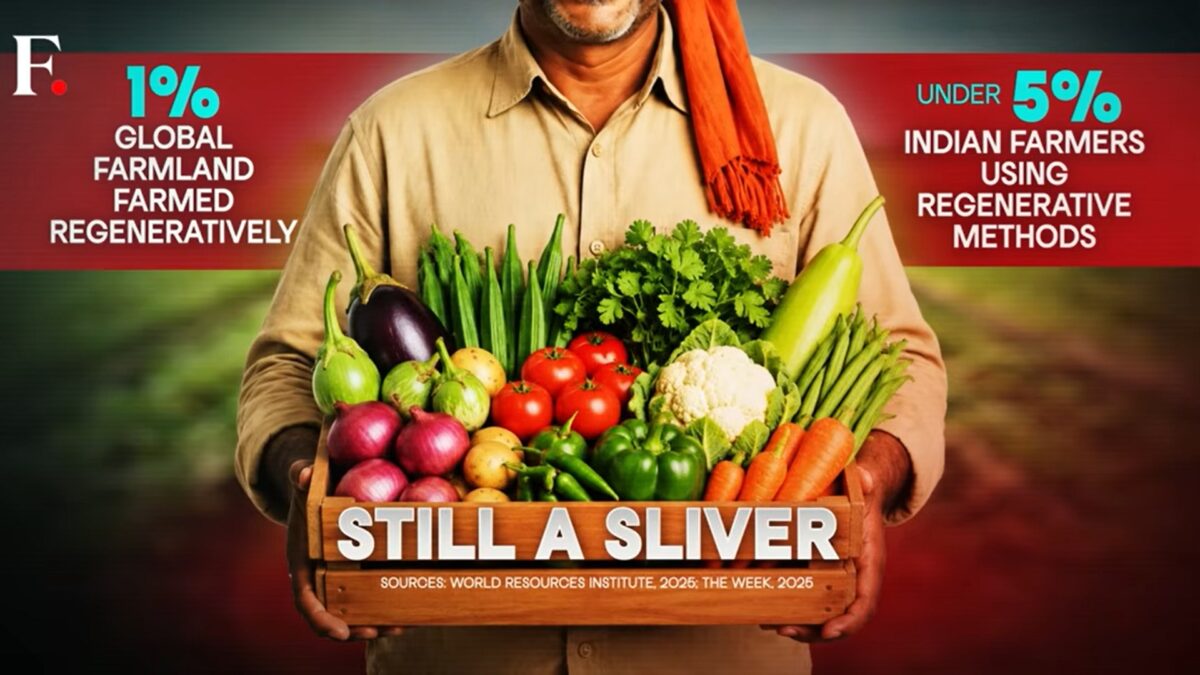
Two decades ago, the team at the Naandi Foundation turned tribal farmers in a remote Andhra valley into some of the world's best-paid coffee growers. Araku Coffee now sells in Paris, and the best of it goes for thousands of rupees a kilogram. Now the same team is trying to do it again — this time with everyday vegetables. Their company, Urban Farms Co., works with regenerative farmers and sells their produce on apps like Blinkit and Zepto. The bet is that what worked for premium coffee can work for staples too. But vegetables aren't coffee. They're cheap, everyday, and…
Vaeshnavi Kasthuril, MINT Bengaluru, 27 Jul 2026 Over the past six years, Trent Ltd has grown its revenue more than fivefold, outpacing Titan Co. Ltd, Tata Consumer Products Ltd (TCPL) and Voltas Ltd to become the fastest-growing established company in Tata Sons' consumer and retail portfolio. Trent, incorporated in 1998, is the youngest among the Tata group's four major listed consumer businesses. Voltas was incorporated in 1954, TCPL traces its origins to Tata Tea, established in 1962, while Titan was incorporated in 1984. While Titan remains the group's largest consumer business by revenue, Trent has overtaken Voltas and nearly caught…
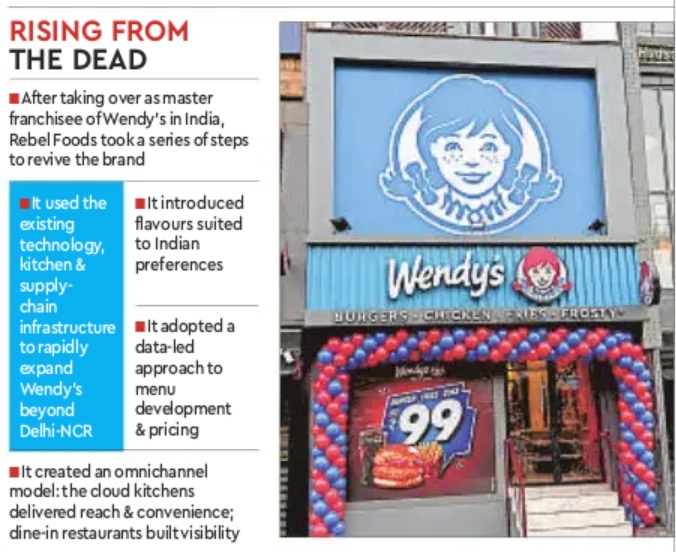
Kartikay Kashyap, Financial Express / Brandwagon 30 July 2026 Wendy's first foray into India’s quick service restaurant (QSR) market in 2015 remained a non-starter. Sierra Nevada Restaurants, the then master franchisee, could not scale its retail presence beyond four conventional restaurants concentrated largely in Delhi-NCR. This limited physical availability, brand awareness and ordering frequency. Ten years on and under a new master franchisee Rebel Foods since 2023, Wendy’s seems to have turned over a new leaf. With more than 250 stores, and ₹200 crore in revenues, the brand wants to be the one-stop destination for the younger generation where consumers…
Sowmya Ramasubramanian, Vaeshnavi Kasthuril (MINT) Bengaluru, 13 July 2026 India's vertical quick-commerce startups across categories like baby care, medicines and fashion, backed by venture capital heavyweights, are beginning to redefine what “quick” means. For some, the race is no longer about cutting delivery times by a few more minutes. Instead, founders are increasingly talking about better assortment, sharper curation, stronger supply chains and healthier unit economics as the factors that will decide whether the model survives. Baby care platform Ozi, backed by Blume Ventures and RTP Global, has settled on a roughly 60-minute delivery promise. Founder Amit Sah told Mint…
Viveat Susan Pinto, S Shanthi (Financial Express) 13 July 2026 India’s new-age coffee chains are accelerating expansion despite continuing losses, as investors bet that the country’s under-penetrated branded cafe market can deliver long-term growth. Third Wave Coffee plans to open 100 cafes this financial year while targeting company-wide break-even. Blue Tokai aims to expand from 240 outlets to 800 by FY30 and is preparing for an eventual public listing. Nothing Before Coffee (NBC), which has grown to 114 cafes across 45 cities, plans to more than double its network over the next two years. The expansion comes even as profitability…
Reliance Retail & 7-Eleven ending 5-year franchise deal in India @SagarMalviya_ET
@devangshu:"convenience stores pressured by q-comm; family-kiranas survive with lower overheads & different margin expectations than corps"
Speciality Restaurants expanding into high-margin QSR and cloud kitchen spaces - @devangshu shared his perspective on the opportunities and realities of managing a diverse "house of brands" in the food service sector #India #strategy #diversification
Geopolitical friction has again sparked renewed concerns over inflation and rising input costs for FMCG companies as @itmeansjustice @whysnavi write. @devangshu commented.