Weakening rupee and rising crude oil prices – dual challenge for the economy [Video]
admin
May 15, 2026
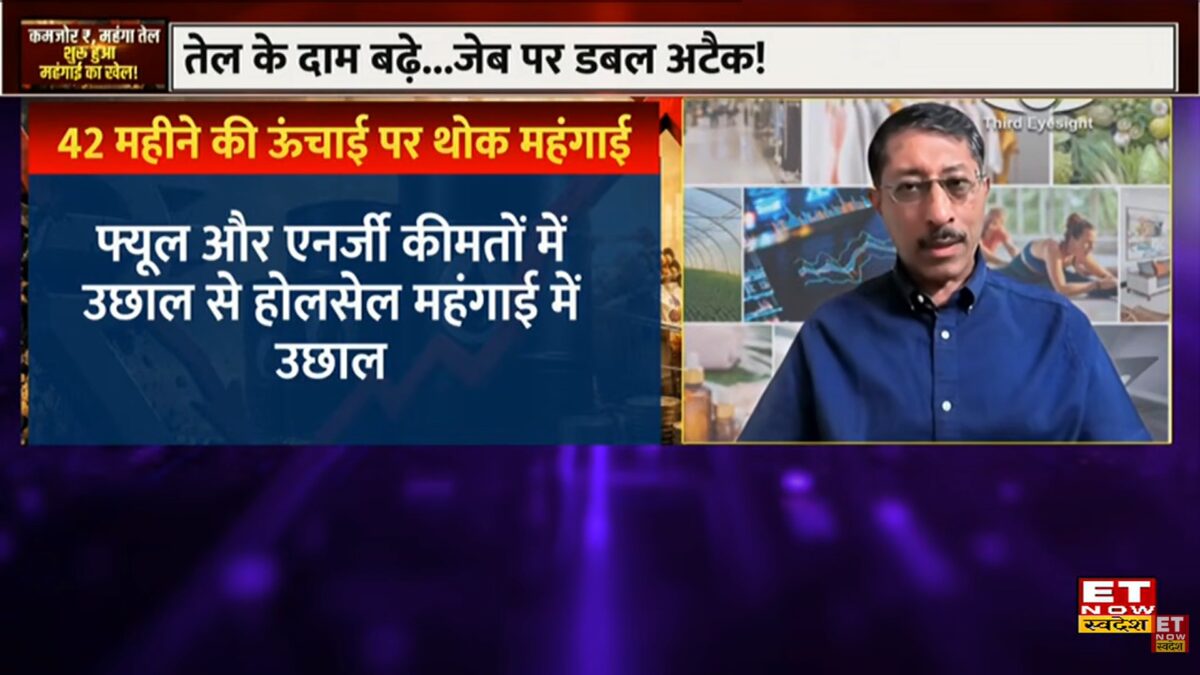
The ET Now Swadesh panel discussion focussed on the dual challenge facing the Indian economy: a weakening rupee and rising crude oil prices, which together are driving “imported inflation” and straining household budgets. Devangshu Dutta (Founder, Third Eyesight) put forth the following key points during the discussion (the video link is under the text summary below):
1. Dual Impact on Industry and Consumers:
Inflationary pressures are hitting both sides of the market. While industries are facing rising input costs, the decision of how much cost to pass on to the consumer (through price increases or altering packaging sizes) rests with individual companies.
Any direct price increase immediately can dampen consumer demand. As a result, companies have been hesitant to pass the entire burden of inflation to consumers right away. However, if geopolitical conflicts persist long term, they will have no choice but to raise prices.
2. Vulnerability of Small Businesses (SMEs):
While public discussions often revolve around large, stock-market-listed corporations, the majority of the Indian economy is driven by Small and Medium Enterprises (SMEs) and small businesses.
These smaller entities face immense pressure from rising input costs coupled with falling demand, which ultimately translates to direct financial stress on households.
3. Income vs. Expenditure Strain:
Due to these economic pressures, households will have to tighten their budgets over the next two quarters.
Individuals should brace for rising costs of goods and services while anticipating that household incomes may not increase at the same pace to balance it out.
4. Ripple Effect of Crude Oil Beyond Logistics:
The impact of crude oil is often misunderstood as only a transportation/logistics problem. While rising diesel prices inevitably raise truck freight rates that get passed onto products, oil’s impact is much broader.
Crude oil is a core raw material. It directly affects the cost of plastics used in product packaging and is also formed into other base ingredients for many products. Therefore, rising oil prices inflate the overall production costs of almost every retail product, even if their logistical share is small.
5. Shifts in Consumer Spending Patterns & “Shrinkflation”:
Lower-income groups, including daily wage earners and unskilled workers have fixed incomes and no financial cushions, forcing an immediate disruption in their daily essential spending. For the Middle-income groups, fixed liabilities like rent and EMIs will not decrease. To balance their household budgets, middle-class consumers will first cut back on discretionary spending (spending by choice), such as reducing outdoor dining, entertainment, and online food deliveries.
If inflation lasts longer, consumers will resort to “down-trading”, either substituting premium products with cheaper alternative brands or buying smaller packet sizes.
Companies are already shifting to “shrinkflation” tactics to avoid breaking critical price points. Instead of increasing the retail price, they are reducing the product volume (e.g., shrinking a packet from 100 grams to 80 grams).
The panel noted that while the Reserve Bank of India (RBI) has adequate foreign exchange reserves to defend the rupee temporarily, the definitive solution relies heavily on the cooling down of global geopolitical tensions (such as the Middle East conflict affecting the Strait of Hormuz). Until then, Indian consumers will need careful financial planning and smart spending adjustments to navigate this inflationary phase. [Video below.]