
admin
May 27, 2026
Kartikey Kashyap, Financial Express
27 May 2026
Three campaigns took home the Grand Prix awards from Goafest this year: Kansai Nerolac Paints”The Barefoot Journey” by Tribes Commu-nication in the Media category; Mountain Dew’s “Darescore” by Leo in Digital & Technology; and Center fruit (Perfetti Van Melle India)” Kaisi Jeebh Laplapayee”” by Perfetti’s in-house team in the Best Use of Voice/Technology category.
All three were exceptionally creative and scored high on likeability and novelty. There was another common element that tied the three together: How they used creativity to solve real brand problems.
Take PepsiCo’s Mountain Dew Darescore campaign. Nepal’s tourism economy relies heavily on mountaineering, but over 90% of global tourist revenue flows into Mount Everest. As a result, there is overcrowding on Everest, starving the country’s other formidable peaks of income and attention.
Enter Mountain Dew. In partner-ships with the Nepal Tourism Board and the Discovery Channel, the brand built the world’s first algorithmic mountain grading system. Leo aggregated decades of expedition records, terrain complexity maps, seasonal weather hazards, rescue failure rates, and first-hand Sherpa wisdom. They funneled these metrics into an engine and assigned a quantifiable “Dare Score” to individual peaks. This data visually demonstrated that height does not equal danger, giving climbers an scale to gauge terrain toughness.
The genius of the campaign was its consumer utility. Mountain Dew printed smart QR codes on millions of its beverage bottles. When a user scanned the bottle, it unlocked an immersive digital hub, where users could simulate climbs, map out route plans, read real-time weather conditions, and submit expedition inquiries. The campaign took Mountain Dew’s slogan, “Darr Ke Aage Jeet Hai” and algorithmically decoded it for real-world application.
The result: It Swept Goafest 2026 and collected medals across vastly different categories including Integrated, Brand Experience, Social Content, and Video Craft, besides the Grand Prix. “Darescore is a powerful example of how brands are moving from storytelling to measurable participation. For decades, adventure culture celebrated only the final summit. This campaign changed the lens, it quantified courage itself,” says Prabhakar Mundkur, director, advertising & media, Percept. “What made this Grand Prix-worthy was the fusion of technology, gaming logic, data and brand philosophy into one seamless experience.”
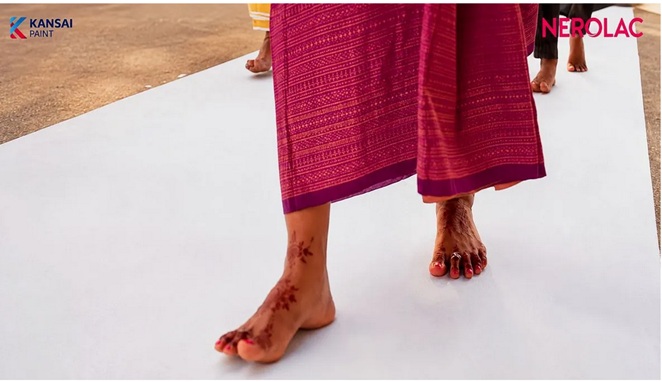
If the Darescore campaign embedded data into storytelling, Nerolac chose to stay away from the beaten path. Its “Barefoot Journey” was a hyper-local activation designed by Tribes Communication for Nerolac Perma NoHeat, an acrylic-based, heat-reflective exterior coating. The campaign focused entirely on real-world product performance.
Every summer devotees visit various religious sites and walk barefoot along sweltering walkways or wait in queues on hot concrete floors.
Along with local authorities, the teams coated thewalkways of several high-footfall temples across south-ern India with Nerolac Perma NoHeat paint. The paint reduced the surface temperature of the pathways by up to 15°C offering relief to devotees.
This campaign won the jury over with its simplicity. According to Devangshu Dutta, founder & CEO, Third Eyesight, “Though the campaign might target a small audience, it made an impact by shifting the frame,” Dutta points out. “The campaign turned advertising into lived experience,” Mundkur says. “People didn’t just hear a claim, they felt it. This is media not as interruption, but as empathy.”
For its part, Centre fruit brought back its hoary “Kaisi Jeebh Lapla-payee” tagline using generative AI. Teaming up with WPP, BharatGPT.ai and Google Cloud, Perfetti created voice-based GenAl interactions in local dialects that turned feature phones smart. “What made the experience special was that it felt less like advertising and more like a conversation,” says Gunjan Khetan, director marketing, Perfetti Van Melle. Al was an enabler of accessibility and a tool to build cultural relevance, Khetan adds. “The brilliance lay in how it con-verted a simple sensory reaction -the uncontrollable craving triggered by taste – into a scalable interactive idea. It was playful, memorable and unmistakably Indian. More importantly, it proved that consistency in -brand codes, when combined with fresh execution, can become a formidable creative asset,” Mundkur says.
There you have it. Winning creative awards is validating, but solving the client’s problems through that creativity remains the bellringer.
(Published in Financial Express)
admin
May 2, 2026
Neethi Lisa Rojan, Mint
2 May 2026, Mumbai
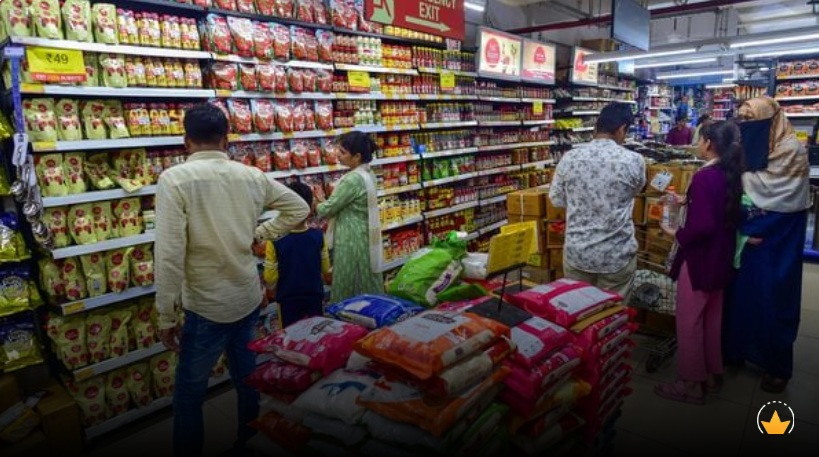
Fast-moving consumer goods makers are leaning on a mix of price increases, smaller pack sizes and tighter cost controls to navigate raw-material volatility triggered by the ongoing US-Iran war, while still reporting robust volume growth for the March quarter. The ongoing war blew up end February this year, disrupting global supply chains.
Executives at top firms said calibrated pricing and ‘shrinkflation’ are helping them protect margins. The trend shows staples demand have held up, but also points to a gradual pass-through of higher commodity and packaging costs to consumers as geopolitical disruptions keep input prices elevated.
At Hindustan Unilever Ltd, the strategy is already in motion. The company has implemented calibrated price hikes and adjusted grammage across products. “We are taking calibrated pricing action in the range of 2-5%,” chief financial officer Niranjan Gupta said in a post-earnings briefing on Thursday. “We use a combination of both the put-down price as well as optimizing the fill levels,” said Gupta. The management also noted that its products in the homecare segment such as soaps (Lux, Pears, Dove, etc.) and detergents (Surf Excel, Rin, etc.) will be the first to be affected by price hikes. Interestingly, this happened at a time when HUL’s volumes grew the fastest in 15 quarters.
Companies have anticipated how consumers will behave.
“In times of inflation, income uncertainty, etc. essentials such as packaged foods, biscuits, and household cleaning products tend to see trade-down behaviour rather than outright disappearance of demand,” said Devangshu Dutta, founder of management consultancy, Third Eyesight. “Consumers tend to shift to smaller pack sizes or private labels, rather than abandoning categories altogether,” he adds.
India’s retail inflation rose from 2.75% in January 2026 to a 10-month high of 3.40% in March, driven largely by food prices.
That balance between pricing and demand is playing out across the sector. Nestle S.A., the parent company of the Indian entity said it saw 3.5% organic sales growth during the quarter, with RIG (real internal growth or volume growth) of 1.2% and pricing of 2.3% in the January-March quarter.
“The conflict in the Middle East will have some impact on commodity and distribution costs, and possibly on consumer behavior. But it’s too early to know the full extent of this,” chief executive officer at Nestlé S.A, Philipp Navratil said in the analyst call after the results. Its India unit, Nestlé India, reported its strongest quarterly growth in nearly a decade, led by double-digit volume expansion.
HUL reported a 21% year-on-year rise in consolidated net profit to ₹2,994 crore, while Nestle India saw net profit up 27% at ₹1,110.9 crore. year-on-year to ₹1,110.9 crore in Q4 FY26. HUL has also retained its medium-term guidance for earnings before interest, taxes, depreciation, and amortization (Ebitda) at 22.5%-23.5%.
The resilience in volumes comes even as input costs surge. Prices of crude oil-linked materials, especially packaging, have risen sharply following disruptions around the Strait of Hormuz chokepoint. High-density polyethylene, widely used in packaging, jumped about 42% in March from the previous month.
Multinationals are already bracing for the fallout. Tide and Gillette maker Procter & Gamble, said in its quarterly earnings call that it could take roughly a $1 billion post-tax hit to its fiscal 2027 profit from surging oil prices. Still, not all inputs are moving in tandem. Prices of staples such as wheat, sugar, tea and coffee have remained relatively stable, offering some cushion. Edible oils, however, remain a concern.
Palm oil, a critical input in many FMCG products, is seeing supply shifts, as producers such as Malaysia and Indonesia divert output toward biodiesel. AWL Agribusiness, which sells Fortune oil, said in the quarterly analyst call that edible oils faced a 10% price surge in March, which has already been passed to consumers. The company expects to pass on the rise in packaging material prices also soon. The company posted a 53% jump in consolidated net profit to ₹292 crore in Q4FY26, from ₹190 crore a year earlier.
Experts expect the trend of margin-saving strategies to continue.
“Depending on the product, category and brand, we will see a mix of price hikes, shrinkflation and rationalization of SKUs (stock keeping units), and also a shift from brand-related to tactical advertising and promotional spends to boost short-term demand,” Dutta said.
Elsewhere, companies are acknowledging broad-based inflation but are continuing to push through growth. Bajaj Consumer Care reported near double-digit volume gains even as managing director Naveen Pandey noted that “nearly 100%” of its cost base is under inflation. The company plans further pricing actions alongside cost optimization. Bajaj Consumer Care’s net profit for the March quarter more than doubled to ₹63.6 crore from a year ago.
Beyond the basics
The ripple effects extend beyond staples. Fashion, lifestyle and grocery retailer Trent Ltd flagged uncertainty around supply chains and inflation, warning of potential implications for near-term demand. “Duration and intensity of disruptions in the Middle East, along with its second order effect on supply chain, commodity prices and inflation in general has potential implications for near-term demand,” the company said in its results presentation.
Meanwhile, consumer appliance maker Havells India has initiated price increases after what chairman Anil Rai Gupta described as an unprecedented escalation in input costs. “I’ve not seen this kind of a price escalation in the recent past in the recent memory,” he said in the post results analyst call.“ Calibrated price actions have been initiated, he said. Havells India reported a strong 40% year-on-year increase in net profit to ₹723 crore in the March quarter.
More clarity may emerge as additional earnings roll in. Companies with higher exposure to West Asia, such as Dabur and Emami, are yet to report results and could face greater consolidated impact due to regional disruptions. “Companies such as Dabur and Emami will be more affected at the consolidated level due to issues in the MENA or Middle East and North Africa Region (6-8% revenue salience),” said analysts at Motilal Oswal Financial Services ahead of the earnings season.
For now, inventory buffers are offering temporary relief. Some companies have built raw-material stockpiles lasting up to six months, helping them absorb immediate shocks. “In our international markets, our effect will be in the raw material, practically zero to a couple of points maybe because we are well-stocked not just for this quarter, but the next quarter also. We normally carry six months inventory in international,” said Raj Pal Gandhi, whole-time director at Varun Beverages, the largest bottler of Pepsico in India, in the quarterly analyst call. This has helped the firm tide over the challenges in plastic shortage faced in March.
However, companies will now have to buy raw materials at higher prices, leaving room open for more price hikes.
(Published in MINT)
admin
January 30, 2026
Vashnavi Kasthuril, MINT
Mumbai, 30 January 2026
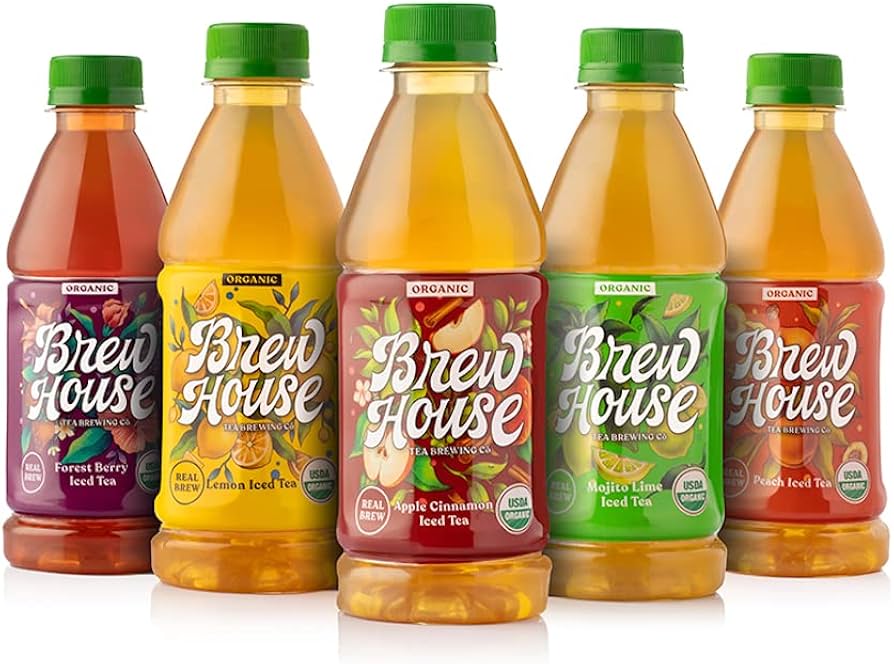
Reliance Consumer Products Ltd (RCPL) plans to enter the bottled iced tea market this coming summer with the relaunch of “Brew House”, three people close to the development told Mint. The people added that the brand—for which the company received approval on 23 July 2025, according to the commerce ministry records—is expected to be relaunched within the next two months. The oil-to-retail conglomerate acquired the brand in 2024 for an undisclosed amount.
The iced teas will be launched in two flavours, lemon and peach, for an entry price of ₹20 for a 200ml bottle, according to two of the three people. “The product was initially supposed to be launched for ₹10 for a 200ml bottle, but after the goods and services (GST) recast, the ready-to-drink segment falls under the ~40% GST bracket, so the company decided to start with ₹20 instead,” said one of the three people, all of whom spoke on the condition of anonymity. RCPL did not immediately respond to Mint’s emailed queries. However, multiple distributors also confirmed to Mint that “Brew House” will launch within the next two months.
FMCG ambitions
Apart from relaunching Brew House, RCPL is also evaluating launching other niche-category drinks. RCPL is also working on several new concepts, such as kombucha, prebiotic sodas, and ayurvedic drinks. RCPL now has the focus and capability to build a specialized route to market for these kinds of offerings. RCPL’s larger ambition is to be a full-scale fast-moving consumer goods (FMCG) company, spanning categories across home care, food, beverages, and snacks, said the second person.
In August 2025, RCPL, the packaged consumer goods arm of Reliance Industries Ltd, acquired a majority stake in a joint venture with Naturedge Beverages Pvt. Ltd, the Mumbai-based company behind the herbal functional drink Shunya. Shunya offers zero-sugar, zero-calorie herbal beverages infused with Indian super-herbs such as ashwagandha, brahmi, khus, kokum, and green tea across India.
“When Reliance acquires a brand, one can be sure of product innovations, and you will see the same here,” said the third person. To be sure, the company has expanded its beverage portfolio to include a diverse range of beverages across mass and value segments, ranging from carbonated soft drinks under the Campa brand to packaged drinking water, sodas, mixers, energy and sports drinks, and traditional Indian refreshments such as nimbu pani, fruit beverages, and milkshakes. RCPL is also present in packaged foods through brands such as SIL, which sells noodles and other staples.
Brew House was launched in May 2017 by Siddhartha Jain under Positive Food Ventures Pvt. Ltd in Gurugram as a premium ready-to-drink iced tea brand positioned as a healthier alternative to carbonated and sugar-heavy beverages. It differentiated itself through real, whole-leaf brewing, lower sugar content and the absence of preservatives. Targeting urban, health-conscious consumers, the brand initially built distribution through cafés, hotels, restaurants, multiplexes and airports before expanding into modern trade and online channels. Its portfolio included flavours such as lemon and peach, sold in 300-350ml glass or premium PET bottles priced at ₹40-80. Singapore-based Food Empire Group later acquired a majority-stake to scale operations, before RCPL acquired the brand in 2024 for an undisclosed amount.
“The relaunch has been a bit slow. It’s available in small batches at Reliance Retail stores for now, but the company’s waiting for the right product, price point, and strategy before scaling it up. Over 2025, the focus has been on building distribution through larger beverage categories and investing in back-end capabilities, including automatic brewing equipment,” said the third person. RCPL has focused on building distribution through larger categories first. It’s difficult for a small, standalone brand to create reach, but a broad portfolio allows scale. Once that foundation is in place, the company can create a separate vertical for niche beverages like iced tea, the person added.
The niche drinks market
The ready-to-drink (RTD) iced tea category in India has long been shaped by major multinational brands and legacy beverage players, though it has remained a relatively niche segment compared with carbonated drinks. Hindustan Unilever Limited and PepsiCo first introduced Lipton Ice Tea in the country in the early 2000s through a joint venture, but the product was pulled back after an initial launch as consumers at the time were not widely ready for iced tea. It was later reintroduced in select markets with PET bottle formats in flavours such as lemon and green tea variants in 2011.
Coca-Cola and Nestle’s joint venture, Nestea, also experimented with bottled lemon RTD iced tea in the early 2010s, initially available in 400ml packs at around ₹25, before its broader rollout was scaled back while the JV evaluated consumer feedback. Aside from multinational brands, Indian companies such as Wagh Bakri have sold iced tea products, including peach-flavour premix packs, retailing around ₹95-100 for 250gm sizes online, though these are often powder mixes rather than RTD bottles.
Currently, Lipton’s bottled RTD iced tea is available in 350ml packs online at roughly ₹60, while powdered iced tea mixes such as Nestle’s 400gm pouches are priced at ₹200-230. In contrast, RCPL’s relaunch of Brew House will be brought to market in 200ml PET bottles at ₹20, undercutting these legacy players and signalling an aggressive pricing strategy.
To be sure, RCPL used a similar strategic playbook when it relaunched Campa Cola, one of India’s once-iconic soft drink brands. Campa, first introduced in the 1970s and marketed with the slogan “The Great Indian Taste”, was a household name in the pre-liberalization era but faded in the 1990s after global giants Coca-Cola and PepsiCo entered the market. Reliance acquired the brand from Pure Drinks Group in 2022 for around ₹22 crore and formally relaunched it in 2023 with variants such as Campa Cola, Campa Lemon, and Campa Orange, initially through its own retail channels and then nationwide.
Reliance’s move into iced tea aligns with its broader FMCG and retail strategy of identifying categories with long-term growth potential, according to Devangshu Dutta, founder of Third Eyesight and co-founder of PVC Partners. While iced tea remains a niche within India’s overall beverage market, Dutta said it is seeing steady, organic growth, driven by the rise of cafe culture, increased eating out, and younger consumers’ demand for non-alcoholic alternatives. “Whether it’s consumed as a standalone iced tea or used as part of a cocktail or some kind of concoction, it’s a category that’s seeing increasing interest,” he said.
Reliance’s key advantage, Dutta added, lies in its distribution muscle and captive shelf space across its retail network, which allows it to scale new products more effectively than smaller, standalone brands. “Anything they put on those shelves and price well becomes an opportunity for growth,” he said, adding that the entry of a large player like Reliance is likely to expand the overall market rather than intensify competition.
(Published in Mint)
admin
January 7, 2026

Writankar Mukherjee & Shabori Das, Economic Times / Brand Equity
7 January 2026
There’s a renewed sparkle in the adage ‘Old is Gold’ at India’s biggest conglomerate Reliance. Banking on Indians’ nostalgia, it is hawking and reviving labels that once defined everyday life, Campa and BPL among them, to set its consumer venture’s cash registers ringing.
What started with sales of Rs. 3,000 crore in FY24, Reliance Industries’ fast-moving consumer goods (FMCG) business quickly accelerated towards Rs. 11,500 crore the following year. With a staggering Rs. 5,400 crore posted in the July to September FY26 quarter alone, the revival story is clearly striking a chord with consumers. But Campa, already the largest contributor to the Reliance Industries’ FMCG business, is only the beginning.
The company is injecting fresh life into acquisition of legacy brands such as Ravalgaon in confectionery and Velvette in personal care. Reliance is applying the same formula to the consumer electronics business, covering televisions, refrigerators and washing machines. Once a staple of Indian households, Kelvinator and BPL are being reintroduced.
Strategy Rings a Bell?
Driving this revival is a strategy Reliance knows well: aggressive pricing that is often 20 to 30% lower than competitors, offering generous trade margins to woo retailers, and a rapid expansion of distribution from its own stores to kiranas and local outlets, alongside local sourcing and an expanding product portfolio.
It’s a playbook that once created waves in the telecom market; this time, however, it comes with a generous dose of nostalgia.
The path ahead though may not be easy. While Campa may have yielded results in a category linked to instant gratification, electronics is a high-ticket, long-term purchase. Marketers are debating whether consumers in their 20s and 30s—spoilt for choice by global brands—would choose a Kelvinator refrigerator, a BPL TV or a Velvette shower gel over LG, Samsung, Dove or Fiama.
Deep Pockets and Retail Muscle
Reliance, experts say, has two advantages— its balance sheet and strong market presence with its own retail stores. “Reliance has the intent to dominate a market in whatever business it enters. Their brands in FMCG and electronics too have a more-than-decent chance of surviving and thriving,” says Devangshu Dutta, founder and chief executive of Third Eyesight, a consultancy in consumer space.
“As long as they have capital and management capability, they may cut their teeth,” he says.
The company is approaching the FMCG and electronics businesses in startup mode, but with deep pockets. As a Reliance executive explains, the strategy is to invest and invest more, gain market share, continue to absorb losses and after achieving scale, drive efficiencies to generate profit.
The path has been carved out. Reliance Consumer Products (RCPL), the FMCG business entity and what started as a unit of Reliance Retail Ventures, is now a direct subsidiary of Reliance Industries. This shift will help the company raise funds independently and eventually launch an initial public offering (IPO), and drive valuation independent of retail. The electronic business may follow suit as it grows in scale.
Reliance did not respond to Brand Equity’s queries.
Electronics: A Tough Play
Industry executives say the electronics foray will not be an easy battle against international brands. Global brands enjoy strong appeal in the Indian market, and companies such as LG, Samsung and Sony have been present for over two decades, cementing their position. Even the newer ones like Haier and Voltas Beko are rapidly gaining market share.
Pulkit Baid, director of the electronics retail chain Great Eastern Retail, says that unlike the cola industry, where two large players (Coca-Cola and PepsiCo) dominate, consumer durables are highly fragmented. “Kelvinator enjoys the brand heritage of an Ambassador car. But we will have to see if the brand is welcomed by Gen Z with the same euphoria as Campa.”
Industry veteran Deba Ghoshal notes that very few legacy brands have been able to withstand the onslaught of new-age brands in consumer electronics. Voltas (from the Tatas) and Godrej are exceptions, he adds.
“Reliance Retail has the strategic foresight to re-establish legacy brands in consumer durables space, instead of chasing a standalone private label business,” adds Ghoshal. “There is a strong opportunity in BPL and Kelvinator, provided they are re-launched with strong value and engaging emotive hooks, and not restricted to being a price warrior. Reliance has the capability; it just needs the right strategy.”
Reliance is readying campaigns for BPL and Kelvinator to connect with the younger consumers. The company is planning to re-launch them beyond Reliance Retail stores—targeting regional retail chains and e-commerce platforms and expanding quickly into smaller towns. With India’s electronics penetration still low—15 to 18% for flat-panel TVs, 40% for refrigerators, 20% for washing machines and less than 10% for air conditioners (ACs)—Reliance has substantial headroom for growth.
Angshuman Bhattacharya, partner and national leader for consumer products and retail at EY India, says Reliance may focus on tier two and three cities. “These markets have been a low priority for the Samsungs and LGs because they want to play in the premium segment where margins are higher. That is where Reliance may expand the market. It requires a lot of capital in terms of inventories and distribution, and Reliance has the ability and potential to do so.”
FMCG: Ball is Rolling
The FMCG push is gaining strong momentum. Reliance plans to double its distribution to three million outlets this fiscal.
Over the next three years, it looks to invest Rs. 40,000 crore to create Asia’s largest integrated food parks and has already invested Rs. 3,000 crore in manufacturing.
Isha Ambani, who spearheads Reliance’s retail and FMCG businesses, drew attention to Campa’s comeback at the company’s AGM in August: “Campa-Cola now holds double-digit market share across many states, breaking a 30-year MNC duopoly of Coca-Cola and PepsiCo. Campa Energy gained two million social media followers in just 90 days.”
Her target is bold: To reach Rs. 1 lakh crore in FMCG revenue within five years and become India’s largest FMCG company with a global presence.
Market watchers say such high ambitions require high investments. Kannan Sitaram, co-founder and partner at venture capital firm Fireside Ventures, said a company like Hindustan Unilever would set aside at least `30-40 crore to launch a brand. “Advertising and marketing alone would take up more than half of that. And when you are re-launching a brand which has not been around for a long while, the spending tends to be 25 to 30% higher in the initial three to four months,” he says.
Yet, analysts believe Reliance is in the consumer brands business for the long term. Bhattacharya says whatever Reliance has learned in this short time is meaningful and serious, something nobody else has managed.
Mover and Shaker
Competitors, including Tata Consumer Products, Dabur and PepsiCo’s largest bottler in India Varun Beverages, have acknowledged the turbulence created by Reliance in the FMCG sector. But the industry hopes low penetration levels will ensure there is room for everyone.
Varun Beverages chairman Ravi Jaipuria did not mince his words in the company’s latest earnings call in October-end: “They (Reliance) have woken all of us up and we are becoming more attentive… it is a very healthy sign for the country because our per capita consumption is so low that in the next five to 10 years, this market may double or triple…there is a huge room, and we see only positives in this.”
The revival of legacy brands and aggressive push into FMCG and consumer electronics indicates that Reliance is preparing for the long haul. In this fight driven by nostalgia, competitive pricing, deep pockets and distribution muscle, the battle for shelf space has just begun.
(Published in Economic Times/Brand Equity)
admin
October 28, 2024
Nisha Qureshi, Afaqs
28 Oct 2024
Reliance Industries last year made a strategic move into the soft drink sector by acquiring the iconic carbonated beverage brand ‘Campa Cola,’ which gained prominence in the 80s and 90s.
The conglomerate intends to strengthen its brand by employing its classic pricing disruption strategy. Reliance is expanding its presence nationwide by focussing on affluent regions and utilising e-commerce and quick commerce platforms.
Recent reports suggest that Campa Cola is providing retailers with more favourable trade margins than its rivals Coca Cola and Pepsi, aiming to challenge the existing duopoly in India’s soft drink market.
In the Q2FY25 earnings call, Reliance Industries reported that its consumer brands, particularly Campa Cola and Independence, are experiencing robust growth, with general trade increasing by 250% year-on-year.
“We are taking several marketing initiatives to grow consumer brands and will leverage the festive period to drive demand,” the company’s representative said during the call, adding that the company was “very optimistic about the next few quarters”.
Experts now believe that the soft-drink beverage market will witness an increase in advertising initiatives by the competitors to mitigate the disruption.
Saurabh Munjal, co-founder and CEO of Archian Foods, the makers of Lahori Zeera, asserts that Reliance’s entry into this sector will only expand the market for soft-drink beverages.
“The consumption will increase, accompanied by a corresponding rise in marketing efforts,” he adds.
Devangshu Dutta, the founder of Third Eyesight, a management consulting firm engaged with the retail and consumer products ecosystem, asserts that both Coca-Cola and Pepsi will undoubtedly endeavour to safeguard their market share.
He says the emphasis will particularly be on domestic consumption, and we can anticipate an increased investment in share-of-mind campaigns to proactively counter Campa’s expansion.
Business strategist and independent director Lloyd Mathias believes that the current circumstances are conducive to market expansion and disruption. “Other players will likewise increase their visibility through marketing strategies and retail initiatives to counter this. So what we will see in the next year is that the categories of soft drinks will grow quite dramatically,” he adds.
The classic Reliance move
Experts suggest that Reliance’s approach to Campa Cola involves competitive pricing, reflecting a strategy akin to its disruptive tactics in the telecom sector with Jio and JioCinema. For instance, a two-litre bottle of Campa Cola’s lemon flavour is priced at Rs 53 on a quick commerce platform, whereas a leading competitor offers it for Rs 74.
Besides competitive pricing, Reliance also has the significant advantage of owning a large retail and media network to scale Campa Cola.
“Reliance has earlier disrupted markets with the aggressive pricing strategy and it has the resources to follow-through on its pricing strategy for Campa as well. It can build significant volumes across its own stores prior to having to compete for shelf space in the broader distribution channels,” says Dutta.
As per Mathias, in addition to possessing deep pockets, Reliance benefits from its extensive media and entertainment wing that will be leveraged for the promotion of Campa Cola.
“I think the combined strength of Reliance in terms of distribution, media, and retail, alongside its capacity to maintain pricing integrity, are quite formidable. I think they are going to make a significant impact in the market,” says Mathias.
Impact on smaller players
Experts also suggest that the introduction of Campa Cola at its current price point will primarily affect smaller local competitors who function within the same pricing bracket, particularly in tier-2 and tier-3 markets.
Mathias asserts that Campa Cola will initially expand the soft-drink beverage market, while also emphasising that given the price point of the soft drink, the immediate impact will be felt by smaller local players who operate at similar price points. Introduction of numerous Indian innovations within the soft-drink category could significantly impact relatively smaller competitors.
Similarly, Dutta observes that the market for carbonated beverages largely hinges on the intangible qualities associated with the brands. In India, however, brand preferences are not as hard coded as they are in the United States.
“Consumers do switch between brands, and price-sensitive customers can be swayed by visible pricing differences. This gives deep-pocketed Reliance an opportunity to carve out a significant market share.”
However, according to Munjial of Lahori Zeera, there appears to be no direct impact on his brand, given that Campa Cola has thus far only introduced the well-known flavours of carbonated beverages. “As far as Lahori Zeera is concerned, there is no impact because the target consumer, the flavours are all very different.”
“This development will merely add to the market and increase the number of people consuming carbonated beverages,” he says.
(Published in Afaqs)
