
admin
October 29, 2026
Pritha Pahari, The Core
29 Oct 2026
When ITC Ltd. launched Aashirvaad in May 2002, it sold one thing — whole wheat flour. The brand now has more than 200 SKUs across staples, spices, fresh foods and frozen foods.
ITC wants to double what Indians spend on Aashirvaad to Rs 20,000 crore in five years. It said growth will come from two places: more premium atta, and new categories around the Indian kitchen. That makes the brand a test of a hard question in packaged food. Can a name built on the purity of an ingredient win in the other segments and break out from its identity built around atta?
Trust in the purity of flour may not translate into trust in ready-to-eat meals, where taste, consistency and repeat purchases matter more. ITC itself has bought brands and built separate ones for some of these jobs.
A Big Target, A Soft Core
Hemant Malik, who runs ITC’s foods division, told PTI the company expects spending on Aashirvaad to double from above Rs 10,000 crore. That figure is what shoppers pay, including taxes and trade margins. It is not ITC’s revenue. The push comes as the core product slows. In the quarter ended June 30, ITC said atta was held back by heat waves, an LPG shortage and low wheat prices.
FMCG-Others revenue rose 12%, or 16% without staples, and dairy, snacks, noodles and frozen snacks each grew more than 20%. Not all of that belongs to Aashirvaad. Snacks, noodles and frozen foods sell under Bingo!, YiPPee! and ITC Master Chef.
The wider backdrop matters too. ITC is trying to rely less on cigarettes, which now face a sharp rise in tax.
Devangshu Dutta, founder of consultancy Third Eyesight, said value-added ready-to-cook and ready-to-eat products earn better gross margins than staples. Selling more of them would also help ITC use its factories more fully, he said.
ITC’s recent annual report shows multigrain atta, vermicelli and besan have grown threefold over five years, and now make up about 16% of the staples portfolio. ITC does not give a brand-level split between premium atta and new categories, or Aashirvaad’s profit.
ITC’s own Q1 FY27 release said atta performance was tempered by transient factors including heat waves, an LPG shortage and benign wheat prices. The FMCG-Others business grew 12% in the quarter.
The Easy Stretch
ITC said its value-added atta variants and staples-related products have grown three-fold in five years, and their share of the portfolio has doubled. They include besan, rava, vermicelli and soya chunks. The newest addition is chana sattu, first sold in Bihar, Jharkhand and West Bengal, with a Rs 10 pack that carries 10 grams of protein.
Suumit Kapoor, a brand growth consultant, calls these safe stretches. Besan and rava barely change what a shopper expects, he said. They are “still about what’s in the bag,” so purity still answers the question.
The Harder Jump
Ready-to-cook and ready-to-eat food asks something different. “Purity is a raw material promise. Ready to eat is a finished experience,” Kapoor said. Nobody buys a packaged curry because the dal was well sourced, he said. They buy it because they are hungry, short of time and hoping it tastes home-cooked.
ITC’s recent launches show it knows this. Its ready-to-cook chapati comes in packs of 10, with no preservatives and a shelf life of five to six days. The chutney and sambar range, launched in June, is made in small batches without preservatives and depends on a cold supply chain.
At launch it was sold only in Bengaluru through quick-commerce apps. The short shelf life answers a real problem.
Dutta said many shoppers prefer freshly cooked, hot meals and are wary of additives that extend shelf life. Cold chains remain patchy even in big cities, he said. A time-pressed household can also cook, order in, eat out or buy a packaged meal, and each choice is judged on price, convenience and taste.
Kapoor added a caution about ITC’s own numbers. They do not show whether shoppers buy the new products because of the Aashirvaad name, or simply because those categories are growing.
ITC’s latest results release names ready-to-cook chapati in a list of products but gives no sales figure for it, or for ready-to-eat meals. That may reflect how ITC groups its figures, not a change in plans.
Why One Name Still Makes Sense
Dutta sees a strong business case for using one name. A familiar brand cuts the cost of getting shoppers to try something new, he said, because Aashirvaad is already in millions of homes. New items can also move through ITC’s existing distribution, including modern trade and quick commerce, and retailers accept extensions from a leading brand more readily than unknown labels.
He also sees a defensive motive. Aashirvaad sits in everyday kitchen use, between ITC’s older gourmet line, Kitchens of India, and its snack-led Sunfeast. A bigger range puts it up against MTR, Haldiram’s and iD Fresh.
Tata Consumer said Tata Sampann grew 69% in Q4 FY26 with strong performance across categories. On the Q1 FY27 earnings call, CEO Sunil D’Souza said the core portfolio of pulses, spices, poha and vermicelli was growing at about 30%, with cold-pressed oils and dry fruits adding to that growth.
Poha and vermicelli are the closest items to convenience foods, but Tata doesn’t separate them out.
AWL Agri Business, which owns Fortune and Kohinoor, reported Q1 FY27 Food & FMCG revenue of Rs 1,726 crore, up 22%, with a segment EBITDA margin of 6%, and management said the Fortune and Kohinoor brands both grew at double-digit rates. AWL’s investor day deck also shows Kohinoor rising from Rs 150 crore in FY23 to over Rs 400 crore in FY26.
Not Betting Only On The Name
ITC’s record suggests it does not rely on one brand for everything.
It launched Kitchens of India in 2001 as a separate premium name, using the dishes of its hotel restaurants. It bought the spices brand Sunrise in 2020. In February 2025, it agreed to buy Prasuma, a frozen and ready-to-cook company, starting with a 43.8% stake. Sproutlife Foods, the Yogabar business, became a subsidiary on April 1.
Mint reported in February 2025, citing two unnamed people, that ITC was in early talks to buy MTR Foods and Eastern Condiments from Norway’s Orkla for about $1.4 billion. Orkla said it does not comment on rumours. ITC did not reply to Mint. No deal followed.
Kapoor reads such moves as ITC buying skills it lacks, not as proof that Aashirvaad cannot stretch.
ITC is also putting weight behind fresh food. Its fresh food business, which includes a brand called ITC Aashirvaad Soul Creations, grew gross order value 90% in the quarter, passed an annual revenue run rate of Rs 300 crore and now runs 75 cloud kitchens in five cities.
What Comes Next
The company’s position is strongest where the brand started. In July, ITC said it had already secured 95% of the wheat of the quality needed for Aashirvaad atta, but it also warned that monsoon rains were short and El Niño could hurt growth.
Value-added atta variants and staples adjacencies have grown three-fold over five years, and Aashirvaad Svasti dairy is among its fastest-growing categories, but neither is a meal category.
The newest meal-type launches, such as ready-to-cook chapatis, frozen naans and parathas, and fresh chutneys and sambar, have no disclosed sales or repeat-purchase data.
ITC launched Aashirvaad ReadyMeals back in 2003 and still describes ready-to-cook as a new bet, and it markets other finished-food lines under separate brands (Kitchens of India, ITC Master Chef, Prasuma), which suggests it doesn’t simply assume the Aashirvaad name carries into every meal category.
Management frames success around product innovation and differentiation, not brand trust alone. The larger test is on the shelf.
Kapoor said staples-linked products can keep drawing on Aashirvaad’s purity, but anything close to a finished meal has to earn a name for taste and consistency. Whether shoppers will pay for that under the Aashirvaad label is what ITC’s Rs 20,000 crore target depends on.
(Published in The Core)
admin
January 30, 2026
Vashnavi Kasthuril, MINT
Mumbai, 30 January 2026
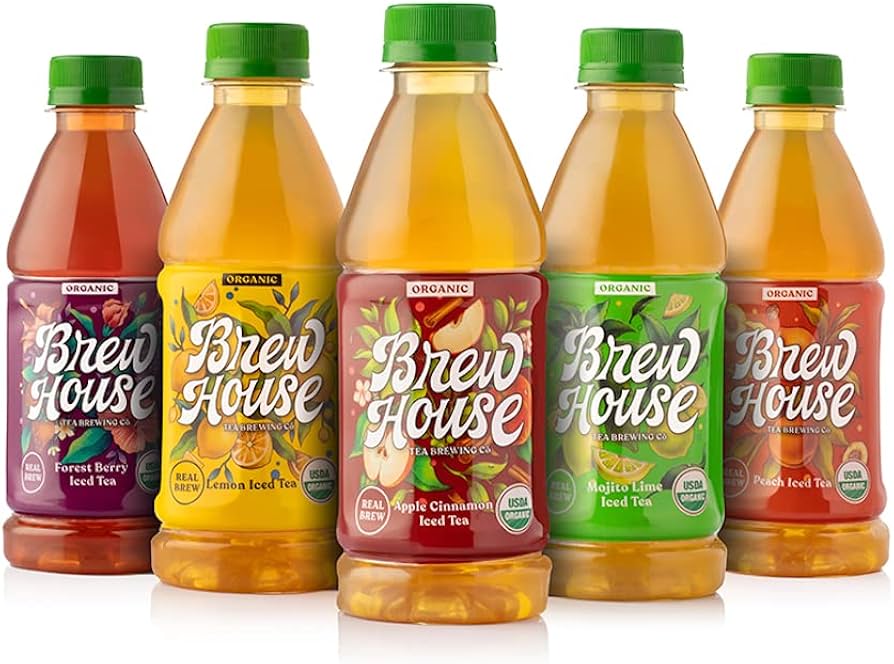
Reliance Consumer Products Ltd (RCPL) plans to enter the bottled iced tea market this coming summer with the relaunch of “Brew House”, three people close to the development told Mint. The people added that the brand—for which the company received approval on 23 July 2025, according to the commerce ministry records—is expected to be relaunched within the next two months. The oil-to-retail conglomerate acquired the brand in 2024 for an undisclosed amount.
The iced teas will be launched in two flavours, lemon and peach, for an entry price of ₹20 for a 200ml bottle, according to two of the three people. “The product was initially supposed to be launched for ₹10 for a 200ml bottle, but after the goods and services (GST) recast, the ready-to-drink segment falls under the ~40% GST bracket, so the company decided to start with ₹20 instead,” said one of the three people, all of whom spoke on the condition of anonymity. RCPL did not immediately respond to Mint’s emailed queries. However, multiple distributors also confirmed to Mint that “Brew House” will launch within the next two months.
FMCG ambitions
Apart from relaunching Brew House, RCPL is also evaluating launching other niche-category drinks. RCPL is also working on several new concepts, such as kombucha, prebiotic sodas, and ayurvedic drinks. RCPL now has the focus and capability to build a specialized route to market for these kinds of offerings. RCPL’s larger ambition is to be a full-scale fast-moving consumer goods (FMCG) company, spanning categories across home care, food, beverages, and snacks, said the second person.
In August 2025, RCPL, the packaged consumer goods arm of Reliance Industries Ltd, acquired a majority stake in a joint venture with Naturedge Beverages Pvt. Ltd, the Mumbai-based company behind the herbal functional drink Shunya. Shunya offers zero-sugar, zero-calorie herbal beverages infused with Indian super-herbs such as ashwagandha, brahmi, khus, kokum, and green tea across India.
“When Reliance acquires a brand, one can be sure of product innovations, and you will see the same here,” said the third person. To be sure, the company has expanded its beverage portfolio to include a diverse range of beverages across mass and value segments, ranging from carbonated soft drinks under the Campa brand to packaged drinking water, sodas, mixers, energy and sports drinks, and traditional Indian refreshments such as nimbu pani, fruit beverages, and milkshakes. RCPL is also present in packaged foods through brands such as SIL, which sells noodles and other staples.
Brew House was launched in May 2017 by Siddhartha Jain under Positive Food Ventures Pvt. Ltd in Gurugram as a premium ready-to-drink iced tea brand positioned as a healthier alternative to carbonated and sugar-heavy beverages. It differentiated itself through real, whole-leaf brewing, lower sugar content and the absence of preservatives. Targeting urban, health-conscious consumers, the brand initially built distribution through cafés, hotels, restaurants, multiplexes and airports before expanding into modern trade and online channels. Its portfolio included flavours such as lemon and peach, sold in 300-350ml glass or premium PET bottles priced at ₹40-80. Singapore-based Food Empire Group later acquired a majority-stake to scale operations, before RCPL acquired the brand in 2024 for an undisclosed amount.
“The relaunch has been a bit slow. It’s available in small batches at Reliance Retail stores for now, but the company’s waiting for the right product, price point, and strategy before scaling it up. Over 2025, the focus has been on building distribution through larger beverage categories and investing in back-end capabilities, including automatic brewing equipment,” said the third person. RCPL has focused on building distribution through larger categories first. It’s difficult for a small, standalone brand to create reach, but a broad portfolio allows scale. Once that foundation is in place, the company can create a separate vertical for niche beverages like iced tea, the person added.
The niche drinks market
The ready-to-drink (RTD) iced tea category in India has long been shaped by major multinational brands and legacy beverage players, though it has remained a relatively niche segment compared with carbonated drinks. Hindustan Unilever Limited and PepsiCo first introduced Lipton Ice Tea in the country in the early 2000s through a joint venture, but the product was pulled back after an initial launch as consumers at the time were not widely ready for iced tea. It was later reintroduced in select markets with PET bottle formats in flavours such as lemon and green tea variants in 2011.
Coca-Cola and Nestle’s joint venture, Nestea, also experimented with bottled lemon RTD iced tea in the early 2010s, initially available in 400ml packs at around ₹25, before its broader rollout was scaled back while the JV evaluated consumer feedback. Aside from multinational brands, Indian companies such as Wagh Bakri have sold iced tea products, including peach-flavour premix packs, retailing around ₹95-100 for 250gm sizes online, though these are often powder mixes rather than RTD bottles.
Currently, Lipton’s bottled RTD iced tea is available in 350ml packs online at roughly ₹60, while powdered iced tea mixes such as Nestle’s 400gm pouches are priced at ₹200-230. In contrast, RCPL’s relaunch of Brew House will be brought to market in 200ml PET bottles at ₹20, undercutting these legacy players and signalling an aggressive pricing strategy.
To be sure, RCPL used a similar strategic playbook when it relaunched Campa Cola, one of India’s once-iconic soft drink brands. Campa, first introduced in the 1970s and marketed with the slogan “The Great Indian Taste”, was a household name in the pre-liberalization era but faded in the 1990s after global giants Coca-Cola and PepsiCo entered the market. Reliance acquired the brand from Pure Drinks Group in 2022 for around ₹22 crore and formally relaunched it in 2023 with variants such as Campa Cola, Campa Lemon, and Campa Orange, initially through its own retail channels and then nationwide.
Reliance’s move into iced tea aligns with its broader FMCG and retail strategy of identifying categories with long-term growth potential, according to Devangshu Dutta, founder of Third Eyesight and co-founder of PVC Partners. While iced tea remains a niche within India’s overall beverage market, Dutta said it is seeing steady, organic growth, driven by the rise of cafe culture, increased eating out, and younger consumers’ demand for non-alcoholic alternatives. “Whether it’s consumed as a standalone iced tea or used as part of a cocktail or some kind of concoction, it’s a category that’s seeing increasing interest,” he said.
Reliance’s key advantage, Dutta added, lies in its distribution muscle and captive shelf space across its retail network, which allows it to scale new products more effectively than smaller, standalone brands. “Anything they put on those shelves and price well becomes an opportunity for growth,” he said, adding that the entry of a large player like Reliance is likely to expand the overall market rather than intensify competition.
(Published in Mint)
