Sagar Malviya, ET Bureau Mumbai, 15 January 2026 It’s mostly a tale of two halves for top western fashion labels in India after the runaway sales and retail expansion in the years soon after the pandemic. While Marks & Spencer, Benetton, and Adidas are battling waning demand, Uniqlo and Nike are gaining fresh ground, reflecting wider choices and increasingly discerning buyers in one of the world’s fastest-growing consumer economies. Spanish brand Zara is facing stagnant growth while it tapered off at Apparel Group, which sells Aldo, and Charles & Keith brands in India. Experts termed the divergent sales performance as…
Writankar Mukherjee & Shabori Das, Economic Times / Brand Equity 7 January 2026 There’s a renewed sparkle in the adage ‘Old is Gold’ at India’s biggest conglomerate Reliance. Banking on Indians’ nostalgia, it is hawking and reviving labels that once defined everyday life, Campa and BPL among them, to set its consumer venture’s cash registers ringing. What started with sales of Rs. 3,000 crore in FY24, Reliance Industries’ fast-moving consumer goods (FMCG) business quickly accelerated towards Rs. 11,500 crore the following year. With a staggering Rs. 5,400 crore posted in the July to September FY26 quarter alone, the revival story…
Saumyangi Yadav, Entrepreneur India Jan 6, 2026 After years of rapid growth and a sharp reset, India's direct-to-consumer (D2C) sector is expected to settle into a more balanced phase. The period of easy funding, aggressive customer acquisition and scale-at-all-costs expansion is clearly over, experts suggest. Now, what lies ahead in 2026 is a shift towards steadier growth driven by better execution, stronger retention and clearer brand positioning. According to Bain and Flipkart, India's e-retail market is projected to reach $170–190 billion in GMV by 2030, driven by a growing online shopper base and evolving commerce models. As adoption deepens across…
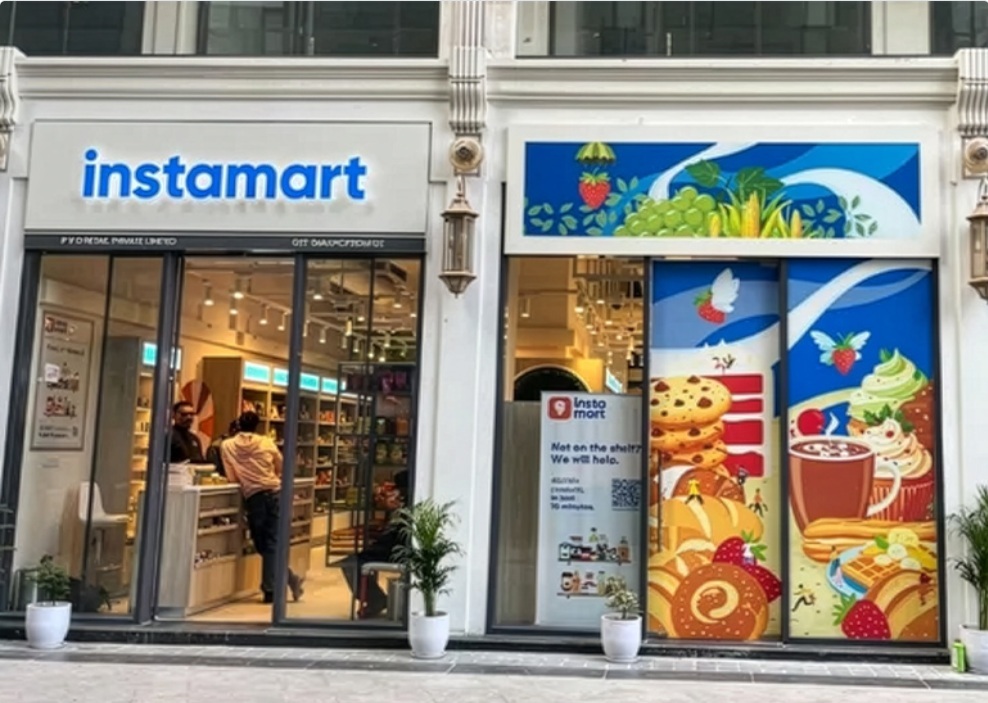
Yash Bhatia, Impact Magazine 29 December 2025 App, Tap, Pay and Zoom it’s delivered - that is Quick commerce for you. And in India, the narrative has so far been defined by speed, scale, high SKU counts, and the dominance of dark stores. Last week, however, Instamart nudged that model by opening an experiential store in Gurugram, allowing consumers to see and feel select products available on the platform. The Bengaluru-based company has positioned the outlet not as a conventional retail store, but as a compact experiential format with a sharply curated assortment of around 100–200 SKUs, compared to the…
By Saumyangi Yadav, Entrepreneur India Dec 15, 2025 India's D2C ecosystem has grown rapidly over the past five years, but scale remains elusive. While thousands of brands have launched and many have crossed early revenue milestones, only a small fraction manage to break past INR 100 crore in annual revenue. According to a new report by DSG Consumer Partners, based on a survey of over 100 Indian D2C founders and operators, the problem is not demand or product-market fit, it is how brands attempt to scale. The report shows that around 60–65 per cent of Indian D2C brands remain stuck…
Reliance Retail & 7-Eleven ending 5-year franchise deal in India @SagarMalviya_ET
@devangshu:"convenience stores pressured by q-comm; family-kiranas survive with lower overheads & different margin expectations than corps"
Speciality Restaurants expanding into high-margin QSR and cloud kitchen spaces - @devangshu shared his perspective on the opportunities and realities of managing a diverse "house of brands" in the food service sector #India #strategy #diversification
Geopolitical friction has again sparked renewed concerns over inflation and rising input costs for FMCG companies as @itmeansjustice @whysnavi write. @devangshu commented.