
admin
November 27, 2025
Viveat Susan Pinto, Financial Express
November 27, 2025
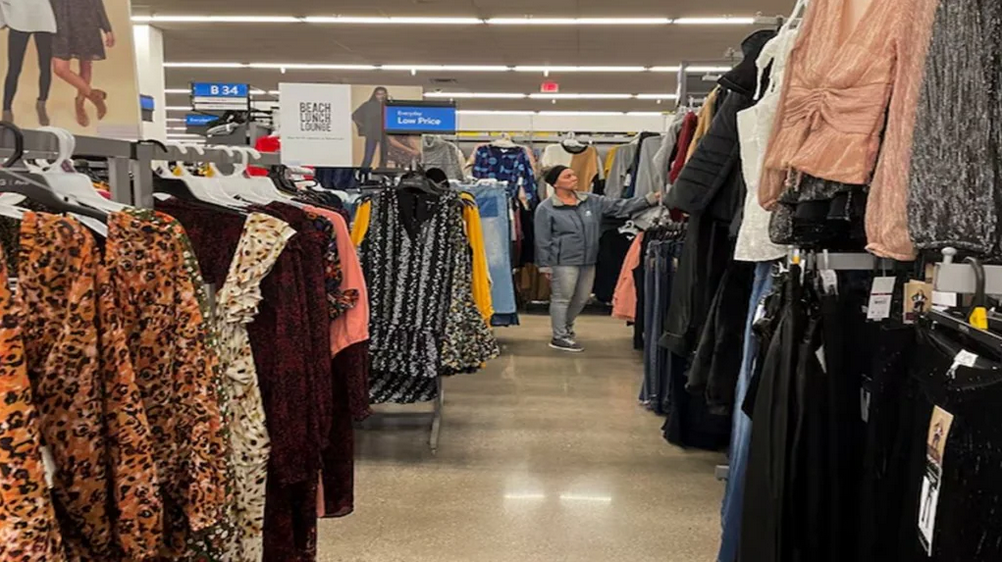
Several of the country’s top retailers, malls and brands have kicked off a shopping extravaganza on the occasion of Black Friday, offering steep discounts across product categories.
A Western import, the day which symbolises the beginning of the Christmas shopping season in the US, the UK and Europe, gained popularity in India over the past two years as a crucial sale window after Diwali.
Domestic retailers, say experts, are using this period to exhaust existing inventory at steep discounts as they gear up for the winter season.
This year, discounts are up to 60-80% across fashion, lifestyle, electronics and cosmetics, higher than the 50% seen last year. E-tailers such as Ajio have pushed the pedal even harder, offering as much as 85-90% on denims, jackets and select products during the sale this year.
Bigger Deals, Longer Duration
“Retailers in India are building Black Friday as an important off-season peak. The participation of brands is growing, deals are getting bigger and the sale days are more,” Devangshu Dutta, founder and chief executive of Third Eyesight, a Gurugram-based retail consultancy, said. That is visible from the intense promotional activity this year. What began as a flash sale event a couple of years ago has now extended to a week-long sale period this year, experts said.
Pushpa Bector, senior executive director and business head, DLF Retail, said that brands this year are ready with strong offers, driven in part by GST cuts and a stable economic outlook. “Early trends show healthy interest across categories by consumers. We expect a strong double-digit uplift over the Black Friday period, setting us up for a strong close to the year,” she said.
Retailer Strategies
While Black Friday typically falls on the last Friday of November, some retailers such as Flipkart, Croma, Vijay Sales, Nykaa and Tata Cliq have kicked off their Black Friday sales last week itself to build on the excitement. For electronic retailers, said Nilesh Gupta, director, Vijay Sales, Black Friday will extend into Cyber Monday next week (falling on December 1), making it even more relevant for them to focus on the occasion.
“We’ve been building Black Friday as a retail property in the last few of years as it fills the post-Diwali void quite well. Black Friday also extends well into Cyber Monday which comes immediately after. While we started with a few categories in the initial years, we now have offers across all our segments. Discounts are up to 45-50% this year in line with last year,” he said.
Rival Croma is also offering up to 50% discount on products this year, executives said.
“Black Friday has become one of India’s most anticipated shopping moments. At Croma, we are focused on delivering value across categories with steal deals, bundled savings, and limited-time offers,” Croma’s CEO & MD Shibashish Roy said.
Croma will also introduce a special late-night shopping window on November 28 at select stores across India. For two hours—from 10 pm to 11:59 pm —these stores will remain open with exclusive additional discounts on some of the season’s most in-demand products.
Nishank Joshi, chief marketing officer, Nexus Select Malls, said it is elevating the Black Friday experience with bigger assured gifts, giveaways and reward points if consumers upload their bills on their Nexus One apps.
Mayank Lalpuria, director, marketing (north, central & west) at Phoenix Mills, which operates Phoenix malls, said that it was expecting double-digit year-on-year growth and strong footfalls during the Black Friday period.
Tanu Prasad, CEO – Malls, Oberoi Realty, said that the firm was seeing far more planned purchases towards premium products and a rise in family-oriented outings. “We are anticipating an encouraging response at the (Black Friday) weekend resulting in a strong kick-off to the (December) shopping season,” Prasad said.
Direct-to-consumer brands such as Inc.5 footwear and NEWME said that they have rolled out big deals for Black Friday. “We’re looking at a 30x surge in orders across both offline and online for Black Friday,” NEWME Co-founder & CEO Sumit Jasoria said.
“Our customers look forward to Black Friday, and this year, we’re excited to bring fresh new launches, curated edits, and our widest range yet,” Rajesh Kadam, CEO, Inc.5 Footwear, said.
(Published in Financial Express)
admin
November 13, 2025

Saumyangi Yadav,Entrepreneur
Nov 13, 2025
India’s consumer landscape is undergoing a decisive shift in 2025. While D2C brands that once thrived on digital-only distribution are now aggressively building an offline footprint, legacy FMCG majors are simultaneously acquiring digital-first brands to strengthen their portfolios and tap into new consumer behaviours.
As analysts suggest, these trends signal a maturing phase for India’s D2C ecosystem, one that blends physical retail and strategic consolidation.
Offline Push Accelerates
According to a recent CBRE report, ‘India’s D2C Revolution: The New Retail Order’, D2C brands leased nearly 5.95 lakh sq ft of retail space between January and June 2025, accounting for 18 per cent of all retail leasing during this period, up sharply from 8 per cent in the first half of 2024. Fashion and apparel dominated the expansion, contributing close to 60 per cent of D2C leasing, followed by homeware and furnishings and jewellery at about 12 per cent each, while health and personal care brands accounted for roughly six per cent. The shift is equally visible in the choice of retail formats: 46 per cent of D2C leasing went to high streets, 40 per cent to malls, and the remaining to standalone stores, reflecting the category’s growing focus on visibility, trial and experiential discovery.
Experts suggest that it represents a strategic pivot to blended engagement.
As Devangshu Dutta, CEO of Third Eyesight, notes, “India’s D2C surge is powered by digital-first consumers, tremendous improvement in seamless logistics, and low-cost market entry, supported subsequently by substantial amounts of investor capital chasing those startups that stand out from the competition. Yet, lasting success demands a more holistic view: the divide between online and offline is a business construct, not a consumer reality. The larger chunk of retail sales still happens through physical channels and, for brands that want to be mainstream, an omnichannel presence is absolutely essential.”
This also aligns with the broader market outlook. The India Brand Equity Foundation (IBEF), in its Indian FMCG Industry Analysis (October 2025), estimates the value of India’s D2C market at USD 80 billion in 2024, with expectations of crossing USD 100 billion in 2025. Much of this growth is being led by categories that combine frequent purchase cycles with strong digital discovery, beauty, personal care, and food and beverage segments where consumers are open to experimentation but demand authenticity, transparency, and a compelling product narrative.
“The Gen Z and millennial consumer cohorts value newness but also authenticity and unique product stories, which are best communicated in spaces that are controlled by the brand,” Dutta added, “In the launch and growth phases, this could be the brand’s digital presence including website and social media, but over time this can include pop-up stores, kiosks, shop-in-shops and even exclusive brand stores.”
CBRE’s data reflects this shift clearly, with D2C brands increasingly opting for flexible store formats and high-street locations to maximise traffic and visibility.
M&A Gains Momentum
Parallel to the offline push is a noticeable wave of consolidation. Large FMCG companies are accelerating acquisitions to capture emerging consumer niches and strengthen their digital-native capabilities.
In recent years, Hindustan Unilever has acquired Minimalist; Marico has bought Beardo, Just Herbs, True Elements, and Plix; ITC has taken over Yoga Bar; and Emami has secured full ownership of The Man Company. These deals, reported widely across business media in 2024 and 2025, point to the need for established companies to fast-track entry into high-growth, ingredient-forward, and youth-focused categories without the lead time of in-house incubation.
“Legacy FMCG companies are acquiring D2C brands to rapidly gain access to new consumer segments, product innovation, and digital-native capabilities, including direct engagement and insights. Such deals enable large companies to diversify portfolios, accelerate entry into trending segments by-passing the initial launch risks, and rejuvenate their brands with modern digital marketing expertise,” Dutta explained.
Challenges and Risks
But the acquisitions do not come without risk and challenges, analysts warned.
“However, integrating D2C operations also poses challenges, including cultural differences, the risk of stifling entrepreneurial agility, and the need to harmonise data and omnichannel strategies. The ability to nurture acquired brands without diluting their distinctive appeal will determine acquisition success,” Dutta added.
Yet even as the ecosystem expands, challenges remain. Offline stores add operational complexity, inventory planning, staffing, last-mile logistics, and real-time data integration. Still, the bottom line is that India’s D2C sector is moving into a hybrid era defined by tighter omnichannel integration, sharper product storytelling, and portfolio realignment through acquisitions.
(Published in Entrepreneur)
admin
October 24, 2025

Entrepreneur India
Oct 23, 2025
Indian consumers are increasingly opting for private labels and in-house brands over established ones, and retailers are taking note. According to EY’s ‘Future Consumer Index 2025’, more than half of India’s consumers are now choosing in-house brands over legacy labels.
The report highlights that 52 per cent of Indian consumers have switched to private labels for better value, while 70 per cent believe these in-house brands offer comparable or superior quality. Backed by this shift, retailers from BigBasket to DMart, and quick-commerce players like Zepto and Blinkit, are doubling down on their private label strategies, viewing them as a path to higher margins, stronger brand loyalty, and greater pricing control.
“Indian consumers’ growing preference for private labels reflects both short-term price pressures and a longer-term structural evolution in retail,” said Devangshu Dutta, CEO of Third Eyesight, speaking to Entrepreneur India.
Trending globally
The surge isn’t unique to India. A recent report by the Institute of Grocery Distribution (IGD) notes that globally, private labels now account for over 45 per cent of grocery volume and are expanding faster than legacy brands.
In India, this shift is becoming increasingly visible in-store. The EY report found that 74 per cent of consumers have noticed more private label options where they shop, and 70 per cent say these products are now displayed more prominently, often placed at eye level, signalling a strategic retail push.
Commenting on this trend, Angshuman Bhattacharya, Partner and National Leader, Consumer Products and Retail Sector, EY-Parthenon, said, “Consumer behaviour has traditionally evolved in response to changing economic situations, but the current shifts appear to be more permanent. Retailers are confidently launching private labels and allocating prime shelf space to them, while technology is enhancing the shopping experience by providing consumers with limitless options and the ability to compare products.”
From price-fighters to power brands
According to Dutta, private labels are no longer just “copycat” alternatives meant to undercut national brands.
“For retailers, not just in India but globally, lookalike private labels used to be tools at the opening price point to hook the customer, who saw them as credible, affordable alternatives to national brands,” he explained, adding, “However, as retailers have grown, they have gained both scale and expertise to widen and deepen their supply chains.”
Over time, he said, investments in formulation, packaging, and quality consistency have increased consumer trust.
“Private labels now compete on functional benefits rather than only on price, particularly in food staples and apparel, but also in brown goods and white goods, and increasingly in personal care and other FMCG categories,” he added. [Must read: “Private Label Maturity Model”]
Retailers scale up private labels
As demand for in-house brands grows, retailers are scaling up their strategies across sectors.
BigBasket, one of India’s largest online grocery platforms, reported that 35–40 per cent of its FY24 sales came from private labels like Fresho, BB Royal, and Tasties. The company aims to push this share closer to 45 per cent through expansion in frozen foods and ready-to-eat categories.
DMart’s private label arm, Align Retail, has reportedly more than doubled its sales in two years, touching INR 3,322 crore in FY25. The retailer’s in-house brands in staples, apparel, and home essentials have helped boost margins in a highly competitive retail landscape.
Zepto, the quick-commerce player, is taking private labels into the 10-minute delivery domain. Its brand Relish, focused on meats and eggs, has achieved INR 40 crore in monthly sales.
Meanwhile, Reliance Retail has also expanded its portfolio of private labels, including Good Life, Enzo, and Puric, across groceries, personal care, and household products, strengthening its broader FMCG play. In 2024, Reliance Retail’s Tira Beauty also announced the launch of its latest private label brand, Nails Our Way, signifying a major expansion in its beauty offerings.
Capturing a lion’s share in retail
Dutta noted that in India, private labels will remain a core pillar of modern retail strategy rather than a cyclical response to cost pressures.
“Consumers increasingly view retailers as brand owners rather than intermediaries. As private labels mature in branding and innovation, their growth aligns more and more with brand equity development rather than just opportunistic cost-saving,” he said.
From a retailer’s perspective, private labels deliver higher gross margins and greater strategic control, Dutta said. [Must read: “Private Label Maturity Model”]
Another report by the Private Label Manufacturers Association (PLMA), using Circana data, found that in 2024, private-label sales in food and non-edible categories grew faster than bigger brands globally. While figures vary by region and quarter, the pattern remains consistent: private labels are outpacing traditional FMCG growth.
Collectively, these shifts show that private labels are becoming a major revenue driver for retailers in India, and are fast evolving from value alternatives into brands with genuine consumer pull.
(Published in Entrepreneur India)
admin
September 5, 2025

Shalinee Mishra, Exchange4Media
5 September 2025
Retailers in India are waking up to a hard truth: customer acquisition can no longer ride on advertising alone. Digital ad spends grew by 14-17% in 2024, touching nearly ₹50,000 crore (as per Pitch Madison report) and accounting for 46% of India’s total ad market. But with customer acquisition costs (CAC) rising 30-35% year-on-year and consumer attention fragmented across platforms, the ad-first growth engine is showing strain. What is emerging instead is an ecosystem where content in the form of video, celebrity-led storytelling, or creator-driven engagement is becoming the direct funnel to commerce.
Flipkart for instance is building influencer production hubs and embedding shoppable videos, Myntra has rolled out its video-first Glamstream, and Amazon has long blurred the line between streaming and shopping through Prime Video and Fire TV. From short videos to celebrity gossip, from beauty blogs to shoppable livestreams, e-commerce giants are no longer just marketplaces; they are evolving into media houses and the trend is only growing.
According to Mindshare’s latest Content Trend Report, India’s branded content marketing industry is now worth ₹10,000 crore, growing at nearly 20% annually, with video formats making up almost half of all spends.
India already has over 270 million online shoppers, a number that Bain projects will rise to 350 million by 2027, making it the world’s second largest e-retail user base. That scale is creating fertile ground for shoppable video and live commerce to take off.
Globally, branded content spend is projected to cross $500 bn by 2027. As per PwC estimates, India’s share is still <2% but among the fastest growing.
Video commerce today largely follows two prominent models. The first is driven by social platforms such as YouTube, Instagram, and Facebook, where shoppable posts allow users to move directly from content to purchase. The second is led by e-commerce platforms like Amazon, Myntra, Nykaa, and Flipkart and others which have added video sections to create immersive shopping experiences within their apps.
Within this, live commerce has emerged as a high-potential format. Meesho and Flipkart, for example, are leading the charge with 2-3% conversion rates, generating an estimated $150-200 million in GMV during festive 2024. Events like Flipkart’s Big Billion Days show how timed livestreams can capture active, purchase-ready audiences.
Meanwhile, influencer-led short videos are driving conversion rates as high as 63%, with beauty and personal care (BPC) and food & beverages (F&B) among the top categories benefiting from this shift. Redseer projects India’s live commerce market could touch $4-5 bn GMV by 2027, up from less than $300 mn today. This surge in shoppable video and live commerce is only the surface of a deeper structural change, one where content itself is becoming the moat that protects brands from rising ad costs, fragmented attention, and fickle consumer loyalty.
Beyond ads: Why content has become retail’s strongest defence
Chirag Taneja, co-founder of e-commerce enablement company GoKwik, framed the trend as a fundamental shift in ownership.
“It’s not just about enhancing top-of-funnel reach, it’s about owning demand, connection, and the touchpoint with end shoppers. For years, brands relied on ads to bring traffic. But acquisition costs have been rising, attention is fragmented, and privacy shifts have made targeting difficult. That’s why content is now the moat. When companies acquire content firms, they’re not just buying eyeballs, they’re securing access to communities that trust and engage with that content.”
According to him, content is collapsing the traditional funnel. “One short video or livestream can take a consumer from awareness to purchase in under a minute. That’s why we see D2C brands treating content as a compounding asset, not just an expense,” he added.
Devangshu Dutta, founder and CEO of management consulting firm Third Eyesight, echoed the sentiment.
“Large companies are buying or partnering with content-driven platforms to capture attention beyond transactional touch points. Short video, regional language content, and influencer-driven discovery are embedding commerce within entertainment. If you want to sell more than a commodity, storytelling is critical. Content builds credibility, differentiation, and trust in a cluttered and price-sensitive market.”
Flipkart bets big on media and creators
The shift is already reshaping strategy at India’s biggest retailers, and Flipkart has moved fastest. Its move to acquire a majority stake in Pinkvilla, a platform built on entertainment and celebrity news signals a clear push to deepen ties with Gen Z and millennials, a cohort that consumes content first and shops later.
“Our acquisition of a majority stake in Pinkvilla is a critical step in our mission to deepen our engagement with Gen Z. Pinkvilla’s robust content IPs and strong connection with its loyal audience base are assets that will accelerate our efforts to leverage content as a key driver of growth,” said Ravi Iyer, Senior Vice President, Corporate at Flipkart.
Flipkart in the last year has exited investments in companies like Aditya Birla Fashion & Retail, where it sold its 7.5% stake in the owner of Pantaloons, Van Heusen, Louis Philippe and Forever 21, as well as BlackBuck, the trucking marketplace that powers India’s mid-mile logistics.
At the same time, the company has doubled down on content and creators. Its Pinkvilla acquisition gives it access to a platform reaching over 60 million monthly users, while in-house features like Flipkart Feed already clock 5–6 million daily video views, highlighting how commerce and content are converging at scale.
Alongside this, Flipkart has launched Creator Cities in Mumbai, Bengaluru and Gurgaon, production hubs designed for influencers to shoot and scale shoppable content.
It has also introduced Flipkart Feed, a TikTok-style vertical video feature embedded in its app, offering bite-sized, influencer-led, fully shoppable videos. Myntra, its fashion arm, has developed Glamstream, with more than 500 hours of video-first shopping content across music, beauty, travel and weddings, featuring stars like Badshah, Tabu, Zeenat Aman and Vijay Deverakonda.
Flipkart has also partnered with YouTube Shopping, allowing creators with over 10,000 subscribers to tag Flipkart products in videos, Shorts and livestreams, enabling viewers to buy directly while creators earn commissions.
Amazon’s head start in content-commerce convergence Flipkart is not alone. Its biggest rival Amazon has long understood this convergence. Through Prime Video and its original programming slate, Amazon has built an entertainment ecosystem that doubles as a commerce funnel. The shows and films on Prime do not merely entertain; they drive shopping behaviour, influence trends, and lock audiences into Amazon’s larger universe of services. With Fire TV and Alexa integrations, the company has blurred the line between watching and buying, a model others are now racing to replicate.
D2C brands treat content as growth engine
Closer home, the Good Glamm Group, now closed, had pioneered a content-led commerce ecosystem in beauty and personal care. Through acquisitions like ScoopWhoop and MissMalini Entertainment, the group stitched together a portfolio where content platforms brought in audiences, who were then nudged towards its direct-to-consumer brands.
This “editorial-to-checkout” model demonstrated how cultural capital could be translated into purchase pathways. Alibaba has taken the strategy global. With stakes in Youku, a leading video-streaming platform, and Alibaba Pictures, the e-commerce titan integrates entertainment with retail operations. Taobao Live has shown how livestream shopping can dominate consumer behavior, particularly inAsia, creating billion-dollar shopping events entirely dependent on
entertainment-driven discovery.
Shopify, meanwhile, has invested in tools that empower merchants to become content creators themselves. Its partnerships with agencies like Sanity and investments in platforms such as Billo reflect a clear intent to enable retailers to embed storytelling, gamification, and user-generated content into their selling journey. Unlike large marketplaces, Shopify’s vision is not to own the content but to democratize access to it for small and mid-sized businesses.
From content to commerce
This content includes newsletters, creator partnerships, branded podcasts, and niche communities on social media. The idea, as industry experts note, is to treat content as an asset that compounds, not just as a cost.
Unlike ads, content continues to generate discovery and engagement long after it’s published. That’s why more D2C brands are making content central to their growth strategies.
Several big names are experimenting in this space. Durex, Plum, Mother Dairy, and HDFC Bank have launched their own podcasts where celebrities share stories along their brand journey. Founder-led podcasts too are on the rise on YouTube, with voices like Nitin Kamath and Deepinder Goyal drawing large audiences in India.
The big question, however, is whether content consumption can effectively be converted into product discovery and purchase pathways. “It’s already happening at scale,” said Taneja. “Content is redefining every aspect of the traditional funnel. In the past, you had awareness at the top, intent in the middle, and purchase at the bottom. Today, one short video or live stream can take a consumer through that entire journey in under a minute.
“From a D2C lens, this convergence is even more critical. D2C brands thrive on agility, the ability to turn trends, storytelling, and community engagement directly into sales. Platforms like Instagram, YouTube, TikTok, and even WhatsApp have embedded shoppable features, which means the content is no longer just ‘top-of-funnel.’ It’s the storefront. But the magic lies in authenticity and design. Consumers don’t want to feel ‘sold to’, they want to feel entertained, inspired, or educated. If the content does that well, conversion becomes a natural byproduct. For example, an athleisure brand showing a workout routine isn’t just demonstrating leggings, it’s giving value. The leggings purchase becomes an easy next step, not a forced pitch.”
The big question: Will content sustain sales at scale?
Taneja further reveals how content is driving sales and long-term growth. “The smartest brands, especially in D2C, have realized that high-quality
content is their most defensible growth engine. Performance marketing will continue to play a role, but the real long-term moat is the kind of content that builds relationships, trust, and recall. Consumers today are spoiled for choice. They don’t buy just products, they buy stories, values, and communities.
“High-quality content allows a brand to consistently show up in ways that feel relevant and credible. And from a business lens, it directly impacts unit economics: it reduces CAC because organic discovery compounds over time, improves LTV because content nurtures loyalty and repeat purchases, and builds resilience because brands with strong content ecosystems are less dependent on fluctuating ad platforms.”
The D2C ecosystem in India is already proving this point. Beauty and personal care brands now run editorial-led platforms alongside commerce, while fashion labels thrive on creator collaborations and storytelling-driven product drops. Their growth is not accidental but built on content strategies that treat every piece not just as a post, but as a business driver.
As an enabler, Taneja adds, the results are visible across platforms. “Brands that invest in content see better conversions on our checkout stack, lower cart drops, and stronger repeat cohorts. Content doesn’t just spark sales it sustains them.”
For all the optimism, the test for content-driven commerce will lie in scale and sustainability. Rising conversions in beauty, fashion, and food show the model works, but questions remain on whether every category can replicate that success, or whether consumers will tire of content-heavy shopping pitches.
(Published in Exchange4Media)
admin
August 21, 2025

Praveen Paramasivam, Reuters
August 21, 2025
Summary
India's luxury beauty market to quintuple by 2035
Domestic brands account for less than a tenth of sales
Global brands modify offerings for India
India’s luxury beauty market is expected to quintuple to $4 billion by 2035 from $800 million in 2023, driven by its young, affluent, social-media savvy shoppers with rising disposable incomes, consulting firm Kearney and luxury beauty distributor LUXASIA said in a report.
Luxury beauty makes up just 4% of the $21-billion beauty and personal care market, compared with 8% to 24% across top Southeast Asian countries and 25% to 48% in developed markets including China and the United States.
That means there is plenty of room for growth.
“India is the last bastion of growth for premium beauty,” said Sameer Jindal, managing director for investment bank Houlihan Lokey’s corporate finance business in India.
“The Indian consumer is willing to experiment and try out new things.”
U.S. beauty giant Estee Lauder home to the brands Clinique and MAC, expects a strong runway for expansion and long-term growth in India, even as it grapples with soft sales in the Americas and Asia-Pacific.
“India today, within the Estee Lauder network, is looked at as one of the priority emerging markets,” said country general manager Rohan Vaziralli, highlighting plans to initially target 60 million women in the nation of more than 1.4 billion.
Homemaker R. Priyanka, based in the southern city of Chennai, said she was thrilled to have better access to Estee Lauder’s Jo Malone London fragrance in India, as a benefit of the companies’ efforts.
“It is easier than asking someone (abroad) to get it for you every time,” she added.
While global beauty brands might have to modify some of their products for India, which bakes in sultry temperatures in summer and oppressive humidity at other times, they face little competition from homegrown brands.
Kearney and LUXASIA identified only Forest Essentials and Kama Ayurveda as their major rivals, underscoring how domestic brands make up less than a tenth of luxury beauty sales.
In the more established markets of China, Japan and South Korea by comparison, domestic brands account for a 40% share.
“There is, of course, a premium perception gap between globally established brands and Indian brands,” said Devangshu Dutta, founder of retail consultancy Third Eyesight.
Global beauty giants’ huge marketing budgets also give them an edge over domestic brands, other industry watchers said.
WOOING INDIAN SHOPPERS
Estee Lauder is studying online sales patterns to identify the smaller cities to target, such as Siliguri in West Bengal state, partnering with designers such as Sabyasachi Mukherjee, and launching products such as kohl, an eyeliner Indians favour.
It has also invested in Forest Essentials, a brand with herbal ingredients, and in a programme offering funding to domestic beauty start-ups.
This year France’s L’Oreal said it was investing more in India and tapping into the “elevated beauty desires” of the nation’s young, digitally savvy, empowered women shoppers to drive growth. It declined further comment.
South Korea’s Amorepacific, known for brands such as Innisfree and Etude, is trying to leverage the Korean beauty craze in India with products geared to the market.
These include items for the popular “cleanser, serum, moisturiser, and sunscreen” beauty regimen, the country head, Paul Lee, said.
Japan’s Shiseido, with a history of more than 150 years, brought its NARS brand to Indian beauty retailer Nykaa’s website this year, and plans to step up growth of its brands in the subcontinent.
Global brands are very excited about India, where consumers are splurging more to stay on top of trends such as “cherry makeup”, Nykaa co-founder Adwaita Nayar said, referring to a look featuring flushed cheeks, glossy lips, and soft pink eyes.
Amazon, which has also been seeing a big boom in beauty demand in India, aims to identify emerging global trends and bring in more brands, said Siddharth Bhagat, director of beauty and fashion at the e-commerce company in India.
Retailer Shoppers Stop, which also pioneers foreign labels, plans to open 15 to 20 beauty stores in each of the next three years to boost its revenue from the segment to a quarter from less than a fifth now, its beauty business CEO Biju Kassim said.
Reporting by Praveen Paramasivam in Chennai; Editing by Dhanya Skariachan and Clarence Fernandez
(Published on Reuters)
