
admin
August 31, 2025
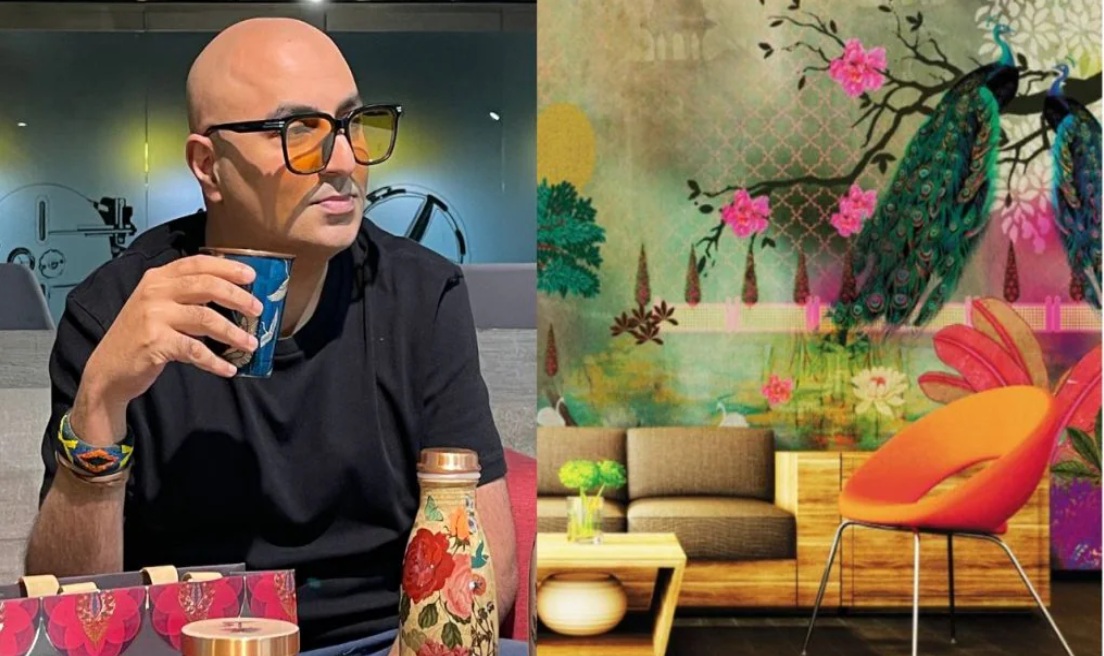
Akanksha Nagar, Storyboard18
31 August 2025
The latest round of US tariffs- a steep 50% duty that kicked in last week- is reshaping the playbook for Indian brands eyeing global markets. While exporters brace for tighter margins and logistical hurdles in the US, experts say this disruption could be a defining moment for Indian consumer brands to shine globally by leaning on innovation, design strength, and the untapped potential of India’s domestic consumption story.
“With the 50% tariffs kicking in, what will India do? Expect an inward-looking India! Expect a deep focus on #IndiaForIndia as marketers develop the India-consumption story for Indian produce. Expect even a Swadeshi movement Ver 3.0. MNCs in India face pressure,” says brand guru Harish Bijoor, founder of Harish Bijoor Consults Inc.
Riding high on this wave is India Circus, which is emerging as one of the fastest-growing players in the new-age home décor space. With a growing appetite for aesthetics, the brand is redefining how Indians furnish their homes. As urban consumers grow more design-aware and seek products that reflect personal taste and cultural identity, design-forward brands are carving out their own niche.
“Consumers today want more than just functionality. They want form, flair, and a sense of identity in their living spaces,” says Devangshu Dutta, founder and CEO of Third Eyesight. This shift, he explains, is creating tailwinds for brands that can deliver both design value and cultural resonance.
But he also adds a note of caution in the tariff context: “Indian brands that are being exported to the US face margin pressures and reduced US market access, both due to import tariffs and due to logistical barriers. They may need to hold inventory in the US to reduce the tariff and shipping impact, but that would also be at a certain cost and loss of agility.
It is an opportune time to focus on exports to other markets. Of course, no other single market would have the scale offered by the USA, so it will perhaps be more expensive and a more fragmented growth.”
Founded by Krsnaa Mehta and now part of the Godrej Enterprises Group, India Circus has found the sweet spot between Indo-contemporary aesthetics and wide accessibility.
From crockery with 22-carat gold accents to tropical wallpapers and statement furniture, its design-led offerings have struck a chord with India’s style-conscious consumers. The brand has also forayed into fashion, while preparing to tap international markets through a new e-commerce platform. “Design is not just an add-on for us; it is our core. Every collection begins with a story, and that’s what keeps our customers coming back,” says Mehta.
On the impact of Trump’s tariffs, Mehta clarifies that the brand remains largely insulated.
“Our major consumer base is in India, we have been focused on expanding our reach and tapping unexplored markets in India. India has so much potential- the newer markets of tier-2 cities like Lucknow, Gurugram, Chandigarh, Ambala are exceptional and the buying power of our consumers has increased significantly in the past few years. So we are not really worried about the tariffs, considering that our designing, production and selling is totally in India. Yes, we do export to the US, but it is not really comparable to what we do in India.”
Yet, he views the moment as a wake-up call for Indian brands globally.
“As a proud Indian brand, we have always been at the forefront of innovation, evolving our design aesthetics from bold prints to more contemporary ones. Our consumers are now visually informed and thus we must keep evolving. It is not just moving ahead but also embracing our roots and creating what is best for not just one but for all. India Circus has always tried to democratise design, by making it affordable and providing great quality at great prices.”
India Circus’s growth is fueled by an omnichannel strategy that blends a strong digital presence with 18 (soon to be 28) offline stores, while aggressively expanding in tier-2 cities.
The brand is targeting ₹400 crore in revenue by FY2026, up from its current ₹100 crore. Having recently launched international website to serve the Middle East and Asia, tt is also exploring categories such as gifting, licensing, and royalty-based partnerships, alongside plans to scale manufacturing. Warehousing in Europe and North America is also under evaluation.
“The growing demand for sustainable, high-quality products has contributed to our growth, as consumers increasingly seek out brands that share their values. Our designers leverage consumer insights, in-house research, and sales data to create products that are both stylish and relevant. We proudly invest in Indian craftsmanship and manufacturing, eschewing imports from countries like China. This approach not only supports local economies but also enables us to maintain quality standards,” Mehta says.
Meanwhile, brands like Chumbak, who were once synonymous with playful, funky aesthetics, have had a patchier journey in the domestic market. At one point, Chumbak had drawn strong private equity interest and grew aggressively, only to later downsize and recalibrate. But Bisen cautions against equating it with India Circus: “Chumbak has always been broader in scope, and that universality may have made it less nimble when it came to capturing specific consumer segments within home decor.”
India Circus, in contrast, has stayed tightly focused, defining its identity around a clear aesthetic and target audience. This discipline, experts say, is crucial in a market that’s growing but fragmented.
“Most brands in the design-led home space operate in sub-categories. Very few cover the full décor spectrum,” Dutta notes. “The key is having a well-defined look and sticking to it.”
According to Statista, in 2025, India’s home décor market was worth $2.13 billion and is projected to grow at a CAGR of 8.6% through 2029. In comparison, the US market stands at $37 billion.
India’s growth is powered by its rising middle class, a young population hungry for differentiated products, and cultural emphasis on interior design. With gifting and new household formation boosting demand further, design-led Indian brands are positioned for deeper expansion, both at home and abroad.
For now, India Circus is leading that charge, proving that even as tariffs disrupt trade flows, Indian creativity, design, and resilience are ready to outshine globally.
(Published in Storyboard18)
admin
August 6, 2025

Naini Thaker, Forbes India
Aug 06, 2025
It’s a known fact that of the thousands of startups founded each year, only a small fraction survive—and even fewer scale to become unicorns. Rarer still are those unicorns which, after reaching dizzying heights, come crashing down. The Good Glamm Group is one such cautionary tale.
Once celebrated as a unicorn that cracked the code on content-to-commerce, the company’s meteoric rise was matched only by the speed of its unravelling. At the heart of its downfall lies a critical misstep: The relentless pursuit of growth through acquisitions and brand launches, even as cracks in its house-of-brands model began to show. Instead of pausing to consolidate and build sustainably, Good Glamm doubled down—prioritising valuation over viability.
That strategy came to a head on July 23 when founder and CEO Darpan Sanghvi announced the dissolution of the group’s house-of-brands structure. In a LinkedIn post, Sanghvi confirmed that lenders would now oversee the sale of individual brands, effectively ending the company’s vision of building a digital-first FMCG conglomerate.
Despite raising $30 million in 2024 and undergoing multiple rounds of restructuring, the group failed to integrate its acquisitions or generate sustainable profitability. With key investors such as Accel and Bessemer Venture Partners exiting the board and leadership turnover accelerating, the company’s ambitious empire—built on rapid expansion and aggressive brand aggregation—has now been reduced to a lender-led breakup.
In the aftermath of the announcement, Sanghvi offered a candid reflection on what went wrong. “In hindsight, it wasn’t one decision, one market force, or one acquisition. It was three levers we pulled, which together, turned Momentum into a Trap,” he wrote in a LinkedIn post. According to Sanghvi, the group’s downfall stemmed from doing “too much, too fast and too big”.
He elaborated: “At first, Momentum feels like your greatest ally. Every headline, every funding round, every big launch is a shot of adrenaline. And you start believing you can do more and more and more. But momentum has a dark side. If you stop steering and go in a hundred different directions, it doesn’t just carry you forward, it drags you faster and faster until you can’t breathe.”
Where The Model Broke?
In October 2017, Sanghvi launched direct-to-consumer (DTC) beauty brand MyGlamm. Most brands at the time were big on selling on marketplaces such as Amazon or Nykaa. However, Sanghvi believed, “We wanted to be truly DTC and not just digitally enabled. We believed that to own the customer, the transaction needs to happen on our own platform.”
But the biggest challenge with being a DTC brand is its customer acquisition cost (CAC). Towards the end of 2019, the company was spending about $15 (over ₹1,000) to acquire a customer to transact on their website. “Around the same time, our revenue run rate was ₹100 crore. We were spending about $0.5 million to acquire 30,000 customers a month. That’s when we realised it was time to solve the CAC problem,” Sanghvi told Forbes India in 2022. In an attempt to find a solution, Sanghvi turned to the content-to-commerce model.
And then, started the acquisition spree. According to Sanghvi, with a single brand in a single category one can’t build scale. He told Forbes India, “The most you can scale it is ₹1,000 crore, if you want a company that’s doing ₹8,000 or ₹10,000 crore in revenue, it has to be multiple brands across multiple categories.” In hindsight, this perspective might be debatable.
As Devangshu Dutta, founder of consultancy Third Eyesight, points out, the “house of brands” model is essentially a modern-day consumer-facing business conglomerate—and its success hinges on multiple factors working in harmony. While there are examples globally and in India of such models thriving, both privately and publicly, the reality is far more nuanced. “Brands take time to grow, and organisations take time to mature,” Dutta notes, emphasising that rapid aggregation of founder-led businesses under a single ownership umbrella is no guarantee of success.
In recent years, Dutta feels the influx of capital into early-stage startups and copycat models—often seen as lower risk due to their success in other geographies—has shortened business lifecycles and inflated expectations. The hope is that synergies across the portfolio will unlock outsized value, but that rarely plays out as planned. “It is well-documented that more than 70 percent of mergers and acquisitions fail,” he adds, citing reasons such as weak brand fundamentals, lack of synergy, inadequate capital, limited management bandwidth, and internal misalignment.
In the case of Good Glamm, these fault lines became increasingly visible as the group expanded faster than it could integrate or stabilise.
Scaling Without Steering
In FY21, the company had losses of ₹43.63 crore, which rose to ₹362.5 crore in FY22 and went up to ₹917 crore in FY23. Despite the mounting losses, Good Glamm marked its entry into the US market, in a joint venture with tennis player Serena Williams to launch a new brand—Wyn Beauty by Serena Williams. The launch was in partnership with US-based beauty retailer Ulta Beauty.
For its international expansion, it invested close to ₹250 crore over three years. “We anticipate that the international business will account for 25 to 35 percent of our total group revenues by the end of next year. This strategic focus on international expansion is pivotal as we prepare for our IPO in October 2025,” he told Forbes India in April 2024.
Clearly, things didn’t pan out as expected. As Sanghvi rightly points out, it was indeed a momentum trap. “You tell yourself you’ll fix the leaks after the next milestone. But the milestones keep coming, and so do the leaks. Soon, you’re running from fire to fire, never realising that the whole building is getting hotter. And somewhere along the way, you lose the stillness to think,” he writes on his LinkedIn post.
Dutta feels that a strong balance sheet is the most fundamental requirement, “to provide growth-funding for the acquisitions or for allowing the time needed for the acquisitions to mature into self-sustaining businesses over years. In the case of VC-funded businesses, the pressure to scale in a short time can go against what may be best for the business or for its individual brands”.
The Good Glamm Group’s fall is a reminder that scale alone doesn’t build resilience. Its story reflects the risks of expanding faster than a business can integrate, and of prioritising valuation over value. The house-of-brands model can work—but only when backed by strategic clarity, operational discipline, and patience. This is less a warning and more a reminder for founders: Scale is not success, and speed is not strategy.
(Published in Forbes India)
Devangshu Dutta
June 30, 2025

In every strategy meeting today, one metric is invariably mentioned: Customer Acquisition Cost (CAC). Whether you’re a well-funded corporate retailer, or raising your first angel round, or a well-established digital duopolist brand scaling Series C, CAC is one of the key performance metrics. “Real” spend that is neatly broken down by channel, optimised by funnel tweaks, scrutinised to the last rupee or dollar.
But there’s a metric we almost never hear about that could be costing brands far more in the long run.
Let’s call it Customer Forfeiture Cost (CFC), the residual lifetime value that is lost when a customer walks away from your business not because of price, competition, or even shifting needs, but because of a “burn”: a delivery missed or messed up, a refund that took weeks, an arrogant customer service call, or a product that failed spectacularly against the promise. In other words, when your brand hurts someone enough to make them walk away. Probably for ever.
It’s a paradox: brands are pumping thousands of crores into acquiring users, but they’re bleeding value at the other end. Yet, while CAC is a line item in every financial statement, CFC is invisible in management dashboards. CEOs don’t announce, “We’ve cut our forfeiture cost by 20% this quarter.”
Yet. every CXO knows it exists. The NPS scores, the social media complaints, the “never again” comments in reviews, the sinking feeling when repeat purchase rates fall.
Why CFC Matters More Than Ever
In every business, during the early stages each sale is a victory. Whether it was the retail chains that grew in the 1990s and early-2000s or the digital upstarts that came up through 2010s and 2020s, scale has been the mantra, and investors have poured money into scaling through the growing consumption of India 1 and India 2 customers.
Today customer acquisition isn’t cheap. The same person who clicked impulsively in 2020 now thinks twice before confirming payment. In this landscape, retention isn’t optional, it’s existential.
Every lost customer isn’t just a refund processed, or a cart abandoned. It’s the long tail of future repeat purchases that will never happen, negative word of mouth and brand distrust in the customer’s circle of influence, and increased future CAC due to declining organic reach.
Way back in 1967, management consultant Peter Drucker wrote in his book “The Effective Executive”: “What gets measured, gets managed”.
Today your CAC may be Rs. 500-1,000. If the average customer life time value (LTV) is Rs. 10,000, and a single burn causes churn after just one order worth Rs. 2,000, your CFC is Rs. 8,000, and that doesn’t even include reputational spillover.
Why We Don’t Measure It
Yes, CFC is hard to quantify. It’s not as easily attributable as ad spends. There’s usually no neat model telling you why someone never returned, because tech stacks aren’t typically designed to track emotional exits. And let’s face it, introspection about broken relationships is uncomfortable, even for management teams.
But that doesn’t mean it’s not real. If a customer leaves because your delivery executive messed up, or because your app crashed during checkout twice in a row, that’s on you, not the market. And in a business climate where sustainable growth is the mantra, LTV is king.
Ignoring CFC is like watching your roof leak and blaming the rain.
Toward a New Discipline
Brands and retailers must start measuring CFC, the value lost when customers disengage due to friction, mistrust, or neglect, and then start working on reducing it. This can be done by:
The Competitive Edge We’re Not Using
In a crowded space where everyone’s vying for eyeballs, trust is the true moat. Customers don’t expect perfection – they do expect accountability, authenticity, and recovery when things go wrong.
Brands that understand and act on Customer Forfeiture Costs will quietly start building a powerful edge: deeper brand loyalty, lower CAC over time thanks to referrals and repeats and greater lifetime value per user.
In other words, real, compounding value.
As the Indian brand ecosystem matures, Customer Forfeiture Cost needs to be as visible and valued as CAC. Acquisition is the invitation; experience is the relationship. Relationships, once broken, are expensive to rebuild; if they can be rebuilt at all.
In the end, growth isn’t just about who comes in. It’s about who stays, and why.
(Written by Devangshu Dutta, Founder of Third Eyesight, this was published in Financial Express on 2 July 2025)
admin
May 5, 2025

Mint, 5 May 2026
Priyamvada C., Sneha Shah
Urban India’s pet parents are driving a wave of investor interest in the pet care space. A clutch of startups such as Heads Up For Tails, Supertails, and Vetic are now in fundraising talks amid rising demand for premium products and services
While Supertails looks to raise about ₹200 crore by the end of this year, Heads Up For Tails is eyeing an investment from domestic investment firm 360 One Asset over the next few months, according to mul tiple people familiar with the matter.
Vetic, a tech-enabled chain of pet clinics, is looking to raise a sizeable round and has begun discussions with investors, they said, adding that some of these transactions may see existing investors part exit their stake.
Supertails and Vetic did not immediately respond to Mint’s requests for a comment. While 360 One declined to comment, Heads Up For Tails’ founder Rashi Narang denied the development.
Investor interest in pet care surged in the years following the pandemic, driven by a wave of new pet adoptions and rising disposable incomes. In 2023, pet care startups raised a record $66.3 million across 16 rounds, led by one major transaction ― Drool’s $60 million fundraise.
While 2023 saw a funding spike driven by Drool’s large deal, overall funding activity in 2024 was more broad-based, with fundraising at $17.9 million spanning 13 rounds, as per Tracxn.
“Pet ownership in India is estimated to be less than 10% of overall households, but growing at a rapid pace with rising incomes, especially among urban consumers. In developed economies, pet ownership can exceed three in four households, and that headroom for growth is reflected among the upper income segments in India,” said Devangshu Dutta, chief executive of Third Eyesight, a management consulting firm.
He added that urban couples and singles in many cases are even opting to become “pet parents” instead of having children.
Platforms such as Supertails, Drools and Heads Up For Tails have been the big beneficiaries of this shift. Drools raised $60 million from LVMH-backed private equity firm L Catterton in 2023, while Supertails raised $15 million led by RPSG Capital Ventures in February last year.
Similarly, Supertails, which is in talks to acquire Blue 7 Vets, a multi speciality veterinary clinic, as part of its strategy to expand offline, will also raise capital to fund the acquisition of new customers, investments in technology, and the expansion of healthcare services, including Super-tails Pharmacy and build an omni-channel experience for consumers.
The company raised about $15 million in its series B funding round last year led by RPSG Capital Ventures and existing investors Fireside Ventures, Saama Capital, DSG Consumer Partners and Sauce VC.
(Published in Mint)
admin
March 7, 2025

Shailja Tiwari, Financial Express
March 7, 2025
This is what happens when you hit the gym after a long pause. On your first rebound day, the same weights seem heavier, the same set of squats tires you quicker. You might feel frustrated – nothing seems the way you left it.
The same scenario faces brands looking to make a comeback. Those “muscles” – read brand loyalty -have lost strength due to long absence. The brand’s “stamina”- customer loyalty – have declined with neglect. All of which essentially means you need a relook at the entire “regimen” – the product, price, place and promotion – that seemed to work the last time around.
Men’s fashion brand Reid & Taylor is facing the same dilemma.
Launched in India in 1998, the brand vanished from the market in 2018 after S Kumars – which held the rights to manufacture and market the Scottish brand in India went bankrupt. Reid & Taylor is making a gradual comeback now, under the aegis of its new owner Finquest Group, complete with a campaign featuring new brand ambassador Vicky Kaushal and tagline, “Man on a Mission”.
Finquest Group has invested over ₹750 crore in revitalising the brand. Reid & Taylor is available in more than 1,200 multi-brand and exclusive brand outlets across the country, as per a company announcement.
In January, Reid & Taylor also announced its partnership with the Unicommerce to knit together the brand’s website, warehouses, physical stores, and other online platforms in one integrated network. The tech integration followed the launch of Reid & Taylor’s brand website and its growing presence across various online marketplaces, a clear signal the company is gearing up to address the needs of today’s customer and give its competitors a run for their money.
Kapil Makhija, CEO and MD, Unicommerce, explains how this will enable Reid & Taylor to modernise its operations: “In addition to a consistent customer experience, this integration enables efficient inventory management through a centralised platform that allows ship-from-store service, where the brand can switch orders between warehouses and stores, offering a broader assortment for sale and faster order fulfilment. It also helps Reid and Taylor connect with the more online savvy audience.”
The Indian menswear market, encompassing formal, casual and traditional apparel, had crossed ₹2 trillion in 2023 and is expected to reach ₹4.3 trillion by 2027, as per a Statista report. Experts say that the menswear category has grown exponentially since Reid & Taylor’s first outing. It has a host of local and international brands such as Raymond, Mufti, Allen Solly, Louis Phillipe and Manyavar offering stiff competition.
In other words, Reid & Taylor has its task cut out.
Makeover strategy
The greatest challenge for the relaunched brand is to establish relevance and share-of-mind with a new set of consumers, observes Devangshu Dutta, CEO of Third Eyesight. “In its initial avatar in India, it rode on the brand’s past goodwill, but since its fall a few years ago, the market has changed significantly. Ready-to-wear apparel, growth of modern retail, online commerce and a set of consumers who have no past history or association with the brand are all significant factors at play, remarks Dutta.
At its best in the early-2000s, the brand was positioned mostly within the wedding segment, a category that is also rapidly changing. The styles that dominate wedding apparel are changing among younger cohorts, points out Ajimon Francis, MD India for Brand Finance. Formal three-piece suits and safari suits are no longer style statements.
Consumers are opting either for designer wear like a Tarun Tahiliani or for mid-segment offerings where brands like Raymond operate. “Formal suits are becoming an ‘uncle’ or ‘dadaji’ segment, and the wedding lines showcased by most brands are geared towards traditional wear. Formalwear for weddings now includes sherwanis and kurtas, where brands like Manyavar and FabIndia rule,” he points out.
Reflecting on the brand’s exit earlier from the Indian market, Francis says that its owners’ (S Kumars) inability to adapt the brand to changing consumer behaviour led to its downfall. The Finquest Group will need to clearly redefine its new positioning since Reid & Taylor now offers a mix of styles across casual and formal menswear.
Legacy brings credibility but it can also be baggage, remarks Rutu Mody Kamdar, founder of Jigsaw Brand Consultants. The challenge for Reid & Taylor lies in shaking off the heritage brand’ tag and making itself relevant to younger buyers who value modern style over nostalgia. “It needs to own the ‘quiet luxury’ space, timeless tailoring with a contemporary edge. That includes modern cuts, cultural collaborations, omnichannel presence, and aspirational storytelling,” suggests Kamdar.
E-commerce strategy will be key too. The brand will need to blend strong visuals with smart pricing and seamless strategy. Kamdar adds that Reid & Taylor needs to look at e-commerce as not just a sales channel but also a brand building platform.
(Published in Financial Express – Brandwagon)
