
admin
June 22, 2026
Sharleen D’souza & Shivani Shinde, Business Standard
Mumbai, 21 June 2026
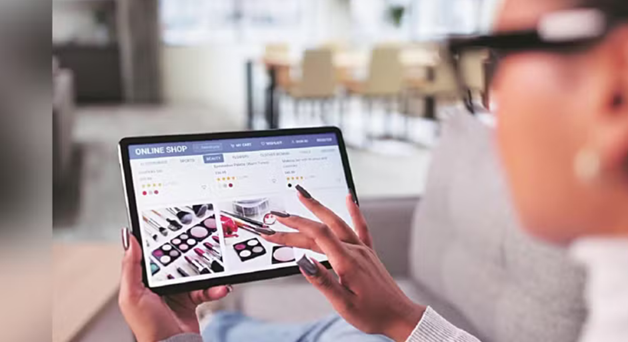
Online beauty marketplaces Reliance Retail Ventures’ Tira and Nykaa have a common mantra: growing in-house brands. Successful brand acquisitions and margin growth seem to fuel the push.
“With private labels, margins are better. It also helps both companies plug the gap in the market which other brands are not present in,” Devangshu Dutta, chief executive officer (CEO) of Third Eyesight, told Business Standard. Within in-house brands, products need some investment in research and development (R&D), he explained.
Harish Bijoor, brand and business strategy consultant at Harish Bijoor Consults, said that margins are better for platforms with in-house brands.“Typically most companies are getting insular. The idea is to own brands and own the profits from those brands. When you are a marketplace, you put in effort for other brands, this strategy helps marketplaces lock in on profits instead of losing out to other brands, which sell on the platform,” he said.
At the 49th annual general meeting of Reliance Industries (RIL) on Friday, Isha Ambani, executive director of Reliance Retail Ventures Ltd, and non-executive director of RIL, had laid out plans for Tira. “We will scale our own brands to consumers across India and beyond, ensuring Indian beauty prod-
ucts stand proudly alongside the world’s leading global giants.”
Its in-house brands include Puraveda, Pahadi Local, haircare brand Anomaly, which was recently acquired from actress Priyanka Chopra Jonas, and skincare and make-up brand Akind, which it co-created with Mira Rajput Kapoor. Its portfolio also includes Nails Our Way and Dream Immerse Play.
Ambani’s statement had come a day after Nykaa’s management had also hinted at expanding its in-house brands on its investor day on Thursday. The platform, operated by FSN E-Commerce Ventures, outlined an ambitious road map to become an over $5 billion beauty and lifestyle business.
The growth of Nykaa’s “House of Brands” is expected to be significant. The management aims to be the largest house of brands business in India by financial year 2030 (FY30). Management has guided toward a net sale value (NSV) compounded annual growth rate (CAGR) of 30 per cent over FY26-30, taking the NSV from Rs. 1,700 crore in FY26 to Rs. 5,000 crore by FY30.
The “House of Nykaa” GMV grew over 65 per cent in FY26, with an improvement in profitability. In a report on the company’s focus on in-house brands business, Motilal Oswal said, “House of Brands is expected to grow faster than the core marketplace business and become a meaningfully larger contributor to group revenues and profits by FY30. We believe profit contribution is expected to increase disproportionately, given the higher gross margins, stronger pricing control, and lower dependence on third-party brands.”
Nykaa’s platform creates a structural incubation advantage, it said. “Fashion today serves about 300,000 styles across categories, while customer discovery increasingly happens through content, personalisation, and creator-led commerce. This allows the company to identify emerging brands and categories early, before allocating capital behind them,” the report added.
As of the fourth quarter of financial year (FY26), “House of Nykaa” had 12 brands across Beauty and Fashion categories at various growth stages, and two successful acquisitions of Dot & Key and Earth Rhythm. Dot & Key has grown 13 times over the last three years, while Kay Beauty has grown three times over this period, said the company. During the Q4FY26 results, the company had said that the strong performance of “House of Nykaa” had impacted margins positively. P Ganesh, chief financial officer, FSN E-Commerce while explaining the margin growth said, “…with gross margin improving by 132 basis points
in FY26, led by strong performance of House of Nykaa and improved service income across businesses.”
For FY26, “House of Nykaa” delivered a strong Rs. 3,176 crore of GMV. “That’s an about 50 per cent year-on-year increase. Served more than 17 million consumers and expanded distribution beyond online as well to 150,000 GT doors. As a reminder, this unit includes brands across beauty and fashion, seven brands in Beauty and in Fashion five brands, with an increased focus on one in particular, which is Nykd,” said Adwaita Nayar, executive director, cofounder and chief executive officer, “House of Nykaa Brands”, during the fourth quarter results.
(Published in Business Standard)
admin
February 14, 2026

This episode of theUpStreamlife is a freewheeling conversation between Vishal Krishna and Devangshu Dutta, founder of Third Eyesight, with insights into the growth of modern retail and consumption in India, brand building and M&A, the balance of power between brands and retailers/platforms, sustainability vs growth and many other aspects, and is well-suited for founders and teams who want to be building for the long run in India.
admin
February 6, 2026

Anees Hussain and Kartikay Kashyap, Financial Express / Brand Wagon
6 February 2026
Swiggy Instamart’s Noice has consciously rejected every aesthetic that defines platform house brands. Its visual identity doesn’t sport minimalist colours or whites, no clean sans-serif, no ‘discount alternative’ signalling. Instead it uses Indian truck art inspired design with neon colours and bold text. That design architecture also personifies Swiggy’s big gamble.
Noice isn’t just a private label chasing margin expansion. It’s a differentiation play by a company that’s losing ground in a war in which being faster and cheaper is no longer enough. Early data suggests that Noice is finding traction. In namkeens, sweets, and western snacks, Noice holds a 4.4% market share on Instamart as of December 2025, competing against category leaders like Haldiram’s (16.7%) and Lay’s (9%), according to 1digitalstack.ai. This segment generated between ₹41-60 crore per month in the September-December period, with Noice’s share translating to roughly ₹1.8-2.6 crore a month. In beverages (fruit juice, mocktails, energy drinks, tea, coffee and soda), Noice more than doubled its platform sales share -from 2.6% in July to 5.8% by December. The brand now ranks 12th overall, ahead of Coolberg and gaining on established players. Category leader Real’s share fell from 12.3% to 9.5% over the same period. The beverage category generated ₹13,920.3 crore per month during July-December, with Noice’s December share of 5.8% representing about ₹88 lakh in monthly sales. Modest but shows velocity.
Bhushan Kadam, senior vice president, White Rivers Media, says the platform enjoys certain struc-tural advantages: “Swiggy has a credible shot at building Noice into a meaningful private label play because quick commerce (q-commerce) in India is still in a high-growth phase and Swiggy already has the scale, infrastructure, and customer base to drive repeat consumption.”
Swiggy’s own performance with private labels on q-commerce has been positive. Its Supreme Harvest brand, spanning pulses, oils, spices, and dry fruits has achieved just over 20% platform penetration, accord-ing to 1digitalstack.ai. The broader private label landscape offers both encouragement and caution. Tata Digital-owned BigBasket (BB) remains the clear winner, with private labels accounting for nearly 33% of its total revenue. But BB has a crucial advantage: Sourcing infrastructure inherited from Tata’s retail operations that provides scale – and supply chain depth that pure-play q-commerce platforms are still only building.
Noice isn’t Swiggy’s first experiment with owned brands. In May 2025, the company sold its cloud kitchen brands – The Bowl Company, Homely, Soul Rasa, Istah – to Kouzina Food Tech after years of trying to operate its own restaurants. Those brands required Swiggy to manage kitchens, hire chefs, and compete with thousands of independent restaurants. Unit economics never worked out.
Noice represents a fundamentally different model. Instead of large manufacturers optimised for extended shelf lives, Noice works with regional food makers producing in small batches. Launched mid last year with 200 SKUs across 40 manufacturers, it has expanded to over 350 products from 60 makers across 20-plus categories. Packaged versions of items like paneer and rasgullas from the mithai shop fail to resonate with consumers because they might use preservatives and taste artificial. Other offerings include biscuits made with butter instead of margarine, Punjabi lassi with seven-day shelf life delivered everyday like milk.
“Noice seems to be purpose-built for q-commerce: Impulse driven categories, low switching costs and algorithmic discovery. That alone fixes the biggest flaw of Swiggy’s past private label experiment,” says Ankur Sharma, cofounder, Brandshark. It is trying to do things for which customers come back to the platform – “products that are not there on any other platform”, adds Satish Meena, advisor, Datum Intelligence.
Uphill climb
Unlike other private label brands owned by Blinkit and Zepto who largely deal in non-perishable products, Swiggy-owned-Noice currently has a 50-50 split between perishable and non-perishable categories. Perishable products fetch 25-45% margins compared to 15-25% on non-perishable private labels and just 10-15% on third-party FMCG brands. Short shelf lives that enable freshness also mean higher wastage risk if demand forecasting fails. The solution Swiggy is testing hinges on shifting the capex risk entirely to small manufacturers while using its distribution scale as a leverage.
That apart, competition in q-commerce has intensified sharply over the past year. Reliance Retail’s JioMart, Flipkart Minutes, and Amazon Now have entered meaningfully with aggressive pricing. Zepto slashed minimum order values and waived customer fees at ₹149. Swiggy waived platform fees – but only on higher-value baskets at ₹299, essentially ceding low-AOV (average order value) products that drive frequency. In the meantime, market leader Blinkit’s gross order value reached nearly twice that of Instamart’s.
In q-commerce’s brutal pricing war, it is execution that will determine if Noice becomes a genuine differentiator or just another private label. “Proving Noice is not ‘just another’ private label would be the biggest challenge for the company,” says Devangshu Dutta,, founder and CEO, Third Eyesight.
(Published in Financial Express/Brand Wagon)
admin
February 2, 2026

Sakshi Sadashiv, MINT
Bengaluru, 02 Feb 2026
BRND.ME, a roll-up commerce company, expects to complete its reverse flip (change of headquarters) from Singapore to India by March, clearing a key regulatory hurdle as it prepares to tap Indian public markets with an IPO.
Despite the rise of private labels from quick-commerce giants such as Swiggy Instamart and Zepto, CEO Ananth Narayanan remains confident. He argues that BRND.ME’s core categories—spanning complex, value-added products such as specialized haircare and niche party supplies—possess a level of brand loyalty and complexity that is difficult for generic retail labels to replicate. While private labels are currently displacing national brands in high-frequency, simple categories like dairy and staples, Narayanan believes the company’s core categories remain protected from this encroachment as they drive searches.
Having shifted its strategy from aggressive acquisitions to organic scaling, the company is now doubling down on its four largest brands: MyFitness (peanut butter), Botanic Hearth (haircare), Majestic Pure (aromatherapy), and PartyPropz (celebration supplies).
About 10-15% of BRND.ME’s India business currently comes from quick commerce, a channel the company plans to scale, Narayanan said. The company is the leader in party supplies on quick-commerce platforms, benefiting from impulse-driven demand. “People forget birthdays and anniversaries, so it’s a classic category to build a brand on quick commerce,” he said. The category contributes about ₹200 crore of revenue. The company also leads the peanut butter category through MyFitness, with a 30% market share on all quick commerce platforms and annual revenue of ₹270 crore.
The company’s revenue run rate stands at about $200 million. Male consumers worried about male-pattern baldness now account for about 35% of haircare sales. The company aims for a 10-fold jump in aromatherapy and haircare sales from $6 million to $60 million within four years, led by Majestic Pure and Botanic Hearth.
Drawing on his experience running Myntra, Narayanan said that private labels typically have a ceiling. “Even when we pushed hard on private labels at Myntra, they never went beyond 25-30% of the overall portfolio. That tends to remain the case as the categories we operate in are very hard to displace because we drive searches.”
This dynamic is already visible across several quick-commerce categories. The peanut butter segment is heavily consolidated on Blinkit, with Pintola and MyFitness together accounting for about 73% of sales, according to data from Datum Intelligence. Similar patterns have emerged in other categories. Blinkit’s popcorn segment, for instance, has rapidly consolidated into a duopoly, with 4700BC and Act II controlling 99% of sales.
Private labels muscling in
While Blinkit has consciously avoided launching private-label products on its platform, Swiggy has done so through Noice, and Zepto through Relish and Daily Good. For established brands, these private labels are becoming harder to ignore. Swiggy has scaled Noice aggressively, expanding the portfolio from about 200 to 350 stock keeping units (SKUs) and onboarding more manufacturing partners while moving beyond staples into categories such as beverages and ready-to-cook foods. These products are aimed at delivering significantly higher margins of 35-40%, compared with 10-15% on third-party brands, Mint reported earlier.
Private labels now contribute an estimated 6-8% of quick-commerce sales, up from 1-2% two years ago, according to data from 1digitalstack.ai, though penetration in perishables remains limited because of supply-chain complexity and quality concerns. A broader push into fresh categories could lift private-label share to 10-15%. Noice has already captured 3.4% of wafer sales and 1.9% of biscuit sales on the platform within months of its launch, according to 1digitalstack.ai data. The two categories are dominated by Lay’s and Britannia, which have a market share of about 35% each in their respective segments.
Zepto’s private-label push spans multiple everyday categories, including Relish for meat products, Daily Good for staples, Chyll for ice cubes and juices, and Aaha! for snacks, sweets, cereals and batters.
This growing presence creates a structural ‘trap’ for digital-first brands. Devangshu Dutta, chief executive at Third Eyesight, a consultancy firm, said, “Brands that are overly dependent on a single sales platform remain structurally vulnerable to being replaced by the platform’s own private labels, which are designed to capitalise on product opportunities that already have proven demand.” Platforms, he explained, tend to dominate high-frequency purchases, often undercutting brands on both price and visibility.
Persistently high online customer acquisition costs add to the pressure, particularly if the customer relationship is owned by the platform rather than the brand. “This has been one of the significant friction points for all digital-only brands, and weighs especially heavily on companies that have online-heavy portfolios with multiple brands in play,” Dutta added.
(Published in Mint)
admin
October 24, 2025

Entrepreneur India
Oct 23, 2025
Indian consumers are increasingly opting for private labels and in-house brands over established ones, and retailers are taking note. According to EY’s ‘Future Consumer Index 2025’, more than half of India’s consumers are now choosing in-house brands over legacy labels.
The report highlights that 52 per cent of Indian consumers have switched to private labels for better value, while 70 per cent believe these in-house brands offer comparable or superior quality. Backed by this shift, retailers from BigBasket to DMart, and quick-commerce players like Zepto and Blinkit, are doubling down on their private label strategies, viewing them as a path to higher margins, stronger brand loyalty, and greater pricing control.
“Indian consumers’ growing preference for private labels reflects both short-term price pressures and a longer-term structural evolution in retail,” said Devangshu Dutta, CEO of Third Eyesight, speaking to Entrepreneur India.
Trending globally
The surge isn’t unique to India. A recent report by the Institute of Grocery Distribution (IGD) notes that globally, private labels now account for over 45 per cent of grocery volume and are expanding faster than legacy brands.
In India, this shift is becoming increasingly visible in-store. The EY report found that 74 per cent of consumers have noticed more private label options where they shop, and 70 per cent say these products are now displayed more prominently, often placed at eye level, signalling a strategic retail push.
Commenting on this trend, Angshuman Bhattacharya, Partner and National Leader, Consumer Products and Retail Sector, EY-Parthenon, said, “Consumer behaviour has traditionally evolved in response to changing economic situations, but the current shifts appear to be more permanent. Retailers are confidently launching private labels and allocating prime shelf space to them, while technology is enhancing the shopping experience by providing consumers with limitless options and the ability to compare products.”
From price-fighters to power brands
According to Dutta, private labels are no longer just “copycat” alternatives meant to undercut national brands.
“For retailers, not just in India but globally, lookalike private labels used to be tools at the opening price point to hook the customer, who saw them as credible, affordable alternatives to national brands,” he explained, adding, “However, as retailers have grown, they have gained both scale and expertise to widen and deepen their supply chains.”
Over time, he said, investments in formulation, packaging, and quality consistency have increased consumer trust.
“Private labels now compete on functional benefits rather than only on price, particularly in food staples and apparel, but also in brown goods and white goods, and increasingly in personal care and other FMCG categories,” he added. [Must read: “Private Label Maturity Model”]
Retailers scale up private labels
As demand for in-house brands grows, retailers are scaling up their strategies across sectors.
BigBasket, one of India’s largest online grocery platforms, reported that 35–40 per cent of its FY24 sales came from private labels like Fresho, BB Royal, and Tasties. The company aims to push this share closer to 45 per cent through expansion in frozen foods and ready-to-eat categories.
DMart’s private label arm, Align Retail, has reportedly more than doubled its sales in two years, touching INR 3,322 crore in FY25. The retailer’s in-house brands in staples, apparel, and home essentials have helped boost margins in a highly competitive retail landscape.
Zepto, the quick-commerce player, is taking private labels into the 10-minute delivery domain. Its brand Relish, focused on meats and eggs, has achieved INR 40 crore in monthly sales.
Meanwhile, Reliance Retail has also expanded its portfolio of private labels, including Good Life, Enzo, and Puric, across groceries, personal care, and household products, strengthening its broader FMCG play. In 2024, Reliance Retail’s Tira Beauty also announced the launch of its latest private label brand, Nails Our Way, signifying a major expansion in its beauty offerings.
Capturing a lion’s share in retail
Dutta noted that in India, private labels will remain a core pillar of modern retail strategy rather than a cyclical response to cost pressures.
“Consumers increasingly view retailers as brand owners rather than intermediaries. As private labels mature in branding and innovation, their growth aligns more and more with brand equity development rather than just opportunistic cost-saving,” he said.
From a retailer’s perspective, private labels deliver higher gross margins and greater strategic control, Dutta said. [Must read: “Private Label Maturity Model”]
Another report by the Private Label Manufacturers Association (PLMA), using Circana data, found that in 2024, private-label sales in food and non-edible categories grew faster than bigger brands globally. While figures vary by region and quarter, the pattern remains consistent: private labels are outpacing traditional FMCG growth.
Collectively, these shifts show that private labels are becoming a major revenue driver for retailers in India, and are fast evolving from value alternatives into brands with genuine consumer pull.
(Published in Entrepreneur India)
