
admin
May 6, 2026
Vaeshnavi Kasthuril, MINT
Mumbai, 6 May 2026
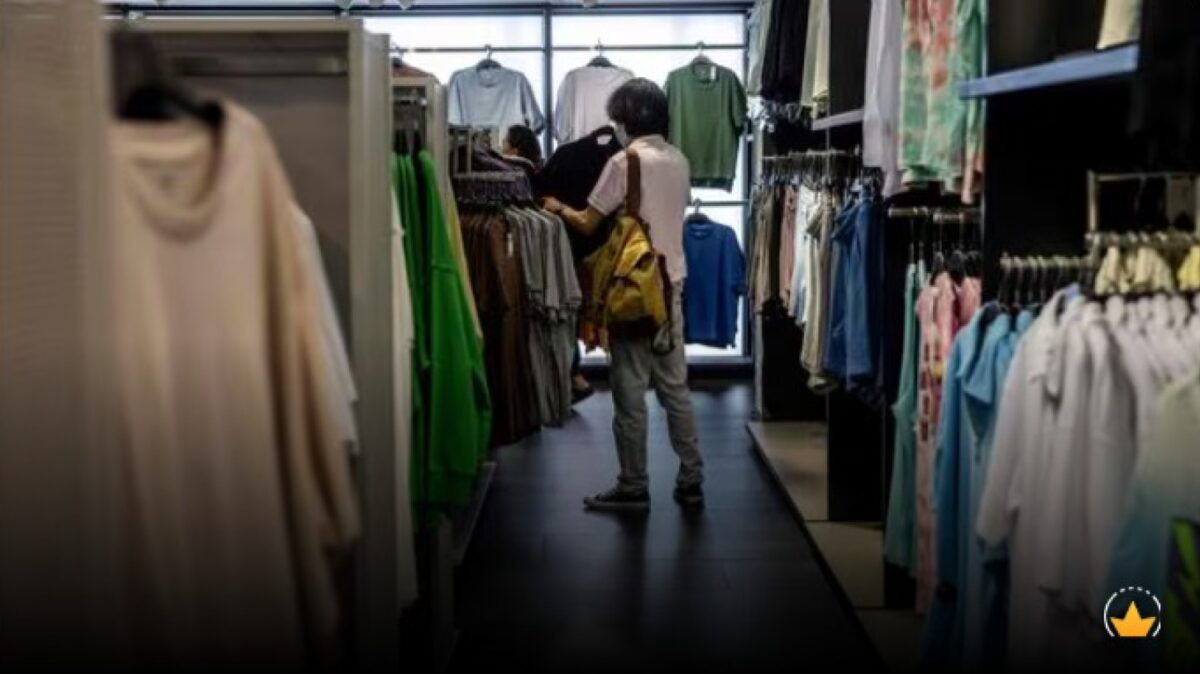
Fashion retailers are speeding up deliveries to keep pace with instant-gratification shopping driven by quick-fashion startups, with established players and newer brands taking sharply different approaches.
For example, brands such as Biba and The House of Rare have adopted a more calibrated, infrastructure-led strategy rather than a rapid overhaul of existing store networks. “We’ve been doing this in a very soft way but not necessarily from the same stores because that affects the customer experience,” said Siddharth Bindra, managing director of Biba. Bindra said using retail stores as fulfilment hubs for rapid delivery creates operational constraints, particularly given store sizes and layouts. “We don’t have very large stores; they are anywhere between 1,000 and 2,000 square feet. So that’s not the right efficiency,” he said.
Instead, the brand is evaluating a hub-based model in cities with higher store density, enabling faster deliveries without disrupting stone operations. “If we do, it will be though proper hubs in cities where we have four to five stores, where we would start with quick commerce and accelerate it,” he said. This could enable same-day or two to three-hour deliveries.
The House of Rare, which houses Rare Rabbit (men’s urban fashion) and Rareism (women’s fashion), is adopting a similar approach, evaluating city-levee fulfilment hubs in markets with higher store concentrations to enable faster deliveries while keeping retail outlets focused on walk-in consumers.
The strategy reflects a broader attempt among legacy retallers to belance speed with experience, rather than treating stores as Interchangeable logistics nodes. “The eventual goal is the customer, but it creates a lot of difference in the customer experience” Bindra said, pointing to the trade-offs involved.
Different take
In contrast, some brands are moving more aggressively to integrate stones directly into fulfilment networks.
Libas, an initial public offering (IPO)-bound apparel company, is networking its operating model to plug its physical retail network Into a faster, hyperlocal delivery system.
Earlier, the 12-year-old company followed a more traditional structure. Online orders were largely fulfilled from central warehouses and delivered over a few days, while stores primarily served walk-in customers, with the two channels operating independently.
That is now changing. Libas is using its stores and nearby warehouses as local fulfilment points, allowing it to service orders within a much smaller delivery radius,
“At Libas, the time frame will be approximately 60-90 minutes at the max,” said Bhavay Pruthi, senior vice president, e-commerce and product management.
The rollout has been gradual, starting with select cities and limited catchments, typically within a 7-10km radius, where delivery timelines can be tightly controlled. It has also narrowed the product mix initialy to itams that are easier to move quickly.
The push comes as consumer expectations around delivery timelines extend beyond groceries into fashion, forcing brands to rethink supply-chain design,
Rise of quick fashion
The urgency to adapt is being shaped by a surge in quick fashion startups that are attracting investor attention despite heavy cash burm.
The segment has seen a flurry of funding in recent months, with Zilo raising $15.3 million in February led by Peak XV, and Knot securing $5 million in a round led by 12 Flags in December.
It has also evolved rapidly. Quick-commerce platforms such as Zepto, Instamart and Blinkit initially offered a limited range of basic fashion items for last-minute purchases. This has since expanded into a more specialized category, with vertical players offering wider assortments across party, work and occasion wear with rapid delivery timelines.
New entrants are pushing the model further. Wydo, for instance, promises deliveries within 15 to 30 minutes in Bengaluru, while Gen Z-focused offerings such as Newme’s Zip and Snitch Quick are building businesses around near-instant fashion access.
Myntra’s rapid commerce division, M-Now, accounted for about 10% of orders in the locations where it was available as of last November.
“This is the new kind of experience that customers are expecting,” Pruthi said.
Libas is working with third-party logistics providers and quick commerce platforms for the last-mile delivery, while focusing internally on faster picking, packing and order routing. Quick commerce currently accounts for about 2% of its overall sales, with scope to grow as the model scales..
Early results, however, highlight the trade-offs. “We saw very good sell-throughs for e-commerce, but it was cannibalizing existing store sales,” Pruths said.
There are also fimits to what customers are willing to buy through rapid-delivery channels. “Customers do not have the confidence to spend 15,000 for a fashion product from a quick- commerce channel,” he said.
To address this, Libas has tightened delivery radii, curated a more suitable product mix, and is testing stores with attached dark-store infrastructure to balance walk-in and online demand.
Experts say these challenges are structural.
“If you look at fashion, it’s extremely unpredictable, and if you are a brand across multiple products, it’s complicated process,” said Devangshu Dutta, founder of management consulting firm Third Eyesight.
While demand for faster deliveries is rising, it remains a small slice of the overall market, with profitability still uncertain due to limited assortments and high fulfilment costs. For traditional retailers, adopting the model requires a fundamental reworking of supply chains that were not built for near-instant delivery, Dutta added.
(Published in MINT)
admin
February 27, 2026

Samar Srivastava, Forbes India
Feb 27, 2026
India’s young consumers are discovering the next big beauty serum, protein bar or sneaker brand not in a mall, but on Instagram reels, YouTube shorts and quick-commerce apps that promise 10-minute delivery. What began as a trickle of digital-first labels a decade ago has now become a full-blown wave. Direct-to-consumer (D2C) brands—built online, fuelled by social media and venture capital—have reshaped India’s consumer landscape and forced legacy companies to rethink everything from marketing to distribution.
India today has more than 800 active D2C brands across beauty, personal care, fashion, food, home and electronics, according to industry estimates and consulting reports. The Indian D2C market is estimated at $12–15 billion in 2025, up from under $5 billion in 2020, and growing at 25–30 percent annually. The pandemic accelerated online adoption, but the structural drivers—cheap data, digital payments and over 750 million internet users—were already in place.
Unlike traditional FMCG brands that relied on distributors and kirana stores, D2C brands such as Mamaearth, boAt, Licious and Sugar Cosmetics built their early traction online. Customer acquisition happened through performance marketing; feedback loops were immediate; product iterations were rapid.
Importantly, these brands are discovered online—but as they scale, consumers buy them both online and offline, increasingly through quick-commerce platforms such as Blinkit, Zepto and Swiggy Instamart, as well as modern trade and general trade stores. The omnichannel play is now central to their growth strategy.
According to Anil Kumar, founder and chief executive of Redseer Strategy Consultants, the ecosystem is maturing in measurable ways. Brands are taking lesser time to reach ₹100 crore or ₹500 crore revenue benchmarks and, once there, mortality rates are coming down. There is also an acceptance that if a brand is not profitable in a 3–5 year timeframe, that needs to be corrected. “There is a lot of emphasis on growing profitably and not just through GMV,” he says.
Big Cheques, Bigger Exits
The D2C boom would not have been possible without capital. Between 2014 and 2022, Indian D2C startups raised over $5 billion in venture and growth funding. Peak years like 2021 alone saw more than $1.2 billion invested in the segment. Beauty, personal care and fashion accounted for nearly 50 percent of total inflows, followed by food and beverages.
Some brands scaled independently; others found strategic buyers. Among the most prominent exits:
> Hindustan Unilever acquired a majority stake in Minimalist, reportedly valuing the actives-led skincare brand at over ₹3,000 crore. For Hindustan Unilever, the annual run rate from sales of its D2C portfolio is estimated at around ₹1,000 crore, underscoring how material digital-first brands have become to its growth strategy.
> ITC Limited bought Yoga Bar for about ₹175 crore in 2023 to strengthen its health foods portfolio.
> Emami acquired a majority stake in The Man Company, expanding its digital-first play.
> Tata Consumer Products acquired Soulfull as part of its health and wellness strategy.
> Marico invested in brands such as Beardo and True Elements.
Private equity has also entered aggressively at the growth stage. ChrysCapital invested in The Man Company; L Catterton backed Sugar Cosmetics; General Atlantic invested in boAt; and Sequoia Capital India (now Peak XV Partners) was an early backer of multiple consumer brands.
Valuations were often steep. boAt was valued at over $1.2 billion at its peak. Mamaearth’s parent, Honasa Consumer, listed in 2023 at a valuation of around ₹10,000 crore. Across categories, brands crossing ₹500 crore in annual revenue began attracting buyout interest, with deal sizes ranging from ₹150 crore to over ₹3,000 crore depending on scale and profitability.
Yet exits have not always been smooth. “While it takes 7-8 years to build a brand most funds that invest in them have a timeline of 3-5 years before they need an exit,” says Devangshu Dutta, founder of Third Eyesight, a retail consultancy. This timing mismatch can create pressure—pushing brands to scale aggressively, sometimes at the cost of margins.
Integration Pains and the Profitability Pivot
For large FMCG companies, buying D2C brands offers speed: Access to younger consumers, premium positioning and digital marketing expertise. But integration brings challenges.
Founder-led organisations operate with rapid decision cycles, test-and-learn marketing and flat hierarchies. Large corporations often work with layered approvals, structured brand calendars and rigid cost controls. Cultural friction can lead to talent exits if autonomy is curtailed too quickly.
Margins are another sticking point. In the early growth phase, many D2C brands spent 30–40 percent of revenue on digital advertising. Rising customer acquisition costs post-2021, combined with higher logistics expenses, squeezed contribution margins. As brands entered offline retail, distributor and retailer margins of 20–35 percent further compressed profitability.
Large acquirers, used to EBITDA margins of 18–25 percent in mature FMCG portfolios, often discovered that digital-first brands operated at low single-digit margins—or were loss-making at scale. Rationalising ad spends, optimising supply chains and pruning SKUs became essential.
The funding slowdown between 2022 and 2024 triggered a reset. Marketing spends were cut by as much as 25–40 percent across several startups. Growth moderated from 80–100 percent annually during peak years to 25–40 percent for more mature brands—but unit economics improved.
Quick-commerce has emerged as a structural growth lever. For categories such as personal care, snacking and health foods, these platforms now account for 10–25 percent of urban revenues for scaled brands, improving inventory turns and reducing dependence on paid digital acquisition.
The next phase of India’s D2C journey will be less about blitz scaling and more about disciplined brand building—balancing growth, profitability and exit timelines. What began as a disruption is now part of the mainstream consumer playbook. And as capital becomes more selective, only brands that combine strong gross margins, repeat purchase rates above 35–40 percent and sustainable EBITDA pathways will endure.
(Published in Forbes India)
admin
February 16, 2026

Christina Moniz, Financial Express (Brand Wagon)
16 February 2026
Starting this month global sportswear maker Nike shifted its e-commerce operations to beauty and fashion marketplace Nykaa to address poor logistics, high delivery times and inventory niggles. With Nykaa in charge, the brand said, customers can expect free shipping on all orders and faster deliveries rang ing from twotofour days depending on the location.
The change comes at a time when Nike is struggling to cope with declining market share and operational and supply-side issues in India. Its physical store count in the country has dropped by half in the past ten years to 100 from over 200 a decade ago. Nike in India undertook major restructuring of its business between 2016 and 2019, closing 35% of its stores in those three years to take a more digital-first approach.
It’s not all doom and gloom though. The brand reported a 14% growth in sales in the fiscal ending March 2025 to clock ₹1,380 crore. But it is well behind competing brands such as Puma (₹3,274 crore) and Adidas (₹3,114 crore), both of which have over 400 stores across the country.
Given India’s size, the competitive landscape and potential, treating it as a secondary export market to be serviced from Singapore was a poor decision on Nike’s part, says Devangshu Dutta, founder and CEO, Third Eyesight.
Nike’s alignment with a local player offers important strategic lessons for global brands with big ambitions in India, especially those in the ₹8,800 crore sportswear market. Brands that have not treated India as an afterthought have succeeded in creating sustained growth and market leadership, says Dutta.
“Most of Nike’s global competitors have treated India as a market high consequence. Nike might be the leader by global revenues, in India is smaller than its global rivals like Adidas, Puma and Skechers. ASICS has a smaller base but is growing at 30% while Lotto is also looking to grow its footprint massively, observes Dutta.
Ever since Nike’s digital-first pivot, its customers in the country have raised several complaints citing delivery failures and poor service, with some deliveries reportedly taking weeks. Its decision to transfer its digital operations to Nykaa in India could potentially address these missteps and reverse the breakdown of customer experience, say experts.
Changing course
“The recent move feels like Nike acknowledging that India cannot be treated as an extension of a global system. It needs local infrastructure, local partners, and a model built specifically for how Indians shop online. Partnering with Nykaa brings local execution muscle that is hard to replicate quickly,” observes Tusharr Kumar, CEO, Only Much Louder, adding that the move is a maturity moment for global brands. “Scale alone doesn’t guarantee success. What matters is adapting to local consumer behaviour, logistical realities and service expectations,” says Kumar.
That said, Nike’s shift won’t be without challenges. The biggest one will be balancing scale with brand control, notes Yasin Hamidani, director, Media Care Brand Solutions. “While Nykaa offers strong reach and trust, Nike will need to ensure its premium positioning, product storytelling, and customer experience don’t get diluted. If managed well, this move doesn’t necessarily hurt Nike’s brand,” he states.
However, he adds that competition like Adidas and Puma, with stronger on-ground retail and omnichannel presence, may gain an edge if Nike’s visibility or momentum slows. “The partnership with Nykaa must feel strategic and not like a retreat,” he cautions.
Given that Nykaa is also a marketplace for other activewear brands, it remains to be seen how the platform maintains Nike’s premium customer experience. “On its own platform, Nike could control everything from storytelling to checkout flows and post-purchase engagement. Nike will now need to adjust to sharing customer data, promotional calendars, and operational priorities with a partner platform,” says Somdutta Singh, founder & CEO at Assiduus Global, adding that striking the right balance between leveraging Nykaa’s scale and maintaining Nike’s distinctiveness will be key.
(Published in Financial Express – Brandwagon)
admin
February 14, 2026

This episode of theUpStreamlife is a freewheeling conversation between Vishal Krishna and Devangshu Dutta, founder of Third Eyesight, with insights into the growth of modern retail and consumption in India, brand building and M&A, the balance of power between brands and retailers/platforms, sustainability vs growth and many other aspects, and is well-suited for founders and teams who want to be building for the long run in India.
admin
February 11, 2026

Vaeshnavi Kasthuril, Mint
Bengaluru, 11 February 2026
Sales of winter wear were underwhelming for the second year in a row as an unusually delayed and milder winter disrupted demand for heavy winter wear, particularly in north and west India, executives at two of India’s top clothing retailers said. Initial optimism for a bumper season this year compounded the disappointment for retailers.
While early signs of a La Niña—a weather pattern typically known for bringing freezing temperatures to India—triggered some early buying in the previous quarter, the season remained unusually mild, leaving stores with a surplus of winter clothing. Excess rainfall and cyclonic activity during the festive period in parts of eastern and southern India further weighed on seasonal buying, compounding the pressure on winter sales which are typically front-loaded.
This slump is particularly painful because winter sales are the industry’s largest annual driver. These months coincide with India’s massive wedding season, when spending peaks. Together, they account for roughly 20% of total yearly revenue for apparel companies, according to industry estimates. India’s apparel market was estimated to be worth more than ₹1.9 trillion in FY25, of which 41% was organised, credit ratings firm CareEdge said in January 2026.
V-Mart: margin over volume
Lalit Agarwal, managing director of V-Mart Retail, said, “Northern India saw a delayed or milder winter initially, leading to dispersed demand for heavy winter wear. Winter demand was definitely delayed a little bit—it didn’t get lost, but it was erratic.” He added that while festive demand held up, “demand visibility was uncertain, particularly in winter-led categories, and we consciously chose to protect margins rather than chase volumes.”
V-Mart’s revenue grew a little over 10% year-on-year to ₹1,126.4 crore in Q3 from ₹1,023.7 crore a year earlier and ₹889.05 crore in the third quarter of FY24, but this growth was largely driven by wedding and festive-season clothing, executives at the company said.
Anand Agarwal, chief financial officer of V-Mart Retail, said despite forecasts of a strong, early winter, “peak winters were delayed across North and West India, leading to a lull post-Diwali.” He added, “While the festive period went off reasonably well, winter demand did not pan out as anticipated,” attributing the softer sales to fewer peak winter days and unusually warmer temperatures.
Despite the delayed demand, the company managed to avoid a build-up of unsold inventory during the quarter. “Inventory health remained strong despite the delayed winter, and in some categories we were even short of inventory,” said Anand Agarwal, indicating that the eventual dip in temperatures led to a sudden pick-up in demand in select winter categories rather than excess stock.
Winter-led assortments continue to account for a sizeable share of the company’s quarterly sales, underscoring its sensitivity to weather patterns. “Winter and pre-winter categories accounted for about 40-45% of the overall mix during the quarter, and this share rose to over 60% during peak winter weeks in December,” said Agarwal during the third-quarter earnings call. The higher share of winter wear sales during peak weeks helped cushion margins, even as volumes remained below expectations. Lalit Agarwal said the company refrained from aggressive discounting amid uncertain demand. “Higher full-price sell-through during the winter quarter supported margins, as we did not undertake aggressive discounting,” he said.
Vishal Mega Mart: the late recovery
Gunender Kapur, managing director and chief executive officer of rival Vishal Mega Mart, said delayed winters usually force retailers to push promotions to ensure that they don’t carry forward all that merchandise, because the next opportunity to sell it would be the following year.
Despite this, the company’s performance held up, he said, highlighting that winter sales achieved robust double-digit same-store growth for the entire season and the full quarter, effectively overcoming the sluggish demand during December. Kapur noted that demand for winter clothing increased significantly in January, adding, “Winter merchandise is still selling well, both in our stores and in other stores, we believe.”
Vishal Mega Mart reported revenue growth of about 17% to ₹3,670.3 crore in Q3 FY26 from ₹3,135.9 crore in Q3 FY25 and ₹2,623.5 crore in Q3 FY24, largely on the back of wedding and festive-season demand.
Kapur said the company was unsure whether there would be significant unsold winter merchandise at the end of the season, adding that maintaining pricing discipline helped protect profit margins. “Merchandise that sells in December typically fetches a higher price than January merchandise for winter because sales often begin by late December or early January,” he said. “In our case, there was no problem. We achieved same-store sales growth of over 10%, even with the winter merchandise we purchased for the autumn-winter season.”
V2 Retail: the outlier
In contrast, V2 Retail recorded strong performance in the third quarter, largely driven by winter wear. Revenue surged nearly 60% year-on-year to ₹929.2 crore in Q3 from ₹590.9 crore a year earlier. This is perhaps because V-Mart and Vishal Mega Mart are more concentrated in north and central India, where winter demand was more uneven this season, while V2 has a stronger presence in eastern and north-eastern markets, including Bihar, Jharkhand, Odisha and Assam.
Managing director Akash Agarwal said the early onset of winter led to a “very good season” for the company. He noted that winter garments typically command a much higher average selling price (ASP) than summer products, which resulted in a visible bump in average bill value during the third quarter, led by higher sales of jackets and sweaters. Agarwal said this high-ASP, high-margin category accounted for the bulk of Q3 sales and was a key driver of the company’s same-store sales growth.
A worsening problem?
Two straight years of sluggish sales because of erratic winters highlight broader challenges around climate change for apparel retailers, which peg their inventory based on weather patterns and demand.
“Seasons have always been inherently unpredictable, and retailers have never been able to forecast with certainty how cold or warm a winter will be or how long it will last,” said Devangshu Dutta, founder of Third Eyesight, a consulting firm. However, he said that the challenge has intensified over the past 15-20 years as apparel businesses have scaled up and expanded their store footprints nationwide, stretching product development and supply chains over several months.
“No matter how hard you work on the plan, your forecast will always be wrong. You will either overshoot or undershoot,” Dutta said, adding that this leaves retailers grappling with either shortages or excess stock. Winterwear, he said, is particularly vulnerable because it has a higher value per unit, a much shorter selling window, and a smaller market, factors which together create a “humongous problem” for retailers.
Data from a World Meteorological Organisation report published on 16 January showed that 2025 was among the three warmest years on record worldwide, continuing a decade-long streak of exceptional heat despite the cooling La Niña phase. This is a clear sign that background warming from greenhouse gases is overwhelming natural variability, the report said. It suggested that climate change will intensify seasonal shifts and extreme weather in the years and decades ahead, making industries tied to seasonal patterns, such as winter apparel, increasingly vulnerable to unpredictable weather swings and weaker cold spells.
(Published in Mint)
