
admin
August 28, 2026
Sowmya Ramasubramanian, MINT
28 Aug 2026
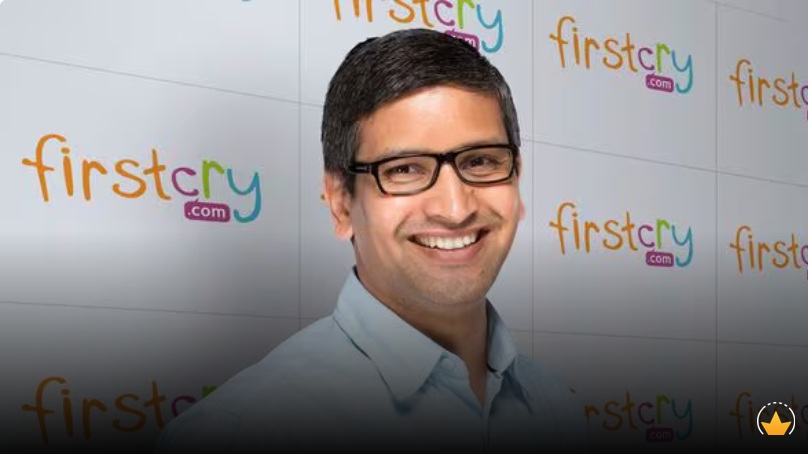
Quick commerce is here to stay, according to FirstCry managing director and chief executive Supam Maheshwari. He added, however, that the economics will increasingly favour large retailers with established stores, logistics networks, and private labels over niche platforms building from scratch.
“There will be fatalities in this space,” Maheshwari told Mint, referring to specialty quick-commerce platforms. He explained that these platforms face a difficult path to profitability due to high logistics, inventory, working capital, and customer-acquisition costs.
FirstCry (Brainbees Solutions Limited) has developed its own logistics arm, RocketBees, along with FirstCry Qwik, which provides two-to-three-hour delivery in select pin codes. RocketBees, launched in mid-2025, now operates across 72 cities and improved its delivery turnaround by around 20% between launch and the first quarter of FY27. Qwik, launched in December 2025, has expanded to 12 cities and delivered about 125,000 shipments in June, Maheshwari said.
Rather than tracking Qwik’s expansion by city count, FirstCry is targeting about 10% of its online orders through the service over the next few quarters. The model will leverage the company’s existing store network where possible, with dedicated dark stores in select catchments.
Qwik will operate alongside FirstCry’s standard e-commerce offering, providing faster delivery for a narrower local assortment, while the broader catalogue remains available through same-day and next-day delivery.
This strategy comes as FirstCry tries to regain operating leverage after a period of margin pressure. Consolidated revenue rose 13% year-on-year to ₹2,106 crore in Q1FY27, even as adjusted Ebitda declined to ₹89.3 crore from ₹92.7 crore a year earlier, squeezing the margin to 4.2% from 5%. While India multi-channel revenue grew 17.7%, its adjusted Ebitda margin shrank to 5.7% from 8.6%.
Maheshwari’s remarks also coincide with sustained investor interest in vertical quick-commerce platforms focused on the mother-and-baby and kids categories. Kids-focused OZi secured $6.2 million from RTP Global in March, while babycare platform Peeko raised over $7 million in a round led by Chiratae Ventures earlier this month.
Quick commerce edge
Maheshwari said FirstCry isn’t aiming to replicate the standard quick-commerce model. Niche platforms, he noted, lack the scale needed to absorb logistics and supply-chain costs, leaving them more exposed to inventory and working-capital demands. Their reliance on third-party brands also restricts their ability to protect margins.
“If you put all of this together, it just becomes unsustainable in my view,” Maheshwari said, arguing that niche-category quick commerce could take many years and hundreds of millions of dollars to become profitable. In contrast, FirstCry generates over half its gross merchandise value (GMV) from in-house brands and operates a national logistics network, creating what he described as a different economic equation.
FirstCry has more than two million stock keeping units (SKUs), and Qwik can offer products beyond emergency purchases such as diapers or formula, including partywear, ethnicwear, strollers, walkers and tricycles, he added.
Maheshwari also said he does not expect delivery speed to cannibalize FirstCry’s core business. “A lot of mothers are planned shoppers. When they are buying fashion, nursery products or other categories, they do research, they look at the brand and quality. They don’t necessarily need the product in 10 minutes.”
That distinction is reflected in FirstCry’s approach to physical stores. The company has spent the past two quarters changing its offline assortment strategy, moving from an e-commerce-led approach focused on product width to a retail model focused more heavily on depth. Maheshwari said this allows the company to secure better costs, offer better prices, and improve footfall and conversion.
FirstCry plans to add around 90-100 stores in FY27, and Maheshwari expects an even larger number in FY28. The expansion is not being driven by Qwik, he said, although stores in cities where Qwik operates can also be used to fulfill quick-commerce orders.
The offline push is aimed at increasing wallet share in markets where FirstCry doesn’t have stores yet. Maheshwari said 36% of GMV from the top 50 cities in FY26 came from customers who transacted both online and offline.
“Assortment depth, availability, trust, and sustained price-value have been, and will remain, the true differentiation levers. For categories such as medicines and baby products, credibility and compliance outweigh saved minutes, apart from urgent purchases,” Devangshu Dutta, founder of consultancy Third Eyesight, told Mint last month.
Private labels and margins
Home brands accounted for more than 58% of GMV in FY26, up from 37% in FY20, and Maheshwari expects that trajectory to continue. FirstCry’s portfolio includes Babyhug, BabyOasis, CuteWalk and Pine Kids, alongside third-party brands.
“The trust is first with FirstCry as a retail platform and then with the home brands. That is why our curation is so important. We are offering a superior experience through the home brands we have been building,” Maheshwari said. Rather than viewing this curation simply as a lever for higher gross margins, he considers it a key competitive advantage spanning FirstCry’s physical stores, e-commerce platform, and quick-commerce service.
FirstCry’s consolidated gross margin fell to 36.5% in Q1FY27 from 38.5% a year earlier, while India multi-channel adjusted Ebitda margin fell to 5.7%. Maheshwari attributed the pressure primarily to aggressive competition in diapers and higher raw-material costs, which affected FirstCry’s manufacturing business.
He expects the raw-material impact to be fully reflected in pricing by Q3, while diapers could take another two to four quarters to normalise. “This is only a 15% category for us,” he said, noting that the remaining 85% of the portfolio—fashion, baby gear, nursery and toys—continues to perform strongly. He said he expects margins to recover through FY27 and that the company’s longer-term margin trajectory remains upward.
Brainbees Solutions stock was trading around ₹186 at 1 pm on Friday, down around 1.35% on the day. The stock is down more than 72% since it was listed in August 2024.
(Published in MINT)
admin
November 27, 2025
Viveat Susan Pinto, Financial Express
November 27, 2025
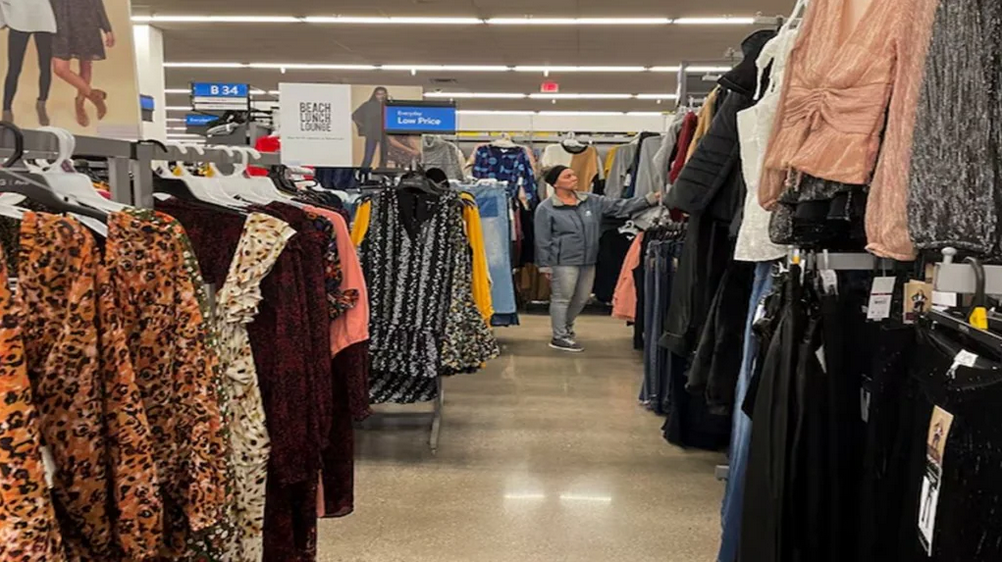
Several of the country’s top retailers, malls and brands have kicked off a shopping extravaganza on the occasion of Black Friday, offering steep discounts across product categories.
A Western import, the day which symbolises the beginning of the Christmas shopping season in the US, the UK and Europe, gained popularity in India over the past two years as a crucial sale window after Diwali.
Domestic retailers, say experts, are using this period to exhaust existing inventory at steep discounts as they gear up for the winter season.
This year, discounts are up to 60-80% across fashion, lifestyle, electronics and cosmetics, higher than the 50% seen last year. E-tailers such as Ajio have pushed the pedal even harder, offering as much as 85-90% on denims, jackets and select products during the sale this year.
Bigger Deals, Longer Duration
“Retailers in India are building Black Friday as an important off-season peak. The participation of brands is growing, deals are getting bigger and the sale days are more,” Devangshu Dutta, founder and chief executive of Third Eyesight, a Gurugram-based retail consultancy, said. That is visible from the intense promotional activity this year. What began as a flash sale event a couple of years ago has now extended to a week-long sale period this year, experts said.
Pushpa Bector, senior executive director and business head, DLF Retail, said that brands this year are ready with strong offers, driven in part by GST cuts and a stable economic outlook. “Early trends show healthy interest across categories by consumers. We expect a strong double-digit uplift over the Black Friday period, setting us up for a strong close to the year,” she said.
Retailer Strategies
While Black Friday typically falls on the last Friday of November, some retailers such as Flipkart, Croma, Vijay Sales, Nykaa and Tata Cliq have kicked off their Black Friday sales last week itself to build on the excitement. For electronic retailers, said Nilesh Gupta, director, Vijay Sales, Black Friday will extend into Cyber Monday next week (falling on December 1), making it even more relevant for them to focus on the occasion.
“We’ve been building Black Friday as a retail property in the last few of years as it fills the post-Diwali void quite well. Black Friday also extends well into Cyber Monday which comes immediately after. While we started with a few categories in the initial years, we now have offers across all our segments. Discounts are up to 45-50% this year in line with last year,” he said.
Rival Croma is also offering up to 50% discount on products this year, executives said.
“Black Friday has become one of India’s most anticipated shopping moments. At Croma, we are focused on delivering value across categories with steal deals, bundled savings, and limited-time offers,” Croma’s CEO & MD Shibashish Roy said.
Croma will also introduce a special late-night shopping window on November 28 at select stores across India. For two hours—from 10 pm to 11:59 pm —these stores will remain open with exclusive additional discounts on some of the season’s most in-demand products.
Nishank Joshi, chief marketing officer, Nexus Select Malls, said it is elevating the Black Friday experience with bigger assured gifts, giveaways and reward points if consumers upload their bills on their Nexus One apps.
Mayank Lalpuria, director, marketing (north, central & west) at Phoenix Mills, which operates Phoenix malls, said that it was expecting double-digit year-on-year growth and strong footfalls during the Black Friday period.
Tanu Prasad, CEO – Malls, Oberoi Realty, said that the firm was seeing far more planned purchases towards premium products and a rise in family-oriented outings. “We are anticipating an encouraging response at the (Black Friday) weekend resulting in a strong kick-off to the (December) shopping season,” Prasad said.
Direct-to-consumer brands such as Inc.5 footwear and NEWME said that they have rolled out big deals for Black Friday. “We’re looking at a 30x surge in orders across both offline and online for Black Friday,” NEWME Co-founder & CEO Sumit Jasoria said.
“Our customers look forward to Black Friday, and this year, we’re excited to bring fresh new launches, curated edits, and our widest range yet,” Rajesh Kadam, CEO, Inc.5 Footwear, said.
(Published in Financial Express)
admin
August 31, 2024
MG Arun, India Today
Aug 31, 2024
Nearly five years after the Centre brought in norms to rein in multinational e-commerce companies operating in India, Union commerce minister Piyush Goyal sparked fresh controversy by raising concerns over the rapid expansion of e-commerce. He also drew attention to the pricing strategies used by some e-commerce firms, questioning what he termed “predatory pricing”.
“Are we going to cause huge, social disruption with this massive growth of e-commerce? I don’t see it as a matter of pride that half our market may become part of the e-commerce network 10 years from now; it is a matter of concern,” Goyal said at an event in New Delhi last week.
His comments come at a time when the ecommerce business in India is growing exponentially. Estimated at $83 billion (around Rs 7 lakh crore) as of FY22, the market is expected to grow to $150 billion (Rs 12.6 lakh crore) by FY26. The growth will be due to multiple levers: a growing middle class, rising internet penetration, the proliferation of smartphones, convenience of online shopping and increasing digitisation of payments. The overall Indian retail market was pegged at $820 billion (Rs 69 lakh crore) in 2023, according to a report published by the Boston Consulting Group and the Retailers Association of India. E-commerce still comprises only about 7 per cent of that, as per Invest India.
The Indian e-commerce market is dominated by global giants, including Amazon and Walmart (which took over Flipkart in 2018). They, along with domestic players, offer huge discounted prices compared to retail prices, which drives online sales significantly. In FY23, Amazon Seller Services and Flipkart posted Rs 4,854 crore and Rs 4,891 crore losses, respectively. Goyal’s argument is that these losses are due to their predatory pricing.
“Is predatory pricing policy good for the country?” Goyal asked, while stressing the need for a balanced evaluation of e-commerce’s effects, particularly on traditional retailers such as restaurants, pharmacies and local stores. “I’m not wishing away ecommerce—it’s there to stay,” he said. Later, he said e-commerce uses technology that aids convenience. But there are 100 million small retailers whose livelihood depends on their businesses.
The Centre has specific laws that permit foreign direct investment (FDI) in e-commerce exclusively for business-to-business (B2B) transactions. However, according to Goyal, these laws have not been followed entirely in letter and spirit. Currently, India does not allow FDI in the inventory-based model of e-commerce, where e-commerce entities own and directly sell goods and services to consumers (B2C). FDI is permitted only in firms operating through a marketplace model, where an e-commerce entity provides a platform on a digital or electronic network to facilitate transactions between buyers and sellers (B2B).
The country’s laws also stipulate that in marketplace models, e-commerce entities cannot ‘directly or indirectly influence the sale price of goods or services’ and must maintain a ‘level playing field’. Entities in the marketplace model re allowed to transact with sellers registered on their platform on a B2B basis. However, each seller or its group company is not permitted to sell more than 25 per cent of the total sales of the marketplace model entity.
Goyal said certain structures have been created to suit large e-commerce players with “deep pockets”. Algorithms have been used to drive consumer choice and preference. For instance, several pharmacies have disappeared, he said, and a few large chains are dominating the retail space. He invoked the importance of platforms like the Open Network for Digital Commerce where small businesses can sell their products.
E-commerce firms counter the argument on predatory pricing. “It is the sellers’ discretion as to what price they should sell at,” says an industry source. The e-commerce player who provides the platform seldom has a role in it, he explains. “Sellers could be doing clearance sales or liquidation of old products at cheaper prices. Some sellers also source products at manufacturing cost and park it with e-commerce firms instead of involving warehousing agents. This helps cut their overhead costs and allows them to offer lower prices on the platform,” he adds.
Some experts are of the view that the government should not step in with controls and allow the market forces to play their role in determining prices. Price controls may lead to shortages, inferior product quality and the rise of illegal markets. Moreover, the Competition Commission of India (CCI), which is mandated to act against monopolies, may be given more teeth. It is ironical that, on the one hand, the Centre wants more FDI to flow in, but places more and more controls on foreign players on the other hand. At the core are the interests of small traders and retailers, a key section of the electorate.
Others argue that the government has a role to ensure that there is fair competition. “It is not just small retailers the government would be speaking for, but for large domestic players too,” says Devangshu Dutta, founder of consultancy firm Third Eyesight, emphasising that the government’s role should be to establish laws and practices that promote fairness.
According to him, it is no secret that e-commerce has grown through discounts. “For large e-commerce firms, market acquisition happens by acquiring a share of the consumer’s mind and through pricing. When a large sum is spent on advertisements, it is for acquiring the mind share of the consumer,” he says. “Pricing matters in a big way too. Whether you call it predatory pricing or market acquisition pricing depends on which side of the fence you are.”
(This article was originally published in the India Today edition dated September 9, 2024)
Devangshu Dutta
October 29, 2014
(The Hindu Businessline – cat.a.lyst got marketing experts from diverse industries to analyse consumer behaviour during the last one month and pick out valuable nuggets on how this could impact marketing and brands in the years to come. This piece was a contribution to this Deepavali special supplement.)

Two trends that stand out in my mind, having examined over two-and-a-half decades in the Indian consumer market, are the stretching or flattening out of the demand curve, or the emergence of multiple demand peaks during the year, and discount-led buying.
Secular demand
Once, sales of some products in 3-6 weeks of the year could exceed the demand for the rest of the year. However, as the number of higher income consumers has grown since the 1990s, consumers have started buying more round the year. While wardrobes may have been refreshed once a year around a significant festival earlier, now the consumer buys new clothing any time he or she feels the specific need for an upcoming social or professional occasion. Eating out or ordering in has a far greater share of meals than ever before. Gadgets are being launched and lapped up throughout the year. Alongside, expanding retail businesses are creating demand at off-peak times, whether it is by inventing new shopping occasions such as Republic Day and Independence Day sales, or by creating promotions linked to entertainment events such as movie launches.
While demand is being created more “secularly” through the year, over the last few years intensified competition has also led to discounting emerging as a primary competitive strategy. The Indian consumer is understood by marketers to be a “value seeker”, and the lazy ones translate this into a strategy to deliver the “lowest price”. This has been stretched to the extent that, for some brands, merchandise sold under discount one way or the other can account for as much as 70-80 per cent of their annual sales.
Hyper-opportunity
This Diwali has brought the fusion of these two trends. Traditional retailers on one side, venture-steroid funded e-tailers on the other, brands looking at maximising the sales opportunity in an otherwise slow market, and in the centre stands created the new consumer who is driven by hyper-opportunism rather than by need or by festive spirit. A consumer who is learning that there is always a better deal available, whether you need to negotiate or simply wait awhile.
This Diwali, this hyper-opportunistic customer did not just walk into the neighbourhood durables store to haggle and buy the flat-screen TV, but compared costs with the online marketplaces that were splashing zillions worth of advertising everywhere. And then bought the TV from the “lowest bidder”. Or didn’t – and is still waiting for a better offer. The hyper-opportunistic customer was not shy in negotiating discounts with the retailer when buying fashion – so what if the store had “fixed” prices displayed!
This Diwali’s hyper-opportunism may well have scarred the Indian consumer market now for the near future. A discount-driven race to the bottom in which there is no winner, eventually not even the consumer. It is driven only by one factor – who has the most money to sacrifice on discounts. It is destroys choice – true choice – that should be based on product and service attributes that offer a variety of customers an even larger variety of benefits. It remains to be seen whether there will be marketers who can take the less trodden, less opportunistic path. I hope there will be marketers who will dare to look beyond discounts, and help to create a truly vibrant marketplace that is not defined by opportunistic deals alone.
Devangshu Dutta
May 21, 2010
A lively discussion / debate took place on Retailwire.com about whether retailers were using chargebacks as justifiable penalties for poor performance by vendors or an unjustified means of generating income for the retailers.
The fact is that fees, discounts and chargebacks are becoming more common, and in private conversations – when no retail customer is within earshot – vendors will verify this. Retailers say that such chargebacks are only compensation for vendors not complying with processes that have been clearly laid down and agreed to, since non-compliance creates extra costs for the retailer, or loses the retailer margin.
But is vendor performance really becoming worse with each passing season? Or is it that difficult trading conditions or insufficient skills are making buyers take this easy road to margin?
It’s an open secret that merchandise quality and delays – the two most common causes for chargebacks – are easily overlooked when the market is hot and the product is in demand.
Chargebacks are a dangerous tool in the hands of a lazy, short-term thinking buyer who is incentivised on gross/realised margins from season to season; to him/her they are a quicker way to get to that bonus check for the season. Pragmatic vendors, for the most part, don’t want to antagonise the buyer because that risks not just business with the current retail customer, but any retailer that the buyer moves to in the future.
It’s ironic that vendors are mainly cited as “partners” when it comes to sharing the retailer’s pain. I don’t recall any retailer calling such vendor-partners up to a stage for distributing checks to share extra margin in particularly profitable years. Comments are welcome from anyone who can remember that happening; we’ll all have something inspiring to quote in industry meets, then. (And I’m really hoping some comments quoting such incidents will appear soon!)
The Retailwire discussion on this topic (with comments justifying both sides) is here – “Clothing Vendors Take a Chargeback Hit” – and the original article in Crain’s New York Business is here – “Retailer fee frenzy hits designers“.
