
admin
January 24, 2022
Written By Devika Singh
The entry of Jubilant FoodWorks will intensify competition in the fried chicken segment, where KFC so far has maintained its stronghold.

Popeyes, founded in 1972 in New Orleans, Louisiana, has over 3,400 restaurants in over 25 countries around the world. Popeyes (Wikimedia Commons)
Jubilant FoodWorks, the franchisee for Domino’s Pizza, will launch the iconic US-based fried chicken brand Popeyes, known for spicy New Orleans-style fried chicken and chicken sandwiches, in India on January 19 with the unveiling of the first outlet in Bengaluru.
“Popeyes was founded in 1972 and has been one of America’s most popular and fastest-growing chicken brands. Popeyes aims to delight Indian guests with the bold and delicious flavours of its Louisiana-style chicken,” the company said in a filing to stock exchanges.
“The success of the brand lies in its traditional and unique technique of hand breading, battering, and marinating its fresh chicken for 12 hours in bold Cajun seasonings,” the company added.
Popeyes runs over 3,400 restaurants in 25 countries.
With the entry of Jubilant FoodWorks, the competition is set to intensify in the fried chicken segment, where KFC has maintained leadership in the country so far.
“KFC has enjoyed a free run in the fried chicken market. There are some local players in this segment but no large QSR (quick service restaurant) player had a presence in it until now. With Popeyes as a competitor, now Jubilant FoodWorks is stepping into that opportunity,” said Devangshu Dutta, chief executive at consulting firm Third Eyesight.
While launching its initial public offering (IPO) last year, Devyani International, the largest franchisee of Yum! Brands (which owns KFC), had stressed the advantage it has over other QSRs in the country.
“We have no competition for KFC in India,” Ravi Kant Jaipuria, chairman, Devyani International, had said at the time. Devyani International runs 284 KFC India stores across 107 cities and the brand contributes more than half of its revenues. Sapphire Foods, which too launched its IPO last year, is another major franchise for KFC in India.
Both the companies already compete with Jubilant FoodWorks in the pizza segment as they also operate Yum! Brands-owned Pizza Hut in India. Jubilant FoodWorks with Domino’s Pizza, however, has clear leadership in the pizza market. Sample this: Pizza Hut currently has 500 stores in India, of which 317 are run by Devyani International; Jubilant FoodWorks, on the other hand, already has 1,335 outlets of Domino’s Pizza in India.
Now with the launch of Popeyes, Jubilant FoodWorks, it seems, wants a chunk of the fried chicken pie too.
Westlife Development, which holds the master franchise for McDonald’s in southern and western India, also has set its sight on the fried chicken segment in India. In an interview with Moneycontrol in September last year, Smita Jatia, managing director of Westlife Development, shared an ambitious plan to become a market leader in the segment. The company has already introduced fried chicken in its 125 stores in South India and plans to soon launch the food item in the western region too.
Clearly, the fried chicken market is certainly headed for interesting times as several new QSR players vie for a share of it. According to experts, the segment also offers the next avenue for growth for QSR players. “While fried chicken was the first to take off in Southeast Asia, in India, pizza and burgers found takers given the preference towards wheat-based cuisine in some parts of the country,” said Rajat Tuli, partner at global management consulting firm Kearney.
“However, as Indians become more experimental with food and trying out different cuisines, the fried chicken segment offers the next arena for growth to QSR companies,” he added.
Tuli also believes that the segment has enough space for a couple of players. “The QSR space is poised for over 20 percent growth in the next five-six years and hence there is enough headroom for multiple players to grow in it,” he said.
‘Veg options and no MSG’
The Popeyes India menu will feature the signature Cajun-flavoured Chicken Sandwich and Popeyes signature Chicken in Classic and Spicy flavours. The Indian menu will also feature an array of vegetarian options and will also have rice bowls and wraps. The entire India menu has no flavour enhancer monosodium glutamate (MSG), and the chicken is antibiotic-free, said Jubilant FoodWorks.
In a statement, Shyam S. Bhartia, chairman, and Hari S. Bhartia, co-chairman, Jubilant FoodWorks, said, “We are excited to introduce the Popeyes Louisiana Kitchen brand to chicken-loving Indian consumers. We are confident that Popeyes will not only delight guests but also strategically complement our portfolio and fortify JFL’s leadership in the QSR domain.”
Popeyes will start with its flagship store in Bengaluru’s Koramangala on January 19, followed by stores in New BEL Road and Kammanahalli soon thereafter. The brand will have its own app (Android and iOS) and mobile website.
To ensure a smooth and seamless delivery experience, Jubilant FoodWorks has built its in-house delivery fleet with e-bikes to enable zero-emission delivery. The company is also taking precautions given the pandemic situation.
“Safety protocols like daily temperature screening for all employees and frequent sanitisation of the restaurant are being implemented and frequent sanitisation of bikes will be conducted. All delivery riders will be compulsorily wearing face masks and gloves while following the frequent hand sanitisation protocol,” it added.
Source: moneycontrol
admin
June 17, 2020
Written By RASHMI PRATAP
A handwritten note on a piece of recycled paper plus a hand-made trinket or pen is what one receives along with every order from Gwalior-based iTokri, an online store of handcrafted fabrics, jewellery, paintings and other artworks. Just like its little free gift, all the products in iTokri’s catalogue are unique and especially crafted for the brand, which has been doubling its revenues every year since launch in 2012. The small town retailer has achieved all this without following the typical e-commerce template of being a marketplace.
iTokri online is India’s only crafts and artwork retailer with its own inventory of handmade artisanal products ranging from Punjab’s phulkari dupattas and Gujarat’s bandhani sarees to Andhra’s ikkat handloom fabrics and Odisha’s pattachitra paintings. It sources products including jewellery, dress materials and household items from nearly 500 artisans and NGOs across India. iTokri founders Jia and Nitin Pamnani believe in taking away the burden of sale from artisans and allowing them to focus on what they are best at – their craft.
The inventory model
“Artisans don’t have the financial strength to hold on to the inventory after production. If we put the onus of holding inventory on the artisan and tell them to dispatch the products as per demand, we cannot succeed. We buy from artisans in bulk, stock goods at our warehouse and courier orders from here,” says Pamnani, a documentary maker who left Delhi in 2010 to start the sustainable business in his home town Gwalior with Jia.
“Some of my friends were in the art and crafts sector. They suggested that an e-commerce platform could work from anywhere in the country. Since the availability of traditional art and craft products was still limited to government emporia and exhibitions those days, I decided to take the plunge,” he says.
Set up with an investment of Rs 50 lakh in 2012, iTokri has now expanded its reach to the nooks and corners of the country both for sourcing as well as sales in the last 8 years.
“Sometimes, artisans have ready products and we procure them. We also design our collection and send it for production, like we make our own prints for textiles and those are exclusive to us. You won’t find them anywhere else,” says Pamnani, adding that some factories make products only for iTokri.
Unlike other retailers, who follow the marketplace model and charge sellers or artisans a commission for using their platform, the inventory model is more capital intensive. “The working capital requirement in an inventory model is high as the retailer holds the inventory. Moreover, overheads like warehousing add to costs,” says Devangshu Dutta, Chief Executive at retail consultancy Third Eyesight.
In the case of Pamnani, warehousing is not a big cost as his family already owned one when he started the business.
But Dutta says an inventory model offers some advantages. “The biggest benefit is that you have the complete control over curating a product as well as its production and branding. This helps build a consistent customer experience,” Dutta adds.
Besides, when products are not generic, there are significant margin advantages to retailers. A case in point is itokri masks, the largest variety of which can be found on the online shopping site. From hand-woven handspun Eri silk natural-dyed masks to Lucknowi chikankari and ajrakh print cotton masks, the retailer has them all.
“There is a huge amount of margin play in that. If you are a marketplace, the major margin in such a case will go to the merchant and you will only receive the regular commission for usage of the platform. But if you own the inventory, you can decide the margin and selling price,” Dutta says.
Artisans love iTokri
While Pamnani has bootstrapped the venture so far and is fully in control, he has managed to keep away from increasing his margins to generate higher profits. “iTokri keeps the least margin of all the retailers we work with,” says Jaipur-based Ahmed Badhshah Miyan, award-winning master craftsman of resist tie and dye technique leheriya. He was associated with the Ministry of Textiles for many years, supporting textile traditions, and has won many national and international awards.
Award winning tie and dye craftsman Ahmed Badshah Miyan at his workshop in Jaipur. His son, Shahnawaz Alam, says during the lockdown, iTokri was the only retailer that did not stop payments to artisans.
“iTokri supported us and made payment for all orders as per schedule so that artists are not impacted.”
Alam and his father, who have been associated with Pamnani since 2012, say that iTokri trusts artisans with designs and colours, not forcing them to deviate from the tradition to meet mass requirements. “We don’t repeat the collection sent to iTokri,” says Alam, who supplies leheriya dupattas and sarees to the retailer.
iTokri also provides the name of the craftsman or organisation below every product detailed on its website, giving them due credit.
Hyderabad-based A G Govardhan, Padma Shri master weaver for ikkat, says Pamnani does not try to bring down prices by negotiating rates with craftsmen. “He wants perfect, authentic quality. Unlike others who are now mixing power loom products with handloom, iTokri’s only expectation from us is high quality genuine products. This supports traditional weavers like us,” he says.
t is this exclusivity, moderate pricing and following of the traditional craft processes that has helped iTokri gain a customer base of over 3 lakh across India and overseas.
Nearly 20 percent of these are from the UK, US and Canada and almost one lakh are regular buyers.
Despite its rapid growth, iTokri has not roped in any other investor so far. “We don’t want to go for funding as we are not yet ready for it,” Pamnani says.
It was love for sustainability that brought Pamnani to Gwalior in 2010. And it also helped him keep the business going even when the country was under total lockdown from March 25 till mid-May. During this period too, iTokri’s 8 am e-mailers announcing the collection of the day did not stop.
“There was enough in our warehouse to keep sharing with our customers. And we resumed operations in the first week of May itself after getting clearance from local administration,” says Pamnani.
The advantage: Gwalior, being away from the hustle bustle and without the population density of a metro, has reported only 150 cases of COVID-19 so far and most of them have recovered. “If we have to understand small businesses and work with them, we have to understand sustainability. And that comes from de-centralisation, not necessarily being in big towns,” says Pamnani.
At a time when most businesses are still struggling to resume operations in the COVID-19 world, iTokri’s toli (as its team is referred to) is busy writing lovely notes for putting in their customers’ orders.
And that’s the beauty of being a sustainable enterprise — it can sustain even during a crisis like COVID-19.
(Rashmi Pratap is a Mumbai-based journalist specialising in financial, business and socio-economic reporting)
Source: 30stades
Devangshu Dutta
April 7, 2020

Oil shocks, financial market crashes, localised wars and even medical emergencies like SARS pale when compared to the speed and the scale of the mayhem created by SARS-CoV-2. In recent decades the world has become far more interconnected through travel and trade, so the viral disease – medical and economic – now spreads faster than ever. Airlines carrying business and leisure-travellers have also quickly carried the virus. Businesses benefitting from lower costs and global scale are today infected deeply due to the concentration of manufacturing and trade.
A common defensive action worldwide is the lock-down of cities to slow community transmission (something that, ironically, the World Health Organization was denying as late as mid-January). The Indian government implemented a full-scale 3-week national lockdown from March 25. The suddenness of this decision took most businesses by surprise, but quick action to ensure physical distancing was critical.
Clearly consumer businesses are hit hard. If we stay home, many “needs” disappear; among them entertainment, eating out, and buying products related to socializing. Even grocery shopping drops; when you’re not strolling through the supermarket, the attention is focussed on “needs”, not “wants”. A travel ban means no sales at airport and railway kiosks, but also no commute to the airport and station which, in turn means that the businesses that support taxi drivers’ daily needs are hit.
Responses vary, but cash is king! US retailers have wrangled aid and tax breaks of potentially hundreds of billions of dollars, as part of a US$2 trillion stimulus. A British retailer is filing for administration to avoid threats of legal action, and has asked landlords for a 5-month retail holiday. Several western apparel retailers are cancelling orders, even with plaintive appeals from supplier countries such as Bangladesh and India. In India, large corporate retailers are negotiating rental waivers for the lockdown period or longer. Many retailers are bloated with excess inventory and, with lost weeks of sales, have started cancelling orders with their suppliers citing “force majeure”. Marketing spends have been hit. (As an aside, will “viral marketing” ever be the same?)
On the upside are interesting collaborations and shifts emerging. In the USA, Jo-Ann Stores is supplying fabric and materials to be made up into masks and hospital gowns at retailer Nieman Marcus’ alteration facilities. LVMH is converting its French cosmetics factories into hand sanitizer production units for hospitals, and American distilleries are giving away their alcohol-based solutions. In India, hospitality groups are providing quarantine facilities at their empty hotels. Zomato and Swiggy are partnering to deliver orders booked by both online and offline retailers, who are also partnering between themselves, in an unprecedented wave of coopetition. Ecommerce and home delivery models are getting a totally unexpected boost due to quarantine conditions.
Life-after-lockdown won’t go back to “normal”. People will remain concerned about physical exposure and are unlikely to want to spend long periods of time in crowds, so entertainment venues and restaurants will suffer for several weeks or months even after restrictions are lifted, as will malls and large-format stores where families can spend long periods of time.
The second major concern will be income-insecurity for a large portion of the consuming population. The frequency and value of discretionary purchases – offline and online – will remain subdued for months including entertainment, eating-out and ordering-in, fashion, home and lifestyle products, electronics and durables.
The saving grace is that for a large portion of India, the Dusshera-Deepavali season and weddings provide a huge boost, and that could still float some boats in the second half of this year. Health and wellness related products and services would also benefit, at least in the short term. So 2020 may not be a complete washout.
So, what now?
Retailers and suppliers both need to start seriously questioning whether they are valuable to their customer or a replaceable commodity, and crystallise the value proposition: what is it that the customer values, and why? Business expansion, rationalised in 2009-10, had also started going haywire recently. It is again time to focus on product line viability and store productivity, and be clear-minded about the units to be retained.
Someone once said, never let a good crisis be wasted.
This is a historical turning point. It should be a time of reflection, reinvention, rejuvenation. It would be a shame if we fail to use it to create new life-patterns, social constructs, business models and economic paradigms.
(This article was published in the Financial Express under the headline “As Consumer businesses take a hard hit, time for retailers to reflect and reinvent”.
admin
March 25, 2020

T. Surendar, The Morning Context
25 March 2020
Standing on the porch of the Grand Hyatt Hotel in Mumbai suburbs, Diwakar Vaish, co-founder of Noida-based AgVa Healthcare, was trying to catch the attention of software industry executives. This is at the annual conference hosted by IT trade body Nasscom. Vaish’s stall was a side-show for startups to exhibit digital technologies in the healthcare sector.
On a cool, breezy February day, the atmosphere was nothing as grim you would expect in a hospital emergency ward. Vaish’s rig, comprising an iPad-like device on a short steel column mounted on wheels with dangling wires, was a cost-effective version of a ventilator used in critical care. There wasn’t much excitement about his solution, as few executives really understood the medical problem he aimed to solve.
Today, a robotic engineer by training, Vaish is super busy.
It is not easy to get him on the phone, as AgVa’s ventilator is suddenly in demand from all parts of the country. The company is running three shifts fulfilling orders, which have been pouring in since it became apparent that Indian hospitals did not have enough ventilators for patients rendered ill by the novel coronavirus.
Unwittingly, the need for ventilators has once again drawn attention to India’s medical devices industry or the lack of it. So much so that Anand Mahindra, chairman of the $17 billion Mahindra group, which has interests in automobiles, software and resorts, said that he was finding ways to manufacture ventilators in his factories. It isn’t easy putting together a ventilator, not when you are racing against time, but Mahindra is a hardy businessman with deep pockets, and maybe, just maybe, he will succeed.
In many ways, the Indian medical devices industry is an anomaly. India has a space programme, a nuclear programme, it is among the few countries that has developed patented medicines and a low cost version of anything from power turbines to trucks but when it comes to medical equipment, it fares poorly.
India is also the biggest supplier of FDA-approved drugs to the US, the biggest pharmaceutical market in the world. Even as the Indian market for medical equipment has grown at double-digit rates in the last five years to Rs 1 lakh crore, two-thirds of its needs are met by foreign companies such as Philips, GE Healthcare, Siemens and Abbott.
Import domination is all pervasive extending to even non-critical but common equipment like sonography machines, dentistry chairs and diagnostic equipment. Less than five Indian companies had revenue of more than Rs 500 crore a year and 90% were classified as small scale, with annual revenue less than Rs 10 crore. The biggest player in the domestic market is the Rs 1,300 crore Mumbai-based Transasia Bio-Medicals, which makes in vitro diagnostic solutions that are exported to Western markets too.
“For a long time, the government was the biggest buyer of medical equipment and they always preferred imported equipment. That meant that it was not lucrative for local entrepreneurs to invest their capital in the sector,” says G.S.K. Velu, managing director of Trivitron Healthcare, which makes and exports imaging equipment.
The proliferation of private hospitals in the last two decades also did not change things much. With well-entrenched foreign players and a liberal import duty structure to make available the best facilities in India, there were few local companies of scale who could invest big money to fend off competition. AgVa’s ventilators were priced at a fifth of the ones sold by the foreign competitors, yet it couldn’t make inroads into big hospitals. “It’s almost as if our cost was our barrier to sell. Being critical equipment, customers had a lot of inertia to even place test orders,” says Vaish.
Thanks to meagre domestic manufacturing. India also could not set standards of equipment specifications to suit the local needs. It had to tweak its own equipment standards to fall in line with those of foreign manufacturers. For example, in the US, defibrillators used to restore heartbeats by giving shock to patients had to last at least two shock cycles. But, in India, since access to hospitals and medical care was not as easy. patients arrive long after they have suffered heart attacks and Indian doctors use defibrillators for even 10 cycles at a time.
The local standards did not specify this need and as a result many imported defibrillators were not of much use in Indian conditions. “We still don’t have an act to regulate medical devices and it falls under the drugs category. Everything is still borrowed from the West,” says Aniruddha Atre, co-founder and director of Pune-based Jeevtronics Pvt. Ltd, which makes the world’s first hand-cranked defibrillator.
Trivitron’s Velu says that the share of locally produced medical equipment will increase within the next decade. This will be a combination of help from the government which will enforce more domestic manufacturing by overseas firms and increased entrepreneurship.
There is also a view that more global manufacturing will come to India, as firms de-risk their strategy of manufacturing everything in China. “In the past, when labour costs went up in the Chinese west coast, Indian garment companies were beneficiaries of increased orders even though other countries like Bangladesh and Vietnam too got a big share of it. The availability of labour and ability to scale up operations is something global players look for and to that extent India will always be an important outsourcing destination,” said Devangshu Dutta, managing partner at consultancy firm Third Eyesight.
The trend started even before the COVID-19 pandemic as companies in the US began to brace themselves for a trade war with China. For example, a US-based company has started sourcing Indian tyres at a 10-15% premium as it wants to diversify its risk from China. “India has witnessed a surge in mobile phone manufacturing. This is bound to increase the ecosystem in electronic manufacturing which in turn create ecosystems for industries like medical equipment,” says Sharad Verma, senior partner who oversees industrials at Boston Consulting Group.
The timing is also right for increase in local manufacturing, argues Verma. One of the important criteria for that is viable domestic consumption. It’s happened time and again in sectors like automobiles, mobile phones and more recently in manufacture of metro bogies after domestic consumption has reached a scale where it makes sense for companies to set up manufacturing facilities. “The industry is no longer small and the incidence of medical technology will only go up from here making it viable for even foreign companies to look at a manufacturing set up in India,” says Verma.
It will be interesting to see how it all plays out. The sector, so far, hasn’t seen much by way of private equity or venture investment. The most prominent one was an investment by a Morgan Stanley fund and Samara Capital in Surat-based Sahajanand Medical Technologies and Fidelity Growth Partners’s investment in Trivitron. But starting 2014, a government fund run by the Biotechnology Industry Research Assistance Council-incubated several companies who are slowly bringing their products to market. As some of these products hit home, especially in the wake of COVID-19, the action is definitely bound to pick up.
(published in The Morning Context)
Devangshu Dutta
December 17, 2019
Remember the year 2000? After Y2K passed safely, that year some optimistic analysts predicted that India’s modern retail chains would reach 20 per cent market share by 2015. Two years after that supposed watershed, another firm declared that modern retail will be at around that level in 2020 – but wait! – only in the top 9 cities in the country. Don’t hold your breath: India surprises; constantly. As many have noted, “predictions are tough, especially about the future!” What we can do is reflect on some of this year’s developments that could play out over the coming year.
In many minds 2019 may be the Year of the Recession, plagued by discounting, but that demand slowdown has brewing for some time now. However, there’s another under-appreciated factor that has been playing out: while small, independent retailers can flex their business investments with variations in demand, modern retail chains need to spread the business throughout the year in order to meet fixed expenses and to manage margins more consistently.
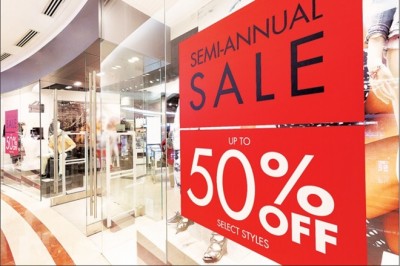
To reduce dependence on festive demand, retailers like Big Bazaar and Reliance have been inventing shopping events like Sabse Sasta Din (Cheapest Day), Sabse Sachi Sale (Most Authentic Sale), Republic Day / 3-Day sale, Independence Day shopping and more for the last few years. In ecommerce, there’s the Amazon’s Freedom Sale, Prime Day, and Great India Festival, and Flipkart’s Big Billion Day Sale. This year retailers and brands went overboard with Black Friday sale, a shopping-event concept from the 1950s in the USA linked to a harvest celebration marked by European colonisers of North America. (The fact that Black Friday has a totally different connotation in India since the terrorist bombings in Bombay in 1993 seems to have completely escaped the attention of brands, retailers and advertising agencies.) Be that as it may, we can only expect more such invented and imported events to pepper the retail calendar, to drive footfall and sales. The consumer has been successfully converted to a value-seeking man-eater fed on a diet of deals and discounts. With no big-bang economic stimuli domestically and a sputtering global economy, we should just get used to the idea of not fireworks but slow-burning oil lamps and sprinklings of flowers and colour through the year. Retailers will just have to work that much harder to keep the lamps from sputtering.
Ecommerce companies have been in operating for 20 years now, but the Indian consumer still mostly prefers a hands-on experience. The lack of trust is a huge factor, built on the back of inconsistency of products and services. The one segment that has been receiving a lot of love, attention and money this year (and will grow in 2020) is food and grocery, since it is the largest chunk of the consumption basket. Beyond the incumbents – Grofers, Big Basket, MilkBasket and the likes – now Walmart-Flipkart and Amazon are going hard at it, and Reliance has also jumped in. Remember, though, that selling groceries online is as old as the first dot-com boom in India. E-grocers still struggle to create a habit among their customers that would give them regular and remunerative transactions, and they also need to tackle supply-side challenges. Average transactions remain small, demand remains fragmented, and supply chain issues continue to be troublesome. Most e-grocers are ending up depending on a relatively narrow band of consumers in a handful of cities. The generation that is comfortable with an ever-present screen is not yet large enough to tilt the scales towards non-store shopping and convenience isn’t the biggest driver for the rest, so, for a while it’ll remain a bumpy, painful, unprofitable road.
Where we will see rapid pick-up is social commerce, both in terms of referral networks as well as using social networks to create niche entrepreneurial businesses – 2020 should be a good year for social commerce, including a mix of online platforms, social media apps as well as offline community markets. However, western or East Asia models won’t be replicated as the Indian market is significantly lower in average incomes, and way more fragmented.
As a closing thought, I’ll mention a sector that I’ve been involved with (for far too long): fashion. In the last 8-10 decades, globally fashion has become an industry living off artificially-generated expiry dates. A challenge that I have extended to many in the industry, and this year publicly at a conference: if consumption falls to half in the next five years, and you still have to run a profitable business (obviously!), how would you do it? Plenty of clues lie in India – we epitomise the future consumers; frugal, value-seeking, wanting the latest and the best but not fearful about missing out the newest design, because it will just be there a few weeks later at a discount. If you can crack that customer base and turn a profit, you would be well set for the next decade or so.
(Published as a year-end perspective in the Financial Express.)
