
admin
August 1, 2026

Murali K Menon, Firstpost
1 August 2026
The next time you are shopping for veggies on a quick commerce app, we’d suggest you hop onto the organic produce section and consider where those vegetables came from. Chances are, they have travelled through a supply chain pretty different from the one that bought veggies to your kitchen just five years ago. Some of that produce is supplied by Urban Farms Co., a little-known company that is rethinking food systems.
Urban Farms works with about 2,000 small farmers on the outskirts of several of India’s cities, as well as in states like Rajasthan and Maharashtra to grow vegetables using regenerative practices and supplies them to urban consumers via quick commerce and modern retail. The definition of renegenrative agriculture changes depending on who you ask, but broadly it refers to an approach that seeks to restore soil health, as opposed to conventional, chemical-intensive farming.
About 1% of global farmland is now under regenerative practices, according to a 2025 World Resources Institute study. Urban Farms, whose farmer network grows over 50 varieties of vegetables, handles around 12,000 tonnes annually and is targeting a twenty-fold jump in revenue from its current Rs 30 crore in the next five years.
That target might sound ambitious until you look at its origins. Urban Farms was founded by members of the team behind Araku Coffee, the specialty coffee brand that put Indian coffee on the global map. Both Araku Coffee and Urban Farms are backed by the Hyderabad-based Naandi Foundation, among the country’s largest, multi-sector non-profits. The NGO was set up by Dr. Reddy’s Laboratories founder, the late Kallam Anji Reddy, and counts Kris Gopalakrishnan and Anand Mahindra on its board.
The broad details of Araku Coffee’s success are well known, but the model that underpins it is much less discussed. Over two decades, the project worked with thousands of tribal farmers to promote regenerative farming practices, restore degraded land, and improve farmer incomes while building a globally recognised premium coffee brand. The same spirit animates Urban Farms. Instead of tribal farmers, it works with small farmers on the outskirts of India’s cities. Instead of a premium export crop, it is betting on everyday vegetables sold through quick commerce and modern retail. But can a model proven in a premium niche survive in the toughest, most commoditised part of Indian agriculture?
Beyond coffee
Coffee was just a conversation-starter, says Manoj Kumar, the lead architect of the Araku Coffee project and the founding CEO of the Naandi Foundation. The developmental economist says that the project proved two things. “It proved at scale that our regenerative organic agricultural science worked for 20 years in every crop, from coffee to millet, consistently season after season, without any drop in yield. And, just as importantly, that we could do world-class excellence at scale with very ordinary poor people.”
The eventual goal was improving farmer economics. “In India, 85% of farmers have less than one hectare of land,” Kumar says. “The question is: what do we do with small and marginal farmers?” Urban Farms is one answer to that question. Unlike Araku Coffee, though, it isn’t built around a single crop.
“Urban Farms is about doing a system change. We are changing food systems,” says Vikash Abraham, the company’s CEO. So, what does that mean for something as everyday as a lady finger? Before it reaches your kitchen, Urban Farms is involved in almost every stage of its journey. It supplies regenerative fertilisers to farmers, works with them through the growing season, buys back their produce, and sells it to retailers and quick commerce platforms.
Urban Farms
“We procure from the farmer at the same price as conventional produce. We do not pay a premium per kilogram because we believe profitability is about cost of cultivation versus the entire income you get from your farm,” Abraham says. In other words, with Urban Farms, farmers don’t earn more because they sell lady finger at a higher price. They earn more because regenerative farming lowers their costs while giving them an assured buyer. A typical vegetable grower could earn as much as Rs 20,000 to Rs 30,000 more per acre annually, says Abraham, with savings increasing over time. A first-season comparison conducted by the company across 56.5 acres in Wardha, Maharashtra, found that soybean yields rose 12% and total cultivation costs fell by 8%.
Spending on farm inputs dipped from ₹9,750 to ₹5,267 per acre, while profits increased from ₹12,550 to ₹19,195. The model does not rely on government subsidies and farmers pay for the inputs themselves. According to Abraham, Urban Farms doesn’t approach farmers from a moral standpoint, or talk about climate change. “We go to them with a business proposition, and the business proposition is about making profitability.”
From trial to habit
Urban Farms’ residue-free vegetables generally cost about 40% more than conventional produce, although the gap varies by crop, market prices, and platforms. Lady finger, for instance, was priced at ₹24 for a 250gm pack on Zepto in Azadpur, in north Delhi, earlier this week compared with ₹17 for conventional produce; on Blinkit, the same pack was sold at ₹35.
Quick commerce accounts for 65% of its business under the residue-free category, with modern trade and other channels making up the rest. Abraham says part of that premium reflects the cost of maintaining a separate, traceable supply chain. The company supplies Blinkit, Zepto, Swiggy, and Flipkart as well as Reliance, Jubilant, and Country Delight, among others.
Devangshu Dutta, founder of retail consultancy Third Eyesight, says that he expects demand to grow, as incomes rise and consumers become more conscious of the food they are eating. But he thinks a 40% premium may be too high for regular consumption because vegetables, unlike coffee or craft chocolate, are staples.
“You could have a premium of maybe 20% to 30%. Some products could be higher than that, but that is something that has to be managed carefully.” For category growth to accelerate, he says, the produce must become “a fixture in the consumer’s pantry, in the consumer’s kitchen, on the consumer’s plate.”
Dutta believes that quick commerce is well-suited to fresh produce because Indian households have traditionally bought vegetables frequently rather than stocking up. “The bottleneck really is having the product range that consumers will buy over a period of time again and again.” That requires farmers growing different crops across regions and climatic zones. And building a wide range of vegetables also means working with farmers and ensuring farmer retention in the system season after season. “You don’t just sign up a farmer and say he’s going to be there forever,” Dutta says.
Urban Farms says it has managed to do that so far. In May this year, Anand Mahindra posted on X that 80 to 90% of the farmers who work with the company return every season. “Not out of loyalty to a movement, but because the economics work,” he wrote, pointing to yields comparable with conventional farming, lower input costs and produce that consistently tests residue-free.
Abraham says that Urban Farms would like to work with about 100,000 farmers by 2030, and the company’s growth will depend on how quickly it can both build and nurture relationships with its partners across the country. Applying the Araku model to a far more unpredictable market won’t be easy, but if Urban Farms can keep both farmers and shoppers in the system as it grows, coffee, as Manoj Kumar said, may indeed have been just the conversation-starter.
(Published in Firstpost)
admin
August 1, 2026
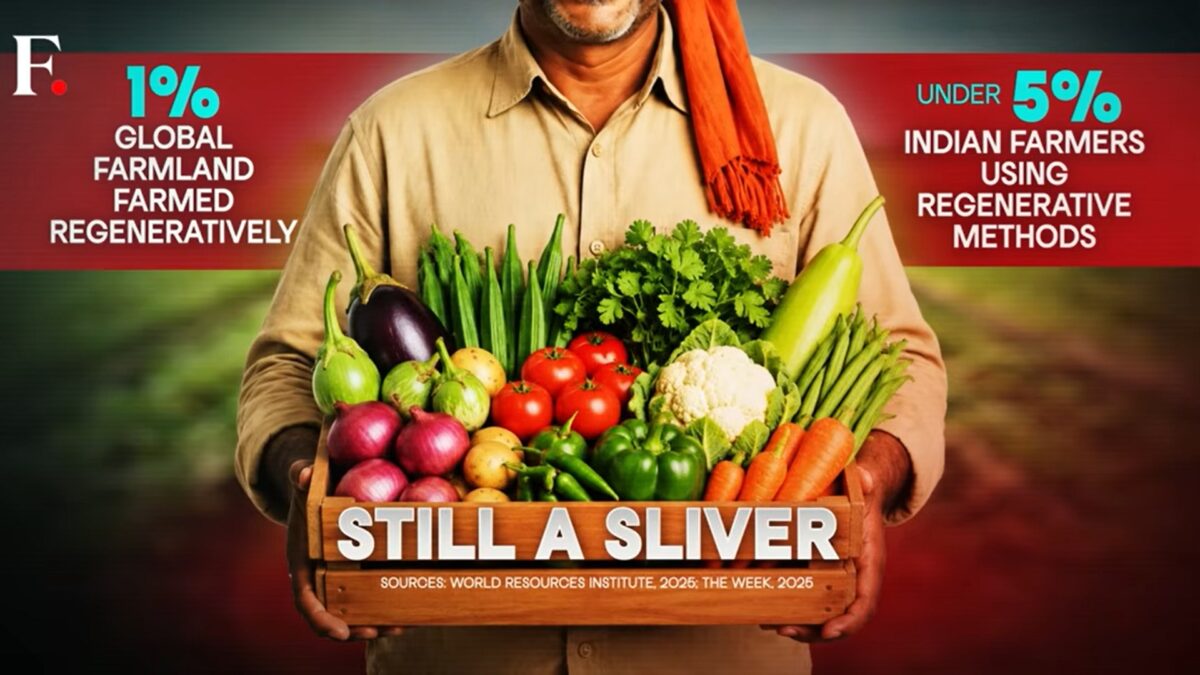
Two decades ago, the team at the Naandi Foundation turned tribal farmers in a remote Andhra valley into some of the world’s best-paid coffee growers. Araku Coffee now sells in Paris, and the best of it goes for thousands of rupees a kilogram. Now the same team is trying to do it again — this time with everyday vegetables. Their company, Urban Farms Co., works with regenerative farmers and sells their produce on apps like Blinkit and Zepto. The bet is that what worked for premium coffee can work for staples too. But vegetables aren’t coffee. They’re cheap, everyday, and something people buy all the time. Can this really scale, and does it actually leave farmers better off?
admin
June 20, 2023

Kuldeep Chauhan, Editor-in-Chief, HimbuMail
20 June 2023, Shimla/New Delhi
For the first time in India, a conference brought together influential religious figures and water practitioners, establishing a powerful alliance with a shared vision of safeguarding water resources for future generations.
There is no disagreement over sanctity of water in all religions. But problem is how different communities and their followers take up the task to conserve and protect water and on which scale of their involvement?
There are individual success stories in Assam, Himachal, Ladakh (Ice Stupa), Uttarakhand, Rajasthan, Maharashtra and other places where individual initiatives have created wonders conserving water and forests.
There are tribal communities in the Himalaya who live in harmony with Nature preserving and protecting water and bio-diversities. But the challenge is how to bring all on board to protect water, forests and glaciers from depletion.
The conference brought Religious leaders from various faiths together at N D Tiwari Bhawan in New Delhi on June 18 and addressed the pressing need for water conservation and management.
Under the banner of “Water Security and Peace” the conference witnessed the convergence of diverse religious teachings. They all emphasized the paramount importance of protecting nature.
Recognizing that the protection of water is a fundamental responsibility outlined in religious texts worldwide, the religious leaders urged a global awakening towards water conservation and peaceful coexistence.
During the conference, several key decisions or resolves were made.
Religious leaders pledged to collaborate closely with social workers to preserve India’s faith in the sanctity of water and nature.
A comprehensive water literacy campaign will be launched across universities, colleges to promote awareness and ensure water security.
Notably, Chetna Yatra, a symbolic journey led by religious leaders of all faiths, will be organized to raise awareness about groundwater recharge, inspiring communities to actively participate in conservation efforts.
Eminent subject experts from across the country shed light on the dire consequences of the water crisis compounded by climate change.
The conference drew a diverse audience, encompassing individuals from all walks of life who united in their resolution to forge ahead in water conservation initiatives.
Dr. Rajendra Singh, President of the People’s World Commission on Drought and Flood said the impending water crisis threatens global stability. “To avert this crisis, people from all segments of society must unite, as only through collective action can peace be preserved.”
Dr. Indira Khurana, President of the Himalayan River Basin Council, expressed her concern about the unexpected swiftness with which climate change impacts have affected humanity. Underscoring the gravity of the situation, she stressed the urgent need for society to address these challenges together, transcending societal divisions.
The program’s convener, Maulana Qasmi, highlighted that religious leaders felt a shared responsibility to stand alongside society in protecting nature. “Their aim is to awaken society to the critical subject of water conservation, fostering a deep sense of awareness and urgency.”
The conference featured the insightful perspectives of notable figures such as Sudarshan Das from the Mahanadi Bachao Andolan in Odisha, Vinod Bodhankar from Pune, Neeraj Kumar from Bihar, Deepak Malviya from Kanpur, and Anil Sagar, Arun Tiwari, Ibrahim Khan, Raj Kumar Sangwan, Subodh Nandan Sharma, Lakshmi Bhatia, Devangshu Dutta, among others.
Over 140 participants passionately shared their views, further fueling the collective resolve towards water conservation.
National convenor of Jan-Jan Jodo Abhiyan, Sanjay Singh, emphasized that the time has come for people of all religions and social classes to unite on a massive scale, collectively spearheading the cause of water conservation.
Distinguished representatives from various faiths graced the event, including Dharma Guru Swami Sushil Goswami, Vivek Muni representing Jainism, Ijazak Malekar from Judaism, Father Sebastian from the Christian faith, and Shri Mahant Vivekanand. Maulana AR Shaheen Qasmi and Mr. Tariq represented Islam, while Dharam Singh Nihang advocated for the Sikh faith, and Mr. A.K. Merchant shared the views of the Bahai faith.
The historic conference, organized by the People’s World Commission on Drought and Flood and the World Peace Organization, serves as a powerful testament to the growing realization that water security and peace are intricately intertwined.
The religious leaders have taken up the mantle of environmental stewardship in India and it remains to be seen how the people and other NGOs, bodies and government agencies replicate the resolves on the ground zero.
If what is resolved at Conference gets practiced on ground zero, the Nation and the world stand poised for a better future where collective efforts pave the way for a harmonious coexistence with nature.
admin
June 28, 2022

June 28, 2022
Edited by Surabhi Shaurya, India.com
The blanket ban on single-use plastic items from next month poses a challenge to cool beverages such as Frooti, Real, Tropicana and Maaza. Earlier, beverage company Parle Agro, which owns Frooti and Appy had also urged the government to extend the deadline to implement the ban on plastic straws by six months. For the unversed, the government’s ban on single-use plastics, including plastic straw, is going to be effective from July 1, 2022.
Calling the government’s decision a ‘hasty ban’, Parle Agro had said it will ‘negatively impact’ overall businesses of the industry players in the FMCG (Fast Moving Consumer Goods) and beverage segment. “While Parle Agro endorses the government-led ban on the use of plastic straws, our plea is to postpone the implementation of the injunction by six months,” the company had said in a statement.
Amul Urges Environment Ministry to Postpone Ban
Besides, leading dairy firm Amul has urged the environment ministry to postpone the ban imposed on plastic straw by one year due to lack of adequate availability of paper straws in the domestic as well as international markets. “We have written a letter to Environment Secretary on the proposed ban on single use plastic straw,” Gujarat Cooperative Milk Marketing Federation (GCMMF) MD R S Sodhi had said last month.
GCMMF markets its milk and other dairy products under Amul brand. “The plastic straw in our butter milk and lassi is attached to tetra pack. It is part of primary packaging. So we have urged the Environment Ministry to include it as part of Extended Producer Responsibility (EPR) and recycling,” Sodhi said.
Amul needs 10-12 lakh plastic straws daily. Besides, Sodhi said, the company has urged the ministry to provide local industry one year to set up dedicated facilities for producing paper straws. “Paper straws are not available in domestic market. We don’t have capacity. We are not getting paper straws in international market,” he added.
Why Are Beverage Makers Worried?
To ensure a smooth transition to environment-friendly options like the paper of PLA straws, non-alcoholic beverage makers would require at least 6-8 months.
Parle Agro said that India produces and sells around 6 billion packs of paper-based beverage cartons with integrated plastic straws per annum. The available capacity to provide alternatives like biodegradable PLA straws or paper straws by a local Indian manufacturer is 1.3 million units per day, which is much less than the actual requirement.
“Packaging companies will need to invest in the right infrastructure to accommodate the changes which will require time to ensure the alternative is appropriate and cost-effective, especially during inflationary times,” the company said in a statement, adding that currently, there is no local manufacturer who can accommodate the demand.”
How Will Ban Impact The Sale Of Cold Beverages
The supply chain of beverages sold in small tetra packs will be disrupted with the blanket ban. Moreover, the beverage makers might have to incur heavy import and logistics costs as they import paper straws to replace plastic straws.
Speaking to Moneycontrol, Devangshu Dutta, CEO of retail consulting firm Third Eyesight said, “The companies have to look at alternative solutions, which may increase the costs. It will be challenging for the companies to pass on the increase in cost to the consumer as it may dampen demand, especially given the fact that these products are priced at low price points to target a certain consumer cohort.”
Full list of items to be banned from July 1:
admin
June 10, 2022

Devika Singh, Moneycontrol
June 10, 2022
As the threat of a plastic straw ban looms, dairy products giant Amul has written to the Prime Minister’s Office, urging a delay of its implementation by up to one year.
Amul makes products such as flavoured milk, lassi and spiced butter milk that come in small cartons packed with plastic straws for on-the-go consumption.
The letter to the PMO, sent ahead of the proposed July 1 start of the ban on single-use plastic products, said the move may have a “negative impact” on farmers and milk consumption.
“We agree it is a positive step to reduce plastic usage,” R.S. Sodhi, managing director of Gujarat Cooperative Milk Marketing Federation (GCMMF), which owns the Amul brand, told Moneycontrol.
“However, we have requested the government to delay the implementation by six months to a year so that we utilize this time to gradually shift from plastic straws to paper straws,” Sodhi said.
The government earlier this year issued a notification banning several single-use plastic products. The ban has the potential to affect the sales of beverages sold in small tetra packs.
Here’s a rundown on all the products that are proposed to be banned, why beverage makers are pushing for a delay in its implementation and how it will affect them.
What does the government notification say?
The Ministry of Environment, Forest and Climate Change released a notification in March banning single-use plastic items.
Such products include plastic plates, cups, glasses, forks, spoons, knives, straws, trays, swizzle sticks, wrapping or packing film, invitation cards, and cigarette packets and plastic or PVC banners of less than 100 microns from July 1.
Other products such as earbuds with plastic sticks, plastic sticks for balloons, plastic flags, wrappers for candy sticks and ice-cream sticks, and polystyrene (thermocol) for decoration also come under the ambit of the ban.
In February, the government had notified guidelines on the extended producer responsibility for plastic packaging under the Plastic Waste Management Amendment Rules, 2022.
“Directions have been issued to e-commerce companies, leading single-use plastic sellers/users, and plastic raw material manufacturers with respect to phasing out of identified single-use plastic items,” the notification said.
Why are beverage makers worried?
Non-alcoholic beverage makers like Amul; Parle Agro, maker of Frooti; and Dabur, which sells a range of fruit-based drinks under the Real brand, have a significant share of their revenue coming from low-unit packs priced at Rs 10.
These packs, which come with a plastic straw for consumers to drink the beverages, are meant for on-the-consumption and are mainly sold in rural areas. According to industry estimates, packaged consumer goods makers derive 25-40 percent of sales from low-unit packs priced at Rs 2-Rs 15.
The only replacement to the plastic straws available in the market are paper straws that are produced in a very limited quantity in India.
Plastic vs. paper
Sample this. According to the industry, about 6 billion packs of paper-based beverage cartons with integrated plastic straws are sold annually in the country.
The capacity to produce paper straws is only 1.3 million straws per day against a requirement of 6 million/day.
Paper straws are also an expensive alternative to plastic straws given their limited availability.
According to Schauna Chauhan, CEO of Parle Agro, although the company started importing paper straws to adhere to the new rules by the given deadline, it is not a sustainable solution.
“The percentage increase in the cost for importing PLA straws and paper straws goes up by 259 percent and 278 percent respectively. The economics just does not match up for a Rs.10 product,” she said.
While a plastic straw costs 10 paise and accounts for 1 percent of a Rs 10 beverage carton, a paper straw costs 40-45 paise and would account for 4-4.5 percent of the cost.
Besides paper straws, beverage makers have found another alternative in PLA straws that are made of corn starch and biodegradable.
In-house production of paper straws
Beverage companies are urging the government to delay the ban so that they can build adequate capacity for producing paper straws in the country.
Amul plans to import paper straw-making machines and start production in-house. Parle Agro, too, has similar plans.
“We have already begun work on developing many local MSMEs {micro, small and medium enterprises} to be able to cater to our volume of biodegradable straws,” said Chauhan of Parle Agro.
“A six-month extension will help straw manufacturers in India build adequate capacity to manufacture and supply biodegradable straws to beverage companies in India,” she said.
These companies source plastic straws from third-party manufacturers.
Potential impact of the ban
The ban, if it comes into effect on July 1, will disrupt the supply chain of beverages sold in small tetra packs such as Frooti, Appy Fizz, Real Fruit Juice, Amul Lassi and similar products.
The companies are also expected to incur heavy import and logistics costs as they import paper straws to replace plastic straws.
“The companies have to look at alternative solutions, which may increase the costs. It will be challenging for the companies to pass on the increase in cost to the consumer as it may dampen demand, especially given the fact that these products are priced at low price points to target a certain consumer cohort,” said Devangshu Dutta, CEO of retail consulting firm Third Eyesight.
To tackle the challenge, Amul plans to sell its products without straws until the company builds the capacity to produce paper straws in India.
“However, this impacts the on-the-go consumption of our products,” said Sodhi.
Sales in the hinterland
A majority of the sales of these low-unit packs come from rural India, and could hurt the earnings of packaged consumer goods makers. Parle Agro, for instance, derives about 50 percent of its sales from rural India.
“The increase in the product cost will lead to a fall in demand and affect sales significantly. The hasty ban will negatively impact the industry and overall businesses of numerous players in the FMCG and beverage segment.,” said Chauhan.
Experts say growth in the non-alcoholic beverages segment has been driven by tetra packs, and while plastic packaging and straws do have an adverse impact on the environment, the switchover is set to disrupt the industry in the short and medium terms.
(Published in Moneycontrol)
