
admin
May 15, 2026
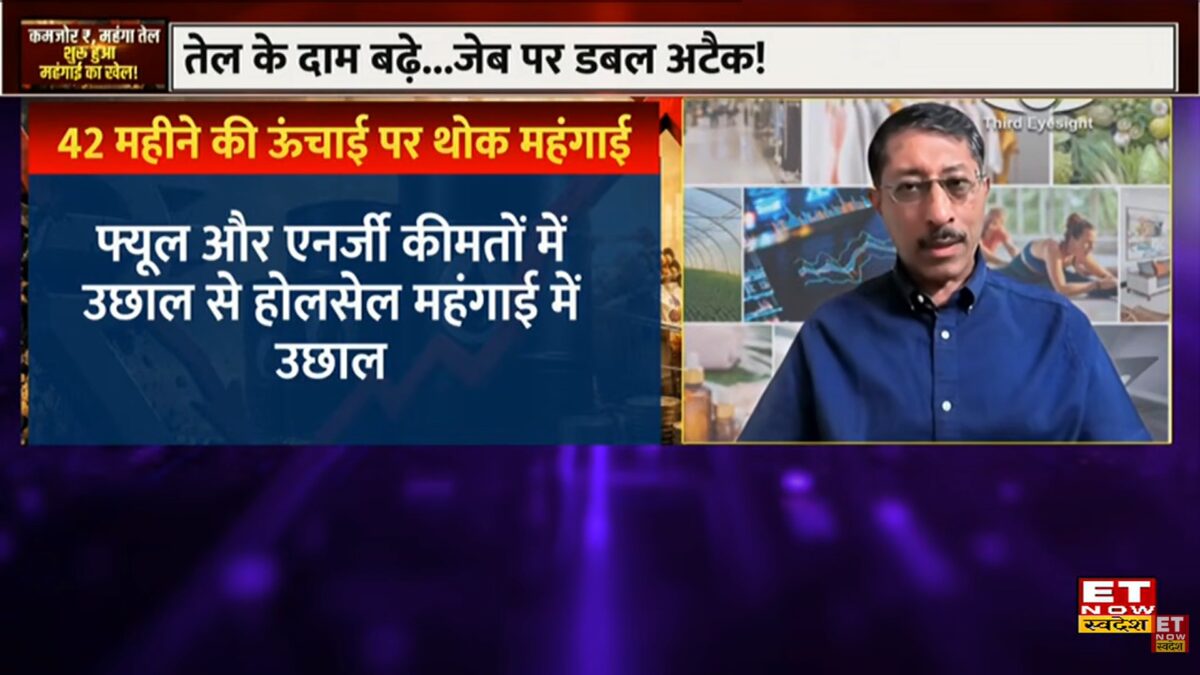
The ET Now Swadesh panel discussion focussed on the dual challenge facing the Indian economy: a weakening rupee and rising crude oil prices, which together are driving “imported inflation” and straining household budgets. Devangshu Dutta (Founder, Third Eyesight) put forth the following key points during the discussion (the video link is under the text summary below):
1. Dual Impact on Industry and Consumers:
2. Vulnerability of Small Businesses (SMEs):
3. Income vs. Expenditure Strain:
4. Ripple Effect of Crude Oil Beyond Logistics:
5. Shifts in Consumer Spending Patterns & “Shrinkflation”:
The panel noted that while the Reserve Bank of India (RBI) has adequate foreign exchange reserves to defend the rupee temporarily, the definitive solution relies heavily on the cooling down of global geopolitical tensions (such as the Middle East conflict affecting the Strait of Hormuz). Until then, Indian consumers will need careful financial planning and smart spending adjustments to navigate this inflationary phase. [Video below.]
admin
May 12, 2026

Anushka Jha & Kausar Madhyia, Afaqs
12 May 2026
On May 10, Prime Minister Narendra Modi, in his address to the nation, made some appeals to the citizens of India. In addition to asking Indians to re-adopt Covid-like practices of working from home and refraining from travel abroad, the prime minister also appealed to the citizenry to stop buying gold for weddings for a year.
The appeals come in response to the global energy crisis and economic instability triggered by the US-Iran war and the consequent West Asia conflict, which makes import-dependent commodities like gold especially vulnerable.
The market reaction was almost immediate. Following the Prime Minister’s appeal, jewellery stocks saw sharp declines on the BSE. According to PTI, Senco Gold fell nearly 11%, Kalyan Jewellers dropped close to 10%, and Titan Company declined around 8%, while Tribhovandas Bhimji Zaveri slipped over 6%.
National interest and gold monetisation
Industry leaders have responded by balancing the Prime Minister’s vision with structural solutions.
“India’s economic strength must always come before individual preferences. Hon’ble Prime Minister’s appeal regarding responsible gold consumption reflects the larger national concern of rising imports and pressure on foreign exchange reserves,” says Rajesh Rokde, chairman of the All India Gem and Jewellery Domestic Council (GJC).
He suggests that a revitalised Gold Monetisation Scheme (GMS) could “mobilise idle household gold” and “convert dormant gold into productive national capital”.
“Nation First. Responsible Gold Ecosystem Next,” he adds.
Avinash Gupta, the vice chairman of GJC, emphasises the emotional and cultural connection of gold to Indian households.
“But today, the nation also faces the challenge of balancing gold demand with economic stability.” He believes the GMS can channel gold into the formal economy, “reducing imports, easing CAD pressure and strengthening India’s financial ecosystem.”
India’s cultural fabric and the market reality
According to a report by MoneyControl, India imports 90% of its gold needs, making the country as one of the largest gold importers globally.
Gold is an integral part of India’s cultural fabric. It is not only a fitting gift for various auspicious occasions but also constitutes one of the most expensive elements of the ‘great Indian weddings’. Additionally, there are specific religious days dedicated solely to the purchase of gold, such as Akshaya Tritiya and Dhanteras.
However, external pressures are already weighing on the market.
Devangshu Dutta, founder of Third Eyesight, a retail management consulting firm, observes: “Jewellery retailers are already suffering from higher raw material costs, and rising gold and silver prices have driven several customers to postpone or reduce their purchases, including on significant dates such as Akshaya Tritiya.”
He notes that while wedding demand may remain strong, discretionary purchases will face a setback. “Companies will need to lean into lighter, more contemporary designs and lower caratage to sustain year-round demand.”
The potential impact of the appeal
Despite rising gold prices, approximately 700 to 800 tonnes of gold are consumed every year by Indian households, weddings, festivals, investment purchases, and rural savings, as per the same Money Control report.
Given the popularity of PM Modi, industry veterans expect a tangible shift in consumer behaviour.
“There will certainly be an impact,” says Arun Iyer, founder and creative partner at Spring Marketing Capital and former chief creative officer at Lowe Lintas, who played a significant role in the creation of Tanishq and several of its iconic advertisements.
“Given that the Prime Minister obviously has a very, very deep influence on our society, I think there will be an impact. People will think twice before buying gold.”
He further notes that while critical purchases will continue, “this quarter is expected to pose some challenges for the jewellery brands”.
Adaptation and brand strategy
According to the India Brand Equity Foundation, India’s gems and jewellery market stood at Rs 7,31,255 crore in January 2025 and is projected to increase to Rs 11,18,390 crore by 2030.
To sustain this growth, players like Suvankar Sen, CEO and MD of Senco Gold Ltd, are focusing on recycling.
“Today, almost 50% of our overall business is driven through recycled gold. This not only helps consumers optimise the value of their existing gold holdings but also contributes towards reducing dependence on fresh gold imports,” he says.
From a brand perspective, Saurabh Parmar, fractional CMO, believes the strategy must shift.
“In a scenario when the head of state says something like this, the brand faces a credibility problem, not a sales problem. The play is to shift from category promotion to category trust, lean on heritage, on long-term value, and on gold’s role in Indian culture.” He advises brands not to appear opportunistic but to signal, ‘We have always been there.'”
Given the popularity of Prime Minister Modi in India, his influence is likely to affect the performance of leading jewellery brands in the next quarter. This may include major players such as Tanishq, Malabar Gold & Diamonds, and Kalyan Jewellers, among others.
(Published in Afaqs)
admin
May 6, 2026
Vaeshnavi Kasthuril, MINT
Mumbai, 6 May 2026
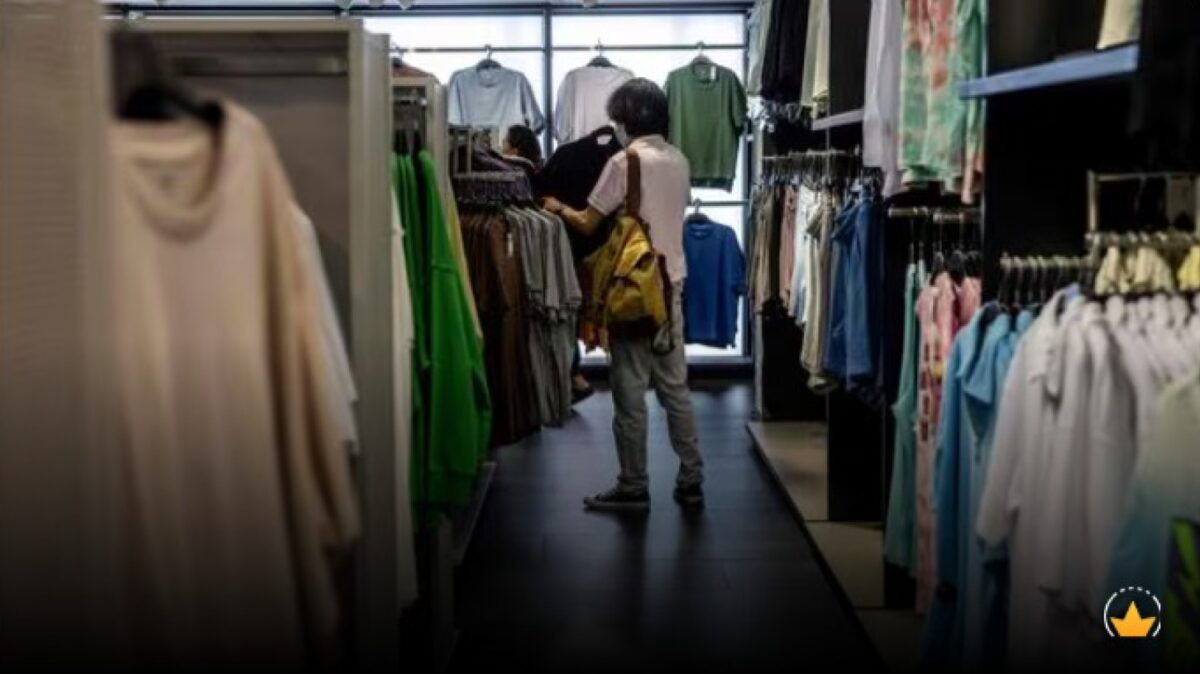
Fashion retailers are speeding up deliveries to keep pace with instant-gratification shopping driven by quick-fashion startups, with established players and newer brands taking sharply different approaches.
For example, brands such as Biba and The House of Rare have adopted a more calibrated, infrastructure-led strategy rather than a rapid overhaul of existing store networks. “We’ve been doing this in a very soft way but not necessarily from the same stores because that affects the customer experience,” said Siddharth Bindra, managing director of Biba. Bindra said using retail stores as fulfilment hubs for rapid delivery creates operational constraints, particularly given store sizes and layouts. “We don’t have very large stores; they are anywhere between 1,000 and 2,000 square feet. So that’s not the right efficiency,” he said.
Instead, the brand is evaluating a hub-based model in cities with higher store density, enabling faster deliveries without disrupting stone operations. “If we do, it will be though proper hubs in cities where we have four to five stores, where we would start with quick commerce and accelerate it,” he said. This could enable same-day or two to three-hour deliveries.
The House of Rare, which houses Rare Rabbit (men’s urban fashion) and Rareism (women’s fashion), is adopting a similar approach, evaluating city-levee fulfilment hubs in markets with higher store concentrations to enable faster deliveries while keeping retail outlets focused on walk-in consumers.
The strategy reflects a broader attempt among legacy retallers to belance speed with experience, rather than treating stores as Interchangeable logistics nodes. “The eventual goal is the customer, but it creates a lot of difference in the customer experience” Bindra said, pointing to the trade-offs involved.
Different take
In contrast, some brands are moving more aggressively to integrate stones directly into fulfilment networks.
Libas, an initial public offering (IPO)-bound apparel company, is networking its operating model to plug its physical retail network Into a faster, hyperlocal delivery system.
Earlier, the 12-year-old company followed a more traditional structure. Online orders were largely fulfilled from central warehouses and delivered over a few days, while stores primarily served walk-in customers, with the two channels operating independently.
That is now changing. Libas is using its stores and nearby warehouses as local fulfilment points, allowing it to service orders within a much smaller delivery radius,
“At Libas, the time frame will be approximately 60-90 minutes at the max,” said Bhavay Pruthi, senior vice president, e-commerce and product management.
The rollout has been gradual, starting with select cities and limited catchments, typically within a 7-10km radius, where delivery timelines can be tightly controlled. It has also narrowed the product mix initialy to itams that are easier to move quickly.
The push comes as consumer expectations around delivery timelines extend beyond groceries into fashion, forcing brands to rethink supply-chain design,
Rise of quick fashion
The urgency to adapt is being shaped by a surge in quick fashion startups that are attracting investor attention despite heavy cash burm.
The segment has seen a flurry of funding in recent months, with Zilo raising $15.3 million in February led by Peak XV, and Knot securing $5 million in a round led by 12 Flags in December.
It has also evolved rapidly. Quick-commerce platforms such as Zepto, Instamart and Blinkit initially offered a limited range of basic fashion items for last-minute purchases. This has since expanded into a more specialized category, with vertical players offering wider assortments across party, work and occasion wear with rapid delivery timelines.
New entrants are pushing the model further. Wydo, for instance, promises deliveries within 15 to 30 minutes in Bengaluru, while Gen Z-focused offerings such as Newme’s Zip and Snitch Quick are building businesses around near-instant fashion access.
Myntra’s rapid commerce division, M-Now, accounted for about 10% of orders in the locations where it was available as of last November.
“This is the new kind of experience that customers are expecting,” Pruthi said.
Libas is working with third-party logistics providers and quick commerce platforms for the last-mile delivery, while focusing internally on faster picking, packing and order routing. Quick commerce currently accounts for about 2% of its overall sales, with scope to grow as the model scales..
Early results, however, highlight the trade-offs. “We saw very good sell-throughs for e-commerce, but it was cannibalizing existing store sales,” Pruths said.
There are also fimits to what customers are willing to buy through rapid-delivery channels. “Customers do not have the confidence to spend 15,000 for a fashion product from a quick- commerce channel,” he said.
To address this, Libas has tightened delivery radii, curated a more suitable product mix, and is testing stores with attached dark-store infrastructure to balance walk-in and online demand.
Experts say these challenges are structural.
“If you look at fashion, it’s extremely unpredictable, and if you are a brand across multiple products, it’s complicated process,” said Devangshu Dutta, founder of management consulting firm Third Eyesight.
While demand for faster deliveries is rising, it remains a small slice of the overall market, with profitability still uncertain due to limited assortments and high fulfilment costs. For traditional retailers, adopting the model requires a fundamental reworking of supply chains that were not built for near-instant delivery, Dutta added.
(Published in MINT)
admin
February 14, 2026

This episode of theUpStreamlife is a freewheeling conversation between Vishal Krishna and Devangshu Dutta, founder of Third Eyesight, with insights into the growth of modern retail and consumption in India, brand building and M&A, the balance of power between brands and retailers/platforms, sustainability vs growth and many other aspects, and is well-suited for founders and teams who want to be building for the long run in India.
admin
February 11, 2026

Vaeshnavi Kasthuril, Mint
Bengaluru, 11 February 2026
Sales of winter wear were underwhelming for the second year in a row as an unusually delayed and milder winter disrupted demand for heavy winter wear, particularly in north and west India, executives at two of India’s top clothing retailers said. Initial optimism for a bumper season this year compounded the disappointment for retailers.
While early signs of a La Niña—a weather pattern typically known for bringing freezing temperatures to India—triggered some early buying in the previous quarter, the season remained unusually mild, leaving stores with a surplus of winter clothing. Excess rainfall and cyclonic activity during the festive period in parts of eastern and southern India further weighed on seasonal buying, compounding the pressure on winter sales which are typically front-loaded.
This slump is particularly painful because winter sales are the industry’s largest annual driver. These months coincide with India’s massive wedding season, when spending peaks. Together, they account for roughly 20% of total yearly revenue for apparel companies, according to industry estimates. India’s apparel market was estimated to be worth more than ₹1.9 trillion in FY25, of which 41% was organised, credit ratings firm CareEdge said in January 2026.
V-Mart: margin over volume
Lalit Agarwal, managing director of V-Mart Retail, said, “Northern India saw a delayed or milder winter initially, leading to dispersed demand for heavy winter wear. Winter demand was definitely delayed a little bit—it didn’t get lost, but it was erratic.” He added that while festive demand held up, “demand visibility was uncertain, particularly in winter-led categories, and we consciously chose to protect margins rather than chase volumes.”
V-Mart’s revenue grew a little over 10% year-on-year to ₹1,126.4 crore in Q3 from ₹1,023.7 crore a year earlier and ₹889.05 crore in the third quarter of FY24, but this growth was largely driven by wedding and festive-season clothing, executives at the company said.
Anand Agarwal, chief financial officer of V-Mart Retail, said despite forecasts of a strong, early winter, “peak winters were delayed across North and West India, leading to a lull post-Diwali.” He added, “While the festive period went off reasonably well, winter demand did not pan out as anticipated,” attributing the softer sales to fewer peak winter days and unusually warmer temperatures.
Despite the delayed demand, the company managed to avoid a build-up of unsold inventory during the quarter. “Inventory health remained strong despite the delayed winter, and in some categories we were even short of inventory,” said Anand Agarwal, indicating that the eventual dip in temperatures led to a sudden pick-up in demand in select winter categories rather than excess stock.
Winter-led assortments continue to account for a sizeable share of the company’s quarterly sales, underscoring its sensitivity to weather patterns. “Winter and pre-winter categories accounted for about 40-45% of the overall mix during the quarter, and this share rose to over 60% during peak winter weeks in December,” said Agarwal during the third-quarter earnings call. The higher share of winter wear sales during peak weeks helped cushion margins, even as volumes remained below expectations. Lalit Agarwal said the company refrained from aggressive discounting amid uncertain demand. “Higher full-price sell-through during the winter quarter supported margins, as we did not undertake aggressive discounting,” he said.
Vishal Mega Mart: the late recovery
Gunender Kapur, managing director and chief executive officer of rival Vishal Mega Mart, said delayed winters usually force retailers to push promotions to ensure that they don’t carry forward all that merchandise, because the next opportunity to sell it would be the following year.
Despite this, the company’s performance held up, he said, highlighting that winter sales achieved robust double-digit same-store growth for the entire season and the full quarter, effectively overcoming the sluggish demand during December. Kapur noted that demand for winter clothing increased significantly in January, adding, “Winter merchandise is still selling well, both in our stores and in other stores, we believe.”
Vishal Mega Mart reported revenue growth of about 17% to ₹3,670.3 crore in Q3 FY26 from ₹3,135.9 crore in Q3 FY25 and ₹2,623.5 crore in Q3 FY24, largely on the back of wedding and festive-season demand.
Kapur said the company was unsure whether there would be significant unsold winter merchandise at the end of the season, adding that maintaining pricing discipline helped protect profit margins. “Merchandise that sells in December typically fetches a higher price than January merchandise for winter because sales often begin by late December or early January,” he said. “In our case, there was no problem. We achieved same-store sales growth of over 10%, even with the winter merchandise we purchased for the autumn-winter season.”
V2 Retail: the outlier
In contrast, V2 Retail recorded strong performance in the third quarter, largely driven by winter wear. Revenue surged nearly 60% year-on-year to ₹929.2 crore in Q3 from ₹590.9 crore a year earlier. This is perhaps because V-Mart and Vishal Mega Mart are more concentrated in north and central India, where winter demand was more uneven this season, while V2 has a stronger presence in eastern and north-eastern markets, including Bihar, Jharkhand, Odisha and Assam.
Managing director Akash Agarwal said the early onset of winter led to a “very good season” for the company. He noted that winter garments typically command a much higher average selling price (ASP) than summer products, which resulted in a visible bump in average bill value during the third quarter, led by higher sales of jackets and sweaters. Agarwal said this high-ASP, high-margin category accounted for the bulk of Q3 sales and was a key driver of the company’s same-store sales growth.
A worsening problem?
Two straight years of sluggish sales because of erratic winters highlight broader challenges around climate change for apparel retailers, which peg their inventory based on weather patterns and demand.
“Seasons have always been inherently unpredictable, and retailers have never been able to forecast with certainty how cold or warm a winter will be or how long it will last,” said Devangshu Dutta, founder of Third Eyesight, a consulting firm. However, he said that the challenge has intensified over the past 15-20 years as apparel businesses have scaled up and expanded their store footprints nationwide, stretching product development and supply chains over several months.
“No matter how hard you work on the plan, your forecast will always be wrong. You will either overshoot or undershoot,” Dutta said, adding that this leaves retailers grappling with either shortages or excess stock. Winterwear, he said, is particularly vulnerable because it has a higher value per unit, a much shorter selling window, and a smaller market, factors which together create a “humongous problem” for retailers.
Data from a World Meteorological Organisation report published on 16 January showed that 2025 was among the three warmest years on record worldwide, continuing a decade-long streak of exceptional heat despite the cooling La Niña phase. This is a clear sign that background warming from greenhouse gases is overwhelming natural variability, the report said. It suggested that climate change will intensify seasonal shifts and extreme weather in the years and decades ahead, making industries tied to seasonal patterns, such as winter apparel, increasingly vulnerable to unpredictable weather swings and weaker cold spells.
(Published in Mint)
