
Devangshu Dutta
October 9, 2016
P. Karunya Rao of Zee Business in conversation with Devangshu Dutta, Chief Executive, Third Eyesight and Narayan Devanathan, Group Executive & Strategy Officer, Dentsu India, about festive discounts, the evolution of ecommerce and retail business in India.
admin
September 12, 2016
Suneera Tandon, Quartz
New Delhi, 12 September
2016
 The Platonic ideal
“Efficiency
is doing better what is already being done.” – Peter Drucker,
Innovation & Entrepreneurship: Practices and Principles
The practice
Research
firm Gartner defines supply chain as, “…the processes of creating and
fulfilling demands for goods and services. It encompasses a trading
partner community engaged in the common goal of satisfying end
customers.”
Sounds simple? But it hardly is. In fact, the
supply chain can be one of the most complex structures in a business,
piecing together design, development, sourcing, manufacturing, and
distribution. It gets even more complex when it relies on rural India,
which is scattered over 640,867 villages and are often hard to access.
Fabindia, a chain of retail stores, has spent close to five decades
scoping India’s hinterland to connect rural Indian artisans to urban
shoppers. Here’s how they did it.
Fabindia began its India
sojourn back in 1960 when John Bissell, who was first introduced to the
country in 1958 while on a two-year grant from the Ford Foundation,
decided to set up an export shop to sell home furnishings to overseas
customers. Bissell, whose work at the foundation involved advising
government-based craft organizations on handloom fabrics, spent a lot
of time traversing the length and breadth of the country.
In
1976, the export house diversified into retail through a small store
that sold leftovers from export orders in Delhi’s tony market of
Greater Kailash. It took another two decades for retail to became the
mainstay of the company’s business.
Fifty years later, Fabindia,
managed by John’s son William Bissell, is a widely recognized global
brand, known for handwoven and hand-made goods that connect some 55,000
artisans from the country to consumers worldwide. In the process, it
has achieved two broad goals: to market the handloom tradition of India
to the rest of the world and to provide sustained employment to
artisans in rural areas.
The chain sells everything from
handwoven saris, rugs, apparel, home d�cor, and organic food in its 220
stores across 83 cities in India, including eight stores in overseas
markets such as Dubai, Singapore, Malaysia etc. It also retails its
products online to 33 countries. For the fiscal year 2014-15, Fabindia
had a turnover of Rs1,148 crore (approximately $170 million).
But
behind the red and black Ikat-printed scarves, Kalamkari prints from
south India, and block-printed Bagru fabric from north India is an
extensive and complex supply chain that runs from villages across the
country, covering a third of India’s over 650 districts.
The
retailer has successfully taken its founder’s vision to enable social
change at the grassroots level while engaging in a profit-making
business for urban shoppers. It does this while building systems that
encourage not just fair remuneration to India’s rural artisans, but
also provides infrastructure, access to technology and systems, quality
guidelines, and timely payments to these craftsmen. Fabindia also
offers access to capital and raw materials to artisans working with the
retailer.
As William Bissell puts it in a Harvard Business
School case study: “It seems contradictory that we pursue both a social
goal and a profit, but I believe that is the only way to do it.”
Through most of the ’90s and early 2000s, Fabindia grew as a retail chain expanding modestly in the country’s top metros.
Since
the opening of the Indian economy through the economic reforms of 1991,
Fabindia’s interaction with artisans scattered across the country has
grown significantly (pdf). The complexity of the company’s supply chain
is far different from that of a regular manufacturer that works through
designated factories.
The company’s interaction with these
artisans is very localized since it works with them through multiple
associations. The retailer deals directly with individual artisans who
work out of their homes and also with clusters of crafters and rural
NGOs and organizations that have a crafts supply base.
In
addition, the company uses its 11 production hubs across the country,
which are basically aggregation points, to centralize orders and pair
up vendors with artisans. Each hub has a number of field offices
attached to it.
“The production hubs and field offices act as
nodal points for interaction with the artisans that constitute the
supply chain, which is one of the most unique in the world,” said
Prableen Sabhaney, head of communications and public affairs at
Fabindia Overseas.
While most artists have the skill and the
craft, they don’t have the acumen to decipher fashion trends for the
season. So Fabindia acts like a conduit between their crafts and the
market.
At Fabindia, a large proportion of products carry some
element of the handmade, which requires an ability to communicate with
artisans and institute quality control as most artisans work largely in
India’s hinterland. For instance, an 18-step process is required to
create a simple pattern in Bagru print, a traditional form of
block-printing using natural dyes perfected in the northern state of
Rajasthan.
And the company has spent years putting processes to
ensure newer collections reach the stores on time. Recently, the
product range has become more diversified as well.
As for
remuneration, Fabindia follows a bottom-up structure. It asks artists
what it costs them in terms of—time, energy, skills, and raw material
to hand-make a certain fabric or accessory and pays accordingly.
Analysts
who track the sector believe that Fabindia’s unique model sets it apart
from other domestic or export-focused handicraft companies purely
because of the sheer volume of artisans it works with.
“In
handicraft, there are several companies that have created substantial
export-led supply bases, which tap into craft both from the rural
artisans as well as those based in smaller urban centers,” Devangshu
Dutta, chief executive at consulting firm, Third Eyesight said.
“Among
these, Fabindia has certainly had the most visible success in terms of
size and brand profile domestically. Fabindia has achieved scale by
working through artists, intermediaries and supplier companies who have
acted as anchors in the rural communities,” said Dutta.
Sabhaney
offers that challenges span from co-creating contemporary products
while using traditional techniques to quality issues, since the
products are created in environments that are very different from where
they are finally used. The company also works hard to provide access to
raw material and capital across many hard-to-access areas—and doing all
of this at scale.
“The ability to do this and not lose anything
in translation has been and will continue to be Fabindia’s strength,”
added Sabhaney.
The takeaways
As
the market evolves with e-commerce and the entry of foreign brands,
which has altered consumer preferences and style-cycles, Fabindia knows
it needs to quicken its response to these changes.
Not all of
the innovations the company has tested remain. In a unique ownership
structure created by Bissell, Fabindia set up supplier regional
communities (SRCs), which were community owned companies, self-managed
by a group of artisans, weavers and craft workers in a particular
geography back in 2007. According to a case study by INSEAD (pdf),
these SRC’s “offered artisans joint ownership of resources and access
to common facilities. It also trained artisans and developed new
handicrafts. The SRC allowed Fabindia to consolidate supply capacity
instead of dealing with single-loom weaver units, and to implement a
standard system for production and delivery control.”
The 2010
book, The Fabric of Our Lives reveals how production worked under the
SRC model. A number of dedicated designers and sourcing officers worked
closely with rural artists giving them design inputs in tandem with the
latest trends in the market and order quantities through dedicated
distribution centers in key villages. These designers worked with the
weaver to develop samples. They were then shown by the designers that
refer it to a product selection committee. The fabric was then approved
and the cost price finalized. The quantity of fabric to be produced the
first time was pre-determined by software based on a minimum stock
requirement ratio and an order is given to the weaver to make the
product. The weaver produced the requisite amount of fabric in a month
and brought it into the distribution centers.
But the SRC model has now been diluted as the company looks more innovative ways to engage rural artisans.
In
the company’s next vision plan, it is focusing more on cluster
development that will basically help bring artisans up to speed with
the processes and market trends.
“There are plans for a greater focus on the handloom and hand-craft sector,” Sabhaney said.
“There
is a much bigger focus on the social aspect, there are going to be
significant investments in developing clusters and bringing them up to
what is required around the country,” she added.
(Published in Quartz)
admin
August 16, 2016
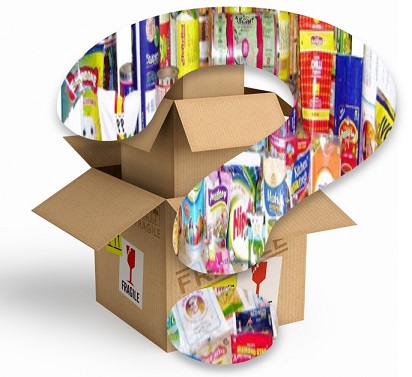
Packaging of products is, undoubtedly, an extremely strong means of conveying the essence of the brand, its ethos and its personality.
Packaging is not only a vehicle to endorse the identity of a brand in a consumer’s mind, the growing need for sophisticated packaging also results from many lifestyle needs such as ease of transportation, storage, usage and disposability sought by convenience seeking and time pressed consumers.
But, increasingly, it also reflects the brand’s responsibility and sensitivity towards Nature and its resources.
If we, as consumers, were to reduce or optimize packaging from our daily lives, especially for food and beverages, there will be a redefinition of the processes involving our purchase and usage. It will also to a larger degree alter the systems and processes of organisations whose distribution and retail is integrally dependent on packaging.
Original Unverpackt, a concept grocery store in Berlin, Germany operates without food packaging that would later turn into garbage. The idea around which it is build is to bring one’s own containers and have it weighed. The supermarket will label your containers. After one shops and gets to the till, the weight of the containers is subtracted and one has to pay for the net weight of the groceries. The label is designed to survive a few washings so one may come back and skip the weighing process for a few more times. In this way, not only do the food products shed their familiar identifiers (brand colors, packaging structures, and bold logos) but the ways they move from shelf to home becomes radically different. While shoppers are encouraged to bring their own bags and containers with them, a range of re-usable jars and containers are also available for purchase onsite. As much as possible, produce is sourced locally.
At this point of time, it may seem difficult to adopt this framework in entirety. However we should remember that just a few short decades ago we followed similar practices such as engaging biodegradable, recyclable, reusable materials for packaging, making use of one’s own containers and bags and filling them in with quantities as per the requirements from the bulk containers.
Singapore’s National Environment Agency (NEA) will be introducing mandatory requirements for companies to use sustainable resources in packaging and reduce packaging waste very soon. It is still being decided in what forms the regulations could be developed, but the preliminary ideas include requiring companies to submit annual reports on how much packaging they use, to develop waste reduction plans, or to meet recycling targets. Belgium on the other hand has been championing the cause of waste management by maximizing recycling and reusage.
The global trends are moving towards sustainable packaging given the ecological resource wastage it creates, the garbage the packaging material produces and the air and the ground water pollution the landfills create. Earth Overshoot Day, which marks the date when humanity’s demand for ecological resources and services in a given year exceeds what Earth can regenerate in that year, is arriving progressively earlier and earlier, indicating that the humanity’s resource consumption for the year is exceeding the earth’s capacity to regenerate those resources in that year.
Another very grim consequence that was witnessed is the frightening and highly visible impact on marine life – since the start of this year more than 30 sperm whales have been found beached around the North Sea in the United Kingdom, the Netherlands, France, Denmark, and Germany. After a necropsy of the whales in Germany, researchers found that four of the giant marine animals had large amounts of plastic waste in their stomachs. Although the marine litter may not have been the only cause of them being beached, it had a horrifying consequence on the health of these animals.
Given the serious consequences and the growing sensitivity towards these consequences, it is imperative for product manufacturers, raw material manufacturers and equipment and technology providers to design packaging with solemn intent to address sustainability.
The best time to reduce the use of packaging was 50 years ago. The next best time is now.
Devangshu Dutta
January 15, 2016

Retailers seem to be fighting a losing battle against the growth of ecommerce, and it is only the nature of the shopping activity, especially for fashion – interactive, social, and immersive as it is – that has kept many retailers relevant and in business.
However, the defensive stance is changing, and now they’re using technology to get the customers back into the store. Forward-thinking retailers are reimagining trial rooms, stores, business processes and entire business models. It’s not a physical versus virtual approach but an approach that integrates both sides. The idea is to create a more immersive experience than pure digital retail can be, using some of the same tools as ecommerce.
It is important to remember that the whole retail environment is a “suggestive” environment. Due to cost and other operational factors most retailers are ill-equipped to provide appropriate levels of excitement, suggestion and support during the browsing and buying process.
For many, the simplest move could be screens serving up their catalogue to customers within the store. For instance, US department store chain Kohl’s has initiated connected fitting rooms that identify products the customer is carrying, and bring up not only those items onscreen, but additional colours and sizes that are available. If the customer wants an alternative, a message goes to a sales associate who can fetch the requested option. Macy’s and Bloomingdales are using tablets in the trial rooms, while Nordstrom, Neiman Marcus and Rebecca Minkoff are attempting to boost their fashion sales using magic mirrors to provide similar enablement. These devices and the processes empower and involve the customer far more, while leaving store staff free for other activities.
A step up, Puma is using “virtual trials” for its apparel products by having a customer take images of herself in specific positions, and then mapping styles on their own images to visualise how they might look. While this needs more work and investment, this is still only a more developed product browser technique from the customer’s point-of-view.
The next level, augmented reality trials and virtual fit, are significantly more sophisticated at creating simulations of a selected garment image draping and falling on the customer’s body even as he or she moves normally. Imaging and texturing of the simulated garments is technically challenging and expensive, repeated for each new style and option. The imaging also needs to mimic the “wearer’s” movements. Nevertheless, retailers such as Polo Ralph Lauren are finding it worth their while to investigate these new technologies, as these reintroduce the much needed “theatre” that are integral to a successful retailer.
For the customer virtualisation expands the number of items “taken” into the trial room, and creates more convenient product discovery. More products can be seen in the same shopping time, and sharing of images and videos with friends and family, engages them in the shopping process as well.
For retailers, the benefits multiply. Inventory can be optimised, and there is reduced handling and shrinkage. Even without sales associates, it is feasible to prompt for alternatives and related products, improving conversion and transaction values, reducing space and costs of physical trial rooms, and increasing the number of customers serviced especially at peak traffic times.
A phenomenal advantage is the data captured that is relevant while the customer is in the store, but which can be linked to future promotions. Valuable intelligence, such as what is being tried and for how long, can help the retailer to quickly gauge demand patterns, and adjust pricing and promotions. Normally retailers only capture sales transactions (post-fact), and miss out the rich information on in-store behaviour that etailers do collect and analyse.
However, massive hurdles to virtualisation remain, including data input accuracy, product accuracy, and the technical capabilities of the tech solution adopted. A bigger concern is whether technology is intuitive and seamless, or whether it gets in the way of the shopping experience. Further, consumers do have privacy concerns about the images and other data collected.
Its important to remind ourselves that, on its own, technology is just a novelty – huge transformation of business processes, organisational capabilities and behaviours must happen as well.
That is perhaps the biggest mountain to climb.
Devangshu Dutta
July 30, 2015
Much has been written recently, with more than a touch of surprise, about ecommerce companies opening physical retail stores. Whether it is Amazon, Birchbox and Bonobos in the US, Spartoo in France, Astley Clarke in the UK or FirstCry and Flipkart in India, young tech-based ecommerce businesses are adopting the ways of the dinosaur retailers that they were apparently going to drive into extinction.
Perhaps, the seeds of the surprise lie in the perception that the ecommerce companies themselves built for their investors, the media and the public, that it was only a matter of time that the traditional retail model would be dead.
Or perhaps we should pin it on their investors for keeping the companies on the “pure-play” path so far – venture funds that have invested in ecommerce have largely taken the view that the more “asset-light” the business, the better it is; so they’re far happier spending on technology development, marketing, salaries, and even rent, than on stores and inventory.
After a bloody discounting and marketing battle, in a few short years, there are now a handful of ecommerce businesses left standing in a field littered with dead ecommerce bodies, surrounded by many seriously wounded physical retailers who are trying to pick up unfamiliar technology weapons. And their worlds are merging.
Which is a Stronger Building Material – Bricks or Clicks?
Online business models offer some clear strengths. Etailers have a reach that is unlimited by time and geography – the web store is always up and available wherever the etailer chooses to deliver its products.
An ecommerce brand’s inventory is potentially more optimised, because it is held in one location or a few locations, rather than being spread out in retail stores all across the market including in those stores where it may not be needed.
However, we forget that consumers don’t really care to have their choices and shopping behaviour dictated by the business plans of ecommerce companies or their investors. The fact is that physical retail environments do have distinct advantages, as etailers are now discovering.

Firstly, shopping is as much an experiential occasion as it is a transaction comprising of products and money. In fact, the word “theatre” has been used often in the retail business. For products that have a touch-feel element, the physical retail environment continues to be preferred by the customer. Of course, there are products that could be picked off a website with little consideration to the retail environment. For standard products such as diapers or a pair of basic headphones, online convenience may win over the need for a physical experience. However, non-standard products such as apparel or jewellery lend themselves to experiential buying, where a physical retail store definitely has an edge.
Shopping in a physical retail environment is also a social and participative activity. We take our friends or family along, we ask for their opinion and get it real-time. The physical retail environment lends itself to the consumer being immersed in multiple sensory experiences at the same time. These aspects are not replicable even remotely to the same degree by online social sharing of browsed products, wish-lists and purchases, nor by virtual smell and touch (at least not yet!).
In a market that is dominated by advertising noise, a physical store also helps to create a more direct and stronger connect for the consumer with the brand than any website or app can. An offline presence creates credibility for a brand, especially in an environment where online sales are dominated by discounts and deals, and many brands have risen and fallen online in the customer’s eyes during the last 3-4 years.
As a matter of fact, every store acts as a powerful walk-in billboard for the brand. If used well, the store conveys brand messages more powerfully than pure advertisements in any form. This reality has been embraced by retailers for decades, as they have created concept stores and flagship stores in locations with rents and operating costs that are otherwise unviable, except when you see it as a marketing investment.
Showrooming vs. Webrooming
As ecommerce has grown and brands have become available across channels, offline and online, the retail sector has been faced with a new challenge: customers browsing through products in the store, but placing orders with ecommerce sites that offered them the best deal. This obviously meant that retailers were, in a sense, running expensive showrooms (without compensation) on behalf of the ecommerce companies! The industry adopted the term “showrooming” to describe the phenomenon.
However, ecommerce businesses are now getting a taste of their own medicine as retailers are benefitting from a reverse traffic.
Consumers have now started using websites to conveniently do comparative shopping without leaving the comfort of their homes, and collect information on product features and prices but, once the product choice has been narrowed down, the final decision and the actual purchase takes place in a physical store.
This is described with a slightly unwieldy term, “webrooming”. This is one among the reasons that lead to consumers abandoning browsing sessions and carts when they’re online.
Bricks AND Clicks
The wide split between offline and online channels is mainly because traditional offline retailers have been slow to adopt online and mobile shopping environments.
Most physical retailers around the world have approached ecommerce as an after-thought, with a “we also do this” kind of an approach. Ecommerce has typically been a small part of their business, and not typically a focus area for top management. So, in most cases the consumer’s attitude has also reflected these retailers’ own indifference to their ecommerce presence. However, due to the accelerating penetration of mobiles, tablets and other digital devices, a serious online transactional presence is now vital for any retailer that wants to remain top of the consumer’s list.
On the other hand, ecommerce companies, as mentioned earlier, have so far mainly stuck to “pure-play” online presence due to their own reasons. However, with passage of time there is bound to be a convergence and eventually a fusion between channels.
The Journey to Omnichannel
Omnichannel today, in my opinion, is still more a buzzword today than a reality. Being truly omnichannel requires the brand or retailer to offer a seamless experience to the customer where the customer never feels disconnected from the brand, regardless of the channel being used during the information seeking, purchase and delivery process. For instance, a customer might seek initial comparative information online, step into a department store to try a product, pay for it online, have the product delivered at home, and be provided after-sales support by a service franchisee of the brand.
Very few companies can claim to offer a true omnichannel experience, due to internal informational and management barriers. However, having an effective multi-channel presence is the first step to creating this, since operating across different channels needs a completely different management mind-set from the original single-channel business. Having a presence across different channel means that a retailer will need to juggle the diverse needs. Capabilities, processes and systems that are fine-tuned for one channel, may not be fully optimal for another channel. This requires the retailer to restructure its organisation, systems and processes to handle the different service requirements of the various channels.
For instance, brick-and-mortar retailers moving online need to rethink in terms of the service (“always open”), speed (“right now”), and scale (“everywhere”). A traditional retail organisation is seldom agile enough to work well with the new technology-enabled channels as well.
An etailer opening physical stores, on the other hand, needs to embrace product ranging and merchandising skills to allocate appropriate inventory to various locations, as well as the ability to create and maintain a credible, distinctive store environment – in essence, inculcating old-world skills and overheads that they thought they would never need.
The retail business is not divided black-or-white between old-world physical retailers and the upstart online kids – at least the consumer doesn’t think so.
Retailers need to and will see themselves logically serving customers across multiple channels that are appropriate for their product mix. They need to mould their business models until they achieve balance, proficiency and excellence across channels, and eventually become truly omnichannel businesses. It doesn’t matter from which side of the digital divide they began.
