
admin
July 28, 2025
By Meenakshi Verma Ambwani, Hindu Businessline
New Delhi, July 28, 2025
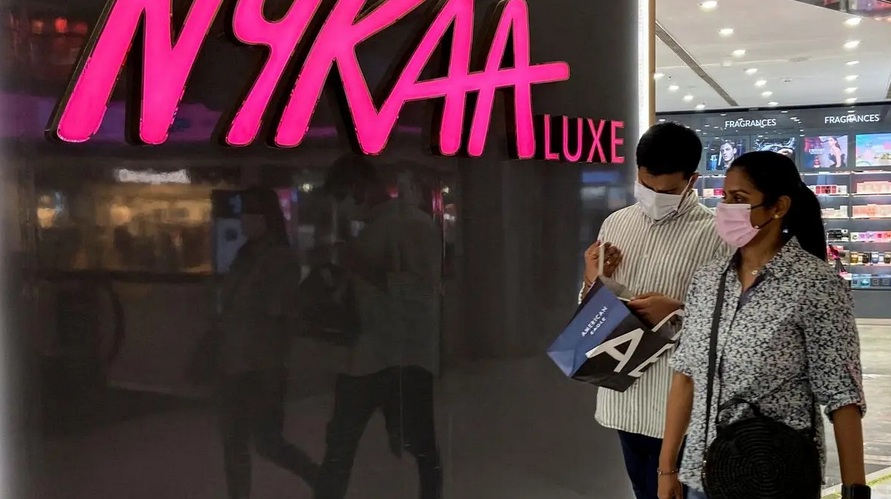
Nykaa said that Kay Beauty, co-founded with actor Katrina Kaif, has crossed the ₹240 crore mark in terms of Gross Merchandise Value.
Stars from the tinsel town are donning the entrepreneurial hat to venture into the beauty and fashion business space. Some have even succeeded in growing their brands sustainably, earning big bucks.
Take for instance Skincare brand Hyphen, co-founded by actor Kriti Sanon with Pep Brands, which recently touched the ₹400 crore-mark in Annual Recurring Revenues.
Tarun Sharma, CEO and co-founder, Hyphen told businessline: “The brand is witnessing healthy growth rate quarter-on-quarter. In the first year itself, it touched ₹100 crore ARR. We had aimed for ₹500 crore ARR in 3-4 years and, within two years, we are at ₹400crore ARR.” Pep Brands led by Sharma owns mCaffeine and Hyphen.
The model that works
Sharma believes an operator-led, celebrity anchored model works better. ”The operator can bring in the necessary financial and execution muscle. If a celeb partners with an operator that has deep expertise in the space, then there is huge potential for growth,” he added.
“Product launches, marketing and distribution are very data-driven at Pep Brands. It guides us on what to launch, when to launch, and how to launch products. That has helped Hyphen in achieving this kind of growth rate. It is by design that the majority of the business of Hyphen is D2C,” Sharma explained.
In May, Nykaa said that Kay Beauty, co-founded with actor Katrina Kaif, has crossed the ₹240 crore mark in terms of Gross Merchandise Value. On an earnings call for Q4FY25, Adwaita Nayar, Executive Director, Chief Executive Officer, Nykaa Fashion, said: “Kay Beauty is one of the fastest-growing brands on the platform. It’s hit about ₹240 crore of GMV. The innovations have been fantastic this year. So, it is quite a premium brand, and I think the consumers are accepting it even at that price point. It’s got great gross margins.”
Earlier this year, Reliance Retail Ventures announced that it has decided to acquire 51 per cent stake in Ed-a-Mamma , a kid and maternity wear brand founded by actor Alia Bhatt. According to some reports, Hrithik Roshan’s sportswear brand HRX is a ₹1,000 crore brand.
Among the recent entrants are Ranbir Kapoor, who has decided to foray in the apparel and accessories space with ARKS. Launched in February, the brand has also launched its first store in Mumbai, followed by a second store in New Delhi and another with Broadway in Hyderabad.
‘Shift in preferences’
Abhinav Verma, co-founder and CEO, ARKS, told businessline: “We are seeing a shift in consumer preferences towards made-in-India brands. We decided to leverage on the strong manufacturing capability that India has to build a brand that is both aspirational and offers value. We are looking to build a ₹100 crore brand in the next 3-4 years with a strong omni-channel strategy.”
“The success of some of these brands demonstrates that building on consumer relevance and with powerful time-bound execution, celebrity ventures can become significant players in a crowded market. With consumer demand for relatability and digital-first branding on the rise, this segment will definitely grow. However, only brands that offer genuine value to consumers, and not just star appeal, are likely to endure,” said Devangshu Dutta, CEO, Third Eyesight.
(Published in The Hindu-Businessline)
admin
July 16, 2025

Prabhanu Kumar Das, Medianama
16 July 2025
E-commerce logistics platform Shiprocket announced the launch of Shunya.ai, a sovereign AI model developed in India to support the country’s Micro, Small and Medium Enterprises (MSMEs), on July 11. The company claims that it is India’s first multimodal AI stack, built in partnership with US-based Ultrasafe Inc.
This announcement comes at the heels of Shiprocket filing a confidential draft red herring prospectus (DHRP) with the Securities and Exchange Board of India (SEBI) in May 2025 for their Initial Public Offering (IPO). The company is expected to raise around Rs 2500 crore in its IPO.
What does the AI model offer?
As per Shiprocket’s website, Shunya.ai is built on a freemium model, with unlimited access priced at Rs 499 a month for MSMEs. It is directly integrated into the Shiprocket platform and offers AI agents across multiple languages. According to the company, the agents can perform the following tasks:
Shiprocket CEO Saahil Goel stated, “We’ve adapted Shunya.ai from the ground up for Indian languages, commerce workflows, and MSME needs. By embedding it directly into our platform, we’re giving over 1,50,000 sellers instant access to tools that are intelligent, local, and scalable, levelling the playing field for businesses across Bharat.” Notably, Larsen and Toubro’s AI cloud arm, Cloudfiniti is reportedly providing the underlying GPU infrastructure, ensuring that all data processing and storage remains within India.
This AI model does offer multiple benefits but it will not level the playing field against big players, as per Devangshu Dutta who is the founder of specialist consulting firm, Third Eyesight.
“While Shunya AI can help small businesses compete better, it won’t completely level the playing field. Large companies still have greater organisational capacity and capability to respond to the insights offered, including more data and bigger budgets. The real benefit for small businesses is improving how they work and serve customers within their current markets, rather than suddenly competing with giants,” Dutta said.
The E-Commerce AI Pivot
This is not the first time that an Indian e-commerce platform has unveiled a B2B AI service through its existing platform. Zepto recently launched Zepto Atom in May 2025, a real-time tool that offers consumer brands available on the platform minute-level updates, PIN-code level performance maps, and Zepto GPT, a Natural Language Processing (NLP) assistant trained on internal data that brands can query about their stock keeping units (SKUs) and performance data.
Zomato and its e-commerce arm Blinkit have also been growing their AI capabilities. Analytics India Magazine previously reported that the company’s generative AI team has grown from 3 to 20 engineers in the time-span of a year. Zomato introduced a personalised AI food assistant for users, and also uses AI in its backend to optimise delivery times and improve consumer support. Blinkit also released the Recipe Rover AI in May 2023, an AI assistant for recipes.
Other companies like Swiggy with ‘What to Eat’ AI, Myntra’s MyFashionGPT AI shopping assistant, and Amazon’s Rufus have also adopted AI assistants on their platform as a tool for the consumer.
The issue of merchant stickiness
Dutta asserts that this shift means platforms like Zepto and Shiprocket are changing from being service providers to becoming data intelligence companies. They are generating, or are in the process of generating revenue through transactional data that flows through the company.
“While this can create better insights and automation for merchants on these platforms, it also could make the merchants more dependent on the platforms. Once a merchant builds its operations around a platform’s specific AI tools and insights, it becomes much harder to switch to a competitor – creating stronger merchant stickiness. We already see this in infrastructure and core services such as banking and financial services, enterprise cloud services, building management etc. and the same is likely to happen in AI-enabled process management”, he said.
Why this matters
As Shiprocket is preparing for an IPO, Shunya.ai becomes another means to generate revenue for the company. This app can extend Shiprocket’s reach to local physical stores and MSMEs, by offering them the opportunity to provide the same experiences and support to the consumer that larger retailers and e-commerce platforms do, while automating delivery automation, cataloguing, and customer support.
Furthermore, the launch of this model is also part of the larger trend of AI integration and automation, both within e-commerce platforms for their consumers and within the back-end for optimisation.
Competition in these sectors and merchant stickiness may also become an issue, as businesses hosted on these e-commerce services may become reliant on specific AI tools and their outputs.
Questions of data privacy are also important when it comes to service companies moving towards data intelligence: How do these AI models gather and use data? The consent of end-consumers in these B2B models, data storage, and security are all issues that need to be studied as e-commerce and retails pivots towards AI.
Some Unanswered Questions
MediaNama has reached out to Shiprocket with the following questions and will update the article when we receive a response.
(Published in Medianama)
admin
March 20, 2025

Sagar Malviya, Economic Times
Mumbai, 20 March 2025
Established beauty product makers such as Forest Essentials, Colorbar, Kama Ayurveda, Body Shop, VLCC Personal Care and Lotus Herbals saw a slowdown in sales growth in FY24, according to the latest Registrar of Companies filings. Consumers favoured new-age rivals such as Minimalist and Pilgrim, specialised derma brands, as well as global labels Shiseido, Innisfree and Eucerin.
Sales growth of established brands mostly in the natural skincare segment, more than halved to single digits during the previous financial year amid a broader economic slump.
In contrast, companies such as L’Oreal, Nykaa and Sephora continued to grow at 12-34% on a significantly bigger base, even as they lost pace.
Direct-to-consumer brand Pilgrim more than doubled its sales, Minimalist’s revenue increased 80% and Foxtale’s sales surged 500% on a lower base.
“With most consumers tightening their budget on discretionary spends in FY24, they seem to have opted for brands that give instant benefits compared to natural products, which take time to be effective,” said Devangshu Dutta, founder of retail consulting firm Third Eyesight.
Over the past few years, there has been a flurry of beauty product launches, which have depended on platforms such as Nykaa and Tira for sales.
In the past two years, Nykaa has launched more than 350 brands, or In the past two years, or nearly one new label every alternate day on average.
This includes international brands such as CeraVe, Uriage and Versed, as well as home-grown brands such as Foxtale and Hyphen.
Reliance Retail, which entered beauty retailing with Tira two years ago, now sells nearly 1,000 brands, including exclusive labels such as Akind, Augustinus Badee, Allies of Skin, Kundal and Patchology.
“10 years ago we were only competing against big guys,” Vincent Karney, global chief executive of Beiersdorf, maker of Eucerin, Nivea and La Prakrit, told ET last month. “Now we have those local brands, and we have to become a bit more agile.”

On Nykaa, Fenty Beauty by Rihanna is the highest-selling brand in lipcare while Eucerin has become its biggest premium dermo-cosmetic serum. South Korean beauty brands Axis-Y, Tirtir and Numbuzin grew over 60% in 2024, with sales of toners increasing 104%, serums 45%, moisturisers 52% and sunscreens 154% on the platform.
VLCC and Colorbar did not respond to ET queries, while Forest Essentials was not reachable.
In January, Mike Jatania, cofounder and executive chairman of The Body Shop and Aurea Group, told ET, “There would be continuation of new entrants. Inflation is still a global issue and we will see the pressure. Competitive environment will be a challenge… 70% of our stores are showing decent growth. We have closed some stores and opened a few also, that’s the nature of the business.”
Ingredients Matter
Warnery of Beiersdorf emphasised the need to stay focused on “big innovation, by being able to talk to GenZ, (a position) which might be filled in by those local brands coming with basic ingredients.”
The likes of Minimalist, Ordinary and Pilgrim disclose active ingredients at a granular level, specifying the exact percentage of acid used in the product to appeal to GenZ users (those born between 1997 and early 2010s), who are said to be far more conscious of what they use on their skin compared to millennials (those born during 1980s to mid-1990s) and Gen X (those born from about 1965 to 1980).
Shoppers Stop, which manages brands such as Estee Lauder, Shiseido, Bobbi Brown, Mac and Clinique in India, sees the overall beauty market driven by companies focusing on consumers across age groups, and not just younger ones. Both natural and dermatological products are expected to find takers.
“While most new age brands tap younger cohorts, their pocket size allows them to mostly buy affordable products and the more affluent consumers opt for established global brands that have proven themselves since decades,” said Biju Kassim, chief executive, beauty, at Shoppers Stop. “Beauty is still not a habit in India and with hundreds of brands being launched, the focus is to grow penetration. There is also a shift from care to cure, driven by derma-recommended products and brands disclosing active ingredients, but it is still a niche sub-segment.”
Dutta of Third Eyesight sees the current trend as temporary. “We expect growth of (established) companies to bounce back in the current fiscal, driven by a strong demand for beauty,” he said, pointing especially to online platforms. India’s beauty and personal care market is expected to reach $34 billion by 2028, up from $21 billion now, driven by an online surge and a growing preference for high quality, premium beauty products according to a report by Nykaa and consulting firm Redseer.
Nicolas Hieronimus, chief executive of cosmetics giant L’Oreal, last year said consumers in India are more demanding and are not just settling for very basic things like putting an ingredient in a product such as salicylic acid or collagen. “That’s where L’Oreal has the best cards to play, and that’s where we really thrive,” he had told ET.
Beiersdorf, Unilever, L’Oreal and Shiseido, among the world’s largest cosmetics companies, have all identified India as a key growth driver, citing the burgeoning population and growing affinity for beauty products.
(Published in Economic Times)
admin
March 7, 2025

Shailja Tiwari, Financial Express
March 7, 2025
This is what happens when you hit the gym after a long pause. On your first rebound day, the same weights seem heavier, the same set of squats tires you quicker. You might feel frustrated – nothing seems the way you left it.
The same scenario faces brands looking to make a comeback. Those “muscles” – read brand loyalty -have lost strength due to long absence. The brand’s “stamina”- customer loyalty – have declined with neglect. All of which essentially means you need a relook at the entire “regimen” – the product, price, place and promotion – that seemed to work the last time around.
Men’s fashion brand Reid & Taylor is facing the same dilemma.
Launched in India in 1998, the brand vanished from the market in 2018 after S Kumars – which held the rights to manufacture and market the Scottish brand in India went bankrupt. Reid & Taylor is making a gradual comeback now, under the aegis of its new owner Finquest Group, complete with a campaign featuring new brand ambassador Vicky Kaushal and tagline, “Man on a Mission”.
Finquest Group has invested over ₹750 crore in revitalising the brand. Reid & Taylor is available in more than 1,200 multi-brand and exclusive brand outlets across the country, as per a company announcement.
In January, Reid & Taylor also announced its partnership with the Unicommerce to knit together the brand’s website, warehouses, physical stores, and other online platforms in one integrated network. The tech integration followed the launch of Reid & Taylor’s brand website and its growing presence across various online marketplaces, a clear signal the company is gearing up to address the needs of today’s customer and give its competitors a run for their money.
Kapil Makhija, CEO and MD, Unicommerce, explains how this will enable Reid & Taylor to modernise its operations: “In addition to a consistent customer experience, this integration enables efficient inventory management through a centralised platform that allows ship-from-store service, where the brand can switch orders between warehouses and stores, offering a broader assortment for sale and faster order fulfilment. It also helps Reid and Taylor connect with the more online savvy audience.”
The Indian menswear market, encompassing formal, casual and traditional apparel, had crossed ₹2 trillion in 2023 and is expected to reach ₹4.3 trillion by 2027, as per a Statista report. Experts say that the menswear category has grown exponentially since Reid & Taylor’s first outing. It has a host of local and international brands such as Raymond, Mufti, Allen Solly, Louis Phillipe and Manyavar offering stiff competition.
In other words, Reid & Taylor has its task cut out.
Makeover strategy
The greatest challenge for the relaunched brand is to establish relevance and share-of-mind with a new set of consumers, observes Devangshu Dutta, CEO of Third Eyesight. “In its initial avatar in India, it rode on the brand’s past goodwill, but since its fall a few years ago, the market has changed significantly. Ready-to-wear apparel, growth of modern retail, online commerce and a set of consumers who have no past history or association with the brand are all significant factors at play, remarks Dutta.
At its best in the early-2000s, the brand was positioned mostly within the wedding segment, a category that is also rapidly changing. The styles that dominate wedding apparel are changing among younger cohorts, points out Ajimon Francis, MD India for Brand Finance. Formal three-piece suits and safari suits are no longer style statements.
Consumers are opting either for designer wear like a Tarun Tahiliani or for mid-segment offerings where brands like Raymond operate. “Formal suits are becoming an ‘uncle’ or ‘dadaji’ segment, and the wedding lines showcased by most brands are geared towards traditional wear. Formalwear for weddings now includes sherwanis and kurtas, where brands like Manyavar and FabIndia rule,” he points out.
Reflecting on the brand’s exit earlier from the Indian market, Francis says that its owners’ (S Kumars) inability to adapt the brand to changing consumer behaviour led to its downfall. The Finquest Group will need to clearly redefine its new positioning since Reid & Taylor now offers a mix of styles across casual and formal menswear.
Legacy brings credibility but it can also be baggage, remarks Rutu Mody Kamdar, founder of Jigsaw Brand Consultants. The challenge for Reid & Taylor lies in shaking off the heritage brand’ tag and making itself relevant to younger buyers who value modern style over nostalgia. “It needs to own the ‘quiet luxury’ space, timeless tailoring with a contemporary edge. That includes modern cuts, cultural collaborations, omnichannel presence, and aspirational storytelling,” suggests Kamdar.
E-commerce strategy will be key too. The brand will need to blend strong visuals with smart pricing and seamless strategy. Kamdar adds that Reid & Taylor needs to look at e-commerce as not just a sales channel but also a brand building platform.
(Published in Financial Express – Brandwagon)
admin
December 31, 2024

Jasodhara Banerjee, Forbes India
31 December 2024
Once, there was alabaster. Then, there was porcelain. And now there is glass. And no, we are not talking about the different kinds material to make fine, delicate objet d’art, but the quality and texture of facial skin—smooth, flawless and luminescent—that humans aspire to.
While a Google search for the term ‘glass skin’ will churn out hundreds of results that describe not just what the term means—tracing it to Korean skin care routines and products—but also detail the meticulous steps, varying between five and 11, that will apparently make you look like your favourite K-pop singer or K-drama actor. Like all things K (read: Korean), be it television and OTT serials, or food and clothes, K-beauty seems to have taken the Indian market by storm. A search for ‘Korean brands’ on online platforms such as Nykaa and Tira Beauty brings up more than a thousand products, ranging from ₹75 for a facial sheet mask to ₹17,900 for 60 ml of face cream. Clearly, there is something for everybody.
Fuelling this surge has been a plethora of factors, including the rise of online marketplaces that have made Indian and foreign skin care and beauty products more accessible than before, the thriving ecosystem of influencers and content creators that has revolutionised the marketing of these products, and, of course, consumer demand for products that claim to have the goodness of natural ingredients backed by the surety of science. And, surprising as it may seem, the Covid-19 pandemic and accompanying lockdowns also seem to have played a role in this.
Case in point is Amorepacific Corporation, a Seoul-headquartered beauty and cosmetics company that operates in more than 50 countries, and has a portfolio of more than 30 brands, such as Sulwhasoo, Laneige, Mamonde, Etude House and Innisfree. It is one of the largest cosmetics companies, not just in South Korea, but in the world.
“We are the number one beauty and personal care brand in South Korea and were the first Korean corporation to enter India with direct management, with our own subsidiary,” says Paul Lee, managing director and country head, Amorepacific India. “We started our business in India with Innisfree, which uses natural ingredients from Jeju Island in South Korea. We started with Innisfree because India had a huge demand for brands with natural products. Then we introduced Laneige and Sulwhasoo, which fall in the luxury skin care segment, and these were followed by Etude, which is a makeup brand.”
Amorepacific entered India sometime in 2012, taking tentative steps in a fledgling market with minimal investments and a retail store in Delhi’s Khan market. “At that time, the awareness of K-beauty was very small, and our momentum of growth started with the popularity of dedicated ecommerce players like Nykaa. In the last seven years, our annual growth has been 50 percent, our current growth is 60 percent year-on-year,” says Lee.
A potent potion for growth
Although industry players and experts feel there are multiple factors behind this growth, the popularity of Korean cultural elements is a significant one. “Korean beauty and personal care brands have multiple enabling factors. The global expansion of Korean beauty and personal care products has been on the back of a cultural export wave like any other earlier in history; in this case through the growing popularity of K-pop and K-dramas,” says Devangshu Dutta, founder, Third Eyesight and co-founder, PVC Partners. “In India, these brands initially had an influence in the Northeastern states, where customers are usually ahead on the fashion curve and also find resonance with the look of these brands.” He adds that factors such as the increasing number of Indian tourists to East Asian countries, and the growing presence of Korean and Japanese expatriates within India have also supported the growing footprint of these brands.
A spokesperson for Tira Beauty, which was launched in April 2023, agrees with Dutta, and attributes the demand for K-beauty products to the exposure that consumers have to K-dramas and K-pop. However, she adds that a significant factor is rooted in the products themselves. “These are the innovations that these brands are bringing to the table,” she explains. “The kind of formulations they offer are very well-suited for the Indian consumer. The ingredients are very efficacy oriented, and deliver a lot of quality, thus resolving a lot of concerns that consumers in India have.”
For instance, skin hydration is a core need of consumers, and a lot of Korean skin care products focus on hyaluronic acid as an ingredient. “Consumers who have sensitive skin or inflammation as a key concern get to use ingredients like centella asiatica, that a lot of Korean products use,” she says.
The spokesperson adds that the texture of the products is also a factor behind their popularity in India: “A lot of Korean sunscreens are light weight, a lot of their essences are suited for the Indian skin and the Indian weather. Both these factors are contributing to the rise we are witnessing in the space of K-beauty.”
Lee of Amorepacific highlights the use of unique ingredients such as fermented beans, ginseng and green tea that were never used before by American or European companies. There are also many options for consumers to choose from, depending on what is best suited for them. For instance, there is a product line with green tea for consumers with sensitive skin, and the same products are available for those with dry skin. “There are three key metrics that we have seen among Indian consumers: One is the demand for premium quality, two is the demand for glass skin, and the third is reliability.”
Lee also attributes market factors that have been instrumental in making Korean products more accessible to Indian consumers. “There has been a lot of change before Covid, and after Covid. From the macro perspective, the number of internet users with access to low-cost data plans has increased. During the Covid-19 pandemic, the number of new people watching OTT platforms such as Netflix also surged. From the Netflix perspective, I think India is one of the top three countries, where the number of subscribers is concerned.”
According to the Korea Trade-Investment Promotion Agency, the beauty market in India saw substantial growth following the Covid-19 pandemic and is projected to expand by 10 percent annually from 2022 to 2027, more than twice the global average growth rate for the beauty sector. According to market analyst Mordor Intelligence, the K-beauty market in India is expected to grow annually by 9.4 percent from 2021 to 2026.
Lee highlights the popularity of Korean OTT series such as Squid Games in making Indians familiar with Korean culture, and YouTube videos making a lot of people aware of K-beauty. “When we started operating in India, there were hardly two or three brands operating here, but currently there are more than 60 Korean brands in India. The influence of TV and music content has made people familiar with Korean culture, which is similar to Indian culture in being family-centric,” he adds.
Content creator Scherezade Shroff Talwar says, “The Hallyu [Korean] wave during the pandemic has definitely contributed to, what I would say, an over-consumption of Korean culture and I definitely contribute to it as well. K-beauty products have been around in India for a while, but with the increasing popularity of K-dramas and K-pop, people are seeing more such content across multiple platforms. This has contributed to the rising number of Korean brands in India, and the use of their products.” She recalls how, in November, she was in South Korea with her K-drama club, and the members had lists of the products that they wanted to buy there because they are not available in India.
According to a September report by market research firm Mintel, social media analysis in India reveals that there have been 6.2 million posts in the last two years discussing K-drama, K-pop, and K-beauty trends, predominantly among the 19 to 24 age group. This continued popularity in K-pop throughout the APAC region influences consumers’ interest in Korean skin care and beauty products, the report adds.
Lee says that Korean beauty companies have also been prompt to react to the demands in the market. For instance, Innisfree introduces new products every three months, and they are based on consumer feedback through social media and actual stores. Given the demand from Indian consumers, Amorepacific has also formed a task force at its headquarters which is dedicated to reviewing and studying the Indian market, with plans bring in more brands and businesses.
Data shows, adds Lee, that the import of Korean skin care products into India is increasing by 63 percent every year, going up four times compared to 2020. Amorepacific’s own research shows that 53 percent of Indian beauty consumers have already tried Korean products. “Fifteen percent of the entire skin care products market is now dominated by Korean products,” he claims.
Although Amorepacific decided to close all 23 of its exclusive stores in India because of the losses suffered during the pandemic, it decided to partner instead with local channels such as Nykaa, Tira Beauty and SS Beauty, and its products are today available across 400 counters in 45 cities. “Although our company is seeing 60 percent growth every year now, our retail area is doubling every year,” says Lee. “Our aim is to be available in 500 counters within a year.”
The availability and accessibility of Korean skin care and beauty products have also coincided with the rise of marketing products through influencers and content creators. The spokesperson for Tira Beauty says that influencers have played a massive role in the popularity of Korean products. “One of the reasons why K-beauty products do well across markets is because Gen-Z consumers tend to follow a lot of these influencers,” she explains. For instance, Tira launched the Beauty of Joseon sunscreen, and it went out of stock very quickly. “We experienced this because there was a lot of awareness due to influencer activations, and there’s a certain amount of virality these products enjoy even before they are launched.” She also gives the example of the brand Tirtir, which was launched on Tira Beauty in India in November. “The brand rolled out samples to influencers in India in July, and that helped propel demand to a great extent.”
According to business consulting firm Grand View Research, celebrity influencers have been beneficial to marketers due to their global reach, which often transcends cultural boundaries. Hence, the top strategy used by Korean cosmetics brands is to sell their products to Korean celebrities. Storytelling using Korean celebrities as brand ambassadors, and streaming advertisements and video tutorials all over the social media platform are some of the major strategies adopted by K-beauty brands.
Grand View Research gives the example of the lip layering bar of Laniege, which has emerged as a convenient tool for those who want to get the trendy gradient lip look with just a single application. Celebrities such as actors Song Hye Kyo and Lee Sung Kyung have used the product, enhancing its appeal and desirability among consumers.
Celebrities from different parts of the world promote K-beauty products, and this fosters a cross-cultural appeal and encourages individuals from diverse backgrounds to explore and adopt these products in their skin care routines. Following this global trend, in India, young celebrities have been roped in to appeal to Gen-Z consumers. For instance, actor Palak Tiwari became the first Indian brand ambassador for Etude, while actor Wamiqa Gabbi became first Indian brand ambassador for Innisfree, and Sara Tendulkar, daughter of cricketing legend Sachin Tendulkar, is the brand ambassador for Laneige.
Dutta of Third Eyesight says, “Influencers certainly have played a role in building the buzz around K-beauty and have formed a relatively cost-effective means to spread the message in the past. However, in recent years with a growing number of social influencers, there is more clutter as well on the channels.”
India not in the big league, but demanding
Although the rise of K-beauty products in India has been significant, the country remains a far smaller market for these brands compared to markets such as the US, Europe and China. According to Grand View Research, the global K-beauty products market size was valued at $91.99 billion in 2022 and is expected to grow at a compound annual growth rate (CAGR) of 9.3 percent from 2023 to 2030.
The consulting firm says the Korean cosmetics industry grew steadily during the Covid-19 pandemic, owing to an increase in awareness of the numerous benefits offered by the products. Moreover, due to a rise in popularity among consumers, major K-beauty companies are taking initiatives such as R&D, product launches, mergers and acquisitions to retain shares in the market and respond to changes in the marketplace by introducing a range of items.
Grand View Research valued the US market, one of the largest for K-beauty products, at $20.2 billion in 2021 and expects it to grow at a CAGR of 8.8 percent between 2023 and 2030. Compared to this, Statista valued the India K-beauty market at $486 million in 2021, and expects it to grow to over $1.3 billion by 2032.
Lee of Amorepacific says the US remains the largest beauty market as a whole, followed by China, Japan, the UK, France and India. “One of the differentiating factors between the US and Indian consumers is that the premium market in India is very small, and it is still a mass-product driven market,” he says. “Secondly, ecommerce in India is still quite small. In South Korea and the US, ecommerce just in the beauty segment, is 30 to 40 percent, while in India it is 13 percent. India is traditionally an offline market.”
He adds that despite the growth, Indians remain sceptical about whether Korean products are suitable for Indian skins, and there is demand for products that are made only for Indians. “Localisation, therefore, has become important for the company. Although we conduct clinical trials in different geographies, we are starting to take more feedback from Indian consumers, and we are ready to develop products only for the Indian market. For instance, we have introduced the Innisfree kajal and the Innisfree hair massage oil, and have developed lip colours for the Indian market.”
Although the company did not divulge revenue figures, it is expecting to grow six times in the next six years in India, and plans to introduce at least five more brands within the next seven years in this market.
(Published in Forbes India)
