
admin
August 3, 2022
Written By Ratna Bhushan

Large restaurants have increased the amount of discounts and promotional offers by 15-20% on their own apps compared with those offered by aggregators Swiggy and Zomato, to offset steep commissions and search optimisation fees being charged by the aggregators and reduce the dependence on them, industry executives said.
India’s largest quick service chain, Domino’s Pizza which operates 1,625 outlets, launched multiple “free rewards offers” on its own app last weekend, across delivery, takeaway and dine-ins.
While Zomato and Swiggy charge commissions of 15-30% on every order, new tech platforms like ThriveNow and Google-backed DotPe levy only 3-5%. These food tech platforms allow restaurants to set up their own digital services.
Domino’s, McDonald’s, Social, Punjab Grill, deGustibus Hospitality, Street Foods of India, Wow!Momo and Pizza Hut are among the ones offering higher discounts on their own apps.
For large brands, orders from their own apps are averaging anywhere between 10% and 25%, though smaller ones are still relying heavily on the aggregators for scale, executives said.
“Our focus is to increase promotions and give more value through our own delivery platforms to entice customers to transact and reduce dependence on more expensive aggregators,” said Rohit Aggarwal, director at Lite Bite Foods, which operates Punjab Grill, Artful Baker and YouMee. He said close to 20% of the company’s delivery business was now through its own platforms.
Executives said the relationship between restaurants and aggregators involved both a huge benefit and cost.
“There’s the inherent benefit which restaurants reap from the aggregators in terms of scale and last-mile delivery, specially for the mid-sized restaurants which don’t have the budgets to set up their own deliveries. But the restaurants are also dealing with the very steep cost of commissions,” said Devangshu Dutta, chief executive of retail consultancy Third Eyesight.
Some brands that offer direct deliveries are also focusing on the nascent but emerging subscription-based meal services and menu customisation.
“It is extremely important for restaurants to take back some control of their digital landscape, rather than being totally dependent on the aggregators. This will not only save them huge delivery costs but also give them access to more customer data; aggregators have thrived on discounts, which is funded almost entirely by the restaurants,” said Anurag Katriar, chief executive of Indigo Hospitality.
In addition to third-party delivery operators such as Dunzo and Shadowfax, which work either through logistics aggregators or directly with the restaurants, brands are also delivering through their own fleet.
Riyaaz Amlani, chief executive at Impresario Handmade Restaurants, which runs Social, Smoke House Deli and Salt Water Cafe, said: “We are offering the best price on our own platforms and our discounts are in the range of 20-25%.”
For large brands, orders from their own apps are anywhere between 10% and 25%, though smaller ones are still relying heavily on the aggregators for scale, executives said.
In addition to third-party delivery operators such as Dunzo or Shadowfax which work either through logistics aggregators or directly with the restaurants, brands are also delivering through their own fleet. Some that offer direct deliveries said they were also focusing on the nascent but emerging subscription-based meal services and menu customisation.
Mid last year, over a dozen large restaurant chains had collaborated to start a #OrderDirect movement, amid escalation of a long-standing tussle between restaurants and aggregators. The food services chains alleged that aggregators charged steep commissions and masked critical customer data.
According to estimates by the National Restaurant Association of India, the annual food services market in India is of about Rs 4.2 lakh crore and could grow to Rs 7.7 lakh crore by 2025.
India’s largest quick service chain, Domino’s Pizza which operates 1,625 outlets, launched multiple “free rewards offers” on its own app last weekend, across delivery, takeaway and dine-ins.
While Zomato and Swiggy charge commissions of 15-30% on every order, new tech platforms like ThriveNow and Google-backed DotPe levy only 3-5%. These food tech platforms allow restaurants to set up their own digital services.
“We’ve grown 40% this quarter over the previous quarter, enabling restaurants to set up their own direct ordering platform; we expect to see further escalation in demand in the upcoming festive season,” said Dhruv Dewan, cofounder at Hashtag Loyalty, which operates ThriveNow.
Jubilant Foodworks, the master franchise for Domino’s Pizza in India, had acquired a 35% stake Hashtag Loyalty late last year.
Thrive charges a 5% commission and is working to increase its scale from 11,300 restaurants at present, Dewan said.
Domino’s, McDonald’s, Social, Punjab Grill, deGustibus Hospitality, Street Foods of India, Wow!Momo and Pizza Hut are among the ones offering higher discounts on their own apps.
For large brands, orders from their own apps are averaging anywhere between 10% and 25%, though smaller ones are still relying heavily on the aggregators for scale, executives said.
“Our focus is to increase promotions and give more value through our own delivery platforms to entice customers to transact and reduce dependence on more expensive aggregators,” said Rohit Aggarwal, director at Lite Bite Foods, which operates Punjab Grill, Artful Baker and YouMee. He said close to 20% of the company’s delivery business was now through its own platforms.
Executives said the relationship between restaurants and aggregators involved both a huge benefit and cost. “ .
“There’s the inherent benefit which restaurants reap from the aggregators in terms of scale and last-mile delivery, specially for the mid-sized restaurants which don’t have the budgets to set up their own deliveries. But the restaurants are also dealing with the very steep cost of commissions,” said Devangshu Dutta, chief executive of retail consultancy Third Eyesight.
Some brands that offer direct deliveries are also focusing on the nascent but emerging subscription-based meal services .
“It is extremely important for restaurants to take back some control of their digital landscape, rather than being totally dependent on the aggregators. This will not only save them huge delivery costs but also give them access to more customer data; aggregators have thrived on discounts, which is funded almost entirely by the restaurants,” said Anurag Katriar, chief executive of Indigo Hospitality.
In addition to third-party delivery operators such as Dunzo and Shadowfax, which work either through logistics aggregators or directly with the restaurants, brands are also delivering through their own fleet.
Riyaaz Amlani, chief executive at Impresario Handmade Restaurants, which runs Social, Smoke House Deli and Salt Water Cafe, said: “We are offering the best price on our own platforms and our discounts are in the range of 20-25%.”
For large brands, orders from their own apps are anywhere between 10% and 25%, though smaller ones are still relying heavily on the aggregators for scale, executives said.
In addition to third-party delivery operators such as Dunzo or Shadowfax which work either through logistics aggregators or directly with the restaurants, brands are also delivering through their own fleet. Some that offer direct deliveries said they were also focusing on the nascent but emerging subscription-based me .
Mid last year, over a dozen large restaurant chains had collaborated to start a #OrderDirect movement, amid escalation of a long-standing tussle between restaurants and aggregators. The food services chains alleged that aggregators charged steep commissions and masked critical customer data.
According to estimates by the National Restaurant Association of India, the annual food services market in India is of about Rs 4.2 lakh crore and could grow to Rs 7.7 lakh crore by 2025.
Source: economictimes
Devangshu Dutta
December 17, 2019
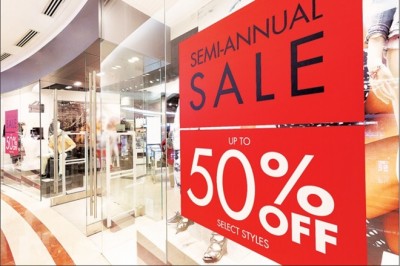
Remember the year 2000? After Y2K passed safely, that year some optimistic analysts predicted that India’s modern retail chains would reach 20 per cent market share by 2015. Two years after that supposed watershed, another firm declared that modern retail will be at around that level in 2020 – but wait! – only in the top 9 cities in the country. Don’t hold your breath: India surprises; constantly. As many have noted, “predictions are tough, especially about the future!” What we can do is reflect on some of this year’s developments that could play out over the coming year.
In many minds 2019 may be the Year of the Recession, plagued by discounting, but that demand slowdown has brewing for some time now. However, there’s another under-appreciated factor that has been playing out: while small, independent retailers can flex their business investments with variations in demand, modern retail chains need to spread the business throughout the year in order to meet fixed expenses and to manage margins more consistently.
To reduce dependence on festive demand, retailers like Big Bazaar and Reliance have been inventing shopping events like Sabse Sasta Din (Cheapest Day), Sabse Sachi Sale (Most Authentic Sale), Republic Day / 3-Day sale, Independence Day shopping and more for the last few years. In ecommerce, there’s the Amazon’s Freedom Sale, Prime Day, and Great India Festival, and Flipkart’s Big Billion Day Sale. This year retailers and brands went overboard with Black Friday sale, a shopping-event concept from the 1950s in the USA linked to a harvest celebration marked by European colonisers of North America. (The fact that Black Friday has a totally different connotation in India since the terrorist bombings in Bombay in 1993 seems to have completely escaped the attention of brands, retailers and advertising agencies.) Be that as it may, we can only expect more such invented and imported events to pepper the retail calendar, to drive footfall and sales. The consumer has been successfully converted to a value-seeking man-eater fed on a diet of deals and discounts. With no big-bang economic stimuli domestically and a sputtering global economy, we should just get used to the idea of not fireworks but slow-burning oil lamps and sprinklings of flowers and colour through the year. Retailers will just have to work that much harder to keep the lamps from sputtering.
Ecommerce companies have been in operating for 20 years now, but the Indian consumer still mostly prefers a hands-on experience. The lack of trust is a huge factor, built on the back of inconsistency of products and services. The one segment that has been receiving a lot of love, attention and money this year (and will grow in 2020) is food and grocery, since it is the largest chunk of the consumption basket. Beyond the incumbents – Grofers, Big Basket, MilkBasket and the likes – now Walmart-Flipkart and Amazon are going hard at it, and Reliance has also jumped in. Remember, though, that selling groceries online is as old as the first dot-com boom in India. E-grocers still struggle to create a habit among their customers that would give them regular and remunerative transactions, and they also need to tackle supply-side challenges. Average transactions remain small, demand remains fragmented, and supply chain issues continue to be troublesome. Most e-grocers are ending up depending on a relatively narrow band of consumers in a handful of cities. The generation that is comfortable with an ever-present screen is not yet large enough to tilt the scales towards non-store shopping and convenience isn’t the biggest driver for the rest, so, for a while it’ll remain a bumpy, painful, unprofitable road.
Where we will see rapid pick-up is social commerce, both in terms of referral networks as well as using social networks to create niche entrepreneurial businesses – 2020 should be a good year for social commerce, including a mix of online platforms, social media apps as well as offline community markets. However, western or East Asia models won’t be replicated as the Indian market is significantly lower in average incomes, and way more fragmented.
As a closing thought, I’ll mention a sector that I’ve been involved with (for far too long): fashion. In the last 8-10 decades, globally fashion has become an industry living off artificially-generated expiry dates. A challenge that I have extended to many in the industry, and this year publicly at a conference: if consumption falls to half in the next five years, and you still have to run a profitable business (obviously!), how would you do it? Plenty of clues lie in India – we epitomise the future consumers; frugal, value-seeking, wanting the latest and the best but not fearful about missing out the newest design, because it will just be there a few weeks later at a discount. If you can crack that customer base and turn a profit, you would be well set for the next decade or so.
(Published as a year-end perspective in the Financial Express.)
Devangshu Dutta
October 9, 2016
P. Karunya Rao of Zee Business in conversation with Devangshu Dutta, Chief Executive, Third Eyesight and Narayan Devanathan, Group Executive & Strategy Officer, Dentsu India, about festive discounts, the evolution of ecommerce and retail business in India.
Devangshu Dutta
October 29, 2014
(The Hindu Businessline – cat.a.lyst got marketing experts from diverse industries to analyse consumer behaviour during the last one month and pick out valuable nuggets on how this could impact marketing and brands in the years to come. This piece was a contribution to this Deepavali special supplement.)

Two trends that stand out in my mind, having examined over two-and-a-half decades in the Indian consumer market, are the stretching or flattening out of the demand curve, or the emergence of multiple demand peaks during the year, and discount-led buying.
Secular demand
Once, sales of some products in 3-6 weeks of the year could exceed the demand for the rest of the year. However, as the number of higher income consumers has grown since the 1990s, consumers have started buying more round the year. While wardrobes may have been refreshed once a year around a significant festival earlier, now the consumer buys new clothing any time he or she feels the specific need for an upcoming social or professional occasion. Eating out or ordering in has a far greater share of meals than ever before. Gadgets are being launched and lapped up throughout the year. Alongside, expanding retail businesses are creating demand at off-peak times, whether it is by inventing new shopping occasions such as Republic Day and Independence Day sales, or by creating promotions linked to entertainment events such as movie launches.
While demand is being created more “secularly” through the year, over the last few years intensified competition has also led to discounting emerging as a primary competitive strategy. The Indian consumer is understood by marketers to be a “value seeker”, and the lazy ones translate this into a strategy to deliver the “lowest price”. This has been stretched to the extent that, for some brands, merchandise sold under discount one way or the other can account for as much as 70-80 per cent of their annual sales.
Hyper-opportunity
This Diwali has brought the fusion of these two trends. Traditional retailers on one side, venture-steroid funded e-tailers on the other, brands looking at maximising the sales opportunity in an otherwise slow market, and in the centre stands created the new consumer who is driven by hyper-opportunism rather than by need or by festive spirit. A consumer who is learning that there is always a better deal available, whether you need to negotiate or simply wait awhile.
This Diwali, this hyper-opportunistic customer did not just walk into the neighbourhood durables store to haggle and buy the flat-screen TV, but compared costs with the online marketplaces that were splashing zillions worth of advertising everywhere. And then bought the TV from the “lowest bidder”. Or didn’t – and is still waiting for a better offer. The hyper-opportunistic customer was not shy in negotiating discounts with the retailer when buying fashion – so what if the store had “fixed” prices displayed!
This Diwali’s hyper-opportunism may well have scarred the Indian consumer market now for the near future. A discount-driven race to the bottom in which there is no winner, eventually not even the consumer. It is driven only by one factor – who has the most money to sacrifice on discounts. It is destroys choice – true choice – that should be based on product and service attributes that offer a variety of customers an even larger variety of benefits. It remains to be seen whether there will be marketers who can take the less trodden, less opportunistic path. I hope there will be marketers who will dare to look beyond discounts, and help to create a truly vibrant marketplace that is not defined by opportunistic deals alone.
admin
February 28, 2011
 Business
Standard, Mumbai, February 28, 2011
Business
Standard, Mumbai, February 28, 2011
Sayantani
Kar (with inputs from Preeti Khicha)
When some of India’s big retail chains banded together recently to substitute Reckitt Benckiser’s products with private labels to protest the latter’s decision to cut sales margins on its products, they were doing something many global retailers have done with great success. Part of their overall strategy, especially for large chains in the US and Europe, is to develop quality private label products that complement other pieces in their marketing mix. While this is one way retailers can differentiate their firms from competition, it also helps them flex their muscles in their relationships with brand manufacturers. Indeed, retail giants Tesco, Walmart and Carrefour have a significant portion of their sales coming from private labels — ranging from 10 per cent for Costco and 50 per cent for Tesco.
India is a back runner in the private label race, but it is
catching up. A Shoppers Trend Study by Nielsen found awareness
about private labels has gone up from 64 per cent in 2009 to 78
per cent in 2010 across 11 cities in India. Nielsen Director (retail
services) Siddharthan Sundaram says, “Over the last three
to four months, we found an increased awareness of private labels
in categories such as staples, household products, personal care
products such as soaps, biscuits and packaged groceries.”
Thanks partly to the recent economic downturn, there is greater
acceptance — and even loyalty — to such brands in India,
say marketers. Future Group Business Head (private brands) Devendra
Chawla reasons, “A label on the shelf becomes a brand by
covering the two feet distance from the shelf to the trolley.
After all it is the consumer’s choice.” Even in the
toughest segment for private labels to crack — fast moving
consumer goods including food and personal care — store labels
claim share of 19-25 per cent.
Low-involvement categories such as household cleaners were among the first to see the entry of private labels (17-44 per cent of sale in modern trade), bringing in huge margin-lifts for modern retailers. In categories such as food products — jams, biscuits and staples — private labels today contribute more than 25 per cent of modern trade sales. Little wonder, retailers are now mining shopper data to make private labels shed their ‘low’ly tag — low involvement and low cost. Store chains are segmenting their brands according to consumer needs, combining more than one brand according to consumer behaviour, besides launching high-involvement premium products and innovative packaging to give national brands a run for their money.
Innovate or die
Retail innovation has had a big role to play in speeding up the
process of consumer acceptance. Future Group’s retail arm,
which includes Big Bazaar and Food Bazaar, calls its in-house
products ‘private brands’ not labels. It has a separate
team, headed by Devendra Chawla, to research and test FMCG products
before launch. The team has a range of private brands — Tasty
Treat, Fresh and Pure, Cleanmate, Caremate, Sach, John Miller,
Premium Harvest and Ektaa. Look at how it is using shopper data
to improve its products. The insight that kids found ketchup bottles
cumbersome and had to be served — making it inconvenient
if an adult was not around — led it to change the packaging
that in turn gave the brand a margin advantage. By offering ketchup
in pouches, it saved on the price of the glass bottle and freight
(pouches take up less space in a truck, hence more can be fitted
in). While ketchup in glass bottles continue to be Rs 99 for a
kilo, its Tasty Treat ketchup pouches come in Rs 59 packs.
By working with vendors it has also come up with interesting combinations — for example, its Tasty Treat jam has three small tubs packed as one unit, each tub containing a different flavour to offer consumers larger variety.
Retailers have now donned the hats of “product selectors” and “product developers” at the same time, points out Third Eyesight CEO Devangshu Dutta. “So far, most of the retailers were just selecting products from vendors which are mostly lower-priced knock-offs of manufacturer brands,” he says. Not any more.
Ashutosh Chakradeo, head (buying, merchandising and supply chain), HyperCity Retail, explains the process his company follows: “To develop food products, we identify vendors, tie up with food laboratories, chefs and consumers to be part of the tasting panels. Before launching a private label we do at least a month of consumer testing. We identify customers from our loyalty programme called Discovery Club, which tells us who buys a certain category of product. We give the relevant consumers our private label products for trial for a month. We meet the customers at their homes, take their feedback and these changes are incorporated into the private label brand.”
“Our stores act as research labs and are a constant source of feedback,” points out Chawla of Future Group. Chawla estimates 3-4 per cent of the sales of private labels are ploughed back into packaging and design innovation. Reliance Retail CEO Bijou Kurien says, “The teams are our main investment in private labels. Our 100-strong designers across all the formats help in coming up with product designs that fill a need gap or offer a few more features at the same price as national brands.” Reliance Retail has recently launched its own brand of watches priced Rs 149-199 which “no national player can offer” points out Kurien.
The edge
Most vendors directly supply to retailers’ distribution centres,
cutting out cost leakage at the distributor’s and carrying
and forwarding centres. Direct access to store shelves and aisles
also cuts out the high mainstream advertising costs that brands
have to bear. By clever product arrangements and in-store promotions,
retailers can sway the shopper and draw attention to the price
advantage. Chakradeo says, “We display private labels in
heavy footfall areas in the store. We complement displays —
so we keep our private label ketchup near the bakery.”
To tackle the tricky personal care category of face creams and shampoos that Aditya Birla Retail’s More chain has entered, it plans to communicate promotional offers straight to its loyalty programme members. “It will help us induce trials,” says Thomas Varghese, More’s CEO.
Bundling products is another way to woo the value-conscious consumer. Six months back, Future Group started bundling its private brands. Chawla says, “Take home-cleaning, which requires a floor cleaner, glass cleaner, toilet cleaner and utensil cleaner which we combined as a shudhikaran solution of our Cleanmate brand.” The combi-pack costs Rs 125, which would come to around Rs 220-250 if shoppers bought a la carte. The margins are still high at 26 per cent. “Vendors are assured of volumes,” points out Chawla.
What it also does is convert the fence-sitter who has not yet bought into a category. For example, consumers who avail of the shudhikaran solution also get into the habit of using glass cleaners — a category which has a small base and gets most of its sales from modern trade. Similarly, Future Group saw a 25 per cent spurt in the sales of soups when it clubbed soup mugs with its Tasty Treat soup packets based on the insight that Indians preference to sip their soup out of a coffee mug.
Don’t be surprised if you see MNC brands coming out with combo-offers for their products, way bigger than the occasional bucket with a detergent!
Growing up
There are signs the industry is evolving. Private labels in FMCG
are shedding their low-cost tags. But retailers know better than
to vacate low price-points altogether. Instead, they are segmenting
their brands just as a manufacturer brand would do. Chakradeo
of Hypercity says, “Over a period, we hope to increase the
stickiness and the differentiation our brands bring to our stores.
Particularly, in staples where we have seen our private label
business grow rapidly. This is a very quality and price-sensitive
category. We started with basic products but now we have premium
daals (lentils) and basmati rice as part of our portfolio.”
Future Group too has its ‘good, better, best’ policy firmly in place. In staples, the stores offer some products ‘loose’, such as rice, wheat, lentils, which is at the bottom of the ladder. Its Food Bazaar version of the products straddle the middle category, and above the two is its brand, Premium Harvest, which retails at a price higher than some manufacturer brands.
Stickiness may also result from the manner in which retailers are positioning their brands. Future Group’s brand Ektaa will retail regional food and staples across its stores in the country so that migrants can buy supplies they are comfortable with. Be it Govindbhog rice and kasundi (a rice variety and mustard sauce preferred by Bengalis), khakra (Gujarati snack) or murukku (loved by Tamilians). Boston Consulting Group Partner & Director Abheek Singhi says, “Indian retailers are not cut-pasting private label products from other markets but adapting them.”
Are private labels a risk worth taking? Chakradeo says, “The entire product formulation for our cleaners was done in partnership with Dow Chemicals, USA. We did not make any investment and we gave them a percentage of sales as fee. Investments are not huge in making private labels as in most cases it is partnered with vendors. It is more of operating expenses than capital expenditure.”
Future Group brought down logistics costs further by 6-8 per cent by appointing vendors in more than one region for 10 of its product categories to fill its distribution centres. Chakradeo adds, “As the volumes go up, we will be able to put up for backend infrastructure facilities for development and R&D.”
Should national brands be worried? Devangshu Dutta says, “As long as retailers have access to the production and development and have customers for it, the private labels will remain profitable.” India Equity Partners Operating Partner V Sitaram sums up, “In modern trade, though the market leaders will face some slip in market share, the number 3 or 4 brands might have a bigger problem in certain categories thanks to private labels.”
As retailers leverage consumer insights to deploy private labels more effectively, national brands are aggressively fighting the challenge. From sprucing up supply chains to galvanising in-store promotions, they are covering all bases. KPMG Executive Director Ramesh Srinivas says, “Earlier brands had to adjust between a modern trade and a general trade supply chain. The former had to be serviced directly at the stores or had their own supply chain while the latter used the manufacturer’s supply chain. Now, some brands separate modern trade teams and even distributors.”
Britannia Category Director (delight and lifestyle) Shalini Degan says, “We have divided our portfolio into three categories, A,B,C, each having its benchmark fill-rate. We don’t allow fill-rates to drop below those levels. Why the segmentation? We need to focus on brands which have a higher traction in modern trade when servicing it, else we might end up focusing on brands that are not modern trade-led.”
Fill-rates denote how often and to what accuracy the retailer’s orders for a product are supplied by the manufacturer. Low fill-rates could mean lost opportunity since the shopper sees an empty shelf or a private label instead of the brand she might have thought of picking up.
Samsung Vice-President and Business Head (home appliances) Mahesh Krishnan says, “We have gone in for central billing system 4-5 months back with all large-format retailers. Orders are tracked on a daily basis giving retailers more control over the chain.”
In other words, private labels are here to stay and will evolve as more and more chains gain national footprint and the economies of scale kick in. Dutta of Third Eyesight says, “Gross margins for organised retailers are still low compared to global standards: So, margin fights will continue for some time till retailers gain a bigger share of the pie.”
(Also read: The Private Label Maturity Model.)
