
admin
February 9, 2017
This is a recording of a short, candid talk by Devangshu Dutta (chief executive, Third Eyesight) at the ASSOCHAM’s 8th Global Food Processing Summit in New Delhi, India.
He touched upon the inherent conflicts in the food supply chain we need to be aware of before formulating policies and practices, and strongly urged everyone to look at food security from the point of view of sustainability and risk-management. (Transcript below.)
TRANSCRIPT:
I’ll just take just few minutes to share a few thoughts with you on the sector.
The session was titled “Make in India: Platform for investment opportunity in food processing sector and 100 percent FDI in food retail”.
As we all know, whoever’s been following the news, there’s all this buzz around FDI into retail being allowed, not only for physical retail but also for e-commerce companies, and there are two very strong sets of drivers. On the one hand is the likes of Walmart and Tesco and people who want to actually set up food retail. and you know food is the largest consumption in our basket of consumer products, so they obviously want to tap into that demand. The second side is Amazon and the likes of it where again you know there are no barriers in terms of location, you are buying on the net, tapping into a consumer who’s looking for convenience, and there you need to actually service that demand with food and grocery which is packaged, so there is obviously a very strong push a very strong lobby for that to happen. At the same time there’s a very strong lobby against that because there are domestic retailers who invested a lot of money over the last maybe 10-15 years in setting up a lot of retail stores. In the recent years there have been a few e-commerce companies that have come up as well with domestic and foreign capital. So there is this conflict.
In this whole ecosystem of food production and supply and retail there are some fundamental conflicts that we need to be aware of, before we get into any kind of thinking about what should be done with the sector.
First of all is foreign vs. Indian; this is a conflict which is there the world over, and I think we will see that increase in Europe, in the US, and in other places. You know, “local versus foreign” is a conflict which we will keep seeing. I think we have moved a little bit away from that within, not only this government’s regime but also the earlier government’s regime, where we started to welcome foreigners back into the country and said, “let’s do trade together”. I think it’s important to keep it in mind that local interests will always always be take predominance over foreign interests. If any government comes in and says, “I will give foreign interests precedence”, it’s going to not be there in power the next time, so that’s something which is to be kept in mind.
The second is this is a conflict between large and small…large retailers versus small retailers. A Reliance had to close shops in Uttar Pradesh, had to close shops in Kerala because they were impacting small retailers. So it’s not just about Walmart impacting small retailers, it’s also about the large Indian companies impacting smaller companies.
The third conflict is between traditional and modern, and this is happening again even in farming. Indian farmers tend to follow traditional practices, there are fragmented land holdings, and then you have modern entrepreneurial farmers, you have cooperatives which are adopting different techniques, and there is a conflict which happens at that level as well. At the local level it can get hugely political and then it starts raising barriers. So if you talk about the food supply chain, it’s not a simple thing to deal with.
Fourthly, the biggest biggest conflict – and that’s not really a conflict outright because these are people who are working together – but there are differences of interests and, therefore, there are conflicts…that is between retailer, supplier and the farmer, the interests are not aligned. A retailer wants lower prices, a supplier wants even lower prices, but the farmer wants higher yield and higher prices, so that conflict, just something on account of price and commercial terms and various other things, is bound to create friction in that supply chain.
Having understood that, I think we need to also acknowledge the fact that retailers are unlikely to invest in the supply chain and in farming. Amazon is not going to set up food processing. Amazon is not going to set up farms which are contract farming. Let’s face it, even Future Group hasn’t. Future Group has set up a food park. Future Group has taken over companies which are in food production companies but Future Group has has not set up, ground-up, contract farming. They’ve tried but it’s not their core competence, it’s not even their core interest. Reliance has done a little bit, ITC has done a few things but it’s not something which is fundamentally their business. They’re retailers, that’s what drives them, so what they can do is they can create an ecosystem.
Let’s take the example of McDonald’s or a Pizza Hut or say a Domino’s. These are foreign quick service restaurants which have come into the country. A McDonald’s had to actually build its supply chain from scratch to get the potato fries, to get the burgers done, to get the patties done and they created an ecosystem, in some cases they invested or co-invested with Indian partners, but in most cases they encouraged Indian partners to talk to their partners from Europe, US etc.
When we talk about people like Future Group, it has done a lot in being a platform for Indian companies to come on board and sometimes international companies as well. They’re a platform for them to launch and grow their business. So what the retailer can do is create the ecosystem, create the demand pipeline. Beyond that it is up to the food producer, it is up to the farmer, to take that opportunity and move on. It’s not for the retailer to handhold from scratch all the way to selling on the shelves.
In terms of the practices that we need to adopt I’d like to say this, that while we keep talking about international standards, food is a very local thing. We may be going into a world where 50 years down the line all of us will be having a white-gray powder which has no flavour and that’s what the future of food…I hope not!…The fact is the food is a very local thing because of tastes, because of cultures, because of the environment that you are in. And we are actually losing a lot. People who are here from farming, if you look back not, even very far – maybe 20-25 years – certainly, if you look back 50 years, what was being farmed we’ve lost probably 30-40 percent of that produce, because there is no demand, because it is difficult to grow, because it’s seasonal, because it is difficult to process, difficult to sell. If you go to the sabziwala today versus if we went to the sabziwala 10 years ago, you will find that the variety of produce has actually diminished. So while we are talking about food processing, what is happening is…and I’d like to mention this…You know, sometimes we come to conferences like this and we run our businesses, we run with a split personality. We do what is convenient for the business, we do what is good for the business in terms of cost, in terms of ease of processing, in terms of ease of selling etc. When it comes to us as consumers, we want fresh, we want variety, we want flavor, we want colour, we want all of it. Why do we have the split personality? Why can’t we actually combine the two and do what is right for us as consumers, our children as consumers, the environment, and the future as well?
Sustainability is should be a big driver and we forget that the kind of food processing which is going on right now, by and large the kind of plants which are being put up, are based on technology which was developed in North America and Europe between 1900 and say 1960-70. That’s been the most wasteful part of the last century in terms of energy, in terms of water, in terms of labour, in terms of anything. It’s resource intensive. Now imagine even if 20% of India – over 200 million people – started to live and depend on that kind of a lifestyle and that kind of an industrial structure! This country will be finished, certainly! The world would be finished! We cannot do that, so we’ve got to do stuff which is good for us as consumers, the environment as a whole, and good for the business. It can’t just be one. We cannot be uni-dimensional in our thinking.
Last point: I think diversity is a very, very important part of the food supply chain and diversity means that there are “many”. We tend to look at large companies as being the standard and, therefore, large being good. But the fact is that if you take food which is an integral part of our lives…You cannot live without air, you can live without food and water for a few days, you can’t survive. You can live without clothes for your entire life.
If let’s say the food supply chain and even the processing, the acquisition and everything else, if it gets consolidated beyond a certain point it becomes extremely vulnerable. Anybody who’s looked at financial services risk management or any any kind of risk assessment, you would know that it is good to have a diversified basket. From the point-of-view of farming, from the point-of-view of manufacturing, from the point-of-view of retail, consolidation beyond a certain point is actually detrimental to quality and to safety. So if you’re looking at food safety, if you’re looking at sustainability, we need to actually encourage many, many, many entrepreneurs, many small businesses.
For that…I don’t know if anybody is there from the government sitting in this audience…but Make in India will only happen if we make it easier. Today all of us who are in business know that India is one of the most hostile environments to do business of any sort. It does not matter whether you are in manufacturing, whether you’re a truck driver, whether you are running a consulting business. With all the regulations…we don’t lack regulation, there’s too much regulation…we don’t have an environment where it is easy to do business. If that can happen we will find that we will have an extremely diverse and vibrant ecosystem which will grow and we can actually be the standard, the international standard which can be followed by everybody else. I think what we should do is try and get the government to work in that direction. If we can do that, if that’s one outcome we can achieve out of this conference I’ll be really, really, really happy.
Thank you so much!
Devangshu Dutta
January 10, 2017
In this piece I’ll just focus on one aspect of technology – artificial intelligence or AI – that is likely to shape many aspects of the retail business and the consumer’s experience over the coming years.
To be able to see the scope of its potential all-pervasive impact we need to go beyond our expectations of humanoid robots. We also need to understand that artificial intelligence works on a cycle of several mutually supportive elements that enable learning and adaptation. The terms “big data” and “analytics” have been bandied about a lot, but have had limited impact so far in the retail business because it usually only touches the first two, at most three, of the necessary elements.
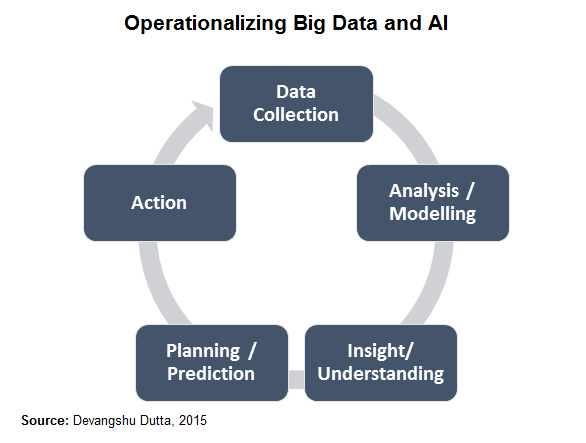
“Big data” models still depend on individuals in the business taking decisions and acting based on what is recommended or suggested by the analytics outputs, and these tend to be weak links which break the learning-adaptation chain. Of course, each of these elements can also have AI built in, for refinement over time.
Certainly retailers with a digital (web or mobile) presence are in a better position to use and benefit from AI, but that is no excuse for others to “roll over and die”. I’ll list just a few aspects of the business already being impacted and others that are likely to be in the future.
On the consumer-side, AI can deliver a far higher degree of personalisation of the experience than has been feasible in the last few decades. While I’ve described different aspects, now see them as layers one built on the other, and imagine the shopping experience you might have as a consumer. If the scenario seems as if it might be from a sci-fi movie, just give it a few years. After all, moving staircases and remote viewing were also fantasy once.
On the business end it potentially offers both flexibility and efficiency, rather than one at the cost of the other. But we’ll have to tackle that area in a separate piece.
(Also published in the Business Standard.)
Devangshu Dutta
December 29, 2016
In 2016, brick-and-mortar modern retailers seemed to have begun recovering their confidence, and cautiously investing in expansion. However, currency shortage has significantly dampened demand at the end of the year. The hangover would continue into the first half of 2017, and consumers could be muted overall on discretionary purchases, including fashion, mobile upgrades and out-of-home dining.
On the other hand, while digital transactions introduce a note of caution (friction) in the consumer’s purchase decision, for e-tailers they do reduce complexity, cash-handling costs and potential returns which could provide significant unexpected wins.
I’ve written about this for years, and don’t tire of reiterating: the retail sector must recognise that shopping is a unified activity for the consumer; physical stores and non-store environments are alternative but complementary channels. Brands can and must use whatever channel mix works for them, and brick-and-mortar retailers need to invest in creating an integrated growth blueprint towards “unified commerce”.
On their part, while e-commerce companies are constrained by FDI policy, they will need to invest more in developing “old economy” strengths – strong product differentiation and distinguishable brands. Fashion, accessories, home decor and other lifestyle products are strong drivers of gross margin for all multi-product retailers, and e-commerce players struggling on the path to profit would focus on these even more, as well as on private labels. They also need to have management teams that are able to cast their minds 3-5 years into the future, while keeping close watch on immediate cash flows. Capital is available, but turning risk-averse. All businesses need to focus on up-skilling their teams, retaining good people, improving processes and adopting technology. In recent years, growth in the retail sector seems to have been driven by a “spray-and-pray” approach, not necessarily management sophistication. Spending like there’s no tomorrow is a sure way to no tomorrow.
In short, 2017 could be the year where the entire retail sector grows up – a lot. We hope.
(This piece was published in The Hindu – Businessline on 29 December 2016).
Devangshu Dutta
October 9, 2016
P. Karunya Rao of Zee Business in conversation with Devangshu Dutta, Chief Executive, Third Eyesight and Narayan Devanathan, Group Executive & Strategy Officer, Dentsu India, about festive discounts, the evolution of ecommerce and retail business in India.
admin
August 16, 2016
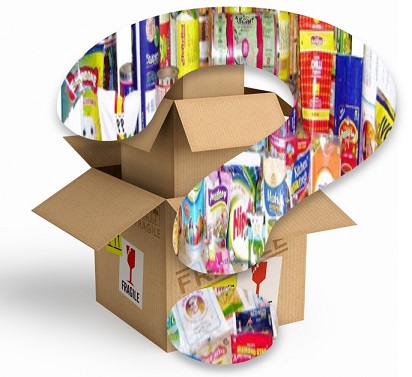
Packaging of products is, undoubtedly, an extremely strong means of conveying the essence of the brand, its ethos and its personality.
Packaging is not only a vehicle to endorse the identity of a brand in a consumer’s mind, the growing need for sophisticated packaging also results from many lifestyle needs such as ease of transportation, storage, usage and disposability sought by convenience seeking and time pressed consumers.
But, increasingly, it also reflects the brand’s responsibility and sensitivity towards Nature and its resources.
If we, as consumers, were to reduce or optimize packaging from our daily lives, especially for food and beverages, there will be a redefinition of the processes involving our purchase and usage. It will also to a larger degree alter the systems and processes of organisations whose distribution and retail is integrally dependent on packaging.
Original Unverpackt, a concept grocery store in Berlin, Germany operates without food packaging that would later turn into garbage. The idea around which it is build is to bring one’s own containers and have it weighed. The supermarket will label your containers. After one shops and gets to the till, the weight of the containers is subtracted and one has to pay for the net weight of the groceries. The label is designed to survive a few washings so one may come back and skip the weighing process for a few more times. In this way, not only do the food products shed their familiar identifiers (brand colors, packaging structures, and bold logos) but the ways they move from shelf to home becomes radically different. While shoppers are encouraged to bring their own bags and containers with them, a range of re-usable jars and containers are also available for purchase onsite. As much as possible, produce is sourced locally.
At this point of time, it may seem difficult to adopt this framework in entirety. However we should remember that just a few short decades ago we followed similar practices such as engaging biodegradable, recyclable, reusable materials for packaging, making use of one’s own containers and bags and filling them in with quantities as per the requirements from the bulk containers.
Singapore’s National Environment Agency (NEA) will be introducing mandatory requirements for companies to use sustainable resources in packaging and reduce packaging waste very soon. It is still being decided in what forms the regulations could be developed, but the preliminary ideas include requiring companies to submit annual reports on how much packaging they use, to develop waste reduction plans, or to meet recycling targets. Belgium on the other hand has been championing the cause of waste management by maximizing recycling and reusage.
The global trends are moving towards sustainable packaging given the ecological resource wastage it creates, the garbage the packaging material produces and the air and the ground water pollution the landfills create. Earth Overshoot Day, which marks the date when humanity’s demand for ecological resources and services in a given year exceeds what Earth can regenerate in that year, is arriving progressively earlier and earlier, indicating that the humanity’s resource consumption for the year is exceeding the earth’s capacity to regenerate those resources in that year.
Another very grim consequence that was witnessed is the frightening and highly visible impact on marine life – since the start of this year more than 30 sperm whales have been found beached around the North Sea in the United Kingdom, the Netherlands, France, Denmark, and Germany. After a necropsy of the whales in Germany, researchers found that four of the giant marine animals had large amounts of plastic waste in their stomachs. Although the marine litter may not have been the only cause of them being beached, it had a horrifying consequence on the health of these animals.
Given the serious consequences and the growing sensitivity towards these consequences, it is imperative for product manufacturers, raw material manufacturers and equipment and technology providers to design packaging with solemn intent to address sustainability.
The best time to reduce the use of packaging was 50 years ago. The next best time is now.
