
admin
November 28, 2021

By Rasul Bailay & Writankar Mukherjee, Economic Times
November 27, 2021
Reliance Retail aims to be one of the world’s top retailers, but for the last couple of years, it has been a buyer, not a seller. It has bought a string of retail brands — from online pharmacy Netmeds and online furniture retailer Urban Ladder to digital lingerie seller Zivame, online grocer MilkBasket and haute couture label Ritu Kumar. The latest acquisition was Sri Lankan lingerie brand Amante.
These acquisitions are crucial cogs in Reliance Retail’s further push into brick-and-mortar and ecommerce, and are part of Mukesh Ambani-led Reliance Industries Ltd (RIL) unit’s larger strategy: To break into the global top ten retailers. India’s largest retailer (by sales as well as by the number of stores) is currently ranked 53rd in the world, according to Deloitte’s Global Powers of Retailing 2021. Reliance Retail reported an annual revenue of $22 billion and a net profit of $750 million for the fiscal year ending March 2021.
At the same time, the company is looking beyond pure retailing. It’s pursuing a larger play to tap into the growing pie of the country’s overall consumption story — from contract manufacturing to distribution of everything from affordable fashion and consumer electronics to grocery products in India’s $850 billion annual retail market that is expected to swell to $1.3 trillion in the next few years. (Reliance did not respond to ET’s questionnaire.)
Analysts say Reliance’s overall plan is to engage India’s burgeoning consumers in its ecosystem one way or the other at any given point of time: shopping in its vast network of physical stores or on JioMart ecommerce platform, using Jio’s mobile or WiFi networks, watching movies on Jio Cinema, paying through Jio wallet so on and so forth that it is dubbed by the petroleum-to-telecommunications conglomerate as “retail plus” strategy.
“Their plan is to weave their products and services so deeply into your life that from morning to evening you are spending time and money on their networks either directly or indirectly,” says a top executive of an online grocery retailer. “Their idea is to constantly keep consumers engaged in a Jio bubble or in a Jio world.” The executive estimates India has a middle class of around 40 crore people. “Even if they succeed in capturing 10% of that wallet share, it is going to be huge,” he says.
That’s the reason Reliance Retail is betting big on business-to-business (B2B) ecommerce, with a digital wholesale marketplace along the lines of Alibaba for products such as smartphones, televisions, garments and grocery items, among other products, according to people aware of the plan. It’s looking to service a whole gamut of retailers in cities and villages.
Reliance has already started distributing its licencee products of Kelvinator- and BPL-branded consumer electronic items and its smartphone JioPhone Next, produced in collaboration with Google, to retailers outside of Reliance’s stable. The company also boasts a whole host of private brands and many of them are making inroads into general trade.
“The market for modern retail and ecommerce put together would be 15-20% in India. The rest 80% is still in the traditional market. If Reliance can make an entry into the traditional market and partner the smaller stores, the opportunity for growth and revenue is much more,” says an industry executive aware of the plans.
“Reliance’s approach is not to be a threat to small stores or merchants, but to be their enabler, provide them merchandise at best wholesale rates, upgrade their stores and even list them on their ecommerce platforms to help them reach newer consumers,” he adds.
Reliance is doing exactly that. Earlier this year, it started supplying Puric InstaSafe-branded FMCG products like soaps, home disinfectants and sanitisers to kiranas in Punjab and West Bengal. It is planning to roll these items nationwide. The company has put in place a marketing team for the first time to push these products. Similarly, B2B portal Ajio Business is selling T-shirts for Rs 79 onwards, a pair of jeans for Rs 220 and shirts for Rs 170 onwards to small businesses. Last quarter, Reliance Retail forayed into the wholesale business of medicines through Netmeds by roping in neighbourhood pharmacies under its B2B initiative.
These are some of the steps in the conglomerate’s bet not just on pure retail play but on end-to-end gameplay in the retail ecosystem, controlling manufacturing, wholesale, supply chain, ecommerce and payments.
To augment its digital wholesale plans, Reliance Retail has already converted its network of cash-and-carry outlets into fulfilment centres.
Analysts say Reliance’s ambitions are long-term and capital intensive and the company is ready for the long haul and to spend. “Reliance’s plan to rope in and aggregate many elements together — retailers, B2B buyers, suppliers, small players — and bring them on board takes time and is a capital-hungry business,” says Devangshu Dutta, chief executive of consulting firm Third Eyesight. “But controlling end-to-end is Reliance’s game plan in any business, including telecom, where it spans the entire value chain of not just providing the mobile network but also a digital interface with consumers.”
In a bid to feed its ambitious consumption plans, Reliance Retail is lapping up stores and warehouses nationwide to service both ecommerce and B2B sales through its “new commerce” omnichannel plans that will also involve legions of kiranas as last-mile delivery agents as well as buyers of Reliance’s products. Reliance Retail, which operates more than 13,000 stores of various formats, plans to open around 5,000 outlets of its Smart Point that would entail a convenience store, a pharmacy, agnostic centre, a telecom services and financial services products outlet all rolled into one across the country.
Reliance is planning to take this format to even tehsils, according to sources. Real estate agents and mall executives say Reliance is scouting for space for supermarkets, fashion outlets and jewellery and footwear stores.
They say Reliance is also planning to enter newer retail formats like a department store chain to compete with Shoppers Stop and Lifestyle. Also in the works is a Sephora-style beauty and cosmetics chain, they say.
“We will focus on expanding our store footprint multifold this year with co-located delivery hubs over the next few years. They will provide a strong network to reach and serve millions of merchants and customers,” Ambani said at the last AGM of shareholders.
Deloitte’s Global Powers of Retailing 2021 report ranked Reliance Retail as the world’s second fastest growing retailer, behind South Korea’s Coupang Corp.
Global financial and tech titans have taken notice of Reliance Retail’s play and pumped billions of dollars into it. Last year, the holding company Reliance Retail Ventures Ltd raised Rs 47,265 crore by selling about 10% stake to some of the biggest names in global private equity, including Silver Lake, KKR, General Atlantic, Abu Dhabi Investment Authority and TPG.
Reliance will continue with its acquisition spree, say analysts. However, Reliance Retail’s largest, the Rs 25,000 crore acquisition of Future Group, is bogged down by Amazon’s opposition to the proposed deal.
(Published in Economic Times)
admin
April 21, 2021

Debojyoti Ghosh, Fortune India
April 21, 2021
Billionaire entrepreneur Kumar Mangalam Birla-led retailer Aditya Birla Fashion and Retail Limited (ABFRL) has continued its build-up in the ethnic wear market with its fourth deal since 2019 and second this year. In February, the Mumbai-based fashion retailer picked up a 33.5% stake in fashion designer Tarun Tahiliani’s Goodview Properties—that will own and operate the designer’s eponymous couture label—for ₹67 crore. That was a month after ABFRL acquired a 51% stake in Kolkata-based designer Sabyasachi Mukherjee’s company, Sabyasachi Couture, which sells garments, accessories, and fine jewellery, for ₹398 crore.
ABFRL, which owns fashion brands such as Louis Philippe and Van Heusen, said in a statement that ethnic wear “is a large and growing market with a significant opportunity to build scale” and expects it to be an important category over the next few years.
Experts note the two recent deals come as the luxury industry, including fashion, has been hammered by the pandemic. The year-long shutdown in global travel has slowed over a decade of growth across luxury categories. Indeed, the global fashion industry’s profit is expected to have slumped about 93% in 2020, according to a report by consulting firm McKinsey and The Business of Fashion in December.
“[Luxury] business has been hit hard during the pandemic, like all fashion and retail businesses. And a significant injection of money is needed to maintain the business momentum, and to scale it further,” says Devangshu Dutta, chief executive of retail consultancy Third Eyesight.
In March, Italy’s billionaire Agnelli family—best known as the founders of automaker Fiat—acquired a 24% stake in French luxury shoemaker Christian Louboutin for $642 million. Three months before that it paid $95 million for a controlling stake in Shang Xia Paris, a Chinese luxury goods business founded by French luxury brand Hermès and Chinese designer Jiang Qiong Er.
Many fashion firms have used the Covid-19-induced slowdown to reshape business models, streamline operations, and sharpen their customer propositions, said the report by McKinsey and The Business of Fashion.
And that is exactly what Tahiliani plans to do with his new corporate partner. The duo will create a new entity—80% held by ABFRL and 20% by Tahiliani—to launch a new brand of apparel and accessories in the affordable premium ethnic wear segment, while it also plans to launch a men’s ethnic wear brand.
“Discussions with ABFRL have been in the works for nearly two years. I couldn’t be happier about entering into this partnership. They understand scale and numbers like no one else in the market today. Each of their home-grown brands is a resounding success,” Tahiliani, founder and CEO of Tarun Tahiliani Brand, tells Fortune India. “This collaboration permits me the financial freedom to focus on designing,” he adds.
ABFRL aims to build the new ethnic wear brand into a ₹500-crore business in the next five years, with more than 250 stores across India. The first tranche of stores is expected to open by September. “This new entity with ABFRL currently concentrates only on menswear. In our collective opinion, at present, there is only one branded national player in the Indian ethnic [wear] for men space. In order to scale this up, we need to be in three or four categories of clothing. This will give depth, both in terms of style and sizing to the men who come into the store,” says Tahiliani.
Currently, the top panIndia ethnic wear brand for men is Vedant Fashions’ Manyavar. The Kolkata-based company forayed into women’s wear in 2016 selling lehengas, saris, and the like under the label Mohey,
ABFRL’s previous deals in the segment—both in 2019—were a 51% stake in fashion designers Shantanu & Nikhil’s Finesse International Design for a reported ₹60 crore, and its ₹110-crore acquisition of Jaypore. Both make apparel, footwear, accessories, and other items.
ABFRL’s managing director, Ashish Dikshit, declined to comment for this story. ABFRL had, when announcing the Sabyasachi Couture investment, said it expected that deal to accelerate its strategy to build a comprehensive portfolio of brands across segments, occasions, and geographies.
Experts say ABFRL’s recent investments allow it to tap into the designer’s creative stream and goodwill, while providing the financial and organisational muscle of a large corporate. Albeit one that is not aiming too far upmarket.
“We shouldn’t see the ABFRL [stake] acquisitions as entry into couture, which is a different business from the ready-to-wear market. It is the expansion of these brands into ready-to-wear, tapping into the desirability of the designer brand, while making it accessible and affordable to a larger market is what will be of interest,” says Third Eyesight’s Dutta.
Indeed, Mukherjee, in a press release in late January, noted, “As my brand evolved and matured, I began searching for the right partner in order to ensure continuity and long-term sustainable growth.”
Nonita Kalra, a veteran fashion editor, says that the ABFRL deal shows the growing heft of the [Sabyasachi] brand in the fashion business. “Corporates aren’t sentimental. They are hard-nosed about investments, with careful due-diligence. ABFRL is paying what it is worth and expecting it to grow bigger. They are never going to invest in a stagnant business,” she says.
Experts, though, caution that while corporate partnerships and acquisitions allow a designer-entrepreneur and their investor partners to unlock some of the value being built, it is essential to have clarity about each brand’s design language and target consumer. “With [ABFRL’s] new venture [in men’s ethnic wear with Tahiliani], the key thing to understand is how the company will differentiate it from Shantanu & Nikhil’s positioning and focus, which is also menswear-driven,” says Abneesh Roy, executive vice president, Edelweiss Securities. “The challenge will be ensuring that each brand maintains its distinctive identity, while deriving synergies from the group.”
ABFRL has stitched up some unique deals; it now has to ensure they don’t unravel.
(The story originally appeared in Fortune India‘s April 2021 issue).
Devangshu Dutta
April 7, 2020

Oil shocks, financial market crashes, localised wars and even medical emergencies like SARS pale when compared to the speed and the scale of the mayhem created by SARS-CoV-2. In recent decades the world has become far more interconnected through travel and trade, so the viral disease – medical and economic – now spreads faster than ever. Airlines carrying business and leisure-travellers have also quickly carried the virus. Businesses benefitting from lower costs and global scale are today infected deeply due to the concentration of manufacturing and trade.
A common defensive action worldwide is the lock-down of cities to slow community transmission (something that, ironically, the World Health Organization was denying as late as mid-January). The Indian government implemented a full-scale 3-week national lockdown from March 25. The suddenness of this decision took most businesses by surprise, but quick action to ensure physical distancing was critical.
Clearly consumer businesses are hit hard. If we stay home, many “needs” disappear; among them entertainment, eating out, and buying products related to socializing. Even grocery shopping drops; when you’re not strolling through the supermarket, the attention is focussed on “needs”, not “wants”. A travel ban means no sales at airport and railway kiosks, but also no commute to the airport and station which, in turn means that the businesses that support taxi drivers’ daily needs are hit.
Responses vary, but cash is king! US retailers have wrangled aid and tax breaks of potentially hundreds of billions of dollars, as part of a US$2 trillion stimulus. A British retailer is filing for administration to avoid threats of legal action, and has asked landlords for a 5-month retail holiday. Several western apparel retailers are cancelling orders, even with plaintive appeals from supplier countries such as Bangladesh and India. In India, large corporate retailers are negotiating rental waivers for the lockdown period or longer. Many retailers are bloated with excess inventory and, with lost weeks of sales, have started cancelling orders with their suppliers citing “force majeure”. Marketing spends have been hit. (As an aside, will “viral marketing” ever be the same?)
On the upside are interesting collaborations and shifts emerging. In the USA, Jo-Ann Stores is supplying fabric and materials to be made up into masks and hospital gowns at retailer Nieman Marcus’ alteration facilities. LVMH is converting its French cosmetics factories into hand sanitizer production units for hospitals, and American distilleries are giving away their alcohol-based solutions. In India, hospitality groups are providing quarantine facilities at their empty hotels. Zomato and Swiggy are partnering to deliver orders booked by both online and offline retailers, who are also partnering between themselves, in an unprecedented wave of coopetition. Ecommerce and home delivery models are getting a totally unexpected boost due to quarantine conditions.
Life-after-lockdown won’t go back to “normal”. People will remain concerned about physical exposure and are unlikely to want to spend long periods of time in crowds, so entertainment venues and restaurants will suffer for several weeks or months even after restrictions are lifted, as will malls and large-format stores where families can spend long periods of time.
The second major concern will be income-insecurity for a large portion of the consuming population. The frequency and value of discretionary purchases – offline and online – will remain subdued for months including entertainment, eating-out and ordering-in, fashion, home and lifestyle products, electronics and durables.
The saving grace is that for a large portion of India, the Dusshera-Deepavali season and weddings provide a huge boost, and that could still float some boats in the second half of this year. Health and wellness related products and services would also benefit, at least in the short term. So 2020 may not be a complete washout.
So, what now?
Retailers and suppliers both need to start seriously questioning whether they are valuable to their customer or a replaceable commodity, and crystallise the value proposition: what is it that the customer values, and why? Business expansion, rationalised in 2009-10, had also started going haywire recently. It is again time to focus on product line viability and store productivity, and be clear-minded about the units to be retained.
Someone once said, never let a good crisis be wasted.
This is a historical turning point. It should be a time of reflection, reinvention, rejuvenation. It would be a shame if we fail to use it to create new life-patterns, social constructs, business models and economic paradigms.
(This article was published in the Financial Express under the headline “As Consumer businesses take a hard hit, time for retailers to reflect and reinvent”.
Devangshu Dutta
December 17, 2019
Remember the year 2000? After Y2K passed safely, that year some optimistic analysts predicted that India’s modern retail chains would reach 20 per cent market share by 2015. Two years after that supposed watershed, another firm declared that modern retail will be at around that level in 2020 – but wait! – only in the top 9 cities in the country. Don’t hold your breath: India surprises; constantly. As many have noted, “predictions are tough, especially about the future!” What we can do is reflect on some of this year’s developments that could play out over the coming year.
In many minds 2019 may be the Year of the Recession, plagued by discounting, but that demand slowdown has brewing for some time now. However, there’s another under-appreciated factor that has been playing out: while small, independent retailers can flex their business investments with variations in demand, modern retail chains need to spread the business throughout the year in order to meet fixed expenses and to manage margins more consistently.
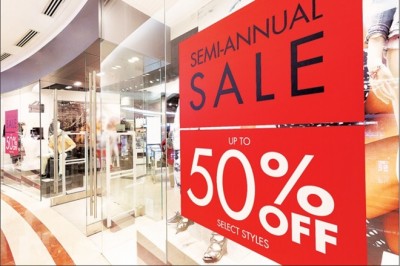
To reduce dependence on festive demand, retailers like Big Bazaar and Reliance have been inventing shopping events like Sabse Sasta Din (Cheapest Day), Sabse Sachi Sale (Most Authentic Sale), Republic Day / 3-Day sale, Independence Day shopping and more for the last few years. In ecommerce, there’s the Amazon’s Freedom Sale, Prime Day, and Great India Festival, and Flipkart’s Big Billion Day Sale. This year retailers and brands went overboard with Black Friday sale, a shopping-event concept from the 1950s in the USA linked to a harvest celebration marked by European colonisers of North America. (The fact that Black Friday has a totally different connotation in India since the terrorist bombings in Bombay in 1993 seems to have completely escaped the attention of brands, retailers and advertising agencies.) Be that as it may, we can only expect more such invented and imported events to pepper the retail calendar, to drive footfall and sales. The consumer has been successfully converted to a value-seeking man-eater fed on a diet of deals and discounts. With no big-bang economic stimuli domestically and a sputtering global economy, we should just get used to the idea of not fireworks but slow-burning oil lamps and sprinklings of flowers and colour through the year. Retailers will just have to work that much harder to keep the lamps from sputtering.
Ecommerce companies have been in operating for 20 years now, but the Indian consumer still mostly prefers a hands-on experience. The lack of trust is a huge factor, built on the back of inconsistency of products and services. The one segment that has been receiving a lot of love, attention and money this year (and will grow in 2020) is food and grocery, since it is the largest chunk of the consumption basket. Beyond the incumbents – Grofers, Big Basket, MilkBasket and the likes – now Walmart-Flipkart and Amazon are going hard at it, and Reliance has also jumped in. Remember, though, that selling groceries online is as old as the first dot-com boom in India. E-grocers still struggle to create a habit among their customers that would give them regular and remunerative transactions, and they also need to tackle supply-side challenges. Average transactions remain small, demand remains fragmented, and supply chain issues continue to be troublesome. Most e-grocers are ending up depending on a relatively narrow band of consumers in a handful of cities. The generation that is comfortable with an ever-present screen is not yet large enough to tilt the scales towards non-store shopping and convenience isn’t the biggest driver for the rest, so, for a while it’ll remain a bumpy, painful, unprofitable road.
Where we will see rapid pick-up is social commerce, both in terms of referral networks as well as using social networks to create niche entrepreneurial businesses – 2020 should be a good year for social commerce, including a mix of online platforms, social media apps as well as offline community markets. However, western or East Asia models won’t be replicated as the Indian market is significantly lower in average incomes, and way more fragmented.
As a closing thought, I’ll mention a sector that I’ve been involved with (for far too long): fashion. In the last 8-10 decades, globally fashion has become an industry living off artificially-generated expiry dates. A challenge that I have extended to many in the industry, and this year publicly at a conference: if consumption falls to half in the next five years, and you still have to run a profitable business (obviously!), how would you do it? Plenty of clues lie in India – we epitomise the future consumers; frugal, value-seeking, wanting the latest and the best but not fearful about missing out the newest design, because it will just be there a few weeks later at a discount. If you can crack that customer base and turn a profit, you would be well set for the next decade or so.
(Published as a year-end perspective in the Financial Express.)
admin
March 27, 2019
“Fashion is a zombie business. It is dead and it doesn’t know it yet,” says Devangshu Dutta, Founder of Third Eyesight, a specialist management consulting firm.
This is a must-watch excerpt from a presentation and panel discussion anchored by Devangshu Dutta on 27 March 2019 at the India Fashion Forum, in Mumbai.
The challenge he presents is simple: create a new business model for the fashion sector.
