
admin
May 30, 2022
Written By Akanksha Nagar
Having acquired Patanjali Ayurved’s food retail business, the company has ambitious plans

While its edible oil business has been its mainstay, Ruchi Soya’s CEO Sanjeev Asthana is confident that the share of FMCG revenue could touch 20% this fiscal.
Ruchi Soya has its sights set on clocking `20,000 crore- `22,000 crore in revenue over the next five years from its FMCG business, after recently having acquired Patanjali Ayurved’s food retail business worth `690 crore. The Patanjali food portfolio comprises 21 major products, including top-selling items such as ghee, honey and juices, besides staples such as atta and spices.
To achieve its target, Ruchi Soya plans to launch a D2C (direct-to-consumer) channel in the next two months for its nutraceuticals business, with more categories to follow, while also increasing its investment on e-commerce and expanding its offline footprint. It is quite active across all key online marketplaces including Flipkart, Amazon and JioMart.
According to the latest Statista report, India’s FMCG market was valued at $110 billion in 2020, and by 2025, it is expected to touch $220 billion, as more brands adopt the D2C route. Several top FMCG makers, including Hindustan Unilever, Dabur and Emami, have launched D2C brands in the past two years.
Oiling other products
While its edible oil business has been its mainstay, Ruchi Soya’s CEO Sanjeev Asthana is confident that the share of FMCG revenue could touch 20% this fiscal. It is targeting `7000 crore in revenue from FMCG and `25,000 crore from commodity sales by the end of FY23. “Over the next five years, the revenue split between FMCG and commodities will be equal,” he says.
Furthermore, Ruchi Soya plans on consolidating and rationalising the Patanjali food portfolio, while simultaneously revamping some of its existing products. “The aim is to reposition the entire company towards being a food FMCG major,” says Asthana.
Following the acquisition, Ruchi Soya will be renamed Patanjali Foods (after regulatory approvals). Asthana says that brands such as Nutrela, Mahakosh, Ruchi Gold and Sunrich will continue to be marketed under their existing names, while all the businesses that are coming in from Patanjali will use the Patanjali brand in exchange for a brand licensing fee
evangshu Dutta, chief executive, Third Eyesight, says the company name change may work in its favour, since there is a large audience aligned with the image and values of Patanjali Group and its founder Baba Ramdev.
Casting a wide net
But not all is smooth-sailing. Alagu Balaraman, CEO, Augmented SCM, suggests for the company to scale up, it needs to build a robust traditional distribution network, since a bulk of sales still happens through these channels. “The cost of doing e-commerce delivery is significantly high,” he notes.
Ruchi Soya is working on those lines. Asthana says besides utilising Patanjali’s existing distribution muscle, it is expanding its offline retail footprint by adding 10,500 non-exclusive modern grocery stores and 4,500 exclusive ones every month.
Source: financialexpress
admin
March 24, 2022
Written By Aditya Kalra & Abhirup Roy

MUMBAI, March 6 (Reuters) – At a large Future Retail (FRTL.NS) supermarket in Mumbai last week, workers were unloading hundreds of bright blue grocery crates belonging to India’s biggest retailer Reliance.
Prospective customers were turned back by security, disappointed at the closed state of the store that still carries the signage of Future’s biggest brand, Big Bazaar, but which will likely soon be rebranded as a Reliance outlet.
Across India, similar scenes are being played out as Reliance Industries (RELI.NS), India’s biggest conglomerate run by Mukesh Ambani, the country’s richest man, presses ahead with a shock de facto takeover of prized retail real estate that Amazon.com Inc has been keen to take part-ownership of.
The high-profile bitter dispute between corporate titans in which Amazon has sought to block Reliance’s planned $3.4 billion purchase of Future Group’s retail assets is currently before India’s Supreme Court.
Reliance’s takeover began with utmost stealth on the night of Feb. 25 when its staff began arriving at Future stores. Many in Future’s management were in the dark about the plans as store employees from all over the country frantically began to call, according to people with direct knowledge of the matter.
“It was tense, everybody was panicking. We didn’t know who they were. They wanted access and seniors didn’t know about it,” a New Delhi Big Bazaar store employee said, describing what happened around 8 p.m. that day.
At a Future store in Sonipat town in northern Haryana state, announcements were made asking customers to leave as Reliance seized control, one source said. In Vadodara in western Gujarat, Future employees arriving for work the next morning were asked to go back home with no explanation, said another source.
Citing unpaid payments by Future, Reliance has taken control of operations of some 200 Big Bazaar stores and has plans to seize another 250 of Future’s retail outlets. Combined, they represent the crown jewels of Future’s retail network and around a third of all Future outlets. read more
Although Reliance had not played a large public role in the legal dispute, it had, according to sources, for some months assumed many of the leases held by cash-strapped Future, India’s No. 2 retailer and Amazon’s estranged business partner.
Reliance’s sudden possession of the stores appears to have landed what some analysts are calling a coup de grace that spoils Amazon’s chances of untangling the transfer of Future’s assets to Reliance. That’s despite a series of legal battles won by the U.S. e-commerce giant to date blocking the 2020 deal announced between the two Indian companies.
“What will Amazon fight for now?” said a source close to the U.S. company with knowledge of the legal dispute. “The shops are gone.”
Representatives for Reliance, Amazon and Future did not respond to Reuters queries for this article. Sources asked not to be identified due to the sensitive nature of the dispute.
AFTER THE TAKEOVER, TALKS
Future Retail said on Feb. 26 it was “scaling down its operations” to cut losses although it made no mention of Reliance in its statement. Future Group as a whole has more than $4 billion in debt.
Reliance plans to retain Future’s employees at the stores it takes over, sources have said.
Amazon, which has a stake in a separate Future Group unit that it argues prevents Future from selling retail assets without its permission, has called the supermarkets and other stores an “irreplaceable” network in a sector worth $900 billion in revenues annually.
The legal wrangles had over time become increasingly high-stakes and marked by ugly rhetoric. At one point, Amazon sought for Future Chief Executive Kishore Biyani to be detained in prison for disobeying a legal order. And Future once likened Amazon to Alexander the Great and his “ruthless ambition to scorch the earth”.
But on Thursday, six days after Reliance’s move, Amazon at a Supreme Court hearing unexpectedly called for cordial talks to end the dispute – a proposal Future agreed to.
“People have taken over shops … let’s at least have a conversation,” Amazon’s lawyer Gopal Subramanium said.
Discussions are expected to begin soon. read more
Whatever the outcome of the talks, analysts say Amazon had gravely underestimated Reliance.
“If anybody should have seen this coming, it should have been Amazon and they should have prepared against it,” said Devangshu Dutta of retail consultancy Third Eyesight.
“Clearly, they didn’t.”
Source: reuters
admin
January 24, 2022
Written By Devika Singh
The entry of Jubilant FoodWorks will intensify competition in the fried chicken segment, where KFC so far has maintained its stronghold.

Popeyes, founded in 1972 in New Orleans, Louisiana, has over 3,400 restaurants in over 25 countries around the world. Popeyes (Wikimedia Commons)
Jubilant FoodWorks, the franchisee for Domino’s Pizza, will launch the iconic US-based fried chicken brand Popeyes, known for spicy New Orleans-style fried chicken and chicken sandwiches, in India on January 19 with the unveiling of the first outlet in Bengaluru.
“Popeyes was founded in 1972 and has been one of America’s most popular and fastest-growing chicken brands. Popeyes aims to delight Indian guests with the bold and delicious flavours of its Louisiana-style chicken,” the company said in a filing to stock exchanges.
“The success of the brand lies in its traditional and unique technique of hand breading, battering, and marinating its fresh chicken for 12 hours in bold Cajun seasonings,” the company added.
Popeyes runs over 3,400 restaurants in 25 countries.
With the entry of Jubilant FoodWorks, the competition is set to intensify in the fried chicken segment, where KFC has maintained leadership in the country so far.
“KFC has enjoyed a free run in the fried chicken market. There are some local players in this segment but no large QSR (quick service restaurant) player had a presence in it until now. With Popeyes as a competitor, now Jubilant FoodWorks is stepping into that opportunity,” said Devangshu Dutta, chief executive at consulting firm Third Eyesight.
While launching its initial public offering (IPO) last year, Devyani International, the largest franchisee of Yum! Brands (which owns KFC), had stressed the advantage it has over other QSRs in the country.
“We have no competition for KFC in India,” Ravi Kant Jaipuria, chairman, Devyani International, had said at the time. Devyani International runs 284 KFC India stores across 107 cities and the brand contributes more than half of its revenues. Sapphire Foods, which too launched its IPO last year, is another major franchise for KFC in India.
Both the companies already compete with Jubilant FoodWorks in the pizza segment as they also operate Yum! Brands-owned Pizza Hut in India. Jubilant FoodWorks with Domino’s Pizza, however, has clear leadership in the pizza market. Sample this: Pizza Hut currently has 500 stores in India, of which 317 are run by Devyani International; Jubilant FoodWorks, on the other hand, already has 1,335 outlets of Domino’s Pizza in India.
Now with the launch of Popeyes, Jubilant FoodWorks, it seems, wants a chunk of the fried chicken pie too.
Westlife Development, which holds the master franchise for McDonald’s in southern and western India, also has set its sight on the fried chicken segment in India. In an interview with Moneycontrol in September last year, Smita Jatia, managing director of Westlife Development, shared an ambitious plan to become a market leader in the segment. The company has already introduced fried chicken in its 125 stores in South India and plans to soon launch the food item in the western region too.
Clearly, the fried chicken market is certainly headed for interesting times as several new QSR players vie for a share of it. According to experts, the segment also offers the next avenue for growth for QSR players. “While fried chicken was the first to take off in Southeast Asia, in India, pizza and burgers found takers given the preference towards wheat-based cuisine in some parts of the country,” said Rajat Tuli, partner at global management consulting firm Kearney.
“However, as Indians become more experimental with food and trying out different cuisines, the fried chicken segment offers the next arena for growth to QSR companies,” he added.
Tuli also believes that the segment has enough space for a couple of players. “The QSR space is poised for over 20 percent growth in the next five-six years and hence there is enough headroom for multiple players to grow in it,” he said.
‘Veg options and no MSG’
The Popeyes India menu will feature the signature Cajun-flavoured Chicken Sandwich and Popeyes signature Chicken in Classic and Spicy flavours. The Indian menu will also feature an array of vegetarian options and will also have rice bowls and wraps. The entire India menu has no flavour enhancer monosodium glutamate (MSG), and the chicken is antibiotic-free, said Jubilant FoodWorks.
In a statement, Shyam S. Bhartia, chairman, and Hari S. Bhartia, co-chairman, Jubilant FoodWorks, said, “We are excited to introduce the Popeyes Louisiana Kitchen brand to chicken-loving Indian consumers. We are confident that Popeyes will not only delight guests but also strategically complement our portfolio and fortify JFL’s leadership in the QSR domain.”
Popeyes will start with its flagship store in Bengaluru’s Koramangala on January 19, followed by stores in New BEL Road and Kammanahalli soon thereafter. The brand will have its own app (Android and iOS) and mobile website.
To ensure a smooth and seamless delivery experience, Jubilant FoodWorks has built its in-house delivery fleet with e-bikes to enable zero-emission delivery. The company is also taking precautions given the pandemic situation.
“Safety protocols like daily temperature screening for all employees and frequent sanitisation of the restaurant are being implemented and frequent sanitisation of bikes will be conducted. All delivery riders will be compulsorily wearing face masks and gloves while following the frequent hand sanitisation protocol,” it added.
Source: moneycontrol
admin
November 28, 2021

By Rasul Bailay & Writankar Mukherjee, Economic Times
November 27, 2021
Reliance Retail aims to be one of the world’s top retailers, but for the last couple of years, it has been a buyer, not a seller. It has bought a string of retail brands — from online pharmacy Netmeds and online furniture retailer Urban Ladder to digital lingerie seller Zivame, online grocer MilkBasket and haute couture label Ritu Kumar. The latest acquisition was Sri Lankan lingerie brand Amante.
These acquisitions are crucial cogs in Reliance Retail’s further push into brick-and-mortar and ecommerce, and are part of Mukesh Ambani-led Reliance Industries Ltd (RIL) unit’s larger strategy: To break into the global top ten retailers. India’s largest retailer (by sales as well as by the number of stores) is currently ranked 53rd in the world, according to Deloitte’s Global Powers of Retailing 2021. Reliance Retail reported an annual revenue of $22 billion and a net profit of $750 million for the fiscal year ending March 2021.
At the same time, the company is looking beyond pure retailing. It’s pursuing a larger play to tap into the growing pie of the country’s overall consumption story — from contract manufacturing to distribution of everything from affordable fashion and consumer electronics to grocery products in India’s $850 billion annual retail market that is expected to swell to $1.3 trillion in the next few years. (Reliance did not respond to ET’s questionnaire.)
Analysts say Reliance’s overall plan is to engage India’s burgeoning consumers in its ecosystem one way or the other at any given point of time: shopping in its vast network of physical stores or on JioMart ecommerce platform, using Jio’s mobile or WiFi networks, watching movies on Jio Cinema, paying through Jio wallet so on and so forth that it is dubbed by the petroleum-to-telecommunications conglomerate as “retail plus” strategy.
“Their plan is to weave their products and services so deeply into your life that from morning to evening you are spending time and money on their networks either directly or indirectly,” says a top executive of an online grocery retailer. “Their idea is to constantly keep consumers engaged in a Jio bubble or in a Jio world.” The executive estimates India has a middle class of around 40 crore people. “Even if they succeed in capturing 10% of that wallet share, it is going to be huge,” he says.
That’s the reason Reliance Retail is betting big on business-to-business (B2B) ecommerce, with a digital wholesale marketplace along the lines of Alibaba for products such as smartphones, televisions, garments and grocery items, among other products, according to people aware of the plan. It’s looking to service a whole gamut of retailers in cities and villages.
Reliance has already started distributing its licencee products of Kelvinator- and BPL-branded consumer electronic items and its smartphone JioPhone Next, produced in collaboration with Google, to retailers outside of Reliance’s stable. The company also boasts a whole host of private brands and many of them are making inroads into general trade.
“The market for modern retail and ecommerce put together would be 15-20% in India. The rest 80% is still in the traditional market. If Reliance can make an entry into the traditional market and partner the smaller stores, the opportunity for growth and revenue is much more,” says an industry executive aware of the plans.
“Reliance’s approach is not to be a threat to small stores or merchants, but to be their enabler, provide them merchandise at best wholesale rates, upgrade their stores and even list them on their ecommerce platforms to help them reach newer consumers,” he adds.
Reliance is doing exactly that. Earlier this year, it started supplying Puric InstaSafe-branded FMCG products like soaps, home disinfectants and sanitisers to kiranas in Punjab and West Bengal. It is planning to roll these items nationwide. The company has put in place a marketing team for the first time to push these products. Similarly, B2B portal Ajio Business is selling T-shirts for Rs 79 onwards, a pair of jeans for Rs 220 and shirts for Rs 170 onwards to small businesses. Last quarter, Reliance Retail forayed into the wholesale business of medicines through Netmeds by roping in neighbourhood pharmacies under its B2B initiative.
These are some of the steps in the conglomerate’s bet not just on pure retail play but on end-to-end gameplay in the retail ecosystem, controlling manufacturing, wholesale, supply chain, ecommerce and payments.
To augment its digital wholesale plans, Reliance Retail has already converted its network of cash-and-carry outlets into fulfilment centres.
Analysts say Reliance’s ambitions are long-term and capital intensive and the company is ready for the long haul and to spend. “Reliance’s plan to rope in and aggregate many elements together — retailers, B2B buyers, suppliers, small players — and bring them on board takes time and is a capital-hungry business,” says Devangshu Dutta, chief executive of consulting firm Third Eyesight. “But controlling end-to-end is Reliance’s game plan in any business, including telecom, where it spans the entire value chain of not just providing the mobile network but also a digital interface with consumers.”
In a bid to feed its ambitious consumption plans, Reliance Retail is lapping up stores and warehouses nationwide to service both ecommerce and B2B sales through its “new commerce” omnichannel plans that will also involve legions of kiranas as last-mile delivery agents as well as buyers of Reliance’s products. Reliance Retail, which operates more than 13,000 stores of various formats, plans to open around 5,000 outlets of its Smart Point that would entail a convenience store, a pharmacy, agnostic centre, a telecom services and financial services products outlet all rolled into one across the country.
Reliance is planning to take this format to even tehsils, according to sources. Real estate agents and mall executives say Reliance is scouting for space for supermarkets, fashion outlets and jewellery and footwear stores.
They say Reliance is also planning to enter newer retail formats like a department store chain to compete with Shoppers Stop and Lifestyle. Also in the works is a Sephora-style beauty and cosmetics chain, they say.
“We will focus on expanding our store footprint multifold this year with co-located delivery hubs over the next few years. They will provide a strong network to reach and serve millions of merchants and customers,” Ambani said at the last AGM of shareholders.
Deloitte’s Global Powers of Retailing 2021 report ranked Reliance Retail as the world’s second fastest growing retailer, behind South Korea’s Coupang Corp.
Global financial and tech titans have taken notice of Reliance Retail’s play and pumped billions of dollars into it. Last year, the holding company Reliance Retail Ventures Ltd raised Rs 47,265 crore by selling about 10% stake to some of the biggest names in global private equity, including Silver Lake, KKR, General Atlantic, Abu Dhabi Investment Authority and TPG.
Reliance will continue with its acquisition spree, say analysts. However, Reliance Retail’s largest, the Rs 25,000 crore acquisition of Future Group, is bogged down by Amazon’s opposition to the proposed deal.
(Published in Economic Times)
admin
June 19, 2020

“The industry has no reserves. And now with all the constraints from the curfew to the liquor ban to the reduction in the capacity we are all going to lose money for a few months. On top of the losses during the lockdown, this is very hard to recover from and hence many are closing,” said AD Singh, the founder and Managing Director of the Olive Group of Restaurants.
New Delhi: The restaurant industry fears 30-40% eateries (from the organized sector) will shut down shutters soon out of the half a million present in the larger cities. Popular restaurants in Khan Market, New Delhi have already announced closure and many to follow suit, as shared by industry sources.
Some ground realities
“The industry has no reserves. And now with all the constraints from the curfew to the liquor ban to the reduction in the capacity we are all going to lose money for a few months. On top of the losses during the lockdown, this is very hard to recover from and hence many are closing,” said AD Singh, the founder and Managing Director of the Olive Group of Restaurants.
It takes no science to understand why the restaurant industry is the worst hit as opined by the industry experts. The industry which thrives on socializing and creating good times with family and friends is surely the worst hit where maintaining social distancing now is the norm. Besides, one of the primary reasons for the closing of restaurants is that it’s a capital intensive business wherein the daily churn is required to get going.
National Restaurants Association of India (NRAI) President Anurag Katriar said the sustainability cost is very high in the restaurant industry. There is no working capital and there is uncertainty in business volumes going forward. The volume is expected to be subdued as will need cash to fund losses that restaurants are unlikely to get. Further, the operational cost including the rentals is very high to afford.
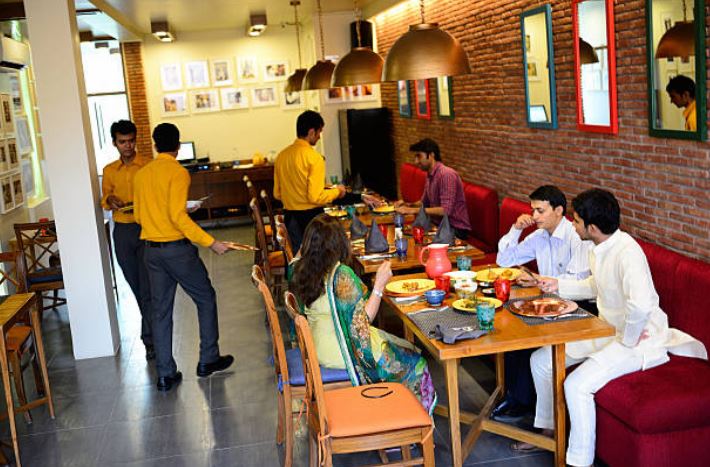
Even if the restrictions are not there, customers at this time will not be in that state of mind to dine out. Economic factors as well as the fear of spending some good amount of time (40 minutes to one hour) in a closed environment where many strangers will come and go does not look feasible for consumers.
Also, high rental is another cascading factor in the operating cost. Moreover, with the kind of guidelines to operate a restaurant business these days, many would not have the capability to follow such guidelines of social distancing and fewer footfalls, no liquor, etc.
“Eating out at restaurants is not a necessity, by and large; it’s a part of discretionary spending when you go out, socialize ― it’s all part of that. If you are not in a secure mind-frame about your future income, you will be as conservative as possible, and these are the kinds of expenditures that get knocked out first,” said Devangshu Dutta, founder, Third Eyesight.
“The restaurant industry was always a high mortality rate industry but the effects of the pandemic has been devastating. Some estimates say that 25-40% of restaurants may never open and even those that open will have to deal with low sales for a few months,” said Zorawar Kalra, founder of Massive Restaurants.
“I see the cost to sustain closure is very high. Many don’t have any resources which will impact the industry in such a way that 30-40% of restaurants will not reopen,” Katriar said.
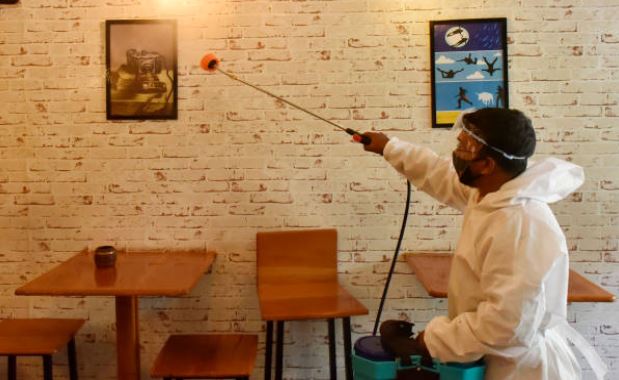
Maintaining the utmost care in health and hygiene measures may prove a double whammy for restaurateurs. Firstly, it will add to their operating costs but they won’t be able to do away with this measure-as this is the only way to bring back consumer confidence. Adopting digital menus and digital payment solutions is another area they will have to travel around.
What’s in the offing?
Maintaining the utmost care in health and hygiene measures may prove a double whammy for restaurateurs. Firstly, it will add to their operating costs but they won’t be able to do away with this measure-as this is the only way to bring back consumer confidence. Adopting digital menus and digital payment solutions is another area they will have to travel around.
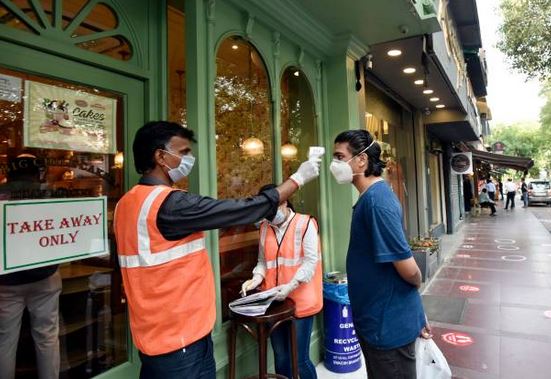
Besides, working with 50 percent or less of total capacity to ensure social distancing, the restaurants will probably have to get on the apps that provide online reservations, pre-ordering, and waitlist management to help minimize the queue of people waiting to be served. Popular restaurants have already started with thermal scanning for employees as well as consumers.
So, in the post COVID era, thermal scanning will be the new metal detection initiative that the restaurants will have to partake.
“Restaurants will have to opt for digital menus, contactless food, and sanitization among others. And with 50 percent occupancy, no alcohol and reduced working hours-restaurants will not make any money,” said Riyaaz Amlani, MD of Impresario Handmade Restaurants and the former President of NRAI.
Source: etvbharat
