
admin
January 7, 2026

Writankar Mukherjee & Shabori Das, Economic Times / Brand Equity
7 January 2026
There’s a renewed sparkle in the adage ‘Old is Gold’ at India’s biggest conglomerate Reliance. Banking on Indians’ nostalgia, it is hawking and reviving labels that once defined everyday life, Campa and BPL among them, to set its consumer venture’s cash registers ringing.
What started with sales of Rs. 3,000 crore in FY24, Reliance Industries’ fast-moving consumer goods (FMCG) business quickly accelerated towards Rs. 11,500 crore the following year. With a staggering Rs. 5,400 crore posted in the July to September FY26 quarter alone, the revival story is clearly striking a chord with consumers. But Campa, already the largest contributor to the Reliance Industries’ FMCG business, is only the beginning.
The company is injecting fresh life into acquisition of legacy brands such as Ravalgaon in confectionery and Velvette in personal care. Reliance is applying the same formula to the consumer electronics business, covering televisions, refrigerators and washing machines. Once a staple of Indian households, Kelvinator and BPL are being reintroduced.
Strategy Rings a Bell?
Driving this revival is a strategy Reliance knows well: aggressive pricing that is often 20 to 30% lower than competitors, offering generous trade margins to woo retailers, and a rapid expansion of distribution from its own stores to kiranas and local outlets, alongside local sourcing and an expanding product portfolio.
It’s a playbook that once created waves in the telecom market; this time, however, it comes with a generous dose of nostalgia.
The path ahead though may not be easy. While Campa may have yielded results in a category linked to instant gratification, electronics is a high-ticket, long-term purchase. Marketers are debating whether consumers in their 20s and 30s—spoilt for choice by global brands—would choose a Kelvinator refrigerator, a BPL TV or a Velvette shower gel over LG, Samsung, Dove or Fiama.
Deep Pockets and Retail Muscle
Reliance, experts say, has two advantages— its balance sheet and strong market presence with its own retail stores. “Reliance has the intent to dominate a market in whatever business it enters. Their brands in FMCG and electronics too have a more-than-decent chance of surviving and thriving,” says Devangshu Dutta, founder and chief executive of Third Eyesight, a consultancy in consumer space.
“As long as they have capital and management capability, they may cut their teeth,” he says.
The company is approaching the FMCG and electronics businesses in startup mode, but with deep pockets. As a Reliance executive explains, the strategy is to invest and invest more, gain market share, continue to absorb losses and after achieving scale, drive efficiencies to generate profit.
The path has been carved out. Reliance Consumer Products (RCPL), the FMCG business entity and what started as a unit of Reliance Retail Ventures, is now a direct subsidiary of Reliance Industries. This shift will help the company raise funds independently and eventually launch an initial public offering (IPO), and drive valuation independent of retail. The electronic business may follow suit as it grows in scale.
Reliance did not respond to Brand Equity’s queries.
Electronics: A Tough Play
Industry executives say the electronics foray will not be an easy battle against international brands. Global brands enjoy strong appeal in the Indian market, and companies such as LG, Samsung and Sony have been present for over two decades, cementing their position. Even the newer ones like Haier and Voltas Beko are rapidly gaining market share.
Pulkit Baid, director of the electronics retail chain Great Eastern Retail, says that unlike the cola industry, where two large players (Coca-Cola and PepsiCo) dominate, consumer durables are highly fragmented. “Kelvinator enjoys the brand heritage of an Ambassador car. But we will have to see if the brand is welcomed by Gen Z with the same euphoria as Campa.”
Industry veteran Deba Ghoshal notes that very few legacy brands have been able to withstand the onslaught of new-age brands in consumer electronics. Voltas (from the Tatas) and Godrej are exceptions, he adds.
“Reliance Retail has the strategic foresight to re-establish legacy brands in consumer durables space, instead of chasing a standalone private label business,” adds Ghoshal. “There is a strong opportunity in BPL and Kelvinator, provided they are re-launched with strong value and engaging emotive hooks, and not restricted to being a price warrior. Reliance has the capability; it just needs the right strategy.”
Reliance is readying campaigns for BPL and Kelvinator to connect with the younger consumers. The company is planning to re-launch them beyond Reliance Retail stores—targeting regional retail chains and e-commerce platforms and expanding quickly into smaller towns. With India’s electronics penetration still low—15 to 18% for flat-panel TVs, 40% for refrigerators, 20% for washing machines and less than 10% for air conditioners (ACs)—Reliance has substantial headroom for growth.
Angshuman Bhattacharya, partner and national leader for consumer products and retail at EY India, says Reliance may focus on tier two and three cities. “These markets have been a low priority for the Samsungs and LGs because they want to play in the premium segment where margins are higher. That is where Reliance may expand the market. It requires a lot of capital in terms of inventories and distribution, and Reliance has the ability and potential to do so.”
FMCG: Ball is Rolling
The FMCG push is gaining strong momentum. Reliance plans to double its distribution to three million outlets this fiscal.
Over the next three years, it looks to invest Rs. 40,000 crore to create Asia’s largest integrated food parks and has already invested Rs. 3,000 crore in manufacturing.
Isha Ambani, who spearheads Reliance’s retail and FMCG businesses, drew attention to Campa’s comeback at the company’s AGM in August: “Campa-Cola now holds double-digit market share across many states, breaking a 30-year MNC duopoly of Coca-Cola and PepsiCo. Campa Energy gained two million social media followers in just 90 days.”
Her target is bold: To reach Rs. 1 lakh crore in FMCG revenue within five years and become India’s largest FMCG company with a global presence.
Market watchers say such high ambitions require high investments. Kannan Sitaram, co-founder and partner at venture capital firm Fireside Ventures, said a company like Hindustan Unilever would set aside at least `30-40 crore to launch a brand. “Advertising and marketing alone would take up more than half of that. And when you are re-launching a brand which has not been around for a long while, the spending tends to be 25 to 30% higher in the initial three to four months,” he says.
Yet, analysts believe Reliance is in the consumer brands business for the long term. Bhattacharya says whatever Reliance has learned in this short time is meaningful and serious, something nobody else has managed.
Mover and Shaker
Competitors, including Tata Consumer Products, Dabur and PepsiCo’s largest bottler in India Varun Beverages, have acknowledged the turbulence created by Reliance in the FMCG sector. But the industry hopes low penetration levels will ensure there is room for everyone.
Varun Beverages chairman Ravi Jaipuria did not mince his words in the company’s latest earnings call in October-end: “They (Reliance) have woken all of us up and we are becoming more attentive… it is a very healthy sign for the country because our per capita consumption is so low that in the next five to 10 years, this market may double or triple…there is a huge room, and we see only positives in this.”
The revival of legacy brands and aggressive push into FMCG and consumer electronics indicates that Reliance is preparing for the long haul. In this fight driven by nostalgia, competitive pricing, deep pockets and distribution muscle, the battle for shelf space has just begun.
(Published in Economic Times/Brand Equity)
admin
December 15, 2025

By Saumyangi Yadav, Entrepreneur India
Dec 15, 2025
India’s D2C ecosystem has grown rapidly over the past five years, but scale remains elusive. While thousands of brands have launched and many have crossed early revenue milestones, only a small fraction manage to break past INR 100 crore in annual revenue. According to a new report by DSG Consumer Partners, based on a survey of over 100 Indian D2C founders and operators, the problem is not demand or product-market fit, it is how brands attempt to scale.
The report shows that around 60–65 per cent of Indian D2C brands remain stuck in the INR 1–50 crore revenue band, with very few reaching the INR 100 crore mark. This stage marks the point where early traction exists, but growth begins to strain unit economics, teams, and operating systems.
Insights from over 100 D2C founders reveal that India’s fastest-growing brands win on fundamentals rather than speed alone. Clear product-market fit, disciplined data tracking, strong unit economics, creative velocity, and an early focus on retention consistently separate scalable brands from those that plateau. Founders also admit that performance marketing mistakes, pricing missteps, and weak creative systems slow growth far more than budget constraints. In a booming D2C landscape, capability gaps in operations, brand-building, and supply-chain depth are widening the divide between breakout brands and those stuck in the performance plateau.
Industry observers argue that this is where many brands mistake rapid online growth for sustainable scale.
As Devangshu Dutta, Founder & CEO, Third Eyesight, explains, “Scaling up online can be very rapid, but is also capital-hungry in terms of CAC. Given the intense competition, the lack of customer stickiness and the power of platforms, there is a constant churn of marketing spend which is a huge bleed for growing brands.”
CAC Inflation is The Real Constraint
One of the clearest findings from the playbook is that acquisition efficiency, rising CAC and unstable ROAS, is the single biggest blocker to growth, cited by more founders than funding or category expansion. Moreover, over 70 per cent of brands rely on Meta as their primary acquisition channel, increasing vulnerability to auction pressure and platform-driven volatility.
Dutta links this directly to the limits of a digital-only mindset. “Limited offline expansion can trap brands in narrow urban digital markets, blocking broader scale,” he said.
This over-reliance on online performance marketing often leads to growth that looks strong on dashboards but weak on cash flow.
Highlighting their report, Pooja Shirali, Vice President, DSG Consumer Partners, said, “Across over 90 consumer brands we’ve partnered with at DSGCP, one truth is clear: brands that master Meta’s ecosystem don’t just grow, they change their entire trajectory through strategic clarity and disciplined execution. The real drivers of scale have less to do with viral moments, and everything to do with the long-term fundamentals that make milestones like the first INR 100 crore predictable, not accidental.”
Why Omnichannel is Unavoidable
The report suggests that brands that scale sustainably are those that reduce overdependence on paid digital acquisition and expand their distribution footprint. However, offline expansion brings its own complexity.
Dutta stresses that omnichannel is not an optional add-on, but a strategic shift. “D2C brands must adopt an omnichannel approach, blending online with offline retail for sustainable and scalable reach. Clearly the channels work very differently and management teams have to be prepared and capitalised for the long haul to tackle acquiring customers with channel-appropriate strategies,” he adds.
This aligns with the DSGCP report’s broader insight that scale breaks down when brands fail to adapt operating models as they grow.

Even within digital channels, performance weakens over time. The playbook finds that 62 per cent of founders report creative fatigue, where repeated creatives fail to sustain ROAS despite higher spends. At the same time, 55 per cent admit to under-investing in CRM and retention, with most brands reporting repeat purchase rates of just 10–30 per cent.
Both the data and expert opinion point to a common theme: brands that cross the INR 100 crore mark are structurally different. They obsess over unit economics, processes, and capital efficiency rather than topline growth alone.
As Dutta puts it, “Scalable brands that cross the growth hump have leadership obsessed with unit economics and omnichannel execution rather than chasing vanity metrics. Cash always was and is king, especially at early stages of growth.”
He adds that execution strength matters as much as strategy. “They are able to grow and steer teams that build and replicate processes fast rather than spending time, effort and money reinventing all the time, and do so without constant CXO intervention.”
As competition intensifies and capital becomes more selective, the next generation of INR 100 crore D2C brands is likely to be defined not by speed, but by the ability to compound cash flows, institutionalise processes, and scale distribution beyond digital platforms.
Saumyangi is a Senior Correspondent at Entrepreneur India with over three years of experience in journalism. She has reported on education, social, and civic issues, and currently covers the D2C and consumer brand space.
(Published in Entrepreneur India)
admin
November 26, 2025
Aakriti Bansal, Medianama
November 26, 2025
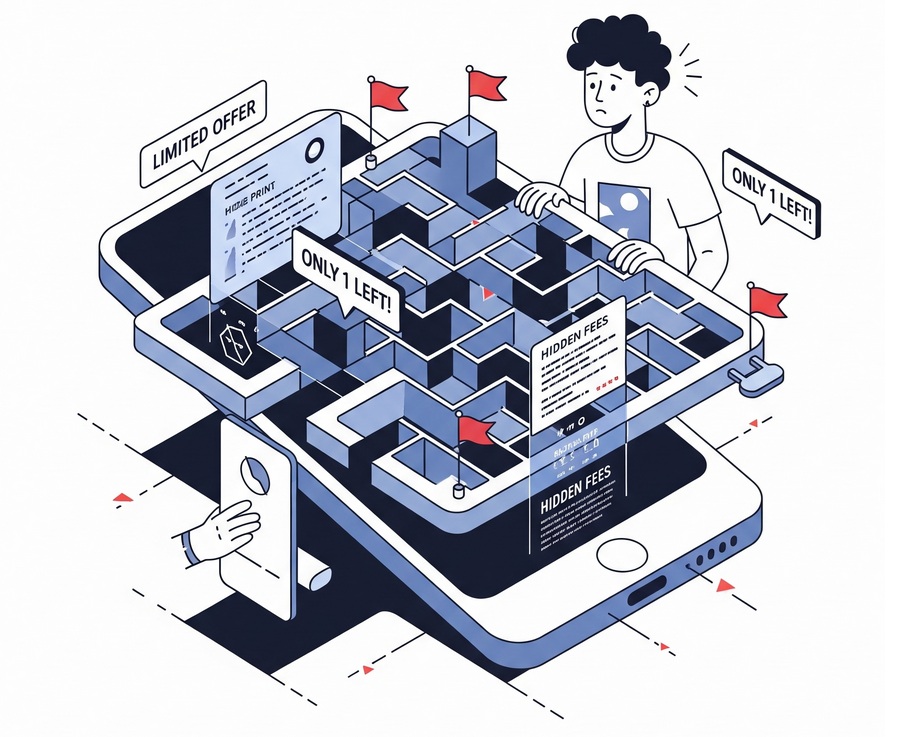
MediaNama’s Take: The Central Consumer Protection Authority’s (CCPA) decision to publish 18 self-declarations confirms only a partial picture of its dark pattern(s) identifying exercise. The authority has stated that 26 platforms have filed their declarations, but it has made only 18 of them public. This gap means the public still cannot see what eight major platforms submitted or whether those filings contain any meaningful detail. Moreover, even among the published declarations, several are one-paragraph statements that offer almost no insight into the scope or accuracy of the companies’ internal audits.
LocalCircles’ new survey adds further complications, reporting that 21 of the 26 platforms that submitted declarations still display at least one dark pattern. This finding suggests that the CCPA’s reliance on voluntary self-assessment may not be enough to shift platform behaviour at scale. It also raises questions about what the unpublished declarations contain and whether the missing submissions are similarly sparse or incomplete.
Notably, the CCPA has not clarified how it plans to verify the accuracy of any of the declarations, whether published or unpublished. If filings remain unverified for months, compliance risks turning into a box-ticking exercise rather than a meaningful regulatory process. Therefore, the next phase matters far more than the publication of select declarations, because the current approach raises more questions than it answers.
What’s the News
The CCPA has made 18 dark pattern self-declarations public, despite stating that 26 platforms have filed their compliance letters. The publication follows an RTI filed by MediaNama that revealed which companies had submitted their declarations, and pointed out that none of the filings had been available to the public at the time.
These declarations stem from the Ministry’s June 5 advisory, which required e-commerce and quick commerce companies to conduct internal audits under the 2023 Guidelines for Prevention and Regulation of Dark Patterns and submit compliance letters within 90 days.
For context, Moneycontrol reported that Amazon has still not filed its declaration and has asked for additional time. A senior government official told the publication that the government “has done what it had to” and does not plan further discussions.
The official also said that any punitive action would depend on consumer complaints routed through channels such as the national consumer helpline. This indicates that the enforcement approach continues to be reactive rather than compliance-driven.
What Did The CCPA Ask Platforms To Do?
The June 5 advisory set out a simple compliance framework for digital platforms. It asked every e-commerce and quick commerce company to complete a self-audit of its website and mobile app within 90 days and check their interfaces for the 13 dark patterns listed in the 2023 guidelines. Platforms were required to file a self-declaration confirming compliance once this internal review was complete.
However, the advisory did not specify how the audit should be conducted. Companies were free to choose any methodology, and the CCPA did not prescribe a standard format, a uniform checklist, or a minimum evidence requirement. Also, the advisory did not require independent audits or third-party validation.
Furthermore, there was no explanation of how the CCPA planned to verify whether the declarations were accurate or complete. In effect, the responsibility for defining the scope, depth, and rigour of the audit rested entirely with each platform.
What the CCPA Has Done With the Declarations
As mentioned before, the CCPA has now published 18 self-declarations on its website. The release confirms that companies submitted their compliance letters, but it does not indicate whether the authority evaluated the accuracy or depth of the filings.
Several platforms submitted very short statements that simply assert compliance without describing any checks or findings. BigBasket, Zomato, Blinkit and Swiggy were among the companies that filed especially minimal disclosures. The CCPA has not explained why these filings were accepted or whether any follow-up questions were asked. Therefore, asking for and disclosing self-declarations shows some administrative progress, but it does not reflect any regulatory scrutiny.
This lack of verification aligns with concerns raised by Devangshu Dutta, Founder of business consulting firm Third Eyesight. He told MediaNama that self-declarations “do not change things much” when regulators do not audit submissions or impose consequences.
Further, Dutta remarked that most companies comply at the minimum level required if their claims are not examined and are not made public in full. According to him, revenue-driving design choices such as forced add-ons, confusing checkout flows or misleading scarcity claims will not be voluntarily removed sans oversight.
What Independent Evidence Shows
LocalCircles’ latest audit presents a sharply different picture from the companies’ filings. The organisation found that 21 of the 26 platforms that submitted “dark pattern free” declarations still use one or more manipulative design practices. The assessment relied on feedback from more than 250,000 consumers across 392 districts along with AI-assisted testing.
The most common violations include forced action, subscription traps, bait and switch, basket sneaking, interface interference and disguised advertisements. In practice, these dark patterns respectively mean that users are pushed into steps they did not choose, face hidden or hard-to-cancel subscriptions, see offers change during checkout, encounter fees added at the last moment, get nudged toward platform-favoured choices, and come across ads that appear as regular listings.
LocalCircles also identified drip pricing (gradually adding mandatory fees during the checkout process) on 11 of the 26 companies, including Flipkart, Myntra, Cleartrip, MakeMyTrip, BigBasket, Zomato and Blinkit, among others. The organisation said that many platforms appear to misunderstand what qualifies as drip pricing, which has led to incomplete corrections.
Trust Can Erode Due To Gap Between Declarations And User Experience
Sachin Taparia, Founder of LocalCircles, said that the problem begins with the absence of any verification. “Our understanding is that CCPA is wanting that companies submit a self-declaration at the earliest. However, there is no cross checking of claims that is being done by the CCPA, and as a result the companies are not being as thorough with their dark-pattern detection and resolution,” he said.
Taparia added that discrepancies between declarations and user experience could harm trust. “LocalCircles has found dark patterns on 21 of the 26 platforms submitting self-declarations. If this exercise is not done with high accuracy, both platforms doing so and CCPA could see consumer trust being impacted,” he said.
Importantly, Dutta echoed this concern, saying that the absence of penalties or reputation-related consequences allows companies to self-declare compliance while keeping revenue-generating patterns intact. He described the current process as “more an administrative formality [rather] than a behaviour-changing regulatory tool”.
Why This Matters
The gap between self-declarations and independent audits in the true sense of the word brings the real enforcement question into focus. What should the next phase of regulation look like?
In this context, Dutta said that regulators need to move beyond self-certifications and mandate detailed user experience (UX) audit reports that map every user journey, including pop-ups, onboarding, search, checkout, cancellations and returns.
He explained that regulators should reinforce this by demanding substantive evidence instead of brief compliance letters. This evidence can include screenshots and screen recordings of key flows, version histories that show how an interface changed over time, and product design documents or A/B testing results that reveal why specific nudges were introduced. To explain, A/B testing is essentially a method for comparing two versions of something to see which one performs better.
Furthermore, Dutta noted that platforms already collect extensive data on user complaints and drop-off points, which can help identify harmful or confusing design choices. He also said that independent third-party attestations, similar to security or accessibility audits, can provide a credible external check and increase the cost of non-compliance.
Multiple Annual Audits For Apps that Change Interface Frequently
Notably, Dutta stressed that most dark pattern categories appear across e-commerce, quick commerce and Direct-to-Consumer (D2C) websites, which means regulators can create a baseline audit standard that works across sectors instead of relying on platform-specific interpretations. He also suggested that audits should occur at least once a year, and companies that frequently modify their interfaces may need to report two or three times annually.
The larger concern now is whether the CCPA plans to move toward such a structured framework. Without independent verification and clear audit expectations, companies can continue declaring compliance even when manipulative designs remain embedded in their interfaces.
(Published in Medianama)
admin
October 10, 2025

Pooja Yadav, Exchange4Media
10 October 2025
Over the years, India’s e-commerce market has been dominated by the duopoly of Amazon and Flipkart. These platforms have not only captured consumer attention but also shaped how brands spend their marketing budgets. In parallel to this, the concept of retail media networks (RMNs), marketplaces selling ad placements to brands directly, has also grown rapidly. Not only this, it is emerging as one of the fastest-growing channels in digital advertising.
As a result, the industry is witnessing a wave of new retail media platforms entering the market. From grocery and pharmacy marketplaces to Q-comm platforms, D2C marketplaces, and ONDC pilots, all are attempting to carve out space for themselves. Yet despite these new entrants, Amazon and Flipkart continue to command the lion’s share of shopper-marketing rupees, leaving little oxygen, even for challenger players like eBay, even as it retools its India strategy.
Retail media is now outpacing social and video in growth, and in India, this expansion remains concentrated around these two dominant players. According to several experts e4m spoke with, Amazon and Flipkart dominate because of their massive logged-in traffic at the point of purchase, first-party data, and closed-loop attribution linking impressions directly to GMV. These platforms succeed by combining large logged-in audiences, direct attribution from impressions to sales, and first-party data insulated from signal loss-advantages most challengers cannot match.
Adding to this, Shradha Agarwal, Co-Founder & CEO of Grapes, highlighted the key hurdles brands face when allocating budgets to newer networks like ONDC or eBay. She noted that brands consider three main factors: whether the network can deliver the same sales efficiency, whether it reaches new users or just shoppers already accessible on Amazon, and whether the scale is meaningful. Quoting an example, she said if a brand is already generating 10 crore on Amazon, it may question whether investing in a new platform that delivers only 25 lakh is worth the effort.
Vaibhav Jain, Head of Media at First Economy, pointed out, the biggest barriers to scaling budgets across newer retail media networks like eBay or ONDC or any other, are fragmented infrastructure, limited data maturity, and inconsistent measurement. Many platforms still lack robust first-party data systems and unified reporting standards, making it difficult for brands to validate ROI at the level provided by Amazon or Flipkart.
Everyone’s building a network – but is there room?
Despite the dominance of Amazon and Flipkart, the retail media landscape is attracting new entrants, including grocery and pharmacy marketplaces, Q-commerce platforms, D2C marketplaces, and ONDC pilots, all attempting to carve out space for themselves. Among these challengers, eBay has recently re-entered India with a markedly different approach focussing on building technical and export-led capabilities rather than competing directly in the domestic consumer market.
Against this backdrop, eBay has reopened its India chapter with a Global Capability Centre (GCC) in Bengaluru, planning to host over 300 engineers across AI/ML, product, design, and data analytics. Unlike its previous consumer-facing stints in 2005 and 2013, this pivot is capability and export-led, not a direct battle with domestic marketplaces. Globally, eBay earns revenue through Promoted Listings and other advertising products, but in India, it has historically lacked domestic shopper scale and first-party data, the two critical ingredients that make retail media profitable.
This time, eBay appears to be betting on cross-border trade, technology-led capabilities, and potentially new ad-tech opportunities a model that could differentiate it from established players like Amazon and Flipkart.
Speaking on this, Lloyd Mathias, business strategist and angel investor, said, “Retail media takes off only when you have a large front-end site like Amazon or Flipkart, where advertisers want to reach shoppers at the point of purchase. I don’t think retail media is going to be a big revenue driver for eBay at all.”
Adding to this, seasoned e-commerce analyst and Datum Intelligence advisor Satish Meena noted, “Retail-media economics depend on domestic shopper traffic and first-party data both of which eBay currently lacks in India. The realistic play is export-facing promotions, enabling Indian sellers to advertise SKUs to international buyers on eBay’s global sites. That’s valuable but niche, and unlikely to rival Flipkart or Amazon’s India-scale retail-media businesses.”
Devangshu Dutta of Third Eyesight stated, “On the trade front, the company appears to be prioritising exports from India rather than competing in the domestic market, which is already hypercompetitive and price-driven.”
Until eBay establishes a stronger consumer-facing presence, retail media will not be a priority, as per experts. In the near term, its strategy is likely to focus on export-facing ads, promoting Indian sellers to global buyers. Looks like this approach is unlikely to challenge Amazon or Flipkart in India.
What it would take to break the duopoly
While eBay’s strategy has been called smart, opportunities remain. Harish Bijoor, Founder, Harish Bijoor Consults Inc, noted that communication formats are evolving. with peer-to-peer engagement gaining reliability over top-down approaches. Amazon and Flipkart follow top-down models, whereas eBay could differentiate itself through 1:1 consumer interaction.
After two failed attempts at cracking India’s consumer market, eBay’s third innings (as some may call) is fundamentally different. It is no longer chasing domestic consumers but enabling Indian sellers to export globally, leveraging eBay’s global logistics, trust programs, and buyer base. The company is also partnering with government export initiatives, MSME councils, and logistics providers, while buildin technical, analytic, and product capabilities through the Bengaluru GCC.
Mandar Lande, co-founder of Waayu, a platform working with ONDC and MSMEs to enable digital commerce, said that eBay is unlikely to build a traditional retail media business in India without a large consumer marketplace. “eBay lacks the first-party shopper data and traffic scale that power retail media networks like Amazon Ads or Flipkart Ads. However, it could still build a niche ad-tech play focused on export sellers, cross-border insights, and global buyer intent analytics essentially an “export intelligence and seller marketing’ platform rather than a domestic retail media business. While it won’t rival Amazon Ads in India, it can carve out a high-value B2B media niche rooted in cross-border commerce rather than local eyeballs.”
For challenger brands like eBay aiming to break into India’s retail media landscape, success will depend on proving incremental sales rather than just impressions, offering unique audiences, maintaining pricing flexibility, and providing ease of buying through self-serve tools and standardised metrics.
Experts told eam that while retail media and ad-tech may not be immediate revenue drivers, eBay’s export-first strategy allows the company to build scale, technology, and credibility, setting the stage for potential consumer-facing or advertising initiatives in the future.
Jain mentioned, “Closed-loop measurement is central to shifting brand spend beyond Amazon and Flipkart. It offers verifiable proof of performance, linking ad exposure directly to sales. Challenger retail media networks that can deliver credible attribution and comparable ROAs will gain traction faster. Measurement sophistication isn’t just an advantage; it’s the entry ticket to serious brand consideration.”
Speaking about how self-serve tools, standardised metrics, and competitive CPC/CPM rates influence a brand’s willingness to experiment with challenger retail media networks, Jain told e4m that these elements are critical for encouraging experimentation. They simplify campaign management, enable agility, and allow brands to benchmark performance fairly against established players.
From a brand execution perspective, Agarwal emphasised that the availability of self-serve tools is crucial for experimentation. Advertising on commerce platforms was previously cumbersome, but self-serve options now allow brands to launch campaigns at any budget, large or small, providing flexibility and control. When pricing is competitive and reporting is standardised, brands are more willing to test new networks. Early experiments have shown that allocating even a portion of retail media budgets to challenger platforms can deliver meaningful incremental sales, although such cases remain limited.
Reality check for 2025 plans
Brands in India are increasingly looking to diversify their retail media spend and reduce costs, but in a market dominated by Amazon and Flipkart, certainty still drives allocation decisions. Amazon Ads India revenue surged to 8,342 crore in FY25, a 25% year-on-year increase, while Flipkart Ads has grown 600% since 2020, capturing a significant share of marketplace marketing budgets. Until challengers can match these giants on shopper intent, identity, and attribution, most retail media budgets will remain top-heavy.
While many new entrants are trying to add variety at the edges by offering niche audiences, alternative ad formats, and export-focussed solutions, However, breaking into the core of India’s retail media market requires domestic scale, robust attribution frameworks, and access to unique audiences that cannot be replicated elsewhere.
Experts point to several structural barriers for newer networks. Fragmented infrastructure, limited first-party data, and inconsistent measurement make it difficult for brands to validate ROI at the level provided by Amazon or Flipkart.
(Published in Exchange4media)
admin
September 19, 2025

Anuja Jain, Exchange4Media
19 September 2025
Retail media is now the fastest-growing line in Indian advertising, with brand budget tilting hard toward e-commerce as digital shopping scales.
Fresh FY25 financials underline the shift: Amazon India’s ad sales jumped 25% to *8,342 crore, while Flipkart booked ₹6,310 crore. Together, the two platforms command 14,652 crore in commerce advertising, signaling a decisive move of performance spends from traditional channels to shoppable, data-rich placements.
At Amazon India, advertising has become the second largest revenue pillar after marketplace services, contributing nearly 28% of a 30,139-crore operating base. The heft now rivals or surpasses several legacy media categories, highlighting brands’ tilt to closed-loop, performance-led placements on commerce.
On the other hand, for Flipkart, ads are now a clear topline engine. Marketplace revenues have crossed ₹20,000 crore, with income from marketplace services more than doubling on the back of brand promotions, even as the company ploughs investment into logistics, new commerce formats, and Al-driven personalization.
For context, marquee media houses sit well below commerce ads, Zee Entertainment’s FY25 advertising revenue was 838 crore, while HT Media logged about a little over 1,070 crore for the year. Even Network18’s entire news segment revenue (ad + subscription) was approximately 468 crore, clearly indicating the scale retail media now commands.
Why retail media Is booming
According to brand experts, the surge in ad revenues of Amazon and Flipkart not only reflects the growing dominance of retail media in India but this works because it is closest to the point of purchase, akin to securing premium shelf space in physical retail.
“Consumers come to Amazon and Flipkart with high purchase intent, and coupled with first-party data, brands can sharply target audiences-premium or mass-with clear measurability of ROI,” said one of the experts.
Underlining the growing dominance of retail media, “E-commerce platforms know exactly who you are and what you buy,” he explains that this knowledge allows brands to pitch products with far greater precision thab traditional digital channels.
Retail expert Devangshu Dutta explains that the surge in ad revenues for e-commerce needs to be compared with the long-standing practices of large retailers, who have historically charged slotting fees for shelf placement and additional promotional charges for in-store or media visibility.
“As far as ad revenues for e-commerce companies in India are concerned, this is a fundamental structural shift rather than a temporary spike. It is a mature monetisation strategy that mirrors global trends,” he said.
The size and accuracy of retail media networks (RMNs) are the main drivers of the increase in e-commerce ad spending. According to Bloom Agency, an NCR based digital marketing outfit, companies are discovering unmatched reach and conversion prospects in India, where there will be over 342 million online consumers by 2025 with platforms like Amazon (with 150 million users) and Flipkart (with 180 million users) controlling over 65% of the market. In contrast to traditional digital advertisements on Google or Meta, retail media provides closed-loop attribution, which allows advertisers to track sales impact directly. This is a crucial indicator in today’s ROI-driven market.
IBEF (Indian Brand Equity Foundation) data shows that India’s digital advertising industry has crossed ₹60,000 crore in FY24, with retail media accounting for a fast-expanding share. Globally, retail media is already being hailed as the “third wave” of digital advertising after search and social media, and India is now firmly aligned with that trajectory.
Nipun Marya, CEO of iQOO, credited Amazon Ads as a crucial growth driver for the brand’s recent launches. “For recent launches, iQOO leveraged Amazon Ads to reach relevant audiences and build pre-launch buzz, using formats like Amazon Live, influencer-led shopping events, display, video, and search ads,” he said.
Emphasizing the centrality of Amazon in its strategy, Marya highlighted, “Based on consumer insights, iQOO identified Amazon as the key shopping destination for its core audience and built its e-commerce strategy around the platform.” This approach, which combines influencer-led activities, Amazon Live storytelling, and always-on Search Ads, has helped the brand deepen engagement and sustain consumer consideration in a competitive and price sensitive market.
Tight demand is also lifting platform pricing, through last Diwali, India retail-media CPMs spiked 30% at peak and CPCs ran 33% above baseline, and brands are budgeting for similar pressure this season. New premium placements, video/CTV and Amazon’s Sponsored TV are further nudging average rates up as advertisers chase shoppable reach.
Quick commerce platforms like Zepto, Blinkit and Swiggy Instamart are also capitalising on festive demand with steep hikes in ad rates, especially for premium slots like homepage banners and sponsored placements. Categories such as FMCG, snacks and personal care are leading the charge, with brands committing lakhs each month to secure visibility. By turning digital shelf space into monetised real estate, Q-comm ad revenues are projected to cross ₹5,000 crore by 2025, reinforcing why retail media is one of the fastest-growing, ROI-driven channels.
Quick commerce players are seeing varied traction from advertising revenues. Zepto has emerged as the frontrunner, crossing ₹1,000 crore in annualised ad revenue, or over ₹83 crore a month. In contrast, Blinkit earned just 7 crore in FY25 from related-party ads, dwarfed by its 502 crore ad spends. Zomato’s food delivery arm reported ₹8,080 crore in revenue, up 27% YoY on the back of commissions, ads and platform fees, while Swiggy’s operations grew 45% YoY to 4,410 crore but losses widened to 1,081 crore due to heavy quick commerce investments.
Intensifying competition for brand wallets
Sponsored listings, video commercials, and Al-driven targeting are just a few of the ways that Amazon’s commerce ecosystem seamlessly incorporates advertising, giving businesses greater visibility at the point of sale. Flipkart, on the other hand, is using its creator-led campaigns (Creator Cities), subscription play (Flipkart Black), and holiday specials to create an engaging layer of brand interaction.
The competitive dynamic is forcing consumer brands, especially in FMCG, electronics, and fashion, to rethink their media mix. With e-commerce penetration expected to jump from 25% in FY24 to 37% by FY30 as per the IBEF report, advertising spends on these platforms are projected to scale even faster. Analysts suggest that retail media could command over 20% of India’s total digital ad market by 2030.
A Reshaped Media Landscape
The implications for India’s advertising ecosystem are profound. Traditional digital duopoly players Google and Meta still command scale, but the entry of retail giants is fragmenting spends. For brands, the choice is less about “whether” to advertise on Amazon or Flipkart and more about “how much” to allocate in order to capture consumers at the point of intent.
As India races toward becoming the world’s second-largest online consumer market with 600 million shoppers by 2030, says Grab On report, retail media is set to be the fastest-growing channel. Amazon and Flipkart’s FY25 numbers signal that we are only at the beginning of this pivot. The clear signal for advertisers is that e-commerce has evolved beyond sales, now standing at the very core of digital ad planning.
(Published in Exchange4Media)
