
admin
August 9, 2024
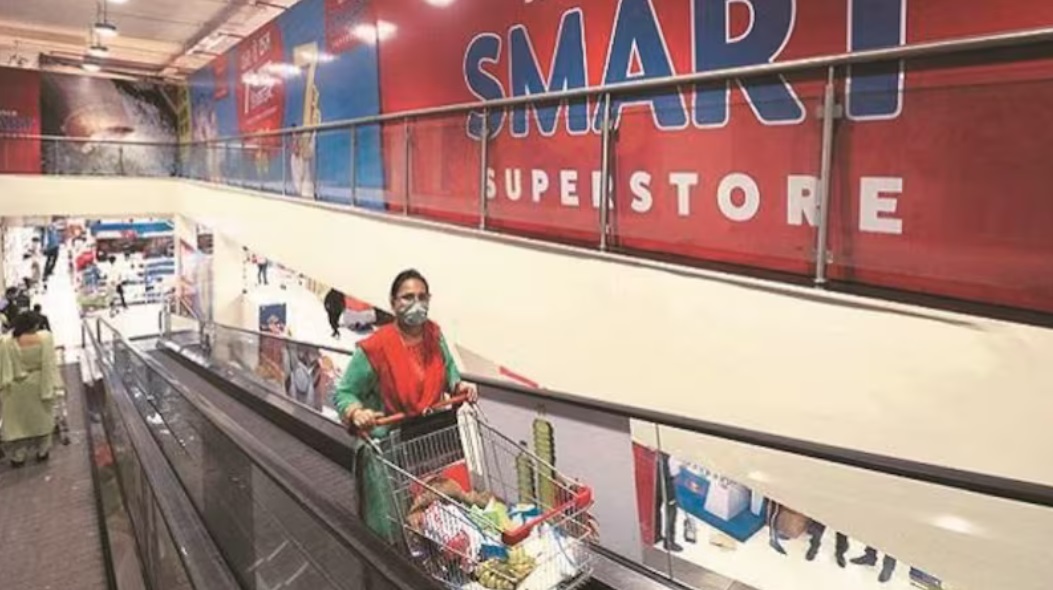
Sagar Malviya and Rica Bhattacharyya, Economic Times
9 August 2024, Mumbai
Reliance Industries Ltd. reduced its workforce by 42,000, or nearly 11%, in FY24, in what is being seen as an outcome of a cost-efficiency drive and reduced hiring, especially in its retail segment which also saw store closures and slower expansion.
The employee strength at the country’s largest company by market value, stood at 347,362 in FY24 compared with 389,414 a year ago. The intake of new recruits was slashed by more than a third to 171,116, according to its latest annual report.
“The new lines of businesses (at Reliance) have matured now and have significant support from digital initiatives. Now they are at a stage to better manage the operations with optimum strength,” said an analyst with a leading broking firm, requesting not to be named. “It doesn’t mean that the numbers (of headcount) won’t increase when new business opportunities emerge and strategy changes. They understand very well how to drive cost management and efficiency.”
Most of the job cuts were in its retail business, whose 207,552 employees last fiscal accounted for about 60% of RIL’s total employee strength. The number was 245,581 in FY23.
“Overall voluntary separations in FY24 are lower than FY23. The retail industry typically has a high employee turnover rate, especially in store operations,” RIL said in the report, adding that its employee benefits expense increased by 3% year-on-year to Rs 25,699 crore. In FY23, it had gone up by 33%.
In FY23, Reliance Retail expanded its physical store network, adding more than 3,300 new stores to take the total store count at the end of the year to 18,040. In FY24, the store count stood at 18,836–a net addition of some 800 after factoring in unviable store closures.
Last year, RIL’s online wholesale format JioMart aligned its operations with Metro Cash and Carry, which it acquired. With the addition of Metro’s permanent workforce of 3,500 employees, there was an overlap of roles, both in the backend and online sales operations.
Experts said many of the large conglomerates are rebadging some of the front-end service functions to third-party rolls.
“Many companies in the retail sector have been getting people off their own roles and appointing staffing companies for a leaner structure and efficient management. This may reflect as a drop in headcount (on the company reports) but need not necessarily be loss of jobs,” said Lohit Bhatia, president of workforce management at Quess Corp. “This could include functions such as security guards at the store level, facility management, logistics, picking and packing, etc. That apart, digitisation and tech advancement is also leading to some job roles being redundant across sectors.”
India’s retail sales expansion slowed to 4% last year after a surge in spending across segments—from clothes to cars—in the post-pandemic period, triggered by revenge shopping. Reliance’s retail division, however, grew 18% in sales to Rs 3,06,848 crore.
“Focus on store productivity usually happens in cycles; we have seen consumers unleash their spending post pandemic, which led to retailers expanding their network or square footage. However, if some of the stores are unviable, then management teams are now highly objective, even ruthless, and will shut stores,” said Devangshu Dutta, founder of retail consulting firm Third Eyesight. “In addition, any company planning to list would like to have healthy and lean operations, although we cannot pin-point it to Reliance in this case.”
Another analyst, who did not wish to be named, said, “Reliance’s annual report reveals that the group, spanning petrochemicals, telecom, and retail, has moved beyond its core investment phase and is now poised to reap substantial benefits from operating leverage, efficiency gains, and investments in technology and talent.”
(Published in Economic Times)
admin
July 28, 2024

Writankar Mukherjee, Economic Times
Kolkata, 28 July 2024
Top retail chains such as Reliance Retail, Shoppers Stop and Spencer’s Retail are facing a prolonged slowdown in consumption, pushing them to exit unprofitable markets, raise debt and control costs.
India’s largest retailer Reliance Retail shuttered 249 stores in the three months ended June. The company is also going slow on expansion, opening 331 new stores in the quarter compared to 470-800 stores opened every quarter in FY22, FY23 and FY24. The closures mean the retail business of Reliance Industries made 82 net new store additions last quarter–the lowest in 15 quarters.
Spencer’s Retail has decided to completely exit North and South India markets by closing 49 stores in the National Capital Region (NCR), Andhra Pradesh and Telangana. The step will erase Rs 490 crore of annual revenue, but the company is hopeful it will improve profitability.
Shoppers Stop chief executive officer Kavindra Mishra told investors last week that it may have to defer a few store openings this fiscal due to regulatory and other issues. The company will also borrow Rs 100 crore for expansion with demand remaining soft.
Meanwhile, V-Mart Retail has closed 22 stores in the first six months of 2024, as per its latest investor presentation.
“Pruning underperforming locations is a natural reaction during times of demand stress,” said Devangshu Dutta, CEO of retail sector consulting firm Third Eyesight.
Pure Economics
“Demand forecasting can never be perfect due to a lag between demand assessment and supply. Retailers now try to do away with underperforming stores at the bottom of the pile quickly. Earlier there were prestige issues in shutting down stores, but now it’s acceptable industry practice and pure economics,” said Third Eyesight’s Dutta.
Analysts say most retailers expanded rapidly after the pandemic, banking on pent-up demand and revenge shopping at the time. With demand turning sluggish, the industry is now being forced to take various steps to sustain operations. At Reliance Retail, net profit rose by a modest 4.6% from a year earlier in the June quarter to Rs 2,549 crore while revenue grew 6.6% to Rs 66,260 crore. It was the slowest pace of revenue growth and came after a 9.8% increase in Q4FY24. Net profit and revenue from operations fell sequentially in the June quarter.
Spencer’s Retail CEO Anuj Singh told analysts on Thursday the 49 stores it is closing make up nearly 22% of revenue, but also Rs 56 crore of losses at the regional Ebitda level in North and South India. “They were a drag on the balance sheet. We will now focus on Uttar Pradesh and the East where there is a sizable consumption opportunity with a 250 million population,” he added.
Singh said the store rationalisation exercise and about 35% headcount reduction at corporate offices will reduce overheads from 8% operating cost to 6.3% of total sales. “We now expect to achieve Ebitda breakeven by March 2025 which will give us the option to raise capital,” he said.
Mishra at Shoppers Stop said demand remained subdued last quarter due to fewer wedding dates, long election season with polling dates on weekend, heatwaves, and high level of cumulative inflation. All these factors combined hit growth and volume recovery, except in value fashion and beauty.
More stores shut than opened
In fact, the sustained demand slowdown saw chains like Pantaloons, Spencer’s Retail and Nature’s Basket close more stores than they opened last fiscal. Retailers like V-Mart Retail, W, Aurelia and Titan Eye+ had a higher rate of store closures than openings in the March quarter.
(Published in Economic Times)
admin
July 20, 2024

Gargi Sarkar, Inc42
20 July 2024
The Indian government’s ban on Chinese apps and products in 2020 saw two massive casualties. Everyone knows about TikTok, but fast fashion brand Shein was equally as big in India four years ago.
But the India setback did not halt Shein’s global momentum, just as it did not stop TikTok from becoming what it is today. Shein became the world’s largest online-only fashion company in 2022.
Valued at a staggering $10 Bn, the brand accounted for nearly one-fifth of the global fast-fashion market in 2022, outpacing giants such as Zara and H&M. To put things in context, Shein was founded in 2008, whereas Zara was incorporated in 1975 and H&M in 1947.
In India, Shein set the market on fire. Launched in India in 2018, the brand was already a major player by 2020, dominating online searches and influencer-led content. But the ban in 2020 meant all that came to a halt.
The Indian government’s ban stemmed from fears of Shein’s Chinese parent company storing or transferring data of Indian customers to China. While the ban itself came under a tense geopolitical climate, one could say that Shein’s exit left a gap in India’s fashion market which D2C brands quickly filled.
Brands such as Urbanic, Twenty Dresses, Cilory, attempted to fill the void but couldn’t quite match Shein’s popularity. Indeed, VCs also backed fast fashion and casual wear startups such as The Souled Store, Virgio, NewMe and others which looked to replicate the Shein formula.
Ecommerce unicorn Meesho has also looked to fill the gap with affordable fashion and a similar content-led sales strategy that worked wonders for Shein.
While many of these brands have grown in scale over the past four years, none of them — at least so far — have quite replicated the magic of Shein and how quickly it disrupted the market.
And that’s arguably why Shein’s re-entry into India through a partnership with Reliance Retail is a big deal.
Shein joins the Mukesh Ambani-led conglomerate’s exclusive portfolio of over 50 brands, including Silk Feet, Jivers, Xlerate, Feet Up, Dhuni by Avaasa, Riva, John Player Select, Kidlyboo, and Altair. Besides this, Reliance Retail has similar deals with designer labels such as Kenzo, Y3, Marc Jacobs, Coach, Steve Madden, Kate Spade, among others.
It’s clear why Shein has looked to re-enter India, where the fast fashion industry is projected to reach a size of $30 Bn by FY23, as per a Redseer report. The overall fashion segment grew at a modest 6% YoY in FY24, whereas the fast fashion subsegment surged by up to 40% in the same period. Now, Shein is back to grab a large chunk of the market once again, though there’s definitely a lot different about this Shein.
Reliance Punches Shein’s Ticket To India
The first thing that we need to note is that Shein is not back as a standalone entity, but its products will be available on Reliance Retail’s apps and physical stores. Shein is not operating business in India — Reliance is said to be bringing in former Meta director Manish Chopra to lead the brand.
Shein’s parent entity will receive a licence fee as a share of profits generated solely within India. The operations will be managed by a company wholly owned by Reliance Retail. Crucially, all data and the app itself will be hosted and stored within India, ensuring that Shein has no access to or control over this data.
These are some of the key factors behind Shein’s comeback to India being approved by the government nearly one year ago.
Reliance Retail is set to launch the Chinese fast-fashion label Shein within the coming weeks. Further, to diversify its supply chain and promote domestic industries, Shein reportedly will be sourcing goods from India for its global operation in the Middle East and other markets.
More than anything else, fast fashion brands and indeed other some of the more premium brands need to worry about the Reliance factor. Shein’s brand name and Reliance’s massive resource base are a deadly combo.
Reliance Retail’s fashion ecommerce app Ajio directly competes with Myntra, Nykaa Fashion, Meesho, Amazon India, Flipkart, Tata Cliq, and other platforms. From a distribution point of view, Ajio will be the exclusive storefront for Shein, and exclusivity is a big deal in fashion ecommerce.
Ajio commands around 30% market share based on monthly active users (MAUs), data sourced from AllianceBernstein shows.
Flipkart Group’s Myntra maintains the highest market share in terms of active users, surpassing 50%. However, the report notes a decrease in transaction frequency, with Myntra’s GMV growing only 12% in FY23 compared to 35% in FY22.

“Shein’s re-entry may have a somewhat negative impact on Nykaa Fashion, as Nykaa primarily targets the premium fashion segment. In contrast, Myntra caters to both the mass and premium fashion markets and already has strong brand recognition in the fashion industry. Therefore, the impact on Myntra might be mild, whereas Nykaa Fashion could feel more significant effects,” Karan Taurani, SVP, at Elara Capital said.
He added that Shein is part of a broader strategy by Reliance Retail to expand its portfolio of brands. In that sense, Shein is just another addition to its portfolio.
A Myntra executive admitted to Inc42 that Ajio has an edge when it comes to exclusivity, but added that Myntra has also introduced Gen Z-focussed features which are gaining fast traction. Myntra’s focus on in-house brands or private labels is paying off, however, at the same time, the company is also looking to snap up more exclusive brand partnerships.
Should D2C Brands Worry?
One thing that Ajio cannot afford to do is give Shein more prominence. Fashion ecommerce marketplaces are quick to see gaps in terms of sales of particular brands and look to woo them to their side. In this regard, Shein will be competing with a number of D2C brands as well as international labels in fast fashion.
As per Inc42 data, between 2018 and 2023, D2C fashion brands captured almost 93% of the total funding raised in the Indian fashion ecommerce space.
The Myntra executive quoted above believes that Shein will definitely disrupt D2C fashion brands in India as many of them target the Gen Z audience, but they are also looking to protect margins and break into the premium segment.
The D2C landscape in fashion includes the likes of Andamen, House Of Rare, Bombay Shirt Company, Snitch, Damensch, The Souled Store among others. And there are houses of brands such as Mensa Brands, TMRW and others which combined have dozens of brands across categories in fashion. It’s not easy to stand out, and Shein will have to fight for its space on the aisles.
Most of these brands are looking to widen their net margins by adding premium products. Premiumisation is a major thesis among Indian D2C brands right now as they realise many of them are targeting a very limited cream of the market.
On the other hand, Shein has built its reputation on affordability. So is Shein actually directly competing with these players? Market experts believe that Shein is not successful just because of its pricing, but its use of data.
“Brands with the right product and high-quality service should attract customers who are not price-sensitive. A price-oriented brand is not a major threat; the real risk is if your product fails to keep up with market trends. Fashion-driven brands could take your business away if your product quality and service do not meet customer expectations. However, if your product is trendy, the quality is high, and your service is good, you should be safe in retaining customers who are not focused on price,” Devangshu Dutta, founder and CEO of Third Eyesight, said.
Those in the industry do believe that one brand cannot conquer the fashion market. That simply does not happen with the fashion industry, which is why there is so much depth in the market. Shein’s success will lead to the emergence of more D2C brands that look to mimic the data-led, trend-first model.
“The potential of the Indian market is evident, and it’s becoming increasingly exciting. This means that many companies will emerge in this category to serve this customer base. It validates the hypothesis we had two and a half years ago: the Indian consumer is evolving, and fashion should evolve along with them. From that perspective, Shein’s entry justifies and validates our hypothesis,” the founder of a Bengaluru-based GenZ-focussed fashion brand said.
Good brands always emerge from intense competitive churn, and Indian brands have the potential to go global if they hit it big. “Competing against Shein and building a successful business will open new opportunities for us and strengthen our execution and agility,” the founded quoted above added.
Is Shein Ready For Second Innings?
Now, coming back to Shein, it remains to be seen if it will be able to gain popularity like its first stint in India. One must remember that Shein tried to make a comeback in India in 2021 after the government’s ban through ecommerce giant Amazon, but the brand supposedly did not get much traction.
“I think the case of visibility is different when comparing Amazon and Reliance Retail. Through Reliance Retail, the visibility could be much higher compared to Amazon because Reliance Retail already has a very wide portfolio of fashion brands, including more than 25-30 luxury brands across various categories. It’s all about creating visibility, generating buzz, and going to market together in terms of marketing efforts. Reliance has a very strong omnichannel presence, both online and offline,” Elara Capital’s Taurani said.
While Amazon is, of course, a large ecommerce phenomenon, the platform is not a primary port-of-call for online fashion shoppers. This is why Shein could potentially perform better with Reliance Retail.
“We have to wait and see how Shein performs in India. We will need to observe how this unfolds to comment on its visibility and performance, both online and offline. In marketplaces, brands compete daily, and Shein’s strength has always been its designs. We’ll have to closely watch how Reliance leverages this strength,” an industry analyst said.
(Published on Inc42)
admin
May 20, 2024

Sagar Malviya, Economic Times
Mumbai, 20 May 2024
Spain’s Inditex, the owner of fashion brand Zara, saw its slowest ever sales growth in India, excluding the pandemic year, in FY24 as the world’s largest fashion group faced rising competition from global rivals in the clothing market that is increasingly getting cluttered.
Inditex Trent, its joint venture with Tata that runs 23 of Zara stores in India, saw revenue rise 8% to Rs 2,775 crore last fiscal, significantly down from 40% growth a year ago, according to Trent’s annual report. Net profit was down too at Rs 244 crore, an 8% drop.
Zara has been a runaway success since its arrival in the country more than a decade ago but after initially doubling sales every two years, the brand’s rate of expansion had come down in the past few years. “The market is very competitive, and the challenges are real. Nevertheless, the opportunity pool and the size of the market means that there is space for multiple successful players. Trent remains well placed to navigate this next phase of growth by leveraging our platform and growth engines,” P Venkatesalu, chief executive officer at Trent, said in the report.
Trent that runs Westside has shifted focus on its lower priced fast fashion brand Zudio, which opened about four new stores every week on average last fiscal to take the total store count at 545 doors. Trent also has a separate association with the Inditex group to operate Massimo Dutti stores in India. The entity saw revenues rise 14% to Rs. 102 crore.
Experts said consumer demand has been affected in the past couple of years with brands having to work extra hard to get same-store growth and much of top-line growth has come for brands from store additions.
“Most international and premium Indian brands are competing for a relatively narrow slice of the population pie in the larger urban centres. While the Indian market is a bright spot amid the gloom in the world’s major economies, global pressures are likely to play a part in the confidence among brands to invest in expansion,” Devangshu Dutta, founder of retail consulting firm Third Eyesight, said, adding there is not necessarily “fatigue” for the brand.
“But if the contest for the consumer’s attention is more intense and the consumer’s choices are more fragmented across a wider choice of brands, that will definitely have an impact on any individual brand’s performance.”
Being the world’s second most-populous country, India is an attractive market for apparel brands, especially with youngsters increasingly embracing western-style clothing. Most of Zara’s back-end and merchandise sourcing are handled by Inditex, while the Tata expertise is mainly for identifying real estate and locations.
(Published in Economic Times)
admin
May 8, 2024
At the recent Phygital Retail Convention in Mumbai, Devangshu Dutta anchored an engaging “Fireside Chat” with Bhavana Jaiswal of IKEA India and Kapil Makhija of Unicommerce , on retailers engaging with their customers across channels and formats, and the opportunities as well as challenges in managing experiences seamlessly across online and offline interfaces.
Watch the video at this link:
