
admin
February 14, 2026

This episode of theUpStreamlife is a freewheeling conversation between Vishal Krishna and Devangshu Dutta, founder of Third Eyesight, with insights into the growth of modern retail and consumption in India, brand building and M&A, the balance of power between brands and retailers/platforms, sustainability vs growth and many other aspects, and is well-suited for founders and teams who want to be building for the long run in India.
admin
February 6, 2026

Anees Hussain and Kartikay Kashyap, Financial Express / Brand Wagon
6 February 2026
Swiggy Instamart’s Noice has consciously rejected every aesthetic that defines platform house brands. Its visual identity doesn’t sport minimalist colours or whites, no clean sans-serif, no ‘discount alternative’ signalling. Instead it uses Indian truck art inspired design with neon colours and bold text. That design architecture also personifies Swiggy’s big gamble.
Noice isn’t just a private label chasing margin expansion. It’s a differentiation play by a company that’s losing ground in a war in which being faster and cheaper is no longer enough. Early data suggests that Noice is finding traction. In namkeens, sweets, and western snacks, Noice holds a 4.4% market share on Instamart as of December 2025, competing against category leaders like Haldiram’s (16.7%) and Lay’s (9%), according to 1digitalstack.ai. This segment generated between ₹41-60 crore per month in the September-December period, with Noice’s share translating to roughly ₹1.8-2.6 crore a month. In beverages (fruit juice, mocktails, energy drinks, tea, coffee and soda), Noice more than doubled its platform sales share -from 2.6% in July to 5.8% by December. The brand now ranks 12th overall, ahead of Coolberg and gaining on established players. Category leader Real’s share fell from 12.3% to 9.5% over the same period. The beverage category generated ₹13,920.3 crore per month during July-December, with Noice’s December share of 5.8% representing about ₹88 lakh in monthly sales. Modest but shows velocity.
Bhushan Kadam, senior vice president, White Rivers Media, says the platform enjoys certain struc-tural advantages: “Swiggy has a credible shot at building Noice into a meaningful private label play because quick commerce (q-commerce) in India is still in a high-growth phase and Swiggy already has the scale, infrastructure, and customer base to drive repeat consumption.”
Swiggy’s own performance with private labels on q-commerce has been positive. Its Supreme Harvest brand, spanning pulses, oils, spices, and dry fruits has achieved just over 20% platform penetration, accord-ing to 1digitalstack.ai. The broader private label landscape offers both encouragement and caution. Tata Digital-owned BigBasket (BB) remains the clear winner, with private labels accounting for nearly 33% of its total revenue. But BB has a crucial advantage: Sourcing infrastructure inherited from Tata’s retail operations that provides scale – and supply chain depth that pure-play q-commerce platforms are still only building.
Noice isn’t Swiggy’s first experiment with owned brands. In May 2025, the company sold its cloud kitchen brands – The Bowl Company, Homely, Soul Rasa, Istah – to Kouzina Food Tech after years of trying to operate its own restaurants. Those brands required Swiggy to manage kitchens, hire chefs, and compete with thousands of independent restaurants. Unit economics never worked out.
Noice represents a fundamentally different model. Instead of large manufacturers optimised for extended shelf lives, Noice works with regional food makers producing in small batches. Launched mid last year with 200 SKUs across 40 manufacturers, it has expanded to over 350 products from 60 makers across 20-plus categories. Packaged versions of items like paneer and rasgullas from the mithai shop fail to resonate with consumers because they might use preservatives and taste artificial. Other offerings include biscuits made with butter instead of margarine, Punjabi lassi with seven-day shelf life delivered everyday like milk.
“Noice seems to be purpose-built for q-commerce: Impulse driven categories, low switching costs and algorithmic discovery. That alone fixes the biggest flaw of Swiggy’s past private label experiment,” says Ankur Sharma, cofounder, Brandshark. It is trying to do things for which customers come back to the platform – “products that are not there on any other platform”, adds Satish Meena, advisor, Datum Intelligence.
Uphill climb
Unlike other private label brands owned by Blinkit and Zepto who largely deal in non-perishable products, Swiggy-owned-Noice currently has a 50-50 split between perishable and non-perishable categories. Perishable products fetch 25-45% margins compared to 15-25% on non-perishable private labels and just 10-15% on third-party FMCG brands. Short shelf lives that enable freshness also mean higher wastage risk if demand forecasting fails. The solution Swiggy is testing hinges on shifting the capex risk entirely to small manufacturers while using its distribution scale as a leverage.
That apart, competition in q-commerce has intensified sharply over the past year. Reliance Retail’s JioMart, Flipkart Minutes, and Amazon Now have entered meaningfully with aggressive pricing. Zepto slashed minimum order values and waived customer fees at ₹149. Swiggy waived platform fees – but only on higher-value baskets at ₹299, essentially ceding low-AOV (average order value) products that drive frequency. In the meantime, market leader Blinkit’s gross order value reached nearly twice that of Instamart’s.
In q-commerce’s brutal pricing war, it is execution that will determine if Noice becomes a genuine differentiator or just another private label. “Proving Noice is not ‘just another’ private label would be the biggest challenge for the company,” says Devangshu Dutta,, founder and CEO, Third Eyesight.
(Published in Financial Express/Brand Wagon)
admin
January 31, 2026

Surabhi Prasad, Business Today
Print Edition: 01 Feb, 2026
The last two years—2024 and, more notably, 2025—saw a wave of protests by a new generation of students and young professionals looking for political change, better economic conditions and more climate awareness across countries, including Bangladesh, Nepal, Indonesia and the Maldives.
But beyond these uprisings, Gen Z, the term used to describe those born in late 1990s to the early part of the 2010s and currently aged around 13-29 years, are not only questioning but also bringing forth changes in societal norms and economic behaviour. It’s not just a generation gap!
Gen Z are digital natives. They are tech savvy, have grown up with Internet in their homes, iPads as their support system, social media as a constant companion and take digital payments, online and quick commerce for granted. They tend to be night owls, the real gigsters, at home with artificial intelligence (AI) and machine learning, and with a lingo—cap, salty, suss and tea—that make others scratch their heads.
They also have newer challenges—rising unemployment, an uncertain economic environment, the rise of AI that has put a question mark on the future of work, climate change that is turning more real by the day, and skyrocketing real estate prices that mean a dream home could remain just a dream. Still, they are the rising consumer force who, over the next decade, are poised to become the largest chunk of the labour force and the focus of most companies.
For a country like India that is still young, Gen Z will soon be the economic force to reckon with. A recent report by not-for-profit think tank People Research on India’s Consumer Economy (PRICE) estimates that as of 2025, nearly one in five young individuals globally lives in India. “This is a formidable 420-million strong force, constituting approximately 29% of the nation’s total population, and made up of individuals aged between 15 and 29 as defined by India’s National Youth Policy (2014),” it said.
Labour sociologist Ellina Samantroy, Fellow at the V.V. Giri National Labour Institute, says India’s expanding Gen Z or youth workforce offers a significant opportunity for the country to reap the demographic dividend. As per the recent Periodic Labour Force Survey 2023-24, around 46.5% of the labour force is in the 15-29 age group. “There has been an increase in labour force participation in this age group from 42% during 2021-22. One can see the economic growth potential of this cohort,” she says.
However, with transitions and emerging opportunities in the world of work, it is important to harness the potential of this population cohort with adequate access to education and skilling, she says.
Devangshu Dutta, founder and chief executive of Third Eyesight, a boutique management consulting firm focused on the retail and consumer products ecosystem, says Indian Gen Z consumers are not a uniform cohort.
“A critical issue in India is the coexistence of aspiration and constraint, and India’s Gen Z are shaped by a mix of high digital exposure and wide economic disparity. While they are ambitious and globally aware, their purchasing power varies sharply across segments and locations,” he says.
Further, urban, higher-income Gen Z display global consumption behaviours such as brand experimentation, social commerce and premium aspiration, whereas a large proportion of Gen Z in Tier II, Tier III and rural India is highly value-driven and necessity-led, while drawing their inspiration from global and national sources. He also points out that unlike Millennials, Indian Gen Z are also entering the workforce in a more uncertain economic environment, making price sensitivity, smaller pack sizes and flexible payment options important. “Employment patterns such as informal jobs, gig work and delayed income stability are influencing consumption cycles and brand loyalty,” he says. There is a strong preference for digital discovery, vernacular content and peer-led recommendations, with trust built through community and relevance rather than legacy brand status.
Rising aspirations of Indian households and changes in consumption pattern with a marked move from essentials to more premium products have been well documented, most recently in Household Consumption Expenditure Surveys. But more granular, individual-level data from PRICE shows marked changes in education levels and behaviour of Gen Z and other cohorts such as Millennials (those aged between 30 and 45), Gen X (aged 45-60) and Baby Boomers (60+). A 2024 PRICE ICE 360 Survey of 8,200 respondents (18–70 years) in 25 major cities showed that Gen Z is the most educated cohort, spends the most time browsing the Internet and is more engaged with e-commerce and paid digital services.
Multinational and domestic companies are also now waking up to the Gen Z wave and are realising that they need to review strategies to gain the attention and loyalty of Gen Z as consumers and workers.
“Fashion, beauty and personal care, food and beverages, and mobile and consumer electronics are at the forefront of change in India,” says Dutta. Responding to Gen Z requirements, companies are designing products at accessible price points, expanding entry-level ranges and leveraging sachetisation and subscription models. Brands are investing more in regional languages, local influencers and platforms such as short-video and social commerce channels that resonate with young Indian consumers, he says.
But this process is still at a nascent stage, and many companies and analysts are still trying to assess this generation.
For the 34th Anniversary Issue, we at Business Today decided to decode what Gen Z is truly about, what influences them the most, what they aspire to purchase, what they can afford and what this means for India Inc. Over the course of the last few months, our newsroom saw animated discussions as senior editors sat down with younger colleagues to discuss lifestyle choices, brand loyalties and career ambitions, as we drafted an issue brief and a potential survey.
We then got in touch with PRICE, which worked with us on our survey objectives and tweaked the questionnaire. The result—a first-of-its-kind exercise where PRICE surveyed 4,311 Gen Z respondents, who are now entering the workforce with an income of their own, residing in metros and Tier II cities. The survey covered gender, education, employment status, personal income and household income classes. The main focus was urban, educated Gen-Z who has the income to be a strong consumer.
The research examined consumption behaviour across discretionary and essential categories, savings and credit attitudes, digital influence, brand loyalty, aspirations, and future spending intent.
And the results are indeed, surprising! The survey reveals that traditional consumption models that were built around age-based life stages, linear career progression and early credit adoption no longer hold for Gen Z. “This cohort’s behaviour reflects early exposure to economic shocks, greater career volatility and a redefinition of success away from speed toward resilience,” it underlines.

For businesses, misreading delayed demand as permanent weakness risks underinvestment just as Gen Z approaches its next consumption inflection, it warns. For financial services, premature credit push without trust-building will underperform. For consumer brands, price-led acquisition without quality consistency will fail to convert into lifetime value.
Delve into this issue where BT brings to you the in-depth findings of the survey and explains what this means for companies as they vie for a share of this growing consumer segment. Gen Z is not just about rizz and drip, it is giving the main character energy as they come of age.


(Published in Business Today, issue dated 1 February 2026)
admin
December 29, 2025
Yash Bhatia, Impact Magazine
29 December 2025
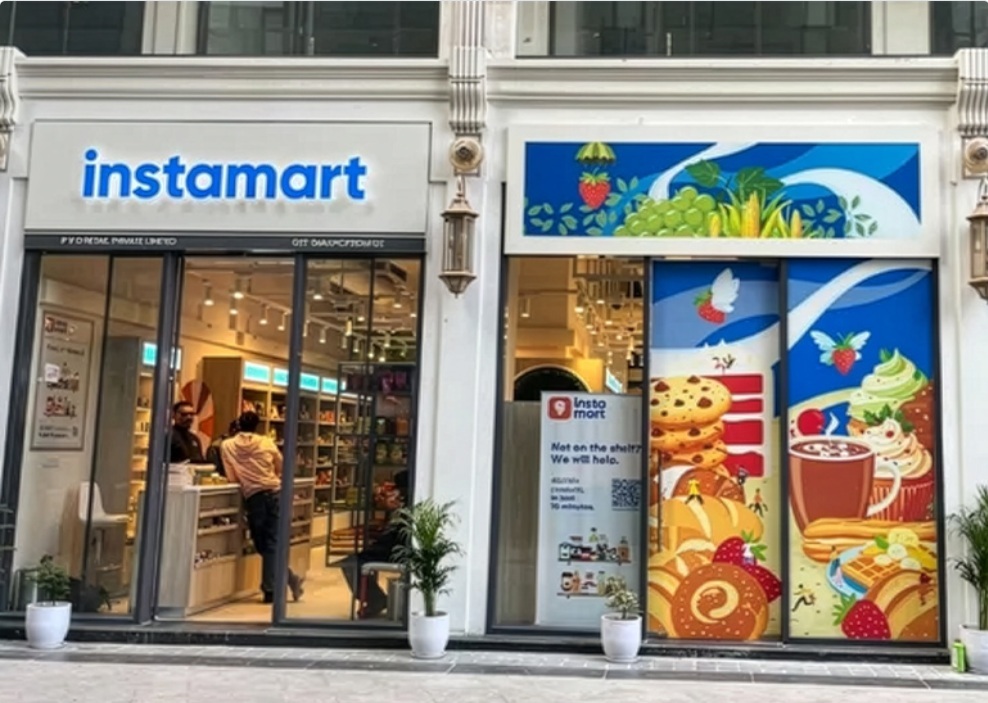
App, Tap, Pay and Zoom it’s delivered – that is Quick commerce for you. And in India, the narrative has so far been defined by speed, scale, high SKU counts, and the dominance of dark stores. Last week, however, Instamart nudged that model by opening an experiential store in Gurugram, allowing consumers to see and feel select products available on the platform.
The Bengaluru-based company has positioned the outlet not as a conventional retail store, but as a compact experiential format with a sharply curated assortment of around 100–200 SKUs, compared to the 15,000–20,000 SKUs typically housed in a dark store. Spanning roughly 400 sq. ft., the space is about one-tenth the size of a standard 4,000 sq. ft. dark store.
Under this model, sales proceeds are paid directly to sellers. This differs from Instamart’s regular arrangement, where payments are routed through the platform and later settled with sellers after deducting the platform’s share. IMPACT reached out to Instamart for further details, but the company declined to comment.
Sources close to the development say that Instamart has enabled sellers to open branded experiential stores in and around residential societies as part of a targeted consumer experiment. These are not conventional retail outlets, but compact experiential formats with a highly curated SKU assortment, focused on categories where consumers prefer to assess the products first-hand before purchasing, such as fresh fruits, vegetables, pulses, new product launches, and selected D2C brands. The initiative is largely centred on fresh categories and allows sellers to experiment with Instamart’s branding and service ecosystem.
Devangshu Dutta, Founder, Third Eyesight, a retail consultancy firm, says that physical presence plays a vital role in anchoring trust, particularly in premium products, groceries, and fresh produce. “Experiencing a product or brand physically can significantly enhance perceived value and help create stickiness. For this reason, offline stores continue to remain integral to the consumer products sector,” he explains.
Built on the promise of speed and convenience, quick commerce brands have come under growing scrutiny for quality and hygiene lapses at dark stores. Over the past year, several reports have flagged issues ranging from poor storage conditions and compromised freshness to the sale of expired or damaged products, particularly in food and grocery categories.
In some instances, regulatory inspections have led to licence suspensions after authorities identified hygiene violations at fulfilment centres. “Trust is what builds loyalty, and the shift is clearly moving from minutes to confidence,” says Shankar Shinde, Co-Founder, Aisles and Shelves, a behaviour-led brand consultancy in India. Shinde adds that the emergence of offline formats such as Instamart’s physical store aligns with this transition, particularly in grocery and fresh categories where consumers place a high premium on quality and consistency. “Physical touchpoints help reduce consumer anxiety, especially in a market like India, where shoppers still prefer hand-picked fresh produce such as fruits and vegetables,” he explains.
Against this backdrop, the opening of experiential centres could emerge as one way for quick commerce players to rebuild consumer trust by allowing shoppers to experience products in person before purchasing. IMPACT also reached out to Blinkit and Zepto for their views, but both declined to comment.
Kushal Bhatnagar, Associate Partner, Redseer Strategy Consultants, believes the move is aimed at unlocking incremental growth by tapping into offline-first consumers who are not yet active on quick commerce, while also catering to the offline purchase missions of existing quick commerce users. He notes that quick commerce currently reaches only about 75–80 million annual transacting users as of CY2025, even as over 90% of India’s grocery consumption continues to take place offline.
Beyond expanding reach, Bhatnagar sees offline formats as a way to address deeper trust barriers within the category. He adds that such formats can help deepen consumer confidence, particularly in categories where apprehensions around quality and freshness persist in quick commerce deliveries, concerns that are partly alleviated when consumers can experience products first-hand. Additionally, he points out that this approach benefits brands, especially emerging ones that are largely confined to quick commerce or a limited set of platforms, by giving them greater physical retail visibility without requiring heavy investment in traditional distribution networks.
Viewed through a financial lens, the move also carries implications for how quick commerce platforms justify value. Saurabh Parmar, fractional CMO, believes the initiative signals a shift from promise to performance, with a stronger emphasis on optimisation and a more realistic assessment of long-term value creation. He notes that while quick commerce has expanded into Tier 2 markets and seen growth in user numbers, these metrics alone still fall short of fully justifying current valuations. In this context, an offline presence becomes another lever to strengthen the overall business case.
At the same time, Parmar cautions that offline formats cannot replace the core proposition of quick commerce. He adds that experiential centres enhance brand credibility and make quick commerce feel closer to conventional retail, with the potential to eventually extend into other facets of e-commerce. However, he emphasises that quick commerce must continue to remain the frontline, as the sector’s valuations are fundamentally anchored in its speed-led proposition.
Retail experts, meanwhile, view physical touchpoints as a long-standing mechanism for building trust rather than a structural shift.
Dutta adds that such formats complement existing digital trust mechanisms such as delivery consistency, speed, ratings, and reviews by making brands feel tangible and accountable rather than abstract.
Bhatnagar notes that quick commerce currently has an average monthly transacting user base of around 40 million as of CY2025, leaving significant headroom for growth when compared to India’s overall e-commerce base of nearly 300 million active transacting users.
Beyond expanding the user base, he adds that experiential stores can also support wallet-share expansion across categories, which remains a key growth lever for the sector. “Non-grocery segments such as beauty and personal care, electronics, and fashion currently contribute about 25% of quick commerce GMV (Gross Merchandise Value), a share that is expected to rise further. Within groceries as well, platforms can drive incremental growth by building greater depth in fresh produce and staples,” Bhatnagar highlights.
From an operational perspective, however, the offline format is viewed more as a supporting layer than a core growth engine. Dutta sees Instamart’s offline presence as an experimental add-on rather than a replacement for its delivery-led model. The operating processes and economics differ significantly from those of quick commerce delivery, positioning physical formats as a complement to the speed proposition rather than an alternative. If the model proves viable and is backed by sufficient resources, it could eventually lead to a parallel scale-up of dark stores and experiential formats across different catchments.
For now, Instamart’s offline foray remains a tightly scoped experiment rather than a strategic pivot. Its significance lies less in square footage and more in what it signals about the evolving priorities of quick commerce. As the category matures, speed alone may no longer be sufficient to secure trust, loyalty, or long-term value. Experiential touchpoints, if deployed selectively, could help platforms bridge the gap between digital convenience and physical reassurance, particularly in categories where quality perception continues to remain fragile.
(Published in IMPACT)
admin
November 26, 2025
Aakriti Bansal, Medianama
November 26, 2025
MediaNama’s Take: The Central Consumer Protection Authority’s (CCPA) decision to publish 18 self-declarations confirms only a partial picture of its dark pattern(s) identifying exercise. The authority has stated that 26 platforms have filed their declarations, but it has made only 18 of them public. This gap means the public still cannot see what eight major platforms submitted or whether those filings contain any meaningful detail. Moreover, even among the published declarations, several are one-paragraph statements that offer almost no insight into the scope or accuracy of the companies’ internal audits.
LocalCircles’ new survey adds further complications, reporting that 21 of the 26 platforms that submitted declarations still display at least one dark pattern. This finding suggests that the CCPA’s reliance on voluntary self-assessment may not be enough to shift platform behaviour at scale. It also raises questions about what the unpublished declarations contain and whether the missing submissions are similarly sparse or incomplete.
Notably, the CCPA has not clarified how it plans to verify the accuracy of any of the declarations, whether published or unpublished. If filings remain unverified for months, compliance risks turning into a box-ticking exercise rather than a meaningful regulatory process. Therefore, the next phase matters far more than the publication of select declarations, because the current approach raises more questions than it answers.
What’s the News
The CCPA has made 18 dark pattern self-declarations public, despite stating that 26 platforms have filed their compliance letters. The publication follows an RTI filed by MediaNama that revealed which companies had submitted their declarations, and pointed out that none of the filings had been available to the public at the time.
These declarations stem from the Ministry’s June 5 advisory, which required e-commerce and quick commerce companies to conduct internal audits under the 2023 Guidelines for Prevention and Regulation of Dark Patterns and submit compliance letters within 90 days.
For context, Moneycontrol reported that Amazon has still not filed its declaration and has asked for additional time. A senior government official told the publication that the government “has done what it had to” and does not plan further discussions.
The official also said that any punitive action would depend on consumer complaints routed through channels such as the national consumer helpline. This indicates that the enforcement approach continues to be reactive rather than compliance-driven.
What Did The CCPA Ask Platforms To Do?
The June 5 advisory set out a simple compliance framework for digital platforms. It asked every e-commerce and quick commerce company to complete a self-audit of its website and mobile app within 90 days and check their interfaces for the 13 dark patterns listed in the 2023 guidelines. Platforms were required to file a self-declaration confirming compliance once this internal review was complete.
However, the advisory did not specify how the audit should be conducted. Companies were free to choose any methodology, and the CCPA did not prescribe a standard format, a uniform checklist, or a minimum evidence requirement. Also, the advisory did not require independent audits or third-party validation.
Furthermore, there was no explanation of how the CCPA planned to verify whether the declarations were accurate or complete. In effect, the responsibility for defining the scope, depth, and rigour of the audit rested entirely with each platform.
What the CCPA Has Done With the Declarations
As mentioned before, the CCPA has now published 18 self-declarations on its website. The release confirms that companies submitted their compliance letters, but it does not indicate whether the authority evaluated the accuracy or depth of the filings.
Several platforms submitted very short statements that simply assert compliance without describing any checks or findings. BigBasket, Zomato, Blinkit and Swiggy were among the companies that filed especially minimal disclosures. The CCPA has not explained why these filings were accepted or whether any follow-up questions were asked. Therefore, asking for and disclosing self-declarations shows some administrative progress, but it does not reflect any regulatory scrutiny.
This lack of verification aligns with concerns raised by Devangshu Dutta, Founder of business consulting firm Third Eyesight. He told MediaNama that self-declarations “do not change things much” when regulators do not audit submissions or impose consequences.
Further, Dutta remarked that most companies comply at the minimum level required if their claims are not examined and are not made public in full. According to him, revenue-driving design choices such as forced add-ons, confusing checkout flows or misleading scarcity claims will not be voluntarily removed sans oversight.
What Independent Evidence Shows
LocalCircles’ latest audit presents a sharply different picture from the companies’ filings. The organisation found that 21 of the 26 platforms that submitted “dark pattern free” declarations still use one or more manipulative design practices. The assessment relied on feedback from more than 250,000 consumers across 392 districts along with AI-assisted testing.
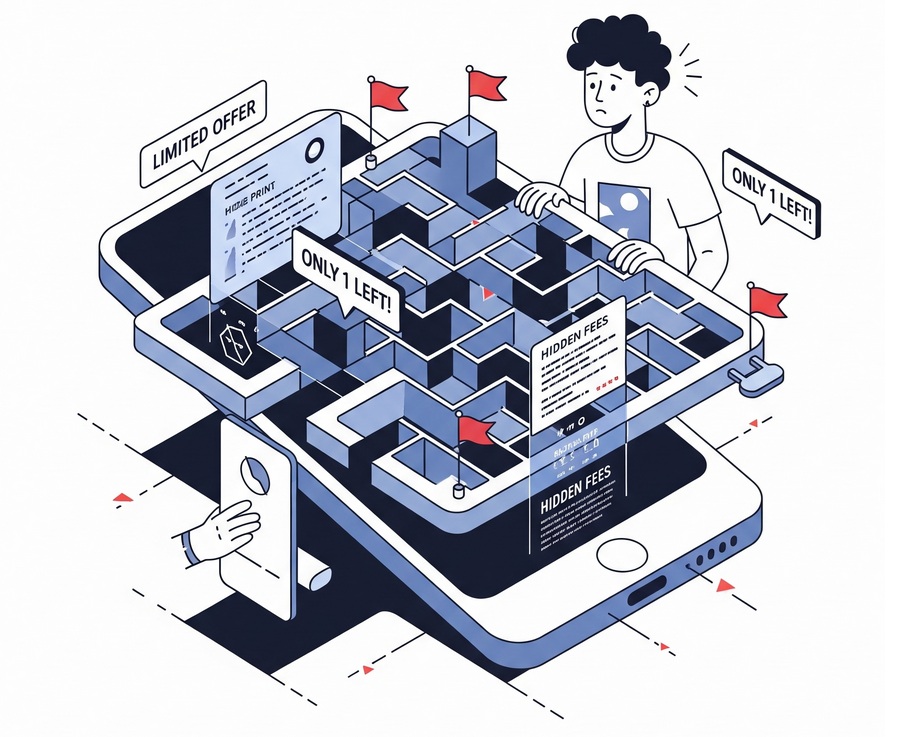
The most common violations include forced action, subscription traps, bait and switch, basket sneaking, interface interference and disguised advertisements. In practice, these dark patterns respectively mean that users are pushed into steps they did not choose, face hidden or hard-to-cancel subscriptions, see offers change during checkout, encounter fees added at the last moment, get nudged toward platform-favoured choices, and come across ads that appear as regular listings.
LocalCircles also identified drip pricing (gradually adding mandatory fees during the checkout process) on 11 of the 26 companies, including Flipkart, Myntra, Cleartrip, MakeMyTrip, BigBasket, Zomato and Blinkit, among others. The organisation said that many platforms appear to misunderstand what qualifies as drip pricing, which has led to incomplete corrections.
Trust Can Erode Due To Gap Between Declarations And User Experience
Sachin Taparia, Founder of LocalCircles, said that the problem begins with the absence of any verification. “Our understanding is that CCPA is wanting that companies submit a self-declaration at the earliest. However, there is no cross checking of claims that is being done by the CCPA, and as a result the companies are not being as thorough with their dark-pattern detection and resolution,” he said.
Taparia added that discrepancies between declarations and user experience could harm trust. “LocalCircles has found dark patterns on 21 of the 26 platforms submitting self-declarations. If this exercise is not done with high accuracy, both platforms doing so and CCPA could see consumer trust being impacted,” he said.
Importantly, Dutta echoed this concern, saying that the absence of penalties or reputation-related consequences allows companies to self-declare compliance while keeping revenue-generating patterns intact. He described the current process as “more an administrative formality [rather] than a behaviour-changing regulatory tool”.
Why This Matters
The gap between self-declarations and independent audits in the true sense of the word brings the real enforcement question into focus. What should the next phase of regulation look like?
In this context, Dutta said that regulators need to move beyond self-certifications and mandate detailed user experience (UX) audit reports that map every user journey, including pop-ups, onboarding, search, checkout, cancellations and returns.
He explained that regulators should reinforce this by demanding substantive evidence instead of brief compliance letters. This evidence can include screenshots and screen recordings of key flows, version histories that show how an interface changed over time, and product design documents or A/B testing results that reveal why specific nudges were introduced. To explain, A/B testing is essentially a method for comparing two versions of something to see which one performs better.
Furthermore, Dutta noted that platforms already collect extensive data on user complaints and drop-off points, which can help identify harmful or confusing design choices. He also said that independent third-party attestations, similar to security or accessibility audits, can provide a credible external check and increase the cost of non-compliance.
Multiple Annual Audits For Apps that Change Interface Frequently
Notably, Dutta stressed that most dark pattern categories appear across e-commerce, quick commerce and Direct-to-Consumer (D2C) websites, which means regulators can create a baseline audit standard that works across sectors instead of relying on platform-specific interpretations. He also suggested that audits should occur at least once a year, and companies that frequently modify their interfaces may need to report two or three times annually.
The larger concern now is whether the CCPA plans to move toward such a structured framework. Without independent verification and clear audit expectations, companies can continue declaring compliance even when manipulative designs remain embedded in their interfaces.
(Published in Medianama)
