
admin
September 16, 2022
Over the past five years, legacy players have made a slew of investments in D2C startups.
Marico has acquired men’s grooming brand Beardo, beauty brand Just Herbs and breakfast brand True Elements. Similarly, Emami acquired vegan cosmetics brand Brillare Science and grooming brand The Man Company. It recently picked up a minority stake in nutrition company TruNativ. Colgate-Palmolive and Reckitt both hold minority stakes in Bombay Shaving Company, whereas Wipro Consumer Care has invested in The Ayurveda Company. ITC has invested in baby and mother care brands Mother Sparsh and Mylo.
Devangshu Dutta explained the reasons behind the trend of larger FMCG companies acquiring D2C brands.
admin
September 5, 2022

Akanksha Nagar, Financial Express
September 5, 2022
Can you give a brand a second shot at life?
Reliance Retail Ventures certainly thinks so. It has acquired Campa-Cola for an estimated `22 crore from Delhi-based Pure Drinks Group on the assumption that it will not only be able to revive the five-decade-old brand but can also use it to springboard into the dog-eat-dog soft drink market in India.
It will not be a cakewalk surely. The ones who were fans of the brand—which was launched in the 70s—have moved on, and younger customers have little or no association with the brand.
Samit Sinha, managing partner, Alchemist Brand Consulting, believes that Reliance must have been very keen on getting into the soft drinks category as a part of its overall strategy of retail expansion. In any case, it hasn’t had to shell out a bomb for the brand so it is a less audacious gambit than starting from scratch. There is one other factor that might work in its favour—which is the formula, the taste of which had near widespread acceptance in its heyday.
Sandeep Goyal, managing director, Rediffusion Brand Solutions, who is handling a similar resurrection of Garden Vareli sarees, says giving an old brand like Campa-Cola a new life will be far from easy—the Campa-Cola generation is now in their sixties and therefore there is very little monetisable value in the nostalgia.
RESURRECTION RULES
Breathe life into an old brand if:
1. The market presents an opportunity to refresh the brand without compromising on its core promise
2. There are positive connotations for the brand that can be built upon in the current market context
3. The company has the resources and inclination to be a “caretaker” or “steward” of the relationship that had been created between the brand and its customers
Courtesy: Devangshu Dutta, CEO, Third Eyesight
Launch versus resurrect
From the looks of it, Campa-Cola will have to fight sip for sip, bottle for bottle.
Rohit Ohri, chairman and CEO, FCB Group India, who had managed the Pepsi account for more than a decade, says it will be difficult for a new brand to find space in a market dominated by multinationals like Pepsi and Coke. While the residual equity can help get the foothold, the real challenge would be to woo a younger consumer set.
Naresh Gupta, co-founder and CSO, Bang In The Middle, concurs: “When you try to resurrect a brand, you do it knowing that the brand isn’t doing well or has been out of circulation. That is big baggage for the brand to wipe out. Often the residual awareness and following are limited to the audience that is less likely to be your core audience today.”
There is also the fact that young people in the metros are moving away from colas, preferring healthier drinks or niche artisanal products instead. At the same time, soft drink is an impulse category and needs a large dose of salience to fly off the shelf.
Gupta says Reliance can try and build on the Indian-ness that Campa-Cola exudes. His guess is the old brand will be used as a calling card in trade and there would be a host of new launches that build upon it. “Campa-Cola may fuel a lot more fresh fizzy drinks launch from Reliance,” he adds.
That said, just the sheer time an old brand has spent on the shop-shelves would give Campa-Cola an edge over any new brand that its current owner might want to launch. An old brand can appear to be proven, experienced and secure, while a new brand could be seen as untested, raw, and risky. An old brand may have had a positive relationship with the consumer but may have been dormant due to strategic or operational reasons. In such a case, reviving the brand is clearly a good idea, says Devangshu Dutta, chief executive, Third Eyesight.
Reliance could have launched a new brand but if the existing brand has residual awareness or connection, it could be the pivot around which other brand properties can be built. Here, the new owner also has the benefit of having a wide retail network. As on March 31, 2022, Reliance Retail operated 15,196 stores across 7,000-plus cities with a retail area of over 41.6 million sq ft. This, if nothing else, will give Campa-Cola a start any new brand will die for.
(Published in Financial Express)
admin
September 2, 2022
Written by Christina Moniz
Retail chains are on an expansion spree, riding on growing demand from a young consumer cohort
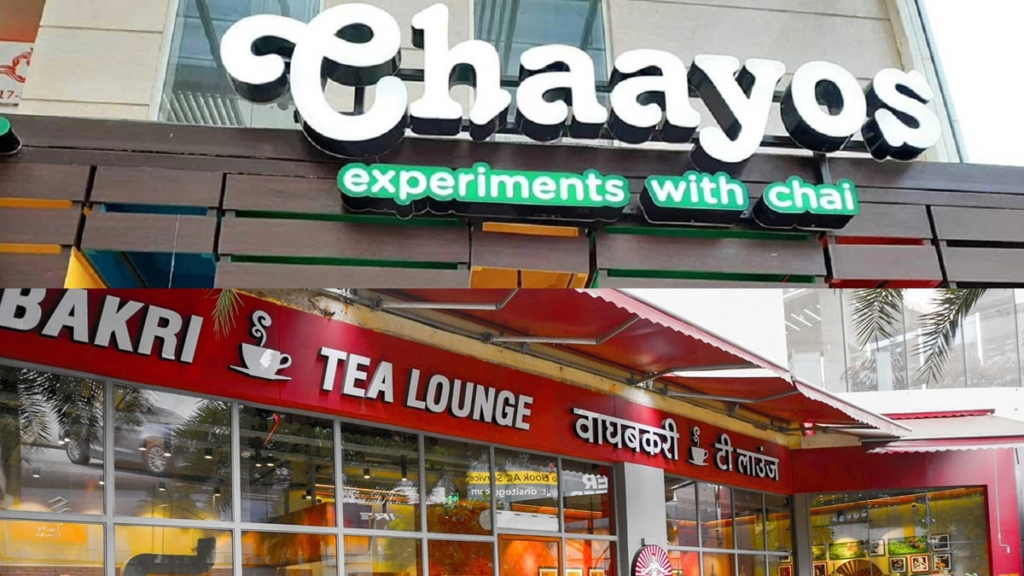
Just about a month back, Wagh Bakri Tea Group, the third largest packaged tea company in India with a turnover of over `1,500 crore, opened its 15th tea lounge in Noida’s upscale DLF Mall of India.
A little over two years ago, Chaayos’ physical footprint was 75 outlets across the country. Currently, its store count is 200.
Just about a month back, Wagh Bakri Tea Group, the third largest packaged tea company in India with a turnover of over `1,500 crore, opened its 15th tea lounge in Noida’s upscale DLF Mall of India.
A little over two years ago, Chaayos’ physical footprint was 75 outlets across the country. Currently, its store count is 200.
Get the drift?
Today the humble cuppa is much bigger than an excuse for roadside tittle-tattle. The rash of tea lounges and bars have taken what used to be, at its best, a social lubricant, and turned it into a `700-crore market.
Homegrown tea café chains have been quick to cash in on the out-of-home demand from a young consumer cohort, offering snacks, groovy ambience and even free wi-fi connectivity. Chains such as Chaayos, Chai Point and Wagh Bakri’s Tea Lounge are ramping up their offerings to cater to a segment for whom coffee shops were the default hang-out zone. Up until now.
But how sustainable are they, given that 80% of the tea drinking market is unorganised? Pramod Damodaran, CEO, Wagh Bakri Tea Lounge, says brands in this segment are catering to the “need state of the consumer”, whether it is meetings,family outings, a quick rest after shopping at the mall or a quiet moment in airports, offices or hospitals. “We elevate the tea drinking experience and make it premium, almost akin to how tea drinkers in the past would enjoy their tea at fancy hotels, but we offer the experience at affordable prices,” he says. While coffee chains offer muffins and croissants with their beverages, Wagh Bakri pairs its teas with pakoras, samosas and vada pav, which resonate more with the average Indian consumer.
Growing the market
Nitin Saluja, founder, Chaayos, draws parallels with global coffee brand, Starbucks. “Before Starbucks launched in the US, there were very few good quality coffee retail outlets. In the Indian context, before chai cafes were launched, consumers could barely enjoy a good cup of tea in a hygienic retail space outside their homes,” he says.
The pandemic, too, played its part in getting consumers to choose hygienic options. That is why home delivery, which was 20% of Chaayos’ revenue prior to the pandemic, now hovers around 30-35%.
The success of chai chains is a reflection of evolving consumer preferences. Saluja says despite the presence of huge international and homegrown brands in the coffee retail segment, the category earns an annual revenue of around 1,500 crore. “In comparison, there are only 3-4 homegrown chai café players, but their combined annual revenue is around700 crore. Only chai retail chains in India can replicate the success of coffee chains in the West,” he says.
Damodaran says his chain is not competing with coffee chains but rather catering to the growing need for cafes. It is for this reason that the brand also offers coffee across its outlets. Wagh Bakri has 15 tea lounges and 10 tea kiosks (Tea World) across Maharashtra, Gujarat and Delhi NCR but plans to ramp up its footprint in the North, West and South over the next three years.
“The industry can ensure long-term health only by capturing the value offered by out-of-home consumption in modern branded formats, packaged branded sales in modern retail and direct-to-consumer models,” sums up Devangshu Dutta, CEO, Third Eyesight.
Source: financialexpress
admin
June 24, 2022
Written By Christina Moniz
Prashanth Aluru, a former Facebook and Bain hand, will be behind the steering wheel for this venture

The Aditya Birla Group has just announced the launch of its ‘house of brands’ business entity, TMRW, to support digital fashion and lifestyle brands. TMRW, which will operate as a wholly owned subsidiary of Aditya Birla Fashion & Retail (ABFRL), aims to build and buy over 30 brands in the next three years, the company said in a statement.
With this move, the company expects to make its entry into the D2C market, which is expected to be reach $100 billion by 2025. “What a brand like Shoppers’ Stop does in brick and mortar, ABFRL is doing online. While in the past, the company was known for certain brands, it is now pivoting itself towards a wider pitch with bigger variety of brands that could potentially appeal to a wider range of consumers,” said Ankur Bisen, senior partner and head, food and retail, Technopak Advisors. The launch could be ABFRL’s next step in positioning itself as a fashion major, he said.
Prashanth Aluru, a former Facebook and Bain hand, will be behind the steering wheel for this venture.
ABFRL will compete with start-ups like the Good Glamm Group and Mensa Brands, among others. The number of D2C brands and online sellers in the country have grown over the last couple of years, and experts believe that TMRW could be the company’s endeavour to become relevant to new-age consumers. Brands like Reliance Retail and Myntra are going down the same path, says Bisen.
The opportunity is immense; according to a report by IMARC Group, the Indian textile and apparel segment reached $151.2 billion in 2021 and is set to grow at a CAGR of 14.8% between 2022 and 2027.
ABFRL, which has a network of over 3,300 stores across India, is home to brands like Pantaloons, Van Heusen, Louis Philippe and Allen Solly, and has partnerships with labels like Forever 21, American Eagle and more recently, Reebok. The retail company has also forayed into the ethnic wear business and has forged strategic partnerships with designers such as Sabyasachi, Masaba and Shantanu & Nikhil.
Having reported losses for the last three years, the company narrowed its losses to `108.72 crore in FY22 on the back of revenues of `8,136.22 crore. The company reported a 55% surge in revenues during the last fiscal. While Madura Fashion & Lifestyle contributed 68.4% to the company’s FY22 revenue, the remainder 31.6% came from Pantaloons, according to Bloomberg data.
Ambi Parameswaran, author and founder of Brand-Building.com, said ABFRL has already built a good retail presence for the brands in its portfolio. “There must be significant synergies at the back end, but the brands are managed separately,” he said. “I suppose the new venture, TMRW, will offer all these brands as well as all the other ethnic brands that ABFRL has acquired in the last three years.”
He said the synergies will probably lie at the back end with supply chain, logistics, finance and HR. However, the brands will most likely be given the space to build strong individual identities.
This is not the company’s first foray into the e-commerce space. ABFRL shut down its e-commerce venture, ABOF (All About Fashion) in 2017, though in August last year, it said the brand would be made available on Flipkart and Myntra.
A concept like ‘house of brands’ is potentially beneficial to both — the large conglomerates and also to the smaller, emerging brands that are acquired. In a D2C framework, niche brands that would otherwise find it difficult to navigate the established multi-layered distribution and retail channels see greater feasibility in connecting with their customers directly through digital channels.
According to Devangshu Dutta, CEO of retail consultancy Third Eyesight, this makes it viable to launch a product range, which would not be immediately entertained in established channels, and allows them to retain their distinctiveness. With the passage of time and with their growth, some of these brands could also expand into established modern retail and traditional retail formats and to a more mainstream audience.
“Large companies, on the other hand, can find it difficult to grow their existing brands beyond a certain pace, and often may not be able to break new ground in terms of product development and customer experience. At some point, inorganic growth by acquiring other businesses and brands becomes an important element of their strategy,” Dutta said.
The house of brands model, to be sure, comes with its fair share of challenges. Angshuman Bhattacharya, EY India partner and national leader – consumer products and retail, said the strategy must have clear synergies from an operations and distribution perspective. “Possible challenges could emanate out of the non-compatibility of categories with the distribution. Another potential challenge could be in supporting multiple brands with marketing investments, failing which the realisable value envisaged during acquisition could stay unfulfilled,” Bhattacharya said.
The other downside, as Dutta pointed out, is that over time there is consolidation of market power within a handful of companies. This has happened across the globe and across sectors, and can negatively impact consumer choice, supplier dynamics and pricing.
Source: financialexpress
admin
May 30, 2022
Written By Akanksha Nagar
Having acquired Patanjali Ayurved’s food retail business, the company has ambitious plans

While its edible oil business has been its mainstay, Ruchi Soya’s CEO Sanjeev Asthana is confident that the share of FMCG revenue could touch 20% this fiscal.
Ruchi Soya has its sights set on clocking `20,000 crore- `22,000 crore in revenue over the next five years from its FMCG business, after recently having acquired Patanjali Ayurved’s food retail business worth `690 crore. The Patanjali food portfolio comprises 21 major products, including top-selling items such as ghee, honey and juices, besides staples such as atta and spices.
To achieve its target, Ruchi Soya plans to launch a D2C (direct-to-consumer) channel in the next two months for its nutraceuticals business, with more categories to follow, while also increasing its investment on e-commerce and expanding its offline footprint. It is quite active across all key online marketplaces including Flipkart, Amazon and JioMart.
According to the latest Statista report, India’s FMCG market was valued at $110 billion in 2020, and by 2025, it is expected to touch $220 billion, as more brands adopt the D2C route. Several top FMCG makers, including Hindustan Unilever, Dabur and Emami, have launched D2C brands in the past two years.
Oiling other products
While its edible oil business has been its mainstay, Ruchi Soya’s CEO Sanjeev Asthana is confident that the share of FMCG revenue could touch 20% this fiscal. It is targeting `7000 crore in revenue from FMCG and `25,000 crore from commodity sales by the end of FY23. “Over the next five years, the revenue split between FMCG and commodities will be equal,” he says.
Furthermore, Ruchi Soya plans on consolidating and rationalising the Patanjali food portfolio, while simultaneously revamping some of its existing products. “The aim is to reposition the entire company towards being a food FMCG major,” says Asthana.
Following the acquisition, Ruchi Soya will be renamed Patanjali Foods (after regulatory approvals). Asthana says that brands such as Nutrela, Mahakosh, Ruchi Gold and Sunrich will continue to be marketed under their existing names, while all the businesses that are coming in from Patanjali will use the Patanjali brand in exchange for a brand licensing fee
evangshu Dutta, chief executive, Third Eyesight, says the company name change may work in its favour, since there is a large audience aligned with the image and values of Patanjali Group and its founder Baba Ramdev.
Casting a wide net
But not all is smooth-sailing. Alagu Balaraman, CEO, Augmented SCM, suggests for the company to scale up, it needs to build a robust traditional distribution network, since a bulk of sales still happens through these channels. “The cost of doing e-commerce delivery is significantly high,” he notes.
Ruchi Soya is working on those lines. Asthana says besides utilising Patanjali’s existing distribution muscle, it is expanding its offline retail footprint by adding 10,500 non-exclusive modern grocery stores and 4,500 exclusive ones every month.
Source: financialexpress
