
admin
September 5, 2022

Akanksha Nagar, Financial Express
September 5, 2022
Can you give a brand a second shot at life?
Reliance Retail Ventures certainly thinks so. It has acquired Campa-Cola for an estimated `22 crore from Delhi-based Pure Drinks Group on the assumption that it will not only be able to revive the five-decade-old brand but can also use it to springboard into the dog-eat-dog soft drink market in India.
It will not be a cakewalk surely. The ones who were fans of the brand—which was launched in the 70s—have moved on, and younger customers have little or no association with the brand.
Samit Sinha, managing partner, Alchemist Brand Consulting, believes that Reliance must have been very keen on getting into the soft drinks category as a part of its overall strategy of retail expansion. In any case, it hasn’t had to shell out a bomb for the brand so it is a less audacious gambit than starting from scratch. There is one other factor that might work in its favour—which is the formula, the taste of which had near widespread acceptance in its heyday.
Sandeep Goyal, managing director, Rediffusion Brand Solutions, who is handling a similar resurrection of Garden Vareli sarees, says giving an old brand like Campa-Cola a new life will be far from easy—the Campa-Cola generation is now in their sixties and therefore there is very little monetisable value in the nostalgia.
RESURRECTION RULES
Breathe life into an old brand if:
1. The market presents an opportunity to refresh the brand without compromising on its core promise
2. There are positive connotations for the brand that can be built upon in the current market context
3. The company has the resources and inclination to be a “caretaker” or “steward” of the relationship that had been created between the brand and its customers
Courtesy: Devangshu Dutta, CEO, Third Eyesight
Launch versus resurrect
From the looks of it, Campa-Cola will have to fight sip for sip, bottle for bottle.
Rohit Ohri, chairman and CEO, FCB Group India, who had managed the Pepsi account for more than a decade, says it will be difficult for a new brand to find space in a market dominated by multinationals like Pepsi and Coke. While the residual equity can help get the foothold, the real challenge would be to woo a younger consumer set.
Naresh Gupta, co-founder and CSO, Bang In The Middle, concurs: “When you try to resurrect a brand, you do it knowing that the brand isn’t doing well or has been out of circulation. That is big baggage for the brand to wipe out. Often the residual awareness and following are limited to the audience that is less likely to be your core audience today.”
There is also the fact that young people in the metros are moving away from colas, preferring healthier drinks or niche artisanal products instead. At the same time, soft drink is an impulse category and needs a large dose of salience to fly off the shelf.
Gupta says Reliance can try and build on the Indian-ness that Campa-Cola exudes. His guess is the old brand will be used as a calling card in trade and there would be a host of new launches that build upon it. “Campa-Cola may fuel a lot more fresh fizzy drinks launch from Reliance,” he adds.
That said, just the sheer time an old brand has spent on the shop-shelves would give Campa-Cola an edge over any new brand that its current owner might want to launch. An old brand can appear to be proven, experienced and secure, while a new brand could be seen as untested, raw, and risky. An old brand may have had a positive relationship with the consumer but may have been dormant due to strategic or operational reasons. In such a case, reviving the brand is clearly a good idea, says Devangshu Dutta, chief executive, Third Eyesight.
Reliance could have launched a new brand but if the existing brand has residual awareness or connection, it could be the pivot around which other brand properties can be built. Here, the new owner also has the benefit of having a wide retail network. As on March 31, 2022, Reliance Retail operated 15,196 stores across 7,000-plus cities with a retail area of over 41.6 million sq ft. This, if nothing else, will give Campa-Cola a start any new brand will die for.
(Published in Financial Express)
admin
July 8, 2022
Akash Podishetty & Krishna Veera Vanamali, Business Standard
New Delhi, 8 July 2022
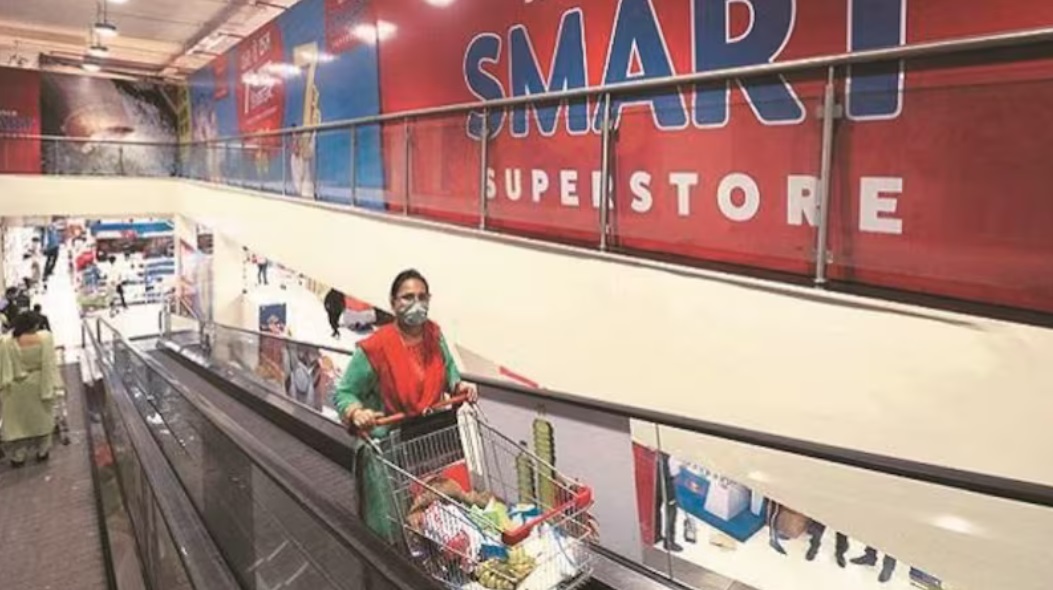
India’s $900 billion retail market has emerged as one of the most dynamic industries and is expected to reach anywhere between $1.3-$1.5 trillion by 2025. The organized retail is seen gaining 15% market share in the overall retail space, while food & grocery and apparel and lifestyle may account for 80% of India’s retail market by 2025.
Large market offers big opportunities. And it looks like Reliance Retail has seized it, with its massive omni-channel retail play of physical stores, B2B with kiranas and e-commerce.
The company went on an acquisition spree and partnerships in the last three years, adding to its portfolio some of the biggest names, including Hamleys, Dunzo, Zivame etc.
It has also partnered with famous global retail chain 7-Eleven. Catering to India’s affluent consumers, Reliance, meanwhile, houses some of the most iconic brands such as Versace, Armani Exchange, GAP, GAS, Jimmy Choo, Michael Kors among others. The premium segment has become one of the fastest growing categories.
Also firming up its inorganic play, the company is planning to acquire dozens of niche local consumer brands to build a formidable consumer goods business.
Arvind Singhal, Chairman and Managing Director, Technopak Advisors says, there’s focus on physical retail expansion. Reliance is looking to cater to both price conscious and brand conscious customers, while trying to capture as much of the private consumption market as possible, he says.
Reliance Retail’s competitors are nowhere close to even put up a fight. The company has over 15,000 offline stores across categories, compared with DMart’s 294 stores or Aditya Birla Fashion’s 3,468 outlets.
Reliance retail’s revenue has grown five times in the last five years and the core retail revenue of $18 billion is greater than competitors combined, according to a Bernstein report.
Speaking to Business Standard, Devangshu Dutta, CEO, Third Eyesight, says, Reliance wants a decent share of Indian consumers’ wallet. From that perspective, Reliance still has a long way to go, he says. As consumer preferences evolve, Reliance too should adapt.
An undisputed leader in the domestic market, the aim of Reliance, according to Mukesh Ambani, is to become one of the top 10 retailers globally. Part of this bet is based on the premise that incomes and consumption power of Indians will increase across the board in coming years. However, could the uneven recovery that different segments of the population have seen stop the pie from growing larger and prove to be a dampener for Ambani’s ambitions?
(Published in Business Standard)
Devangshu Dutta
April 7, 2020

Oil shocks, financial market crashes, localised wars and even medical emergencies like SARS pale when compared to the speed and the scale of the mayhem created by SARS-CoV-2. In recent decades the world has become far more interconnected through travel and trade, so the viral disease – medical and economic – now spreads faster than ever. Airlines carrying business and leisure-travellers have also quickly carried the virus. Businesses benefitting from lower costs and global scale are today infected deeply due to the concentration of manufacturing and trade.
A common defensive action worldwide is the lock-down of cities to slow community transmission (something that, ironically, the World Health Organization was denying as late as mid-January). The Indian government implemented a full-scale 3-week national lockdown from March 25. The suddenness of this decision took most businesses by surprise, but quick action to ensure physical distancing was critical.
Clearly consumer businesses are hit hard. If we stay home, many “needs” disappear; among them entertainment, eating out, and buying products related to socializing. Even grocery shopping drops; when you’re not strolling through the supermarket, the attention is focussed on “needs”, not “wants”. A travel ban means no sales at airport and railway kiosks, but also no commute to the airport and station which, in turn means that the businesses that support taxi drivers’ daily needs are hit.
Responses vary, but cash is king! US retailers have wrangled aid and tax breaks of potentially hundreds of billions of dollars, as part of a US$2 trillion stimulus. A British retailer is filing for administration to avoid threats of legal action, and has asked landlords for a 5-month retail holiday. Several western apparel retailers are cancelling orders, even with plaintive appeals from supplier countries such as Bangladesh and India. In India, large corporate retailers are negotiating rental waivers for the lockdown period or longer. Many retailers are bloated with excess inventory and, with lost weeks of sales, have started cancelling orders with their suppliers citing “force majeure”. Marketing spends have been hit. (As an aside, will “viral marketing” ever be the same?)
On the upside are interesting collaborations and shifts emerging. In the USA, Jo-Ann Stores is supplying fabric and materials to be made up into masks and hospital gowns at retailer Nieman Marcus’ alteration facilities. LVMH is converting its French cosmetics factories into hand sanitizer production units for hospitals, and American distilleries are giving away their alcohol-based solutions. In India, hospitality groups are providing quarantine facilities at their empty hotels. Zomato and Swiggy are partnering to deliver orders booked by both online and offline retailers, who are also partnering between themselves, in an unprecedented wave of coopetition. Ecommerce and home delivery models are getting a totally unexpected boost due to quarantine conditions.
Life-after-lockdown won’t go back to “normal”. People will remain concerned about physical exposure and are unlikely to want to spend long periods of time in crowds, so entertainment venues and restaurants will suffer for several weeks or months even after restrictions are lifted, as will malls and large-format stores where families can spend long periods of time.
The second major concern will be income-insecurity for a large portion of the consuming population. The frequency and value of discretionary purchases – offline and online – will remain subdued for months including entertainment, eating-out and ordering-in, fashion, home and lifestyle products, electronics and durables.
The saving grace is that for a large portion of India, the Dusshera-Deepavali season and weddings provide a huge boost, and that could still float some boats in the second half of this year. Health and wellness related products and services would also benefit, at least in the short term. So 2020 may not be a complete washout.
So, what now?
Retailers and suppliers both need to start seriously questioning whether they are valuable to their customer or a replaceable commodity, and crystallise the value proposition: what is it that the customer values, and why? Business expansion, rationalised in 2009-10, had also started going haywire recently. It is again time to focus on product line viability and store productivity, and be clear-minded about the units to be retained.
Someone once said, never let a good crisis be wasted.
This is a historical turning point. It should be a time of reflection, reinvention, rejuvenation. It would be a shame if we fail to use it to create new life-patterns, social constructs, business models and economic paradigms.
(This article was published in the Financial Express under the headline “As Consumer businesses take a hard hit, time for retailers to reflect and reinvent”.
Devangshu Dutta
December 17, 2019

Remember the year 2000? After Y2K passed safely, that year some optimistic analysts predicted that India’s modern retail chains would reach 20 per cent market share by 2015. Two years after that supposed watershed, another firm declared that modern retail will be at around that level in 2020 – but wait! – only in the top 9 cities in the country. Don’t hold your breath: India surprises; constantly. As many have noted, “predictions are tough, especially about the future!” What we can do is reflect on some of this year’s developments that could play out over the coming year.
In many minds 2019 may be the Year of the Recession, plagued by discounting, but that demand slowdown has brewing for some time now. However, there’s another under-appreciated factor that has been playing out: while small, independent retailers can flex their business investments with variations in demand, modern retail chains need to spread the business throughout the year in order to meet fixed expenses and to manage margins more consistently.
To reduce dependence on festive demand, retailers like Big Bazaar and Reliance have been inventing shopping events like Sabse Sasta Din (Cheapest Day), Sabse Sachi Sale (Most Authentic Sale), Republic Day / 3-Day sale, Independence Day shopping and more for the last few years. In ecommerce, there’s the Amazon’s Freedom Sale, Prime Day, and Great India Festival, and Flipkart’s Big Billion Day Sale. This year retailers and brands went overboard with Black Friday sale, a shopping-event concept from the 1950s in the USA linked to a harvest celebration marked by European colonisers of North America. (The fact that Black Friday has a totally different connotation in India since the terrorist bombings in Bombay in 1993 seems to have completely escaped the attention of brands, retailers and advertising agencies.) Be that as it may, we can only expect more such invented and imported events to pepper the retail calendar, to drive footfall and sales. The consumer has been successfully converted to a value-seeking man-eater fed on a diet of deals and discounts. With no big-bang economic stimuli domestically and a sputtering global economy, we should just get used to the idea of not fireworks but slow-burning oil lamps and sprinklings of flowers and colour through the year. Retailers will just have to work that much harder to keep the lamps from sputtering.
Ecommerce companies have been in operating for 20 years now, but the Indian consumer still mostly prefers a hands-on experience. The lack of trust is a huge factor, built on the back of inconsistency of products and services. The one segment that has been receiving a lot of love, attention and money this year (and will grow in 2020) is food and grocery, since it is the largest chunk of the consumption basket. Beyond the incumbents – Grofers, Big Basket, MilkBasket and the likes – now Walmart-Flipkart and Amazon are going hard at it, and Reliance has also jumped in. Remember, though, that selling groceries online is as old as the first dot-com boom in India. E-grocers still struggle to create a habit among their customers that would give them regular and remunerative transactions, and they also need to tackle supply-side challenges. Average transactions remain small, demand remains fragmented, and supply chain issues continue to be troublesome. Most e-grocers are ending up depending on a relatively narrow band of consumers in a handful of cities. The generation that is comfortable with an ever-present screen is not yet large enough to tilt the scales towards non-store shopping and convenience isn’t the biggest driver for the rest, so, for a while it’ll remain a bumpy, painful, unprofitable road.
Where we will see rapid pick-up is social commerce, both in terms of referral networks as well as using social networks to create niche entrepreneurial businesses – 2020 should be a good year for social commerce, including a mix of online platforms, social media apps as well as offline community markets. However, western or East Asia models won’t be replicated as the Indian market is significantly lower in average incomes, and way more fragmented.
As a closing thought, I’ll mention a sector that I’ve been involved with (for far too long): fashion. In the last 8-10 decades, globally fashion has become an industry living off artificially-generated expiry dates. A challenge that I have extended to many in the industry, and this year publicly at a conference: if consumption falls to half in the next five years, and you still have to run a profitable business (obviously!), how would you do it? Plenty of clues lie in India – we epitomise the future consumers; frugal, value-seeking, wanting the latest and the best but not fearful about missing out the newest design, because it will just be there a few weeks later at a discount. If you can crack that customer base and turn a profit, you would be well set for the next decade or so.
(Published as a year-end perspective in the Financial Express.)
admin
October 31, 2019
Written By Editor

All schools in India have been asked to set up “school nutrition gardens” by the central government. The gardens will have to be managed by the students, with the help of staff and teachers.
The Ministry of Human Resource Development (HRD), which governs the education sector, issued guidelines for developing and maintaining kitchen gardens in schools in both urban and rural areas. The Government’s aim is to improve nutrition in schools, and also to connect children with the sources of food in an era of rapid urbanization and mounting environmental issues.
However, some schools have already embarked upon this journey well before the official guidelines came into place. One such is the Smt. Sulochanadevi Singhania School, Thane (Mumbai, India).
Students have been introduced to not just growing food within the school themselves, but grow it organically, without synthetic chemical inputs. The aim of the project has been to grow chemical-free, nutrient-rich vegetables and to provide an opportunity to learn by doing. The project is to teach the students how organic farming discourages environmental exposure to pesticides and chemicals, helps to build healthy soil, fight the effects of global warming and encourages biodiversity.
The students have sowed a wide variety of vegetables including cucumbers, chillies, lady’s fingers (okra), tomatoes, brinjals, spinach, bottle gourd, bitter gourd, ridge gourd, and capsicum, to name a few. The students have also planted paddy, to get hands-on experience of rice farming.
(Photos courtesy Smt Sulochana Singhania School, Thane, Mumbai. Check out more pictures on the school’s Facebook album.)

Source: billionfarmers
