
admin
November 28, 2021

By Rasul Bailay & Writankar Mukherjee, Economic Times
November 27, 2021
Reliance Retail aims to be one of the world’s top retailers, but for the last couple of years, it has been a buyer, not a seller. It has bought a string of retail brands — from online pharmacy Netmeds and online furniture retailer Urban Ladder to digital lingerie seller Zivame, online grocer MilkBasket and haute couture label Ritu Kumar. The latest acquisition was Sri Lankan lingerie brand Amante.
These acquisitions are crucial cogs in Reliance Retail’s further push into brick-and-mortar and ecommerce, and are part of Mukesh Ambani-led Reliance Industries Ltd (RIL) unit’s larger strategy: To break into the global top ten retailers. India’s largest retailer (by sales as well as by the number of stores) is currently ranked 53rd in the world, according to Deloitte’s Global Powers of Retailing 2021. Reliance Retail reported an annual revenue of $22 billion and a net profit of $750 million for the fiscal year ending March 2021.
At the same time, the company is looking beyond pure retailing. It’s pursuing a larger play to tap into the growing pie of the country’s overall consumption story — from contract manufacturing to distribution of everything from affordable fashion and consumer electronics to grocery products in India’s $850 billion annual retail market that is expected to swell to $1.3 trillion in the next few years. (Reliance did not respond to ET’s questionnaire.)
Analysts say Reliance’s overall plan is to engage India’s burgeoning consumers in its ecosystem one way or the other at any given point of time: shopping in its vast network of physical stores or on JioMart ecommerce platform, using Jio’s mobile or WiFi networks, watching movies on Jio Cinema, paying through Jio wallet so on and so forth that it is dubbed by the petroleum-to-telecommunications conglomerate as “retail plus” strategy.
“Their plan is to weave their products and services so deeply into your life that from morning to evening you are spending time and money on their networks either directly or indirectly,” says a top executive of an online grocery retailer. “Their idea is to constantly keep consumers engaged in a Jio bubble or in a Jio world.” The executive estimates India has a middle class of around 40 crore people. “Even if they succeed in capturing 10% of that wallet share, it is going to be huge,” he says.
That’s the reason Reliance Retail is betting big on business-to-business (B2B) ecommerce, with a digital wholesale marketplace along the lines of Alibaba for products such as smartphones, televisions, garments and grocery items, among other products, according to people aware of the plan. It’s looking to service a whole gamut of retailers in cities and villages.
Reliance has already started distributing its licencee products of Kelvinator- and BPL-branded consumer electronic items and its smartphone JioPhone Next, produced in collaboration with Google, to retailers outside of Reliance’s stable. The company also boasts a whole host of private brands and many of them are making inroads into general trade.
“The market for modern retail and ecommerce put together would be 15-20% in India. The rest 80% is still in the traditional market. If Reliance can make an entry into the traditional market and partner the smaller stores, the opportunity for growth and revenue is much more,” says an industry executive aware of the plans.
“Reliance’s approach is not to be a threat to small stores or merchants, but to be their enabler, provide them merchandise at best wholesale rates, upgrade their stores and even list them on their ecommerce platforms to help them reach newer consumers,” he adds.
Reliance is doing exactly that. Earlier this year, it started supplying Puric InstaSafe-branded FMCG products like soaps, home disinfectants and sanitisers to kiranas in Punjab and West Bengal. It is planning to roll these items nationwide. The company has put in place a marketing team for the first time to push these products. Similarly, B2B portal Ajio Business is selling T-shirts for Rs 79 onwards, a pair of jeans for Rs 220 and shirts for Rs 170 onwards to small businesses. Last quarter, Reliance Retail forayed into the wholesale business of medicines through Netmeds by roping in neighbourhood pharmacies under its B2B initiative.
These are some of the steps in the conglomerate’s bet not just on pure retail play but on end-to-end gameplay in the retail ecosystem, controlling manufacturing, wholesale, supply chain, ecommerce and payments.
To augment its digital wholesale plans, Reliance Retail has already converted its network of cash-and-carry outlets into fulfilment centres.
Analysts say Reliance’s ambitions are long-term and capital intensive and the company is ready for the long haul and to spend. “Reliance’s plan to rope in and aggregate many elements together — retailers, B2B buyers, suppliers, small players — and bring them on board takes time and is a capital-hungry business,” says Devangshu Dutta, chief executive of consulting firm Third Eyesight. “But controlling end-to-end is Reliance’s game plan in any business, including telecom, where it spans the entire value chain of not just providing the mobile network but also a digital interface with consumers.”
In a bid to feed its ambitious consumption plans, Reliance Retail is lapping up stores and warehouses nationwide to service both ecommerce and B2B sales through its “new commerce” omnichannel plans that will also involve legions of kiranas as last-mile delivery agents as well as buyers of Reliance’s products. Reliance Retail, which operates more than 13,000 stores of various formats, plans to open around 5,000 outlets of its Smart Point that would entail a convenience store, a pharmacy, agnostic centre, a telecom services and financial services products outlet all rolled into one across the country.
Reliance is planning to take this format to even tehsils, according to sources. Real estate agents and mall executives say Reliance is scouting for space for supermarkets, fashion outlets and jewellery and footwear stores.
They say Reliance is also planning to enter newer retail formats like a department store chain to compete with Shoppers Stop and Lifestyle. Also in the works is a Sephora-style beauty and cosmetics chain, they say.
“We will focus on expanding our store footprint multifold this year with co-located delivery hubs over the next few years. They will provide a strong network to reach and serve millions of merchants and customers,” Ambani said at the last AGM of shareholders.
Deloitte’s Global Powers of Retailing 2021 report ranked Reliance Retail as the world’s second fastest growing retailer, behind South Korea’s Coupang Corp.
Global financial and tech titans have taken notice of Reliance Retail’s play and pumped billions of dollars into it. Last year, the holding company Reliance Retail Ventures Ltd raised Rs 47,265 crore by selling about 10% stake to some of the biggest names in global private equity, including Silver Lake, KKR, General Atlantic, Abu Dhabi Investment Authority and TPG.
Reliance will continue with its acquisition spree, say analysts. However, Reliance Retail’s largest, the Rs 25,000 crore acquisition of Future Group, is bogged down by Amazon’s opposition to the proposed deal.
(Published in Economic Times)
admin
September 28, 2020
Written By Mihir Dalal

(From left to right) Doug McMillon, CEO of Walmart, which owns Flipkart; Mukesh Ambani, chairman and MD of RIL; Jeff Bezos, CEO of Amazon
BENGALURU : Last month, Nimit Jain, an entrepreneur, ordered biscuits, shampoo, toothpaste and other items for his family in Kota. He used JioMart—the new online shopping app by Mukesh Ambani’s Reliance Industries Limited—lured by its low prices and freebies.
JioMart was to deliver the order within two days, but Jain’s family didn’t receive the items on time and JioMart didn’t inform Jain about the delay. The delivery was done four days after he had placed the order, a few hours after Jain had complained to the firm via email and Twitter.
A few products were missing, Jain’s parents informed him. It took time to figure out the missing items because the details of the order weren’t available on the app. Jain had paid online and asked JioMart for a partial refund. Instead of receiving an acknowledgement for his refund request, he received a response for his previous email about the delay in delivery. Five days later, Jain got a refund.
Mumbai-based Jain, a computer science graduate from the Indian Institute of Technology, Madras, usually orders groceries from BigBasket and sometimes from Dunzo. He said that he doesn’t plan to use JioMart again.
“A couple of my friends and relatives (in Mumbai and Kota) have also had similarly bad experiences. It doesn’t look like JioMart is ready for online groceries. Their operations and customer care teams weren’t in sync,” Jain said.
Since JioMart expanded to more than 200 cities this summer, scores of customers like Jain have complained about missing products, delayed deliveries and generally poor service. Still, industry executives say that while its service levels have been inconsistent, JioMart is registering similar order volumes to BigBasket, the largest e-grocer, on the back of aggressive marketing and discounts.
These volumes still comprise a small fraction of the overall business of Amazon India and Walmart-owned Flipkart, the two dominant online retailers. But that’s because JioMart is only selling groceries now; it plans to sell other products like fashion and electronics soon. It’s clear that after many years of talk and hype, Reliance, which owns India’s largest offline retail chain, is finally becoming a serious challenger to Amazon and Flipkart, as well as BigBasket and Grofers.
Still, industry executives, logistics firms, consultants and analysts that Mint spoke with said that Reliance will find it tough to break the dominance of Amazon-Flipkart in e-commerce, similar to how Walmart is struggling to challenge Amazon in digital sales in the US even as its stores continue to prosper. Amazon and Flipkart both have deep pockets, proven expertise in e-commerce, popular brands and good knowledge of the Indian market.
“Reliance has the financial muscle, but Walmart (Flipkart) and Amazon are no pushovers,” said Harminder Sahni, managing director, Wazir Advisors, a consultancy. “Today, most people who want to shop online are happy with Flipkart and Amazon. These companies have achieved significant scale and have very few weaknesses. As a latecomer, it will be very difficult for Reliance to make a big dent in the market.”
Reliance did not respond to an emailed questionnaire seeking comment.
Local internet powerhouse
During the pandemic, Reliance has not only moved fast to make inroads into the e-commerce market, it has also consolidated its leadership in organized offline retail. Last month, Reliance bought most of the businesses of Future Group for about $3.4 billion in a deal that will take its retail footprint to nearly 14,000 stores—by far, the largest in India.
In the past six months, Reliance has raised more than $21 billion for its digital unit Jio Platforms. This month, Reliance kickstarted a separate fund-raising spree for its retail unit, Reliance Retail, bagging about $1.8 billion from private equity firms Silver Lake and KKR, two of the investors in Jio. Several more investment firms, including other shareholders in Jio, are expected to join them.
These moves are part of Reliance’s efforts to transform itself into a 21stcentury digital behemoth. It is positioning itself as India’s answer to Amazon, Facebook, Google, Alibaba and other world-class digital giants, and unlike local startups like Flipkart, Ola and Paytm that have or had similar ambitions, Reliance enjoys some unparalleled advantages.
It is now accepted wisdom among politicians and regulators that India needs a ‘local’ internet powerhouse to counter the dominance of America’s Big Tech and the growing influence of Chinese firms, partly because of sovereignty concerns. Reliance’s mastery in lobbying and its political clout makes the firm best-placed to exploit this urgent establishment need to find a domestic internet powerhouse.
Amazon, Flipkart, Facebook and others face many policy-related restrictions that not only serve as obstacles to them but pave the way for domestic firms led by Reliance to enter the fray. For instance, foreign investment rules prevent Amazon and Flipkart from owning inventory or selling private labels (though critics say that these firms do it anyway using clever legal workarounds), while Reliance has no such constraints. Apart from a supportive policy environment and huge capital resources, on the business front, too, Reliance has an enviable digital distribution network and reservoir of customer data on account of Jio.
But despite these formidable advantages, Reliance has yet to prove that it has the chops to realise its ambitious vision.
The war among Reliance and Flipkart and Amazon and other internet firms is also not restricted to retail, but will extend to other sectors like financial services, content and business-to-business commerce. The technology-centric nature of the battle is more suited to the internet companies than to Reliance. There’s little doubt that Reliance will be a major player in the digital business, but the jury’s out on how much value the firm can corner. Its foray in e-commerce and B2B will provide early answers to this question.
Retail battle
After JioMart began testing its service late last year, media reports said that the company would deliver products to customers from local kirana stores. After Facebook invested in Jio in April in a deal that included a business partnership between JioMart and WhatsApp, Ambani said that JioMart would soon connect some 3 crore kirana stores with their neighbourhood customers.
Many analysts, too, expect the partnership with WhatsApp, the most popular app in India, to be a game-changer. In July, Goldman Sachs estimated that Reliance’s entry will help expand the online grocery market by 20 times to about $29 billion by 2024. Reliance’s partnership with Facebook could help the firm become the leader in e-grocery and garner a market share of more than 50% by 2024, Goldman said.
But Mint learns that Reliance is sourcing a majority of orders on JioMart in many cities through Reliance Retail’s supply chain; only a small number of orders are served through kirana stores. JioMart is signing up a few thousand kirana stores every month, but its expansion is happening at a slower rate than many analysts expect. Two industry executives said that JioMart’s average order value is lower than that of other e-grocers, which means that Reliance is losing larger amounts of money on every order.
According to one e-commerce executive, for BigBasket and Grofers, the delivery cost is about 3-4% of the average order value, which exceeds ₹1000. For Reliance, the delivery cost is presently much higher because its order value is below ₹800. The lower order value is partly because most of JioMart’s 200 city-markets are non-metros. BigBasket and others generate an overwhelming majority of their business from the metros. Reliance is betting on expanding the e-grocery market rather, than taking market share from incumbents, which generate an overwhelming majority of their sales from 10-15 cities. But while Reliance may be able to attract customers in smaller cities initially with discounts, profitability will be tough.
“The economics of serving metros are very different from the rest of India. In the mass market, bill values are much, much lower. Right now, Reliance’s main focus is to scale JioMart, so they aren’t worried about the delivery cost,” the executive cited above said. “But eventually, reality will catch up, and they will have to increase basket sizes because this model isn’t sustainable. Grocery has very thin margins to start with. “
Private label push
One obvious way for Reliance to boost margins is by selling more private label products. In the grocery category, Reliance Retail already generates 14% of its revenues from private labels. People familiar with Reliance’s plans said that the company wants to push its private label products to kirana stores. While there are hundreds of well-known brands in FMCG, the grocery category (products like rice, pulses and flour) is largely unstructured. Reliance plans to sell its private label products both in grocery and FMCG.
Apart from retail, Reliance is also rapidly expanding its B2B business. Its private label products form a key component of its retail and wholesale business plans, the people cited above said.
The private label push, however, is making large FMCG companies like Hindustan Unilever, Marico and Dabur, which sell competing products, wary of working with Reliance’s B2B arm.
Like Flipkart and Amazon, which are also expanding their B2B businesses, Reliance’s grand vision over time is to have an integrated ecosystem of wholesale and retail in which it connects consumer goods makers with kirana stores and retailers, supplies a large number of private label products across many categories to retailers and end-customers, and becomes the biggest omnichannel retail firm in the country. But realising this vision will require Reliance to work seamlessly with millions of kirana stores, thousands of brands, modern retailers (all of which will see the firm as a rival to an extent)—and provide exceptional service in a profitable manner to retail customers.
Analysts and industry executives said that Reliance has a higher probability of finding success in categories like fashion (in which it already runs a portal called Ajio) and grocery that are mostly unorganised and have a shortage of established brands. In these categories, Reliance faces fewer barriers from existing players and has a better chance of pushing its private labels in both the wholesale and retail markets. But in categories like electronics and FMCG, which are dominated by entrenched brands, kirana stores and e-commerce firms, Reliance may struggle to scale as fast.
For instance, Flipkart and Amazon dominate online sales of electronics and fashion, which together comprise more than 75% of all e-commerce. To win significant share in electronics, Reliance will have to spend enormous amounts on discounts, marketing and offering favourable terms to brands . But, in fashion, Reliance can tap its low-priced private labels to lure customers without resorting to value destruction.
“The market is too varied for one player to be big in all categories,” an investment banker said. “Reliance will have to carefully choose its battles. There’s a risk that it may spread itself too thin, so it’s wise for them to have started with grocery.”
Meanwhile, while Google and Facebook have together invested more than $10 billion in Reliance, both companies are continuing to expand their own businesses in India. Google and Facebook have ambitions to enter e-commerce and expand in other sectors like payments and content. What this means is that while Google and Facebook will end up collaborating with Reliance in some areas, they will also compete with the firm in others, joining Flipkart and Amazon in the war of the digital conglomerates.
Flipkart and Amazon have already stepped up their lobbying efforts with the emergence of Reliance as a threat. Because of the pandemic that has made e-commerce indispensable, there has been a thaw in the government’s attitude towards the US e-commerce firms. A more antagonistic attitude may return when the pandemic passes.
Eventually, though, the war will be decided by customers. Here, experts are divided on whether Reliance will emerge as the winner. “Reliance still has to do a lot more on getting the customer experience in place, but given the strides they’ve made, it is well-placed to compete in the digital space,” said Devangshu Dutta, head of retail consultancy firm Third Eyesight.
Source: livemint
admin
June 19, 2020

“The industry has no reserves. And now with all the constraints from the curfew to the liquor ban to the reduction in the capacity we are all going to lose money for a few months. On top of the losses during the lockdown, this is very hard to recover from and hence many are closing,” said AD Singh, the founder and Managing Director of the Olive Group of Restaurants.
New Delhi: The restaurant industry fears 30-40% eateries (from the organized sector) will shut down shutters soon out of the half a million present in the larger cities. Popular restaurants in Khan Market, New Delhi have already announced closure and many to follow suit, as shared by industry sources.
Some ground realities
“The industry has no reserves. And now with all the constraints from the curfew to the liquor ban to the reduction in the capacity we are all going to lose money for a few months. On top of the losses during the lockdown, this is very hard to recover from and hence many are closing,” said AD Singh, the founder and Managing Director of the Olive Group of Restaurants.
It takes no science to understand why the restaurant industry is the worst hit as opined by the industry experts. The industry which thrives on socializing and creating good times with family and friends is surely the worst hit where maintaining social distancing now is the norm. Besides, one of the primary reasons for the closing of restaurants is that it’s a capital intensive business wherein the daily churn is required to get going.
National Restaurants Association of India (NRAI) President Anurag Katriar said the sustainability cost is very high in the restaurant industry. There is no working capital and there is uncertainty in business volumes going forward. The volume is expected to be subdued as will need cash to fund losses that restaurants are unlikely to get. Further, the operational cost including the rentals is very high to afford.
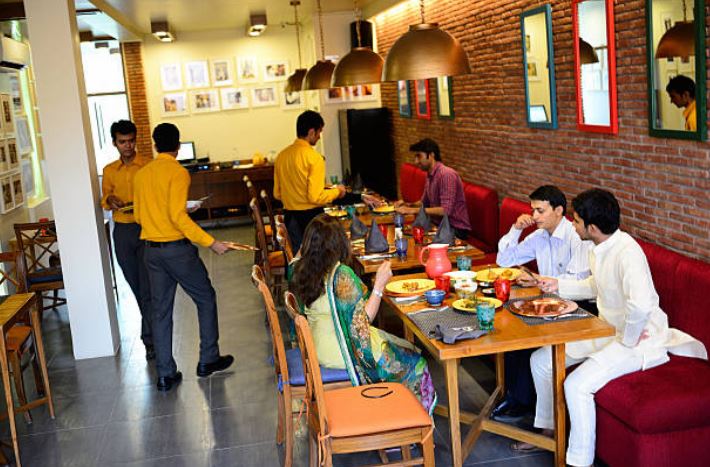
Even if the restrictions are not there, customers at this time will not be in that state of mind to dine out. Economic factors as well as the fear of spending some good amount of time (40 minutes to one hour) in a closed environment where many strangers will come and go does not look feasible for consumers.
Also, high rental is another cascading factor in the operating cost. Moreover, with the kind of guidelines to operate a restaurant business these days, many would not have the capability to follow such guidelines of social distancing and fewer footfalls, no liquor, etc.
“Eating out at restaurants is not a necessity, by and large; it’s a part of discretionary spending when you go out, socialize ― it’s all part of that. If you are not in a secure mind-frame about your future income, you will be as conservative as possible, and these are the kinds of expenditures that get knocked out first,” said Devangshu Dutta, founder, Third Eyesight.
“The restaurant industry was always a high mortality rate industry but the effects of the pandemic has been devastating. Some estimates say that 25-40% of restaurants may never open and even those that open will have to deal with low sales for a few months,” said Zorawar Kalra, founder of Massive Restaurants.
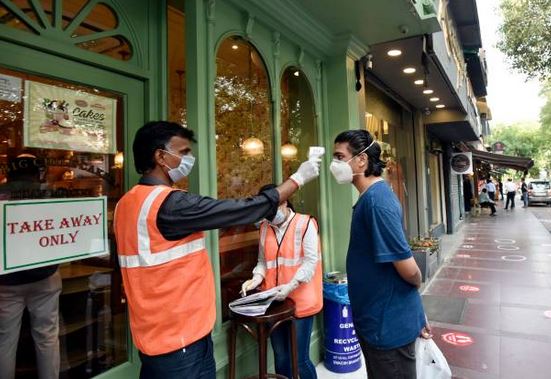
“I see the cost to sustain closure is very high. Many don’t have any resources which will impact the industry in such a way that 30-40% of restaurants will not reopen,” Katriar said.
Maintaining the utmost care in health and hygiene measures may prove a double whammy for restaurateurs. Firstly, it will add to their operating costs but they won’t be able to do away with this measure-as this is the only way to bring back consumer confidence. Adopting digital menus and digital payment solutions is another area they will have to travel around.
What’s in the offing?
Maintaining the utmost care in health and hygiene measures may prove a double whammy for restaurateurs. Firstly, it will add to their operating costs but they won’t be able to do away with this measure-as this is the only way to bring back consumer confidence. Adopting digital menus and digital payment solutions is another area they will have to travel around.
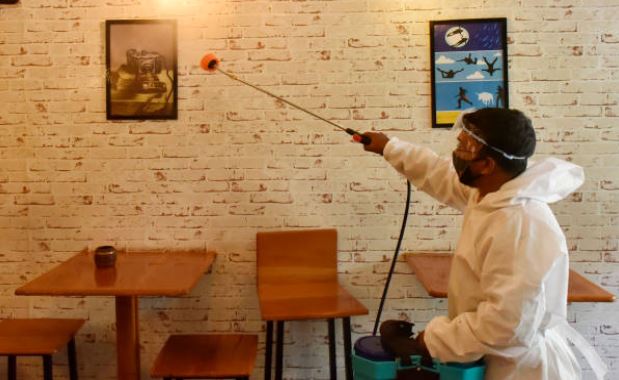
Besides, working with 50 percent or less of total capacity to ensure social distancing, the restaurants will probably have to get on the apps that provide online reservations, pre-ordering, and waitlist management to help minimize the queue of people waiting to be served. Popular restaurants have already started with thermal scanning for employees as well as consumers.
So, in the post COVID era, thermal scanning will be the new metal detection initiative that the restaurants will have to partake.
“Restaurants will have to opt for digital menus, contactless food, and sanitization among others. And with 50 percent occupancy, no alcohol and reduced working hours-restaurants will not make any money,” said Riyaaz Amlani, MD of Impresario Handmade Restaurants and the former President of NRAI.
Source: etvbharat
admin
June 7, 2020
Indian retailers welcoming customers back as stores are opening up – a look at what changes are in store.
Devangshu Dutta
April 7, 2020

Oil shocks, financial market crashes, localised wars and even medical emergencies like SARS pale when compared to the speed and the scale of the mayhem created by SARS-CoV-2. In recent decades the world has become far more interconnected through travel and trade, so the viral disease – medical and economic – now spreads faster than ever. Airlines carrying business and leisure-travellers have also quickly carried the virus. Businesses benefitting from lower costs and global scale are today infected deeply due to the concentration of manufacturing and trade.
A common defensive action worldwide is the lock-down of cities to slow community transmission (something that, ironically, the World Health Organization was denying as late as mid-January). The Indian government implemented a full-scale 3-week national lockdown from March 25. The suddenness of this decision took most businesses by surprise, but quick action to ensure physical distancing was critical.
Clearly consumer businesses are hit hard. If we stay home, many “needs” disappear; among them entertainment, eating out, and buying products related to socializing. Even grocery shopping drops; when you’re not strolling through the supermarket, the attention is focussed on “needs”, not “wants”. A travel ban means no sales at airport and railway kiosks, but also no commute to the airport and station which, in turn means that the businesses that support taxi drivers’ daily needs are hit.
Responses vary, but cash is king! US retailers have wrangled aid and tax breaks of potentially hundreds of billions of dollars, as part of a US$2 trillion stimulus. A British retailer is filing for administration to avoid threats of legal action, and has asked landlords for a 5-month retail holiday. Several western apparel retailers are cancelling orders, even with plaintive appeals from supplier countries such as Bangladesh and India. In India, large corporate retailers are negotiating rental waivers for the lockdown period or longer. Many retailers are bloated with excess inventory and, with lost weeks of sales, have started cancelling orders with their suppliers citing “force majeure”. Marketing spends have been hit. (As an aside, will “viral marketing” ever be the same?)
On the upside are interesting collaborations and shifts emerging. In the USA, Jo-Ann Stores is supplying fabric and materials to be made up into masks and hospital gowns at retailer Nieman Marcus’ alteration facilities. LVMH is converting its French cosmetics factories into hand sanitizer production units for hospitals, and American distilleries are giving away their alcohol-based solutions. In India, hospitality groups are providing quarantine facilities at their empty hotels. Zomato and Swiggy are partnering to deliver orders booked by both online and offline retailers, who are also partnering between themselves, in an unprecedented wave of coopetition. Ecommerce and home delivery models are getting a totally unexpected boost due to quarantine conditions.
Life-after-lockdown won’t go back to “normal”. People will remain concerned about physical exposure and are unlikely to want to spend long periods of time in crowds, so entertainment venues and restaurants will suffer for several weeks or months even after restrictions are lifted, as will malls and large-format stores where families can spend long periods of time.
The second major concern will be income-insecurity for a large portion of the consuming population. The frequency and value of discretionary purchases – offline and online – will remain subdued for months including entertainment, eating-out and ordering-in, fashion, home and lifestyle products, electronics and durables.
The saving grace is that for a large portion of India, the Dusshera-Deepavali season and weddings provide a huge boost, and that could still float some boats in the second half of this year. Health and wellness related products and services would also benefit, at least in the short term. So 2020 may not be a complete washout.
So, what now?
Retailers and suppliers both need to start seriously questioning whether they are valuable to their customer or a replaceable commodity, and crystallise the value proposition: what is it that the customer values, and why? Business expansion, rationalised in 2009-10, had also started going haywire recently. It is again time to focus on product line viability and store productivity, and be clear-minded about the units to be retained.
Someone once said, never let a good crisis be wasted.
This is a historical turning point. It should be a time of reflection, reinvention, rejuvenation. It would be a shame if we fail to use it to create new life-patterns, social constructs, business models and economic paradigms.
(This article was published in the Financial Express under the headline “As Consumer businesses take a hard hit, time for retailers to reflect and reinvent”.
