
admin
August 29, 2022
By Sharleen D’Souza & Sourabh Lele
‘First-ever end-to-end shopping experience’ on messaging platform, says Mark Zuckerberg

Meta Platforms Inc, the parent company of WhatsApp, will partner with Reliance JioMart for a service where WhatsApp users can buy groceries on the messaging platform from the Indian retail firm.
Mark Zuckerberg, chief executive officer (CEO) of Meta Platforms, said in a Facebook post, “[I am] Excited to launch our partnership with JioMart in India. This is our first-ever end-to-end shopping experience on WhatsApp–people can now buy groceries from JioMart right in a chat.”
“Business messaging is an area with real momentum and chat-based experiences like this will be the go-to way people and businesses communicate in the years to come,” he said in an announcement coinciding with the annual general Meeting (AGM) of Reliance Industries the parent company of JioMart.
A Reliance press statement said the service “will enable users in India, including those who have never shopped online before, to seamlessly browse through JioMart’s entire grocery catalog, add items to cart, and make the payment to complete the purchase–all without leaving the WhatsApp chat.”
WhatsApp users can shop on JioMart via by messaging “Hi” to +917977079770.
Mukesh Ambani, chairman and managing director of Reliance Industries, said, “The JioMart on WhatsApp experience furthers our commitment to enabling a simple and convenient way of online shopping.”
“Reliance Retail is looking at touching as many consumers across the country and WhatsApp is a logical platform as India is the largest market for the messaging app in the world,” said Devangshu Dutta, CEO of Third Eyesight, a retail consultancy firm. While WhatsApp is important for growth, Reliance Retail will also need to work on product availability and the cost of delivering to the customer, he said.
Ambani said Reliance’s retail business model has “five imperatives”, or ‘Panch Pran’. These include: enriching customer experience using technology; operationalising and growing multiple channels; integrating with small merchants and providing them a platform to prosper. The fourth imperative is to expand the product portfolio and the fifth one is to strengthen logistics and supply chain.
Isha Ambani, director at Reliance Retail Ventures, said at the AGM that the digital commerce platforms–reliancedigital.in and JioMart–enabled the retail major to deliver 93 per cent of online orders from stores within six hours. “We rolled out our JioMart Digital (JMD) initiative during the year. The platform enables small electronics merchants to sell the entire product portfolio of Reliance Retail on an assisted selling model, helping them deliver superior customer experience and growing their income,” she said.
The company’s new commerce initiative is on course to partner with one crore merchants as it expands to cover the entire country in the next five years, Isha Ambani said.
Last year, Reliance Retail entered pharmacy retail with the acquisition of Netmeds. That year, it launched new operations through Netmeds Wholesale and onboarded merchants in 1,900 towns and cities.
Source: business-standard
admin
July 27, 2022
Written ByAlakananda Chakraborty
Brand’s positioning may be just below Starbucks

It is against this background that Reliance Brands (RBL) announced its strategic partnership with global fresh food and organic coffee chain, Pret A Manger (PAM).
By Alokananda Chakraborty
India may boast of the presence of several marquee international coffee chains, but none of them, with the possible exception of Starbucks, have been able to make much of an impact. The reasons are obvious; for one, India is largely a tea-drinking market, with coffee penetration still at just about 11%. Coffee remains largely an in-home consumption drink. Then there are the usual challenges of getting prime real estate at a reasonable cost and consumers’ capacity to pay. The pandemic, which disrupted food supply chains and the overall demand, delivered a body blow, leading to shutdown of around 8% of the outlets during 2021.
It is against this background that Reliance Brands (RBL) announced its strategic partnership with global fresh food and organic coffee chain, Pret A Manger (PAM). The first store will open by the end of this financial year. While RBL is tight-lipped about the pricing or positioning strategy, experts say PAM’s biggest advantage is its association with Reliance.
“PAM is a late entrant and would have been at a huge disadvantage if it went alone,” says Anthony Dsouza, executive director & country service line leader, innovation, Ipsos India.
So what does Reliance brings to the table? “Significant investment capability, real estate strength and know-how of retail. These could lead to a much higher scalability and access to the right locations,” says Angshuman Bhattacharya, national leader, consumer product and retail sector, EY India. “However, running a café chain also involves building out the right supply chains across the country, which the brand would need to build,” he adds.
Bhattacharya is bang on. The success of an F&B franchise business depends on getting real estate at the right price. Reliance can offer a tremendous advantage here to PAM. Not only does it run a very large retail business, it also owns malls.
Experts say a lot would also depend on the right pricing. Pramod Damodaran, who had relaunched Costa Coffee India in his earlier stint as COO for that firm, and is now CEO of Wagh Bakri Tea Lounge, says, “There’s a big space between the 240 and170 for a cup of cappuccino, that is, just below the Starbucks/Costa Coffees of the world.”
PAM will probably occupy that window – it is unlikely to be a premium offering for two reasons. One, PAM is primarily a sandwich chain in the UK and it’s not clear how much premium it can command for a pre-made sandwich. Two, if PAM were to take advantage of the retail footprint of Reliance and were to follow a shop-in-shop format, say, in a Reliance Trends store, it can’t afford to be premium. The positioning would be a consequence of that captive audience.
In other words, the store location will, to a large extent, determine both the pricing and positioning of PAM. Agrees Devangshu Dutta, chief executive of Third Eyesight, a specialist management consulting firm: “At the end of the day, PAM is more a quick service outlet than a cafe. (Pret A Manger means “ready to eat” in French). And the consistency of its offering comes from what is called the pre-prep.”
All PAM outlets in the UK follow the concept of “freshness of ingredients” and “quickness of service”. The hero product – the sandwich in this case – is still a convenience food, a grab-and-go item. It is prepared by a central commissary or multiple commissaries and is at the most heated or packaged at the counter. “So it is not a restaurant and it can’t charge a restaurant price,” says Dutta.
In a sense, Domino’s has perfected this model with a lot of pre-prep done at the commissary end but the actual pizza is prepared “at location” or in the store. “In this case (PAM), you are not doing that volume of work at the consumer-facing counter,” Dutta adds. And if that is the model RBL plans to replicate in the country, the positioning, by default, is mass.
“The PAM-Reliance combination is likely to be a mass market offer, with value pricing and highly localised strategy,” Dsouza of Ipsos says.
But mass or premium positioning, PAM’s entry will no doubt roil the waters. “Incumbents have to up the food game if they want to take on the might of Reliance,” says an executive with a rival brand. Beverages form a dominant part of the café industry sales. Besides food and beverages, merchandising, which is employed largely for branding, is rapidly becoming a source of additional revenue. About 60-65% of café sales come from beverages, followed by food which forms about 20-25% and about 10% from merchandise.
For one, Tata Starbucks, which witnessed a 76% growth and logged `636 crore revenue in FY22, has been working at its food menu and delivery for some time. In a recent interview to FE BrandWagon, Sushant Dash, CEO, Tata Starbucks, had said that the brand had to “re-prioritise” because of the pandemic, with innovation becoming more important to keep the brand relevant. Starbucks innovated with the menu to keep the interest level up among customers and introduced new food items and gave the existing food items an Indian twist,” he had said.
Earlier this month, Starbucks added masala chai, filter coffee and an array of bite-sized snacks and sandwiches to its menu card. Its new milkshakes will be priced starting at 275, while masala chai and filter coffee will start from190. It also introduced the ‘Picco’ – meaning ‘small’ in Italian – starting at `185.
Will that be enough? Given PAM’s strong presence in the food space, there is no denying that existing café chains in India have to tweak their food menu considerably. In other words, they will have to get out of their comfort zones.
Source: financialexpress
admin
July 24, 2022
By Aishwarya Ramesh

Tata Consumer Products has rolled out ready-to-cook mock meat products under the brand name Simply Better.
Tata Consumer Products (TCPL) is the latest company to enter the plant-based meat segment in India. TCPL has launched a brand called Simply Better – which includes range of ready-to-cook (RTC) products, made of plant-based meat.
The RTC range is a mix of snacking dishes and traditional Indian dishes. It includes plant-based chicken nuggets, chicken fingers, chicken burger patties and Awadhi seekh kebabs. All these plant-based products are currently available on Amazon Prime and Flipkart.

TCPL’s Simply Better products as seen on Amazon.
When it comes to multinational companies, ITC has a play in this (RTC) category. Its Master Chef range includes a plant-based burger patty, priced at Rs 630 for 300 grams. The range has both vegetarian and non-vegetarian frozen snacks and kebabs. The Incredible range also has plant-based chicken nuggets, priced at Rs 475 for 300 grams.

ITC’s IncrEdible plant-based RTC range
Compared to ITC’s offering, Tata’s Simply Better line is priced slightly differently. 270 grams of plant-based chicken nuggets costs Rs 390 and the plant-based burger patty is priced at Rs 450 for 300 grams.
According to a report by Research and Markets, the Indian meat substitutes and mock meat market is estimated to reach over USD47.57 million in value terms by the end of FY2026 and is forecast to grow at CAGR of 7.48% during FY2021E-FY2026.
Devangshu Dutta, chief executive and founder at Third Eyesight, a specialist consulting firm, mentions that the presence of Tata Consumer Products and ITC could help in increasing adoption of the category over time, since both are large players intending to scale with mainstream customers.
“However, both companies will be advertising and targeting the same cohort of customers. Additionally, the two will also be competing against the multiple D2C brands in the category,” he added.
The plant-based meat market, or smart protein market, includes D2C brands. Some of these brands are also backed and endorsed by celebrities and athletes. The Good Dot is endorsed by Olympic athlete Neeraj Chopra, cricketer Virat Kohli and his wife and actress Anushka Sharma have invested in Blue Tribe and actor-couple Riteish Deshmukh and his wife Genelia Deshmukh have invested in plant-based meat startup Imagine Meats.
Anchit Chauhan, AVP – planning, Wunderman Thompson, mentions that the plant-based industry has been built by a set of startups, and now Tata has decided to enter the segment – somewhat late.
“If you look at the e-commerce segment too, Tata entered late with Tata CLiQ, almost 10-12 years after the e-commerce category had been built by the likes of Amazon and Flipkart. But the advantage Tata has is that the trust factor will always be associated with it. It will be able to leverage that brand equity and create success out of it.”
Dutta points out that for years, the most popular plant-based meat product had been Ruchi Soya’s product – Nutrela’s soya chunks and granules (soya chunks available at Rs 499 for 200 grams and granules at Rs 250 for a kilogram). Soya chunks have been available in India since the 1980s and Dutta calls it the ‘poor man’s meat replacement’.
He says that Indians already get protein in their diet through lentils, pulses and beans, and even those who consume non-vegetarian food don’t do so on a regular basis.
“They may eat it once or twice a week. Some people who convert from non-vegetarian to vegetarian, don’t miss the taste at all. Protein isn’t a huge selling point for these products either. So, this specific faux meat segment in India is a niche market.”
Both analysts (Dutta and Chauhan) opined that Tata’s entry into the segment would not have significant impact on the way the products are priced in this category.
According to Chauhan, India is mostly a vegetarian country and the consumers who may opt for plant-based products are ones who may do so out of concern for the environment, love for animals or an overall healthier diet.

Reasons for turning to plant-based meat
“Plant-based products are essentially for non-vegetarians, who have a certain taste but are willing to give it up because they feel for the environment or animals. But that’s a very urban niche right now. If you’re a ‘woke’ urban consumer, the price point of the products may not matter,” says Chauhan.
“One of the factors for this segment to grow in India is availability. Whether it is a startup or a company as big as Tata or ITC, it has to have financial muscle to sustain growth and must be easily available to consumers. Visibility and user trials are important, especially to attract consumers who wish to make a lifestyle switch in their diet. That’s why modern retail is an important channel for these products,” Dutta adds.

Different brands in the segment right now
Dutta explains fundamental consumer behaviour and calls expansion in this market ‘tricky’, since it is difficult to get people to change their behaviour.
“This is even more the case in smaller cities and towns, where people may have a more traditional mindset. Take the example of Kelloggs – it has been in the country for almost 30 years and there hasn’t been a mass behaviour switch as far as breakfast meals are concerned.”
Chauhan adds that it is not just plant-based meat, there is now demand for alcohol-free products – which taste the same as alcohol but do not have any of the side effects that come with drinking alcohol.
Dutta mentions that people in Tier-II and III cities may not be aware of plant-based meats. This is a tricky category that requires a lot more development. “It’s possible that plant-based meats will remain an urban phenomenon for a long time.”
Source : afaqs.com
admin
July 8, 2022
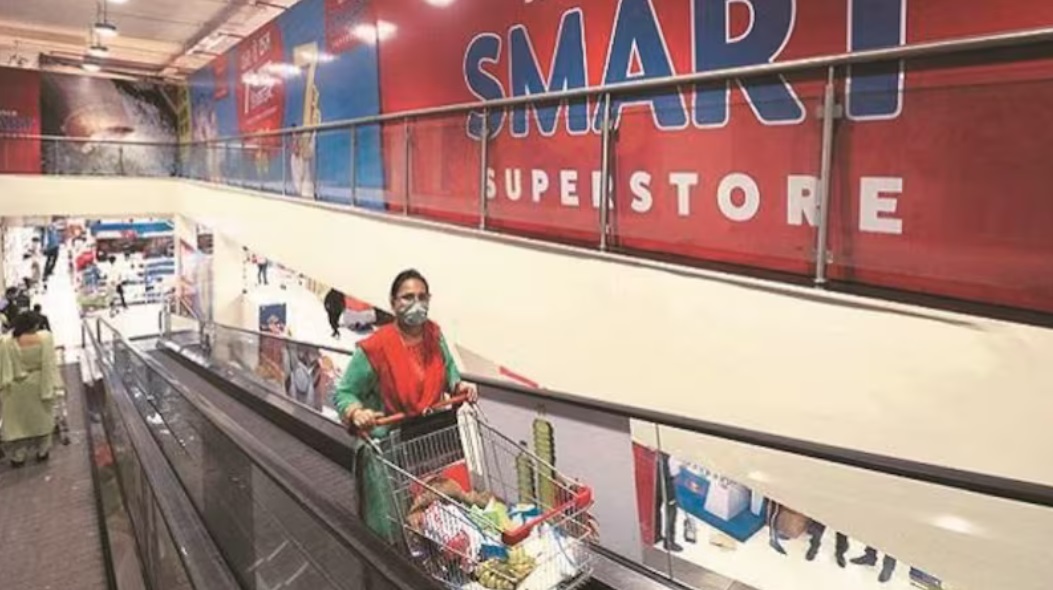
Akash Podishetty & Krishna Veera Vanamali, Business Standard
New Delhi, 8 July 2022
India’s $900 billion retail market has emerged as one of the most dynamic industries and is expected to reach anywhere between $1.3-$1.5 trillion by 2025. The organized retail is seen gaining 15% market share in the overall retail space, while food & grocery and apparel and lifestyle may account for 80% of India’s retail market by 2025.
Large market offers big opportunities. And it looks like Reliance Retail has seized it, with its massive omni-channel retail play of physical stores, B2B with kiranas and e-commerce.
The company went on an acquisition spree and partnerships in the last three years, adding to its portfolio some of the biggest names, including Hamleys, Dunzo, Zivame etc.
It has also partnered with famous global retail chain 7-Eleven. Catering to India’s affluent consumers, Reliance, meanwhile, houses some of the most iconic brands such as Versace, Armani Exchange, GAP, GAS, Jimmy Choo, Michael Kors among others. The premium segment has become one of the fastest growing categories.
Also firming up its inorganic play, the company is planning to acquire dozens of niche local consumer brands to build a formidable consumer goods business.
Arvind Singhal, Chairman and Managing Director, Technopak Advisors says, there’s focus on physical retail expansion. Reliance is looking to cater to both price conscious and brand conscious customers, while trying to capture as much of the private consumption market as possible, he says.
Reliance Retail’s competitors are nowhere close to even put up a fight. The company has over 15,000 offline stores across categories, compared with DMart’s 294 stores or Aditya Birla Fashion’s 3,468 outlets.
Reliance retail’s revenue has grown five times in the last five years and the core retail revenue of $18 billion is greater than competitors combined, according to a Bernstein report.
Speaking to Business Standard, Devangshu Dutta, CEO, Third Eyesight, says, Reliance wants a decent share of Indian consumers’ wallet. From that perspective, Reliance still has a long way to go, he says. As consumer preferences evolve, Reliance too should adapt.
An undisputed leader in the domestic market, the aim of Reliance, according to Mukesh Ambani, is to become one of the top 10 retailers globally. Part of this bet is based on the premise that incomes and consumption power of Indians will increase across the board in coming years. However, could the uneven recovery that different segments of the population have seen stop the pie from growing larger and prove to be a dampener for Ambani’s ambitions?
(Published in Business Standard)
admin
June 30, 2022
Written By Aditya Kalra & Abhirup Roy

MUMBAI, June 30 (Reuters) – Reliance Industries (RELI.NS) said on Thursday it would open outlets of Pret A Manger in India under a franchise deal with the British sandwich and coffee chain, a first foray by the Indian firm in the country’s growing food and beverage industry.
Reliance Brands Ltd (RBL), a unit of the conglomerate that also runs India’s biggest retail chain, would start by opening branches of Pret, as the brand is known in Britain, in big Indian cities, both companies said.
RBL Chief Executive Darshan Mehta said in joint statement the partnership was “rooted in the strong growth potential” of the Pret brand, known for its organic coffee and upmarket sandwiches, and the Indian food and beverage industry.
The first outlet would open in Mumbai before March 2023 and India was expected to become one of Pret’s top three markets in three years, a source familiar with the matter told Reuters.
Pret A Manger, whose name means “ready to eat” in French, first opened in London in 1986. It now has 550 outlets globally, including in the United States and several European states. It is owned by investment group JAB and founder Sinclair Beecham.
In India, the brand will compete with Starbucks (SBUX.O), which has a joint venture with India’s Tata, and Costa Coffee, which is owned by Coca-Cola (KO.N).
Mukesh Ambani, one India’s richest men, runs Reliance, which has more than 2,000 supermarkets and grocery stores in India. Reliance also has partnerships with luxury brands, such as Burberry and Jimmy Choo.
“Reliance wants to look at retail in all its shapes and forms. Over time, they’ve realised partnerships are the way for business formats that may be difficult or slower to crack,” said Devangshu Dutta, head of retail consultancy firm Third Eyesight.
Source: reuters
