
admin
December 20, 2022
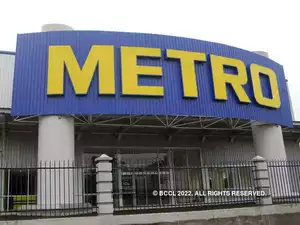
Metro AG global chief executive officer Steffen Greubel said the company is at a “very advanced” level of discussions on its India business, suggesting for the first time that it could be looking at an exit from the country soon.
“We are very advanced in the process regarding India and are at a certain maturity level in the process. It’s too early to share any information, but we have discussed it greatly,” Greubel told analysts when asked if he is looking at a possible withdrawal from India and the status of talks. “We are very deep in the (sale) process in India,” he said last week while announcing annual earnings.
The German wholesaler grew its Indian business by 21% to $982 million during the year ended September, as per its latest annual report.
Last month, ET reported that Reliance had agreed in principle to buy Metro AG’s cash-and-carry wholesale India business for ₹4,000-4,500 crore.
Its unit Reliance Retail is already the biggest grocery retailer in the country with over 2,400 stores across formats while Metro operates 31 wholesale stores in India with seven of them on company owned land in prime locations. The company hasn’t publicly stated that it’s looking to leave India. Metro would be the second big international wholesaler retailer to exit India, if this happens. French retailer Carrefour wound up its India business in 2014 after struggling with sales for four years.
Globally, Metro is the world’s fourth-largest retailer by revenue. In India, it doesn’t sell directly to consumers and is an organised wholesaler or cash-and-carry operator that sells merchandise to local kirana stores, hotels and catering firms.
It decided to put the India business on the block as part of a global decision to exit the country due to heightened competition, a tougher regulatory environment and the lack of a level playing field between local and foreign retail companies, industry executives said.
Experts said the difficult European and global economic environment, regulatory restrictions in India, tough competition from domestic Indian groups and thin margins in the B2B business in India may have led Metro to focus on growing its core markets in Europe.
“Though India is, indeed, a long-term strategic market for companies looking at global growth, whether retail or B2B, not every business model from other geographies can be successfully transplanted or rapidly scaled in India, and Metro’s business footprint in India may be far smaller than they may have expected in the two decades of presence here,” said Devangshu Dutta, founder of retail consulting firm Third Eyesight. The choice to be present in different countries is always a dynamic one for global retailers and entry or withdrawal is driven by individual strategies, rather than solely on the merit of the market itself, he said.
“In September, the management board reported on the current status of the audit of strategic options for Metro India,” according to the annual report.
Overseas investment in offline trade has been a tricky issue, despite India allowing 100% foreign direct investment (FDI) in wholesale trade on a cash-and-carry basis. Metro was one of the first companies to enter the segment in India in 2003. Lobby groups representing small Indian retailers have accused overseas retailers of violating FDI rules, which the foreign companies have consistently denied. Some trade lobbies have complained to the government that a few global wholesalers have been flouting FDI rules by selling to consumers directly, which is not allowed as per current regulations.
(Published in The Economic Times)
admin
November 28, 2022

Sagar Malviya, ET Bureau
November 28, 2022
About half a dozen global apparel and lifestyle brands expanded anywhere between 30% and 70% to garner combined annual revenues of nearly $2 billion in FY22, reversing the performance from a year ago when Covid-induced curbs on mobility and business operations caused sales to shrink.
Sales of Swedish fashion retailer H&M expanded 49% while rival Zara reported a 61% increase in its topline. Japanese brand Uniqlo saw a 64% jump in sales while American denim maker Levi Strauss posted a 58% increase, latest filings with the Registrar of Companies showed. Dubai-based department store Lifestyle International, too, saw a 38% jump in revenues on a large base while German brand Puma expanded 68% despite being the biggest firm in the sporting segment.
“This is a combined impact of a rebound in industry-wide demand in India, a low base effect for some brands, and the visibility and mindshare advantage global brands have,” said Devangshu Dutta, founder of Third Eyesight, a strategy consulting firm.
Big Focus on Online Sales
“Global brands are aspirational not only for consumers but also for real estate developers. Perceived as anchor tenants, they get their choice of the best locations – this provides more impetus to their stores vis-a-vis Indian brands, which are shunted to higher floors in multi-level shopping spaces,” Dutta said.
The revenue surge comes at a time when most of these retailers are facing intensifying competition from both local and global rivals in an increasingly crowded market where web-commerce firms continue to offer steep discounts. Even multinational companies have upped their online focus and for some, web-based orders make up more than a third of their revenues.
For instance, Puma India’s online sales make up nearly half its total business, while for H&M the share is 42%.
Abhishek Ganguly, managing director, Puma India and Southeast Asia, said the affinity of young Indian consumers toward ecommerce is extremely high and that adoption of the online mode of shopping continues to accelerate even after the resumption of normal business operations.
“Consumers may have bought online for the first time during the lockdowns, but they have embraced ecommerce in their shopping journey,” said Ganguly.
“Almost half of our business is in the form of digital commerce today. Having said that, we are witnessing equally strong growth – both in our offline and online channels,” he said.
As the world’s second most-populated country, India is an attractive market for aspirational apparel brands as rising disposable incomes cause the consuming base of the pyramid to broaden further. The performance by global brands is also in line with the overall trend within the home-grown apparel and lifestyle segment, with Shoppers Stop, Tata-owned Trent and Aditya Birla Fashion & Retail also reporting smart performance rebounds, indicating a secular demand for discretionary products.
(Published in Economic Times)
admin
June 30, 2022
Written By Aditya Kalra & Abhirup Roy

MUMBAI, June 30 (Reuters) – Reliance Industries (RELI.NS) said on Thursday it would open outlets of Pret A Manger in India under a franchise deal with the British sandwich and coffee chain, a first foray by the Indian firm in the country’s growing food and beverage industry.
Reliance Brands Ltd (RBL), a unit of the conglomerate that also runs India’s biggest retail chain, would start by opening branches of Pret, as the brand is known in Britain, in big Indian cities, both companies said.
RBL Chief Executive Darshan Mehta said in joint statement the partnership was “rooted in the strong growth potential” of the Pret brand, known for its organic coffee and upmarket sandwiches, and the Indian food and beverage industry.
The first outlet would open in Mumbai before March 2023 and India was expected to become one of Pret’s top three markets in three years, a source familiar with the matter told Reuters.
Pret A Manger, whose name means “ready to eat” in French, first opened in London in 1986. It now has 550 outlets globally, including in the United States and several European states. It is owned by investment group JAB and founder Sinclair Beecham.
In India, the brand will compete with Starbucks (SBUX.O), which has a joint venture with India’s Tata, and Costa Coffee, which is owned by Coca-Cola (KO.N).
Mukesh Ambani, one India’s richest men, runs Reliance, which has more than 2,000 supermarkets and grocery stores in India. Reliance also has partnerships with luxury brands, such as Burberry and Jimmy Choo.
“Reliance wants to look at retail in all its shapes and forms. Over time, they’ve realised partnerships are the way for business formats that may be difficult or slower to crack,” said Devangshu Dutta, head of retail consultancy firm Third Eyesight.
Source: reuters
admin
March 24, 2022
Written By Aditya Kalra & Abhirup Roy

MUMBAI, March 6 (Reuters) – At a large Future Retail (FRTL.NS) supermarket in Mumbai last week, workers were unloading hundreds of bright blue grocery crates belonging to India’s biggest retailer Reliance.
Prospective customers were turned back by security, disappointed at the closed state of the store that still carries the signage of Future’s biggest brand, Big Bazaar, but which will likely soon be rebranded as a Reliance outlet.
Across India, similar scenes are being played out as Reliance Industries (RELI.NS), India’s biggest conglomerate run by Mukesh Ambani, the country’s richest man, presses ahead with a shock de facto takeover of prized retail real estate that Amazon.com Inc has been keen to take part-ownership of.
The high-profile bitter dispute between corporate titans in which Amazon has sought to block Reliance’s planned $3.4 billion purchase of Future Group’s retail assets is currently before India’s Supreme Court.
Reliance’s takeover began with utmost stealth on the night of Feb. 25 when its staff began arriving at Future stores. Many in Future’s management were in the dark about the plans as store employees from all over the country frantically began to call, according to people with direct knowledge of the matter.
“It was tense, everybody was panicking. We didn’t know who they were. They wanted access and seniors didn’t know about it,” a New Delhi Big Bazaar store employee said, describing what happened around 8 p.m. that day.
At a Future store in Sonipat town in northern Haryana state, announcements were made asking customers to leave as Reliance seized control, one source said. In Vadodara in western Gujarat, Future employees arriving for work the next morning were asked to go back home with no explanation, said another source.
Citing unpaid payments by Future, Reliance has taken control of operations of some 200 Big Bazaar stores and has plans to seize another 250 of Future’s retail outlets. Combined, they represent the crown jewels of Future’s retail network and around a third of all Future outlets. read more
Although Reliance had not played a large public role in the legal dispute, it had, according to sources, for some months assumed many of the leases held by cash-strapped Future, India’s No. 2 retailer and Amazon’s estranged business partner.
Reliance’s sudden possession of the stores appears to have landed what some analysts are calling a coup de grace that spoils Amazon’s chances of untangling the transfer of Future’s assets to Reliance. That’s despite a series of legal battles won by the U.S. e-commerce giant to date blocking the 2020 deal announced between the two Indian companies.
“What will Amazon fight for now?” said a source close to the U.S. company with knowledge of the legal dispute. “The shops are gone.”
Representatives for Reliance, Amazon and Future did not respond to Reuters queries for this article. Sources asked not to be identified due to the sensitive nature of the dispute.
AFTER THE TAKEOVER, TALKS
Future Retail said on Feb. 26 it was “scaling down its operations” to cut losses although it made no mention of Reliance in its statement. Future Group as a whole has more than $4 billion in debt.
Reliance plans to retain Future’s employees at the stores it takes over, sources have said.
Amazon, which has a stake in a separate Future Group unit that it argues prevents Future from selling retail assets without its permission, has called the supermarkets and other stores an “irreplaceable” network in a sector worth $900 billion in revenues annually.
The legal wrangles had over time become increasingly high-stakes and marked by ugly rhetoric. At one point, Amazon sought for Future Chief Executive Kishore Biyani to be detained in prison for disobeying a legal order. And Future once likened Amazon to Alexander the Great and his “ruthless ambition to scorch the earth”.
But on Thursday, six days after Reliance’s move, Amazon at a Supreme Court hearing unexpectedly called for cordial talks to end the dispute – a proposal Future agreed to.
“People have taken over shops … let’s at least have a conversation,” Amazon’s lawyer Gopal Subramanium said.
Discussions are expected to begin soon. read more
Whatever the outcome of the talks, analysts say Amazon had gravely underestimated Reliance.
“If anybody should have seen this coming, it should have been Amazon and they should have prepared against it,” said Devangshu Dutta of retail consultancy Third Eyesight.
“Clearly, they didn’t.”
Source: reuters
admin
January 24, 2022
Written By Devika Singh
The entry of Jubilant FoodWorks will intensify competition in the fried chicken segment, where KFC so far has maintained its stronghold.

Popeyes, founded in 1972 in New Orleans, Louisiana, has over 3,400 restaurants in over 25 countries around the world. Popeyes (Wikimedia Commons)
Jubilant FoodWorks, the franchisee for Domino’s Pizza, will launch the iconic US-based fried chicken brand Popeyes, known for spicy New Orleans-style fried chicken and chicken sandwiches, in India on January 19 with the unveiling of the first outlet in Bengaluru.
“Popeyes was founded in 1972 and has been one of America’s most popular and fastest-growing chicken brands. Popeyes aims to delight Indian guests with the bold and delicious flavours of its Louisiana-style chicken,” the company said in a filing to stock exchanges.
“The success of the brand lies in its traditional and unique technique of hand breading, battering, and marinating its fresh chicken for 12 hours in bold Cajun seasonings,” the company added.
Popeyes runs over 3,400 restaurants in 25 countries.
With the entry of Jubilant FoodWorks, the competition is set to intensify in the fried chicken segment, where KFC has maintained leadership in the country so far.
“KFC has enjoyed a free run in the fried chicken market. There are some local players in this segment but no large QSR (quick service restaurant) player had a presence in it until now. With Popeyes as a competitor, now Jubilant FoodWorks is stepping into that opportunity,” said Devangshu Dutta, chief executive at consulting firm Third Eyesight.
While launching its initial public offering (IPO) last year, Devyani International, the largest franchisee of Yum! Brands (which owns KFC), had stressed the advantage it has over other QSRs in the country.
“We have no competition for KFC in India,” Ravi Kant Jaipuria, chairman, Devyani International, had said at the time. Devyani International runs 284 KFC India stores across 107 cities and the brand contributes more than half of its revenues. Sapphire Foods, which too launched its IPO last year, is another major franchise for KFC in India.
Both the companies already compete with Jubilant FoodWorks in the pizza segment as they also operate Yum! Brands-owned Pizza Hut in India. Jubilant FoodWorks with Domino’s Pizza, however, has clear leadership in the pizza market. Sample this: Pizza Hut currently has 500 stores in India, of which 317 are run by Devyani International; Jubilant FoodWorks, on the other hand, already has 1,335 outlets of Domino’s Pizza in India.
Now with the launch of Popeyes, Jubilant FoodWorks, it seems, wants a chunk of the fried chicken pie too.
Westlife Development, which holds the master franchise for McDonald’s in southern and western India, also has set its sight on the fried chicken segment in India. In an interview with Moneycontrol in September last year, Smita Jatia, managing director of Westlife Development, shared an ambitious plan to become a market leader in the segment. The company has already introduced fried chicken in its 125 stores in South India and plans to soon launch the food item in the western region too.
Clearly, the fried chicken market is certainly headed for interesting times as several new QSR players vie for a share of it. According to experts, the segment also offers the next avenue for growth for QSR players. “While fried chicken was the first to take off in Southeast Asia, in India, pizza and burgers found takers given the preference towards wheat-based cuisine in some parts of the country,” said Rajat Tuli, partner at global management consulting firm Kearney.
“However, as Indians become more experimental with food and trying out different cuisines, the fried chicken segment offers the next arena for growth to QSR companies,” he added.
Tuli also believes that the segment has enough space for a couple of players. “The QSR space is poised for over 20 percent growth in the next five-six years and hence there is enough headroom for multiple players to grow in it,” he said.
‘Veg options and no MSG’
The Popeyes India menu will feature the signature Cajun-flavoured Chicken Sandwich and Popeyes signature Chicken in Classic and Spicy flavours. The Indian menu will also feature an array of vegetarian options and will also have rice bowls and wraps. The entire India menu has no flavour enhancer monosodium glutamate (MSG), and the chicken is antibiotic-free, said Jubilant FoodWorks.
In a statement, Shyam S. Bhartia, chairman, and Hari S. Bhartia, co-chairman, Jubilant FoodWorks, said, “We are excited to introduce the Popeyes Louisiana Kitchen brand to chicken-loving Indian consumers. We are confident that Popeyes will not only delight guests but also strategically complement our portfolio and fortify JFL’s leadership in the QSR domain.”
Popeyes will start with its flagship store in Bengaluru’s Koramangala on January 19, followed by stores in New BEL Road and Kammanahalli soon thereafter. The brand will have its own app (Android and iOS) and mobile website.
To ensure a smooth and seamless delivery experience, Jubilant FoodWorks has built its in-house delivery fleet with e-bikes to enable zero-emission delivery. The company is also taking precautions given the pandemic situation.
“Safety protocols like daily temperature screening for all employees and frequent sanitisation of the restaurant are being implemented and frequent sanitisation of bikes will be conducted. All delivery riders will be compulsorily wearing face masks and gloves while following the frequent hand sanitisation protocol,” it added.
Source: moneycontrol
