
admin
September 5, 2025

Shalinee Mishra, Exchange4Media
5 September 2025
Retailers in India are waking up to a hard truth: customer acquisition can no longer ride on advertising alone. Digital ad spends grew by 14-17% in 2024, touching nearly ₹50,000 crore (as per Pitch Madison report) and accounting for 46% of India’s total ad market. But with customer acquisition costs (CAC) rising 30-35% year-on-year and consumer attention fragmented across platforms, the ad-first growth engine is showing strain. What is emerging instead is an ecosystem where content in the form of video, celebrity-led storytelling, or creator-driven engagement is becoming the direct funnel to commerce.
Flipkart for instance is building influencer production hubs and embedding shoppable videos, Myntra has rolled out its video-first Glamstream, and Amazon has long blurred the line between streaming and shopping through Prime Video and Fire TV. From short videos to celebrity gossip, from beauty blogs to shoppable livestreams, e-commerce giants are no longer just marketplaces; they are evolving into media houses and the trend is only growing.
According to Mindshare’s latest Content Trend Report, India’s branded content marketing industry is now worth ₹10,000 crore, growing at nearly 20% annually, with video formats making up almost half of all spends.
India already has over 270 million online shoppers, a number that Bain projects will rise to 350 million by 2027, making it the world’s second largest e-retail user base. That scale is creating fertile ground for shoppable video and live commerce to take off.
Globally, branded content spend is projected to cross $500 bn by 2027. As per PwC estimates, India’s share is still <2% but among the fastest growing.
Video commerce today largely follows two prominent models. The first is driven by social platforms such as YouTube, Instagram, and Facebook, where shoppable posts allow users to move directly from content to purchase. The second is led by e-commerce platforms like Amazon, Myntra, Nykaa, and Flipkart and others which have added video sections to create immersive shopping experiences within their apps.
Within this, live commerce has emerged as a high-potential format. Meesho and Flipkart, for example, are leading the charge with 2-3% conversion rates, generating an estimated $150-200 million in GMV during festive 2024. Events like Flipkart’s Big Billion Days show how timed livestreams can capture active, purchase-ready audiences.
Meanwhile, influencer-led short videos are driving conversion rates as high as 63%, with beauty and personal care (BPC) and food & beverages (F&B) among the top categories benefiting from this shift. Redseer projects India’s live commerce market could touch $4-5 bn GMV by 2027, up from less than $300 mn today. This surge in shoppable video and live commerce is only the surface of a deeper structural change, one where content itself is becoming the moat that protects brands from rising ad costs, fragmented attention, and fickle consumer loyalty.
Beyond ads: Why content has become retail’s strongest defence
Chirag Taneja, co-founder of e-commerce enablement company GoKwik, framed the trend as a fundamental shift in ownership.
“It’s not just about enhancing top-of-funnel reach, it’s about owning demand, connection, and the touchpoint with end shoppers. For years, brands relied on ads to bring traffic. But acquisition costs have been rising, attention is fragmented, and privacy shifts have made targeting difficult. That’s why content is now the moat. When companies acquire content firms, they’re not just buying eyeballs, they’re securing access to communities that trust and engage with that content.”
According to him, content is collapsing the traditional funnel. “One short video or livestream can take a consumer from awareness to purchase in under a minute. That’s why we see D2C brands treating content as a compounding asset, not just an expense,” he added.
Devangshu Dutta, founder and CEO of management consulting firm Third Eyesight, echoed the sentiment.
“Large companies are buying or partnering with content-driven platforms to capture attention beyond transactional touch points. Short video, regional language content, and influencer-driven discovery are embedding commerce within entertainment. If you want to sell more than a commodity, storytelling is critical. Content builds credibility, differentiation, and trust in a cluttered and price-sensitive market.”
Flipkart bets big on media and creators
The shift is already reshaping strategy at India’s biggest retailers, and Flipkart has moved fastest. Its move to acquire a majority stake in Pinkvilla, a platform built on entertainment and celebrity news signals a clear push to deepen ties with Gen Z and millennials, a cohort that consumes content first and shops later.
“Our acquisition of a majority stake in Pinkvilla is a critical step in our mission to deepen our engagement with Gen Z. Pinkvilla’s robust content IPs and strong connection with its loyal audience base are assets that will accelerate our efforts to leverage content as a key driver of growth,” said Ravi Iyer, Senior Vice President, Corporate at Flipkart.
Flipkart in the last year has exited investments in companies like Aditya Birla Fashion & Retail, where it sold its 7.5% stake in the owner of Pantaloons, Van Heusen, Louis Philippe and Forever 21, as well as BlackBuck, the trucking marketplace that powers India’s mid-mile logistics.
At the same time, the company has doubled down on content and creators. Its Pinkvilla acquisition gives it access to a platform reaching over 60 million monthly users, while in-house features like Flipkart Feed already clock 5–6 million daily video views, highlighting how commerce and content are converging at scale.
Alongside this, Flipkart has launched Creator Cities in Mumbai, Bengaluru and Gurgaon, production hubs designed for influencers to shoot and scale shoppable content.
It has also introduced Flipkart Feed, a TikTok-style vertical video feature embedded in its app, offering bite-sized, influencer-led, fully shoppable videos. Myntra, its fashion arm, has developed Glamstream, with more than 500 hours of video-first shopping content across music, beauty, travel and weddings, featuring stars like Badshah, Tabu, Zeenat Aman and Vijay Deverakonda.
Flipkart has also partnered with YouTube Shopping, allowing creators with over 10,000 subscribers to tag Flipkart products in videos, Shorts and livestreams, enabling viewers to buy directly while creators earn commissions.
Amazon’s head start in content-commerce convergence Flipkart is not alone. Its biggest rival Amazon has long understood this convergence. Through Prime Video and its original programming slate, Amazon has built an entertainment ecosystem that doubles as a commerce funnel. The shows and films on Prime do not merely entertain; they drive shopping behaviour, influence trends, and lock audiences into Amazon’s larger universe of services. With Fire TV and Alexa integrations, the company has blurred the line between watching and buying, a model others are now racing to replicate.
D2C brands treat content as growth engine
Closer home, the Good Glamm Group, now closed, had pioneered a content-led commerce ecosystem in beauty and personal care. Through acquisitions like ScoopWhoop and MissMalini Entertainment, the group stitched together a portfolio where content platforms brought in audiences, who were then nudged towards its direct-to-consumer brands.
This “editorial-to-checkout” model demonstrated how cultural capital could be translated into purchase pathways. Alibaba has taken the strategy global. With stakes in Youku, a leading video-streaming platform, and Alibaba Pictures, the e-commerce titan integrates entertainment with retail operations. Taobao Live has shown how livestream shopping can dominate consumer behavior, particularly inAsia, creating billion-dollar shopping events entirely dependent on
entertainment-driven discovery.
Shopify, meanwhile, has invested in tools that empower merchants to become content creators themselves. Its partnerships with agencies like Sanity and investments in platforms such as Billo reflect a clear intent to enable retailers to embed storytelling, gamification, and user-generated content into their selling journey. Unlike large marketplaces, Shopify’s vision is not to own the content but to democratize access to it for small and mid-sized businesses.
From content to commerce
This content includes newsletters, creator partnerships, branded podcasts, and niche communities on social media. The idea, as industry experts note, is to treat content as an asset that compounds, not just as a cost.
Unlike ads, content continues to generate discovery and engagement long after it’s published. That’s why more D2C brands are making content central to their growth strategies.
Several big names are experimenting in this space. Durex, Plum, Mother Dairy, and HDFC Bank have launched their own podcasts where celebrities share stories along their brand journey. Founder-led podcasts too are on the rise on YouTube, with voices like Nitin Kamath and Deepinder Goyal drawing large audiences in India.
The big question, however, is whether content consumption can effectively be converted into product discovery and purchase pathways. “It’s already happening at scale,” said Taneja. “Content is redefining every aspect of the traditional funnel. In the past, you had awareness at the top, intent in the middle, and purchase at the bottom. Today, one short video or live stream can take a consumer through that entire journey in under a minute.
“From a D2C lens, this convergence is even more critical. D2C brands thrive on agility, the ability to turn trends, storytelling, and community engagement directly into sales. Platforms like Instagram, YouTube, TikTok, and even WhatsApp have embedded shoppable features, which means the content is no longer just ‘top-of-funnel.’ It’s the storefront. But the magic lies in authenticity and design. Consumers don’t want to feel ‘sold to’, they want to feel entertained, inspired, or educated. If the content does that well, conversion becomes a natural byproduct. For example, an athleisure brand showing a workout routine isn’t just demonstrating leggings, it’s giving value. The leggings purchase becomes an easy next step, not a forced pitch.”
The big question: Will content sustain sales at scale?
Taneja further reveals how content is driving sales and long-term growth. “The smartest brands, especially in D2C, have realized that high-quality
content is their most defensible growth engine. Performance marketing will continue to play a role, but the real long-term moat is the kind of content that builds relationships, trust, and recall. Consumers today are spoiled for choice. They don’t buy just products, they buy stories, values, and communities.
“High-quality content allows a brand to consistently show up in ways that feel relevant and credible. And from a business lens, it directly impacts unit economics: it reduces CAC because organic discovery compounds over time, improves LTV because content nurtures loyalty and repeat purchases, and builds resilience because brands with strong content ecosystems are less dependent on fluctuating ad platforms.”
The D2C ecosystem in India is already proving this point. Beauty and personal care brands now run editorial-led platforms alongside commerce, while fashion labels thrive on creator collaborations and storytelling-driven product drops. Their growth is not accidental but built on content strategies that treat every piece not just as a post, but as a business driver.
As an enabler, Taneja adds, the results are visible across platforms. “Brands that invest in content see better conversions on our checkout stack, lower cart drops, and stronger repeat cohorts. Content doesn’t just spark sales it sustains them.”
For all the optimism, the test for content-driven commerce will lie in scale and sustainability. Rising conversions in beauty, fashion, and food show the model works, but questions remain on whether every category can replicate that success, or whether consumers will tire of content-heavy shopping pitches.
(Published in Exchange4Media)
admin
August 31, 2025
Akanksha Nagar, Storyboard18
31 August 2025
The latest round of US tariffs- a steep 50% duty that kicked in last week- is reshaping the playbook for Indian brands eyeing global markets. While exporters brace for tighter margins and logistical hurdles in the US, experts say this disruption could be a defining moment for Indian consumer brands to shine globally by leaning on innovation, design strength, and the untapped potential of India’s domestic consumption story.
“With the 50% tariffs kicking in, what will India do? Expect an inward-looking India! Expect a deep focus on #IndiaForIndia as marketers develop the India-consumption story for Indian produce. Expect even a Swadeshi movement Ver 3.0. MNCs in India face pressure,” says brand guru Harish Bijoor, founder of Harish Bijoor Consults Inc.
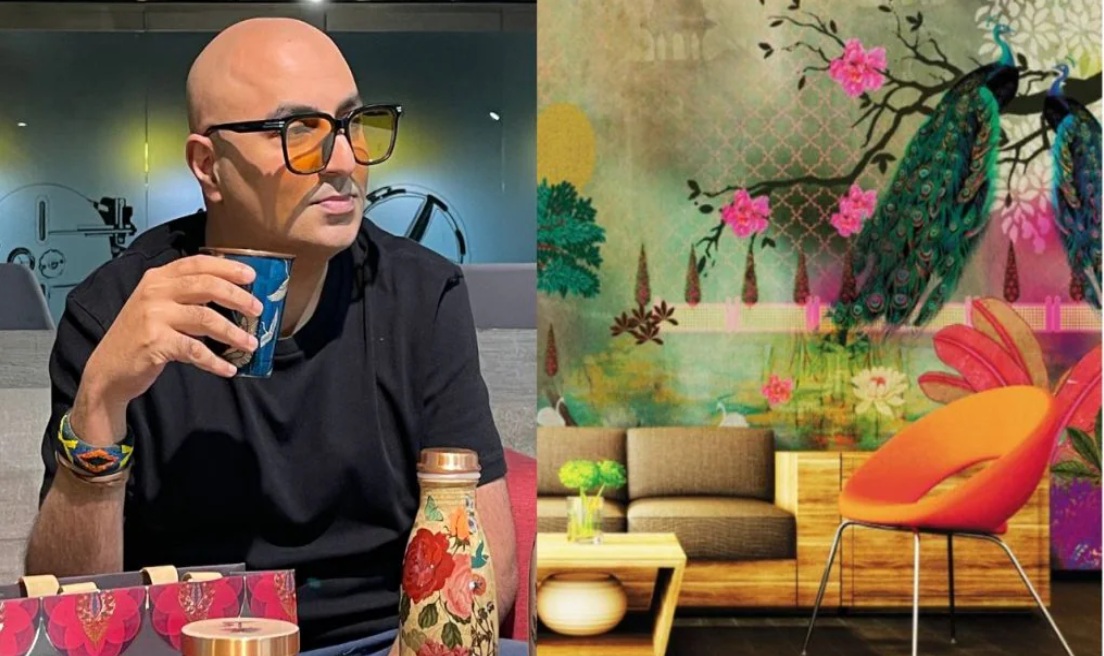
Riding high on this wave is India Circus, which is emerging as one of the fastest-growing players in the new-age home décor space. With a growing appetite for aesthetics, the brand is redefining how Indians furnish their homes. As urban consumers grow more design-aware and seek products that reflect personal taste and cultural identity, design-forward brands are carving out their own niche.
“Consumers today want more than just functionality. They want form, flair, and a sense of identity in their living spaces,” says Devangshu Dutta, founder and CEO of Third Eyesight. This shift, he explains, is creating tailwinds for brands that can deliver both design value and cultural resonance.
But he also adds a note of caution in the tariff context: “Indian brands that are being exported to the US face margin pressures and reduced US market access, both due to import tariffs and due to logistical barriers. They may need to hold inventory in the US to reduce the tariff and shipping impact, but that would also be at a certain cost and loss of agility.
It is an opportune time to focus on exports to other markets. Of course, no other single market would have the scale offered by the USA, so it will perhaps be more expensive and a more fragmented growth.”
Founded by Krsnaa Mehta and now part of the Godrej Enterprises Group, India Circus has found the sweet spot between Indo-contemporary aesthetics and wide accessibility.
From crockery with 22-carat gold accents to tropical wallpapers and statement furniture, its design-led offerings have struck a chord with India’s style-conscious consumers. The brand has also forayed into fashion, while preparing to tap international markets through a new e-commerce platform. “Design is not just an add-on for us; it is our core. Every collection begins with a story, and that’s what keeps our customers coming back,” says Mehta.
On the impact of Trump’s tariffs, Mehta clarifies that the brand remains largely insulated.
“Our major consumer base is in India, we have been focused on expanding our reach and tapping unexplored markets in India. India has so much potential- the newer markets of tier-2 cities like Lucknow, Gurugram, Chandigarh, Ambala are exceptional and the buying power of our consumers has increased significantly in the past few years. So we are not really worried about the tariffs, considering that our designing, production and selling is totally in India. Yes, we do export to the US, but it is not really comparable to what we do in India.”
Yet, he views the moment as a wake-up call for Indian brands globally.
“As a proud Indian brand, we have always been at the forefront of innovation, evolving our design aesthetics from bold prints to more contemporary ones. Our consumers are now visually informed and thus we must keep evolving. It is not just moving ahead but also embracing our roots and creating what is best for not just one but for all. India Circus has always tried to democratise design, by making it affordable and providing great quality at great prices.”
India Circus’s growth is fueled by an omnichannel strategy that blends a strong digital presence with 18 (soon to be 28) offline stores, while aggressively expanding in tier-2 cities.
The brand is targeting ₹400 crore in revenue by FY2026, up from its current ₹100 crore. Having recently launched international website to serve the Middle East and Asia, tt is also exploring categories such as gifting, licensing, and royalty-based partnerships, alongside plans to scale manufacturing. Warehousing in Europe and North America is also under evaluation.
“The growing demand for sustainable, high-quality products has contributed to our growth, as consumers increasingly seek out brands that share their values. Our designers leverage consumer insights, in-house research, and sales data to create products that are both stylish and relevant. We proudly invest in Indian craftsmanship and manufacturing, eschewing imports from countries like China. This approach not only supports local economies but also enables us to maintain quality standards,” Mehta says.
Meanwhile, brands like Chumbak, who were once synonymous with playful, funky aesthetics, have had a patchier journey in the domestic market. At one point, Chumbak had drawn strong private equity interest and grew aggressively, only to later downsize and recalibrate. But Bisen cautions against equating it with India Circus: “Chumbak has always been broader in scope, and that universality may have made it less nimble when it came to capturing specific consumer segments within home decor.”
India Circus, in contrast, has stayed tightly focused, defining its identity around a clear aesthetic and target audience. This discipline, experts say, is crucial in a market that’s growing but fragmented.
“Most brands in the design-led home space operate in sub-categories. Very few cover the full décor spectrum,” Dutta notes. “The key is having a well-defined look and sticking to it.”
According to Statista, in 2025, India’s home décor market was worth $2.13 billion and is projected to grow at a CAGR of 8.6% through 2029. In comparison, the US market stands at $37 billion.
India’s growth is powered by its rising middle class, a young population hungry for differentiated products, and cultural emphasis on interior design. With gifting and new household formation boosting demand further, design-led Indian brands are positioned for deeper expansion, both at home and abroad.
For now, India Circus is leading that charge, proving that even as tariffs disrupt trade flows, Indian creativity, design, and resilience are ready to outshine globally.
(Published in Storyboard18)
admin
August 6, 2025

Naini Thaker, Forbes India
Aug 06, 2025
It’s a known fact that of the thousands of startups founded each year, only a small fraction survive—and even fewer scale to become unicorns. Rarer still are those unicorns which, after reaching dizzying heights, come crashing down. The Good Glamm Group is one such cautionary tale.
Once celebrated as a unicorn that cracked the code on content-to-commerce, the company’s meteoric rise was matched only by the speed of its unravelling. At the heart of its downfall lies a critical misstep: The relentless pursuit of growth through acquisitions and brand launches, even as cracks in its house-of-brands model began to show. Instead of pausing to consolidate and build sustainably, Good Glamm doubled down—prioritising valuation over viability.
That strategy came to a head on July 23 when founder and CEO Darpan Sanghvi announced the dissolution of the group’s house-of-brands structure. In a LinkedIn post, Sanghvi confirmed that lenders would now oversee the sale of individual brands, effectively ending the company’s vision of building a digital-first FMCG conglomerate.
Despite raising $30 million in 2024 and undergoing multiple rounds of restructuring, the group failed to integrate its acquisitions or generate sustainable profitability. With key investors such as Accel and Bessemer Venture Partners exiting the board and leadership turnover accelerating, the company’s ambitious empire—built on rapid expansion and aggressive brand aggregation—has now been reduced to a lender-led breakup.
In the aftermath of the announcement, Sanghvi offered a candid reflection on what went wrong. “In hindsight, it wasn’t one decision, one market force, or one acquisition. It was three levers we pulled, which together, turned Momentum into a Trap,” he wrote in a LinkedIn post. According to Sanghvi, the group’s downfall stemmed from doing “too much, too fast and too big”.
He elaborated: “At first, Momentum feels like your greatest ally. Every headline, every funding round, every big launch is a shot of adrenaline. And you start believing you can do more and more and more. But momentum has a dark side. If you stop steering and go in a hundred different directions, it doesn’t just carry you forward, it drags you faster and faster until you can’t breathe.”
Where The Model Broke?
In October 2017, Sanghvi launched direct-to-consumer (DTC) beauty brand MyGlamm. Most brands at the time were big on selling on marketplaces such as Amazon or Nykaa. However, Sanghvi believed, “We wanted to be truly DTC and not just digitally enabled. We believed that to own the customer, the transaction needs to happen on our own platform.”
But the biggest challenge with being a DTC brand is its customer acquisition cost (CAC). Towards the end of 2019, the company was spending about $15 (over ₹1,000) to acquire a customer to transact on their website. “Around the same time, our revenue run rate was ₹100 crore. We were spending about $0.5 million to acquire 30,000 customers a month. That’s when we realised it was time to solve the CAC problem,” Sanghvi told Forbes India in 2022. In an attempt to find a solution, Sanghvi turned to the content-to-commerce model.
And then, started the acquisition spree. According to Sanghvi, with a single brand in a single category one can’t build scale. He told Forbes India, “The most you can scale it is ₹1,000 crore, if you want a company that’s doing ₹8,000 or ₹10,000 crore in revenue, it has to be multiple brands across multiple categories.” In hindsight, this perspective might be debatable.
As Devangshu Dutta, founder of consultancy Third Eyesight, points out, the “house of brands” model is essentially a modern-day consumer-facing business conglomerate—and its success hinges on multiple factors working in harmony. While there are examples globally and in India of such models thriving, both privately and publicly, the reality is far more nuanced. “Brands take time to grow, and organisations take time to mature,” Dutta notes, emphasising that rapid aggregation of founder-led businesses under a single ownership umbrella is no guarantee of success.
In recent years, Dutta feels the influx of capital into early-stage startups and copycat models—often seen as lower risk due to their success in other geographies—has shortened business lifecycles and inflated expectations. The hope is that synergies across the portfolio will unlock outsized value, but that rarely plays out as planned. “It is well-documented that more than 70 percent of mergers and acquisitions fail,” he adds, citing reasons such as weak brand fundamentals, lack of synergy, inadequate capital, limited management bandwidth, and internal misalignment.
In the case of Good Glamm, these fault lines became increasingly visible as the group expanded faster than it could integrate or stabilise.
Scaling Without Steering
In FY21, the company had losses of ₹43.63 crore, which rose to ₹362.5 crore in FY22 and went up to ₹917 crore in FY23. Despite the mounting losses, Good Glamm marked its entry into the US market, in a joint venture with tennis player Serena Williams to launch a new brand—Wyn Beauty by Serena Williams. The launch was in partnership with US-based beauty retailer Ulta Beauty.
For its international expansion, it invested close to ₹250 crore over three years. “We anticipate that the international business will account for 25 to 35 percent of our total group revenues by the end of next year. This strategic focus on international expansion is pivotal as we prepare for our IPO in October 2025,” he told Forbes India in April 2024.
Clearly, things didn’t pan out as expected. As Sanghvi rightly points out, it was indeed a momentum trap. “You tell yourself you’ll fix the leaks after the next milestone. But the milestones keep coming, and so do the leaks. Soon, you’re running from fire to fire, never realising that the whole building is getting hotter. And somewhere along the way, you lose the stillness to think,” he writes on his LinkedIn post.
Dutta feels that a strong balance sheet is the most fundamental requirement, “to provide growth-funding for the acquisitions or for allowing the time needed for the acquisitions to mature into self-sustaining businesses over years. In the case of VC-funded businesses, the pressure to scale in a short time can go against what may be best for the business or for its individual brands”.
The Good Glamm Group’s fall is a reminder that scale alone doesn’t build resilience. Its story reflects the risks of expanding faster than a business can integrate, and of prioritising valuation over value. The house-of-brands model can work—but only when backed by strategic clarity, operational discipline, and patience. This is less a warning and more a reminder for founders: Scale is not success, and speed is not strategy.
(Published in Forbes India)
admin
July 28, 2025

By Meenakshi Verma Ambwani, Hindu Businessline
New Delhi, July 28, 2025
Nykaa said that Kay Beauty, co-founded with actor Katrina Kaif, has crossed the ₹240 crore mark in terms of Gross Merchandise Value.
Stars from the tinsel town are donning the entrepreneurial hat to venture into the beauty and fashion business space. Some have even succeeded in growing their brands sustainably, earning big bucks.
Take for instance Skincare brand Hyphen, co-founded by actor Kriti Sanon with Pep Brands, which recently touched the ₹400 crore-mark in Annual Recurring Revenues.
Tarun Sharma, CEO and co-founder, Hyphen told businessline: “The brand is witnessing healthy growth rate quarter-on-quarter. In the first year itself, it touched ₹100 crore ARR. We had aimed for ₹500 crore ARR in 3-4 years and, within two years, we are at ₹400crore ARR.” Pep Brands led by Sharma owns mCaffeine and Hyphen.
The model that works
Sharma believes an operator-led, celebrity anchored model works better. ”The operator can bring in the necessary financial and execution muscle. If a celeb partners with an operator that has deep expertise in the space, then there is huge potential for growth,” he added.
“Product launches, marketing and distribution are very data-driven at Pep Brands. It guides us on what to launch, when to launch, and how to launch products. That has helped Hyphen in achieving this kind of growth rate. It is by design that the majority of the business of Hyphen is D2C,” Sharma explained.
In May, Nykaa said that Kay Beauty, co-founded with actor Katrina Kaif, has crossed the ₹240 crore mark in terms of Gross Merchandise Value. On an earnings call for Q4FY25, Adwaita Nayar, Executive Director, Chief Executive Officer, Nykaa Fashion, said: “Kay Beauty is one of the fastest-growing brands on the platform. It’s hit about ₹240 crore of GMV. The innovations have been fantastic this year. So, it is quite a premium brand, and I think the consumers are accepting it even at that price point. It’s got great gross margins.”
Earlier this year, Reliance Retail Ventures announced that it has decided to acquire 51 per cent stake in Ed-a-Mamma , a kid and maternity wear brand founded by actor Alia Bhatt. According to some reports, Hrithik Roshan’s sportswear brand HRX is a ₹1,000 crore brand.
Among the recent entrants are Ranbir Kapoor, who has decided to foray in the apparel and accessories space with ARKS. Launched in February, the brand has also launched its first store in Mumbai, followed by a second store in New Delhi and another with Broadway in Hyderabad.
‘Shift in preferences’
Abhinav Verma, co-founder and CEO, ARKS, told businessline: “We are seeing a shift in consumer preferences towards made-in-India brands. We decided to leverage on the strong manufacturing capability that India has to build a brand that is both aspirational and offers value. We are looking to build a ₹100 crore brand in the next 3-4 years with a strong omni-channel strategy.”
“The success of some of these brands demonstrates that building on consumer relevance and with powerful time-bound execution, celebrity ventures can become significant players in a crowded market. With consumer demand for relatability and digital-first branding on the rise, this segment will definitely grow. However, only brands that offer genuine value to consumers, and not just star appeal, are likely to endure,” said Devangshu Dutta, CEO, Third Eyesight.
(Published in The Hindu-Businessline)
admin
July 28, 2025

Ananditha Anand, Deccan Chronicle (Hyderabad Chronicle)
Hyderabad, 28 July 2025
Beauty is borrowing from the bakery. Be it glazed donut skin, popularised by Hailey Bieber, jam lips, or strawberry freckles – food related makeup looks, as well as cosmetic marketing trends have been at an all-time high. In June 2025, around 2 lakh users looked up latte makeup on the image-based social media platform, Pinterest.
The Novelty Value
According to social-media-influencer Yashvi Bhaia, these trends bring a sense of novelty to cosmetic products. “Take a look at one of the body washes called Whipped Lush. It feels exactly like whipped cream – fluffy, foamy and sweet. This visual being attached to the product brings a pleasant connection,” she says.
Devangshu Dutta, founder of Third Eyesight, a management consulting firm, says, “Terms like choco mousse blush or berry lip tint evokes indulgence, comfort, and a sense of reward, transforming cosmetics into emotional experiences rather than just functional items.” Dutta likened these products to comforting treats, exuding warmth and a nostalgia for food they have consumed before, bottled in these makeup products.
Dhanashree Kavitkar is an avid follower of makeup trends on platforms like Instagram, as well as Chinese sites like Douyin and Red Note. She observes that the melding of the sensory elements of food and makeup “satisfied” the consumer.
“It works almost the same way ASMR does. When I think of jelly lips, I think edible, with a plump and glossy texture. And it just hits the right spot in my brain,” she says.
She also believes that many of these beauty trends, under the guise of novelty, are repackaging pre-existing makeup trends to make it appealing again. “Take strawberry freckle makeup for example, it is literally just drawing freckles on your face, but they gave it a new name to intrigue people,” she says.
Bina Punjani, owner of Bina Punjani Hair Studio says, “These are all marketing buzz-words created by online makeup companies, who wish to advertise to a younger audience.” She explains that food related nomenclature has existed forever in the realm of hair care products, with wines, chocolates, and caramels dominating the hair colour market.
“Sensory feelings have been a huge part of marketing and communication, be it on television, or anywhere else,” said Bhaia. “Now that marketing is so video-forward online, brands will create visuals associated with food,” she says.
Dutta adds that rather than a new concept, the increased intensity and consistency of these beauty brands employing food-related marketing on social media platforms differentiate it from their marketing in the 1980s – when it was first popularised.
Cultural Adaptation
Talking about the virality aspect of these makeup trends, Kavitkar points out how the looks trending in India (and around the world right now), were popular in East Asian countries like China and South Korea a year ago.
“Thanks to the matcha wave now, strawberry matcha makeup is popular. More East Asian food items like mochi and tanghulu have also picked up steam in the makeup space, and have gotten popular globally. But they can feel a bit alien to Indian consumers who don’t know these trends beforehand,” she says. Bhaia talks about how Indian cosmetic products adapted these trends to cater to the Indian “taste.” A leading brand has come up with lip products named masala chai, and jalebi glaze.
“These are such Indian terms, and they’ve been marketed so well. When you think of jalebi, you think of this shiny, orange-ish kind of thing, and you have a very clear visual of it.”
Just Another Trend
What keeps the novelty of these trends alive? Punjani thinks that it is the familiarity that we as humans draw towards nature and ourselves. “Suppose you look at your skin tone, and you see that exact shade in a pear – you end up drawing a psychological connection between the two,” she says.
Kavitkar thinks that they bring in a new wave of experimentation. She says, “Look at tangerine dream makeup. It is a mix of yellow and orange blush on your face, which looks so weird. If you saw someone wearing yellow blush outside, you’d be like, what the hell is she wearing? But that’s the beauty of this look, it’s so out of the box.”
Dutta notes that the frequency of usage of any imagery in the industry ebbs and flows with fashions. “Food, however, consistently provides an intuitive, emotional, and relatable entry point for consumers to engage with beauty, and will remain a versatile tool for building stories around pleasure, nostalgia, authenticity, and self-care,” he says.
While the world goes ‘bananas’ over ‘latte makeup’ and ‘gingerbread nails’ you can try the silent power of ‘smokey eyes’ and nude lips!
(Published in Deccan Chronicle)
