
admin
August 31, 2025
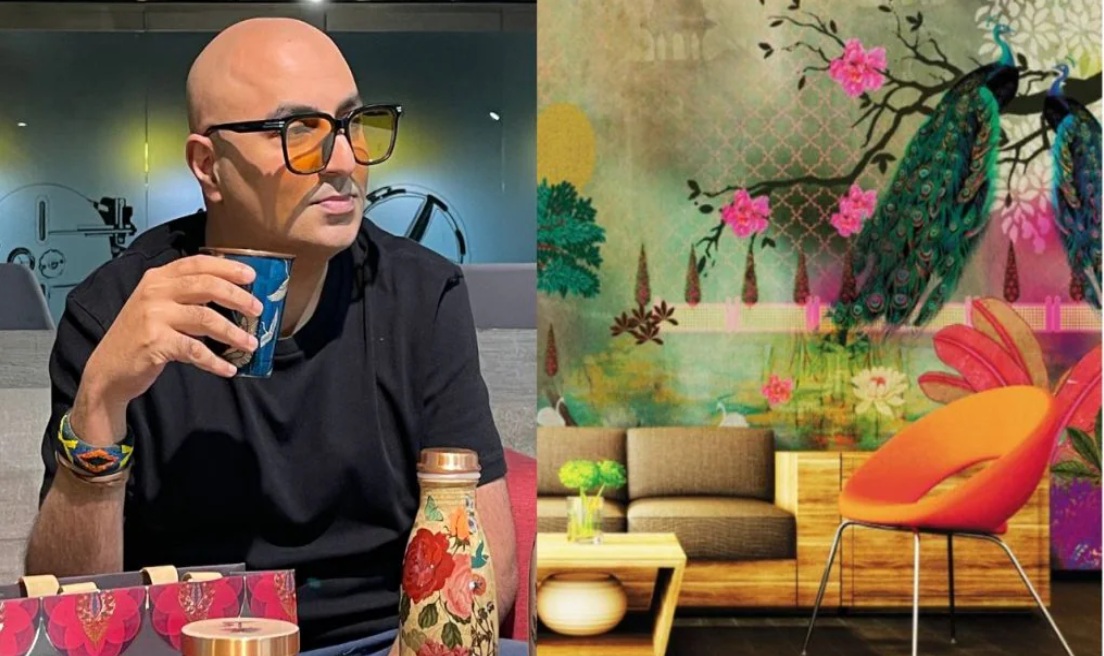
Akanksha Nagar, Storyboard18
31 August 2025
The latest round of US tariffs- a steep 50% duty that kicked in last week- is reshaping the playbook for Indian brands eyeing global markets. While exporters brace for tighter margins and logistical hurdles in the US, experts say this disruption could be a defining moment for Indian consumer brands to shine globally by leaning on innovation, design strength, and the untapped potential of India’s domestic consumption story.
“With the 50% tariffs kicking in, what will India do? Expect an inward-looking India! Expect a deep focus on #IndiaForIndia as marketers develop the India-consumption story for Indian produce. Expect even a Swadeshi movement Ver 3.0. MNCs in India face pressure,” says brand guru Harish Bijoor, founder of Harish Bijoor Consults Inc.
Riding high on this wave is India Circus, which is emerging as one of the fastest-growing players in the new-age home décor space. With a growing appetite for aesthetics, the brand is redefining how Indians furnish their homes. As urban consumers grow more design-aware and seek products that reflect personal taste and cultural identity, design-forward brands are carving out their own niche.
“Consumers today want more than just functionality. They want form, flair, and a sense of identity in their living spaces,” says Devangshu Dutta, founder and CEO of Third Eyesight. This shift, he explains, is creating tailwinds for brands that can deliver both design value and cultural resonance.
But he also adds a note of caution in the tariff context: “Indian brands that are being exported to the US face margin pressures and reduced US market access, both due to import tariffs and due to logistical barriers. They may need to hold inventory in the US to reduce the tariff and shipping impact, but that would also be at a certain cost and loss of agility.
It is an opportune time to focus on exports to other markets. Of course, no other single market would have the scale offered by the USA, so it will perhaps be more expensive and a more fragmented growth.”
Founded by Krsnaa Mehta and now part of the Godrej Enterprises Group, India Circus has found the sweet spot between Indo-contemporary aesthetics and wide accessibility.
From crockery with 22-carat gold accents to tropical wallpapers and statement furniture, its design-led offerings have struck a chord with India’s style-conscious consumers. The brand has also forayed into fashion, while preparing to tap international markets through a new e-commerce platform. “Design is not just an add-on for us; it is our core. Every collection begins with a story, and that’s what keeps our customers coming back,” says Mehta.
On the impact of Trump’s tariffs, Mehta clarifies that the brand remains largely insulated.
“Our major consumer base is in India, we have been focused on expanding our reach and tapping unexplored markets in India. India has so much potential- the newer markets of tier-2 cities like Lucknow, Gurugram, Chandigarh, Ambala are exceptional and the buying power of our consumers has increased significantly in the past few years. So we are not really worried about the tariffs, considering that our designing, production and selling is totally in India. Yes, we do export to the US, but it is not really comparable to what we do in India.”
Yet, he views the moment as a wake-up call for Indian brands globally.
“As a proud Indian brand, we have always been at the forefront of innovation, evolving our design aesthetics from bold prints to more contemporary ones. Our consumers are now visually informed and thus we must keep evolving. It is not just moving ahead but also embracing our roots and creating what is best for not just one but for all. India Circus has always tried to democratise design, by making it affordable and providing great quality at great prices.”
India Circus’s growth is fueled by an omnichannel strategy that blends a strong digital presence with 18 (soon to be 28) offline stores, while aggressively expanding in tier-2 cities.
The brand is targeting ₹400 crore in revenue by FY2026, up from its current ₹100 crore. Having recently launched international website to serve the Middle East and Asia, tt is also exploring categories such as gifting, licensing, and royalty-based partnerships, alongside plans to scale manufacturing. Warehousing in Europe and North America is also under evaluation.
“The growing demand for sustainable, high-quality products has contributed to our growth, as consumers increasingly seek out brands that share their values. Our designers leverage consumer insights, in-house research, and sales data to create products that are both stylish and relevant. We proudly invest in Indian craftsmanship and manufacturing, eschewing imports from countries like China. This approach not only supports local economies but also enables us to maintain quality standards,” Mehta says.
Meanwhile, brands like Chumbak, who were once synonymous with playful, funky aesthetics, have had a patchier journey in the domestic market. At one point, Chumbak had drawn strong private equity interest and grew aggressively, only to later downsize and recalibrate. But Bisen cautions against equating it with India Circus: “Chumbak has always been broader in scope, and that universality may have made it less nimble when it came to capturing specific consumer segments within home decor.”
India Circus, in contrast, has stayed tightly focused, defining its identity around a clear aesthetic and target audience. This discipline, experts say, is crucial in a market that’s growing but fragmented.
“Most brands in the design-led home space operate in sub-categories. Very few cover the full décor spectrum,” Dutta notes. “The key is having a well-defined look and sticking to it.”
According to Statista, in 2025, India’s home décor market was worth $2.13 billion and is projected to grow at a CAGR of 8.6% through 2029. In comparison, the US market stands at $37 billion.
India’s growth is powered by its rising middle class, a young population hungry for differentiated products, and cultural emphasis on interior design. With gifting and new household formation boosting demand further, design-led Indian brands are positioned for deeper expansion, both at home and abroad.
For now, India Circus is leading that charge, proving that even as tariffs disrupt trade flows, Indian creativity, design, and resilience are ready to outshine globally.
(Published in Storyboard18)
Devangshu Dutta
April 2, 2008
I had the privilege of bringing the Prime Source Forum in Hong Kong (April 1-2, 2008) to a close. As in the previous year, the Forum had senior executives from companies based in the Americas, Europe, and Asia, as well as government officials and highly respected academics. The discussions covered wide-ranging topics, and with the variety of people on the panels, there was also some amount of difference in opinion.
8 issues came to my mind as key themes for the global industry, as I was preparing my closing speech, and I thought that those who were not present at the event may also be interested in these. Some of these are views expressed in the panel discussions, others are just my musings. Hopefully thinking through these 8 things can improve the fortunes of the industry around the world (8 being a lucky number in China).
1. Costs vs Prices – Rising costs were a big theme, running through the various panels. Chinese labour costs, power costs, the increasing costs of fuel, new costs of doing business (compliance) – more cost heads were discussed than I can possibly remember.
Once upon a time prices used to go up when costs went up. But that has not been the case for at least the last couple of decades. Even as costs have climbed, retail prices and FOBs have remained steady or even declined. Clearly, the question is whether this is a sustainable situation – though consumers and retailers have been winners so far, how long can factories and labour be squeezed without impacting the very survival of the business?
The interesting contrast is luxury goods, where production costs have come down due to outsourcing and manufacturing in low labour cost countries. (So even in that area, prices and costs don’t show a correlation!)
2. Where next? – Dr. William Fung (Li & Fung) clearly struck a note with most of the audience in his opening keynote address, as he tackled the BIG question: with costs significantly rising in China, and the risks of a concentrated sourcing basket, which other countries could companies look to. According to him, “within the next 3 years, the follow-up country to China is…China”.
After all, which other country’s industry has poured billions of dollars in up-to-date manufacturing capacity and supply chain infrastructure? So even while the Chinese government’s move to push factories to the north and west of China may be producing results as quickly as they may have hoped, buyers clearly have limited options on the table.
Certainly, other countries such as India and its neighbours, as well as Indonesia, Vietnam etc. are an option, but a lot more needs to be pushed through. According to Dr. Fung, India shows higher product differentiation and development skills that make it a logical place for buyers to invest time and energy.
I believe that what buyers did in China 15-20 years ago, is probably what is needed in South Asia and other supply bases now. At that time, China had neither the production capacity nor the supply chain and other infrastructure that it has now. But intrepid buyers opened the Chinese frontier and created the demand pipeline which pulled the supply base up. Would retailers have a similar focus on the other supply bases today, to balance their exposure in China? This is not a new question – in fact, in the last few years it has come up several times when there has been a hurdle or barrier to cross with China (quotas, SARS etc.). But now, with the Chinese government also wanting to turn the industry’s focus away from low-value products such as clothing and textiles, could this be the opportunity for buyers to push their initiatives in other countries ahead?
3. Fashion is about change…but are we prepared for change? – Speed to market is not just about producing quickly and shipping fast, it is about responding to change in the market. The very nature of the fashion business is “change”.
Though benchmarks of 2-week turnaround and even 2-day turnaround exist, by and large the industry works over a lead time of months rather than weeks. We know that it is humanly impossible for even the best buyer to predict with 100% accuracy as to what will sell 6-12 months in the future.
So the answer, especially in these uncertain market conditions, is to take product decisions closer to the sell-date, rather than try and forecast accurately. The only way to reduce the risk is to respond to market needs, rather than to try and predict what the market will need in the future.
4. Neither free nor fair! – There was enormous debate (although mostly in polite terms), about whether free trade and fair trade meant anything.
What is very clear is that trade barriers continue to exist. Even as import tariffs fall, non-tariff barriers remain in place. While thousands and tens of thousands of people around the world are actively working to bring trade barriers down in all countries, within their own markets there are others who are actively lobbying to keep trade barriers up, or to erect new ones. A very interesting perspective shared by one of the panelists was that to a protectionist, “protectionism” isn’t a dirty word! Such a person will have a clear justification for keeping or putting up trade barriers.
So while the vision is that of free trade between nations, we are probably some way off from that.
5. CSR & compliance pressures – “Compliance pressures” are here to stay. Yet, even after years of debate and discussion, it is evident that there are wide gaps between the perceptions of the various players.
Ever since the industrial revolution in the 1800s, talk of more humane conditions in factories has been prevalent. It took European and American companies decades (at the very least) to move up health & safety and labour standards. However, the industries in the current supply countries do not have that luxury any more, since the pressure on prominent brands and the risk to their image is too high – whether you like it or not, compliance standards are being and will be pushed through aggressively.
The key is to understand how to do it most efficiently, and a critical element in getting there would be to have a set of common standards and database of audits and certifications.
However, let’s not underestimate the challenge in getting diverse interests and competitors to agree to sign on to common standards, and to share information about their suppliers.
6. Consolidation (?) – Consolidation may be a model among mature retailers and mature suppliers, but there is enough organic growth in the market to attract and sustain smaller companies, especially in the case of the “emerging economies”.
Developing markets are breeding grounds for new businesses, each of which feels that they can be the next big thing, and in such an environment, being acquired by another company is the farthest thought from the management’s mind.
Another factor against consolidation on the supply end, comes from the inherent development-oriented nature of fashion products – excellent and innovative product development is not the privilege of large companies, and the cost of entry remains low. So we should question the logic of viewing consolidation as an unstoppable juggernaut.
7. Vertical Integration / Control (between suppliers, brands and retailers) – When companies sit across the negotiating table, they are clearly vying to gain the most margin. Retailers are closest to the consumer, and they have the most margin. The downside is that they also bear the most risk or markdown. So when manufacturers look at becoming brands, and brands look at becoming retailers, they need to keep in mind, there is a cost to moving downstream, even with the extra margin being available.
Over the last few decades retailers have also tried to grow their private label to gain extra margin (in effect, to replace some of their suppliers) – but there is a cost to doing that as well. It is not as simple as just stripping out an intermediary’s cost, since the product development and sourcing operation still needs to be managed.
Vertical integration is the holy grail – perfect vertical integration is what people wish for, but it’s impossible to achieve. The best one can hope for is as much vertical control as possible over the chain from raw material to consumer.
8. Victims of our own success – We treat globalisation as a new phenomenon – the fact is that many thousands of years ago, the Egyptian civilization was trading with the Indus Valley civilization, the Chinese and the Romans had discovered each other way before US department store buyers landed in Hong Kong and Korea.
As Nayan Chanda describes in his excellent book – Bound Together – traders, preachers, adventurers and warriors have created bridges across continents for tens of thousands of years. So retailers and importers in the west, are only following in the footsteps of those pioneers, albeit helped by the communications and travel revolution in the last 30 years.
However, lately, companies’ business models are victims of their own success.
Too much has been outsourced too far. Where earlier, buyer and supplier were next to each other, today there is a physical and cultural distances between them, that sometimes seems impossible to bridge. Where earlier, a buyer and designer could pop around the corner to the pattern room to check the fit, and discuss the quality with the factory, today they sit at opposite ends of the earth, and work in a phase difference of day and night.
The costs related to bringing the skills back certainly are prohibitively high. But clearly bridges do need to be built.
Recreating or transferring the skills that have been lost, or are being lost in the US and Europe is absolutely vital for the industry to survive profitably.
Through training & education, through more frequent travel, through internships and gaining work experience in each other’s environment, or through technology, buyers and suppliers need to invest in reaching something of the sort of understanding and close collaboration that used to exist when buyers and suppliers lived in the same city.
A lot to chew on, and many unanswered questions, which I am sure will bring hundreds of industry executives together again next April at Prime Source Forum 2009 in Hong Kong.
