
Devangshu Dutta
April 7, 2020

Oil shocks, financial market crashes, localised wars and even medical emergencies like SARS pale when compared to the speed and the scale of the mayhem created by SARS-CoV-2. In recent decades the world has become far more interconnected through travel and trade, so the viral disease – medical and economic – now spreads faster than ever. Airlines carrying business and leisure-travellers have also quickly carried the virus. Businesses benefitting from lower costs and global scale are today infected deeply due to the concentration of manufacturing and trade.
A common defensive action worldwide is the lock-down of cities to slow community transmission (something that, ironically, the World Health Organization was denying as late as mid-January). The Indian government implemented a full-scale 3-week national lockdown from March 25. The suddenness of this decision took most businesses by surprise, but quick action to ensure physical distancing was critical.
Clearly consumer businesses are hit hard. If we stay home, many “needs” disappear; among them entertainment, eating out, and buying products related to socializing. Even grocery shopping drops; when you’re not strolling through the supermarket, the attention is focussed on “needs”, not “wants”. A travel ban means no sales at airport and railway kiosks, but also no commute to the airport and station which, in turn means that the businesses that support taxi drivers’ daily needs are hit.
Responses vary, but cash is king! US retailers have wrangled aid and tax breaks of potentially hundreds of billions of dollars, as part of a US$2 trillion stimulus. A British retailer is filing for administration to avoid threats of legal action, and has asked landlords for a 5-month retail holiday. Several western apparel retailers are cancelling orders, even with plaintive appeals from supplier countries such as Bangladesh and India. In India, large corporate retailers are negotiating rental waivers for the lockdown period or longer. Many retailers are bloated with excess inventory and, with lost weeks of sales, have started cancelling orders with their suppliers citing “force majeure”. Marketing spends have been hit. (As an aside, will “viral marketing” ever be the same?)
On the upside are interesting collaborations and shifts emerging. In the USA, Jo-Ann Stores is supplying fabric and materials to be made up into masks and hospital gowns at retailer Nieman Marcus’ alteration facilities. LVMH is converting its French cosmetics factories into hand sanitizer production units for hospitals, and American distilleries are giving away their alcohol-based solutions. In India, hospitality groups are providing quarantine facilities at their empty hotels. Zomato and Swiggy are partnering to deliver orders booked by both online and offline retailers, who are also partnering between themselves, in an unprecedented wave of coopetition. Ecommerce and home delivery models are getting a totally unexpected boost due to quarantine conditions.
Life-after-lockdown won’t go back to “normal”. People will remain concerned about physical exposure and are unlikely to want to spend long periods of time in crowds, so entertainment venues and restaurants will suffer for several weeks or months even after restrictions are lifted, as will malls and large-format stores where families can spend long periods of time.
The second major concern will be income-insecurity for a large portion of the consuming population. The frequency and value of discretionary purchases – offline and online – will remain subdued for months including entertainment, eating-out and ordering-in, fashion, home and lifestyle products, electronics and durables.
The saving grace is that for a large portion of India, the Dusshera-Deepavali season and weddings provide a huge boost, and that could still float some boats in the second half of this year. Health and wellness related products and services would also benefit, at least in the short term. So 2020 may not be a complete washout.
So, what now?
Retailers and suppliers both need to start seriously questioning whether they are valuable to their customer or a replaceable commodity, and crystallise the value proposition: what is it that the customer values, and why? Business expansion, rationalised in 2009-10, had also started going haywire recently. It is again time to focus on product line viability and store productivity, and be clear-minded about the units to be retained.
Someone once said, never let a good crisis be wasted.
This is a historical turning point. It should be a time of reflection, reinvention, rejuvenation. It would be a shame if we fail to use it to create new life-patterns, social constructs, business models and economic paradigms.
(This article was published in the Financial Express under the headline “As Consumer businesses take a hard hit, time for retailers to reflect and reinvent”.
Devangshu Dutta
December 17, 2019
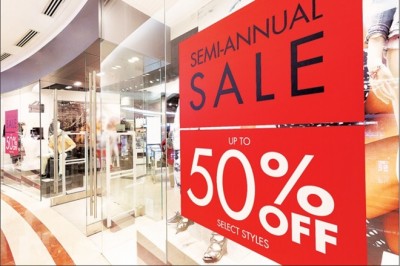
Remember the year 2000? After Y2K passed safely, that year some optimistic analysts predicted that India’s modern retail chains would reach 20 per cent market share by 2015. Two years after that supposed watershed, another firm declared that modern retail will be at around that level in 2020 – but wait! – only in the top 9 cities in the country. Don’t hold your breath: India surprises; constantly. As many have noted, “predictions are tough, especially about the future!” What we can do is reflect on some of this year’s developments that could play out over the coming year.
In many minds 2019 may be the Year of the Recession, plagued by discounting, but that demand slowdown has brewing for some time now. However, there’s another under-appreciated factor that has been playing out: while small, independent retailers can flex their business investments with variations in demand, modern retail chains need to spread the business throughout the year in order to meet fixed expenses and to manage margins more consistently.
To reduce dependence on festive demand, retailers like Big Bazaar and Reliance have been inventing shopping events like Sabse Sasta Din (Cheapest Day), Sabse Sachi Sale (Most Authentic Sale), Republic Day / 3-Day sale, Independence Day shopping and more for the last few years. In ecommerce, there’s the Amazon’s Freedom Sale, Prime Day, and Great India Festival, and Flipkart’s Big Billion Day Sale. This year retailers and brands went overboard with Black Friday sale, a shopping-event concept from the 1950s in the USA linked to a harvest celebration marked by European colonisers of North America. (The fact that Black Friday has a totally different connotation in India since the terrorist bombings in Bombay in 1993 seems to have completely escaped the attention of brands, retailers and advertising agencies.) Be that as it may, we can only expect more such invented and imported events to pepper the retail calendar, to drive footfall and sales. The consumer has been successfully converted to a value-seeking man-eater fed on a diet of deals and discounts. With no big-bang economic stimuli domestically and a sputtering global economy, we should just get used to the idea of not fireworks but slow-burning oil lamps and sprinklings of flowers and colour through the year. Retailers will just have to work that much harder to keep the lamps from sputtering.
Ecommerce companies have been in operating for 20 years now, but the Indian consumer still mostly prefers a hands-on experience. The lack of trust is a huge factor, built on the back of inconsistency of products and services. The one segment that has been receiving a lot of love, attention and money this year (and will grow in 2020) is food and grocery, since it is the largest chunk of the consumption basket. Beyond the incumbents – Grofers, Big Basket, MilkBasket and the likes – now Walmart-Flipkart and Amazon are going hard at it, and Reliance has also jumped in. Remember, though, that selling groceries online is as old as the first dot-com boom in India. E-grocers still struggle to create a habit among their customers that would give them regular and remunerative transactions, and they also need to tackle supply-side challenges. Average transactions remain small, demand remains fragmented, and supply chain issues continue to be troublesome. Most e-grocers are ending up depending on a relatively narrow band of consumers in a handful of cities. The generation that is comfortable with an ever-present screen is not yet large enough to tilt the scales towards non-store shopping and convenience isn’t the biggest driver for the rest, so, for a while it’ll remain a bumpy, painful, unprofitable road.
Where we will see rapid pick-up is social commerce, both in terms of referral networks as well as using social networks to create niche entrepreneurial businesses – 2020 should be a good year for social commerce, including a mix of online platforms, social media apps as well as offline community markets. However, western or East Asia models won’t be replicated as the Indian market is significantly lower in average incomes, and way more fragmented.
As a closing thought, I’ll mention a sector that I’ve been involved with (for far too long): fashion. In the last 8-10 decades, globally fashion has become an industry living off artificially-generated expiry dates. A challenge that I have extended to many in the industry, and this year publicly at a conference: if consumption falls to half in the next five years, and you still have to run a profitable business (obviously!), how would you do it? Plenty of clues lie in India – we epitomise the future consumers; frugal, value-seeking, wanting the latest and the best but not fearful about missing out the newest design, because it will just be there a few weeks later at a discount. If you can crack that customer base and turn a profit, you would be well set for the next decade or so.
(Published as a year-end perspective in the Financial Express.)
admin
November 19, 2019
Written By Rasul Bailay

NEW DELHI: Jeff Bezos, the founder of Amazon, will visit India in January when he is likely to meet Prime Minister Narendra Modi. During his visit he will kick off the US retailer’s annual event around small and medium enterprises, which are perceived to be hurt by deep-pocketed ecommerce companies.
The world’s largest online retailer is said to be worried about the changing ecommerce rules in India, where the Seattle-based company has invested more than $5 billion and created one of its largest foreign subsidiaries.
Bezos comes calling amid protests by a group of small traders against foreign-funded ecommerce companies. The Amazon founder is expected to highlight that it is generating jobs in India and empowering SMEs and other small businesses, according to two people familiar with the matter. He will also raise aspects such as stable business environment and policy continuity for foreign companies, they said.
“We do not have any plans to share at present for this,” an Amazon spokesperson said in an emailed response to a questionnaire regarding Bezos’ upcoming visit.
The outcry against ecommerce companies escalated after the Diwali festive season, when small traders accused Flipkart and Amazon of “unfair business practices” and violation of foreign direct investment rules. They blamed the predatory pricing strategies of the two foreign-owned marketplaces for a slump in traditional retail business during Diwali.
Flipkart and Amazon generated combined sales of Rs. 31,000 crore ($4.3 billion) during the 15-day festival period in October, according to a report by Red Seer Consulting.
The government has been stepping up its scrutiny of Amazon and its India rival Flipkart over their compliance with India’s foreign direct investment laws for ecommerce marketplaces.
The commerce ministry had asked Amazon and Flipkart to furnish details including their shareholding, subsidiaries, business structure and information on their top sellers and their tax details.
Amazon and Flipkart have responded to the questions raised by the government and maintain that they are in full compliance with FDI legislation.
“It is a huge distraction for us,” a senior ecommerce executive said, asking not to be identified. Amazon has reasons to be nervous. The US giant considers India its fastest-growing market with a potential to reach $10 billion in gross merchandise value and outpace the UK, Germany and Japan as its largest overseas subsidiary. In October, Amazon pumped in Rs. 2,800 crore into the flagship Amazon, in marketplace after injecting Rs. 9,450 crore in the unit last year.
So far, Amazon has invested more than $5 billion in India. “The various twists and turns in policies and caveats over the years have created ambiguity and room for interpretation as to what is allowed under the ambit of foreign investment,” said Devangshu Dutta, CEO of retail consultancy Third Eyesight.
“If any foreign-owned or foreigninvested entity is operating in the fuzzy zones of policy and law, there is bound to be concern. ‘Interpretation’ is a double-edged sword — on the plus-side it can give businesses strategy flexibility, but the downside is that government officials can also interpret it strictly.”
In October, Walmart CEO Doug McMillon had written to Modi, seeking certainty and a predictable business environment in India.
Last year, Walmart had purchased Flipkart, India’s largest ecommerce entity, for $16 billion, bringing the US adversaries to a direct fight over market share in the nation’s burgeoning online retailing market.
Following Walmart’s acquisition of Flipkart, India amended the FDI rules for online marketplaces in December, plugging many holes that Amazon and Flipkart are alleged to have misused. Opponents of foreign-funded ecommerce accuse both the global titans of virtually running inventory-led ecommerce, which India bars.
The legislation called Press Note 2 restricted bulk purchases by any vendor from any entity or group company of marketplace to 25%. The rules banned any financial affiliate of the marketplace operator from selling on such platforms. These changes came as blows to Amazon and Flipkart as they either sold through partner entities or through independent vendors that sourced directly from wholesale units related to the FDI-funded
Source: economictimes
admin
October 7, 2019
Indian tea brands want a piece of this steaming hot business.
Written By Devika Singh

The company now plans to expand to the North Indian cities of Gurugram, Chandigarh, Amritsar and Lucknow, among others.
Homegrown tea makers are foraying into quick-service restaurants (QSRs) to tap into the ‘eating out’ culture in India and grow the business. But competition is aplenty — global brands have a formidable presence in India’s QSR scene, even as start-up brands such as Chai Point and Chaayos are gaining traction. According to a report by CARE Ratings, the total market size of QSRs in India is approximately Rs 25,900 crore. The overall restaurant and food service industry is expected to grow at a CAGR of 10.4% between 2018 and 2020.
Indian tea brands want a piece of this steaming hot business. Society Tea, a brand predominantly present in Maharashtra, recently opened its first tea café in Mumbai. Goodricke Group has tied up with the Tea Board of India to launch tea lounges in Mumbai and Kolkata on the latter’s premises. Gujarat-based Wagh Bakri, which was among the first movers, plans to expand its tea lounge presence to 50 large and small format outlets, from the current 13, over the next four years.
What’s brewing?
When Wagh Bakri opened its first tea lounge in Ahmedabad in 2007, the company saw it only as another experiential marketing tool. “Initially, it was a place where people could explore different kinds of tea. But, over the years, we saw a demand for these lounges,” says Parag Desai, executive director, Wagh Bakri Tea Group. The company claims to receive a footfall of 300-400 people per day on an average in stores present in high-street locations.
“We have deliberately stepped out of food courts to keep our offering premium,” Desai adds. A Wagh Bakri tea lounge could entail an investment of Rs 50-75 lakh. The company now plans to expand to the North Indian cities of Gurugram, Chandigarh, Amritsar and Lucknow, among others.
Society Tea, meanwhile, plans to open 10 more stores — mid-size stores around corporate offices — in Maharashtra. Pricing will be its key differentiator. “We are not pricing the product at Rs 300 like other players, but offering a full glass of chai at Rs 50,” says Karan Shah, director, Society Tea.
Goodricke Group has five operational tea lounges in the country, with plans to open one more, its second, in Darjeeling by the year end. The aim is to first foster brand awareness via its presence in locations of high tourist interest.
Blending in
Is a QSR foray really their cup of tea?
According to Devangshu Dutta, chief executive, Third Eyesight, each player could be backed by a different motivation to enter this space. Some may want to use it purely as a marketing tool, while some others may look at it as an alternative source of revenue.
QSRs can be an effective marketing tool especially for brands that have limited access to customers through retail. “Such stores help increase visibility and offer insights about their customers, their spending patterns, etc,” says Pinakiranjan Mishra, partner and leader, consumer products and retail, EY India.
However, expanding footprint in the market and eyeing revenue from the QSR chain could entail substantial investments for tea brands. “If tea companies look at QSRs as an additional business stream, then besides tea, there are food items and cold beverages to be served, which cannot be sourced just from the gardens,” says Dutta.
Furthermore, it will be an uphill task in the presence of biggies Starbucks, Café Coffee Day and Costa Coffee, that are established names in the market, in addition to other upstarts like Chaayos, which has over 50 cafés across Delhi-NCR, Mumbai and Chandigarh, and Chai Point which has 100 cafés in eight cities.
To get an edge, Harsha Razdan, partner and head – life sciences and consumer markets, KPMG India, says that new entrants would have to go beyond metros “and should ensure competitive pricing as the market is price sensitive”.
Source: financialexpress
Devangshu Dutta
August 17, 2019

Retail is such a pervasive and dynamic a sector of the economy, that it is impossible to identify a single point at which modernisation began. I’ve met countless people who perhaps entered the retail sector during the last 15 years, and who mark the beginnings of modern retail around then. There is no doubt that there has been an explosion of investment in retail chains in the last 2 decades, but we need to acknowledge the foundation on which this development is built. The current titans of the sector are standing on the shoulders of previous giants who have created successes and failures from which we are still learning.
This piece is not an exhaustive history of the evolution of the retail business in India, nor a census of all the brands operating in this sector, but the aim is to capture the flavours of the phases of development. (PDF available here to download.)
Early Years
If we were to trace back the growth of “organised” retail (mind you, I dislike that word!) or modern retail to the first retail chains, we will have to cast our mind back more than a hundred years. While many businesses of that time have disappeared, a few pioneers continue to survive, straddling three eras: the British Raj, the Socialist Raj and the Liberalised Lion economy. The businesses that continue to stand, having been through multiple transformations, include:
Fifty Years of Independence
The 1950s and 1960s remained fertile times, post-Independence and before the heavy-handed Socialist Raj truly began squeezing the life out of Indian businesses. Leading textile companies such as DCM, Bombay Dyeing and Raymond, and footwear companies such as Bata and Carona established chains of retail stores including company-operated stores as well as authorised dealers operating under the companies’ banners.
The 1980s brought the Asian Games, colour television, and a new up-to-date car model to India, all marks of a new vibrancy. Over the 1980s, a new retail wave was led by indigenous ventures such as Intershoppe (launched by a fashion exporter), Little Kingdom and The Baby Shop (children’s products), Nirula’s (fast food) and Computer Point (home computers, PCs and accessories). Many of these were certainly ahead of their time: the critical mass of consumers had yet to develop, the business infrastructure was inadequate, and funding norms were unsuitable to the capital-hungry business of retail. Unlike the textile companies that had large manufacturing and trading businesses, these new retailers were like shooting stars, glorious but visible for only a short period of time. This period, unfortunately, also witnessed the degeneration and disappearance of some of the older stalwarts such as DCM and Carona that were beset by labour disputes, management issues and disconnection from the transforming market.
Numero Uno, an indigenous denim brand, was launched in 1987 soon after VF’s American denim brands were launched, and it took nearly a decade for Numero Uno to reach other geographies in India. Nirula’s, one of the oldest fast food restaurant chains based in North India, expanded across the Delhi NCR in the 1980s and 1990s, and also explored other cities, albeit with mixed success.
Future Group, which today has a large retail and consumer brand portfolio, launched trousers under the name Pantaloons in 1987, initially as a distributed brand, and then denimwear under the brand name Bare. Within a few years the company also launched exclusive stores by the same names, to provide focussed visibility to the brands. About a decade of growth later, the group launched its first large format store under the Pantaloons name, but by now covering a much wider range of products, which became its launch pad for achieving scale.
The RPG group that had acquired Spencer & Co. relaunched it in 1991 in a spanking, new format as Spencer’s in Bangalore, and a short few years later rebadged it again as Foodworld in a joint-venture with a foreign partner. It subsequently went on to launch other formats such as Musicworld and Health & Glow.
Also in 1991, the Rahejas converted an old cinema into a department store, Shoppers Stop, aiming to provide an international shopping experience, although initially focussed on menswear. The store added women’s and children’s sections in subsequent years and the second store was launched four years later after the first one. Subsequent large scale retail expansion only came about towards the end of 1990s.
Little Kingdom is a notable example that I would like to dwell on briefly (partly for the purely personal reason that it was my first retail job!). The business was launched in 1987, headed by alumni of the illustrious IIMs around the country, built on processes and IT systems that could have been the envy of many retailers even 25 years later. The company – Mothercare India Limited – was the first purely retail company to start up and launch a public issue in 1991. During the early 1990s, it was the largest retail chain present across the country, in its categories. In 1991, it also attempted to bring the first home computer, Spectrum, to forward-thinking parents through a mix of in-store sales and door-to-door direct-selling. It was admittedly one of the first to expand internationally, opening a franchise store in Dubai in 1992. During its short life, the team launched multiple brands and formats, including Little Kingdom, Ms (a womenswear brand), The Baby Shop, and became a partner to the international giant VF Corporation’s Healthtex children’s brand and Vanity Fair lingerie brand in India. But, by the mid-1990s – financially overstretched between multiple brands and formats, and backward integration into manufacturing – it was gone.
Physical retail was not the only avenue being explored for growth during these decades. An Indian company imagined replicating the success of western catalogue companies, and launched the Burlington’s mail order catalogue retail venture and even became a joint-venture partner of one of the world’s largest catalogue retailers, Otto Versand (Germany). Other models included direct sales business, such as the Eureka Forbes introducing vacuum cleaners through demonstration parties (which was emulated for the Spectrum home computers mentioned above). With the growth of private television channels, products also began being promoted during non-peak hours through infomercials, though serious TV shopping was still a few years away, coming up in the mid-2000s with dedicated teleshopping channels.
The Foreign Hand and Corporate Retailing
The 1980s and 1990s also saw the launch of international brands from global giants such as VF Corporation (Lee, Wrangler, Vanity Fair, Healthtex), Coats Viyella (Louis Phillippe, Van Heusen, Allen Solly), Benetton (UCB and 012), Levi Strauss, Lacoste, Reebok, adidas, Pepe and Nike, grocery retailers such as Nanz (a three-way German-US-Indian partnership) and Dairy Farm International (with RPG Group’s Spencer’s Retail) and Quick Service formats such as Domino’s, McDonald’s, Pizza Hut, Baskin Robbins and KFC.
India was reopening to business, global management consultants were writing glowing reports about the untapped potential of the (mythical) 200 million middle-class customers and global retailers wanted to own part of the action.
Due to the lack of large-format stores and suitable environments, international brands that entered the Indian market during this phase needed to create exclusive stores to ensure that the brand could be communicated holistically to the consumer, in an environment that was more in the brand’s control, and many of them were, in a sense, “forced” to become retailers in India.
However, around 1996, a very senior member of the cabinet is reported to have said, “Do we need foreigners to teach us how to run shops?” It was an unexpected condemnation, coming as it was from a person and a party otherwise seen as champions of an open economy. It slammed the doors shut to foreign investment and, to my mind, the sector is still yet to fully recover from that ban and the policy contortions that have come over the years to allow international brands and retailers to play a more active role in the market.
Internal weaknesses compounded the decline or exit of some of the businesses. Nanz folded due to various operational challenges and lack of adequate experience. British retailer Littlewoods’ wholly-owned subsidiary pulled out of the market due to problems back home, and in 1998 sold the sole store to the Tata Group, which eventually renamed it Westside.
Despite the early hiccups, India continued to attract international players on account of the high growth and changing social norms. Not only was there greater purchasing power available amongst more Indian consumers, there was a shift in consumer attitude from saving to spending. Several brands, including fashion, luxury and quick service formats, entered the market through licensing, franchising, and joint ventures.
During this period the domestic retail market also drew in more corporate houses, attracted by the apparently abundant market opportunity for them to mine alone or to act as a gateway for foreign companies interested in India. Most were significant diversifications from their existing businesses.
Tobacco, paperboards, agri-commodities and hospitality conglomerate ITC ventured into retailing through Wills Lifestyle and as well as its rural initiative e-Choupal in 2000, followed by John Players and Choupal Sagar respectively. Pantaloon Retail launched a partial hypermarket format Big Bazaar in 2001 and went on to Food Bazaar in 2002, Central in 2004, Home Town and Ezone in 2006. Reliance entered in 2006 with multiple stores of Reliance Fresh being opened simultaneously and over the next few years the company expanded through multiple formats such as Reliance Mart, Reliance Digital, Reliance Trendz, Reliance Footprint, Reliance Wellness, Reliance Jewels to name a few. Telecom major Bharti set up a joint-venture with Wal-Mart at the back end, while the Tata group tied the knot with Woolworths and Tesco in two separate businesses supplying its retail stores, even as it expanded its successful watches and jewellery businesses, as well as Westside.
Even a retail operation like Fabindia, born as an export surplus outlet of a handicraft product business found investors to back a rapid expansion spree, becoming more of a corporate retailer than a front-end for producer organisations and craftspeople.
Through the 1990s and beyond, the market remained in ferment. In 1997 Subhiksha, a small modern retail format for food and grocery was launched. Venture-funded Subhiksha expanded rapidly and over the next decade grew to 1,600 outlets. However, in 2009 the business closed down owing to a severe cash crunch, amidst accusations of criminal mismanagement and fraud.
New product areas emerged highlighting the pace of change of lifestyles, cafes prominent among them. Café Coffee Day opened its first store in 1998 in Bangalore and became the largest organised coffee chain in India by far, though it is now living under the shadow of the recent death of its founder. Barista was also launched in 1999 as India’s Starbucks-wannabe, found its footing, scaled up and lost its way, going on to be sold to Tata Coffee and the Sterling Group, who turned it over to the Italian coffee company Lavazza in 2007, who also exited seven years later. Its current owner, the Amtex Group, is itself going through financial troubles in some of its key businesses.
In the last two decades, while some retailers have gone out of business due to unrealistic business plans, mismanagement or lack of funds, most have taken opportunities to rationalise their operations by shutting down unviable or underperforming locations, aligning businesses to market needs, assessing their brand consistency across various touch points, improving organizational capabilities right down to front-line staff, and focusing on unit productivity.
It’s not just Indian retailers that have faced trouble. Foreign brands have had their own share of problems – some have overestimated the market, or their own relevance to the Indian consumer, while others have had misalignment with their Indian franchisees or joint-venture partners. A number of foreign brands and retailers have also churned partners, or exited the market outright, but most remain committed and invested in the market for the long-haul. The last few years have also seen the successful launch and humongous growth of global leaders such as Zara and H&M, even mass-market Chinese retailers like Miniso, as well as the largest investment commitment made by Ikea (about US$2 billion).
Showing on a Screen Near You
The late-1990s also witnessed a dotcom frenzy that led to a plethora of travel sites, and a few product sales businesses such as Fabmall, Rediff and Indiamart.
However, the online market lacked critical mass in the 1990s and early-2000s. Despite apparent advantages of the online business model, success depended on internet penetration (low!), the appearance of value-propositions that were meaningful to Indian consumers (questionable), investments in fulfilment infrastructure (lacking) and the development of payment infrastructure (regulation-bound). Malls and shopping centres – the new temples of retail – seemed to be sucking up all of the consumer traffic, in any case.
By the mid-2000s the business had reached just about Rs 8-9 billion (US$ 180-200 million), despite 25 million Indians being online. Dotcoms became labelled dot-cons, with an estimated 1,000 companies closing down. However, multiple changes took place in the mid-2000s, among them being the price disruption of the telecom market and explosion of mobile connectivity, as well as a renewed funding appetite among venture funds.
This laid the path for growing the second crop of ecommerce in India. Billions of dollars of investment was poured into creating India’s Amazon wannabes, the high streets ran red by ecommerce-fuelled discounts, aggressive advertising budgets (most promoting discounts) and mergers/acquisitions pushed through by venture investors.
After more than a decade of the second coming, India’s ecommerce business accounts for a market share of total retail in the low single digits. India’s Amazon – if one can call it that – is the Flipkart group, now owned by Walmart, bought at an eyepopping $21 billion valuation and still bleeding cash, and the runner-up is relentless Amazon that continues its aggressive push to own what could be one of the three largest markets in years to come. The Chinese internet giants Tencent and Alibaba are also trying to hack piece off the market, having fulfilled their aim of kicking out Western competitors from their home market.
However, the wild card has just been played by the Reliance Group – having moved from textiles to fibre to oil, the group has made its move into telecom and data (didn’t someone say, “data is the new oil”?). It has strategically pushed handsets and cheap data plans into the hands of the consumers and, according to the latest announcement on Jio Fiber, will soon offer High Definition or 4K LED television and a 4K set-top-box for free. The play is to grab as much of the customer’s share of spend on products and services (including entertainment) as possible.
Looking Ahead
Possibly the biggest driver of modern retail in the coming years will be the shift in the demographic structure of the country. The young consumers who are joining the workforce now are a distinctly different set from previous generations. This is a generation that has grown up in the liberalised economy and has been exposed to innumerable choices since their childhood. The most important factor is that these consumers are increasingly located outside the top 10 or 20 cities in the country, and are becoming more accessible as both physical and virtual access improves for them.
A large number of them may have only occasionally, or perhaps never, experienced modern retail first hand while they were growing up, but they have seen this upmarket environment emerge before them and are not shy of spending within it, even if it is only on select special occasions. Most of them are handling mobile phones (even if it is their parents’) while still in school and being socially active online even on the go. Certainly most of them have hardly ever visited tailors, growing from one set of ready-to-wear clothes to another. It is this set of young consumers whose outlook and habits will drive retailing very differently in terms of product categories and services in the future.
There is another significant set of consumers whose number is swelling annually: that of working women. As they add to the discretionary household income available to spend, they gain influence in purchase decisions, and with them the entire household’s lifestyle also undergoes a shift. There is a greater demand of time-saving solutions and convenience products to make their lives easier. Modern retail environments where their various needs can be taken care of under one roof, and convenience pre-packaged products are natural winners in this shift. Ready-to-wear products for women, grooming, beauty and personal care, women-oriented media products, processed foods and eating out get a boost. Another important shift is that, due to busier lifestyles, they are time-crunched and more likely to rely on branded products and services that they can trust. However, given the nascent stage of the market, these brands could just as well be retailers’ own labels, if they are managed well.
In terms of business, significantly greater efficiency needs to be achieved, both at the front-end and in head office and supply chain operations. Process and system-led planning and execution needs to become the norm. With India’s burgeoning population, people are treated as a cheap resource: on the contrary, each extra person can be expensive beyond just their salary cost to the organisation. Each extra person adds some friction to decision making, reducing the responsiveness of the business. Smart business will begin to realise this, and look closely at employee efficiency and effectiveness in the context of the overall business, rather than just in terms of individual costs.
Even as the retail business in India is far from saturation, and fragmented growth continues, the business will also undergo consolidation simultaneously, as large scale retail operations are enormously capital intensive. Mergers will be a strategy that will be explored to improve the viability of many businesses in this sector.
Should you be tempted to think that, squeezed between large corporates, international retailers and ecommerce giants, it’s “Game Over” for smaller domestic retailers and brands, let me say that the India retail story is not only not over yet, but continues to be written and rewritten. As the market grows and matures, retail businesses also need to differentiate themselves, investing more in product selection or even product development through private label growth to help them stand out in the market. A one-size-fits-all strategy doesn’t work in a country as diverse as India. For the size of the market, we have surprisingly few brands, many of them virtually indistinguishable from their competitors. Development on this front, of indigenous brands and product development capabilities, is an absolute must.
The good news is that already there is more talent available than ever before. Most importantly this management pool has experience of the retail sector not just in good times but during (many) downturns as well.
Eventually, what is needed is a mix that will be healthy for India’s ecosystem at large for a long time to come. This will not be delivered by a blind transplantation of international templates or a rapid-fire expansion across the country, nor by fearful protectionism or regional parochialism. It will only be achieved by the evolution of market-appropriate business models and a mature approach that can be make the Indian retailers robust enough to grow not just domestically, but possibly even globally over time.
