
admin
June 29, 2023

Dia Rekhi & Faizan Haidar, Economic Times
New Delhi, June 29, 2023
Fast Retailing, the parent company of Uniqlo, is looking to set up a significant manufacturing presence in India through about 20 ‘production partners’, multiple people aware of the development told ET.
One of the world’s most valuable clothing retailers, Uniqlo already has a cluster of production partners in India and is looking to expand this network through a significantly large investment, they said without sharing any estimated amount.
“The investment amount will be significant because Uniqlo is serious about India and views it as an important market,” one of the persons said. “Unlike the existing facilities in India, which cater more towards exports, the production partners that Uniqlo will bring to India will be specifically meant for the domestic market.”
One of the company’s production partners that ET spoke to confirmed that their current mandate is to produce only for exports.
Uniqlo, which is Asia’s biggest clothing brand, had said India is one of the top priority markets for them where consumers are increasingly shifting from ‘fast-fashion’ to long-lasting essentials and functional wear.
The company’s ambitions for India are considerable with its CEO Tadashi Yanai indicating that he wants Uniqlo to become the “best-selling retailer in India”.
The Japanese brand opened its first door in September 2019, but stringent lockdown measures announced to contain the outbreak of the pandemic in March 2020 delayed the expansion plan.
The brand is now planning to enter Mumbai and Bangalore. It has already opened stores in Lucknow and Chandigarh after Delhi.
Uniqlo does not own any factories. Instead, it outsources production of almost all its products to factories outside Japan.
As per a report titled ‘The Uniqlo case: fast retailing recipe for attaining market leadership position in casual clothing’, this model allows Uniqlo to keep its breakeven point low and improve return on investment.
“As we expand our global sales, we continue to grow our partner factory network in countries like Vietnam, Bangladesh, Indonesia, and India,” the company has stated on its website.
As per its list of garment factories, as on March 1, 2023, Uniqlo has 227 factories in China, 54 in Vietnam, 33 in Bangladesh, 13 in Indonesia, and 16 factories in India and Japan among several other locations.
As the world’s second most-populated country, India is an attractive market for apparel brands, especially with youngsters increasingly embracing western-style clothing.
Over the past decade, global brands Zara and H&M became market leaders in the fast fashion segment in India.
“For global brands, India should be one of the most logical sourcing hubs given its large vertically integrated manufacturing sector on the one hand and the large, growing domestic market driving demand on the other hand,” Devangshu Dutta, founder of retail consulting firm Third Eyesight, told ET. “However, its weight in the sourcing baskets has historically been low due to several reasons, in spite of China being visible for decades to the management teams of brands and retailers as a concentrated sourcing risk,” he said.
Uniqlo’s existing production partners in the country include Shahi Exports, Brandix Lanka, Tangerine Design, Maral Overseas, Shingora Textiles, Silver Spark Apparel, SM Lulla Industries Worldwide and Penguin Apparels.
As per Fast Retailing’s first-half results, the company said its revenue was 1.4672 trillion yen, or around $10.2 billion, and that its operating profit had risen to 220.2 billion yen ($1.53 billion), bolstered by strong performances from operations in several regions, including India where it said it generated significant increases in both revenue and profit.
With regard to Uniqlo International, in particular, it said revenue stood at 755.2 billion yen ($5.25 billion), while operating profit was 122.6 billion yen ($852.93 million).
The company said regions like India “reported significant revenue and profit gains as they enter a full-fledged growth phase”.
(Published in Economic Times)
admin
May 25, 2023

Rochelle Britto & Shabori Das, The Economic Times
May 25, 2023
“Taiyaar Hoke Aaiye”. It seems the tagline has worked for the company which has been able to attract investors who came prepared for its offer for sale (OFS).
In a bid to reduce promoters’ shareholding down to 75% as per SEBI norms, Vedant Fashions, known for its ethnic wear brand Manyavar, floated the OFS on May 19 which saw huge participation — oversubscribed 1.4 times with bids for 34 million shares as compared to 24 million shares on the offer. The non-retail segment was oversubscribed 2.24 times.
The shares were offered at a price of INR1,161. While the stock initially fell 1.5% on May 19 to INR1,230, it was trading at INR1,268 on May 24, up 4.59% in five days.
The promoters have offloaded 16.9 million shares, which works out to 7% of the total equity shares with an option to sell additional 6.9 million (2.88%) shares, taking the total to 9.88%.
Manyavar represents the premium wedding market of the country and boasts of some big names as its brand ambassador — Virat Kohli, Amitabh Bachchan, Ranveer Singh, and Kartik Aaryan. With strong fundamentals, the company has grown at 30% CAGR over the last one year and investors feel this is one classic growth stock with high valuations that cannot be ignored. Vedant Fashions trades at a PE multiple of 73x while Trent, a competitor, has a PE of 119x.
The great Indian wedding
The sales of Vedant Fashion are highly correlated to the wedding season. The Indian wedding market is massive at USD50 billion with around 3 million weddings or events taking place every year. According to news reports, the spending is growing and is likely to be around INR3.75 lakh crore this year.
According to Crisil, weddings are getting bigger, grander, and longer, fuelled by higher disposable incomes and a surge in discretionary spending. It expects the ethnic-apparel market to grow between 15% and 17% to nearly INR1.38 trillion by 2025, supported by a growing desire among Indians to wear traditional attire instead of western wear for big celebrations.
While a lavish spending is done on everything, from venue to food to even flower arrangement, clothes hog the limelight. The business has become high-margin, elite, and high-fashion. And the organised market is growing at a very fast pace.
In the organised market, Vedant Fashion has a 40% market share which might be difficult to maintain as competition increases. “In the upcoming quarter, while April experiences a slight lull in wedding dates, May and June present an abundance of excellent opportunities. Moreover, as we analyse the entire year ahead, we are highly confident in the favourable wedding dates during Q3 and Q4. These trends align closely with our historical data, reinforcing our optimism for the current new financial year,”says Vedant Modi, chief marketing officer, Vedant Fashions.
“Vedant Fashions has successfully tapped into and emerged as the market leader, head and shoulders above competitors, in a segment that has been extremely fragmented. Festive wear and occasion wear is not immune to downturns, but is better placed to ride them out, and this makes it a very attractive product segment. However, Vedant have exploited this opportunity and scaled up much more successfully than other companies, beginning with menswear and then in womenswear,” says Devangshu Dutta, CEO, Third Eyesight.
Expansion spree
Vedant Fashions is expanding its retail footprint by adding around 75,000 sq ft retail area in Q4FY23. It has a total retail presence of 1.47 million square feet as of March FY23, spanning across 649 stores in 257 cities. There is a direct correlation between the addition of stores and the growth in sales, but the full potential of a new store takes some time. Almost 40% of the expansion has happened in the fourth quarter, so the full revenue (of the expansion) would come in the following year. Thus, many times the store growth doesn’t match the revenue growth.
The company is also expanding in US, UAE, London, and Canada to cater to the growing Indian community in these markets. For FY23, it has had sales growth of 30% at INR1,355 crore with Ebitda margins at 50%.
However, the growth witnessed by the company in FY23 has slowed down despite an upswing in events and weddings.
Vedant Fashions reported revenue growth of 76% in FY22 over FY21 and profit growth of 136% during the same period. While the slowdown in the growth rate can be attributed to settling down of revenge shopping post-pandemic, the number of social events has definitely increased to not take notice.
“Market valuations are an indicator of not only present value of a business but also perceived future value, and market leaders usually are rewarded with richer valuations(Page Industries is another such example),” adds Dutta.
The company’s latest presentation states that it has achieved 95% ROCE for FY23. The company is still in an investment stage and its cash flow statement says that INR249 crore is blocked in investments for FY23.

Market outlook
In a market that is lacking growth, the wedding season almost looks like recession-proof. The market has returned to growth mode even at a time when inflation is high and the overall economy is subdued. But then, the Indian wedding market — especially the part that Vedant Fashion tracks — is on a high and the growth will continue for a long time.
While the number of players is increasing, not many have a picture-perfect balance sheet with high ROEs and even higher Ebitda margins. Vedant Fashions has become the classic growth stock with very high valuations. It has a price/book value of 28x but investors feel that for a company that generates a high ROE and a high growth, the valuation is not extreme.
Mutual funds and institutional investors are making a beeline for the stock because of the growth rate and the overall size of the market. According to BSE filings, mutual funds account for 8.90% of the total holding where SBI Mutual Fund has the biggest share at 3.80%. On the other hand, retail holds 1.43%. Post the OFS, these numbers will go up.
The company successfully launched its initial public offering (IPO) last year. The stock debuted at an 8.08% premium over the issue price of INR866. The share slipped more than 4% on May 18 as the promoters announced plans to sell stake in the company.
Since listing, the company has gained 36% and has had a great run with its stock being up by a significant 27% over the last one year as compared to its peer Aditya Birla, which is down by 30.95%, and Nifty 50, up by just 12%.
The Indian apparel market is amongst the top three consumer categories. The pandemic made a lot of consumers switch to the online channel — which was also enabled by easy returns. However, while western apparel in India is a lot more frequently purchased when it comes to the online channel, the offline channel continues to be the primary source of consumers and footfall for ethnic-wear brands. The organised ethnic wear market in India is still relatively small, as the unorganised apparel category, ethnic and otherwise, continues to dominate.
The primary market for the unorganised ethnic wear is mostly women, driven by everyday and wedding wear categories.
According to Euromonitor International, a UK-based market research firm, the Indian apparel market is expected to be at USD58,773.8 million by the end CY23 (excluding the footwear market). The market is expected to grow at a CAGR of 8.6% during CY2023-CY2027.
“The apparel and footwear market experienced significant recovery in 2022 with the easing of Covid-19 restrictions. The industry also benefited from the return of festivals and weddings to their pre-pandemic fervour, as these are periods when the demand for categories such as ethnic apparel and other occasion-based apparel spiked,” says Euromonitor International.
The peer play
Prominent players like Aditya Birla Fashion, Reliance Retail, and Tata-owned Trent are making strategic investments in the country’s thriving ethnic wear market, estimated at INR1.84 trillion.
The recent acquisition of TCNS Clothing by Aditya Birla Fashion further solidifies this ongoing trend. With a transaction value of INR1,650 crore for a controlling stake of 51%, this acquisition highlights the company’s commitment to capitalising on the prevailing market dynamics.
According to Ashish Dikshit, managing director of Aditya Birla Fashion, ethnic wear commands the largest market share in India’s apparel industry, comprising 30% (equivalent to INR1.84 trillion) of the total domestic apparel market valued at INR6.15 trillion, while 80%-85% of the ethnic wear market, according to experts, is dominated by the unorganised segment. The branded or organised end of the market at 15%-20% (around INR28,000 crore – INR37,000 crore in size) is growing at around 20% per annum.
Trent, owned by Tata, has launched a new ethnic wear brand Samoh to increase its market share, as consumers splurge on fresh attire for every event. The new brand will help Trent to compete with Manyavar, and Aditya Birla in the ethnic wear space. The company also has two other fashion retail formats. Its flagship concept, Westside, caters to discerning customers who are aspirational and yet seek value for money. The other format, Zudio, with much smaller stores, operates in a more mass-priced segment. Besides, Trent runs a relatively new concept store, Utsa, which sells its own ethnic and indie wear private labels like Utsa, Zuba, Vark, and Diza.
A growth stock?
The management’s disciplined approach to growth, exemplified by the gradual scale-up of brands like Mohey and Twamev, has been instrumental in mitigating the risks associated with inflated working capital and excessive write-downs. This prudent strategy has safeguarded Vedant Fashions’ profitability and allowed it to maintain sustainable growth without compromising on scalability.
The company’s strong design capabilities with data-driven decision making (leading to no discounted sales), tech-driven supply chain, and auto replenishment model, exclusive vendor ecosystem, and franchise-based EBO expansion have helped scale up its business and achieve superior margins. Most brokerage houses give the stock a “buy” rating.
Manyavar’s decision to team up with some of the country’s top names like Virat Kohli, Ranveer Singh, and Kiara Advani (for Mohey) demonstrates its ambition to capture new markets and connect with a diverse customer base. Continuing the brand’s vision to associate with the best, it reinforced #DulhanWaliFeeling by looping in actress Kiara Advani in January 2023 as the new brand ambassador. With all of them on board, Vedant Fashions hopes to have a joyful journey in style!
By capitalising on their influence, Manyavar solidifies its position as a leading ethnic wear brand in India. But will the company live up to the investors’ expectations? For a growth investor, the answer is yes.
(Published in Economic Times)
admin
February 23, 2023

India’s economy is in focus globally, and is also at an inflection point.
Join Devangshu Dutta at the Asia-Pacific conference of UFI, The Global Association of the Exhibition Industry. Registration Link: https://lnkd.in/dq89_rY3
See you at UFI Asia-Pacific Conference in Kuala Lumpur!
admin
September 23, 2022
Sagar Malviya, The Economic Times
September 13, 2022
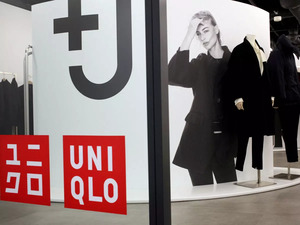
Uniqlo, Asia’s biggest clothing brand, has turned profitable in India in less than three years after it opened its first store in the country despite operating in a period marked by Covid-led lockdowns and restrictions.
The Japanese brand posted a net profit of ₹21.4 crore for 2021-22 compared to a loss of ₹36.1 crore in the previous year, according to business intelligence firm AltInfo. Its sales rose 63% year on year to ₹391.7 crore for the year to March 2022, a slower pace compared to FY21 when it clocked 86% sales growth on a low base.
Experts feel Uniqlo’s strategy of pricing its merchandise at least 20% higher than rivals Zara and H&M has helped it earn better margins despite inflationary pressures in terms of raw materials.
“The market is not easy and turning profitable at a time when most rivals are spending aggressively is a good indication of success. As an international brand, they (Uniqlo) are able to get good locations and are preferred tenants, which helps in generating sales, especially in top cities,” said Devangshu Dutta, founder of Third Eyesight, a strategy consulting firm. “However, the pricing is a bit premium and until they are able to source locally, selling products at a right value for the market will remain challenging.”
The Japanese brand opened its first door in the country in September 2019, but stringent lockdown measures announced in March 2020 to contain the Covid-19 outbreak delayed its store expansion plans, restricting its store count to about seven outlets so far.
Uniqlo has said India is one of the most priority markets where consumers are increasingly shifting from ‘fast-fashion’ to long-lasting essentials and functional wear. “India is an important and very big priority market,” Tomohiko Sei, CEO of Uniqlo India told ET in June.
(Published in The Economic Times)
admin
September 5, 2022

Akanksha Nagar, Financial Express
September 5, 2022
Can you give a brand a second shot at life?
Reliance Retail Ventures certainly thinks so. It has acquired Campa-Cola for an estimated `22 crore from Delhi-based Pure Drinks Group on the assumption that it will not only be able to revive the five-decade-old brand but can also use it to springboard into the dog-eat-dog soft drink market in India.
It will not be a cakewalk surely. The ones who were fans of the brand—which was launched in the 70s—have moved on, and younger customers have little or no association with the brand.
Samit Sinha, managing partner, Alchemist Brand Consulting, believes that Reliance must have been very keen on getting into the soft drinks category as a part of its overall strategy of retail expansion. In any case, it hasn’t had to shell out a bomb for the brand so it is a less audacious gambit than starting from scratch. There is one other factor that might work in its favour—which is the formula, the taste of which had near widespread acceptance in its heyday.
Sandeep Goyal, managing director, Rediffusion Brand Solutions, who is handling a similar resurrection of Garden Vareli sarees, says giving an old brand like Campa-Cola a new life will be far from easy—the Campa-Cola generation is now in their sixties and therefore there is very little monetisable value in the nostalgia.
RESURRECTION RULES
Breathe life into an old brand if:
1. The market presents an opportunity to refresh the brand without compromising on its core promise
2. There are positive connotations for the brand that can be built upon in the current market context
3. The company has the resources and inclination to be a “caretaker” or “steward” of the relationship that had been created between the brand and its customers
Courtesy: Devangshu Dutta, CEO, Third Eyesight
Launch versus resurrect
From the looks of it, Campa-Cola will have to fight sip for sip, bottle for bottle.
Rohit Ohri, chairman and CEO, FCB Group India, who had managed the Pepsi account for more than a decade, says it will be difficult for a new brand to find space in a market dominated by multinationals like Pepsi and Coke. While the residual equity can help get the foothold, the real challenge would be to woo a younger consumer set.
Naresh Gupta, co-founder and CSO, Bang In The Middle, concurs: “When you try to resurrect a brand, you do it knowing that the brand isn’t doing well or has been out of circulation. That is big baggage for the brand to wipe out. Often the residual awareness and following are limited to the audience that is less likely to be your core audience today.”
There is also the fact that young people in the metros are moving away from colas, preferring healthier drinks or niche artisanal products instead. At the same time, soft drink is an impulse category and needs a large dose of salience to fly off the shelf.
Gupta says Reliance can try and build on the Indian-ness that Campa-Cola exudes. His guess is the old brand will be used as a calling card in trade and there would be a host of new launches that build upon it. “Campa-Cola may fuel a lot more fresh fizzy drinks launch from Reliance,” he adds.
That said, just the sheer time an old brand has spent on the shop-shelves would give Campa-Cola an edge over any new brand that its current owner might want to launch. An old brand can appear to be proven, experienced and secure, while a new brand could be seen as untested, raw, and risky. An old brand may have had a positive relationship with the consumer but may have been dormant due to strategic or operational reasons. In such a case, reviving the brand is clearly a good idea, says Devangshu Dutta, chief executive, Third Eyesight.
Reliance could have launched a new brand but if the existing brand has residual awareness or connection, it could be the pivot around which other brand properties can be built. Here, the new owner also has the benefit of having a wide retail network. As on March 31, 2022, Reliance Retail operated 15,196 stores across 7,000-plus cities with a retail area of over 41.6 million sq ft. This, if nothing else, will give Campa-Cola a start any new brand will die for.
(Published in Financial Express)
