
admin
August 5, 2025

Aakriti Bansal, Medianama
August 5, 2025
MediaNama’s Take: Swiggy is shifting from individual convenience to workplace capture. With DeskEats and Corporate Rewards, the company is embedding itself directly into the workday. This move is not just about food delivery. It is about becoming part of employees’ daily routines. More repetition leads to more orders, stronger retention, and access to a new layer of user behaviour: professional identity.
This approach draws from older models like office canteens and Sodexo meal cards. However, Swiggy reworks it for the app economy. Instead of fixed menus or closed ecosystems, it offers personalized choices tied to employer-subsidised benefits. That creates stickiness. When a company supports one app and offers discounts, switching becomes less likely.
The key question now is whether this integration creates lasting value or opens up new responsibilities. These include questions around consent, profiling, and where to draw the line between workplace systems and digital platforms.
What’s the News
Swiggy rolled out DeskEats, a curated food delivery collection for working professionals, in 30 cities and over 7,000 corporate hubs, according to Storyboard18. MediaNama also reviewed the feature on the Swiggy app. The collection includes categories like Stress Munchies, Healthy Nibbles, One-Handed Grabbies, and Deadline Desserts, aimed at common workday cravings.
During the pilot, DeskEats reached 14,000 companies and 1.5 lakh employees. Users can find it in the app by typing “Office” or “Work.”

Swiggy also launched Corporate Rewards, which lets users access benefits by verifying their work email. These include flat Rs 225 off food orders, Rs 2,000 off on Dineout, and Rs 100 off on Instamart.

On LinkedIn, Swiggy VP Deepak Maloo described Corporate Rewards as the professional version of its earlier Student Rewards program which offers perks like free deliveries, flat Rs 200 discounts, and deals starting at Rs 49, tailored for students aged 18–25 across India.
Financial Context
Swiggy may have launched DeskEats while under pressure to control its burn. In Q1 FY26, it spent Rs 1,036 crore on ads—a 132% jump and posted a loss of Rs 1,197 crore. DeskEats and Corporate Rewards offer a way to stabilise repeat orders without over-relying on discounts or ad spending.
The company’s adjusted Earnings Before Interest, Taxes, Depreciation and Amortisation (EBITDA) loss widened to Rs 813 crore. Overall, food delivery revenue grew by 20.2% year-over-year to Rs 2,080 crore, with order volume growing by 23.3%. At the same time, newer formats like ultrafast Bolt and SNACC are aimed at increasing consumption frequency and improving retention. These efforts signal Swiggy’s larger bet on everyday integration to drive value.
Platform Strategy and Corporate Integration
DeskEats gives Swiggy access to dense, time-sensitive demand during work hours. Devangshu Dutta, founder of Third Eyesight, says this helps streamline operations: “By integrating directly with workplaces, Swiggy can anchor itself in employees’ daily routines and provide a more predictable stream of orders.”
He adds, “Scheduled office meals create habitual consumption patterns and increase customer lifetime value, especially when the employer endorses a single platform and offers a favourable price-value mix.”
“This is the age-old model followed by contracted office canteens or cafeterias as well, but updated to the mobile app era, with more flexibility in terms of the items that an individual can order based on their own preferences”, Dutta added.
Furthermore Dutta opined, “Adoption is likely to be more in the larger cities where there is a greater concentration of demand and out-of-home consumption is higher among migrant professionals with high discretionary spending power.”
Data, Consent, and Workplace Targeting
To access Corporate Rewards, users verify with their work email. Swiggy hasn’t said whether it collects additional employee data or whether employers see usage metrics. It’s also unclear if enrolment is opt-in or automatic.
This concern mirrors recent questions raised about Zepto, which began recommending mood-specific product bundles like “Crampy” or “Ragey” based on user searches for PMS. Critics pointed out that such inferences may not be accurate and are often made without the user’s explicit awareness. Zepto’s privacy policy permits broad data collection, including health and behavioural patterns, but lacks clear disclosure on profiling. While Swiggy may not be doing this visibly, the direction of workplace-linked behaviour data raises similar concerns under India’s Digital Personal Data Protection Act (DPDPA), which still doesn’t regulate inferred or behavioural data clearly.
As this model scales, it raises questions under India’s DPDPA especially around purpose limitation and workplace-based profiling.
Why This Matters
Swiggy’s push into the workplace mirrors a broader shift across the food delivery market. Zomato recently launched ‘Zomato for Enterprise,’ a corporate food expense management platform that allows employees to charge business orders directly to their companies. With features like budgeting, ordering rules, and account toggling between work and personal use, Zomato is positioning itself as a paperless, digital alternative to legacy players like Sodexo. According to CEO Deepinder Goyal, over 100 companies have already onboarded the platform.
This move signals intensifying competition in the enterprise food space. While Zomato focuses on billing and reimbursements through employer-tied accounts, Swiggy is targeting recurring workplace consumption through curated menus and behavioural nudges. Both platforms appear to be building business-facing verticals that go beyond consumer ordering, aiming to lock in institutional clients and expand platform dependency within the workspace.
Unanswered Questions
MediaNama reached out to Swiggy with the following questions. The article will be updated when we receive a response:
Is Swiggy positioning DeskEats and Corporate Rewards as part of a larger shift into corporate benefits?
How do companies sign up for Corporate Rewards? Are there different plans or models based on company size?
What employee data does Swiggy collect when someone signs up using their work email?
Are DeskEats and Corporate Rewards linked to Swiggy One or any other paid subscription?
How many companies and users are currently active on DeskEats?
Does Swiggy plan to scale this into a standalone B2B vertical?
(Published in Medianama)
admin
July 28, 2025
By Meenakshi Verma Ambwani, Hindu Businessline
New Delhi, July 28, 2025
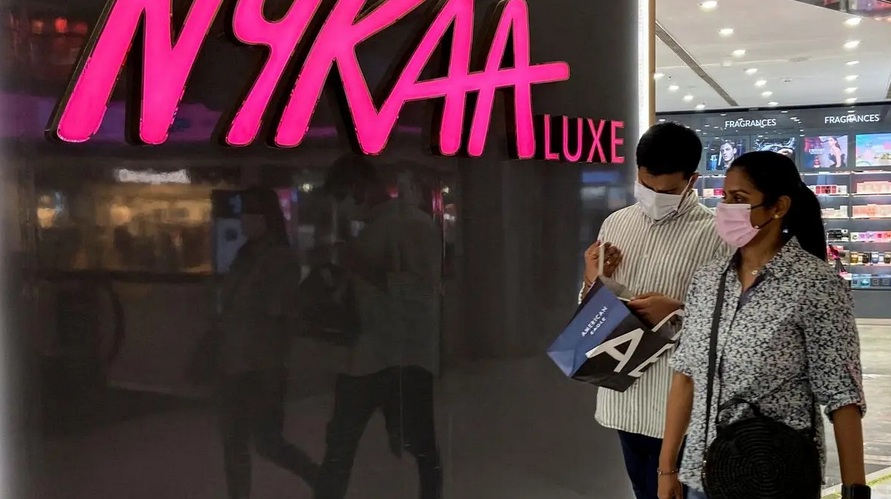
Nykaa said that Kay Beauty, co-founded with actor Katrina Kaif, has crossed the ₹240 crore mark in terms of Gross Merchandise Value.
Stars from the tinsel town are donning the entrepreneurial hat to venture into the beauty and fashion business space. Some have even succeeded in growing their brands sustainably, earning big bucks.
Take for instance Skincare brand Hyphen, co-founded by actor Kriti Sanon with Pep Brands, which recently touched the ₹400 crore-mark in Annual Recurring Revenues.
Tarun Sharma, CEO and co-founder, Hyphen told businessline: “The brand is witnessing healthy growth rate quarter-on-quarter. In the first year itself, it touched ₹100 crore ARR. We had aimed for ₹500 crore ARR in 3-4 years and, within two years, we are at ₹400crore ARR.” Pep Brands led by Sharma owns mCaffeine and Hyphen.
The model that works
Sharma believes an operator-led, celebrity anchored model works better. ”The operator can bring in the necessary financial and execution muscle. If a celeb partners with an operator that has deep expertise in the space, then there is huge potential for growth,” he added.
“Product launches, marketing and distribution are very data-driven at Pep Brands. It guides us on what to launch, when to launch, and how to launch products. That has helped Hyphen in achieving this kind of growth rate. It is by design that the majority of the business of Hyphen is D2C,” Sharma explained.
In May, Nykaa said that Kay Beauty, co-founded with actor Katrina Kaif, has crossed the ₹240 crore mark in terms of Gross Merchandise Value. On an earnings call for Q4FY25, Adwaita Nayar, Executive Director, Chief Executive Officer, Nykaa Fashion, said: “Kay Beauty is one of the fastest-growing brands on the platform. It’s hit about ₹240 crore of GMV. The innovations have been fantastic this year. So, it is quite a premium brand, and I think the consumers are accepting it even at that price point. It’s got great gross margins.”
Earlier this year, Reliance Retail Ventures announced that it has decided to acquire 51 per cent stake in Ed-a-Mamma , a kid and maternity wear brand founded by actor Alia Bhatt. According to some reports, Hrithik Roshan’s sportswear brand HRX is a ₹1,000 crore brand.
Among the recent entrants are Ranbir Kapoor, who has decided to foray in the apparel and accessories space with ARKS. Launched in February, the brand has also launched its first store in Mumbai, followed by a second store in New Delhi and another with Broadway in Hyderabad.
‘Shift in preferences’
Abhinav Verma, co-founder and CEO, ARKS, told businessline: “We are seeing a shift in consumer preferences towards made-in-India brands. We decided to leverage on the strong manufacturing capability that India has to build a brand that is both aspirational and offers value. We are looking to build a ₹100 crore brand in the next 3-4 years with a strong omni-channel strategy.”
“The success of some of these brands demonstrates that building on consumer relevance and with powerful time-bound execution, celebrity ventures can become significant players in a crowded market. With consumer demand for relatability and digital-first branding on the rise, this segment will definitely grow. However, only brands that offer genuine value to consumers, and not just star appeal, are likely to endure,” said Devangshu Dutta, CEO, Third Eyesight.
(Published in The Hindu-Businessline)
admin
June 7, 2025

Pooja Yadav, Inc42
7 Jun 2025
SUMMARY: Nearly two decades after its founding, Myntra has made its first international foray with the launch of‘Myntra Global’ in Singapore. Armed with 100+ Indian brands and over 35,000 styles, it is betting big on the 6.5 Lakh-strong Indian diaspora. Shipping directly from India without local warehousing helps avoid upfront costs but could lead to expensive shipping, long delivery times, and tough return logistics.
Nearly two decades after its incorporation in 2007, Myntra announced last month that it marked its first international foray under the new ‘Myntra Global’ banner. The fashion ecommerce marketplace has launched its operations in Singapore.
The Flipkart-owned platform aims to leverage brand loyalty to drive cross-border commerce by tapping into the Indian diaspora of around 6.5 Lakh people in the island nation.
However, while the brand’s intent is clear, the timing and choice of market raise some concerns. For starters, Singapore isn’t going to be an easy market, especially for a newbie like Myntra. This is because the region is filled to the brim with players like Shopee, Shein, Lazada, and Zalora that enjoy a strong brand recognition and stickiness.
Then, experts believe, Singapore-based shoppers are highly selective, constantly seeking great deals and ahead of the rapidly evolving fashion trends. This, among other factors, could make Myntra’s Singapore entry arduous.
So, what makes industry observers say so? Why isn’t Singapore a promising market for Myntra to begin with? What are the stakes at play here — the hits and the misses? Let’s get right into these questions to make sense of Myntra’s Singapore foray.
A Strategic Experiment?
Myntra’s entry into Singapore isn’t just about going global, it’s a strategic experiment to understand how Indian fashion resonates beyond borders.
According to CEO Nandita Sinha, the core of this launch is Myntra’s attempt to test the waters and understand the product-market fit for Indian fashion in an overseas setting.
But why Singapore? Well, the choice was driven by data. Myntra has found that about 10–15% of its web traffic comes from international markets, and Singapore stands out as a concentrated and engaged segment.
According to Statista (2024), approximately 6.5 Lakh Indians reside in Singapore, with around 3 Lakh Persons of Indian Origin (PIOs). Sinha pointed out, “While analysing our data and exploring potential market opportunities, we discovered that nearly 30,000 of these users are visiting our platform every month.”
This organic interest gave the company confidence to make Singapore its first stop under the Myntra Global banner. The platform has gone live in Singapore with 35,000+ styles, which it now plans to scale up to 1 Lakh in the near future.
However, what’s interesting is that Myntra is betting big on desi styles and brands to cater to the Indian diaspora in Singapore. The platform has launched a curated lineup of over 100 Indian brands, including popular names like Aurelia, Global Desi, AND, Libas, Rustorange, Mochi, W, The Label Life, House of Pataudi, Chumbak, Anouk, Bombay Dyeing, and Rare Rabbit.
Whether it’s ethnic wear, fusion fashion, or home décor, the idea is to spotlight Indian design and craftsmanship. Not to mention, Myntra sees significant potential for cultural occasions such as festivals, weddings and special celebrations.
As per Devangshu Dutta, the founder and chief executive of Third Eyesight, Singapore is an ideal market for Myntra’s international test run due to several reasons. For one, it is a digitally advanced, high-income market with a significant Indian diaspora that is familiar with the brands Myntra offers.
“This makes it a natural nucleus for testing an out-of-India offering,” Dutta said, adding that Singapore’s relatively small size makes it easier to manage the complexities of merchandising across different segments, potentially making it a more efficient testing ground.
Moreover, if the business succeeds, Singapore could serve as a strategic launchpad for Myntra to expand into other Southeast Asian markets. However, for now, Myntra’s Singapore launch is less about scale and more about learning.
Ankur Bisen, senior partner and head at Technopak Advisors, said that Myntra’s recent expansion makes strong strategic sense. This is because it is no longer an Indian company, and expanding to Singapore and Southeast Asia offers significant scale and growth opportunities.
“Unlike a purely Indian company, Myntra can explore multiple markets simultaneously and is not restricted to focussing solely on India,” Bisen said.
However, not everything is rainbows and sunshine, as Myntra’s success will only hinge on pricing, local adaptation, and understanding the distinct preferences of the Indian diaspora in Singapore that may be different from Indian buyers. In simple terms, one size may not fit all.
Then, shipping delays and high logistics costs could dilute the value proposition, especially in a market like Singapore where consumers are used to fast and affordable service.
Imperative to mention that Myntra currently has no plans to set up a warehouse in Singapore. Myntra CEO Sinha mentioned that products would be shipped directly from India, where the inventory will be maintained by the brands themselves.
“Myntra Global was not intended to be a localised service tailored to the Singapore market or any other international location. Instead, the focus would remain on serving global consumers from India, with no immediate plans for physical expansion or local warehousing.”
What Could Go Wrong?
Expanding into a new market is always a risky affair. Some potential pitfalls for Myntra could be logistics complexities, return management, and supply chain localisation.
Yash Dholakia, partner, Sauce.vc, too, pointed out that execution risks extend beyond pricing and scale to include logistics, returns, and supply chain.
Dholakia added that Singapore is a different ballgame altogether, as its distinct retail landscape is not an easy feat. “The fashion industry’s fast-changing nature calls for a sharp understanding of Singapore’s diverse, millennial consumers, who have unique cultural preferences and social media-driven buying habits.”
Moreover, many second- or third-generation PIOs see themselves mainly as Singaporean and have different cultural and fashion preferences.
Therefore, assumptions that what works in India will work for this class of consumers may lead to failure.
To hedge this, Myntra will have to take a fully local approach, which will include setting up independent teams on the ground to understand and address these local differences, rather than just copying and pasting its India playbook.
Moreover, from a branding and market reach perspective, targeting just the 10–15% Indian diaspora in Singapore restricts Myntra’s audience significantly. The fashion market in the city-state is already competitive, with several efficient players offering fast and affordable options.
“Myntra’s edge would primarily be Indian ethnic wear, which restricts its ability to emerge as a broad-market contender,” Dholakia said.
Per Dutta, relying heavily on the Indian diaspora may provide a strong initial boost, but this may not sustain for too long.
A Launchpad For D2C Brands
This is not the first time Myntra has tried to enter an international market. In 2020, Myntra partnered with UAE-based platforms, noon and Namshi, to enter the Middle East with a few Indian brands.
However, its current expansion into Singapore looks more ambitious with a cavalry of over 100+ Indian brands.
To strengthen its footprint in Singapore, Myntra is offering free shipping across a wide range of categories, including women’s fashion, kidswear, and home essentials.
Myntra is offering products across a wide range of price buckets. In the women’s tops category, prices start as low as INR 350 with brands like Tokyo Talkies, and go up to INR 4,800 with brands like Berrylush, DressBerry, and Vishudh. Western dresses also extend up to INR 7,100. In ethnic wear, kurtas range from INR 833 to over INR 3,800, while sarees are priced between INR 1,200 and INR 18,000.
“In terms of pricing, it’s ultimately the brands themselves that determine their price positioning on the platform. As they begin listing and transacting with consumers, they will decide how they want to price their products,” said Sinha.
In addition, what could work in its favour is the opportunity to give the global audience a taste of fast-growing Indian D2C brands.
Many Indian internet-first brands haven’t had the chance to engage with global consumers before, but this expansion lets them showcase their products directly to the Indian diaspora in Singapore.
Besides, the expansion will allow Indian brands to understand new consumer preferences, optimise their product mix for cross-border demand, and grow their presence beyond India.
This pilot could indeed spark broader cross-border opportunities for Indian D2C brands. But it demands localised marketing, deep consumer understanding, and a willingness to adapt to regional preferences.
For brands used to making for Indian buyers, this could be a steep but rewarding learning curve. If executed well, it offers them not just an entry into Singapore but a scalable template for global expansion.
The Cross-Border Gamble
Myntra’s global play comes at a time when the ecommerce platform posted a net profit of INR 30.9 Cr in FY24 versus a loss of INR 782.4 Cr in FY23. This turnaround came on the back of a 15% increase in its operational revenue and tighter cost control.
The platform generates revenue through a mix of transaction fees from sellers, logistics services, advertising, and its private labels. To move towards profitability, Myntra brought down its total expenses to INR 5,123 Cr in FY24 from INR 5,290.1 Cr in FY23.
However, its recent entry into Singapore may bring new financial challenges, even as Myntra has opted not to set up a warehouse in Singapore. It would rather ship products from India through third-party logistics providers.
So, is the fashion major being penny-wise and pound-foolish?
Probably. While this asset-light model avoids upfront capital expenditure, it introduces risks such as longer delivery times, higher logistics costs, customs delays and complicated return processes that could sour customer sentiment. For a platform that just turned profitable, these are crucial levers that could strain margins.
Further, even though Myntra is not offering exchange and returns currently, once it does, it could complicate things further.
This is because shipping a 2 Kg fashion parcel from India to Singapore costs an estimated INR 2,800 to INR 3,500, inclusive of air freight, GST, and last-mile delivery. Reverse logistics could add another INR 1,200 to INR 2,000 per item, pushing the total cost per cross-border order significantly higher.
According to Dibyanshu Tripathi, cofounder and CEO of Hexalog, a logistics company, cross-border logistics could significantly impact Myntra’s profitability as it expands into Southeast Asia.
“Sustaining margins will be challenging with high per-order shipping costs, return expenses, and longer delivery timelines that may affect customer satisfaction. Without localised infrastructure or cost efficiencies, profitability in new markets may be hard to maintain despite revenue growth,” Tripathi said.
In contrast, players such as Lenskart and Nike have structured their global expansions with supply chain control at the core.
All in all, Myntra’s Singapore foray is a bold experiment aimed at testing global appetite for Indian fashion, especially among the diaspora.
While the move offers promising opportunities for Indian D2C brands and cross-border growth, it’s also fraught with challenges. For one, with a lack of local infrastructure, high shipping costs and a diaspora divided between two cultures, sustaining this expansion may prove tough. Can Myntra turn its Singapore pitch into a lasting global success story?
(Published on Inc42)
admin
January 9, 2025

Sagar Malviya, Economic Times
9 January 2025
Starbucks, Barista, Chaayos and Third Wave Coffee are among café chains facing the brunt of a slowdown in discretionary consumer spending. The impact is more severe for these retailers as they opened hundreds of new stores last fiscal year even as losses widened. To be sure, smaller chains such as Tim Hortons and Blue Tokai have bucked the trend.
Experts attribute the expansion rush to the urge among these retailers – both chains and standalone stores – to outpace competition. In certain instance, it led the same retailer to add stores in the same location, impacting its own growth instead of growing the pie.
At Rs 250 to Rs 350 for a cup of coffee, most chains target affluent, discerning coffee enthusiasts with artisanal brewing and experiential consumption, restricting the consumer base.
Devangshu Dutta, founder of retail consulting firm Third Eyesight, said the number of outlets have been expanding since 2022.
This was true for not just the new brands but also existing ones, Dutta said. “Cafe density in larger cities has gone up dramatically in the last couple of years.”
Growth rate fell to just 5% in FY24 from nearly 70% at Barista and Chaayos while Starbucks’ sales growth declined to 12% in FY24 from 70% in FY23. Third Wave saw sales growth slump to 67% from 355% during the period. Cafe Coffee Day posted a 9% increase in FY24, though sharply slowing from 59% a year ago.
Tim Hortons, however, more than doubled its sales last fiscal, its first full year of operations. Blue Tokai also bucked the slowdown trend with a 70% growth in FY24, compared to 73% in FY23.
Blue Tokai cofounder Matt Chitharanjan believes growth in India’s out-of-home coffee market is more than just a caffeine surge—reflecting the country’s shifting economic fabric. “Coffee consumption is strongly linked to income growth and India has reached a tipping point where it will support growth in the segment and should only accelerate going forward,” Chitharanjan told ET. “We have not seen any slowdown in coffee consumption and our positioning is also more product centric instead of just a cafe, which helped in double-digit same store sales growth.”
Tim Hortons, a Canadian coffee chain, which opened its first outlet in India in 2022, plans to have over 100 stores in the next three years. British coffee and sandwich chain Pret A Manger too launched its first shop in Mumbai as part of a franchise agreement with Reliance Brands. It plans to open up to 100 stores over the next five years. Third Wave and Blue Tokai are running more than 250 stores combined while Starbucks had over 330 stores as of March-end.
Tata Starbucks—the equal JV between Tata Consumer Products and US-based Starbucks Corp—said store footfalls have become a concern and the company has tweaked portfolio and pricing to attract traffic. Last year, the chain introduced classic hot and iced coffee starting at Rs 150 for a small cup, about 20-30% cheaper than regular coffee offered at Starbucks and other cafe chains.
“The stress is being seen across the quick service restaurant segment. It’s an overall consumer spending issue, especially in urban areas. And my hypothesis is probably food inflation is higher than what we think,” Sunil D’Souza, MD at Tata Consumer Products said during the December quarter earnings call.
Globally as well as in India, coffee growers have been hit with uncertain weather conditions while geopolitical factors are also affecting supply chains, which in turn, lifted prices to a record high. “The biggest challenge is erratic weather and climate change which has sent coffee prices to a 50-year high, but we will have to see how it impacts our pricing and profit after the current harvest,” said Chitharanjan at Blue Tokai.
(Published in Economic Times)
admin
December 31, 2024

Jasodhara Banerjee, Forbes India
31 December 2024
Once, there was alabaster. Then, there was porcelain. And now there is glass. And no, we are not talking about the different kinds material to make fine, delicate objet d’art, but the quality and texture of facial skin—smooth, flawless and luminescent—that humans aspire to.
While a Google search for the term ‘glass skin’ will churn out hundreds of results that describe not just what the term means—tracing it to Korean skin care routines and products—but also detail the meticulous steps, varying between five and 11, that will apparently make you look like your favourite K-pop singer or K-drama actor. Like all things K (read: Korean), be it television and OTT serials, or food and clothes, K-beauty seems to have taken the Indian market by storm. A search for ‘Korean brands’ on online platforms such as Nykaa and Tira Beauty brings up more than a thousand products, ranging from ₹75 for a facial sheet mask to ₹17,900 for 60 ml of face cream. Clearly, there is something for everybody.
Fuelling this surge has been a plethora of factors, including the rise of online marketplaces that have made Indian and foreign skin care and beauty products more accessible than before, the thriving ecosystem of influencers and content creators that has revolutionised the marketing of these products, and, of course, consumer demand for products that claim to have the goodness of natural ingredients backed by the surety of science. And, surprising as it may seem, the Covid-19 pandemic and accompanying lockdowns also seem to have played a role in this.
Case in point is Amorepacific Corporation, a Seoul-headquartered beauty and cosmetics company that operates in more than 50 countries, and has a portfolio of more than 30 brands, such as Sulwhasoo, Laneige, Mamonde, Etude House and Innisfree. It is one of the largest cosmetics companies, not just in South Korea, but in the world.
“We are the number one beauty and personal care brand in South Korea and were the first Korean corporation to enter India with direct management, with our own subsidiary,” says Paul Lee, managing director and country head, Amorepacific India. “We started our business in India with Innisfree, which uses natural ingredients from Jeju Island in South Korea. We started with Innisfree because India had a huge demand for brands with natural products. Then we introduced Laneige and Sulwhasoo, which fall in the luxury skin care segment, and these were followed by Etude, which is a makeup brand.”
Amorepacific entered India sometime in 2012, taking tentative steps in a fledgling market with minimal investments and a retail store in Delhi’s Khan market. “At that time, the awareness of K-beauty was very small, and our momentum of growth started with the popularity of dedicated ecommerce players like Nykaa. In the last seven years, our annual growth has been 50 percent, our current growth is 60 percent year-on-year,” says Lee.
A potent potion for growth
Although industry players and experts feel there are multiple factors behind this growth, the popularity of Korean cultural elements is a significant one. “Korean beauty and personal care brands have multiple enabling factors. The global expansion of Korean beauty and personal care products has been on the back of a cultural export wave like any other earlier in history; in this case through the growing popularity of K-pop and K-dramas,” says Devangshu Dutta, founder, Third Eyesight and co-founder, PVC Partners. “In India, these brands initially had an influence in the Northeastern states, where customers are usually ahead on the fashion curve and also find resonance with the look of these brands.” He adds that factors such as the increasing number of Indian tourists to East Asian countries, and the growing presence of Korean and Japanese expatriates within India have also supported the growing footprint of these brands.
A spokesperson for Tira Beauty, which was launched in April 2023, agrees with Dutta, and attributes the demand for K-beauty products to the exposure that consumers have to K-dramas and K-pop. However, she adds that a significant factor is rooted in the products themselves. “These are the innovations that these brands are bringing to the table,” she explains. “The kind of formulations they offer are very well-suited for the Indian consumer. The ingredients are very efficacy oriented, and deliver a lot of quality, thus resolving a lot of concerns that consumers in India have.”
For instance, skin hydration is a core need of consumers, and a lot of Korean skin care products focus on hyaluronic acid as an ingredient. “Consumers who have sensitive skin or inflammation as a key concern get to use ingredients like centella asiatica, that a lot of Korean products use,” she says.
The spokesperson adds that the texture of the products is also a factor behind their popularity in India: “A lot of Korean sunscreens are light weight, a lot of their essences are suited for the Indian skin and the Indian weather. Both these factors are contributing to the rise we are witnessing in the space of K-beauty.”
Lee of Amorepacific highlights the use of unique ingredients such as fermented beans, ginseng and green tea that were never used before by American or European companies. There are also many options for consumers to choose from, depending on what is best suited for them. For instance, there is a product line with green tea for consumers with sensitive skin, and the same products are available for those with dry skin. “There are three key metrics that we have seen among Indian consumers: One is the demand for premium quality, two is the demand for glass skin, and the third is reliability.”
Lee also attributes market factors that have been instrumental in making Korean products more accessible to Indian consumers. “There has been a lot of change before Covid, and after Covid. From the macro perspective, the number of internet users with access to low-cost data plans has increased. During the Covid-19 pandemic, the number of new people watching OTT platforms such as Netflix also surged. From the Netflix perspective, I think India is one of the top three countries, where the number of subscribers is concerned.”
According to the Korea Trade-Investment Promotion Agency, the beauty market in India saw substantial growth following the Covid-19 pandemic and is projected to expand by 10 percent annually from 2022 to 2027, more than twice the global average growth rate for the beauty sector. According to market analyst Mordor Intelligence, the K-beauty market in India is expected to grow annually by 9.4 percent from 2021 to 2026.
Lee highlights the popularity of Korean OTT series such as Squid Games in making Indians familiar with Korean culture, and YouTube videos making a lot of people aware of K-beauty. “When we started operating in India, there were hardly two or three brands operating here, but currently there are more than 60 Korean brands in India. The influence of TV and music content has made people familiar with Korean culture, which is similar to Indian culture in being family-centric,” he adds.
Content creator Scherezade Shroff Talwar says, “The Hallyu [Korean] wave during the pandemic has definitely contributed to, what I would say, an over-consumption of Korean culture and I definitely contribute to it as well. K-beauty products have been around in India for a while, but with the increasing popularity of K-dramas and K-pop, people are seeing more such content across multiple platforms. This has contributed to the rising number of Korean brands in India, and the use of their products.” She recalls how, in November, she was in South Korea with her K-drama club, and the members had lists of the products that they wanted to buy there because they are not available in India.
According to a September report by market research firm Mintel, social media analysis in India reveals that there have been 6.2 million posts in the last two years discussing K-drama, K-pop, and K-beauty trends, predominantly among the 19 to 24 age group. This continued popularity in K-pop throughout the APAC region influences consumers’ interest in Korean skin care and beauty products, the report adds.
Lee says that Korean beauty companies have also been prompt to react to the demands in the market. For instance, Innisfree introduces new products every three months, and they are based on consumer feedback through social media and actual stores. Given the demand from Indian consumers, Amorepacific has also formed a task force at its headquarters which is dedicated to reviewing and studying the Indian market, with plans bring in more brands and businesses.
Data shows, adds Lee, that the import of Korean skin care products into India is increasing by 63 percent every year, going up four times compared to 2020. Amorepacific’s own research shows that 53 percent of Indian beauty consumers have already tried Korean products. “Fifteen percent of the entire skin care products market is now dominated by Korean products,” he claims.
Although Amorepacific decided to close all 23 of its exclusive stores in India because of the losses suffered during the pandemic, it decided to partner instead with local channels such as Nykaa, Tira Beauty and SS Beauty, and its products are today available across 400 counters in 45 cities. “Although our company is seeing 60 percent growth every year now, our retail area is doubling every year,” says Lee. “Our aim is to be available in 500 counters within a year.”
The availability and accessibility of Korean skin care and beauty products have also coincided with the rise of marketing products through influencers and content creators. The spokesperson for Tira Beauty says that influencers have played a massive role in the popularity of Korean products. “One of the reasons why K-beauty products do well across markets is because Gen-Z consumers tend to follow a lot of these influencers,” she explains. For instance, Tira launched the Beauty of Joseon sunscreen, and it went out of stock very quickly. “We experienced this because there was a lot of awareness due to influencer activations, and there’s a certain amount of virality these products enjoy even before they are launched.” She also gives the example of the brand Tirtir, which was launched on Tira Beauty in India in November. “The brand rolled out samples to influencers in India in July, and that helped propel demand to a great extent.”
According to business consulting firm Grand View Research, celebrity influencers have been beneficial to marketers due to their global reach, which often transcends cultural boundaries. Hence, the top strategy used by Korean cosmetics brands is to sell their products to Korean celebrities. Storytelling using Korean celebrities as brand ambassadors, and streaming advertisements and video tutorials all over the social media platform are some of the major strategies adopted by K-beauty brands.
Grand View Research gives the example of the lip layering bar of Laniege, which has emerged as a convenient tool for those who want to get the trendy gradient lip look with just a single application. Celebrities such as actors Song Hye Kyo and Lee Sung Kyung have used the product, enhancing its appeal and desirability among consumers.
Celebrities from different parts of the world promote K-beauty products, and this fosters a cross-cultural appeal and encourages individuals from diverse backgrounds to explore and adopt these products in their skin care routines. Following this global trend, in India, young celebrities have been roped in to appeal to Gen-Z consumers. For instance, actor Palak Tiwari became the first Indian brand ambassador for Etude, while actor Wamiqa Gabbi became first Indian brand ambassador for Innisfree, and Sara Tendulkar, daughter of cricketing legend Sachin Tendulkar, is the brand ambassador for Laneige.
Dutta of Third Eyesight says, “Influencers certainly have played a role in building the buzz around K-beauty and have formed a relatively cost-effective means to spread the message in the past. However, in recent years with a growing number of social influencers, there is more clutter as well on the channels.”
India not in the big league, but demanding
Although the rise of K-beauty products in India has been significant, the country remains a far smaller market for these brands compared to markets such as the US, Europe and China. According to Grand View Research, the global K-beauty products market size was valued at $91.99 billion in 2022 and is expected to grow at a compound annual growth rate (CAGR) of 9.3 percent from 2023 to 2030.
The consulting firm says the Korean cosmetics industry grew steadily during the Covid-19 pandemic, owing to an increase in awareness of the numerous benefits offered by the products. Moreover, due to a rise in popularity among consumers, major K-beauty companies are taking initiatives such as R&D, product launches, mergers and acquisitions to retain shares in the market and respond to changes in the marketplace by introducing a range of items.
Grand View Research valued the US market, one of the largest for K-beauty products, at $20.2 billion in 2021 and expects it to grow at a CAGR of 8.8 percent between 2023 and 2030. Compared to this, Statista valued the India K-beauty market at $486 million in 2021, and expects it to grow to over $1.3 billion by 2032.
Lee of Amorepacific says the US remains the largest beauty market as a whole, followed by China, Japan, the UK, France and India. “One of the differentiating factors between the US and Indian consumers is that the premium market in India is very small, and it is still a mass-product driven market,” he says. “Secondly, ecommerce in India is still quite small. In South Korea and the US, ecommerce just in the beauty segment, is 30 to 40 percent, while in India it is 13 percent. India is traditionally an offline market.”
He adds that despite the growth, Indians remain sceptical about whether Korean products are suitable for Indian skins, and there is demand for products that are made only for Indians. “Localisation, therefore, has become important for the company. Although we conduct clinical trials in different geographies, we are starting to take more feedback from Indian consumers, and we are ready to develop products only for the Indian market. For instance, we have introduced the Innisfree kajal and the Innisfree hair massage oil, and have developed lip colours for the Indian market.”
Although the company did not divulge revenue figures, it is expecting to grow six times in the next six years in India, and plans to introduce at least five more brands within the next seven years in this market.
(Published in Forbes India)
