
admin
November 28, 2021

By Rasul Bailay & Writankar Mukherjee, Economic Times
November 27, 2021
Reliance Retail aims to be one of the world’s top retailers, but for the last couple of years, it has been a buyer, not a seller. It has bought a string of retail brands — from online pharmacy Netmeds and online furniture retailer Urban Ladder to digital lingerie seller Zivame, online grocer MilkBasket and haute couture label Ritu Kumar. The latest acquisition was Sri Lankan lingerie brand Amante.
These acquisitions are crucial cogs in Reliance Retail’s further push into brick-and-mortar and ecommerce, and are part of Mukesh Ambani-led Reliance Industries Ltd (RIL) unit’s larger strategy: To break into the global top ten retailers. India’s largest retailer (by sales as well as by the number of stores) is currently ranked 53rd in the world, according to Deloitte’s Global Powers of Retailing 2021. Reliance Retail reported an annual revenue of $22 billion and a net profit of $750 million for the fiscal year ending March 2021.
At the same time, the company is looking beyond pure retailing. It’s pursuing a larger play to tap into the growing pie of the country’s overall consumption story — from contract manufacturing to distribution of everything from affordable fashion and consumer electronics to grocery products in India’s $850 billion annual retail market that is expected to swell to $1.3 trillion in the next few years. (Reliance did not respond to ET’s questionnaire.)
Analysts say Reliance’s overall plan is to engage India’s burgeoning consumers in its ecosystem one way or the other at any given point of time: shopping in its vast network of physical stores or on JioMart ecommerce platform, using Jio’s mobile or WiFi networks, watching movies on Jio Cinema, paying through Jio wallet so on and so forth that it is dubbed by the petroleum-to-telecommunications conglomerate as “retail plus” strategy.
“Their plan is to weave their products and services so deeply into your life that from morning to evening you are spending time and money on their networks either directly or indirectly,” says a top executive of an online grocery retailer. “Their idea is to constantly keep consumers engaged in a Jio bubble or in a Jio world.” The executive estimates India has a middle class of around 40 crore people. “Even if they succeed in capturing 10% of that wallet share, it is going to be huge,” he says.
That’s the reason Reliance Retail is betting big on business-to-business (B2B) ecommerce, with a digital wholesale marketplace along the lines of Alibaba for products such as smartphones, televisions, garments and grocery items, among other products, according to people aware of the plan. It’s looking to service a whole gamut of retailers in cities and villages.
Reliance has already started distributing its licencee products of Kelvinator- and BPL-branded consumer electronic items and its smartphone JioPhone Next, produced in collaboration with Google, to retailers outside of Reliance’s stable. The company also boasts a whole host of private brands and many of them are making inroads into general trade.
“The market for modern retail and ecommerce put together would be 15-20% in India. The rest 80% is still in the traditional market. If Reliance can make an entry into the traditional market and partner the smaller stores, the opportunity for growth and revenue is much more,” says an industry executive aware of the plans.
“Reliance’s approach is not to be a threat to small stores or merchants, but to be their enabler, provide them merchandise at best wholesale rates, upgrade their stores and even list them on their ecommerce platforms to help them reach newer consumers,” he adds.
Reliance is doing exactly that. Earlier this year, it started supplying Puric InstaSafe-branded FMCG products like soaps, home disinfectants and sanitisers to kiranas in Punjab and West Bengal. It is planning to roll these items nationwide. The company has put in place a marketing team for the first time to push these products. Similarly, B2B portal Ajio Business is selling T-shirts for Rs 79 onwards, a pair of jeans for Rs 220 and shirts for Rs 170 onwards to small businesses. Last quarter, Reliance Retail forayed into the wholesale business of medicines through Netmeds by roping in neighbourhood pharmacies under its B2B initiative.
These are some of the steps in the conglomerate’s bet not just on pure retail play but on end-to-end gameplay in the retail ecosystem, controlling manufacturing, wholesale, supply chain, ecommerce and payments.
To augment its digital wholesale plans, Reliance Retail has already converted its network of cash-and-carry outlets into fulfilment centres.
Analysts say Reliance’s ambitions are long-term and capital intensive and the company is ready for the long haul and to spend. “Reliance’s plan to rope in and aggregate many elements together — retailers, B2B buyers, suppliers, small players — and bring them on board takes time and is a capital-hungry business,” says Devangshu Dutta, chief executive of consulting firm Third Eyesight. “But controlling end-to-end is Reliance’s game plan in any business, including telecom, where it spans the entire value chain of not just providing the mobile network but also a digital interface with consumers.”
In a bid to feed its ambitious consumption plans, Reliance Retail is lapping up stores and warehouses nationwide to service both ecommerce and B2B sales through its “new commerce” omnichannel plans that will also involve legions of kiranas as last-mile delivery agents as well as buyers of Reliance’s products. Reliance Retail, which operates more than 13,000 stores of various formats, plans to open around 5,000 outlets of its Smart Point that would entail a convenience store, a pharmacy, agnostic centre, a telecom services and financial services products outlet all rolled into one across the country.
Reliance is planning to take this format to even tehsils, according to sources. Real estate agents and mall executives say Reliance is scouting for space for supermarkets, fashion outlets and jewellery and footwear stores.
They say Reliance is also planning to enter newer retail formats like a department store chain to compete with Shoppers Stop and Lifestyle. Also in the works is a Sephora-style beauty and cosmetics chain, they say.
“We will focus on expanding our store footprint multifold this year with co-located delivery hubs over the next few years. They will provide a strong network to reach and serve millions of merchants and customers,” Ambani said at the last AGM of shareholders.
Deloitte’s Global Powers of Retailing 2021 report ranked Reliance Retail as the world’s second fastest growing retailer, behind South Korea’s Coupang Corp.
Global financial and tech titans have taken notice of Reliance Retail’s play and pumped billions of dollars into it. Last year, the holding company Reliance Retail Ventures Ltd raised Rs 47,265 crore by selling about 10% stake to some of the biggest names in global private equity, including Silver Lake, KKR, General Atlantic, Abu Dhabi Investment Authority and TPG.
Reliance will continue with its acquisition spree, say analysts. However, Reliance Retail’s largest, the Rs 25,000 crore acquisition of Future Group, is bogged down by Amazon’s opposition to the proposed deal.
(Published in Economic Times)
admin
November 1, 2021
Written By Vaishnavi Gupta
D2C brands are taking the traditional retail route to scale up

Analysts say that the move to offline retail makes sense for digital-first brands in categories where experiencing the product is an important driver for purchase
While brands across categories made a beeline for e-commerce during the pandemic, physical retail earned prominence among direct-to-consumer (D2C) brands. Melorra, Plum, Pee Safe and Libas, among others, have been building their offline presence over the past year.
The total retail market in India is estimated to be worth Rs 63 lakh crore, of which 95% buying happens through offline formats, according to Devangshu Dutta, founder, Third Eyesight.
Having started as an online-only brand in 2013, Pee Safe launched its first exclusive store in India in February, 2021. The personal hygiene brand currently operates a store each in Gurugram, Bengaluru and Ahmedabad; and plans to launch 50 offline stores in the next 12 months. “There is a strong demand for personal hygiene and wellness products in the offline market. Hence, opening exclusive outlets is a crucial element of our growth strategy,” says Srijana Bagaria, co-founder and director, Pee Safe. These exclusive brand outlets (EBOs) will be launched through the franchise-owned and franchise-operated (FOFO) model.
Online ethnic wear brand Libas, meanwhile, unveiled two brick-and-mortar stores in New Delhi in September, 2021. The brand has an ambitious target of 200 more stores by 2025 in malls and high streets across metro and tier II cities. A click-and-collect facility will be operational soon, says Sidhant Keshwani, managing director, Libas. “We are aiming for our offline market share to be 25% in the coming two years,” he adds.
The brand offers a range of wedding and occasion wear, as well as ready-to-stitch fabrics exclusively in its offline stores. Soon, it also plans to foray into the kidswear and menswear categories, as well as home décor.
Beauty brand Plum, which has been retailing online since 2014, launched its first store in Mumbai in October, 2021. Plum’s founder and CEO, Shankar Prasad, says the goal is to take the store count to 50 by 2023, and for EBOs to contribute “10-20% of our total sales in two-three years”.
Jewellery brand Melorra extended its presence offline back in December, 2020. “We have been growing 200% year-on-year; we expect to post even stronger numbers this year with the addition of offline stores. We are looking to touch $1 billion in revenue in five years,” says the company’s founder and CEO, Saroja Yeramilli.
A good step?
Analysts say that the move to offline retail makes sense for digital-first brands in categories where experiencing the product is an important driver for purchase. “D2C players have so far done a great job of owning the consumer journey which is largely online. They now see that for the next wave of growth and penetration, they need good representation in a larger set of touchpoints,” says Rachit Mathur, partner and MD, BCG.
However, online is likely to remain the primary revenue stream for these digital-first brands. “Brands such as Lenskart, Nykaa and FirstCry have done a great job in driving strong retail presence and viable productivity, but continue to have a higher bias of online sales,” Mathur notes.
D2C brands could perhaps try a mix of formats for an offline foray, from EBOs to a presence in departmental stores, or even small SIS (shop-in-shop) counters in shopping centres. But brands would need to be cognisant of the fact that consumers behave differently depending on the shopping environment they are in. Hence, the interface, service offering, and even the product mix may have to be tweaked. “Simply bringing in technology into an offline environment just because you are an online-first brand may do nothing to enhance the consumer experience, and may even detract from it,” Dutta says.
Source: financialexpress
admin
February 11, 2021
Written By MONEYCONTROL NEWS
The biggest winner in terms of sales was BigBasket, which accounted for 50 percent of the sales growth followed by DMart, Grofers, Spencer’s Retail and StarQuick (Tata)

Representative Image (Reuters)
Online grocery sales for the largest online and offline retailers grew by a combined 65 percent to Rs 6,820 crore in FY20, while collective losses measured Rs 1,175 crore.
The biggest winner in terms of sales was BigBasket, which accounted for 50 percent of the sales growth, followed by DMart, Grofers, Spencer’s Retail and StarQuick (Tata), a report by The Economic Times said.
Moneycontrol could not independently verify the report.
BigBasket owner Innovative Retail Concepts clocked a net sales growth of 43 percent, or Rs 3,418 crore, while losses rose to Rs 424 crore, as per data with the Registrar of Companies and business intelligence platform Tofler, the report said.
Most executives and experts credit the growth jump to the COVID-19 pandemic and lockdowns, which pushed consumers towards online options for grocery and other purchases, it added.
Follow our LIVE Updates on the coronavirus pandemic here
A spokesperson for Grofers told the newspaper that the value of goods the company sold in FY20 vaulted 88 percent to Rs 3,000 crore, with losses at Rs 637 crore, largely due to investments for strengthening delivery services and building awareness.
Among offline retail chains, DMart’s e-commerce business saw sales zoom to Rs 345 crore, with losses at Rs 79 crore. StarQuick operator Fiora Online saw revenue of Rs 33 crore against a loss of Rs 21 crore and Spencer’s owner Omnipresent Retail reported Rs 15 crore sales with a loss at Rs 14 crore.
Devangshu Dutta, CEO of consulting firm Third Eyesight, said that the customer shift to online propelled investments to enhance capabilities in the space, while a concurrent rise in the average order values would likely benefit companies with a “healthier bottom line”.
Nielsen noted that online sales in the FMCG segment were notable, accounting for 3.1 percent of the India market value–in metros this surged to 8.6 percent as of the September quarter.
Source: moneycontrol
admin
June 19, 2020

“The industry has no reserves. And now with all the constraints from the curfew to the liquor ban to the reduction in the capacity we are all going to lose money for a few months. On top of the losses during the lockdown, this is very hard to recover from and hence many are closing,” said AD Singh, the founder and Managing Director of the Olive Group of Restaurants.
New Delhi: The restaurant industry fears 30-40% eateries (from the organized sector) will shut down shutters soon out of the half a million present in the larger cities. Popular restaurants in Khan Market, New Delhi have already announced closure and many to follow suit, as shared by industry sources.
Some ground realities
“The industry has no reserves. And now with all the constraints from the curfew to the liquor ban to the reduction in the capacity we are all going to lose money for a few months. On top of the losses during the lockdown, this is very hard to recover from and hence many are closing,” said AD Singh, the founder and Managing Director of the Olive Group of Restaurants.
It takes no science to understand why the restaurant industry is the worst hit as opined by the industry experts. The industry which thrives on socializing and creating good times with family and friends is surely the worst hit where maintaining social distancing now is the norm. Besides, one of the primary reasons for the closing of restaurants is that it’s a capital intensive business wherein the daily churn is required to get going.
National Restaurants Association of India (NRAI) President Anurag Katriar said the sustainability cost is very high in the restaurant industry. There is no working capital and there is uncertainty in business volumes going forward. The volume is expected to be subdued as will need cash to fund losses that restaurants are unlikely to get. Further, the operational cost including the rentals is very high to afford.
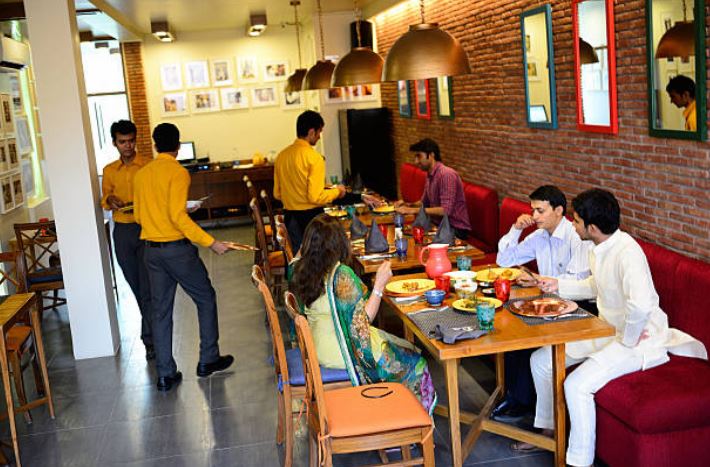
Even if the restrictions are not there, customers at this time will not be in that state of mind to dine out. Economic factors as well as the fear of spending some good amount of time (40 minutes to one hour) in a closed environment where many strangers will come and go does not look feasible for consumers.
Also, high rental is another cascading factor in the operating cost. Moreover, with the kind of guidelines to operate a restaurant business these days, many would not have the capability to follow such guidelines of social distancing and fewer footfalls, no liquor, etc.
“Eating out at restaurants is not a necessity, by and large; it’s a part of discretionary spending when you go out, socialize ― it’s all part of that. If you are not in a secure mind-frame about your future income, you will be as conservative as possible, and these are the kinds of expenditures that get knocked out first,” said Devangshu Dutta, founder, Third Eyesight.
“The restaurant industry was always a high mortality rate industry but the effects of the pandemic has been devastating. Some estimates say that 25-40% of restaurants may never open and even those that open will have to deal with low sales for a few months,” said Zorawar Kalra, founder of Massive Restaurants.
“I see the cost to sustain closure is very high. Many don’t have any resources which will impact the industry in such a way that 30-40% of restaurants will not reopen,” Katriar said.
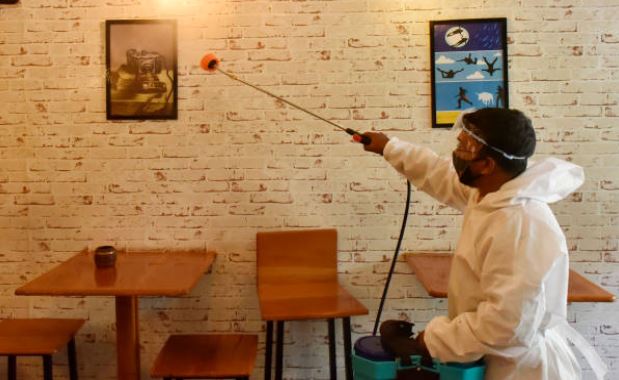
Maintaining the utmost care in health and hygiene measures may prove a double whammy for restaurateurs. Firstly, it will add to their operating costs but they won’t be able to do away with this measure-as this is the only way to bring back consumer confidence. Adopting digital menus and digital payment solutions is another area they will have to travel around.
What’s in the offing?
Maintaining the utmost care in health and hygiene measures may prove a double whammy for restaurateurs. Firstly, it will add to their operating costs but they won’t be able to do away with this measure-as this is the only way to bring back consumer confidence. Adopting digital menus and digital payment solutions is another area they will have to travel around.
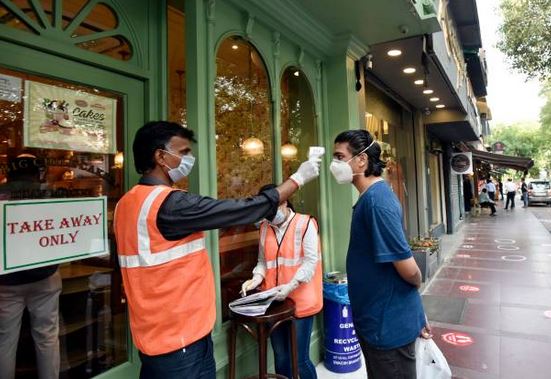
Besides, working with 50 percent or less of total capacity to ensure social distancing, the restaurants will probably have to get on the apps that provide online reservations, pre-ordering, and waitlist management to help minimize the queue of people waiting to be served. Popular restaurants have already started with thermal scanning for employees as well as consumers.
So, in the post COVID era, thermal scanning will be the new metal detection initiative that the restaurants will have to partake.
“Restaurants will have to opt for digital menus, contactless food, and sanitization among others. And with 50 percent occupancy, no alcohol and reduced working hours-restaurants will not make any money,” said Riyaaz Amlani, MD of Impresario Handmade Restaurants and the former President of NRAI.
Source: etvbharat
admin
June 7, 2020
Indian retailers welcoming customers back as stores are opening up – a look at what changes are in store.
