
admin
March 24, 2022
Written By Christina Moniz
D2C brands take the offline route to widen reach

Direct-to-consumer (D2C) brands are fluffing up the Indian mattress category with promises of lower prices, mattress-in-a-box convenience, 10-year warranty and 100-day trials. In a market that is predominantly unorganised, startups such as Wakefit, The Sleep Company, SleepyCat and Flo are aspiring to establish themselves as better alternatives to legacy brands such as Kurlon and Sleepwell, with most of them looking at the offline retail route too, to boost sales.
According to a Research and Markets report, while India’s overall mattress market has grown at a CAGR of over 11% in the last five years, the organised industry has grown at 17%. The mattress category in India is worth `12,000-13,000 crore; of this the organised segment commands 40% share.
New-age mattress brands are able to deliver products at lower price points by taking control of the entire consumer journey – from product discovery to post-sales support. Therefore, these D2C brands save big on distributor and retail margins, says Devangshu Dutta, CEO, Third Eyesight. These savings go towards compensating for higher customer acquisition costs and logistics, he observes. The elimination of the middlemen means that customers get their products at 30-35% less than what traditional players offer.
However, these digital-native companies are aware that they operate in a touch-and-feel category, which is why many offer a 100-day trial period. Priyanka Salot, co-founder, The Sleep Company, says that the product return rate is only 2-3%, and the returned mattresses are donated to charities but never resold. The Sleep Company, which entered the market a little over two years ago, is eyeing a turnover of `1,000 crore in the next five years, and has plans to launch its first offline store in a few months.
Online players also save on logistics, says Chaitanya Ramalingegowda, co-founder and director at Wakefit. “We implemented the roll-pack technology that allows the mattress to fit into a compact box. This lets us ship more products at a time,” he says. Wakefit has only two factories—one in north India and the other in south India—as opposed to older players with 10-12 factories across the country, he points out. The company hopes to close FY22 with a turnover of 630 crore, up from197 crore in FY20. It has one offline experience centre in Bengaluru, with plans to launch 10 more across five cities soon; these centres will not only be experiential, but also double up as booking/ retail sales outlets.
Offline boost
Rajat Wahi, partner, Deloitte India, points out that these new-age mattress brands must establish deeper offline distribution to expand reach. “After all, more than 90% of retail is offline in India,” he notes.
This is why D2C brands are not only taking the offline route, but also foraying into other segments like furniture and sleepwear. Kabir Siddiq, founder and CEO of SleepyCat, says the brand has plans to launch around four experience centres, and aims to become a one-stop shop for all sleep and comfort solutions, offering comforters, pillows and even bedding for pets.
Is the proliferation of D2C players giving legacy brands sleepless nights? Mohanraj J, CEO, Duroflex, says it has been akin to a “wake-up call”. He says the company has poured in investments into the D2C segment in the past few years, and now even has a completely online brand called Sleepyhead, catering to the millennial consumers. “Until recently, about 10% of our company’s growth was from online sales, but we expect that number to change to 30-35% this year,” he adds.
Despite the influx of new-age players, he maintains that Duroflex has doubled its growth in the past two years, with traditional retail registering 25-30% annual growth.
Source: financialexpress
admin
December 23, 2021

Devika Singh, Moneycontrol
December 23, 2021
Male grooming products startup The Man Company, known for its online-first strategy, is looking at offline expansion for its next leg of growth. The company, which operates 28 exclusive brand outlets in the country, plans to launch 60-70 more stores by the end of this fiscal to gain presence across at least 100 locations.
“A lot of growth will come from the offline channel for the next one year at least, especially in Tier II and III cities where launching exclusive stores is a good way to introduce the brand to the consumer as shopping malls are weekend destinations there,” co-founder Hitesh Dhingra told Moneycontrol.
The company, backed by fast-moving consumer goods (FMCG) major Emami which holds a 48.49 percent stake in it, is also looking at introducing its products in more multi-brand outlets. The Man Company is present in 1,200 multi-brand outlets which include lifestyle stores such as Shoppers Stop, Central and Lifestyle as well as hypermarkets, supermarkets and pharmacies. The company plans to be in 2,500 multi-brand outlets by the end of financial year 2022-23.
It currently draws about 70 percent of its sales from online channels including its own direct-to-consumer (D2C) platform and online marketplaces and 30 percent from offline channels. The startup’s strategy is focused on expanding its base in Tier II cities and beyond, which account for 50-55 percent of its sales even on online marketplaces.
“Out of our 28 exclusive brand outlets, only five to six are in top 10 cities and the rest in Tier II and smaller towns. For the new store openings also, we are going to adopt a similar strategy and only 10 percent of the new outlets will be in large cities,” said Dhingra.
The offline way
Several D2C brands have been eyeing the physical retail channel as they try to scale up and tap a wider set of consumers. Brands in the women’s beauty and personal care segment such as Mamaearth, Sugar Cosmetics and Plum Goodness are expanding their presence in the offline retail format. Plum, for instance, is looking to launch 50 exclusive brand outlets in the next two years.
Male grooming startups, too, are following a similar trajectory. For instance, Bombay Shaving Company and Baeardo are launching their products in more and more offline stores.
Devangshu Dutta, chief executive of retail consultancy Third Eyesight, said it makes sense for digitally-native companies that have achieved some brand recognition to launch in offline format for the next phase of growth. Brands in the 1990s for example, he said, who wanted to establish an identity, entered new formats or channels besides the existing ones. Similarly, digitally-native brands need not restrict themselves to online platforms alone, he added.
But he pointed out that these brands will have to address challenges such as ensuring availability of their products in offline channels. “In the online segment, companies can cater to customers with limited stocks. However, in the offline channel, they need to ensure availability of products across stores,” he said.
New categories
Apart from new retail categories, The Man Company has plans to enter categories such as sexual wellness and personal appliances. It has tied up with a marketplace for the launch of personal appliances such as beard trimmers and shavers and the category will be launched exclusively on the platform. The sexual wellness products, too, will be introduced on its D2C platform and later to other marketplaces and offline stores.
“We always launch a product on our platform to test it and get consumer feedback and, based on the response, we introduce the product to the wider market,” said Dhingra.
Launched in 2015, The Man Company caters to the men’s grooming segment and claims to have developed more than 65 stock keeping units. According to Dhingra, the company which competes with Beardo, Bombay Shaving Company and Ustraa will double its sales to Rs 100 crore by the end of this financial year.
Male grooming startups have of late attracted attention from FMCG companies. Marico last year completed the acquisition of Ahmedabad-based Beardo by buying an additional 55 percent stake in the company. It had acquired an initial 45 percent stake in 2019. British consumer goods giant Reckitt Benckiser Group invested Rs 45 crore in Bombay Shaving in February 2021. LetsShave and Ustraa are backed by Wipro Consumer Care.
According to industry estimates, the male grooming market in India was valued at Rs 15,806 crore in 2019 and is expected to cross Rs 36,402 crore by 2025, growing at a compound annual rate of 15-14 percent. Though growth was hit by the pandemic, experts are still bullish about the segment.
(Published in Moneycontrol)
admin
November 1, 2021
Written By Vaishnavi Gupta
D2C brands are taking the traditional retail route to scale up

Analysts say that the move to offline retail makes sense for digital-first brands in categories where experiencing the product is an important driver for purchase
While brands across categories made a beeline for e-commerce during the pandemic, physical retail earned prominence among direct-to-consumer (D2C) brands. Melorra, Plum, Pee Safe and Libas, among others, have been building their offline presence over the past year.
The total retail market in India is estimated to be worth Rs 63 lakh crore, of which 95% buying happens through offline formats, according to Devangshu Dutta, founder, Third Eyesight.
Having started as an online-only brand in 2013, Pee Safe launched its first exclusive store in India in February, 2021. The personal hygiene brand currently operates a store each in Gurugram, Bengaluru and Ahmedabad; and plans to launch 50 offline stores in the next 12 months. “There is a strong demand for personal hygiene and wellness products in the offline market. Hence, opening exclusive outlets is a crucial element of our growth strategy,” says Srijana Bagaria, co-founder and director, Pee Safe. These exclusive brand outlets (EBOs) will be launched through the franchise-owned and franchise-operated (FOFO) model.
Online ethnic wear brand Libas, meanwhile, unveiled two brick-and-mortar stores in New Delhi in September, 2021. The brand has an ambitious target of 200 more stores by 2025 in malls and high streets across metro and tier II cities. A click-and-collect facility will be operational soon, says Sidhant Keshwani, managing director, Libas. “We are aiming for our offline market share to be 25% in the coming two years,” he adds.
The brand offers a range of wedding and occasion wear, as well as ready-to-stitch fabrics exclusively in its offline stores. Soon, it also plans to foray into the kidswear and menswear categories, as well as home décor.
Beauty brand Plum, which has been retailing online since 2014, launched its first store in Mumbai in October, 2021. Plum’s founder and CEO, Shankar Prasad, says the goal is to take the store count to 50 by 2023, and for EBOs to contribute “10-20% of our total sales in two-three years”.
Jewellery brand Melorra extended its presence offline back in December, 2020. “We have been growing 200% year-on-year; we expect to post even stronger numbers this year with the addition of offline stores. We are looking to touch $1 billion in revenue in five years,” says the company’s founder and CEO, Saroja Yeramilli.
A good step?
Analysts say that the move to offline retail makes sense for digital-first brands in categories where experiencing the product is an important driver for purchase. “D2C players have so far done a great job of owning the consumer journey which is largely online. They now see that for the next wave of growth and penetration, they need good representation in a larger set of touchpoints,” says Rachit Mathur, partner and MD, BCG.
However, online is likely to remain the primary revenue stream for these digital-first brands. “Brands such as Lenskart, Nykaa and FirstCry have done a great job in driving strong retail presence and viable productivity, but continue to have a higher bias of online sales,” Mathur notes.
D2C brands could perhaps try a mix of formats for an offline foray, from EBOs to a presence in departmental stores, or even small SIS (shop-in-shop) counters in shopping centres. But brands would need to be cognisant of the fact that consumers behave differently depending on the shopping environment they are in. Hence, the interface, service offering, and even the product mix may have to be tweaked. “Simply bringing in technology into an offline environment just because you are an online-first brand may do nothing to enhance the consumer experience, and may even detract from it,” Dutta says.
Source: financialexpress
admin
September 28, 2020
Written By Mihir Dalal

(From left to right) Doug McMillon, CEO of Walmart, which owns Flipkart; Mukesh Ambani, chairman and MD of RIL; Jeff Bezos, CEO of Amazon
BENGALURU : Last month, Nimit Jain, an entrepreneur, ordered biscuits, shampoo, toothpaste and other items for his family in Kota. He used JioMart—the new online shopping app by Mukesh Ambani’s Reliance Industries Limited—lured by its low prices and freebies.
JioMart was to deliver the order within two days, but Jain’s family didn’t receive the items on time and JioMart didn’t inform Jain about the delay. The delivery was done four days after he had placed the order, a few hours after Jain had complained to the firm via email and Twitter.
A few products were missing, Jain’s parents informed him. It took time to figure out the missing items because the details of the order weren’t available on the app. Jain had paid online and asked JioMart for a partial refund. Instead of receiving an acknowledgement for his refund request, he received a response for his previous email about the delay in delivery. Five days later, Jain got a refund.
Mumbai-based Jain, a computer science graduate from the Indian Institute of Technology, Madras, usually orders groceries from BigBasket and sometimes from Dunzo. He said that he doesn’t plan to use JioMart again.
“A couple of my friends and relatives (in Mumbai and Kota) have also had similarly bad experiences. It doesn’t look like JioMart is ready for online groceries. Their operations and customer care teams weren’t in sync,” Jain said.
Since JioMart expanded to more than 200 cities this summer, scores of customers like Jain have complained about missing products, delayed deliveries and generally poor service. Still, industry executives say that while its service levels have been inconsistent, JioMart is registering similar order volumes to BigBasket, the largest e-grocer, on the back of aggressive marketing and discounts.
These volumes still comprise a small fraction of the overall business of Amazon India and Walmart-owned Flipkart, the two dominant online retailers. But that’s because JioMart is only selling groceries now; it plans to sell other products like fashion and electronics soon. It’s clear that after many years of talk and hype, Reliance, which owns India’s largest offline retail chain, is finally becoming a serious challenger to Amazon and Flipkart, as well as BigBasket and Grofers.
Still, industry executives, logistics firms, consultants and analysts that Mint spoke with said that Reliance will find it tough to break the dominance of Amazon-Flipkart in e-commerce, similar to how Walmart is struggling to challenge Amazon in digital sales in the US even as its stores continue to prosper. Amazon and Flipkart both have deep pockets, proven expertise in e-commerce, popular brands and good knowledge of the Indian market.
“Reliance has the financial muscle, but Walmart (Flipkart) and Amazon are no pushovers,” said Harminder Sahni, managing director, Wazir Advisors, a consultancy. “Today, most people who want to shop online are happy with Flipkart and Amazon. These companies have achieved significant scale and have very few weaknesses. As a latecomer, it will be very difficult for Reliance to make a big dent in the market.”
Reliance did not respond to an emailed questionnaire seeking comment.
Local internet powerhouse
During the pandemic, Reliance has not only moved fast to make inroads into the e-commerce market, it has also consolidated its leadership in organized offline retail. Last month, Reliance bought most of the businesses of Future Group for about $3.4 billion in a deal that will take its retail footprint to nearly 14,000 stores—by far, the largest in India.
In the past six months, Reliance has raised more than $21 billion for its digital unit Jio Platforms. This month, Reliance kickstarted a separate fund-raising spree for its retail unit, Reliance Retail, bagging about $1.8 billion from private equity firms Silver Lake and KKR, two of the investors in Jio. Several more investment firms, including other shareholders in Jio, are expected to join them.
These moves are part of Reliance’s efforts to transform itself into a 21stcentury digital behemoth. It is positioning itself as India’s answer to Amazon, Facebook, Google, Alibaba and other world-class digital giants, and unlike local startups like Flipkart, Ola and Paytm that have or had similar ambitions, Reliance enjoys some unparalleled advantages.
It is now accepted wisdom among politicians and regulators that India needs a ‘local’ internet powerhouse to counter the dominance of America’s Big Tech and the growing influence of Chinese firms, partly because of sovereignty concerns. Reliance’s mastery in lobbying and its political clout makes the firm best-placed to exploit this urgent establishment need to find a domestic internet powerhouse.
Amazon, Flipkart, Facebook and others face many policy-related restrictions that not only serve as obstacles to them but pave the way for domestic firms led by Reliance to enter the fray. For instance, foreign investment rules prevent Amazon and Flipkart from owning inventory or selling private labels (though critics say that these firms do it anyway using clever legal workarounds), while Reliance has no such constraints. Apart from a supportive policy environment and huge capital resources, on the business front, too, Reliance has an enviable digital distribution network and reservoir of customer data on account of Jio.
But despite these formidable advantages, Reliance has yet to prove that it has the chops to realise its ambitious vision.
The war among Reliance and Flipkart and Amazon and other internet firms is also not restricted to retail, but will extend to other sectors like financial services, content and business-to-business commerce. The technology-centric nature of the battle is more suited to the internet companies than to Reliance. There’s little doubt that Reliance will be a major player in the digital business, but the jury’s out on how much value the firm can corner. Its foray in e-commerce and B2B will provide early answers to this question.
Retail battle
After JioMart began testing its service late last year, media reports said that the company would deliver products to customers from local kirana stores. After Facebook invested in Jio in April in a deal that included a business partnership between JioMart and WhatsApp, Ambani said that JioMart would soon connect some 3 crore kirana stores with their neighbourhood customers.
Many analysts, too, expect the partnership with WhatsApp, the most popular app in India, to be a game-changer. In July, Goldman Sachs estimated that Reliance’s entry will help expand the online grocery market by 20 times to about $29 billion by 2024. Reliance’s partnership with Facebook could help the firm become the leader in e-grocery and garner a market share of more than 50% by 2024, Goldman said.
But Mint learns that Reliance is sourcing a majority of orders on JioMart in many cities through Reliance Retail’s supply chain; only a small number of orders are served through kirana stores. JioMart is signing up a few thousand kirana stores every month, but its expansion is happening at a slower rate than many analysts expect. Two industry executives said that JioMart’s average order value is lower than that of other e-grocers, which means that Reliance is losing larger amounts of money on every order.
According to one e-commerce executive, for BigBasket and Grofers, the delivery cost is about 3-4% of the average order value, which exceeds ₹1000. For Reliance, the delivery cost is presently much higher because its order value is below ₹800. The lower order value is partly because most of JioMart’s 200 city-markets are non-metros. BigBasket and others generate an overwhelming majority of their business from the metros. Reliance is betting on expanding the e-grocery market rather, than taking market share from incumbents, which generate an overwhelming majority of their sales from 10-15 cities. But while Reliance may be able to attract customers in smaller cities initially with discounts, profitability will be tough.
“The economics of serving metros are very different from the rest of India. In the mass market, bill values are much, much lower. Right now, Reliance’s main focus is to scale JioMart, so they aren’t worried about the delivery cost,” the executive cited above said. “But eventually, reality will catch up, and they will have to increase basket sizes because this model isn’t sustainable. Grocery has very thin margins to start with. “
Private label push
One obvious way for Reliance to boost margins is by selling more private label products. In the grocery category, Reliance Retail already generates 14% of its revenues from private labels. People familiar with Reliance’s plans said that the company wants to push its private label products to kirana stores. While there are hundreds of well-known brands in FMCG, the grocery category (products like rice, pulses and flour) is largely unstructured. Reliance plans to sell its private label products both in grocery and FMCG.
Apart from retail, Reliance is also rapidly expanding its B2B business. Its private label products form a key component of its retail and wholesale business plans, the people cited above said.
The private label push, however, is making large FMCG companies like Hindustan Unilever, Marico and Dabur, which sell competing products, wary of working with Reliance’s B2B arm.
Like Flipkart and Amazon, which are also expanding their B2B businesses, Reliance’s grand vision over time is to have an integrated ecosystem of wholesale and retail in which it connects consumer goods makers with kirana stores and retailers, supplies a large number of private label products across many categories to retailers and end-customers, and becomes the biggest omnichannel retail firm in the country. But realising this vision will require Reliance to work seamlessly with millions of kirana stores, thousands of brands, modern retailers (all of which will see the firm as a rival to an extent)—and provide exceptional service in a profitable manner to retail customers.
Analysts and industry executives said that Reliance has a higher probability of finding success in categories like fashion (in which it already runs a portal called Ajio) and grocery that are mostly unorganised and have a shortage of established brands. In these categories, Reliance faces fewer barriers from existing players and has a better chance of pushing its private labels in both the wholesale and retail markets. But in categories like electronics and FMCG, which are dominated by entrenched brands, kirana stores and e-commerce firms, Reliance may struggle to scale as fast.
For instance, Flipkart and Amazon dominate online sales of electronics and fashion, which together comprise more than 75% of all e-commerce. To win significant share in electronics, Reliance will have to spend enormous amounts on discounts, marketing and offering favourable terms to brands . But, in fashion, Reliance can tap its low-priced private labels to lure customers without resorting to value destruction.
“The market is too varied for one player to be big in all categories,” an investment banker said. “Reliance will have to carefully choose its battles. There’s a risk that it may spread itself too thin, so it’s wise for them to have started with grocery.”
Meanwhile, while Google and Facebook have together invested more than $10 billion in Reliance, both companies are continuing to expand their own businesses in India. Google and Facebook have ambitions to enter e-commerce and expand in other sectors like payments and content. What this means is that while Google and Facebook will end up collaborating with Reliance in some areas, they will also compete with the firm in others, joining Flipkart and Amazon in the war of the digital conglomerates.
Flipkart and Amazon have already stepped up their lobbying efforts with the emergence of Reliance as a threat. Because of the pandemic that has made e-commerce indispensable, there has been a thaw in the government’s attitude towards the US e-commerce firms. A more antagonistic attitude may return when the pandemic passes.
Eventually, though, the war will be decided by customers. Here, experts are divided on whether Reliance will emerge as the winner. “Reliance still has to do a lot more on getting the customer experience in place, but given the strides they’ve made, it is well-placed to compete in the digital space,” said Devangshu Dutta, head of retail consultancy firm Third Eyesight.
Source: livemint
Devangshu Dutta
December 17, 2019
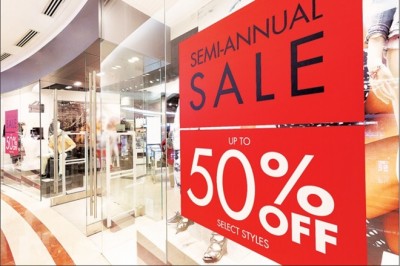
Remember the year 2000? After Y2K passed safely, that year some optimistic analysts predicted that India’s modern retail chains would reach 20 per cent market share by 2015. Two years after that supposed watershed, another firm declared that modern retail will be at around that level in 2020 – but wait! – only in the top 9 cities in the country. Don’t hold your breath: India surprises; constantly. As many have noted, “predictions are tough, especially about the future!” What we can do is reflect on some of this year’s developments that could play out over the coming year.
In many minds 2019 may be the Year of the Recession, plagued by discounting, but that demand slowdown has brewing for some time now. However, there’s another under-appreciated factor that has been playing out: while small, independent retailers can flex their business investments with variations in demand, modern retail chains need to spread the business throughout the year in order to meet fixed expenses and to manage margins more consistently.
To reduce dependence on festive demand, retailers like Big Bazaar and Reliance have been inventing shopping events like Sabse Sasta Din (Cheapest Day), Sabse Sachi Sale (Most Authentic Sale), Republic Day / 3-Day sale, Independence Day shopping and more for the last few years. In ecommerce, there’s the Amazon’s Freedom Sale, Prime Day, and Great India Festival, and Flipkart’s Big Billion Day Sale. This year retailers and brands went overboard with Black Friday sale, a shopping-event concept from the 1950s in the USA linked to a harvest celebration marked by European colonisers of North America. (The fact that Black Friday has a totally different connotation in India since the terrorist bombings in Bombay in 1993 seems to have completely escaped the attention of brands, retailers and advertising agencies.) Be that as it may, we can only expect more such invented and imported events to pepper the retail calendar, to drive footfall and sales. The consumer has been successfully converted to a value-seeking man-eater fed on a diet of deals and discounts. With no big-bang economic stimuli domestically and a sputtering global economy, we should just get used to the idea of not fireworks but slow-burning oil lamps and sprinklings of flowers and colour through the year. Retailers will just have to work that much harder to keep the lamps from sputtering.
Ecommerce companies have been in operating for 20 years now, but the Indian consumer still mostly prefers a hands-on experience. The lack of trust is a huge factor, built on the back of inconsistency of products and services. The one segment that has been receiving a lot of love, attention and money this year (and will grow in 2020) is food and grocery, since it is the largest chunk of the consumption basket. Beyond the incumbents – Grofers, Big Basket, MilkBasket and the likes – now Walmart-Flipkart and Amazon are going hard at it, and Reliance has also jumped in. Remember, though, that selling groceries online is as old as the first dot-com boom in India. E-grocers still struggle to create a habit among their customers that would give them regular and remunerative transactions, and they also need to tackle supply-side challenges. Average transactions remain small, demand remains fragmented, and supply chain issues continue to be troublesome. Most e-grocers are ending up depending on a relatively narrow band of consumers in a handful of cities. The generation that is comfortable with an ever-present screen is not yet large enough to tilt the scales towards non-store shopping and convenience isn’t the biggest driver for the rest, so, for a while it’ll remain a bumpy, painful, unprofitable road.
Where we will see rapid pick-up is social commerce, both in terms of referral networks as well as using social networks to create niche entrepreneurial businesses – 2020 should be a good year for social commerce, including a mix of online platforms, social media apps as well as offline community markets. However, western or East Asia models won’t be replicated as the Indian market is significantly lower in average incomes, and way more fragmented.
As a closing thought, I’ll mention a sector that I’ve been involved with (for far too long): fashion. In the last 8-10 decades, globally fashion has become an industry living off artificially-generated expiry dates. A challenge that I have extended to many in the industry, and this year publicly at a conference: if consumption falls to half in the next five years, and you still have to run a profitable business (obviously!), how would you do it? Plenty of clues lie in India – we epitomise the future consumers; frugal, value-seeking, wanting the latest and the best but not fearful about missing out the newest design, because it will just be there a few weeks later at a discount. If you can crack that customer base and turn a profit, you would be well set for the next decade or so.
(Published as a year-end perspective in the Financial Express.)
