
admin
October 7, 2023

Gargi Sarkar, Inc42
7 Oct 2023
The Indian ecommerce industry anticipates a stronger festive season compared to last year with over 20% sales growth, driven by the D2C segment’s expected 40% QoQ surge
The overlap of festive celebrations and wedding seasons, particularly with a later Diwali this year, is predicted to further stimulate demand
Despite the evident purchase intent, retailers are preparing for a possibly neutral festive season as economic challenges may hit consumers’ spending
As the festive season rings in its 10th anniversary in the ecommerce realm, giants like Flipkart and Amazon are prepping for their annual mega sales, set to begin on October 8. This year, however, they will face tough competition from newer players, including Meesho, which carved out a significant slice of the festive sales pie last year.
With new entrants like Tata Neu and JioMart, and fashion and lifestyle ecommerce players such as Myntra, Nykaa, and AJIO, the stage seems to be set for a fierce showdown.
For these ecommerce platforms, the annual festive sales aren’t merely about revenue generation; they’re pivotal customer engagement and acquisition opportunities. These events lure consumers with compelling discounts and promotions, giving a considerable boost to their yearly sales targets.
Through strategic marketing blitzes, they also aim to amplify brand recognition and glean insights into shopper preferences. Following last year’s subdued festivities, market analysts have predicted a revival in shoppers’ enthusiasm this year, forecasting a robust 20% surge in sales.
The festive season this year is set to witness a remarkable upswing in the ecommerce sector’s gross merchandise value (GMV). According to consulting firm Redseer, the GMV is anticipated to see an 18-20% surge, amounting to INR 90,000 Cr, a leap from INR 76,000 Cr in the previous year.
“The preceding quarter (April to June) witnessed a subdued performance in both offline and online retail sectors, primarily due to persistent inflationary pressures. However, the scenario is expected to undergo a transformation during the upcoming festive season. Festive periods tend to unleash latent consumer demand, prompting individuals to open their wallets more liberally,” Ashish Dhir, EVP (consumer and retail) of business consulting and services firm 1Lattice said.
There is a growing focus on electronics and appliances as traditional categories of interest. However, fashion and beauty are also emerging as important categories. The emergence of luxury goods is another important segment, which will likely make waves during the upcoming festive sales.
The ecommerce industry anticipates a stronger festive season compared to last year with over 20% sales growth, driven by the D2C segment’s expected 40% quarter-over-quarter (Q0Q) surge. However, average user spending is likely to remain flat.
Further, Tier III cities and beyond are becoming key revenue contributors, particularly in the fashion and beauty categories. Although consumer sentiment has improved, retailers are wary that buyers could maintain a cautious stance when it comes to spending lavishly.
While there is much to look forward to, let’s delve deeper into what shoppers and retailers can expect from this milestone year, which marks 10 years of festive sales fervour in the Indian ecommerce space.
D2C Brands To Lead The Charge
Notably, the Indian market is projected to have 500 Mn+ online shoppers by 2030, growing at 12% compound annual growth rate from 205 Mn in 2022, according to a 2020 report.
As far as the upcoming quarter is concerned, industry experts forecast that the homegrown ecommerce sector will likely see impressive growth of over 20%.
Playing a pivotal role in this escalation will be the D2C segment, predicted to grow more than 40% QoQ from October to December. Established ecommerce giants like Amazon, Flipkart and Meesho could also be looking at an approximate 30% uptick in sales, according to experts.
Tracing back to the inaugural ecommerce festive sales in 2014, the industry’s GMV was recorded at INR 27,000 Cr. Fast forward to 2023, the GMV is poised to touch an impressive INR 5,25,000 Cr, a nearly 20-fold increase, per a RedSeer report.

Festive Ecommerce OffersAverage User Spending Could Remain Muted
Despite the rise in GMV in 2022 compared to 2021, average expenditure per shopper held steady at INR 5,200 during the initial four days of the festive season sale, according to a RedSeer report.
This year doesn’t seem poised for a significant spike in individual user spending either. However, there is a silver lining in the form of rising consumer activity in smaller towns and cities. On the flip side, elevated living costs in metropolises like Bengaluru and Mumbai could dent extravagant consumer spending, noted Devangshu Dutta, the founder and CEO of Third Eyesight, a boutique management consulting firm.
Yet, with the growing online shopper populace in these cities, there’s potential for the average order value (AoV) to reduce as more users flock online to shop.
“As the online shopping base continues to expand, the average spending per user naturally tends to decrease. This phenomenon occurs as more people venture into ecommerce, with platforms like Amazon and Flipkart extending their reach to cover a broader audience. However, it’s essential to note that this drop in the average ticket size is a common trend when the customer base expands,” Sangeeta Verma, director of digiCart India said.
Consumers Sentiment Positive, But Retailers Remain Realistic
With the waning impact of inflation, India is witnessing a positive shift in consumer sentiment from the previous year. Unlike several developed nations wrestling with inflation, India has remained largely untouched by its dual impact on demand and supply, experts suggest.
For example, Flipkart delivered strong gross merchandise value (GMV) and sales growth in the company’s second quarter of the financial year 2023-24 (FY24), Walmart’s chief financial officer John David Rainey said during an earnings call.
“In India, the distinguishing factor in terms of festive demand is that it’s not merely brand-driven; consumers here are eager to spend, and the purchase intent is notably high. Unlike some developed economies grappling with inflationary concerns, both the demand and supply sides in India have not seen any impact of inflation. The consumer demand continues to stay buoyant,” Chirag Tanjeja, cofounder and CEO of GoKwik said.
The overlap of festive celebrations and wedding seasons, particularly with a later Diwali this year, is predicted to further stimulate demand, 1Lattice’s Dhir added.
Nevertheless, a note of caution reverberates among retailers. Despite the evident purchase intent, retailers are preparing for a possibly neutral festive season as economic challenges may hit consumers’ spending.
However, a recent study conducted by Nielsen Media India and commissioned by Amazon India says otherwise. According to the report, 81% of consumers are enthusiastic about shopping during the upcoming festive season. More importantly, this positive sentiment towards online shopping is not limited to metropolitan areas but Tier II and III cities and towns.
Ecommerce Platforms Ramp Up Efforts To Woo Sellers
In this year’s festive season, a standout trend is ecommerce giants’ intensified drive to court and captivate sellers with multiple strategic offerings like enticing commission rates, equipping them with advanced selling tools, enhancing the overall selling experience, and broadening their outreach.
Recently, ecommerce heavyweight Meesho made its platform accessible to non-GST registered sellers too. Not too behind in the race is Amazon India, which unveiled its multi-channel fulfilment (MCF) last month for D2C brands and retailers. This initiative is expected to aid sellers in managing customer orders from diverse channels.
Meanwhile, Flipkart flaunted its impressive seller growth, citing a tally surpassing 1.4 Mn — a notable 27% jump since 2022. Meesho currently has a seller base of 1.3 Mn and Amazon has over 1.2 Mn sellers.
Echoing the seller-side optimism, digiCart’s Verma said, “As a seller, we hold a very bullish sentiment. We’re so confident that we started stocking up well in advance. The robust build-up is evident from the current numbers. Mature sellers will expand into existing and new categories after.”
A recent survey by Redseer revealed that sellers are projecting a 15% increase in festive sales year-on-year. Even though the recent sales momentum on ecommerce platforms has been somewhat subdued — with only 40% of those surveyed reporting a 10% quarterly hike — there’s palpable enthusiasm for a significant festive sales boost across a multitude of product sectors.

Who Will Drive The Festive Ecommerce Growth?
Tier II and III cities and towns are expected to be the biggest contributors in this year’s festive season sales. According to experts, customers from these cities and towns are keen on giving their wardrobes and beauty kits a festive makeover. Although Tier I cities are spoilt for choice with numerous offline stores, spanning both legacy and contemporary brands, such luxuries are scarce in smaller cities.
However, this is steadily changing now. Some of the prominent D2C brands that have emerged from the country’s Tier II & III towns and cities are Raipur-based Drools, Mohali-based Lahori, Kanpur-based Phool, Coimbatore-based Juicy Chemistry, just to name a few.
Furthermore, consumer demand in the eastern regions of the country, along with enhanced connectivity in the Northeast, is also on the rise. Semi-urban and rural areas are fast emerging as the driving force behind the new wave of ecommerce growth, a trend expected to be pronounced during the festive season.
Considering that a whopping 65% of India’s populace resides in rural regions, the untapped ecommerce potential is immense, according to the Economic Survey 2022-23.
Yet, fostering trust will be paramount. Residents in these regions typically bank on word-of-mouth endorsements and recommendations from local retailers when exploring new products and brands. This is expected to give local D2C brands a much-needed boost in the upcoming festive season.
What’s Beyond The Festive Sale Fervour
As festive trends leave their mark in the ecommerce landscape, we’re likely to witness several transformative strategies. Central to this evolution will be Buy Now, Pay Later (BNPL) schemes. Yet, the traditional cash-on-delivery remains a preferred choice for many.
Ecommerce brands are increasingly prioritising customer retention, recognising that fostering enduring relationships offers more value. This shift is evident in the rise of loyalty programmes.
Notably, Flipkart introduced “Flipkart VIP” – a direct competitor to Amazon’s Prime – right before the festive sales kickoff. Simultaneously, Meesho debuted a loyalty initiative, targeting both customers and sellers.
Apart from the dominant themes, a few other noteworthy trends are slated to redefine the festive shopping narrative. Black Friday, for instance, is set for a revamp. Gen Z’s influence, especially their propensity to favour specific brands, will be significant.
Last year, for D2C brands, the Black Friday event overshadowed the traditional Diwali and Dusshera festivals in sales figures. GoKwik data indicates that brands on their platform saw a staggering 63% rise in GMV during the Black Friday sale, contrasting starkly with the 10-day Diwali sales.
Also, Christmas, too, is evolving. The allure of winter holidays and modern gifting practices are propelling this transformation, turning Christmas into a significant commercial event.
Given that the final leg of 2023 (October to December) will host almost all the major Indian festivals, the ecommerce players are in for a treat. Even though there will be a lot of cut-throat competition among ecommerce players, there will be no dearth of opportunities for them to woo customers who are eager to splurge to add more flavours to their festive celebrations this year. Going ahead, we will keep a close eye on the ecommerce players and D2C brands that will emerge triumphant after the great Indian festive showdown.
(Published in Inc42)
admin
March 29, 2022

Writankar Mukherjee & Sagar Malviya, Economic Times
Kolkata / Mumbai, March 28, 2022
The war for instant grocery delivery is going to intensify with Reliance Retail entering the segment with its JioMart platform. The company will start the trial in next 2-4 days in Navi Mumbai for ‘JioMart Express’ which will sell and deliver around 2,000 stock keeping units (SKUs) in a few hours, two senior industry executives aware of the plans said.
Reliance has plans to take instant grocery sales to over 200 cities and towns where JioMart is currently operational by end of next quarter and double the reach in next few months to make it India’s largest instant grocer. The company will also tap its network of kirana stores for such fulfillment, apart from its own chain of grocery stores, the executives said. It is testing a separate app for express grocery deliveries as well as integrating it into the JioMart platform.
The plans of India’s largest brick-and-mortar retailer to enter quick commerce is to further grow its e-grocery business and Reliance will compete against Tata-owned Big Basket which will launch it in April, Zomato-funded Blinkit, Swiggy’s Instamart, Walmart-owned Flipkart Quick and Zepto. Earlier this year, Reliance had led a $240 million funding round in quick commerce hyperlocal firm Dunzo owning the largest 26% stake.
“JioMart Express will utilize Dunzo in the markets where it is strong like the metros as well as its own delivery fleet. JioMart Express can be quickly scaled up since Reliance has onboarded lakhs of kiranas under its B2B programme ‘JioMart Partner’ who buys the merchandise from Reliance and sells through the JioMart platform,” an executive said.
An email sent to Reliance Retail remained unanswered till Sunday press time.
Devangshu Dutta, chief executive of consulting firm Third Eyesight, said Reliance needs to ensure that it is in the right catchment which has a high concentration of demand, low competition and keep supply centres close to it to make instant grocery service profitable. “Margin contribution is low in grocery and hence apart from these there could be a higher focus on high margin products in the assortment,” he said.

To be sure, quick commerce is not new for Reliance Retail. It has been delivering orders in less than three hours placed through Reliance Digital online or app for smaller consumer electronics such as mobile phones and laptops. “However, order volumes are going to be much more frequent in grocery, and hence it would need a robust backend and delivery fleet,” an executive said.
While the pilot in Navi Mumbai will start with 1-3 hours delivery time, Reliance will progressively reduce the delivery time to match the industry standard of 45 minutes to an hour and will also expand the range. According to researcher RedSeer, India’s quick commerce market is all set to grow 15 times by 2025 reaching a market size of close to $5.5 billion. Online shoppers in the metros have been using quick commerce for their unplanned and top-up purchases.
(Published in Economic Times)
Devangshu Dutta
December 17, 2019
Remember the year 2000? After Y2K passed safely, that year some optimistic analysts predicted that India’s modern retail chains would reach 20 per cent market share by 2015. Two years after that supposed watershed, another firm declared that modern retail will be at around that level in 2020 – but wait! – only in the top 9 cities in the country. Don’t hold your breath: India surprises; constantly. As many have noted, “predictions are tough, especially about the future!” What we can do is reflect on some of this year’s developments that could play out over the coming year.
In many minds 2019 may be the Year of the Recession, plagued by discounting, but that demand slowdown has brewing for some time now. However, there’s another under-appreciated factor that has been playing out: while small, independent retailers can flex their business investments with variations in demand, modern retail chains need to spread the business throughout the year in order to meet fixed expenses and to manage margins more consistently.
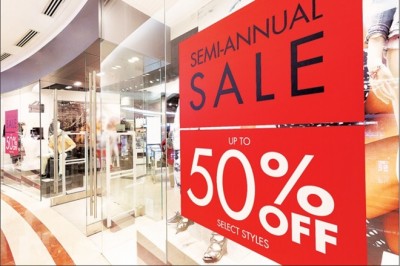
To reduce dependence on festive demand, retailers like Big Bazaar and Reliance have been inventing shopping events like Sabse Sasta Din (Cheapest Day), Sabse Sachi Sale (Most Authentic Sale), Republic Day / 3-Day sale, Independence Day shopping and more for the last few years. In ecommerce, there’s the Amazon’s Freedom Sale, Prime Day, and Great India Festival, and Flipkart’s Big Billion Day Sale. This year retailers and brands went overboard with Black Friday sale, a shopping-event concept from the 1950s in the USA linked to a harvest celebration marked by European colonisers of North America. (The fact that Black Friday has a totally different connotation in India since the terrorist bombings in Bombay in 1993 seems to have completely escaped the attention of brands, retailers and advertising agencies.) Be that as it may, we can only expect more such invented and imported events to pepper the retail calendar, to drive footfall and sales. The consumer has been successfully converted to a value-seeking man-eater fed on a diet of deals and discounts. With no big-bang economic stimuli domestically and a sputtering global economy, we should just get used to the idea of not fireworks but slow-burning oil lamps and sprinklings of flowers and colour through the year. Retailers will just have to work that much harder to keep the lamps from sputtering.
Ecommerce companies have been in operating for 20 years now, but the Indian consumer still mostly prefers a hands-on experience. The lack of trust is a huge factor, built on the back of inconsistency of products and services. The one segment that has been receiving a lot of love, attention and money this year (and will grow in 2020) is food and grocery, since it is the largest chunk of the consumption basket. Beyond the incumbents – Grofers, Big Basket, MilkBasket and the likes – now Walmart-Flipkart and Amazon are going hard at it, and Reliance has also jumped in. Remember, though, that selling groceries online is as old as the first dot-com boom in India. E-grocers still struggle to create a habit among their customers that would give them regular and remunerative transactions, and they also need to tackle supply-side challenges. Average transactions remain small, demand remains fragmented, and supply chain issues continue to be troublesome. Most e-grocers are ending up depending on a relatively narrow band of consumers in a handful of cities. The generation that is comfortable with an ever-present screen is not yet large enough to tilt the scales towards non-store shopping and convenience isn’t the biggest driver for the rest, so, for a while it’ll remain a bumpy, painful, unprofitable road.
Where we will see rapid pick-up is social commerce, both in terms of referral networks as well as using social networks to create niche entrepreneurial businesses – 2020 should be a good year for social commerce, including a mix of online platforms, social media apps as well as offline community markets. However, western or East Asia models won’t be replicated as the Indian market is significantly lower in average incomes, and way more fragmented.
As a closing thought, I’ll mention a sector that I’ve been involved with (for far too long): fashion. In the last 8-10 decades, globally fashion has become an industry living off artificially-generated expiry dates. A challenge that I have extended to many in the industry, and this year publicly at a conference: if consumption falls to half in the next five years, and you still have to run a profitable business (obviously!), how would you do it? Plenty of clues lie in India – we epitomise the future consumers; frugal, value-seeking, wanting the latest and the best but not fearful about missing out the newest design, because it will just be there a few weeks later at a discount. If you can crack that customer base and turn a profit, you would be well set for the next decade or so.
(Published as a year-end perspective in the Financial Express.)
Devangshu Dutta
July 30, 2015
Much has been written recently, with more than a touch of surprise, about ecommerce companies opening physical retail stores. Whether it is Amazon, Birchbox and Bonobos in the US, Spartoo in France, Astley Clarke in the UK or FirstCry and Flipkart in India, young tech-based ecommerce businesses are adopting the ways of the dinosaur retailers that they were apparently going to drive into extinction.
Perhaps, the seeds of the surprise lie in the perception that the ecommerce companies themselves built for their investors, the media and the public, that it was only a matter of time that the traditional retail model would be dead.
Or perhaps we should pin it on their investors for keeping the companies on the “pure-play” path so far – venture funds that have invested in ecommerce have largely taken the view that the more “asset-light” the business, the better it is; so they’re far happier spending on technology development, marketing, salaries, and even rent, than on stores and inventory.
After a bloody discounting and marketing battle, in a few short years, there are now a handful of ecommerce businesses left standing in a field littered with dead ecommerce bodies, surrounded by many seriously wounded physical retailers who are trying to pick up unfamiliar technology weapons. And their worlds are merging.
Which is a Stronger Building Material – Bricks or Clicks?
Online business models offer some clear strengths. Etailers have a reach that is unlimited by time and geography – the web store is always up and available wherever the etailer chooses to deliver its products.
An ecommerce brand’s inventory is potentially more optimised, because it is held in one location or a few locations, rather than being spread out in retail stores all across the market including in those stores where it may not be needed.
However, we forget that consumers don’t really care to have their choices and shopping behaviour dictated by the business plans of ecommerce companies or their investors. The fact is that physical retail environments do have distinct advantages, as etailers are now discovering.

Firstly, shopping is as much an experiential occasion as it is a transaction comprising of products and money. In fact, the word “theatre” has been used often in the retail business. For products that have a touch-feel element, the physical retail environment continues to be preferred by the customer. Of course, there are products that could be picked off a website with little consideration to the retail environment. For standard products such as diapers or a pair of basic headphones, online convenience may win over the need for a physical experience. However, non-standard products such as apparel or jewellery lend themselves to experiential buying, where a physical retail store definitely has an edge.
Shopping in a physical retail environment is also a social and participative activity. We take our friends or family along, we ask for their opinion and get it real-time. The physical retail environment lends itself to the consumer being immersed in multiple sensory experiences at the same time. These aspects are not replicable even remotely to the same degree by online social sharing of browsed products, wish-lists and purchases, nor by virtual smell and touch (at least not yet!).
In a market that is dominated by advertising noise, a physical store also helps to create a more direct and stronger connect for the consumer with the brand than any website or app can. An offline presence creates credibility for a brand, especially in an environment where online sales are dominated by discounts and deals, and many brands have risen and fallen online in the customer’s eyes during the last 3-4 years.
As a matter of fact, every store acts as a powerful walk-in billboard for the brand. If used well, the store conveys brand messages more powerfully than pure advertisements in any form. This reality has been embraced by retailers for decades, as they have created concept stores and flagship stores in locations with rents and operating costs that are otherwise unviable, except when you see it as a marketing investment.
Showrooming vs. Webrooming
As ecommerce has grown and brands have become available across channels, offline and online, the retail sector has been faced with a new challenge: customers browsing through products in the store, but placing orders with ecommerce sites that offered them the best deal. This obviously meant that retailers were, in a sense, running expensive showrooms (without compensation) on behalf of the ecommerce companies! The industry adopted the term “showrooming” to describe the phenomenon.
However, ecommerce businesses are now getting a taste of their own medicine as retailers are benefitting from a reverse traffic.
Consumers have now started using websites to conveniently do comparative shopping without leaving the comfort of their homes, and collect information on product features and prices but, once the product choice has been narrowed down, the final decision and the actual purchase takes place in a physical store.
This is described with a slightly unwieldy term, “webrooming”. This is one among the reasons that lead to consumers abandoning browsing sessions and carts when they’re online.
Bricks AND Clicks
The wide split between offline and online channels is mainly because traditional offline retailers have been slow to adopt online and mobile shopping environments.
Most physical retailers around the world have approached ecommerce as an after-thought, with a “we also do this” kind of an approach. Ecommerce has typically been a small part of their business, and not typically a focus area for top management. So, in most cases the consumer’s attitude has also reflected these retailers’ own indifference to their ecommerce presence. However, due to the accelerating penetration of mobiles, tablets and other digital devices, a serious online transactional presence is now vital for any retailer that wants to remain top of the consumer’s list.
On the other hand, ecommerce companies, as mentioned earlier, have so far mainly stuck to “pure-play” online presence due to their own reasons. However, with passage of time there is bound to be a convergence and eventually a fusion between channels.
The Journey to Omnichannel
Omnichannel today, in my opinion, is still more a buzzword today than a reality. Being truly omnichannel requires the brand or retailer to offer a seamless experience to the customer where the customer never feels disconnected from the brand, regardless of the channel being used during the information seeking, purchase and delivery process. For instance, a customer might seek initial comparative information online, step into a department store to try a product, pay for it online, have the product delivered at home, and be provided after-sales support by a service franchisee of the brand.
Very few companies can claim to offer a true omnichannel experience, due to internal informational and management barriers. However, having an effective multi-channel presence is the first step to creating this, since operating across different channels needs a completely different management mind-set from the original single-channel business. Having a presence across different channel means that a retailer will need to juggle the diverse needs. Capabilities, processes and systems that are fine-tuned for one channel, may not be fully optimal for another channel. This requires the retailer to restructure its organisation, systems and processes to handle the different service requirements of the various channels.
For instance, brick-and-mortar retailers moving online need to rethink in terms of the service (“always open”), speed (“right now”), and scale (“everywhere”). A traditional retail organisation is seldom agile enough to work well with the new technology-enabled channels as well.
An etailer opening physical stores, on the other hand, needs to embrace product ranging and merchandising skills to allocate appropriate inventory to various locations, as well as the ability to create and maintain a credible, distinctive store environment – in essence, inculcating old-world skills and overheads that they thought they would never need.
The retail business is not divided black-or-white between old-world physical retailers and the upstart online kids – at least the consumer doesn’t think so.
Retailers need to and will see themselves logically serving customers across multiple channels that are appropriate for their product mix. They need to mould their business models until they achieve balance, proficiency and excellence across channels, and eventually become truly omnichannel businesses. It doesn’t matter from which side of the digital divide they began.
