
admin
August 9, 2024

Manu Balachandran, Forbes India
9 August 2024
If it hadn’t been for a kind manager at Canara Bank in Malappuram district of Kerala, Shaju Thomas would have probably continued being a journalist.
It was around 2005, and Thomas had wanted a loan of ₹10 lakh from the bank, the only SME (small and medium enterprise) branch in his district, to keep his entrepreneurial venture going. The manager, impressed by the 26-year-old’s perseverance, finally decided to take a gamble on him, even though his predecessor had thought otherwise.
“It was God’s intervention,” Thomas says about that time. “If it weren’t for that money, Popees wouldn’t have existed today.” Today, Thomas runs Popees Baby Care, a business that rakes in well over ₹100 crore a year and has become one of Kerala’s best-known brands in a little over two decades. The company produces everything from clothes to soaps and diapers, retailing them through 70 exclusive outlets and some 8,000 other retail outlets across the country.
Three other stores, all in the Middle East, are being readied this year, which will see Popees go head-to-head with some of the world’s leading baby care brands in malls across Dubai, Abu Dhabi and Sharjah. “I am a believer in Indian cotton being the best,” Thomas tells Forbes India from his office in Thiruvali in Kerala. “Indian manufacturing is also the best. That gives me the confidence. I am obsessed with quality, and that’s at the centre of everything we do. Money is only secondary.”
Last year, Popees posted annual revenues of ₹122 crore and is now setting sights on a topline of ₹250 crore by 2025, before growing to ₹1,000 crore by 2027. The brand sells garments between 18,000 kg and 22,000 kg a month and employs over 1,400 people at its two factories in Kerala and Karnataka. “I am in this business not to make huge gains and profits,” says Thomas, managing director of Popees Baby Care. “We are in the business of baby care, and we must be very careful about everything we do because it involves babies. What I want is satisfaction at the end of the day.”

Last year, Thomas and his wife, Linta Jose, acquired a majority stake in Chennai-based publicly traded Archana Software Limited and renamed the company as Popees Cares Limited. Now, the privately held Popees Baby Care will merge with Popees Cares Limited, before raising private placements, as the company targets aggressive growth in the coming years.
“This year, we are not being very aggressive,” Thomas says. “We want to focus on the listing and merger. We also want to premiumise our collections because our customer profiles are changing. There are more premium customers coming into the market. What we are focussed on is an Ebidta margin of between 34 and 38 percent.” Ebitda refers to earnings before interest, taxes, depreciation, and amortisation.
India’s childcare product market is expected to grow between 13 and 14 percent annually to ₹5.4 lakh crore by 2028, with younger parents focusing on branded apparel and consumables, according to a report by Redseer Consultancy. It also helps that India is the world’s most populous country, and has one of the highest birth rates globally, with 16 births per thousand people, almost 1.5 times that of developed countries. A growing Tier II and III market only adds to the potential for companies such as Popees.
“Global brands carry with them the momentum and visibility that has been built over decades, which translates into trust as well as aspirational value,” says Devangshu Dutta, founder and CEO of Third Eyesight. “But in many cases their pricing is higher than what would be affordable for most Indian consumers. Therefore, there is space for Indian companies to create strong brands that address both factors, trust and value.”

Taking the Risk
Thomas has always had an entrepreneurial streak in him and began venturing out on his own after school. Much of that, he says, is hereditary, coming from a family that had been in business, supplying rubber to the likes of MRF. Passionate about photography, Thomas had set up a small studio in Nilambur, his hometown in Kerala that is known for its teak wood, after his schooling.
Simultaneously, he studied economics before going on to finish his diploma in journalism from the Calicut Press Club in 2000. “Nobody wanted to study economics back then,” Thomas says. “Now it’s in huge demand. But I realised the importance of studying concepts such as scarcity, demand, and supply, now.”
After his graduation in journalism, Thomas picked up work with the Malayalam newspaper, Mangalam, and was soon posted to the hills of Wayanad. Around the same time, he invested in a baby care shop in Manjeri, a town near Kozhikode in Kerala. “I knew there was potential in the sector,” Thomas says.
Being an investor made him aware of the nuances involved in the baby care segment. To begin with, there were no brands, and clothes were often brought in bulk from garment manufacturing units and sold in the state for as little as ₹5. “Very often, these clothes would come in big cartons with naphthalene balls and smelled of sulfur,” Thomas says. “And regardless of that, they sold like hot cakes. Sometimes, people would come from hospitals after childbirth, pick up these clothes, and make the newborn wear them.”
That’s when Thomas realised the massive underlying opportunity in manufacturing good quality, branded clothes for children. “There were big brands for everybody except kids,” Thomas says. He soon packed his bags and went off to Tirupur in Tamil Nadu, India’s then-thriving garment manufacturing capital, to understand how he could venture into the business. With him, he also carried a few pieces of child wear that he had sourced from friends abroad, as a reference for the quality of the product that he was looking to make.
“I was thinking both domestic and international,” Thomas says. But Tirupur was something of a rude shock. Thomas found himself in a market near the railway station, with tiny shops, that had their stitching units outside, from where clothes were dispatched to various states under different labels. “When I enquired with them, they asked me if I wanted to sell domestic or international,” Thomas says. “If it was domestic, I had to buy from there. If it was international, I had to have a minimum order quantity. It was the first time I had heard of that concept.”
But Thomas wasn’t startled. Instead, he found a supplier, who would meet his demand for quality, and soon began working with a minimum order quantity, which is usually the minimum number of units a business is willing to sell to a customer in a single order. He also turned down an offer to join a television news channel, IndiaVision, much to the disdain of his family who had wanted him to remain a journalist.
Starting his own business also came with its own set of challenges. For one, in an era when customers didn’t bother about branded clothes for their kids, and when cheaper alternatives were easily available, Thomas’ products were significantly expensive. He could only sell for ₹60 what was otherwise available at ₹6.
“People in the Malabar region have a mindset to help others,” Thomas says. “Shops in the region started keeping my products. That gave me confidence.” Thomas also realised that he needed to set up a factory in Kerala if he had to make timely deliveries as business was slowly picking up steam, and shipments from Tirupur took time.
Saviour at the Bank
Setting up a small factory was no cheap affair. His family had already been opposed to the idea of doing business, which meant Thomas now had to turn to banks to raise capital. “I made a project report, and submitted it to the bank,” Thomas says. It was a branch where his father, a businessman, had a loan limit of ₹1 crore. “I wanted ₹10 lakh. But the manager wasn’t convinced by my business plan. He asked me ‘why don’t you start a curry powder business’ since people always want food. I told him babies are born every day and clothes for them were essential too.”
But his plea fell on deaf ears and was finally sanctioned a loan for ₹1 lakh without collateral. With his personal savings of another ₹4 lakh, he bought machines from Chennai. “All I knew was that if I set out to do something, I will complete it,” Thomas says. He soon set up a small factory, combining a few rooms in Thirunelly in Kerala. The idea was that the raw material would come from Tirupur, and the workforce in Kerala would do the final stitching before it was dispatched.
Thomas, however, was still desperate for working capital to keep the business running. It was around this time that a new manager had come to the branch and Thomas would visit him every day to pitch his business. “I used to tell him about my ambitions,” Thomas says. “I was particular about cleanliness and having everything in order and would invite him to my factory.” Finally, after much persuasion, the manager visited the factory and was quite impressed. “Within two days, he added another ₹9 lakh to my loan, and that’s how I started.,” Thomas says. “If that hadn’t happened, I would have shut down.”
With the additional funds, Thomas soon began expanding and selling products across Kerala. By 2005, Thomas was married, and his wife also joined him in the business, helping design products. His background in journalism also helped, as he began putting advertorials in evening newspapers about the importance of buying high-quality kids’ wear. By 2010, Popees changed its logo, a turning point in its growth trajectory. That splendid run lasted until 2019, Thomas says, when Popees would only be able to meet 70 percent of its demand and had already been distributing in markets including Punjab and New Delhi.
It was around this time that Thomas began toying with the idea of its retail stores. “My cycle was very long,” Thomas says. “Once you reach a certain turnover, you need to reduce your time. That’s how I thought of my showroom. Until then they were sold in other retail outlets.” The yarn for Popees clothes comes from organic cotton farmers in Ahmedabad, and the manufacturing is done in Tirupur, based on designs given by Popees. Only the final assembly and last round of stitching is done in its factory.
“I was scared to foray into retail,” Thomas says, “My business was already at about ₹74 crore, and I was worried if stores would stop taking my products. With floods in Kerala and Nipah virus in Kozhikode, there was uncertainty already in the market.”
Still, Thomas took the plunge and set up a proto store outside the company’s headquarters. That was a success, with customers flocking to the store and buying in bulk, with the store generating ₹5 lakh in sales. In 2019, Popees opened its first retail outlet in a 1,500 sq ft showroom in Kochi, before starting in Trivandrum and Bengaluru.
But Covid-19 came as a dampener. In early 2020, Thomas had almost finalised a deal with a private equity (PE) major to raise ₹100 crore for a 26 percent stake sale. The due diligence had been completed, and everything seemed on track before the PE firm pulled out after uncertainties about the future. Thomas had also met actor Aishwarya Rai Bachchan to bring her on board as the brand ambassador for Popees.
With Covid-19 shutting down operations, Popees turned to manufacturing masks and clothes for children, all given for free in Kerala during the pandemic. Simultaneously, though, it went on an expansion spree with its retail outlets going from some six stores to over 30 in two years. Today, the company has 70 stores, 35 of which are franchise-invested, company-operated while the others are franchise-owned, franchise-operated. Twenty more stores are expected to be completed this year, with the company gearing up for a launch in the UK and Australia, apart from the UAE.
There is also a focus on omni-channel distribution, with Thomas saying that as much as 30 percent of his clientele chooses to buy products online. The company already sells on ecommerce platforms. Today, it has the capacity to make 5 lakh garments monthly.
Alongside, it has moved to manufacturing everything from baby oil and soap to baby wipes and fabric wash. The product range includes toys, baby soap, body wash, shampoo, lotions, and towels, among others, although a significant share of the sales still come from clothes. “I have three children, and much of what we did was also keeping them in mind,” Thomas says.
That’s why he prefers not to give discounts on products, instead focusing entirely on the quality. “I am obsessed with product and quality,” Thomas says. “We can also provide discounts after raising our markups significantly. But we don’t want such high margins.” The company has now hired a new designer in Bengaluru to bring in a premium collection, which Thomas says, will put Popees in a different league in the next few years.
“We don’t want a lot of money,” Thomas says. “We didn’t have children for a few years after marriage. People are praying and waiting for children. So, you have a responsibility to give good products. If you give good products, they will always come.”
“While the large proportion of those are born to families in low-income segments, there is still a substantial number born to households that are middle and upper income,” adds Dutta of Third Eyesight. “Also, as incomes are growing and the size of families is reducing, the budget available per baby is climbing, which is obviously a strong driver of market growth.”
All that means, for Thomas, the baby steps are now complete. It’s time for the sprint, and the 47-year-old is all set for that.
(Published in Forbes India)
admin
February 21, 2024
The ability of fashion businesses to endure and thrive in the face of stiff competition and changing market dynamics is all about adapting to innovation, customer-centricity, and strategic planning. The correlation between high performing fashion business and product innovation is undeniable.
This panel discussion brings Design and Business Heads together to brainstorm on how fashion companies can devise strategies to drive innovation to remain competitive, meet evolving consumer expectations, and stay ahead of the race.
Moderator: Devangshu Dutta, Founder & Chief Executive, Third Eyesight
Panelists:
admin
February 15, 2024
An insightful must-watch discussion, moderated by Devangshu Dutta (Founder, Third Eyesight), with venture capital fund managers, investors and entrepreneurs in retail on what factors attract investors to retail businesses.
The panelists included Vikram Gupta (Founder & Managing Partner, IvyCap Ventures), Amar Nagaram, (Co-Founder, Virgio), and Vikram Gawande (Vice President, Growth, Blume Ventures).
admin
December 12, 2023
Akshit Pushkarna, Afaqs
12 December 2023
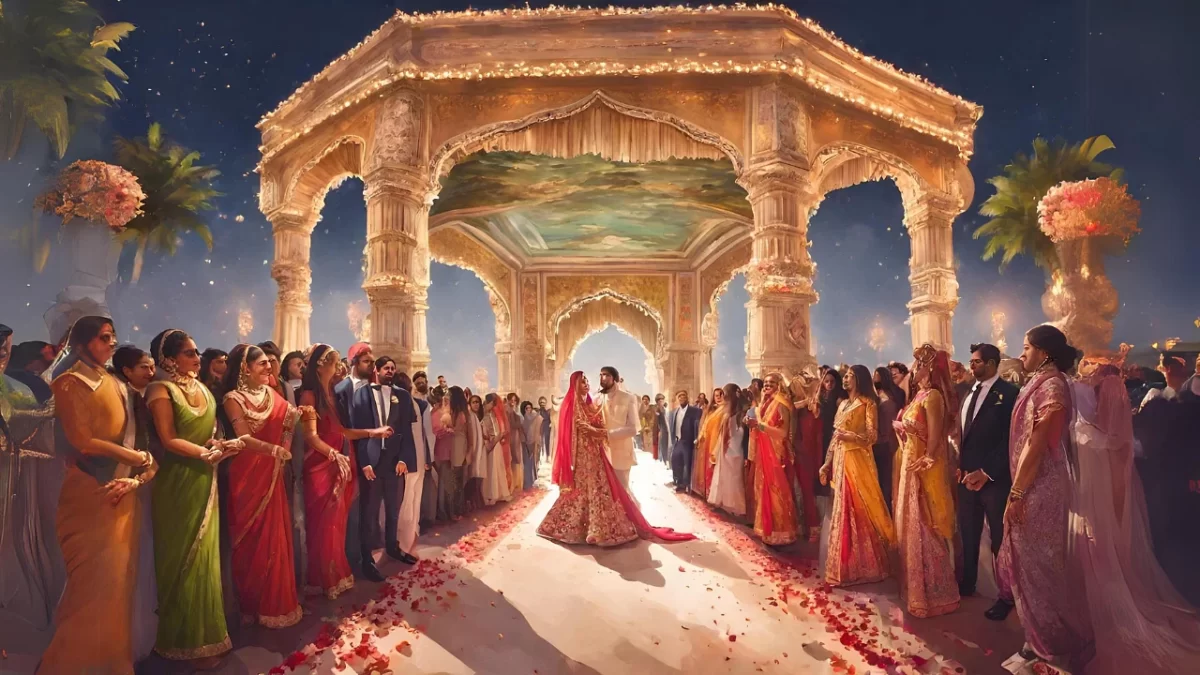
The season for Indian weddings, usually spanning October to December, experienced an unusual twist due to Hindu calendar nuances this year, resulting in a shorter duration. The unexpected shift has upended the conventional decrease in marriage ceremonies, resulting in a condensed surge of weddings.
A report by the Confederation of All India Traders (CAIT) anticipates Rs 4.74 lakh crore in business earnings from the 38 lakh marriages expected this wedding season, marking a historic high. In comparison, the corresponding period last year witnessed around 32 lakh weddings with total expenses amounting to Rs 3.75 lakh crore.
This presents brands involved in the wedding business with an ample opportunity to capitalise and drive forth their business revenues for the year to come. Three key brands associated with wedding business are steering their strategies to align with the evolving preferences of Indian consumers in the lucrative wedding market.
A more region-specific focus for Shaadi.com’s marketing communication
In a conversation with afaqs!, Adhish Zaveri, VP-marketing, Shaadi.com, a prominent online matrimonial and matchmaking service, speaks about how digital media is more relevant for brand building for wedding-oriented businesses now, eclipsing the relevance of traditional TV and out-of-home advertising. He sees mass media serving only reminders to prompt registrations, while the primary focus shifts towards digital platforms.
This change involves a robust regional focus within our marketing playbook, recognising the dynamic shifts in matrimonial behavior across diverse geographies
Adhish Zaveri, VP-marketing, Shaadi.com
“This season, we have incorporated a paradigm shift in our marketing strategy, driven not only by the upswing in weddings but also by observing how Indians approach finding life partners, with nuances varying across regions. This change involves a robust regional focus within our marketing playbook, recognising the dynamic shifts in matrimonial behaviour across diverse geographies,” he says.
The campaign is driven by the company’s commitment to assure individuals of finding a match within a specified timeframe. The pledge to successfully matchmake within 30 days, with a refund guarantee, serves as the crux of their messaging this season. “Tailoring our approach to each market, we’ve executed this promise uniquely.”
This approach sees the company partner with people of influence across markets to drive better visibility. For the Hindi market, they’ve forged a strategic partnership with Jasleen Royal, the acclaimed singer behind popular wedding songs like Din Shagna Da and Hiriye. Leveraging her association, Zaveri says they have orchestrated a robust social media engagement strategy.
“In the Tamil market, we’ve employed celebrities who recently tied the knot as our ‘matchmakers.’ Adapting a viral reel from this region, featuring the celebrity couple, became a cornerstone of our campaign. While regional focus has always been part of our strategy, this time we’ve approached it through a celebrity lens, creating bespoke strategies for each South Indian market. Although distinct, each strategy is unified by a celebrity-centric approach. From featuring Supriya and Sachin Pilgaonkar for Marathi audiences to enlisting Jasleen Royal for the North, and partnering with Ashok Selvan and Keerthi Pandian for the South – we’ve delved deeper into regional dynamics,” he adds.
Zaveri believes the success of the approach is evident, particularly in the South, where the company’s market presence has increased dramatically post-campaign, providing them an opportunity to further invest in the region.
A focus on the Wedding planning business for Vikaas Gutgutia’s Ferns N Petals
In the backdrop of a season that signals prosperity, Vikaas Gutgutia, founder and managing director, Ferns N Petals (FnP), reflects on the trajectory of its business, navigating through the challenges of a pandemic-induced wedding lull.
He says FnP strategically sustained its business in 2022, aligning with the resumption of the wedding business. With the focus shifting to a year poised for business takeoff, the company plans on exploring the wedding planning business with their new business line Shaadi Central.
“With a legacy in the wedding industry, FnP has historically undertaken various wedding-related tasks, albeit not comprehensively under one roof or in an organised manner. This year marks a strategic shift as the company introduced ‘Shaadi Central,’ a luxury wedding company offering a one-stop solution for all wedding needs.”
“This holistic approach aims to streamline and elevate the wedding planning experience, allowing partners and their families to focus on the approaching wedding date with ease. The innovation and consolidation under ‘Shaadi Central’ have sparked notable interest and engagement in the new business venture. Having weathered a less-than-ideal summer season and traditionally subdued winter numbers, we anticipate a robust revenue surge, making the current season particularly promising,” he asserts.”
The business setup was sparked by Gutgutia’s assertion that, with the evolving landscape of wedding planning, which has made destination weddings and grandeur now necessary for some, the role of wedding planners has become significantly prominent. The launch’s alignment with the business boom anticipated with the wedding season of 2023, Gutgutia underscores the importance of timing in business.
The innovation and consolidation under ‘Shaadi Central’ have sparked notable interest and engagement in the new business venture.
Vikaas Gutgutia, founder and managing director, Ferns N Petals (FnP)
Delving into the marketing approach for this new business vertical, he explains, “The momentum generated by word of mouth for the growth of its wedding planning vertical. Each wedding becomes a nexus of potential customers, and social media plays a pivotal role in amplifying references. With clear and specific messaging in the realm of social media, we have successfully driven business, recognising the platform as the primary point of reference in shaping preferences.”
Looking ahead, FnP anticipates a substantial increase in business revenue across all its verticals. The wedding services vertical, in particular, is expected to bring in significant growth in revenue for the company. The belief stems from the observation that the wedding planning sector remains largely unorganised, and he believes that FnP stands out as a formidable player in terms of size and brand image. As the business charts its course forward, the wedding services vertical emerges as a key focus, poised for substantial expansion.
Senco Gold & Diamonds leveraging virtual try-ons for delivering business growth
Joita Sen, director- marketing and design, Senco Gold & Diamonds, says that the company, with a legacy of 80 years, is uniquely equipped to understand the evolving landscape of bridal desires.
Sen elaborates that the company started the year fresh after initiating their Rajwada Collection, a campaign with which the brand aims to weave together traditional designs infused with modern touches and patterns in their offerings. These offerings, thus, can resonate with the essence of the contemporary woman.
The move also sees the brand shifting its focus towards diverse designs, moving away from region-specific choices. Herein lies a unique selling proposition (USP) for the brand—fulfilling a diverse range of needs while ensuring accessibility across various price points. From high-end designs to more budget-friendly options, the brand aims to leave every customer content upon leaving the store.
“The evolution of groom preferences and competitive pricing have further shaped our approach. A significant aspect of our marketing strategy here revolves around social media, leveraging its targeted reach compared to traditional approaches like billboards and footfall. 50 percent of the marketing budget is allocated to digital channels, where advancements have allowed for more precise consumer outreach.”
50 percent of the marketing budget is allocated to digital channels, where advancements have allowed for more precise consumer outreach.
Joita Sen, director- marketing and design, Senco Gold & Diamonds
However, the digital realm poses a challenge in providing a comprehensive array of options compared to the immersive experience offered in showrooms. To address this, Sen acknowledges the importance of virtual try-ons.
“While currently available for select products, we are actively working on expanding our offerings in virtual try-ons. This approach proves instrumental in effectively communicating the design, look, and feel of the jewellery to consumers, bridging the gap between the digital and physical shopping experiences.
According to Devangshu Dutta, CEO, Third Eyesight, the ongoing mega-season of weddings presents a favourable outlook for formalwear and traditional wear brands across various categories. This surge in weddings is not limited to the upper-income segment but extends across the income spectrum, reaching the middle class and towns of all sizes.
Thus, to effectively capitalise on the wedding season, brands must establish a strong position in customers’ minds well in advance, he believes.
“Products and brands associated with brides, grooms, and close family members, as well as those intended for gifting to the extended family, are inherently perceived as “premium” within their respective consumer segments. This holds true regardless of the targeted population segment. Success as a “wedding brand” requires a long-term perspective, with continuous investments in product development, service enhancement, and marketing expenditure to ensure that the brand stands out prominently amid competition,” he says.
”In the current market landscape, achieving visibility demands a multi-modal approach, encompassing both offline and traditional channels, along with tactical online advertising.”
Devangshu Dutta, CEO, Third Eyesight
In the short term, however, he opines that the visibility and availability of products just before the wedding season play a crucial role in influencing specific performance during that period.
”In the current market landscape, achieving visibility demands a multi-modal approach, encompassing both offline and traditional channels, along with tactical online advertising.”
(Published in Afaqs)
admin
November 17, 2023

Smita Tripathi, Business Today
17 November 2023
“I don’t care about being No. 1 or No. 2. I don’t care about how much money I’ve made today, or how much money I’m going to make tomorrow. I think you are successful as a business if you last. Because when you’re trying to create a business, what is important is longevity,” says Sabyasachi Mukherjee, arguably the leading fashion designer in the country.
It is a sultry September morning in Kolkata as we interact with a relaxed Mukherjee—dressed in his signature white kurta-pyjamas and self-designed black sleeveless jacket (he made a guest appearance recently on Season 2 of Amazon Prime Video’s Made in Heaven with the same look)—at his beautiful home in Alipore, a tony locality in the City of Joy. The interiors, which ooze his signature baroque style, are an extension of his personality, which is also reflected in every Sabyasachi store. Mukherjee has tastefully decorated his abode with beautiful curios from around the world. Just like in his stores, the interiors of his home exude class and grandeur.

Mukherjee reveals that a few years ago, he was going through the anniversary issue from the 1930s of a leading fashion magazine. “I saw a small ad that said we are now open for business on Bond Street. It was for Tiffany’s. There were other larger ads for bigger brands from that time. But I don’t remember them. I remember Tiffany & Co. because it lasted and the rest of them just evaporated. And I said to myself that I’ll try my best that doesn’t happen to mine,” says the 49-year-old, who has come a long way since setting up his eponymous label in 1999 with a workforce of three, having borrowed Rs 20,000 from his family.
Over the past two decades, Mukherjee (or Sabya, as he is popularly called) has dressed Bollywood royalty (read Deepika Padukone, Anushka Sharma, Priyanka Chopra, Alia Bhatt), heiresses (Isha Ambani), models, and hundreds of brides across the world. Being a ‘Sabyasachi Bride’ has become a cultural phenomenon that has established the brand as a leading design house.
But Mukherjee doesn’t believe in resting on his laurels. It is the next 20 years that he is planning for. “I want to be India’s first global luxury brand.” And he is working towards it slowly and steadily.

Over the past few years, he has launched his jewellery line as well as accessories. The brand now offers ready-to-wear western wear and he recently entered into a collaboration with US luxury eyewear brand Morgenthal Frederics to launch his range of sunglasses. On the cards is a beauty and wellness line that should launch in a few months. Last year, he opened a store in New York; he had a window display of his jewellery at the Bergdorf Goodman store in Manhattan; and his clothes and accessories will be available at top luxury departmental stores like Selfridges and Browns in another couple of years. In March, he opened his largest flagship store, at 25,000 sq. ft, in Mumbai. “I have spent the last five years growing the brand and making it visible. If this country cannot occupy a position of power in the luxury industry, then shame on all of us. Luxury has been a part of our ecosystem,” he says.
Keeping in mind Mukherjee’s two goals—longevity and global growth for the brand—he sold a 51 per cent stake to Aditya Birla Fashion and Retail Ltd (ABFRL) in 2021, reportedly for Rs 398 crore. “Nobody in my family is interested in my business, I don’t have children, and often a mistake that many entrepreneurs make is that they don’t let go of control at a time when they should, so that they can build tomorrow,” says Mukherjee. “But what I want to do—while I’m still in my prime and I still have full control over my company—is to use the next 20 years to [plan for] tomorrow. I want to create my second-in-command; I want to create a succession plan. So that [brand] Sabyasachi does not go down with me; it deserves a much longer shelf life,” says the designer who broke the rules by signing out of fashion weeks in India and launching his collection directly on Instagram in 2016. It’s a practice the brand continues with the latest Autumn-Winter 2023 collection having dropped on Instagram in mid-September. “Why bother with front row politics, when the world can be your front row,” he says.
As he continues to grow, Mukherjee has not forgotten his middle-class roots. His father was the son of a refugee, raised by a single mother. He was a chemical engineer who worked in a jute/wool mill that shut down and he lost his job. “My father gave maths tuitions, my mother taught art and I taught English as a teenager to make ends meet,” he says, adding there was a time when he didn’t want to go to school because he was traumatised with the privilege that his friends enjoyed. “I once saw my father crying while standing next to the kitchen sink. And I realised that’s what money does to you. It brings you to your knees and strips you of your pride. I felt the same helplessness during Covid-19. I was responsible for all these people,” says Mukherjee. However, after a conversation with his CFO, the designer was relieved to know that they could survive for three years and as a result, no one was let go.
Mukherjee says he had been in talks with billionaire Kumar Mangalam Birla, Chairman of the Aditya Birla Group, for a few years before Covid-19 and it was his decision to sell the majority stake to ABFRL. He says he wanted to work with Birla for the way he has treated his children. “I think it takes a very wise parent to be able to allow his children to be what they want to be. I told him I wanted to partner with you because I think that you have a lot of wisdom. And for me, that’s a great value.”
The designer believes it is this wisdom that makes working with the group easy. “They’re silently trying to build an ecosystem for me without interference, because they know that I do the job the best because I know the domain the best. And they let me lead naturally… When I work with them, I don’t have to be mindfully conscious of the fact that they’re a $57-billion empire. They treat me as an equal partner.”
Harminder Sahni, Founder & MD of consulting firm Wazir Advisors, says that the only way forward for brands like Sabyasachi is to either sell to a corporate or to corporatise. “For growth, you need the backing of a corporate house. Especially if you want to go global as it’s an expensive foray and it is uncharted territory.” As far as expansion into various categories is concerned, Sahni says there is no playbook. While some may expand into larger small-ticket categories to make the brand available to a larger demography, others may stick to their core.
“For any brand to scale globally, it needs to be relevant to consumer audiences that are outside its home market,” says Devangshu Dutta, Chief Executive of consultancy Third Eyesight. For any brand whose products draw heavily from the roots in terms of silhouettes and embellishment techniques, adding products that fit with the ethos and needs of the targeted global markets becomes a must, he adds.
ABFRL and Mukherjee complement each other as the company brings its expertise in understanding consumers at a larger base while the designer is more aware of consumers at the top of the pyramid. “They have a very acute understanding of a consumer that is not mine today but will be mine tomorrow. And I have a very acute understanding of the consumer that they don’t have yet but might get tomorrow.” Mukherjee says he did not take private equity funding earlier because he was not ready. “I’m not here to make money. I’m here to create value. And there’s a huge difference. Value creates money eventually. But money never creates value. With ABFRL, we are very clear about what we want to do.” As for financials, in FY22, Sabyasachi Calcutta (what the company is called post the acquisition) posted a turnover of Rs 229.42 crore, which rose to Rs 343.86 crore in FY23, per ABFRL’s annual report. But profit after tax fell from Rs 27.72 crore in FY22 to Rs 7.96 crore in FY23.
He feels luxury is becoming more abstract and it is about finding value. Moreover, consumers are buying less but better stuff. “People are flirting, but they’re not consuming. It’s like they are channel surfing. What is going to happen is that consumers are going to buy less, but they’re going to buy better. And I’m preparing my brand for that.”
With ABFRL’s backing, the designer is busy strengthening the brand. “We are going to use our core—which is wedding couture—for storytelling, to be able to create different-tiered products at different prices to be able to engage our customers who will slowly and steadily find a ladder to climb up to the core.” However, he plans to make wedding couture very limited and very exclusive. He has already started creating guardrails. Bollywood partnerships have reduced significantly and he is no longer giving his creations for the red carpet. In today’s age of social media, Mukherjee says that everyone believes that they are a celebrity. “For us, our customers are our celebrities. And we are trying to create something that is unique for them. And that’s something that’s not made very visible. But what we are going to make democratically visible are our entry-level products; once we get into beauty that is going to be the most widely distributed. And then it’s going to be accessories.”
Mukherjee says that Indian clothing, which is the heart and soul of the brand, will become more and more exclusive. In clothing, the focus will be on western ready-to-wear. However, that too will be of the best quality. For instance, ready-to-wear starts at Rs 35,000 for a silk shirt with an original artwork, digitally printed. “We are very mindful that we will never dilute the core.” he says.
While currently it is wedding couture that contributes the maximum to revenues, he expects jewellery to surpass that over the next few years. Mukherjee launched his jewellery collection in 2017 and while it was a natural fit, he had an interesting reason for doing so. “When I started looking at people’s selfies, I realised that we occupy the smallest real estate. You see a little bit of the blouse in a wedding picture, you see the garland, the make-up and the jewellery. Where are the clothes? Nowhere. And if the bride decides to wear a bikini blouse, then God save us,” he laughs. “So that’s when I realised that I want more real estate in that picture. And, for me, it was a logical move to start getting into beauty which we’ll eventually get into, and to get into jewellery.”
Accessories is another category he is focussing on as that allows more people to own the brand. Mukherjee is one of the most copied designers in the country. “Today, all top jewellers in the country are copying my jewellery. It happened with my clothes, it’s now happening with my jewellery, so I know we are on the right track,” he says. The same is the case for his accessories. “You go into a copy market and you see LV, Calvin Klein, Gucci and Sabyasachi. I am flattered because that means we have done something right,” he chuckles.
Over the years he has entered into some remarkable collaborations, establishing his brand further. In 2015, he announced his first global one with Christian Louboutin with a collection of limited-edition shoes and handbags, showcasing Sabyasachi’s hallmark embroidery and craft, with Louboutin’s iconic red sole. He also launched the Sabyasachi for Nilaya collection in collaboration with Asian Paints. Other collaborations have included Pottery Barn, H&M, L’Oréal, Strabucks, Thomas Goode, etc. He says he is open to more collaborations but only with brands that are the best in their field and those that allow him to “tell the Indian story without apology”. “I would never do a collaboration, irrespective of how much money was being offered to me, if I was not able to tell the story of who I am and where I come from. I can make more money by selling on my Instagram,” says the designer who went off all social media three years ago to get away from the clutter and the noise. His brand, though, is very active on social media.

Mukherjee can be credited with revolutionising luxury retail in the country. Walk into any Sabyasachi store and you are transported to a world of opulence and luxury rarely seen anywhere else. For instance, at the Mumbai store, over 100 chandeliers, 275 carpets, 3,000 books, and 150 works of art created by the Sabyasachi Art Foundation—which he runs to promote art—are layered among antique Tanjore paintings, vintage photography, rare lithographs, and historical trinkets, some from his own collection.
“When I saw the Ralph Lauren flagship store for the first time, it made me realise how important the soft power of a retail store is to be able to influence a customer because it’s an immersive journey, which tells the length and the breadth of the brand’s story,” says Mukherjee, adding that today it is not just about the product but also the experience of selling the product.
With the opening of the Mumbai flagship store, the total number of Sabyasachi stores in India stands at four, the others being in Kolkata and Delhi, and a jewellery store in Hyderabad. In addition, there is the New York store and an exclusive Sabyasachi Jewellery boutique in Dubai.
Will he look at more expansion? Not immediately, he says. “We are going to build our flagship stores one geography at a time. I first want to expand brand literacy by building our flagship so that the story of what the brand is all about and who we are does not get diluted. We will take our time to understand the geography and then expand later,” he says. However, a part of the business is going to be opened to wholesale again. “Which means that in a couple of years, we are going to start speaking to departmental stores such as Selfridges, Browns, etc.,” These are stores where Mukherjee used to retail at the beginning of his career in 2004-05.
“Right now, I’m charting my own growth, one brick at a time, so that I last those 100 years,” he signs off.
(Published in Business Today)
