
admin
November 4, 2022

Christina Moniz, Financial Express / BrandWagon
November 4, 2022
Direct-to-consumer (D2C) lingerie brands, often credited with transforming the category and the way women shop for innerwear, are expanding their offline footprint in response to growing demand from tier-II markets and beyond. Zivame, whose journey began online just over a decade ago in 2011, has grown its offline presence to over 120 stores and also sells through over 4,000 partner outlets. In its recently concluded Grand Lingerie Festival, Zivame saw its sales grow three times,with a 120% increase in new customer acquisition. “Tier-II markets are showing massive potential and though tier-1 remains our highest revenue contributor, we are seeing significant revenue baseline shifts in tier-II locations,” says Khatija Lokhandwala, head of marketing at Zivame. The company has announced that its focus will be retail expansion in the second half of this fiscal, going beyond metros and tier-I markets.
Another decade-old D2C player in the innerwear segment, Cloviais eyeing the immense opportunity presented by smaller markets with aggressive expansion plans in place. “Clovia currently has 45 exclusive brand outlets in the country and has been diversifying its product range, with plans to open 130 outlets by the end of this fiscal. Ours has always been a mass- market brand, and most of the repeat customers come from tier-II and tier-III markets,” explains Pankaj Vermani, founder and CEO, Clovia. He notes that over 65% of its customer base is from the non- metro markets, and average order values are 20% higher in these cities compared to the metros. Earlier this year, Reliance Retail Ventures acquired an 89% stake in Clovia’s parent company (Purple Panda Fashions) for Rs. 950 crore. Vermani adds that Clovia will ben- efit from the conglomerate’s scale and retail expertise, driving up growth and love for the brand. Reliance Retail had picked up 15% stake in Zivame back in 2020.
Shaping the market
The women’s innerwear market in India is set to double to reach $11-12 billion by 2025, according to a report by RedSeer. Aside from the key segments of bras and panties, ancillary products like athleisure, sleepwear, swimwear and lounge wear are also boosting the lingerie category’s growth in the country, as is evident from the widening portfolios of leading brands. The online segment for women’s innerwear is expected to become a $1 billion market by 2025.
Experts believe there is a large opportunity for companies to grow since 60% of the $6-billion women’s intimate wear market in India is unorganised, and the category is still largely underserved.
“The lingerie market is an example of improving supply feeding into a growing demand, and the increasing demand expanding the opportunity for more brands to step in. Larger cities, with their higher income profiles and demand concentration, are the logical first-choice market for companies such as Zivame,” points out Devangshu Dutta, CEO, Third Eyesight.
The competition in the large cities is greater, with a plethora of Indian and global brands, which is why Dutta recommends that e-commerce led companies should push aggressively in smaller markets to drive sustained growth.
The fact that D2C brands have better data sets at their disposal to glean insights about Indian women and their concerns when buying innerwear has also worked in their favour.
“Intimate wear shopping can be overwhelming for a lot of women. Finding the right size and choosing styles for their specific needs requires an environment free of embarrassment and judgement. At Zivame, we help women choose the right size and perfect fit, ensuring a private, comfortable and discreet shopping experience,” says Lokhandwala.
While lingerie can sometimes be prohibitively expensive, Vermani points out that Clovia’s feedback-led design approach helps it keep pricing competitive.
The brand creates each product in small quantities, and uses technology to predict future sales based on customer feedback, thereby determining the right quantities for production. He states, “With this approach, we have created a fashion brand that is low on cost, high on consumer appeal and efficient in inventory, leading to better margins and cash flows.”
(Published in Brandwagon, Financial Express)
admin
July 8, 2022
Akash Podishetty & Krishna Veera Vanamali, Business Standard
New Delhi, 8 July 2022
India’s $900 billion retail market has emerged as one of the most dynamic industries and is expected to reach anywhere between $1.3-$1.5 trillion by 2025. The organized retail is seen gaining 15% market share in the overall retail space, while food & grocery and apparel and lifestyle may account for 80% of India’s retail market by 2025.
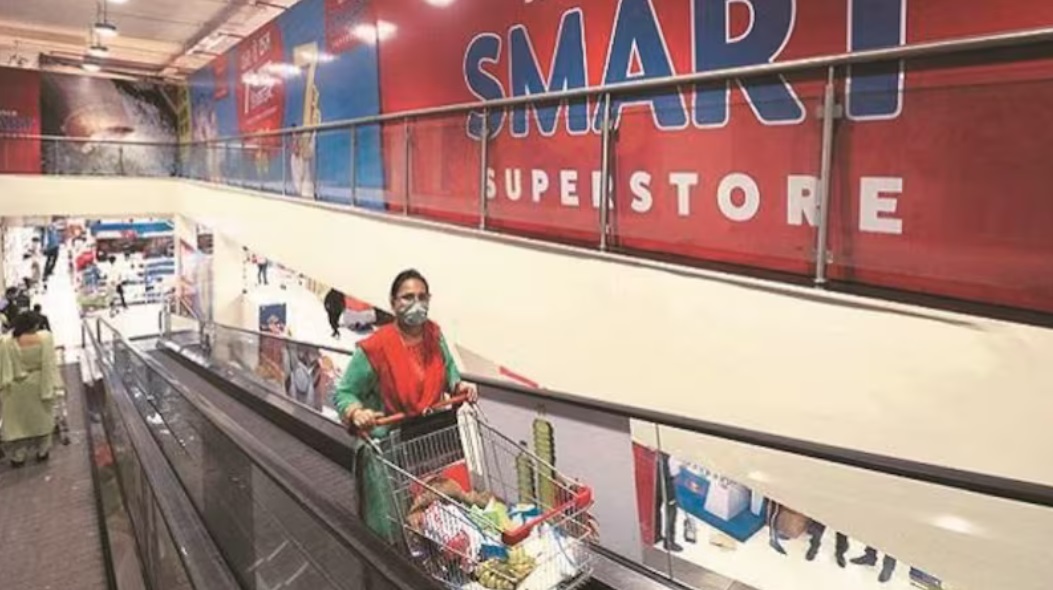
Large market offers big opportunities. And it looks like Reliance Retail has seized it, with its massive omni-channel retail play of physical stores, B2B with kiranas and e-commerce.
The company went on an acquisition spree and partnerships in the last three years, adding to its portfolio some of the biggest names, including Hamleys, Dunzo, Zivame etc.
It has also partnered with famous global retail chain 7-Eleven. Catering to India’s affluent consumers, Reliance, meanwhile, houses some of the most iconic brands such as Versace, Armani Exchange, GAP, GAS, Jimmy Choo, Michael Kors among others. The premium segment has become one of the fastest growing categories.
Also firming up its inorganic play, the company is planning to acquire dozens of niche local consumer brands to build a formidable consumer goods business.
Arvind Singhal, Chairman and Managing Director, Technopak Advisors says, there’s focus on physical retail expansion. Reliance is looking to cater to both price conscious and brand conscious customers, while trying to capture as much of the private consumption market as possible, he says.
Reliance Retail’s competitors are nowhere close to even put up a fight. The company has over 15,000 offline stores across categories, compared with DMart’s 294 stores or Aditya Birla Fashion’s 3,468 outlets.
Reliance retail’s revenue has grown five times in the last five years and the core retail revenue of $18 billion is greater than competitors combined, according to a Bernstein report.
Speaking to Business Standard, Devangshu Dutta, CEO, Third Eyesight, says, Reliance wants a decent share of Indian consumers’ wallet. From that perspective, Reliance still has a long way to go, he says. As consumer preferences evolve, Reliance too should adapt.
An undisputed leader in the domestic market, the aim of Reliance, according to Mukesh Ambani, is to become one of the top 10 retailers globally. Part of this bet is based on the premise that incomes and consumption power of Indians will increase across the board in coming years. However, could the uneven recovery that different segments of the population have seen stop the pie from growing larger and prove to be a dampener for Ambani’s ambitions?
(Published in Business Standard)
admin
June 24, 2022
Written By Christina Moniz
Prashanth Aluru, a former Facebook and Bain hand, will be behind the steering wheel for this venture

The Aditya Birla Group has just announced the launch of its ‘house of brands’ business entity, TMRW, to support digital fashion and lifestyle brands. TMRW, which will operate as a wholly owned subsidiary of Aditya Birla Fashion & Retail (ABFRL), aims to build and buy over 30 brands in the next three years, the company said in a statement.
With this move, the company expects to make its entry into the D2C market, which is expected to be reach $100 billion by 2025. “What a brand like Shoppers’ Stop does in brick and mortar, ABFRL is doing online. While in the past, the company was known for certain brands, it is now pivoting itself towards a wider pitch with bigger variety of brands that could potentially appeal to a wider range of consumers,” said Ankur Bisen, senior partner and head, food and retail, Technopak Advisors. The launch could be ABFRL’s next step in positioning itself as a fashion major, he said.
Prashanth Aluru, a former Facebook and Bain hand, will be behind the steering wheel for this venture.
ABFRL will compete with start-ups like the Good Glamm Group and Mensa Brands, among others. The number of D2C brands and online sellers in the country have grown over the last couple of years, and experts believe that TMRW could be the company’s endeavour to become relevant to new-age consumers. Brands like Reliance Retail and Myntra are going down the same path, says Bisen.
The opportunity is immense; according to a report by IMARC Group, the Indian textile and apparel segment reached $151.2 billion in 2021 and is set to grow at a CAGR of 14.8% between 2022 and 2027.
ABFRL, which has a network of over 3,300 stores across India, is home to brands like Pantaloons, Van Heusen, Louis Philippe and Allen Solly, and has partnerships with labels like Forever 21, American Eagle and more recently, Reebok. The retail company has also forayed into the ethnic wear business and has forged strategic partnerships with designers such as Sabyasachi, Masaba and Shantanu & Nikhil.
Having reported losses for the last three years, the company narrowed its losses to `108.72 crore in FY22 on the back of revenues of `8,136.22 crore. The company reported a 55% surge in revenues during the last fiscal. While Madura Fashion & Lifestyle contributed 68.4% to the company’s FY22 revenue, the remainder 31.6% came from Pantaloons, according to Bloomberg data.
Ambi Parameswaran, author and founder of Brand-Building.com, said ABFRL has already built a good retail presence for the brands in its portfolio. “There must be significant synergies at the back end, but the brands are managed separately,” he said. “I suppose the new venture, TMRW, will offer all these brands as well as all the other ethnic brands that ABFRL has acquired in the last three years.”
He said the synergies will probably lie at the back end with supply chain, logistics, finance and HR. However, the brands will most likely be given the space to build strong individual identities.
This is not the company’s first foray into the e-commerce space. ABFRL shut down its e-commerce venture, ABOF (All About Fashion) in 2017, though in August last year, it said the brand would be made available on Flipkart and Myntra.
A concept like ‘house of brands’ is potentially beneficial to both — the large conglomerates and also to the smaller, emerging brands that are acquired. In a D2C framework, niche brands that would otherwise find it difficult to navigate the established multi-layered distribution and retail channels see greater feasibility in connecting with their customers directly through digital channels.
According to Devangshu Dutta, CEO of retail consultancy Third Eyesight, this makes it viable to launch a product range, which would not be immediately entertained in established channels, and allows them to retain their distinctiveness. With the passage of time and with their growth, some of these brands could also expand into established modern retail and traditional retail formats and to a more mainstream audience.
“Large companies, on the other hand, can find it difficult to grow their existing brands beyond a certain pace, and often may not be able to break new ground in terms of product development and customer experience. At some point, inorganic growth by acquiring other businesses and brands becomes an important element of their strategy,” Dutta said.
The house of brands model, to be sure, comes with its fair share of challenges. Angshuman Bhattacharya, EY India partner and national leader – consumer products and retail, said the strategy must have clear synergies from an operations and distribution perspective. “Possible challenges could emanate out of the non-compatibility of categories with the distribution. Another potential challenge could be in supporting multiple brands with marketing investments, failing which the realisable value envisaged during acquisition could stay unfulfilled,” Bhattacharya said.
The other downside, as Dutta pointed out, is that over time there is consolidation of market power within a handful of companies. This has happened across the globe and across sectors, and can negatively impact consumer choice, supplier dynamics and pricing.
Source: financialexpress
admin
May 30, 2022
Written By Akanksha Nagar
Having acquired Patanjali Ayurved’s food retail business, the company has ambitious plans

While its edible oil business has been its mainstay, Ruchi Soya’s CEO Sanjeev Asthana is confident that the share of FMCG revenue could touch 20% this fiscal.
Ruchi Soya has its sights set on clocking `20,000 crore- `22,000 crore in revenue over the next five years from its FMCG business, after recently having acquired Patanjali Ayurved’s food retail business worth `690 crore. The Patanjali food portfolio comprises 21 major products, including top-selling items such as ghee, honey and juices, besides staples such as atta and spices.
To achieve its target, Ruchi Soya plans to launch a D2C (direct-to-consumer) channel in the next two months for its nutraceuticals business, with more categories to follow, while also increasing its investment on e-commerce and expanding its offline footprint. It is quite active across all key online marketplaces including Flipkart, Amazon and JioMart.
According to the latest Statista report, India’s FMCG market was valued at $110 billion in 2020, and by 2025, it is expected to touch $220 billion, as more brands adopt the D2C route. Several top FMCG makers, including Hindustan Unilever, Dabur and Emami, have launched D2C brands in the past two years.
Oiling other products
While its edible oil business has been its mainstay, Ruchi Soya’s CEO Sanjeev Asthana is confident that the share of FMCG revenue could touch 20% this fiscal. It is targeting `7000 crore in revenue from FMCG and `25,000 crore from commodity sales by the end of FY23. “Over the next five years, the revenue split between FMCG and commodities will be equal,” he says.
Furthermore, Ruchi Soya plans on consolidating and rationalising the Patanjali food portfolio, while simultaneously revamping some of its existing products. “The aim is to reposition the entire company towards being a food FMCG major,” says Asthana.
Following the acquisition, Ruchi Soya will be renamed Patanjali Foods (after regulatory approvals). Asthana says that brands such as Nutrela, Mahakosh, Ruchi Gold and Sunrich will continue to be marketed under their existing names, while all the businesses that are coming in from Patanjali will use the Patanjali brand in exchange for a brand licensing fee
evangshu Dutta, chief executive, Third Eyesight, says the company name change may work in its favour, since there is a large audience aligned with the image and values of Patanjali Group and its founder Baba Ramdev.
Casting a wide net
But not all is smooth-sailing. Alagu Balaraman, CEO, Augmented SCM, suggests for the company to scale up, it needs to build a robust traditional distribution network, since a bulk of sales still happens through these channels. “The cost of doing e-commerce delivery is significantly high,” he notes.
Ruchi Soya is working on those lines. Asthana says besides utilising Patanjali’s existing distribution muscle, it is expanding its offline retail footprint by adding 10,500 non-exclusive modern grocery stores and 4,500 exclusive ones every month.
Source: financialexpress
admin
April 24, 2022
Written By Suvashree Ghosh, Bijou George, and Sankalp Phartiyal

It was a contentious plan to repay overseas bondholders in full that brought what would have been India’s biggest retail deal to a grinding halt.
Debt-laden Future Retail Ltd.’s offshore bondholders — a relatively smaller part of the creditor pool — were promised 100% payment in the rescue offer from billionaire Mukesh Ambani, according to people with knowledge of the matter. Indian lenders were asked to take a haircut of as much as 66%, the people added, asking not to be identified discussing confidential information.
The unequal treatment led to the move last week, when the local banks rebuffed the $3.2 billion offer from Ambani’s conglomerate. Reliance Industries Ltd. announced the purchase plan in August 2020 but struggled to complete the transaction in the face of legal challenges mounted by Amazon.com Inc., which argued it had the first right of refusal contractually.
Bank of India and State Bank of India, the main bankers to Future Retail, didn’t immediately respond to emails seeking comment on reasons for voting down the deal. Representatives for Future Group and Reliance also didn’t immediately comment.
State-run lenders risked probes from federal agencies if they accepted these discriminatory terms, they said, explaining their preference now for a court-mediated insolvency process where bids are called in and there’s no risk of them being accused of cutting a bad deal. Bank of India has already requested an Indian court to initiate the process.
Hard-Nosed Decision
The hard-nosed decision by Indian banks has pushed the teetering Future Retail, which ran one of the nation’s largest retail grocery chains before the pandemic struck, one step closer to bankruptcy. Future Retail is almost certain to default on its $500 million bond coupon payment due July 22, S&P Global Ratings said Tuesday, while downgrading the company’s ratings deeper into junk territory.
The lenders’ action has also taken the wind out of a tortuous two-year-old litigation between Reliance and Jeff Bezos-owned Amazon — the e-tailer had started arbitration proceedings in Singapore to block the deal — but left the door open for Ambani to snag these retail assets, possibly at an even cheaper price, under the bankruptcy process.
“Reliance and other parties could be eligible to bid for its assets by submitting their resolution plans” even if Future Retail ends up in bankruptcy, according to Satwinder Singh, New Delhi-based partner at law firm Vaish Associates Advocates. “This would also lead to moratorium on any or all ongoing arbitration proceedings against Future.”
While the local lenders were agreeable to the deal when it was first announced, a lot changed in the past year or so, the people said. While the Amazon lawsuit dragged on, the asset value eroded and the pandemic worsened the cash crunch at Future Retail that began defaulting on its debt repayments.
Secured Indian lenders were promised recoveries ranging between 34% to 88% of the total $4 billion in dues and even those payouts were staggered over seven years, the people said.
Bloodless Coup
Reliance dealt a body blow to the Kishore Biyani-led Future Group in February when it quietly began poaching employees and taking over rental leases of hundreds of stores earlier run by Future Retail and Future Lifestyle Fashions Ltd. Ambani’s bloodless coup prompted Amazon to suggest settlement talks on the bitter dispute and alarmed Future’s investors and lenders who worried about asset-stripping.
Reliance’s unexpected takeover of Future’s stores eroded bankers’ confidence in the deal as it stripped off value from the chain and potentially could erode Reliance’s offer terms.
The out-of-court truce talks between Amazon, Future and Reliance collapsed soon after the store-purchases were initiated, the companies informed India’s top court on March 15. Amazon will continue with its arbitration proceedings against Future Group in Singapore, according to a person familiar with the matter, who asked not to be identified as the deliberations are private.
“A major turning point was when Reliance physically took over Future’s stores, which turned it into a no-holds barred situation,” said Devangshu Dutta, head of New Delhi-based retail consultancy Third Eyesight. “Before this the battle was being fought in courts and across the negotiating table. But at this point it moved over to the real business.”
Source: bloomberg
