
admin
July 24, 2022
By Aishwarya Ramesh

Tata Consumer Products has rolled out ready-to-cook mock meat products under the brand name Simply Better.
Tata Consumer Products (TCPL) is the latest company to enter the plant-based meat segment in India. TCPL has launched a brand called Simply Better – which includes range of ready-to-cook (RTC) products, made of plant-based meat.
The RTC range is a mix of snacking dishes and traditional Indian dishes. It includes plant-based chicken nuggets, chicken fingers, chicken burger patties and Awadhi seekh kebabs. All these plant-based products are currently available on Amazon Prime and Flipkart.

TCPL’s Simply Better products as seen on Amazon.
When it comes to multinational companies, ITC has a play in this (RTC) category. Its Master Chef range includes a plant-based burger patty, priced at Rs 630 for 300 grams. The range has both vegetarian and non-vegetarian frozen snacks and kebabs. The Incredible range also has plant-based chicken nuggets, priced at Rs 475 for 300 grams.

ITC’s IncrEdible plant-based RTC range
Compared to ITC’s offering, Tata’s Simply Better line is priced slightly differently. 270 grams of plant-based chicken nuggets costs Rs 390 and the plant-based burger patty is priced at Rs 450 for 300 grams.
According to a report by Research and Markets, the Indian meat substitutes and mock meat market is estimated to reach over USD47.57 million in value terms by the end of FY2026 and is forecast to grow at CAGR of 7.48% during FY2021E-FY2026.
Devangshu Dutta, chief executive and founder at Third Eyesight, a specialist consulting firm, mentions that the presence of Tata Consumer Products and ITC could help in increasing adoption of the category over time, since both are large players intending to scale with mainstream customers.
“However, both companies will be advertising and targeting the same cohort of customers. Additionally, the two will also be competing against the multiple D2C brands in the category,” he added.
The plant-based meat market, or smart protein market, includes D2C brands. Some of these brands are also backed and endorsed by celebrities and athletes. The Good Dot is endorsed by Olympic athlete Neeraj Chopra, cricketer Virat Kohli and his wife and actress Anushka Sharma have invested in Blue Tribe and actor-couple Riteish Deshmukh and his wife Genelia Deshmukh have invested in plant-based meat startup Imagine Meats.
Anchit Chauhan, AVP – planning, Wunderman Thompson, mentions that the plant-based industry has been built by a set of startups, and now Tata has decided to enter the segment – somewhat late.
“If you look at the e-commerce segment too, Tata entered late with Tata CLiQ, almost 10-12 years after the e-commerce category had been built by the likes of Amazon and Flipkart. But the advantage Tata has is that the trust factor will always be associated with it. It will be able to leverage that brand equity and create success out of it.”
Dutta points out that for years, the most popular plant-based meat product had been Ruchi Soya’s product – Nutrela’s soya chunks and granules (soya chunks available at Rs 499 for 200 grams and granules at Rs 250 for a kilogram). Soya chunks have been available in India since the 1980s and Dutta calls it the ‘poor man’s meat replacement’.
He says that Indians already get protein in their diet through lentils, pulses and beans, and even those who consume non-vegetarian food don’t do so on a regular basis.
“They may eat it once or twice a week. Some people who convert from non-vegetarian to vegetarian, don’t miss the taste at all. Protein isn’t a huge selling point for these products either. So, this specific faux meat segment in India is a niche market.”
Both analysts (Dutta and Chauhan) opined that Tata’s entry into the segment would not have significant impact on the way the products are priced in this category.
According to Chauhan, India is mostly a vegetarian country and the consumers who may opt for plant-based products are ones who may do so out of concern for the environment, love for animals or an overall healthier diet.

Reasons for turning to plant-based meat
“Plant-based products are essentially for non-vegetarians, who have a certain taste but are willing to give it up because they feel for the environment or animals. But that’s a very urban niche right now. If you’re a ‘woke’ urban consumer, the price point of the products may not matter,” says Chauhan.
“One of the factors for this segment to grow in India is availability. Whether it is a startup or a company as big as Tata or ITC, it has to have financial muscle to sustain growth and must be easily available to consumers. Visibility and user trials are important, especially to attract consumers who wish to make a lifestyle switch in their diet. That’s why modern retail is an important channel for these products,” Dutta adds.

Different brands in the segment right now
Dutta explains fundamental consumer behaviour and calls expansion in this market ‘tricky’, since it is difficult to get people to change their behaviour.
“This is even more the case in smaller cities and towns, where people may have a more traditional mindset. Take the example of Kelloggs – it has been in the country for almost 30 years and there hasn’t been a mass behaviour switch as far as breakfast meals are concerned.”
Chauhan adds that it is not just plant-based meat, there is now demand for alcohol-free products – which taste the same as alcohol but do not have any of the side effects that come with drinking alcohol.
Dutta mentions that people in Tier-II and III cities may not be aware of plant-based meats. This is a tricky category that requires a lot more development. “It’s possible that plant-based meats will remain an urban phenomenon for a long time.”
Source : afaqs.com
admin
July 24, 2022
Written By Akanksha Nagar
Urban Company aims to bring quality, innovation and affordability to the unorganised beauty services market

As the pandemic started hammering the business, a sizeable number of beauty professionals who worked at salons jumped onto the up and coming tech-enabled home services marketplaces.
The bulk of the Indian beauty services industry remains unorganised and fragmented, dominated by expensive salon brands or small players that offer dubious products, inconsistent service and unsolicited advice. With a push from the pandemic-led restrictions, there has been a sudden rise of a clutch of organised, on-demand players that offer professional beauty care services in situ. Urban Company, for one, has witnessed a big rise in service calls in recent months, driven by rising aspiration levels and disposable income, and the growing demand for standardised and safe in-home services. The segment contributes over 40% of the total revenue for the company already. As per published documents, the firm posted a 13.8% increase in revenue from operations to `239 crore in FY21 compared to `210 crore in FY20.
According to Expert Market Research report, the Indian beauty and personal care industry attained a value of `54,558 crore in 2020, and is set to grow at a CAGR of 11% in the 2022-27 period. Of this, the Indian salon market, which stood at `55,000 crore in FY20, is expected to touch a whopping `2 trillion in FY25, at a CAGR of 28%.
Numbers aside, the spread of the Covid pandemic forced the industry to switch to reverse gear as many salons shut down permanently or closed down unviable outlets just to stay afloat. Enrich Beauty which had salons in cities like Mumbai, Delhi, Bangalore and Ahmedabad, for instance, shut down five salons since 2020, bringing the total count down to 83.
As the pandemic started hammering the business, a sizeable number of beauty professionals who worked at salons jumped onto the up and coming tech-enabled home services marketplaces. Says Anand Ramanathan, partner, Deloitte India, “Service aggregator marketplaces have helped increase organisation and bring standardisation in delivery.” It was a win-win for both the customer and the brand. Brands could directly engage with the end consumers and the customer was assured quality—of both the products used and the services rendered.
Mukund Kulashekaran, chief business officer, Urban Company, says the fundamental shift in the beauty service market has been in terms of improved quality. As long as the market remained fragmented, there was zero investment in training or upgradation of services, or in product innovation. None of the small regional players really had the wherewithal to take that leap.
Focus on quality
Urban Company devoted a lot of time and attention to training the service providers while also pursuing innovations to raise the standard of the products on offer. While it uses a number of high-end brands, it has also begun to develop its own to make its services more accessible and compete on a larger scale. It operates three levels of salons: the luxury (average ticket size `2,500), the mid-mass premium (`1,200), and the classic, which is at the economy end of the spectrum (`750) and uses proprietary products for the classic and mid-mass premium segments.
Quality is assured by continuous testing and keeping a sharp eye on customer feedback. There is also significant investment in training and automation. It currently has an in-house team of over 200 full-time trainers across 50 cities. It is stepping up investments in technology to both improve product quality and to act promptly on feedback.
The firm had introduced in-home hair and nail services for women amid the pandemic, which, Kulashekaran says, has scaled quite well. Demand for men’s salon services, launched right before the pandemic, has increased from 20,000 transactions pre-pandemic to as high as 150,000 transactions per month. It launched a Skin Clinic for laser and advanced facials in seven cities and has signed on more than two million clients already.
In terms of geographical spread, while the top ten cities account for more than 80% of its revenue, non-metros are rising fast in terms of revenue share.
Long haul
The company prioritises brand-related communication rather than performance-related. The focus is more on the video medium than the click-through media. So the focus area is TV, but YouTube in case of a targeted campaign.
In the next stage of expansion its communication strategy will be key. Jagdeep Kapoor, founder, chairman and MD, Samsika Marketing Consultants, says that while expanding beyond metros the brand has to be less urban in terms of perception and imagery and take into account the culture and taboos, and the differing definition of beauty.
Samit Sinha, managing partner, Alchemist Brand Consulting, says to keep up the pace of growth the brand has to invest in its service providers, and not just its customers. This is a business model that will not be difficult to replicate. The trick will be to incentivise the beauty care technicians so that they are able to offer high-quality services to the customer and have little reason to join a rival brand. The thing to remember: Like most other service businesses, beauticians too can bypass the company and establish direct relationships with customers — a phenomenon that has plagued the ride hailing and ride share services in India.
BOX: Staying on track (Insights from Devangshu Dutta, CEO, Third Eyesight)
Three factors that will determine success
• The customer sees the aggregation platform as the “provider” of service, rather than a listing agency. So the company needs to totally own the customer experience, end-to-end.
• Ensuring quality of service consistently is the biggest enabler for growth.
• Over time, UC has moved to this “ownership” of the experience, which does mean additional investment, but also pays off in the end.
Three factors that might undo the good work:
• If it doesn’t keep working on customer experience ownership, it could slip
• Margins/commissions need to be reasonable, otherwise, service professionals may abandon the platform
• Given the high customer acquisition costs, it has to drive repeats rather than one-time or low-frequency purchases.
Source: financialexpress
admin
July 8, 2022
Akash Podishetty & Krishna Veera Vanamali, Business Standard
New Delhi, 8 July 2022
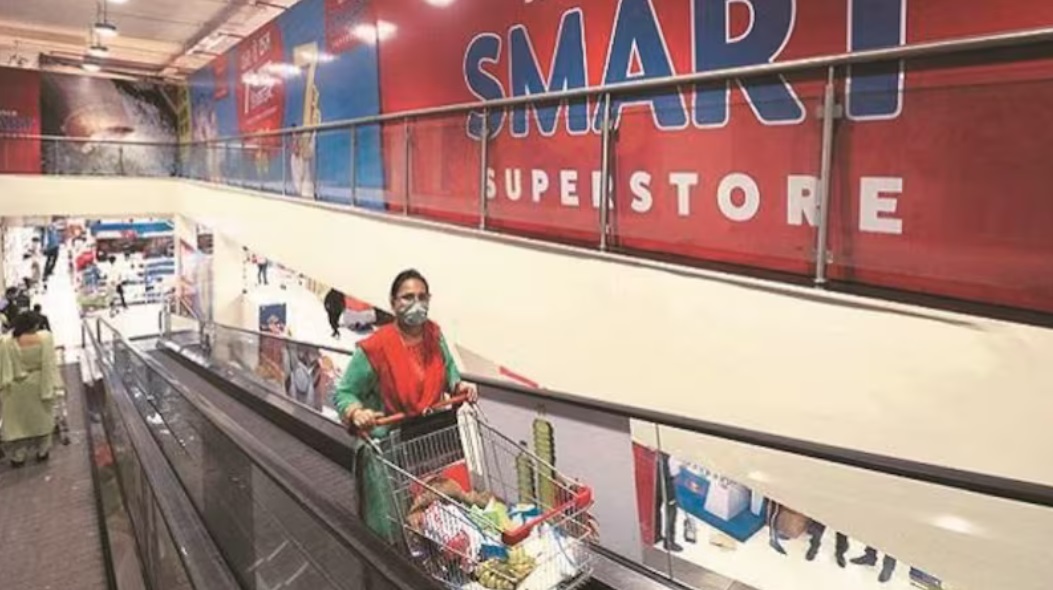
India’s $900 billion retail market has emerged as one of the most dynamic industries and is expected to reach anywhere between $1.3-$1.5 trillion by 2025. The organized retail is seen gaining 15% market share in the overall retail space, while food & grocery and apparel and lifestyle may account for 80% of India’s retail market by 2025.
Large market offers big opportunities. And it looks like Reliance Retail has seized it, with its massive omni-channel retail play of physical stores, B2B with kiranas and e-commerce.
The company went on an acquisition spree and partnerships in the last three years, adding to its portfolio some of the biggest names, including Hamleys, Dunzo, Zivame etc.
It has also partnered with famous global retail chain 7-Eleven. Catering to India’s affluent consumers, Reliance, meanwhile, houses some of the most iconic brands such as Versace, Armani Exchange, GAP, GAS, Jimmy Choo, Michael Kors among others. The premium segment has become one of the fastest growing categories.
Also firming up its inorganic play, the company is planning to acquire dozens of niche local consumer brands to build a formidable consumer goods business.
Arvind Singhal, Chairman and Managing Director, Technopak Advisors says, there’s focus on physical retail expansion. Reliance is looking to cater to both price conscious and brand conscious customers, while trying to capture as much of the private consumption market as possible, he says.
Reliance Retail’s competitors are nowhere close to even put up a fight. The company has over 15,000 offline stores across categories, compared with DMart’s 294 stores or Aditya Birla Fashion’s 3,468 outlets.
Reliance retail’s revenue has grown five times in the last five years and the core retail revenue of $18 billion is greater than competitors combined, according to a Bernstein report.
Speaking to Business Standard, Devangshu Dutta, CEO, Third Eyesight, says, Reliance wants a decent share of Indian consumers’ wallet. From that perspective, Reliance still has a long way to go, he says. As consumer preferences evolve, Reliance too should adapt.
An undisputed leader in the domestic market, the aim of Reliance, according to Mukesh Ambani, is to become one of the top 10 retailers globally. Part of this bet is based on the premise that incomes and consumption power of Indians will increase across the board in coming years. However, could the uneven recovery that different segments of the population have seen stop the pie from growing larger and prove to be a dampener for Ambani’s ambitions?
(Published in Business Standard)
admin
May 30, 2022
Written By Akanksha Nagar
Having acquired Patanjali Ayurved’s food retail business, the company has ambitious plans

While its edible oil business has been its mainstay, Ruchi Soya’s CEO Sanjeev Asthana is confident that the share of FMCG revenue could touch 20% this fiscal.
Ruchi Soya has its sights set on clocking `20,000 crore- `22,000 crore in revenue over the next five years from its FMCG business, after recently having acquired Patanjali Ayurved’s food retail business worth `690 crore. The Patanjali food portfolio comprises 21 major products, including top-selling items such as ghee, honey and juices, besides staples such as atta and spices.
To achieve its target, Ruchi Soya plans to launch a D2C (direct-to-consumer) channel in the next two months for its nutraceuticals business, with more categories to follow, while also increasing its investment on e-commerce and expanding its offline footprint. It is quite active across all key online marketplaces including Flipkart, Amazon and JioMart.
According to the latest Statista report, India’s FMCG market was valued at $110 billion in 2020, and by 2025, it is expected to touch $220 billion, as more brands adopt the D2C route. Several top FMCG makers, including Hindustan Unilever, Dabur and Emami, have launched D2C brands in the past two years.
Oiling other products
While its edible oil business has been its mainstay, Ruchi Soya’s CEO Sanjeev Asthana is confident that the share of FMCG revenue could touch 20% this fiscal. It is targeting `7000 crore in revenue from FMCG and `25,000 crore from commodity sales by the end of FY23. “Over the next five years, the revenue split between FMCG and commodities will be equal,” he says.
Furthermore, Ruchi Soya plans on consolidating and rationalising the Patanjali food portfolio, while simultaneously revamping some of its existing products. “The aim is to reposition the entire company towards being a food FMCG major,” says Asthana.
Following the acquisition, Ruchi Soya will be renamed Patanjali Foods (after regulatory approvals). Asthana says that brands such as Nutrela, Mahakosh, Ruchi Gold and Sunrich will continue to be marketed under their existing names, while all the businesses that are coming in from Patanjali will use the Patanjali brand in exchange for a brand licensing fee
evangshu Dutta, chief executive, Third Eyesight, says the company name change may work in its favour, since there is a large audience aligned with the image and values of Patanjali Group and its founder Baba Ramdev.
Casting a wide net
But not all is smooth-sailing. Alagu Balaraman, CEO, Augmented SCM, suggests for the company to scale up, it needs to build a robust traditional distribution network, since a bulk of sales still happens through these channels. “The cost of doing e-commerce delivery is significantly high,” he notes.
Ruchi Soya is working on those lines. Asthana says besides utilising Patanjali’s existing distribution muscle, it is expanding its offline retail footprint by adding 10,500 non-exclusive modern grocery stores and 4,500 exclusive ones every month.
Source: financialexpress
admin
April 24, 2022
Written By Devika Singh
The Enforcement Directorate (ED) on April 19 accused Amway India of running a “multi-level marketing (MLM) scam” and attached its assets worth Rs 757.77 crore. This is not the first time that Amway India has been accused of running a ‘pyramid scheme’. Read on to understand how direct selling is different from pyramid schemes and why has the ED attached Amway India’s assets?

The direct selling industry is again under the regulatory scanner in India with the Enforcement Directorate’s (ED) move to attach the assets of the Indian unit of US-based direct selling company, Amway. The ED has accused the company of running a “multi-level marketing (MLM) scam” and attached its assets worth Rs 757.77 crore.
According to an ED statement, the attached property includes Amway India’s land and factory building at Dindigul district in Tamil Nadu, plant and machinery vehicles, bank accounts and fixed deposits.
“Immovable and movable properties worth Rs 411.83 crore and bank balances of Rs 345.94 crore from 36 different accounts belonging to Amway attached,” the ED said. The seizures, the ED said, have been made under the Prevention of Money Laundering Act (PMLA).
This is not the first time that Amway India has been accused of running a ‘pyramid scheme’. The company faced accusations on similar lines in the US in the 1970s and has been under government scrutiny in Karnataka and Kerala in the past. In fact, in 2013, Kerala police arrested then Amway India chief William Scott Pinckney and its directors, accusing them of running a pyramid scheme.
Direct selling has come under scrutiny time and again, as over the years, consumers have been duped by fake sellers hawking defective products and services in the garb of direct selling. To discourage such schemes, the government had proposed a draft policy last year, which aims at regulating the direct selling market segment.
Read on to understand what is direct selling, why the ED attached Amway India’s assets, what is Amway’s stand on the issue, how is direct selling different from pyramid schemes, and what are government regulations around direct selling in India?
What is direct selling?
Direct selling firms deploy agents who buy products from the company and then directly reach out and sell to consumers at their homes or other places instead of through a retail format like a store. The direct selling entity and the agent share the profits made through the sale of products. According to industry estimates, there are about 60 lakh agents in the country, who pursue direct selling as a means of earning additional income.
The direct selling industry, as per estimates, is pegged at Rs 10,000 crore in India, and has been growing at 12-13 percent per annum over the last five years. Experts say multi-vitamins, and home care and personal care products are the top-selling categories through this channel.
Beside Amway, companies such as Avon, Oriflame, Modicare and Tupperware operate in the direct selling segment. Some of these companies have been in India for decades now.
What is pyramid scheme and how is it different from direct selling?
Pyramid schemes are defined as a form of investment in which a paying participant recruits further participants and gets rewarded for it. Over the years, consumers have been duped by fake sellers hawking defective products and services in the garb of direct selling, often bringing the direct selling industry too, under scrutiny.
“Pyramid scheme is a scam to make money for a few people and it is based on selling an empty promise, multiplying it through recruiting people,” said Devangshu Dutta, CEO of retail consultancy Third Eyesight.
However, he added, it has to collapse somewhere because you are selling a product or service that does not exist.
“As opposed to that, in direct selling, the companies are selling products and at the end of it there is a tangible exchange of goods or services. So, even if you have downline distributors, as long as at the end of it the customer is getting something of value, then it’s not really a pyramid scheme,” he added.
Why has ED attached Amway India’s assets?
According to the ED’s press statement, Amway India runs a multi-level-marketing scheme or pyramid scheme, which “induces the common gullible public to join as members of the company and purchase products at exorbitant prices.”
The ED said the prices of most Amway products are “exorbitant as compared to the alternative popular products of reputed manufacturers available in the open market”. The new members, who are asked by the company to join it, are not buying the products to be used by themselves, but to become rich by becoming members as showcased by the upline members, said ED.
“The reality is that the commissions received by the upline members contribute enormously to the hike in prices of the products,” the ED said.
And this, indicated the ED, makes Amway’s operations similar to a pyramid scheme, where new members are recruited by existing members with claims of amassing wealth and becoming rich.
The agency claimed that between FY2003 and FY2022, Amway collected Rs 27,562 crore, of which it paid commissions worth Rs 7,588 crore to affiliate members and distributors in the United States and India.
What is Amway’s stand on the issue?
Amway, however, claims that it does not offer any incentives to new members to join the company and the members are only paid once they make a transaction or sell the product, and hence they are not operating a pyramid scheme.
The company has released a statement saying that the action of the authorities is with regard to the investigation dating back to 2011 and since then Amway has been co-operating with the department and has shared all information as sought from Amway from time to time. Amway said it will continue to cooperate with the government authorities for a fair, legal, and logical conclusion of the outstanding issues.
“As the matter is sub judice, we do not wish to comment further. We request you to exercise caution, considering a misleading impression about our business also affects the livelihood of over 5.5 lakh direct sellers in the country,” it said in a statement to media.
In an conversation last year with Moneycontrol, Amway India CEO Anshu Budhraja had said that Amway India does not charge any registration fee to its agents.
“There are no charges for joining Amway business. Further, to ensure that the customers have a satisfying experience with Amway, our products are backed by a money-back guarantee for 100 percent satisfaction of use,” Budhraja had said.
What are the regulations around direct selling?
The government last year included Direct Selling under the Consumer Protection Act (Direct Selling) Rules, 2021. These new rules prohibit direct selling companies from charging registration fees from their agents, and bars them from charging their agents for the cost of demonstration to prospective buyers.
The rules also forbid direct sellers from engaging in pyramid and money circulation schemes. The rules mandate that the companies operating in the segment would have to appoint a Chief Compliance Officer, a Grievance Redressal Officer, and a Nodal Contact Person. The companies would also need to be registered with the Department for Promotion of Industry and Internal Trade and must have an office in India.
They would also be mandated to maintain a website with all relevant information.
“Every direct selling entity shall establish a mechanism for filing of complaints by consumers through its offices, branches and direct sellers through a person, post, telephone, e-mail, and website,” as per the regulation.
“Every direct selling entity shall establish a mechanism for filing of complaints by consumers through its offices, branches and direct sellers through a person, post, telephone, e-mail, and website,” as per the regulation.
It adds: “Every direct selling entity shall ensure that such registration number is displayed prominently to its users in a clear and accessible manner on its website and each invoice issued for each transaction.”
In addition, such companies would have to maintain a record of direct sellers working with them, including their ID proof, address proof, email ID, and other contact information.
Source: moneycontrol
