
admin
February 15, 2024
An insightful must-watch discussion, moderated by Devangshu Dutta (Founder, Third Eyesight), with venture capital fund managers, investors and entrepreneurs in retail on what factors attract investors to retail businesses.
The panelists included Vikram Gupta (Founder & Managing Partner, IvyCap Ventures), Amar Nagaram, (Co-Founder, Virgio), and Vikram Gawande (Vice President, Growth, Blume Ventures).
admin
January 8, 2024
Yash Bhatia, Afaqs
8 January 2024
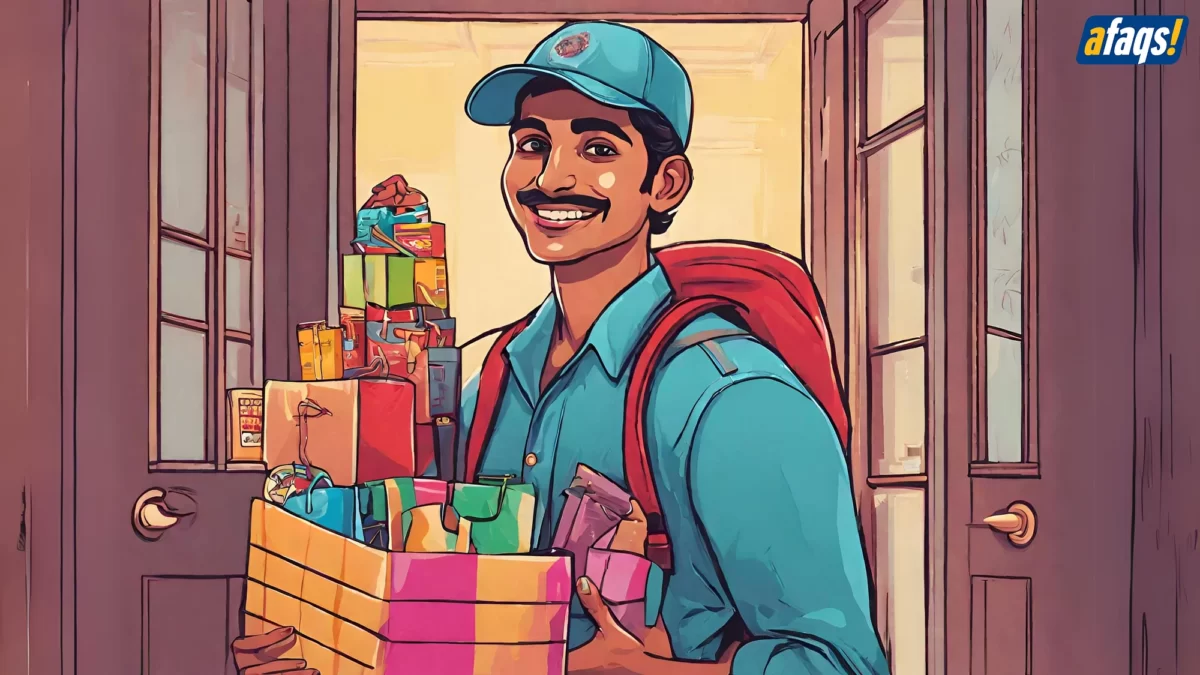
In the 10th episode of Zerodha co-founder Nikhil Kamath’s YouTube podcast series, WTF, Aadit Palicha, co-founder, Zepto, says that consumer goods are the fastest-growing category for its quick commerce business. Initially, quick commerce brands just focussed on serving impulse grocery needs, but now they have changed their way to serve regular planned purchases too.
Major players like Zepto, Blinkit, Swiggy Instamart, and BBNow are expanding their offerings in gifting, makeup, ready-to-eat, baby care, pet care, meat, poultry and more to cater to a wider range of consumer needs and preferences.
Through our interviews with brands like Bombay Shaving Company, Bevzilla and Plum, it is evident that Q-comm business contributes approximately 10-25% of online revenue for different brands.
Also, according to a report by Redseer, the Q-comm market is expected to reach almost $5.5 billion by 2025. The report highlights, that these platforms can up their game by going beyond just grocery and extend their offerings to other consumables, electronics, newspapers and more.
It shows that quick commerce players would focus on other categories to reach this milestone. But, are brands ready for it? If yes, how is their strategy different for this model?
Aditi Handa, co-founder of The Baker’s Dozen, an artisanal bakery, states, “In our category, once the customers figure out a product in the physical store, then they tend to buy again on the quick commerce platforms rather than visiting a store. It works well in our category, as there is no need to touch and feel the product.”
Baker’s Dozen makes 60-65% of its online sales on Q-comm platforms.
Devangshu Dutta, founder of Third Eyesight says that quick commerce has spread across various product categories and he believes, “It is driven more by buzz than customer needs. Unless we meet a core demand with a large consumer market, there’s no sustained road to profit.”
Deepti Karthik, fractional CMO, SuperBottoms, says, “In the diaper category, there are a lot of unplanned purchases. We target customers who’re buying other products, and eventually get trails from them.”
She points out that a lot of gifting happens in the quick commerce segment. “Gift packs can be a great solution our brand can leverage.”
She predicts that for the baby-care brand, quick commerce will contribute 3-5% of overall revenue, led by gifting as a category.
Apart from the reduced delivery time, is there a reason that customers are opting to shop on quick commerce platforms?
Handa answers that two factors work in favour of Q-comm platforms: discounts and convenience. “As these players are expanding their portfolio, customers will find more reasons to go on these apps.”
Is the quick commerce business driven by celebrations?
India is renowned for its diverse festivities. Quick commerce platforms capitalise on this by selling event-related or topical assortments. For instance, they offer flutes for Krishna Jayanti, Ganesha idols for Ganesh Chaturthi, Christmas decorations for the holiday, decorative items for Diwali, and gold and silver coins for Dhanteras.
These platforms are also curating special web and app pages for such occasions, even for regional festivals like Chauth Puja. In 2023, Blinkit curated a specific page dedicated to the wedding season.
Karthik states, “The major business of this sector is driven by consumables and FMCG products. On special occasions, e-commerce brands used to curate specific products, which Q-commerce is now doing. The market share of the other modes is now being taken by the quick commerce players on festivals. That’s why every e-commerce is looking to launch its version of Q-commerce, like Amazon Fresh by Amazon, and BBnow by Big Basket.”
Handa believes differently and states that quick commerce is not taking up the market share of any other modes. “Currently we’re buying more than what we need. Quick commerce is creating some new markets, and people are spending more money as it is easy to spend now.”
Will Q-commerce take over e-commerce?
As the country embraces digital commerce, the battle between e-commerce and Q-commerce is intensifying. While e-commerce has a well-established presence with a vast user base, Q-commerce offers unmatched speed and efficiency. As Q-commerce players foray into other categories, will they take over e-commerce?
Ritesh Ghosal, former chief of marketing at Croma believes that Q-comm will not replace e-commerce. He says that Q-commerce will only be a successful mode for urgently needed products like trimmers, headphones etc.
Handa predicts, “In our category, Q-commerce will replace e-commerce purely based on better service. The only advantage that e-commerce holds is a variety of stock keeping units (SKUs). Like, some products will have a presence in e-commerce only like English Cheddar cheese, it will not be there in Q-comm, a customer can only get it through e-commerce.”
She says that quick commerce also provides a fast way to experiment with new products.
Kartik, says e-commerce will always be at the main stage for the brand and believes Q-commerce will be an incremental business for them.
She has observed that in quick commerce if a product gets listed, it starts to sell faster and gets a quick start as compared to the e-commerce route.
Challenges
While the benefits of quick commerce are evident for customers, these players in the backend face a lot of challenges including warehousing, labour expenses, and, most importantly, the orders are low-value, therefore the margins are less.
Balasubramanian Narayanan, vice president, of Teamlease services points out that the consumer preferences and buying patterns in the quick commerce segment evolve rapidly, making data collection and analysis a crucial aspect.
“Balancing data collection with user privacy is a key challenge. The data insights can help to create personalised experiences, predict demands, and improve operational efficiency. But this can be a challenge in this mode.”
Handa says in quick commerce, the biggest challenge is the stock keeping unit (SKU) mix, SKU selection is critical.
“Brands like Amazon, and Flipkart allow a plethora of SKUs, while quick commerce just allows a limited number, due to limitation of warehouse space and delivery time. The SKU selection by the brand becomes a critical aspect.”
In the physical realm, shelf presence plays an important role in reaching customers, in the online world, optimising the online presence is crucial to get the customers’ attention. She highlights that in quick commerce, the fight is to be at the top of the search bar.
“To be at the top, the brand should generate organic sales, secondly it’s about keyword bidding. A keyword that would search customers to find the product from the brand. The brand pays quick commerce players for this.”
Ghosal also agrees with this and states, “In the Q-commerce arena, most searches are by category rather than by brand. The brands have to tick more boxes in terms of categories/searches so that customers tend to look at them.”
(With additional inputs: Ruchika Jha)
(Published in Afaqs)
admin
October 26, 2023

Sagar Malviya, Economic Times
26 October 2023
Surging demand for fitness wear and sports equipment for disciplines other than cricket and football helped Decathlon’s India unit expand sales 37% to Rs 3,955 crore in FY23. With more than 100 large, warehouse-like stores selling products catering to 85 sporting disciplines, the French company is bigger than Adidas, Nike and Asics all put together in India.
In FY22, sales were Rs 2,936 crore, according to its latest filings with the Registrar of Companies. The retailer, however, posted a net loss of Rs 18.6 crore during the year ended March 2023 compared to a net profit of Rs 36 crore a year ago.
Experts said a host of factors – from pricing products about 30-40% lower than competing products to selling everything from running shoes, athleisure wear to mountaineering equipment under its own brands – has worked in its favour. “They have an extremely powerful format across different sporting activities and have something for both active and casual wear shoppers. For them, the market is still under penetrated with the kind of comprehensive product range they sell for outdoor sports beyond shoes and clothing,” said Devangshu Dutta, founder of retail consulting firm Third Eyesight. “Even their front end staff seem to have a strong domain knowledge about products compared to rival brands.”
By selling only private labels, Decathlon, the world’s biggest sporting goods firm, controls almost every bit of operations, from pricing and design to distribution, and keeps costs and selling prices low.
Decathlon uses a combination of in-house manufacturing and outsourcing to stock its shelves. In fact, it sources nearly 15% of its global requirement from India across sporting goods. And nearly all of its cricket merchandise sold globally is designed and made in India.
(Published in Economic Times)
admin
October 7, 2023

Gargi Sarkar, Inc42
7 Oct 2023
The Indian ecommerce industry anticipates a stronger festive season compared to last year with over 20% sales growth, driven by the D2C segment’s expected 40% QoQ surge
The overlap of festive celebrations and wedding seasons, particularly with a later Diwali this year, is predicted to further stimulate demand
Despite the evident purchase intent, retailers are preparing for a possibly neutral festive season as economic challenges may hit consumers’ spending
As the festive season rings in its 10th anniversary in the ecommerce realm, giants like Flipkart and Amazon are prepping for their annual mega sales, set to begin on October 8. This year, however, they will face tough competition from newer players, including Meesho, which carved out a significant slice of the festive sales pie last year.
With new entrants like Tata Neu and JioMart, and fashion and lifestyle ecommerce players such as Myntra, Nykaa, and AJIO, the stage seems to be set for a fierce showdown.
For these ecommerce platforms, the annual festive sales aren’t merely about revenue generation; they’re pivotal customer engagement and acquisition opportunities. These events lure consumers with compelling discounts and promotions, giving a considerable boost to their yearly sales targets.
Through strategic marketing blitzes, they also aim to amplify brand recognition and glean insights into shopper preferences. Following last year’s subdued festivities, market analysts have predicted a revival in shoppers’ enthusiasm this year, forecasting a robust 20% surge in sales.
The festive season this year is set to witness a remarkable upswing in the ecommerce sector’s gross merchandise value (GMV). According to consulting firm Redseer, the GMV is anticipated to see an 18-20% surge, amounting to INR 90,000 Cr, a leap from INR 76,000 Cr in the previous year.
“The preceding quarter (April to June) witnessed a subdued performance in both offline and online retail sectors, primarily due to persistent inflationary pressures. However, the scenario is expected to undergo a transformation during the upcoming festive season. Festive periods tend to unleash latent consumer demand, prompting individuals to open their wallets more liberally,” Ashish Dhir, EVP (consumer and retail) of business consulting and services firm 1Lattice said.
There is a growing focus on electronics and appliances as traditional categories of interest. However, fashion and beauty are also emerging as important categories. The emergence of luxury goods is another important segment, which will likely make waves during the upcoming festive sales.
The ecommerce industry anticipates a stronger festive season compared to last year with over 20% sales growth, driven by the D2C segment’s expected 40% quarter-over-quarter (Q0Q) surge. However, average user spending is likely to remain flat.
Further, Tier III cities and beyond are becoming key revenue contributors, particularly in the fashion and beauty categories. Although consumer sentiment has improved, retailers are wary that buyers could maintain a cautious stance when it comes to spending lavishly.
While there is much to look forward to, let’s delve deeper into what shoppers and retailers can expect from this milestone year, which marks 10 years of festive sales fervour in the Indian ecommerce space.
D2C Brands To Lead The Charge
Notably, the Indian market is projected to have 500 Mn+ online shoppers by 2030, growing at 12% compound annual growth rate from 205 Mn in 2022, according to a 2020 report.
As far as the upcoming quarter is concerned, industry experts forecast that the homegrown ecommerce sector will likely see impressive growth of over 20%.
Playing a pivotal role in this escalation will be the D2C segment, predicted to grow more than 40% QoQ from October to December. Established ecommerce giants like Amazon, Flipkart and Meesho could also be looking at an approximate 30% uptick in sales, according to experts.
Tracing back to the inaugural ecommerce festive sales in 2014, the industry’s GMV was recorded at INR 27,000 Cr. Fast forward to 2023, the GMV is poised to touch an impressive INR 5,25,000 Cr, a nearly 20-fold increase, per a RedSeer report.

Festive Ecommerce OffersAverage User Spending Could Remain Muted
Despite the rise in GMV in 2022 compared to 2021, average expenditure per shopper held steady at INR 5,200 during the initial four days of the festive season sale, according to a RedSeer report.
This year doesn’t seem poised for a significant spike in individual user spending either. However, there is a silver lining in the form of rising consumer activity in smaller towns and cities. On the flip side, elevated living costs in metropolises like Bengaluru and Mumbai could dent extravagant consumer spending, noted Devangshu Dutta, the founder and CEO of Third Eyesight, a boutique management consulting firm.
Yet, with the growing online shopper populace in these cities, there’s potential for the average order value (AoV) to reduce as more users flock online to shop.
“As the online shopping base continues to expand, the average spending per user naturally tends to decrease. This phenomenon occurs as more people venture into ecommerce, with platforms like Amazon and Flipkart extending their reach to cover a broader audience. However, it’s essential to note that this drop in the average ticket size is a common trend when the customer base expands,” Sangeeta Verma, director of digiCart India said.
Consumers Sentiment Positive, But Retailers Remain Realistic
With the waning impact of inflation, India is witnessing a positive shift in consumer sentiment from the previous year. Unlike several developed nations wrestling with inflation, India has remained largely untouched by its dual impact on demand and supply, experts suggest.
For example, Flipkart delivered strong gross merchandise value (GMV) and sales growth in the company’s second quarter of the financial year 2023-24 (FY24), Walmart’s chief financial officer John David Rainey said during an earnings call.
“In India, the distinguishing factor in terms of festive demand is that it’s not merely brand-driven; consumers here are eager to spend, and the purchase intent is notably high. Unlike some developed economies grappling with inflationary concerns, both the demand and supply sides in India have not seen any impact of inflation. The consumer demand continues to stay buoyant,” Chirag Tanjeja, cofounder and CEO of GoKwik said.
The overlap of festive celebrations and wedding seasons, particularly with a later Diwali this year, is predicted to further stimulate demand, 1Lattice’s Dhir added.
Nevertheless, a note of caution reverberates among retailers. Despite the evident purchase intent, retailers are preparing for a possibly neutral festive season as economic challenges may hit consumers’ spending.
However, a recent study conducted by Nielsen Media India and commissioned by Amazon India says otherwise. According to the report, 81% of consumers are enthusiastic about shopping during the upcoming festive season. More importantly, this positive sentiment towards online shopping is not limited to metropolitan areas but Tier II and III cities and towns.
Ecommerce Platforms Ramp Up Efforts To Woo Sellers
In this year’s festive season, a standout trend is ecommerce giants’ intensified drive to court and captivate sellers with multiple strategic offerings like enticing commission rates, equipping them with advanced selling tools, enhancing the overall selling experience, and broadening their outreach.
Recently, ecommerce heavyweight Meesho made its platform accessible to non-GST registered sellers too. Not too behind in the race is Amazon India, which unveiled its multi-channel fulfilment (MCF) last month for D2C brands and retailers. This initiative is expected to aid sellers in managing customer orders from diverse channels.
Meanwhile, Flipkart flaunted its impressive seller growth, citing a tally surpassing 1.4 Mn — a notable 27% jump since 2022. Meesho currently has a seller base of 1.3 Mn and Amazon has over 1.2 Mn sellers.
Echoing the seller-side optimism, digiCart’s Verma said, “As a seller, we hold a very bullish sentiment. We’re so confident that we started stocking up well in advance. The robust build-up is evident from the current numbers. Mature sellers will expand into existing and new categories after.”
A recent survey by Redseer revealed that sellers are projecting a 15% increase in festive sales year-on-year. Even though the recent sales momentum on ecommerce platforms has been somewhat subdued — with only 40% of those surveyed reporting a 10% quarterly hike — there’s palpable enthusiasm for a significant festive sales boost across a multitude of product sectors.

Who Will Drive The Festive Ecommerce Growth?
Tier II and III cities and towns are expected to be the biggest contributors in this year’s festive season sales. According to experts, customers from these cities and towns are keen on giving their wardrobes and beauty kits a festive makeover. Although Tier I cities are spoilt for choice with numerous offline stores, spanning both legacy and contemporary brands, such luxuries are scarce in smaller cities.
However, this is steadily changing now. Some of the prominent D2C brands that have emerged from the country’s Tier II & III towns and cities are Raipur-based Drools, Mohali-based Lahori, Kanpur-based Phool, Coimbatore-based Juicy Chemistry, just to name a few.
Furthermore, consumer demand in the eastern regions of the country, along with enhanced connectivity in the Northeast, is also on the rise. Semi-urban and rural areas are fast emerging as the driving force behind the new wave of ecommerce growth, a trend expected to be pronounced during the festive season.
Considering that a whopping 65% of India’s populace resides in rural regions, the untapped ecommerce potential is immense, according to the Economic Survey 2022-23.
Yet, fostering trust will be paramount. Residents in these regions typically bank on word-of-mouth endorsements and recommendations from local retailers when exploring new products and brands. This is expected to give local D2C brands a much-needed boost in the upcoming festive season.
What’s Beyond The Festive Sale Fervour
As festive trends leave their mark in the ecommerce landscape, we’re likely to witness several transformative strategies. Central to this evolution will be Buy Now, Pay Later (BNPL) schemes. Yet, the traditional cash-on-delivery remains a preferred choice for many.
Ecommerce brands are increasingly prioritising customer retention, recognising that fostering enduring relationships offers more value. This shift is evident in the rise of loyalty programmes.
Notably, Flipkart introduced “Flipkart VIP” – a direct competitor to Amazon’s Prime – right before the festive sales kickoff. Simultaneously, Meesho debuted a loyalty initiative, targeting both customers and sellers.
Apart from the dominant themes, a few other noteworthy trends are slated to redefine the festive shopping narrative. Black Friday, for instance, is set for a revamp. Gen Z’s influence, especially their propensity to favour specific brands, will be significant.
Last year, for D2C brands, the Black Friday event overshadowed the traditional Diwali and Dusshera festivals in sales figures. GoKwik data indicates that brands on their platform saw a staggering 63% rise in GMV during the Black Friday sale, contrasting starkly with the 10-day Diwali sales.
Also, Christmas, too, is evolving. The allure of winter holidays and modern gifting practices are propelling this transformation, turning Christmas into a significant commercial event.
Given that the final leg of 2023 (October to December) will host almost all the major Indian festivals, the ecommerce players are in for a treat. Even though there will be a lot of cut-throat competition among ecommerce players, there will be no dearth of opportunities for them to woo customers who are eager to splurge to add more flavours to their festive celebrations this year. Going ahead, we will keep a close eye on the ecommerce players and D2C brands that will emerge triumphant after the great Indian festive showdown.
(Published in Inc42)
admin
August 26, 2023
Several new-age startups in the D2C space in India are being acquired by bigger FMCG companies.
