
admin
February 9, 2017
This is a recording of a short, candid talk by Devangshu Dutta (chief executive, Third Eyesight) at the ASSOCHAM’s 8th Global Food Processing Summit in New Delhi, India.
He touched upon the inherent conflicts in the food supply chain we need to be aware of before formulating policies and practices, and strongly urged everyone to look at food security from the point of view of sustainability and risk-management. (Transcript below.)
TRANSCRIPT:
I’ll just take just few minutes to share a few thoughts with you on the sector.
The session was titled “Make in India: Platform for investment opportunity in food processing sector and 100 percent FDI in food retail”.
As we all know, whoever’s been following the news, there’s all this buzz around FDI into retail being allowed, not only for physical retail but also for e-commerce companies, and there are two very strong sets of drivers. On the one hand is the likes of Walmart and Tesco and people who want to actually set up food retail. and you know food is the largest consumption in our basket of consumer products, so they obviously want to tap into that demand. The second side is Amazon and the likes of it where again you know there are no barriers in terms of location, you are buying on the net, tapping into a consumer who’s looking for convenience, and there you need to actually service that demand with food and grocery which is packaged, so there is obviously a very strong push a very strong lobby for that to happen. At the same time there’s a very strong lobby against that because there are domestic retailers who invested a lot of money over the last maybe 10-15 years in setting up a lot of retail stores. In the recent years there have been a few e-commerce companies that have come up as well with domestic and foreign capital. So there is this conflict.
In this whole ecosystem of food production and supply and retail there are some fundamental conflicts that we need to be aware of, before we get into any kind of thinking about what should be done with the sector.
First of all is foreign vs. Indian; this is a conflict which is there the world over, and I think we will see that increase in Europe, in the US, and in other places. You know, “local versus foreign” is a conflict which we will keep seeing. I think we have moved a little bit away from that within, not only this government’s regime but also the earlier government’s regime, where we started to welcome foreigners back into the country and said, “let’s do trade together”. I think it’s important to keep it in mind that local interests will always always be take predominance over foreign interests. If any government comes in and says, “I will give foreign interests precedence”, it’s going to not be there in power the next time, so that’s something which is to be kept in mind.
The second is this is a conflict between large and small…large retailers versus small retailers. A Reliance had to close shops in Uttar Pradesh, had to close shops in Kerala because they were impacting small retailers. So it’s not just about Walmart impacting small retailers, it’s also about the large Indian companies impacting smaller companies.
The third conflict is between traditional and modern, and this is happening again even in farming. Indian farmers tend to follow traditional practices, there are fragmented land holdings, and then you have modern entrepreneurial farmers, you have cooperatives which are adopting different techniques, and there is a conflict which happens at that level as well. At the local level it can get hugely political and then it starts raising barriers. So if you talk about the food supply chain, it’s not a simple thing to deal with.
Fourthly, the biggest biggest conflict – and that’s not really a conflict outright because these are people who are working together – but there are differences of interests and, therefore, there are conflicts…that is between retailer, supplier and the farmer, the interests are not aligned. A retailer wants lower prices, a supplier wants even lower prices, but the farmer wants higher yield and higher prices, so that conflict, just something on account of price and commercial terms and various other things, is bound to create friction in that supply chain.
Having understood that, I think we need to also acknowledge the fact that retailers are unlikely to invest in the supply chain and in farming. Amazon is not going to set up food processing. Amazon is not going to set up farms which are contract farming. Let’s face it, even Future Group hasn’t. Future Group has set up a food park. Future Group has taken over companies which are in food production companies but Future Group has has not set up, ground-up, contract farming. They’ve tried but it’s not their core competence, it’s not even their core interest. Reliance has done a little bit, ITC has done a few things but it’s not something which is fundamentally their business. They’re retailers, that’s what drives them, so what they can do is they can create an ecosystem.
Let’s take the example of McDonald’s or a Pizza Hut or say a Domino’s. These are foreign quick service restaurants which have come into the country. A McDonald’s had to actually build its supply chain from scratch to get the potato fries, to get the burgers done, to get the patties done and they created an ecosystem, in some cases they invested or co-invested with Indian partners, but in most cases they encouraged Indian partners to talk to their partners from Europe, US etc.
When we talk about people like Future Group, it has done a lot in being a platform for Indian companies to come on board and sometimes international companies as well. They’re a platform for them to launch and grow their business. So what the retailer can do is create the ecosystem, create the demand pipeline. Beyond that it is up to the food producer, it is up to the farmer, to take that opportunity and move on. It’s not for the retailer to handhold from scratch all the way to selling on the shelves.
In terms of the practices that we need to adopt I’d like to say this, that while we keep talking about international standards, food is a very local thing. We may be going into a world where 50 years down the line all of us will be having a white-gray powder which has no flavour and that’s what the future of food…I hope not!…The fact is the food is a very local thing because of tastes, because of cultures, because of the environment that you are in. And we are actually losing a lot. People who are here from farming, if you look back not, even very far – maybe 20-25 years – certainly, if you look back 50 years, what was being farmed we’ve lost probably 30-40 percent of that produce, because there is no demand, because it is difficult to grow, because it’s seasonal, because it is difficult to process, difficult to sell. If you go to the sabziwala today versus if we went to the sabziwala 10 years ago, you will find that the variety of produce has actually diminished. So while we are talking about food processing, what is happening is…and I’d like to mention this…You know, sometimes we come to conferences like this and we run our businesses, we run with a split personality. We do what is convenient for the business, we do what is good for the business in terms of cost, in terms of ease of processing, in terms of ease of selling etc. When it comes to us as consumers, we want fresh, we want variety, we want flavor, we want colour, we want all of it. Why do we have the split personality? Why can’t we actually combine the two and do what is right for us as consumers, our children as consumers, the environment, and the future as well?
Sustainability is should be a big driver and we forget that the kind of food processing which is going on right now, by and large the kind of plants which are being put up, are based on technology which was developed in North America and Europe between 1900 and say 1960-70. That’s been the most wasteful part of the last century in terms of energy, in terms of water, in terms of labour, in terms of anything. It’s resource intensive. Now imagine even if 20% of India – over 200 million people – started to live and depend on that kind of a lifestyle and that kind of an industrial structure! This country will be finished, certainly! The world would be finished! We cannot do that, so we’ve got to do stuff which is good for us as consumers, the environment as a whole, and good for the business. It can’t just be one. We cannot be uni-dimensional in our thinking.
Last point: I think diversity is a very, very important part of the food supply chain and diversity means that there are “many”. We tend to look at large companies as being the standard and, therefore, large being good. But the fact is that if you take food which is an integral part of our lives…You cannot live without air, you can live without food and water for a few days, you can’t survive. You can live without clothes for your entire life.
If let’s say the food supply chain and even the processing, the acquisition and everything else, if it gets consolidated beyond a certain point it becomes extremely vulnerable. Anybody who’s looked at financial services risk management or any any kind of risk assessment, you would know that it is good to have a diversified basket. From the point-of-view of farming, from the point-of-view of manufacturing, from the point-of-view of retail, consolidation beyond a certain point is actually detrimental to quality and to safety. So if you’re looking at food safety, if you’re looking at sustainability, we need to actually encourage many, many, many entrepreneurs, many small businesses.
For that…I don’t know if anybody is there from the government sitting in this audience…but Make in India will only happen if we make it easier. Today all of us who are in business know that India is one of the most hostile environments to do business of any sort. It does not matter whether you are in manufacturing, whether you’re a truck driver, whether you are running a consulting business. With all the regulations…we don’t lack regulation, there’s too much regulation…we don’t have an environment where it is easy to do business. If that can happen we will find that we will have an extremely diverse and vibrant ecosystem which will grow and we can actually be the standard, the international standard which can be followed by everybody else. I think what we should do is try and get the government to work in that direction. If we can do that, if that’s one outcome we can achieve out of this conference I’ll be really, really, really happy.
Thank you so much!
Devangshu Dutta
January 10, 2017
In this piece I’ll just focus on one aspect of technology – artificial intelligence or AI – that is likely to shape many aspects of the retail business and the consumer’s experience over the coming years.
To be able to see the scope of its potential all-pervasive impact we need to go beyond our expectations of humanoid robots. We also need to understand that artificial intelligence works on a cycle of several mutually supportive elements that enable learning and adaptation. The terms “big data” and “analytics” have been bandied about a lot, but have had limited impact so far in the retail business because it usually only touches the first two, at most three, of the necessary elements.
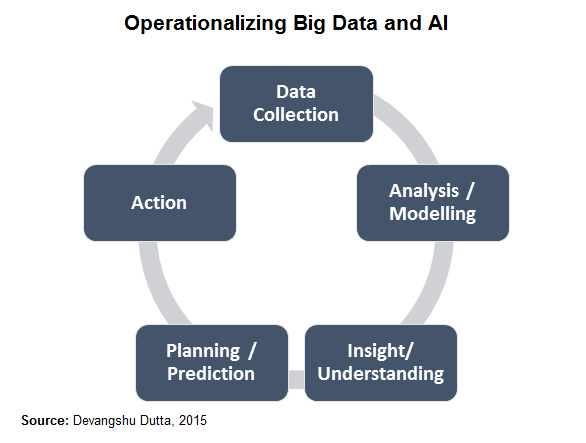
“Big data” models still depend on individuals in the business taking decisions and acting based on what is recommended or suggested by the analytics outputs, and these tend to be weak links which break the learning-adaptation chain. Of course, each of these elements can also have AI built in, for refinement over time.
Certainly retailers with a digital (web or mobile) presence are in a better position to use and benefit from AI, but that is no excuse for others to “roll over and die”. I’ll list just a few aspects of the business already being impacted and others that are likely to be in the future.
On the consumer-side, AI can deliver a far higher degree of personalisation of the experience than has been feasible in the last few decades. While I’ve described different aspects, now see them as layers one built on the other, and imagine the shopping experience you might have as a consumer. If the scenario seems as if it might be from a sci-fi movie, just give it a few years. After all, moving staircases and remote viewing were also fantasy once.
On the business end it potentially offers both flexibility and efficiency, rather than one at the cost of the other. But we’ll have to tackle that area in a separate piece.
(Also published in the Business Standard.)
Devangshu Dutta
December 27, 2016
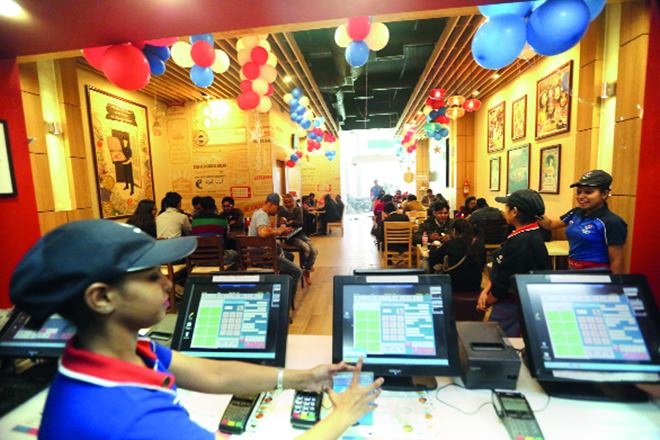
When American fast food standard bearers McDonald’s and Domino’s Pizza stepped into India in the mid-1990s, the market was just ripe enough for take-off.
McDonald’s and later Domino’s Pizza can be credited with not just growing the consumer appetite for fast food but also for fostering an entire food service ecosystem, including fresh produce, baked goods, sauces and condiments, and cold chain technology.
India has been typically difficult for business models driven by scale, replicability and predictability. The customer is price sensitive, operating costs are high and non-compliance of business standards is a frequent occurrence. In this environment, these brands have reinvented the meaning of meals, snacks and treats.
Their growth has set the stage for other international players and also set business aspirational standards for Indian food entrepreneurs and conglomerates alike.
Product experimentation has also been an important part of their success; it keeps excitement in the brand alive and help improve footfall. However, how far a product sustains and whether it becomes a menu staple can’t be predicted accurately. New products also need significant investment in both supply chain and front-of-house changes in standardisation-oriented QSRs, so the new product launch cannot be undertaken lightly. This is one reason these successful QSR formats don’t overhaul their menus drastically but make changes incrementally.
For these market leaders, future scale and deeper penetration is only feasible with higher visit frequency. For growth in middle-income India, they need to become a significantly cost-competitive option to be seen as more than a ‘treat’ or celebration destination.
So, while both McDonald’s and Domino’s Pizza have invested significantly in Indian flavours and menu offerings, perhaps it’s also best for them to reconcile with the fact that there will be a significant part of the consumer’s heart, stomach and wallet that will remain dedicated to indigenous offerings.
In a global environment that’s turning hostile to fast food, India isn’t a quick-fix growth market, but it’s certainly one to stay invested in, for the longer term.
And I have no doubt that as much as these companies aim to change India, over time India will also change them.
(Also published in Brand Wagon, The Financial Express)
admin
September 7, 2016
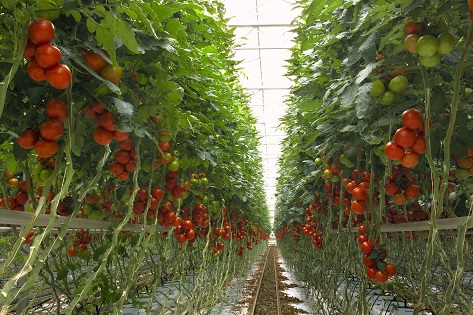
Horticulture production in India has been surpassing the production of food grains for many years. In 2014-15, the total production of horticultural produce was estimated by the Department of Agriculture, Cooperation and Farmers Welfare, Ministry of Agriculture to be approximately 281 million tonnes as against 252 million tonnes of food grain production and 275 million tonnes of oilseeds.
Horticulture and floriculture have result in growing foreign earnings, and India’s domestic market is also growing. In fact the demand for many types of vegetables and fruits which are not native to India such as lettuce, broccoli, gherkins, as well as for exotic flowers such as orchids, gerberas, carnations, is soaring. These crops were initially being cultivated only for export, but are now being bought by the urban population within India as well, as a result of growing familiarity with other cultures, and shifts in cuisines and lifestyles.
Many of these crops require specific climatic conditions which are not available in all parts of India, hence, cultivating them in controlled environments is a preferred option. Other than providing them a hospitable environment, the yield of the crop can be significantly better and availability can be all-year round, providing better market prices in the off-season. Greenhouses can be used by farmers for years to grow and sell exotic vegetables and other high-value commodities. Moreover, greenhouses help reduce the expenditure on pesticides by warding off insects and pests, many of which are carriers of viral and other infections. There is, therefore, considerable merit to extending the area under this system of cultivation, for the benefit of both producers and consumers.
While greenhouses have existed for more than one and a half centuries in various parts of the world, in India use of greenhouse technology started only during 1980’s and it was mainly used for research activities. The commercial utilization of greenhouses started from the late-1980s and with the introduction of the Government’s liberalization policies and development initiatives, several businesses were set up as 100 per cent export oriented units. Now many progressive farming organisations and individual farmers are using varied levels of technology in order to control the environment in which agriculture is done.
Although, there is an upfront capital cost involved in the setting up of a greenhouse, the scale of the greenhouse and proper management helps in yielding viable results. Most of the greenhouse projects in India at this point of time are on landholdings of up to 1 acre. However interest is seen to be growing towards projects of larger landholdings. Capital costs per acre range from Rs. 15 lakhs for a basic green house with simple techniques to control temperature and humidity, to Rs. 1.5 crore for automated greenhouses with superior humidity and temperature control, more closely managed water and nutrient dispersal etc.
Protected cultivation is one the important interventions of the National Horticulture Mission. Various patterns of assistance in the form of subsidies (ranging up to 50% of the cost of setting up the structures) have been devised by the government to encourage farmers to engage with this form of cultivation.
To encourage cultivation of vegetables under controlled atmosphere, Punjab government has empanelled five firms to assist farmers to set up polyhouses and polynet houses in their fields. The state government will provide subsidy on the greenhouse structures erected by these firms.
In Khammam, Telangana, the Horticulture Department is readying two poly-house demonstration units to popularise greenhouse technology and help farmers take up cultivation of high yielding vegetables round the year under controlled weather conditions.
Projects have already been taken up in Telangana, Gujarat and Himachal Pradesh ranging from feasibility studies of green house facilities and distribution halls for grading, sorting and packing to designing and setting up of green houses for breeding of rice and other crops and cultivation of tomatoes, strawberries, capsicum, cucumbers and lettuce.
For higher end, larger scale farms, Indian growers are also exploring technology from Europe. For instance, the Netherlands is the traditional exporter of greenhouse grown flowers and vegetables all over the world. The Dutch greenhouse industry is one of the most advanced in the world, and has now also become a provider of technology and support for the development of greenhouse cultivation around the world. Advanced technology solutions include climate sensors, air treatment devices, and software support.
However, success doesn’t only depend on equipment. Organisations such as Koppert provide biological solutions for natural pest control, natural pollination and seed treatment, to not only improve the quality and yield of the produce, but also make it safer.
There are many Indian as well as international organisations providing greenhouse solutions ranging from materials, technology and project consultancy. In the coming years it is expected that India’s rich agricultural, horticultural and relatively newer floricultural expertise will get enhanced and further competitive with the adoption of greenhouse cultivation to feed the burgeoning global and domestic demand.
admin
August 1, 2016

The cold chain sector is expanding quickly due to increased investments from Indian and international organisations going towards both modernisation of the existing facilities and establishment of new ventures. Over the last few years cold-chain has gained a buzz, finding its way not only into industry presentations but also into budget speeches in Parliament. It is widely reported that India needs to build more cold chain capacity, especially to reduce the enormous amount of waste of food products in the chain from farm to consumer.
India is one of the largest producers of agro-products i.e. fresh fruits and vegetables, milk and related products, fishery products and meat. However, due to lack of the required facilities, spoilage of products is comparatively high.
In recent years, significantly incentivised both by business logic and by tax breaks, there has been a fair amount on investment in cold storages. However, the sector is still highly fragmented; there is inequitable distribution of cold storages, interlinkages between storages is also very poor and many facilities are also operating below capacity.
The National Centre for Cold Chain Development (NCCD) reported that as of December 2014, 70% capacity was utilised, where the total number of cold storages available in India was around 5300 and approximately 6000+ vehicles, providing about 30 Million Metric Tonnes capacity of storage. Most of these facilities are located in the states of Uttar Pradesh, Uttaranchal, Punjab, Maharashtra and West Bengal.
Storage and transportation capacity is only the very first step in strengthening cold chain capabilities but, unfortunately, that is where many entrepreneurs and investors in cold-chain are stopping their thought process. Many players in the industry have been using obsolete machinery, and storages are majorly for a single commodity. The result, predictably, is underutilisation of capacity or mishandling of food products leading to operational problems, cost escalations, spoilage and other losses. Just to mention a simple example that many seem to forget: even domestic refrigerators have at least 3-4 temperature-humidity zones: the freezer, the chill tray, the large cool area, and a vegetable tray. In comparison, many cold stores are built without adequate thought to the various influencing factors. It’s important to recognise that in developing a cold chain capability, the products to be handled, the environment in which the cold chain will operate, not only storage but intake, handling and transportation, all have a role to play.
With a fragmented operating environment, both in terms of production as well as distribution, often a single investor or company may not be able to create the business logic to set up a cold chain facility. Collaboration between multiple individuals and agencies may be a way out.
An example of successful use of integrated cold chain is the Tamil Nadu Bananas Growers Federation. Banana growers in the Tamil Nadu belt were diminishing due to lack of appropriate storage facilities, and farmers were forced to sell produce at throw away prices. With introduction of integrated cold chain solutions, the federation of farmers from Tamil Nadu has now managed to gain a hold of the banana market again. They have managed to increase their income manifold by growing better qualities and storing bananas for longer period of time in the integrated cold chains.
Cold chain logistics in the true sense begin with harvesting and post-harvest handling, going on to controlled atmosphere vehicles, cold storages, sorting and grading facilities, modern pack houses and controlled atmosphere retail stores. Most importantly, even operational know-how is something that is not made part of the investment plan, leading to unviable, unprofitable cold chain facilities.
The focus should be to integrate the cold chain, and also build capacities in all areas. As per NCCD (December 2014), India has approximately 6,000 reefer vehicles against a requirement of 60,000. Similarly the number of pack houses available is 250 and the projected requirement is for 70,000. Hence, the need for a more balanced investment in terms of modern pack-houses, refrigerated transport units and ripening chambers is evident and will bring far better results, both operationally and financially.
In addition, there has to be a significant improvement in developing the know-how and skills sets available to the sector. While the country is faced with large-scale unemployment annually, a well-thought out development of the cold chain sector including due investment in knowledge-based initiatives can create significant numbers of better paying jobs around the country, especially in rural areas from where the produce is sourced.
With development of the consumer and retail sector supporting its growth, integrated cold chain development should be at the top of the agenda for government as well as for private business.
