
admin
May 26, 2023

Chloe Cornish in Mumbai and Eleanor Olcott in Hong Kong, Financial Times
May 26 2023
India’s biggest company Reliance Industries is seeking to dominate the country’s $10bn online domestic fashion market, striking a deal with Shein that will allow the rapidly growing Chinese retailer to return to the world’s most populous nation.
The retail unit of billionaire Mukesh Ambani’s petrol-to-telecoms conglomerate will tie up with Shein three years after India banned the online retailer’s app in its attempt to freeze Chinese companies out of the local market in retaliation for border clashes that had left at least 20 Indian soldiers dead.
“We can confirm Shein’s partnership with Reliance Retail and have no additional comment at this time,” said Shein, declining to answer questions about the structure of the deal. Reliance did not respond to queries about the partnership, which was first reported by the Wall Street Journal.
The addition of a low-priced offering gives India’s biggest listed company by market capitalisation an important boost in its battle to dominate the country’s growing online fashion retail market, which was worth $10bn in 2022, according to analyst estimates.
As part of the licence agreement, which was recently approved by the government, Shein will receive a percentage of profits generated from its fast fashion sales in India, people familiar with the deal said, while Reliance will help Shein build a supply chain with India’s garment industry for global exports.
The move into Indian sourcing comes as Shein diversifies its supply chain outside the coastal province of Guangdong in southern China, where it has 8,000 suppliers, mostly located in the garment hub of Panyu. Pandemic-era supply chain bottlenecks, rising labour costs in China and geopolitical tensions between Beijing and Washington have propelled multinational companies, including Apple and clothing retailer Mango, to migrate parts of their supply chains out of the country.
Shein, which does not sell in China, has been seeking to distance itself from its home country. Last year, it made its Singapore arm the de facto holding company, rapidly expanding its workforce there and shifting some of its operations from its China headquarters in Nanjing.
Shein will seek to minimise delivery times by having more manufacturing centres around the world. India, meanwhile, hopes to benefit from multinationals’ “China plus one” movement, a strategy that seeks to avoid investing only in China and aims to diversify supply chains to other countries.
Reliance has signed agreements with international luxury brands ranging from Balenciaga to Burberry, catering to India’s small but growing demographic of super-rich consumers. In addition, it has nearly 13,000 bricks-and-mortar stores across the country selling affordable apparel.
“Reliance’s other international brand partnerships are more premium, being luxury or designer brands,” said Devangshu Dutta, chief executive of consultant Third Eyesight. “India is still a relatively low per capita income economy. The bigger opportunity is in brands which are euphemistically called value brands, and that’s where Shein is positioned.”
For Shein, access to the Indian market will allow the company to boost sales as the pace of its expansion in Europe and the US begins to lose steam, according to people briefed on its growth figures.
The Financial Times reported that in a recent presentation to investors, Shein forecast that gross merchandise value — the total value of merchandise sold on its platform — will almost triple by 2025 to $80.6bn compared with the figure last year.
The lofty revenue projections come ahead of a much anticipated initial public offering, which promises to be one of the largest listings of a Chinese-founded company in years.
In fashion ecommerce, Reliance lags behind Myntra, one of India’s oldest ecommerce players, which merged with Walmart-backed Flipkart in 2014. Myntra accounts for around half of the online fashion market in India, according to Satish Meena, an independent ecommerce analyst based in Gurgaon.
“Myntra is the nucleus” for online fashion, said Ankur Bisen, senior partner at retail consultancy Technopak Advisors, adding that its “cohort” of shoppers is primarily young and urban. “With the Reliance and Shein partnership, they would like to get into this cohort and break the monopoly of Myntra,” Bisen said.
Meena estimates that Reliance’s ecommerce fashion business Ajio has about 4 per cent of market share, while Bisen put Ajio among the “long tail” of ecommerce fashion ventures behind Myntra. Reliance’s JioMart online shop also sells clothes, alongside groceries and electronics.
“If you look at Reliance as a company, it’s about dominance and it’s about long term,” Dutta said.
(Published in the Financial Times)
admin
November 28, 2022

Sagar Malviya, ET Bureau
November 28, 2022
About half a dozen global apparel and lifestyle brands expanded anywhere between 30% and 70% to garner combined annual revenues of nearly $2 billion in FY22, reversing the performance from a year ago when Covid-induced curbs on mobility and business operations caused sales to shrink.
Sales of Swedish fashion retailer H&M expanded 49% while rival Zara reported a 61% increase in its topline. Japanese brand Uniqlo saw a 64% jump in sales while American denim maker Levi Strauss posted a 58% increase, latest filings with the Registrar of Companies showed. Dubai-based department store Lifestyle International, too, saw a 38% jump in revenues on a large base while German brand Puma expanded 68% despite being the biggest firm in the sporting segment.
“This is a combined impact of a rebound in industry-wide demand in India, a low base effect for some brands, and the visibility and mindshare advantage global brands have,” said Devangshu Dutta, founder of Third Eyesight, a strategy consulting firm.
Big Focus on Online Sales
“Global brands are aspirational not only for consumers but also for real estate developers. Perceived as anchor tenants, they get their choice of the best locations – this provides more impetus to their stores vis-a-vis Indian brands, which are shunted to higher floors in multi-level shopping spaces,” Dutta said.
The revenue surge comes at a time when most of these retailers are facing intensifying competition from both local and global rivals in an increasingly crowded market where web-commerce firms continue to offer steep discounts. Even multinational companies have upped their online focus and for some, web-based orders make up more than a third of their revenues.
For instance, Puma India’s online sales make up nearly half its total business, while for H&M the share is 42%.
Abhishek Ganguly, managing director, Puma India and Southeast Asia, said the affinity of young Indian consumers toward ecommerce is extremely high and that adoption of the online mode of shopping continues to accelerate even after the resumption of normal business operations.
“Consumers may have bought online for the first time during the lockdowns, but they have embraced ecommerce in their shopping journey,” said Ganguly.
“Almost half of our business is in the form of digital commerce today. Having said that, we are witnessing equally strong growth – both in our offline and online channels,” he said.
As the world’s second most-populated country, India is an attractive market for aspirational apparel brands as rising disposable incomes cause the consuming base of the pyramid to broaden further. The performance by global brands is also in line with the overall trend within the home-grown apparel and lifestyle segment, with Shoppers Stop, Tata-owned Trent and Aditya Birla Fashion & Retail also reporting smart performance rebounds, indicating a secular demand for discretionary products.
(Published in Economic Times)
admin
September 23, 2022
Sagar Malviya, The Economic Times
September 13, 2022
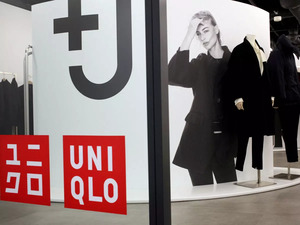
Uniqlo, Asia’s biggest clothing brand, has turned profitable in India in less than three years after it opened its first store in the country despite operating in a period marked by Covid-led lockdowns and restrictions.
The Japanese brand posted a net profit of ₹21.4 crore for 2021-22 compared to a loss of ₹36.1 crore in the previous year, according to business intelligence firm AltInfo. Its sales rose 63% year on year to ₹391.7 crore for the year to March 2022, a slower pace compared to FY21 when it clocked 86% sales growth on a low base.
Experts feel Uniqlo’s strategy of pricing its merchandise at least 20% higher than rivals Zara and H&M has helped it earn better margins despite inflationary pressures in terms of raw materials.
“The market is not easy and turning profitable at a time when most rivals are spending aggressively is a good indication of success. As an international brand, they (Uniqlo) are able to get good locations and are preferred tenants, which helps in generating sales, especially in top cities,” said Devangshu Dutta, founder of Third Eyesight, a strategy consulting firm. “However, the pricing is a bit premium and until they are able to source locally, selling products at a right value for the market will remain challenging.”
The Japanese brand opened its first door in the country in September 2019, but stringent lockdown measures announced in March 2020 to contain the Covid-19 outbreak delayed its store expansion plans, restricting its store count to about seven outlets so far.
Uniqlo has said India is one of the most priority markets where consumers are increasingly shifting from ‘fast-fashion’ to long-lasting essentials and functional wear. “India is an important and very big priority market,” Tomohiko Sei, CEO of Uniqlo India told ET in June.
(Published in The Economic Times)
admin
July 8, 2022
Akash Podishetty & Krishna Veera Vanamali, Business Standard
New Delhi, 8 July 2022
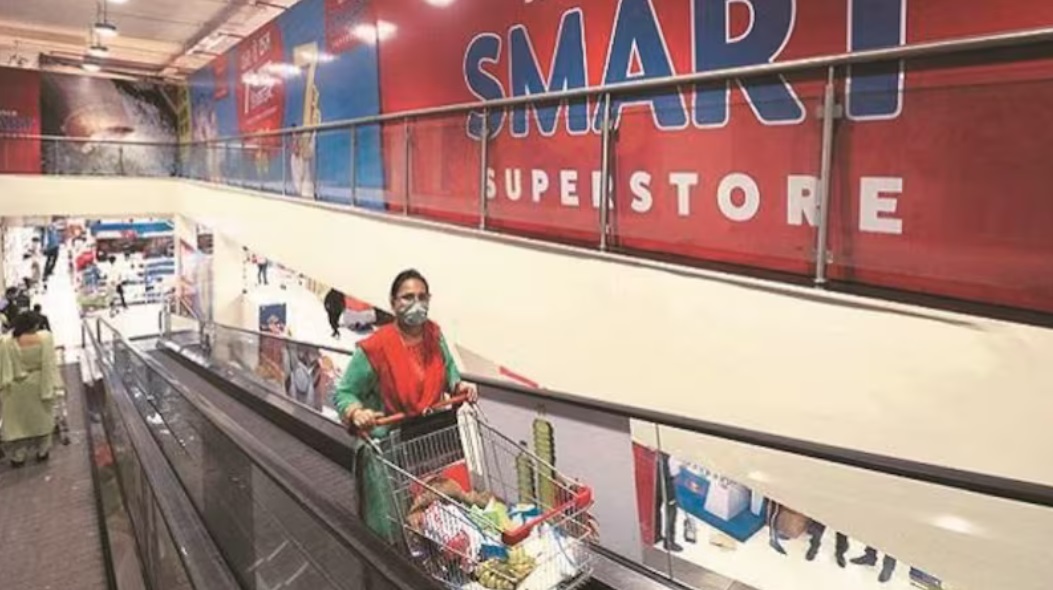
India’s $900 billion retail market has emerged as one of the most dynamic industries and is expected to reach anywhere between $1.3-$1.5 trillion by 2025. The organized retail is seen gaining 15% market share in the overall retail space, while food & grocery and apparel and lifestyle may account for 80% of India’s retail market by 2025.
Large market offers big opportunities. And it looks like Reliance Retail has seized it, with its massive omni-channel retail play of physical stores, B2B with kiranas and e-commerce.
The company went on an acquisition spree and partnerships in the last three years, adding to its portfolio some of the biggest names, including Hamleys, Dunzo, Zivame etc.
It has also partnered with famous global retail chain 7-Eleven. Catering to India’s affluent consumers, Reliance, meanwhile, houses some of the most iconic brands such as Versace, Armani Exchange, GAP, GAS, Jimmy Choo, Michael Kors among others. The premium segment has become one of the fastest growing categories.
Also firming up its inorganic play, the company is planning to acquire dozens of niche local consumer brands to build a formidable consumer goods business.
Arvind Singhal, Chairman and Managing Director, Technopak Advisors says, there’s focus on physical retail expansion. Reliance is looking to cater to both price conscious and brand conscious customers, while trying to capture as much of the private consumption market as possible, he says.
Reliance Retail’s competitors are nowhere close to even put up a fight. The company has over 15,000 offline stores across categories, compared with DMart’s 294 stores or Aditya Birla Fashion’s 3,468 outlets.
Reliance retail’s revenue has grown five times in the last five years and the core retail revenue of $18 billion is greater than competitors combined, according to a Bernstein report.
Speaking to Business Standard, Devangshu Dutta, CEO, Third Eyesight, says, Reliance wants a decent share of Indian consumers’ wallet. From that perspective, Reliance still has a long way to go, he says. As consumer preferences evolve, Reliance too should adapt.
An undisputed leader in the domestic market, the aim of Reliance, according to Mukesh Ambani, is to become one of the top 10 retailers globally. Part of this bet is based on the premise that incomes and consumption power of Indians will increase across the board in coming years. However, could the uneven recovery that different segments of the population have seen stop the pie from growing larger and prove to be a dampener for Ambani’s ambitions?
(Published in Business Standard)
Devangshu Dutta
December 5, 2013
(Published in ETRetail.com on 6 December 2013)
Franchising isn’t rocket science, but advanced space programmes offer at least one parallel which we can learn from – the staging of objectives and planning accordingly.
A franchise development programme can be staged like a space launch, each successive stage being designed and defined for a specific function or role, and sequentially building the needed velocity and direction to successfully create a franchise operation. The stages may be equated to Launch, Booster, Orbiter and Landing stages, and cover the following aspects:

Stage 1: Launch
The first and perhaps the most important stage in launching a franchise programme is to check whether the organisation is really ready to create a franchise network. Sure, inept franchisees can cause damage to the brand, but it is important to first look at the responsibilities that a brand has to making the franchise network a success. Too many brands see franchising as a quick-fix for expansion, as a low-cost source for capital and manpower at the expense of franchisee-investors. It is vital for the franchiser to demonstrate that it has a successful and profitable business model, as well as the ability to provide support to a network of multiple operating locations in diverse geographies. For this, it has to have put in place management resources (people with the appropriate skills, business processes, financial and information systems) as well as budgets to provide the support the franchisee needs to succeed. The failure of many franchise concepts, in fact, lies in weakness within the franchiser’s organisation rather than outside.
Stage 2: Booster
Once the organisation and the brand are assessed to be “franchise-ready”, there is still work to be put into two sets of documents: one related to the brand and the second related to the operations processes and systems. A comprehensive marketing reference manual needs to be in place to be able to convey the “pulling” power that the brand will provide to the franchisee, clearly articulate the tangible and intangible aspects that comprise the brand, and also specify the guidelines for usage of brand materials in various marketing environments. The operations manual aims to document standard operating procedures that provide consistency across the franchise network and are aimed at reducing variability in customer experience and performance. It must be noted that both sets of documents must be seen as evolving with growth of the business and with changes in the external environment – the Marketing Manual is likely to be more stable, while the Operations Manual necessary needs to be as dynamic as the internal and external environment.
Stage 3: Orbiter
Now the brand is ready to reach out to potential franchisees. How wide a brand reaches, across how many potential franchisees, with what sort of terms, all depend on the vision of the brand, its business plan and the practices prevalent in the market. However, in all cases, it is essential to adopt a “parent” framework that defines the essential and desirable characteristics that a franchisee should possess, the relationship structure that needs to be consistent across markets (if that is the case), and any commercial terms about which the franchiser wishes to be rigid. This would allow clearer direction and focussed efforts on the part of the franchiser, and filter out proposals that do not fit the franchiser’s requirements. Franchisees can be connected through a variety of means: some will find you through other franchisees, or through your website or other marketing materials; others you might reach out to yourselves through marketing outreach programmes, trade shows, or through business partners. During all of this it is useful, perhaps essential, to create a single point of responsibility at a senior level in the organisation to be able to maintain both consistency and flexibility during the franchise recruitment and negotiation process, through to the stage where a franchisee is signed-on.
Stage 4: Landing
Congratulations – the destination is in sight. The search might have been hard, the negotiations harder still, but you now – officially – have a partner who has agreed to put in their money and their efforts behind launching YOUR brand in THEIR market, and to even pay you for the period that they would be running the business under your name. That’s a big commitment on the franchisee’s part. The commitment with which the franchiser handles this stage is important, because this is where the foundation will be laid for the success – or failure – of the franchisee’s business. Other than a general orientation that you need to start you franchisee off with, the Marketing Manual and the Operational Manual are essential tools during the training process for the franchisee’s team. Depending on the complexity of the business and the infrastructure available with the franchiser, the franchisee’s team may be first trained at the franchiser’s location, followed by pre-launch training at the franchisee’s own location, and that may be augmented by active operational support for a certain period provided by the franchiser’s staff at the franchisee’s site. The duration and the amount of support are best determined by the nature of the business and the relative maturity of both parties in the relationship. For instance, someone picking up a food service franchise without any prior experience in the industry is certainly likely to need more training and support than a franchisee who is already successfully running other food service locations.
Will going through these steps guarantee that the franchise location or the franchise network succeeds? Perhaps not. But at the very least the framework will provide much more direction and clarity to your business, and will improve the chances of its success. And it’s a whole lot better than flapping around unpredictably during the heat of negotiations with high-energy franchisees in high-potential markets.
