
admin
September 25, 2023

Akanksha Nagar, Financial Express
September 25, 2023
Adding to the fizz in the energy drink market, NourishCo, a division of Tata Consumer Products (TCP), has unveiled Say Never — a caffeine-based energy drink priced at Rs 10 for a 200 ml cup — in two variants of red (berries) and blue (tropical flavours). In its initial phase of launch, the brand will be available largely through general trade outlets in Karnataka and some key markets of the north, including Delhi, NCR, Uttar Pradesh and Bihar. Vikram Grover, MD, NourishCo Beverages, TCP, says, “With Say Never we are celebrating the heroes who carve their own path.”
As a functional beverage, the energy drinks segment has grown by leaps and bounds in recent years to stand at Rs 3,500 crore in 2022. Experts reckon the market will touch Rs 10,000 crore by 2027. Red Bull is the category leader with a 61% market share of the market.
PepsiCo’s debut of Sting a few years ago at an inviting Rs 50 for 250 ml (as opposed to Red Bull’s Rs 125 for 250 ml can) had shaken up the category. With a 7% market share Sting has surpassed PepsiCo’s older products like Mountain Dew to become the company’s fastest-growing brand. Charged by Thums Up kept up the buzz for Coca-Cola during the 2023 edition of the Indian Premier League on Star Sports. Grover says Say Never will stand out for two reasons — the attractive price point and the cup delivery format, which the company has used with Gluco+. “The rapid growth in this energy segment in the recent past has come on the back of price disruption, and we feel that we can take that disruption forward,” he adds.
As energy drinks still operate in a niche segment with a premium play, an affordable price point can be a game-changer, say experts. “Affordability is a significant driver in India, especially for pre-teens, teens and college students,” says Devangshu Dutta, CEO, Third Eyesight. For many years energy drinks were treated as a niche premium opportunity, but the availability of lower price options has opened up the mass market as demonstrated by PepsiCo’s Sting in PET bottles with a much lower price point.
While the cola giants have an obvious advantage in terms of shelf space accessibility, given the market’s trajectory even smaller players stand a good chance to create a space for themselves. “Clarity in positioning, techniques to make the brand stand out, and ensuring availability with strong distribution and replenishment is imperative to get ahead,” Dutta suggests.
TCP plays in the energy space with Tata Gluco+, a glucose-based energy drink targeting a young consumer set; for Say Never the target is the youth between the ages of 18 and 35.
Besides pricing, what will be make or break is marketing muscle and a differentiated appeal, says Samit Sinha, managing partner, Alchemist Brand Consulting. “Say Never can position itself as a party-drink — akin to how Red Bull is equated with active lifestyles. There are enough opportunities to create nuanced differences in attributes, functional benefits and most of all, emotional benefits.”
NourishCo contributes 4% to the TCP overall business and in Q1 of FY23, its recorded a strong revenue growth of 60%. TCP’s flagship drink Tata Gluco+ registered a growth of 61% in the same period.
(Published in Financial Express)
admin
September 2, 2022
Written by Christina Moniz
Retail chains are on an expansion spree, riding on growing demand from a young consumer cohort
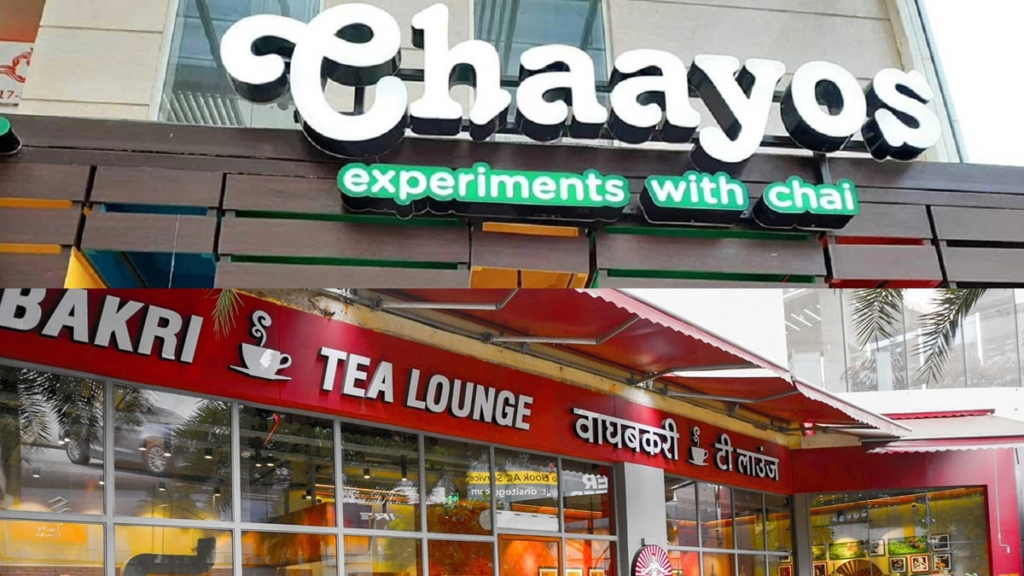
Just about a month back, Wagh Bakri Tea Group, the third largest packaged tea company in India with a turnover of over `1,500 crore, opened its 15th tea lounge in Noida’s upscale DLF Mall of India.
A little over two years ago, Chaayos’ physical footprint was 75 outlets across the country. Currently, its store count is 200.
Just about a month back, Wagh Bakri Tea Group, the third largest packaged tea company in India with a turnover of over `1,500 crore, opened its 15th tea lounge in Noida’s upscale DLF Mall of India.
A little over two years ago, Chaayos’ physical footprint was 75 outlets across the country. Currently, its store count is 200.
Get the drift?
Today the humble cuppa is much bigger than an excuse for roadside tittle-tattle. The rash of tea lounges and bars have taken what used to be, at its best, a social lubricant, and turned it into a `700-crore market.
Homegrown tea café chains have been quick to cash in on the out-of-home demand from a young consumer cohort, offering snacks, groovy ambience and even free wi-fi connectivity. Chains such as Chaayos, Chai Point and Wagh Bakri’s Tea Lounge are ramping up their offerings to cater to a segment for whom coffee shops were the default hang-out zone. Up until now.
But how sustainable are they, given that 80% of the tea drinking market is unorganised? Pramod Damodaran, CEO, Wagh Bakri Tea Lounge, says brands in this segment are catering to the “need state of the consumer”, whether it is meetings,family outings, a quick rest after shopping at the mall or a quiet moment in airports, offices or hospitals. “We elevate the tea drinking experience and make it premium, almost akin to how tea drinkers in the past would enjoy their tea at fancy hotels, but we offer the experience at affordable prices,” he says. While coffee chains offer muffins and croissants with their beverages, Wagh Bakri pairs its teas with pakoras, samosas and vada pav, which resonate more with the average Indian consumer.
Growing the market
Nitin Saluja, founder, Chaayos, draws parallels with global coffee brand, Starbucks. “Before Starbucks launched in the US, there were very few good quality coffee retail outlets. In the Indian context, before chai cafes were launched, consumers could barely enjoy a good cup of tea in a hygienic retail space outside their homes,” he says.
The pandemic, too, played its part in getting consumers to choose hygienic options. That is why home delivery, which was 20% of Chaayos’ revenue prior to the pandemic, now hovers around 30-35%.
The success of chai chains is a reflection of evolving consumer preferences. Saluja says despite the presence of huge international and homegrown brands in the coffee retail segment, the category earns an annual revenue of around 1,500 crore. “In comparison, there are only 3-4 homegrown chai café players, but their combined annual revenue is around700 crore. Only chai retail chains in India can replicate the success of coffee chains in the West,” he says.
Damodaran says his chain is not competing with coffee chains but rather catering to the growing need for cafes. It is for this reason that the brand also offers coffee across its outlets. Wagh Bakri has 15 tea lounges and 10 tea kiosks (Tea World) across Maharashtra, Gujarat and Delhi NCR but plans to ramp up its footprint in the North, West and South over the next three years.
“The industry can ensure long-term health only by capturing the value offered by out-of-home consumption in modern branded formats, packaged branded sales in modern retail and direct-to-consumer models,” sums up Devangshu Dutta, CEO, Third Eyesight.
Source: financialexpress
admin
July 27, 2022
Written ByAlakananda Chakraborty
Brand’s positioning may be just below Starbucks

It is against this background that Reliance Brands (RBL) announced its strategic partnership with global fresh food and organic coffee chain, Pret A Manger (PAM).
By Alokananda Chakraborty
India may boast of the presence of several marquee international coffee chains, but none of them, with the possible exception of Starbucks, have been able to make much of an impact. The reasons are obvious; for one, India is largely a tea-drinking market, with coffee penetration still at just about 11%. Coffee remains largely an in-home consumption drink. Then there are the usual challenges of getting prime real estate at a reasonable cost and consumers’ capacity to pay. The pandemic, which disrupted food supply chains and the overall demand, delivered a body blow, leading to shutdown of around 8% of the outlets during 2021.
It is against this background that Reliance Brands (RBL) announced its strategic partnership with global fresh food and organic coffee chain, Pret A Manger (PAM). The first store will open by the end of this financial year. While RBL is tight-lipped about the pricing or positioning strategy, experts say PAM’s biggest advantage is its association with Reliance.
“PAM is a late entrant and would have been at a huge disadvantage if it went alone,” says Anthony Dsouza, executive director & country service line leader, innovation, Ipsos India.
So what does Reliance brings to the table? “Significant investment capability, real estate strength and know-how of retail. These could lead to a much higher scalability and access to the right locations,” says Angshuman Bhattacharya, national leader, consumer product and retail sector, EY India. “However, running a café chain also involves building out the right supply chains across the country, which the brand would need to build,” he adds.
Bhattacharya is bang on. The success of an F&B franchise business depends on getting real estate at the right price. Reliance can offer a tremendous advantage here to PAM. Not only does it run a very large retail business, it also owns malls.
Experts say a lot would also depend on the right pricing. Pramod Damodaran, who had relaunched Costa Coffee India in his earlier stint as COO for that firm, and is now CEO of Wagh Bakri Tea Lounge, says, “There’s a big space between the 240 and170 for a cup of cappuccino, that is, just below the Starbucks/Costa Coffees of the world.”
PAM will probably occupy that window – it is unlikely to be a premium offering for two reasons. One, PAM is primarily a sandwich chain in the UK and it’s not clear how much premium it can command for a pre-made sandwich. Two, if PAM were to take advantage of the retail footprint of Reliance and were to follow a shop-in-shop format, say, in a Reliance Trends store, it can’t afford to be premium. The positioning would be a consequence of that captive audience.
In other words, the store location will, to a large extent, determine both the pricing and positioning of PAM. Agrees Devangshu Dutta, chief executive of Third Eyesight, a specialist management consulting firm: “At the end of the day, PAM is more a quick service outlet than a cafe. (Pret A Manger means “ready to eat” in French). And the consistency of its offering comes from what is called the pre-prep.”
All PAM outlets in the UK follow the concept of “freshness of ingredients” and “quickness of service”. The hero product – the sandwich in this case – is still a convenience food, a grab-and-go item. It is prepared by a central commissary or multiple commissaries and is at the most heated or packaged at the counter. “So it is not a restaurant and it can’t charge a restaurant price,” says Dutta.
In a sense, Domino’s has perfected this model with a lot of pre-prep done at the commissary end but the actual pizza is prepared “at location” or in the store. “In this case (PAM), you are not doing that volume of work at the consumer-facing counter,” Dutta adds. And if that is the model RBL plans to replicate in the country, the positioning, by default, is mass.
“The PAM-Reliance combination is likely to be a mass market offer, with value pricing and highly localised strategy,” Dsouza of Ipsos says.
But mass or premium positioning, PAM’s entry will no doubt roil the waters. “Incumbents have to up the food game if they want to take on the might of Reliance,” says an executive with a rival brand. Beverages form a dominant part of the café industry sales. Besides food and beverages, merchandising, which is employed largely for branding, is rapidly becoming a source of additional revenue. About 60-65% of café sales come from beverages, followed by food which forms about 20-25% and about 10% from merchandise.
For one, Tata Starbucks, which witnessed a 76% growth and logged `636 crore revenue in FY22, has been working at its food menu and delivery for some time. In a recent interview to FE BrandWagon, Sushant Dash, CEO, Tata Starbucks, had said that the brand had to “re-prioritise” because of the pandemic, with innovation becoming more important to keep the brand relevant. Starbucks innovated with the menu to keep the interest level up among customers and introduced new food items and gave the existing food items an Indian twist,” he had said.
Earlier this month, Starbucks added masala chai, filter coffee and an array of bite-sized snacks and sandwiches to its menu card. Its new milkshakes will be priced starting at 275, while masala chai and filter coffee will start from190. It also introduced the ‘Picco’ – meaning ‘small’ in Italian – starting at `185.
Will that be enough? Given PAM’s strong presence in the food space, there is no denying that existing café chains in India have to tweak their food menu considerably. In other words, they will have to get out of their comfort zones.
Source: financialexpress
admin
May 30, 2022
Written By Akanksha Nagar
Having acquired Patanjali Ayurved’s food retail business, the company has ambitious plans

While its edible oil business has been its mainstay, Ruchi Soya’s CEO Sanjeev Asthana is confident that the share of FMCG revenue could touch 20% this fiscal.
Ruchi Soya has its sights set on clocking `20,000 crore- `22,000 crore in revenue over the next five years from its FMCG business, after recently having acquired Patanjali Ayurved’s food retail business worth `690 crore. The Patanjali food portfolio comprises 21 major products, including top-selling items such as ghee, honey and juices, besides staples such as atta and spices.
To achieve its target, Ruchi Soya plans to launch a D2C (direct-to-consumer) channel in the next two months for its nutraceuticals business, with more categories to follow, while also increasing its investment on e-commerce and expanding its offline footprint. It is quite active across all key online marketplaces including Flipkart, Amazon and JioMart.
According to the latest Statista report, India’s FMCG market was valued at $110 billion in 2020, and by 2025, it is expected to touch $220 billion, as more brands adopt the D2C route. Several top FMCG makers, including Hindustan Unilever, Dabur and Emami, have launched D2C brands in the past two years.
Oiling other products
While its edible oil business has been its mainstay, Ruchi Soya’s CEO Sanjeev Asthana is confident that the share of FMCG revenue could touch 20% this fiscal. It is targeting `7000 crore in revenue from FMCG and `25,000 crore from commodity sales by the end of FY23. “Over the next five years, the revenue split between FMCG and commodities will be equal,” he says.
Furthermore, Ruchi Soya plans on consolidating and rationalising the Patanjali food portfolio, while simultaneously revamping some of its existing products. “The aim is to reposition the entire company towards being a food FMCG major,” says Asthana.
Following the acquisition, Ruchi Soya will be renamed Patanjali Foods (after regulatory approvals). Asthana says that brands such as Nutrela, Mahakosh, Ruchi Gold and Sunrich will continue to be marketed under their existing names, while all the businesses that are coming in from Patanjali will use the Patanjali brand in exchange for a brand licensing fee
evangshu Dutta, chief executive, Third Eyesight, says the company name change may work in its favour, since there is a large audience aligned with the image and values of Patanjali Group and its founder Baba Ramdev.
Casting a wide net
But not all is smooth-sailing. Alagu Balaraman, CEO, Augmented SCM, suggests for the company to scale up, it needs to build a robust traditional distribution network, since a bulk of sales still happens through these channels. “The cost of doing e-commerce delivery is significantly high,” he notes.
Ruchi Soya is working on those lines. Asthana says besides utilising Patanjali’s existing distribution muscle, it is expanding its offline retail footprint by adding 10,500 non-exclusive modern grocery stores and 4,500 exclusive ones every month.
Source: financialexpress
admin
December 23, 2021

Devika Singh, Moneycontrol
December 23, 2021
Male grooming products startup The Man Company, known for its online-first strategy, is looking at offline expansion for its next leg of growth. The company, which operates 28 exclusive brand outlets in the country, plans to launch 60-70 more stores by the end of this fiscal to gain presence across at least 100 locations.
“A lot of growth will come from the offline channel for the next one year at least, especially in Tier II and III cities where launching exclusive stores is a good way to introduce the brand to the consumer as shopping malls are weekend destinations there,” co-founder Hitesh Dhingra told Moneycontrol.
The company, backed by fast-moving consumer goods (FMCG) major Emami which holds a 48.49 percent stake in it, is also looking at introducing its products in more multi-brand outlets. The Man Company is present in 1,200 multi-brand outlets which include lifestyle stores such as Shoppers Stop, Central and Lifestyle as well as hypermarkets, supermarkets and pharmacies. The company plans to be in 2,500 multi-brand outlets by the end of financial year 2022-23.
It currently draws about 70 percent of its sales from online channels including its own direct-to-consumer (D2C) platform and online marketplaces and 30 percent from offline channels. The startup’s strategy is focused on expanding its base in Tier II cities and beyond, which account for 50-55 percent of its sales even on online marketplaces.
“Out of our 28 exclusive brand outlets, only five to six are in top 10 cities and the rest in Tier II and smaller towns. For the new store openings also, we are going to adopt a similar strategy and only 10 percent of the new outlets will be in large cities,” said Dhingra.
The offline way
Several D2C brands have been eyeing the physical retail channel as they try to scale up and tap a wider set of consumers. Brands in the women’s beauty and personal care segment such as Mamaearth, Sugar Cosmetics and Plum Goodness are expanding their presence in the offline retail format. Plum, for instance, is looking to launch 50 exclusive brand outlets in the next two years.
Male grooming startups, too, are following a similar trajectory. For instance, Bombay Shaving Company and Baeardo are launching their products in more and more offline stores.
Devangshu Dutta, chief executive of retail consultancy Third Eyesight, said it makes sense for digitally-native companies that have achieved some brand recognition to launch in offline format for the next phase of growth. Brands in the 1990s for example, he said, who wanted to establish an identity, entered new formats or channels besides the existing ones. Similarly, digitally-native brands need not restrict themselves to online platforms alone, he added.
But he pointed out that these brands will have to address challenges such as ensuring availability of their products in offline channels. “In the online segment, companies can cater to customers with limited stocks. However, in the offline channel, they need to ensure availability of products across stores,” he said.
New categories
Apart from new retail categories, The Man Company has plans to enter categories such as sexual wellness and personal appliances. It has tied up with a marketplace for the launch of personal appliances such as beard trimmers and shavers and the category will be launched exclusively on the platform. The sexual wellness products, too, will be introduced on its D2C platform and later to other marketplaces and offline stores.
“We always launch a product on our platform to test it and get consumer feedback and, based on the response, we introduce the product to the wider market,” said Dhingra.
Launched in 2015, The Man Company caters to the men’s grooming segment and claims to have developed more than 65 stock keeping units. According to Dhingra, the company which competes with Beardo, Bombay Shaving Company and Ustraa will double its sales to Rs 100 crore by the end of this financial year.
Male grooming startups have of late attracted attention from FMCG companies. Marico last year completed the acquisition of Ahmedabad-based Beardo by buying an additional 55 percent stake in the company. It had acquired an initial 45 percent stake in 2019. British consumer goods giant Reckitt Benckiser Group invested Rs 45 crore in Bombay Shaving in February 2021. LetsShave and Ustraa are backed by Wipro Consumer Care.
According to industry estimates, the male grooming market in India was valued at Rs 15,806 crore in 2019 and is expected to cross Rs 36,402 crore by 2025, growing at a compound annual rate of 15-14 percent. Though growth was hit by the pandemic, experts are still bullish about the segment.
(Published in Moneycontrol)
