
admin
December 20, 2022

Metro AG global chief executive officer Steffen Greubel said the company is at a “very advanced” level of discussions on its India business, suggesting for the first time that it could be looking at an exit from the country soon.
“We are very advanced in the process regarding India and are at a certain maturity level in the process. It’s too early to share any information, but we have discussed it greatly,” Greubel told analysts when asked if he is looking at a possible withdrawal from India and the status of talks. “We are very deep in the (sale) process in India,” he said last week while announcing annual earnings.
The German wholesaler grew its Indian business by 21% to $982 million during the year ended September, as per its latest annual report.
Last month, ET reported that Reliance had agreed in principle to buy Metro AG’s cash-and-carry wholesale India business for ₹4,000-4,500 crore.
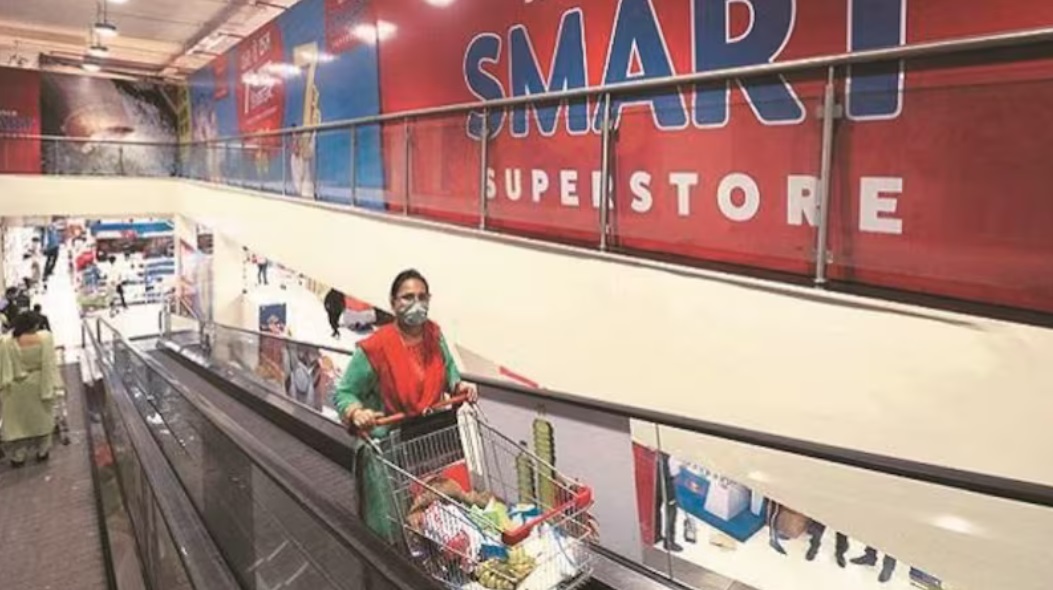
Its unit Reliance Retail is already the biggest grocery retailer in the country with over 2,400 stores across formats while Metro operates 31 wholesale stores in India with seven of them on company owned land in prime locations. The company hasn’t publicly stated that it’s looking to leave India. Metro would be the second big international wholesaler retailer to exit India, if this happens. French retailer Carrefour wound up its India business in 2014 after struggling with sales for four years.
Globally, Metro is the world’s fourth-largest retailer by revenue. In India, it doesn’t sell directly to consumers and is an organised wholesaler or cash-and-carry operator that sells merchandise to local kirana stores, hotels and catering firms.
It decided to put the India business on the block as part of a global decision to exit the country due to heightened competition, a tougher regulatory environment and the lack of a level playing field between local and foreign retail companies, industry executives said.
Experts said the difficult European and global economic environment, regulatory restrictions in India, tough competition from domestic Indian groups and thin margins in the B2B business in India may have led Metro to focus on growing its core markets in Europe.
“Though India is, indeed, a long-term strategic market for companies looking at global growth, whether retail or B2B, not every business model from other geographies can be successfully transplanted or rapidly scaled in India, and Metro’s business footprint in India may be far smaller than they may have expected in the two decades of presence here,” said Devangshu Dutta, founder of retail consulting firm Third Eyesight. The choice to be present in different countries is always a dynamic one for global retailers and entry or withdrawal is driven by individual strategies, rather than solely on the merit of the market itself, he said.
“In September, the management board reported on the current status of the audit of strategic options for Metro India,” according to the annual report.
Overseas investment in offline trade has been a tricky issue, despite India allowing 100% foreign direct investment (FDI) in wholesale trade on a cash-and-carry basis. Metro was one of the first companies to enter the segment in India in 2003. Lobby groups representing small Indian retailers have accused overseas retailers of violating FDI rules, which the foreign companies have consistently denied. Some trade lobbies have complained to the government that a few global wholesalers have been flouting FDI rules by selling to consumers directly, which is not allowed as per current regulations.
(Published in The Economic Times)
admin
July 8, 2022
Akash Podishetty & Krishna Veera Vanamali, Business Standard
New Delhi, 8 July 2022
India’s $900 billion retail market has emerged as one of the most dynamic industries and is expected to reach anywhere between $1.3-$1.5 trillion by 2025. The organized retail is seen gaining 15% market share in the overall retail space, while food & grocery and apparel and lifestyle may account for 80% of India’s retail market by 2025.
Large market offers big opportunities. And it looks like Reliance Retail has seized it, with its massive omni-channel retail play of physical stores, B2B with kiranas and e-commerce.
The company went on an acquisition spree and partnerships in the last three years, adding to its portfolio some of the biggest names, including Hamleys, Dunzo, Zivame etc.
It has also partnered with famous global retail chain 7-Eleven. Catering to India’s affluent consumers, Reliance, meanwhile, houses some of the most iconic brands such as Versace, Armani Exchange, GAP, GAS, Jimmy Choo, Michael Kors among others. The premium segment has become one of the fastest growing categories.
Also firming up its inorganic play, the company is planning to acquire dozens of niche local consumer brands to build a formidable consumer goods business.
Arvind Singhal, Chairman and Managing Director, Technopak Advisors says, there’s focus on physical retail expansion. Reliance is looking to cater to both price conscious and brand conscious customers, while trying to capture as much of the private consumption market as possible, he says.
Reliance Retail’s competitors are nowhere close to even put up a fight. The company has over 15,000 offline stores across categories, compared with DMart’s 294 stores or Aditya Birla Fashion’s 3,468 outlets.
Reliance retail’s revenue has grown five times in the last five years and the core retail revenue of $18 billion is greater than competitors combined, according to a Bernstein report.
Speaking to Business Standard, Devangshu Dutta, CEO, Third Eyesight, says, Reliance wants a decent share of Indian consumers’ wallet. From that perspective, Reliance still has a long way to go, he says. As consumer preferences evolve, Reliance too should adapt.
An undisputed leader in the domestic market, the aim of Reliance, according to Mukesh Ambani, is to become one of the top 10 retailers globally. Part of this bet is based on the premise that incomes and consumption power of Indians will increase across the board in coming years. However, could the uneven recovery that different segments of the population have seen stop the pie from growing larger and prove to be a dampener for Ambani’s ambitions?
(Published in Business Standard)
admin
March 29, 2022

Writankar Mukherjee & Sagar Malviya, Economic Times
Kolkata / Mumbai, March 28, 2022
The war for instant grocery delivery is going to intensify with Reliance Retail entering the segment with its JioMart platform. The company will start the trial in next 2-4 days in Navi Mumbai for ‘JioMart Express’ which will sell and deliver around 2,000 stock keeping units (SKUs) in a few hours, two senior industry executives aware of the plans said.
Reliance has plans to take instant grocery sales to over 200 cities and towns where JioMart is currently operational by end of next quarter and double the reach in next few months to make it India’s largest instant grocer. The company will also tap its network of kirana stores for such fulfillment, apart from its own chain of grocery stores, the executives said. It is testing a separate app for express grocery deliveries as well as integrating it into the JioMart platform.
The plans of India’s largest brick-and-mortar retailer to enter quick commerce is to further grow its e-grocery business and Reliance will compete against Tata-owned Big Basket which will launch it in April, Zomato-funded Blinkit, Swiggy’s Instamart, Walmart-owned Flipkart Quick and Zepto. Earlier this year, Reliance had led a $240 million funding round in quick commerce hyperlocal firm Dunzo owning the largest 26% stake.
“JioMart Express will utilize Dunzo in the markets where it is strong like the metros as well as its own delivery fleet. JioMart Express can be quickly scaled up since Reliance has onboarded lakhs of kiranas under its B2B programme ‘JioMart Partner’ who buys the merchandise from Reliance and sells through the JioMart platform,” an executive said.
An email sent to Reliance Retail remained unanswered till Sunday press time.
Devangshu Dutta, chief executive of consulting firm Third Eyesight, said Reliance needs to ensure that it is in the right catchment which has a high concentration of demand, low competition and keep supply centres close to it to make instant grocery service profitable. “Margin contribution is low in grocery and hence apart from these there could be a higher focus on high margin products in the assortment,” he said.

To be sure, quick commerce is not new for Reliance Retail. It has been delivering orders in less than three hours placed through Reliance Digital online or app for smaller consumer electronics such as mobile phones and laptops. “However, order volumes are going to be much more frequent in grocery, and hence it would need a robust backend and delivery fleet,” an executive said.
While the pilot in Navi Mumbai will start with 1-3 hours delivery time, Reliance will progressively reduce the delivery time to match the industry standard of 45 minutes to an hour and will also expand the range. According to researcher RedSeer, India’s quick commerce market is all set to grow 15 times by 2025 reaching a market size of close to $5.5 billion. Online shoppers in the metros have been using quick commerce for their unplanned and top-up purchases.
(Published in Economic Times)
admin
July 9, 2014
B2B event companies don’t often think about consumer spending as something directly relevant to their business. However, consumer trends can allow industry event and exhibition organizers to get an advance view of where the opportunities can lie in the future. In this Keynote address at UFI’s Asia Open Seminar in Bangalore, Devangshu Dutta shares his views about the key consumer trends in India, and the implications for the events and exhibitions industry.
(This presentation was delivered on 6 March 2014 in Bangalore, India.)
Devangshu Dutta
October 11, 2000
Over the past few years, the Internet has been revolutionising the way we interact with each other, as individuals, as companies or corporate entities, providing a mass of information keeps growing with no end in sight. With cheap and direct access, we can quite simply move around with a few clicks, most of the time locate what we want, make an informed (and even comparison-based) decision, and exit. Surely, as many pundits forecast, the Internet should bring an end to intermediation of any sort. Well, yes. And no.
Yes, the Internet makes information more easily accessible to everyone. Every week there are literally thousands of websites, hundreds of portals and at least a few dozen exchanges that spring up. These get hit upon either directly, or via the many search engines that, in turn, are also constantly updating and fine-tuning their search algorithms, pushing to create sensible shortlists that are useful for the researcher. One is even named after the butler created by P. G. Wodehouse, with the implicit claim that it will anticipate your needs even before you know of them! However, these are only attempts at generating intelligence (at best), more often just information, quite a lot of which is unintelligible, and very far from the “knowledge” that we human beings seem to create in our minds quite automatically as we go about doing our tasks. Just a few days ago, I was searching for hotels in the US – what I downloaded was a morass of information, and I spent a whole day sorting through it. In this case I could have just as well requested a trusted travel agent to come up with a few appropriate options for me, from which I could have booked my choice.
Our minds are, yet, the best-known computer to man, in terms of versatility. Our minds can store enormous amounts of data – a surprising amount remains in long-term memory (despite the fact that often we can’t seem to remember the name of the person that we just met in the lift!). More importantly, we can connect and inter-relate seemingly unrelated items of information, for example, creating travel itineraries covering flights, hotels and various other details into a plan that is most effective and efficient keeping in mind the time constraints, costs and our objectives for travelling. We are still not fully-there from robot programmes which will automatically find you the best prices, and the most convenient locations or times, let alone do that for hotels AND flights AND trains and any other items that your itinerary contains. Travel is actually probably one of the simpler examples – you could still create parameters which, provided the base information about price, time or location is provided by the service providers, can be used in programmes that can analyse patterns of new and past data, and revert with some shortlisted options.
Let us think of a more complex example – the textile and apparel supply chain. It is one of the most fragmented industries, and possibly one of the most global in terms of trade flows. There are multiple layers of raw materials and intermediate products, most of which pass through some sort of intermediaries (such as commission agents, stockists, importers etc.). In such a form the industry is a prime candidate for opening out to the Internet, where suppliers can create their websites, or store their information through other platforms (such as “exchanges”) which can be accessed by buyers from around the world – easy to set up, independent of time zones and very very low cost. Get rid of the multiple layers that mostly add costs, book orders directly, get rid of stocks… sounds like a heaven-sent opportunity!
Well, that is how it is being seen by the 70-80 exchanges that have come up around the world, or are in various stages of being set up. Some of these have been set up by existing industry players, some by technology companies, and yet others by people who have set up exchanges in other sectors who believe that similar business principles can be applied to the textile and apparel supply chain as they have applied in the other sectors. This should dramatically raise the direct access between suppliers and customers – be the end of agents and other intermediaries – and basically make millions for the companies promoting the exchanges!
Yet, around the world, retailers and brands that buy finished products and raw material do not seem to be rushing to stake any significant proportion of their purchases to web-based sourcing. And there are multiple reasons for that.
Firstly, such a proliferation of exchanges seems to be only a reflection of the fragmentation, and there does not seem the likelihood that any clearly dominant player will emerge in the next few months. There is little or no differentiation between most of these exchanges – most of them offering a sophisticated yellow pages capability, while others offer possibly a few add-ons such as functionality that allows buyers to bid for stocks, or suppliers to quote for products.
Secondly, in certain areas, buyers or suppliers themselves have got involved in setting up exchanges. Some of these are private web-based initiatives (such as Wal-Mart or Littlewoods on the retail end, or LiFung.com or TheThread.com on the supply side), while others apparently are more public and collaborative, such as World-Wide Retail Exchange.
Closed web-based systems are excellent for the company that is initiating it, because it enables the company to streamline operational processes. However, it does create another platform for people to adapt to, though web-based systems are less painful certainly than EDI or other proprietary systems, which require specific investments. Also, occasionally it brings up the question of conflict of interest. For example, how comfortable would one supplier feel in sharing internal information with another supplier who has taken on an additional role?
Other initiatives, such as the WWRE, have got off to a good start, but here internal stumbling blocks are inevitable due to the composition of the groups. Consider the WWRE: 27 retailers currently, in four separate areas of operation (as diverse as food and clothing), with different geographical bases, which make the business imperatives very different for the various participants. Add to that the fact that people are loath to share knowledge that is considered proprietary by them, whether process knowledge or supplier contacts. It is a long-drawn process of consensus management in such a large initiative.
Thirdly, what kind of a service offer is the best? As of now, there is are options available from various B2B service providers, offering varying areas of benefit, from listing services to “software solutions” for various applications, to loose working relationships. Not only do the service offerings actually vary, there are varying degrees of claims and counterclaims that muddy the waters further.
The scenario is actually as confusing as it seems to be – players, whether exchanges, portals or any other kind of company, are dynamically evolving their business models, with changes seemingly almost every week, and new players emerging all the time. In such a scenario, buyers (who are early-adopters) will get into as many exchanges as possible to get the maximum choice, and to hedge their bets. On the other hand, the majority – which comprises of buyers who adopt new technologies later – will hold back to see which exchanges come up as the most widely accepted or most appropriate for them.
Finally, whether we like it or not, textile and apparel products are inherently emotional products. They are, of course, driven by specifications, and those specs can be defined fairly precisely. But what the specifications cannot ever completely convey is how a buyer feels instinctively about including a product in a range. Or, indeed, what the impact would be of making some minor adjustments that can be visualised, discussed and decided in an interactive session between a buyer and a supplier. Or, for that matter, what is the best way to reconfigure a supply chain, under pressure of a new order, or an unforeseen delay in the process. Intermediation is something that has become ingrained in the textile and apparel supply chain.
In such a scenario, it is unlikely that intermediaries will disappear immediately. What is certainly happening, however, that while previously buyers were willing (or forced) to pay for having access to information, pure information itself is being made a commodity. In this frame of reference, companies are seeking out “genuine value-for-money” before they will shell out a buying or selling commission. Process or domain knowledge is an absolute must – only this can enable web-based companies to create unique and genuine value-adding web-solutions. Simply putting up a ‘telephone directory on the web’ will fetch very little in return. Even though a telephone directory has hundreds thousands of entries, how much do you pay for it? Relationship-management and process-management capability will remain in demand, and many of the existing intermediaries certainly show a lot of that.
Vertical integration
One of the most important developments that will certainly be an accelerated outcome of the internet, will be the vertical integration of the textile and apparel supply chain. While, in the past, the very diverse nature of the stages of the supply chain has created and maintained multiple layers, web-based technologies are now enabling companies to structure and manage the apparel supply chain from as early a stage as they wish to, be that fabric, yarn or even fibre. It is more feasible to exert control, without actually physically owning the different bits of the supply chain.
Breaking down size barriers
Another significant outcome is that the web breaks down “size” barriers. Large retailers typically bought from large suppliers, while small retailers typically did business with small suppliers. Any “criss-crossing” (i.e. small companies dealing with larger companies) needed middlemen – individuals or companies that broke bulk or consolidated orders, for small or large retailers, respectively. This had more to do with operating systems, management capabilities and the scale needed for relationship management than it did with actual barriers. Now, however, web-based systems can allow some parity between organisations of different size, because at a low cost the same level of functionality is available to companies of all sizes, This is significantly changing the balance of power, and the overall structure of the industry. Scale was never the only surrogate measure of capability in this industry, but the correlation between actual scale and perceived or actual capability is getting even more vague over the Internet.
The impact of the web on the textile and apparel industry is not going to be immediate – it will take a while to permeate the hundreds of thousands of companies that make up the supply chain – so there is some breathing space.
But surely, in the next five years, the textile and apparel supply chain that we shall be seeing, will be structured quite differently from the existing supply chain. There will certainly be some casualties. What is important is that you – whether you are a supplier or a retailer – should start taking cognisance of the changes to come, and begin changing your own business to avoid being one of the casualties.
