
admin
February 23, 2024

Kailash Babar & Sagar Malviya, Economic Times
Mumbai, 23 February 2024
Tata Group and Reliance Industries, two of India’s largest conglomerates, are vying for premium retail real estate in Mumbai as they extend their footprints, creating rivalry in a city starved of marquee properties. From Zara and Starbucks to Westside and Titan, the Tata Group occupies nearly 25 million square feet of retail space in India. That is still no match for Reliance Industries that control three times more at 73 million sq ft for more than 100 local and global brands.
But in Mumbai, they are evenly matched, having nearly 3 million sq ft of retail space each. That is a quarter of what is considered the most prime retail real estate in the country, and both the retail giants are looking for more.
“In a modern retail environment, most visible locations contain more successful or larger brands. It just so happens that many of those brands are owned by either Reliance or the Tatas,” said Devangshu Dutta, founder of Third Eyesight, a strategy consulting firm.
“Tatas have been in retail for longer but also slower to scale up compared to Reliance which had this stated ambition of being the most dominant and put the money behind it,” he said.
In a market where demand is much higher than supply, developers and landlords seek to separate the wheat from the chaff, experts said. Ultimately, success in Mumbai’s retail real estate scene hinges on a delicate equilibrium between accommodating industry leaders and fostering a vibrant, varied shopping environment, they said. “In the competitive landscape of retail real estate in Mumbai, commercial developers and mall owners often face the strategic challenge of accommodating prominent retail brands,” said Abhishek Sharma, director, retail, at commercial real estate consultants Knight Frank India.
“These big brands, with a significant market share of 40-45% in the Indian retail sector, can easily be termed as industry giants and possess the potential to command 45-50% of space in any mall,” he said. According to Sharma, there may be perceptions of preferential treatments, but the dynamics are complex, and developers must balance the demand from these major brands with the need for a diverse tenant mix.
Tata Group entered retail in the late 1980s, initially by opening Titan watch stores and a decade later by launching department store Westside. So far, it has about 4,600 stores, including brands such as Tanishq, Starbucks, Westside, Zudio, Zara and Croma.
While Reliance Retail started in 2006, it overcompensated for its late entry by aggressively opening stores across formats. Reliance has over 18,774 stores across supermarkets, electronics, jewellery, and apparel space. It has also either partnered or acquired over 80 global brands, from Gap and Superdry to Balenciaga and Jimmy Choo. A diverse portfolio of brands across various segments through strategic partnerships and collaborations helps an entity like Reliance to leverage synergies and enhance retail presence, especially in malls, experts said.
“The array of brands with Reliance bouquet allows it to enter early into the project and set the tone and positioning of the mall,” said a retail leasing expert who requested not to be identified.
“This positively helps the mall to set its own positioning and future tenant mix. It also helps Reliance place their brands in most relevant zones within the mall. This will emerge as a clear differentiator in a city like Mumbai where brands are already jostling for space, which is the costliest in the country,” the person added.
(Published in Economic Times)
admin
February 15, 2024
An insightful must-watch discussion, moderated by Devangshu Dutta (Founder, Third Eyesight), with venture capital fund managers, investors and entrepreneurs in retail on what factors attract investors to retail businesses.
The panelists included Vikram Gupta (Founder & Managing Partner, IvyCap Ventures), Amar Nagaram, (Co-Founder, Virgio), and Vikram Gawande (Vice President, Growth, Blume Ventures).
admin
January 29, 2024

Economic Times, 29 January 2024
High aspirational value, rising disposable incomes in non-metro markets, premiumisation, and social media boosting brand awareness have led to international retail brands growing at a fast pace while desi brands go easy on expansion.
Global brands such as Zara, H&M, Bugatti Fashion, La Vie en Rose, Adidas, Nike, West Elm, Starbucks, Uniqlo and Marks & Spencer are fast finding favour with Indian buyers. A significant propeller of their growth is small towns where buyers, willing to spend more, are getting more brand conscious.
According to CBRE, about two dozen international brands entered India in 2023 and expansion by global brands that are already present in the country have fuelled the demand.
Videshi retailers make more space
The retail sector recorded an all-time high leasing in 2023, taking 7.1 million sq ft across eight cities, an increase of 47% from last year despite large retailers slowing down on store expansion. A prominent factor in the growth was international brands. Retail leasing by international brands was almost 25% in 2023 compared to 14% in the previous year, ET has reported.
Canadian lingerie retailer La Vie en Rose made its debut in India in partnership with Apparel Group India and launched its first store in Delhi-NCR in July 2023 and later expanded in Pune and Bangalore. Similarly, Rimowa, a German luxury luggage brand, entered India through its partnership with Reliance Brands and opened its first store in Mumbai.
Other notable expansions by international players include French fashion & apparel brand Bugatti Fashion and the American furniture brand West Elm opening their stores in Pune, and American lingerie brand Victoria’s Secret opening stores in Hyderabad and Pune.
Making inroads into small towns
Three dozen big brands entered tier-II cities in the first nine months of 2023, as demand from smaller cities continued to be strong even after the pandemic. A good number of those were global brands.
Brands such as H&M, Marks & Spencer and GAP have entered cities like Indore, Mangalore, Patna, Ranchi, Mysore, and Coimbatore, according to data by CBRE. “India’s first retail REIT has encouraged developers to aggregate and upgrade their existing facilities, apart from developing new malls. Moreover, domestic and international fashion brands are looking to expand in non-metro cities, fueled by a well-aware and well-travelled consumer set,” Ram Chandnani, Managing Director, Advisory & Transactions Services, CBRE India, has said.
Desi retailers turn cautious
While international brands are expanding at a strong pace, desi retailers are turning cautious. India’s top retailers have significantly slowed down their store expansion this fiscal year, after opening a record number of outlets last year, ET has reported based on their latest investor disclosures. The top five retail chains – Reliance Retail, Titan Company, Avenue Supermarts that owns DMart, V-Mart Retail and Shoppers Stop – together opened 44% fewer stores in the first three quarters through December compared with a year earlier.
Top industry executives attributed the slowdown in store expansion to more focus on profitability when consumption had not picked up the way it was expected to and as most of the new markets are already filled up with two-four retailers, leaving little room for more outlets. It appears global retail brands are less vulnerable to these pressures.
Global brands buck the trend
Top global apparel and fast fashion brands appear to have struck a strong chord with young customers, racking up sales growth of anywhere between 40% and 60% in FY23, bucking the trend in a market where the overall demand for discretionary products slowed down, ET has reported based on latest filings with the Registrar of Companies.
For instance, Swedish fashion retailer H&M and rival Zara reported a 40% increase in its topline while Japanese brand Uniqlo saw a 60% jump in sales. American denim maker Levi Strauss and British brand Marks & Spencer posted a 54% increase. Dubai-based department store Lifestyle International, too, saw a 46% jump in revenues on a large base. These brands garnered combined annual revenues of nearly $2.6 billion, more than double compared to FY21 when it was $1.1 billion all put together.
“With consumers getting brand conscious, global brands have a natural advantage. There is a distinct aspirational momentum for international brands that carries them through. Also they can sustain having unsold inventory and discounting better than smaller peers,” Devangshu Dutta, founder of Third Eyesight, a strategy consulting firm, told ET recently. “Also, these brands have not yet reached saturation point in terms of network and hence can invest further to widen their reach.”
Even as international brands are aggressively adding more physical stores, the revenue surge was also led by brands’ shifting focus on ecommerce, which now accounts for more than a quarter of their sales, even as they face intensify competition from both local and global rivals in an increasingly crowded market where web-commerce firms continue to offer steep discounts. Over the past two years, sales growth for most retailers have been price-led, reversing the historic trend when volumes or actual demand drove a bulk of the sales.
The fashion retail segment has been struggling with a demand slowdown since January last year due to inflationary headwinds. The overall retail growth slowed down to 6% in both March and April, increasing marginally to 9% in August and September before falling slightly to 7% in October and November, according to the Retailers Association of India.
(Published in Economic Times)
admin
January 8, 2024
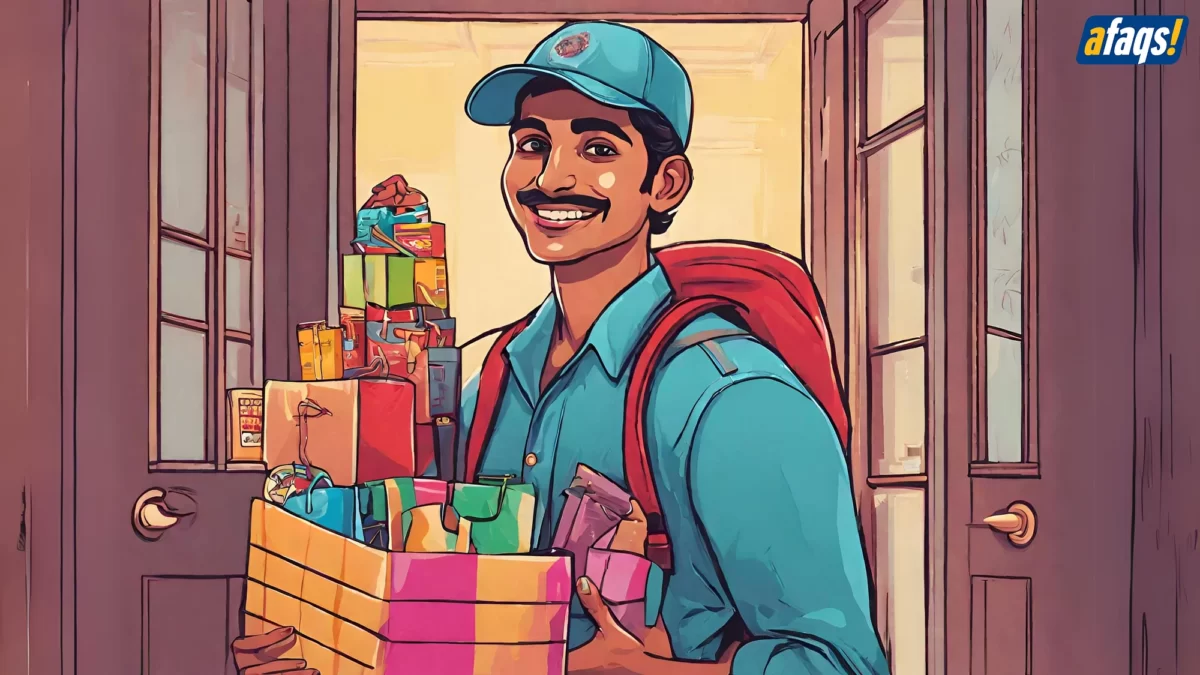
Yash Bhatia, Afaqs
8 January 2024
In the 10th episode of Zerodha co-founder Nikhil Kamath’s YouTube podcast series, WTF, Aadit Palicha, co-founder, Zepto, says that consumer goods are the fastest-growing category for its quick commerce business. Initially, quick commerce brands just focussed on serving impulse grocery needs, but now they have changed their way to serve regular planned purchases too.
Major players like Zepto, Blinkit, Swiggy Instamart, and BBNow are expanding their offerings in gifting, makeup, ready-to-eat, baby care, pet care, meat, poultry and more to cater to a wider range of consumer needs and preferences.
Through our interviews with brands like Bombay Shaving Company, Bevzilla and Plum, it is evident that Q-comm business contributes approximately 10-25% of online revenue for different brands.
Also, according to a report by Redseer, the Q-comm market is expected to reach almost $5.5 billion by 2025. The report highlights, that these platforms can up their game by going beyond just grocery and extend their offerings to other consumables, electronics, newspapers and more.
It shows that quick commerce players would focus on other categories to reach this milestone. But, are brands ready for it? If yes, how is their strategy different for this model?
Aditi Handa, co-founder of The Baker’s Dozen, an artisanal bakery, states, “In our category, once the customers figure out a product in the physical store, then they tend to buy again on the quick commerce platforms rather than visiting a store. It works well in our category, as there is no need to touch and feel the product.”
Baker’s Dozen makes 60-65% of its online sales on Q-comm platforms.
Devangshu Dutta, founder of Third Eyesight says that quick commerce has spread across various product categories and he believes, “It is driven more by buzz than customer needs. Unless we meet a core demand with a large consumer market, there’s no sustained road to profit.”
Deepti Karthik, fractional CMO, SuperBottoms, says, “In the diaper category, there are a lot of unplanned purchases. We target customers who’re buying other products, and eventually get trails from them.”
She points out that a lot of gifting happens in the quick commerce segment. “Gift packs can be a great solution our brand can leverage.”
She predicts that for the baby-care brand, quick commerce will contribute 3-5% of overall revenue, led by gifting as a category.
Apart from the reduced delivery time, is there a reason that customers are opting to shop on quick commerce platforms?
Handa answers that two factors work in favour of Q-comm platforms: discounts and convenience. “As these players are expanding their portfolio, customers will find more reasons to go on these apps.”
Is the quick commerce business driven by celebrations?
India is renowned for its diverse festivities. Quick commerce platforms capitalise on this by selling event-related or topical assortments. For instance, they offer flutes for Krishna Jayanti, Ganesha idols for Ganesh Chaturthi, Christmas decorations for the holiday, decorative items for Diwali, and gold and silver coins for Dhanteras.
These platforms are also curating special web and app pages for such occasions, even for regional festivals like Chauth Puja. In 2023, Blinkit curated a specific page dedicated to the wedding season.
Karthik states, “The major business of this sector is driven by consumables and FMCG products. On special occasions, e-commerce brands used to curate specific products, which Q-commerce is now doing. The market share of the other modes is now being taken by the quick commerce players on festivals. That’s why every e-commerce is looking to launch its version of Q-commerce, like Amazon Fresh by Amazon, and BBnow by Big Basket.”
Handa believes differently and states that quick commerce is not taking up the market share of any other modes. “Currently we’re buying more than what we need. Quick commerce is creating some new markets, and people are spending more money as it is easy to spend now.”
Will Q-commerce take over e-commerce?
As the country embraces digital commerce, the battle between e-commerce and Q-commerce is intensifying. While e-commerce has a well-established presence with a vast user base, Q-commerce offers unmatched speed and efficiency. As Q-commerce players foray into other categories, will they take over e-commerce?
Ritesh Ghosal, former chief of marketing at Croma believes that Q-comm will not replace e-commerce. He says that Q-commerce will only be a successful mode for urgently needed products like trimmers, headphones etc.
Handa predicts, “In our category, Q-commerce will replace e-commerce purely based on better service. The only advantage that e-commerce holds is a variety of stock keeping units (SKUs). Like, some products will have a presence in e-commerce only like English Cheddar cheese, it will not be there in Q-comm, a customer can only get it through e-commerce.”
She says that quick commerce also provides a fast way to experiment with new products.
Kartik, says e-commerce will always be at the main stage for the brand and believes Q-commerce will be an incremental business for them.
She has observed that in quick commerce if a product gets listed, it starts to sell faster and gets a quick start as compared to the e-commerce route.
Challenges
While the benefits of quick commerce are evident for customers, these players in the backend face a lot of challenges including warehousing, labour expenses, and, most importantly, the orders are low-value, therefore the margins are less.
Balasubramanian Narayanan, vice president, of Teamlease services points out that the consumer preferences and buying patterns in the quick commerce segment evolve rapidly, making data collection and analysis a crucial aspect.
“Balancing data collection with user privacy is a key challenge. The data insights can help to create personalised experiences, predict demands, and improve operational efficiency. But this can be a challenge in this mode.”
Handa says in quick commerce, the biggest challenge is the stock keeping unit (SKU) mix, SKU selection is critical.
“Brands like Amazon, and Flipkart allow a plethora of SKUs, while quick commerce just allows a limited number, due to limitation of warehouse space and delivery time. The SKU selection by the brand becomes a critical aspect.”
In the physical realm, shelf presence plays an important role in reaching customers, in the online world, optimising the online presence is crucial to get the customers’ attention. She highlights that in quick commerce, the fight is to be at the top of the search bar.
“To be at the top, the brand should generate organic sales, secondly it’s about keyword bidding. A keyword that would search customers to find the product from the brand. The brand pays quick commerce players for this.”
Ghosal also agrees with this and states, “In the Q-commerce arena, most searches are by category rather than by brand. The brands have to tick more boxes in terms of categories/searches so that customers tend to look at them.”
(With additional inputs: Ruchika Jha)
(Published in Afaqs)
admin
December 12, 2023

Akshit Pushkarna, Afaqs
12 December 2023
The season for Indian weddings, usually spanning October to December, experienced an unusual twist due to Hindu calendar nuances this year, resulting in a shorter duration. The unexpected shift has upended the conventional decrease in marriage ceremonies, resulting in a condensed surge of weddings.
A report by the Confederation of All India Traders (CAIT) anticipates Rs 4.74 lakh crore in business earnings from the 38 lakh marriages expected this wedding season, marking a historic high. In comparison, the corresponding period last year witnessed around 32 lakh weddings with total expenses amounting to Rs 3.75 lakh crore.
This presents brands involved in the wedding business with an ample opportunity to capitalise and drive forth their business revenues for the year to come. Three key brands associated with wedding business are steering their strategies to align with the evolving preferences of Indian consumers in the lucrative wedding market.
A more region-specific focus for Shaadi.com’s marketing communication
In a conversation with afaqs!, Adhish Zaveri, VP-marketing, Shaadi.com, a prominent online matrimonial and matchmaking service, speaks about how digital media is more relevant for brand building for wedding-oriented businesses now, eclipsing the relevance of traditional TV and out-of-home advertising. He sees mass media serving only reminders to prompt registrations, while the primary focus shifts towards digital platforms.
This change involves a robust regional focus within our marketing playbook, recognising the dynamic shifts in matrimonial behavior across diverse geographies
Adhish Zaveri, VP-marketing, Shaadi.com
“This season, we have incorporated a paradigm shift in our marketing strategy, driven not only by the upswing in weddings but also by observing how Indians approach finding life partners, with nuances varying across regions. This change involves a robust regional focus within our marketing playbook, recognising the dynamic shifts in matrimonial behaviour across diverse geographies,” he says.
The campaign is driven by the company’s commitment to assure individuals of finding a match within a specified timeframe. The pledge to successfully matchmake within 30 days, with a refund guarantee, serves as the crux of their messaging this season. “Tailoring our approach to each market, we’ve executed this promise uniquely.”
This approach sees the company partner with people of influence across markets to drive better visibility. For the Hindi market, they’ve forged a strategic partnership with Jasleen Royal, the acclaimed singer behind popular wedding songs like Din Shagna Da and Hiriye. Leveraging her association, Zaveri says they have orchestrated a robust social media engagement strategy.
“In the Tamil market, we’ve employed celebrities who recently tied the knot as our ‘matchmakers.’ Adapting a viral reel from this region, featuring the celebrity couple, became a cornerstone of our campaign. While regional focus has always been part of our strategy, this time we’ve approached it through a celebrity lens, creating bespoke strategies for each South Indian market. Although distinct, each strategy is unified by a celebrity-centric approach. From featuring Supriya and Sachin Pilgaonkar for Marathi audiences to enlisting Jasleen Royal for the North, and partnering with Ashok Selvan and Keerthi Pandian for the South – we’ve delved deeper into regional dynamics,” he adds.
Zaveri believes the success of the approach is evident, particularly in the South, where the company’s market presence has increased dramatically post-campaign, providing them an opportunity to further invest in the region.
A focus on the Wedding planning business for Vikaas Gutgutia’s Ferns N Petals
In the backdrop of a season that signals prosperity, Vikaas Gutgutia, founder and managing director, Ferns N Petals (FnP), reflects on the trajectory of its business, navigating through the challenges of a pandemic-induced wedding lull.
He says FnP strategically sustained its business in 2022, aligning with the resumption of the wedding business. With the focus shifting to a year poised for business takeoff, the company plans on exploring the wedding planning business with their new business line Shaadi Central.
“With a legacy in the wedding industry, FnP has historically undertaken various wedding-related tasks, albeit not comprehensively under one roof or in an organised manner. This year marks a strategic shift as the company introduced ‘Shaadi Central,’ a luxury wedding company offering a one-stop solution for all wedding needs.”
“This holistic approach aims to streamline and elevate the wedding planning experience, allowing partners and their families to focus on the approaching wedding date with ease. The innovation and consolidation under ‘Shaadi Central’ have sparked notable interest and engagement in the new business venture. Having weathered a less-than-ideal summer season and traditionally subdued winter numbers, we anticipate a robust revenue surge, making the current season particularly promising,” he asserts.”
The business setup was sparked by Gutgutia’s assertion that, with the evolving landscape of wedding planning, which has made destination weddings and grandeur now necessary for some, the role of wedding planners has become significantly prominent. The launch’s alignment with the business boom anticipated with the wedding season of 2023, Gutgutia underscores the importance of timing in business.
The innovation and consolidation under ‘Shaadi Central’ have sparked notable interest and engagement in the new business venture.
Vikaas Gutgutia, founder and managing director, Ferns N Petals (FnP)
Delving into the marketing approach for this new business vertical, he explains, “The momentum generated by word of mouth for the growth of its wedding planning vertical. Each wedding becomes a nexus of potential customers, and social media plays a pivotal role in amplifying references. With clear and specific messaging in the realm of social media, we have successfully driven business, recognising the platform as the primary point of reference in shaping preferences.”
Looking ahead, FnP anticipates a substantial increase in business revenue across all its verticals. The wedding services vertical, in particular, is expected to bring in significant growth in revenue for the company. The belief stems from the observation that the wedding planning sector remains largely unorganised, and he believes that FnP stands out as a formidable player in terms of size and brand image. As the business charts its course forward, the wedding services vertical emerges as a key focus, poised for substantial expansion.
Senco Gold & Diamonds leveraging virtual try-ons for delivering business growth
Joita Sen, director- marketing and design, Senco Gold & Diamonds, says that the company, with a legacy of 80 years, is uniquely equipped to understand the evolving landscape of bridal desires.
Sen elaborates that the company started the year fresh after initiating their Rajwada Collection, a campaign with which the brand aims to weave together traditional designs infused with modern touches and patterns in their offerings. These offerings, thus, can resonate with the essence of the contemporary woman.
The move also sees the brand shifting its focus towards diverse designs, moving away from region-specific choices. Herein lies a unique selling proposition (USP) for the brand—fulfilling a diverse range of needs while ensuring accessibility across various price points. From high-end designs to more budget-friendly options, the brand aims to leave every customer content upon leaving the store.
“The evolution of groom preferences and competitive pricing have further shaped our approach. A significant aspect of our marketing strategy here revolves around social media, leveraging its targeted reach compared to traditional approaches like billboards and footfall. 50 percent of the marketing budget is allocated to digital channels, where advancements have allowed for more precise consumer outreach.”
50 percent of the marketing budget is allocated to digital channels, where advancements have allowed for more precise consumer outreach.
Joita Sen, director- marketing and design, Senco Gold & Diamonds
However, the digital realm poses a challenge in providing a comprehensive array of options compared to the immersive experience offered in showrooms. To address this, Sen acknowledges the importance of virtual try-ons.
“While currently available for select products, we are actively working on expanding our offerings in virtual try-ons. This approach proves instrumental in effectively communicating the design, look, and feel of the jewellery to consumers, bridging the gap between the digital and physical shopping experiences.
According to Devangshu Dutta, CEO, Third Eyesight, the ongoing mega-season of weddings presents a favourable outlook for formalwear and traditional wear brands across various categories. This surge in weddings is not limited to the upper-income segment but extends across the income spectrum, reaching the middle class and towns of all sizes.
Thus, to effectively capitalise on the wedding season, brands must establish a strong position in customers’ minds well in advance, he believes.
“Products and brands associated with brides, grooms, and close family members, as well as those intended for gifting to the extended family, are inherently perceived as “premium” within their respective consumer segments. This holds true regardless of the targeted population segment. Success as a “wedding brand” requires a long-term perspective, with continuous investments in product development, service enhancement, and marketing expenditure to ensure that the brand stands out prominently amid competition,” he says.
”In the current market landscape, achieving visibility demands a multi-modal approach, encompassing both offline and traditional channels, along with tactical online advertising.”
Devangshu Dutta, CEO, Third Eyesight
In the short term, however, he opines that the visibility and availability of products just before the wedding season play a crucial role in influencing specific performance during that period.
”In the current market landscape, achieving visibility demands a multi-modal approach, encompassing both offline and traditional channels, along with tactical online advertising.”
(Published in Afaqs)
