
admin
December 12, 2022

Christina Moniz, Financial Express
December 12, 2022
This year has seen the entry of several brands into the plant-based meat category, from large players like ITC and Tata Consumer Products to newer brands like Licious. Mock meat, a growing trend especially in Western markets, is a plant-based protein processed to resemble and taste like meat. From vegetarian ‘chicken nuggets’ and sausages to meat-free ‘mutton’ seekh kebabs, most Indian players use ingredients like soya and jackfruit to mimic the texture and taste of meat.
The Indian vegan meat market is rather small currently — estimated to be around Rs 250-300 crore. But consider the potential: About 41 percent of respondents in India identified as either vegan, vegetarian, or pescatarian in a 2021 survey. A report by Wazir Advisors estimates that this category will grow 8-10 times to reach Rs 3,500 crore in 2026.
Looking from a global perspective too, this new category cannot be written off as just a blip. Worldwide, the consumption of such meat substitutes grew from 133 million kg in 2013 to 470 million kg in 2020.
While the projections are fantastic for this market, it is still very small within the entire food category, points out Sandeep Singh, co-founder of Blue Tribe Foods, a two-year-old start-up in this segment. What is needed to grow the category, he believes, is innovation. “The food items need to move beyond burgers and nuggets to appeal to the Indian non-vegetarian consumer. For example, someone needs to create a good chicken tikka masala or a good kheema to attract the Indian palate,” he explains. Earlier this year, star couple Virat Kohli and Anushka Sharma announced their investment in Blue Tribe Foods, a move that has boosted awareness for the brand and category, says Singh.
Variety & cost
Tata Consumer Products, which launched its vegan meat brand, Simply Better, in July this year is tapping into the trend of consumers moving towards healthier and sustainable lifestyle choices. Deepika Bhan, president, packaged foods (India), Tata Consumer Products, maintains that the market holds great growth potential. “Over 70% of the Indian population is flexitarian (consumes both vegetarian and non-vegetarian food). Surveys also show that over 73% of Indians today are protein deficient. These data points signify untapped potential in the plant protein segment. The consumer cohort, which is aware of the health and environmental benefits of plant protein, is likely to expand to a more diverse audience seeking to supplement their diet with alternate, plant-based meat,” remarks Bhan.
Cost is a factor hindering growth. Currently, the pricing for plant-based meat is 1.5 times the price of real meat products. “For premium consumers, price is not a challenge but to gain scale and reach the masses, pricing needs to be more attractive,” observes Devangshu Dutta, CEO, Third Eyesight. Indians have for decades consumed soya nuggets and products as a source of protein and as a meat alternative, but brands today are targeting urban consumers who are not price sensitive. “The consumers that brands are targeting are influenced by trends in Western markets and adopting veganism for ethical or health reasons,” adds Dutta.
Another consumption trend that is unique to Indian consumers is that there are around 100-odd non-meat eating days annually, on account of religious or cultural occasions. Meat and seafood company Licious is targeting these consumers on non-meat eating days with its newly launched vegan meat brand, UnCrave. Simeran Bhasin, business head, alternative protein, Licious, states that all brands in the category are still on a journey to improve their offerings . “Our plan is to create relevance before aiming to take a share in it. Eating is believing, and we want more of our consumers to sample our alternative protein offerings. So, we send samples of UnCrave along with Licious food deliveries to encourage consumption and drive brand awareness,” explains Bhasin.
While UnCrave is currently present in only four cities (Mumbai, Delhi, Pune and Bangalore), she asserts that there is a market for the brand in non-metros too and expects the brand to reach the top 20 markets by the end of the next fiscal.
(Published in Financial Express)
admin
September 5, 2022

Akanksha Nagar, Financial Express
September 5, 2022
Can you give a brand a second shot at life?
Reliance Retail Ventures certainly thinks so. It has acquired Campa-Cola for an estimated `22 crore from Delhi-based Pure Drinks Group on the assumption that it will not only be able to revive the five-decade-old brand but can also use it to springboard into the dog-eat-dog soft drink market in India.
It will not be a cakewalk surely. The ones who were fans of the brand—which was launched in the 70s—have moved on, and younger customers have little or no association with the brand.
Samit Sinha, managing partner, Alchemist Brand Consulting, believes that Reliance must have been very keen on getting into the soft drinks category as a part of its overall strategy of retail expansion. In any case, it hasn’t had to shell out a bomb for the brand so it is a less audacious gambit than starting from scratch. There is one other factor that might work in its favour—which is the formula, the taste of which had near widespread acceptance in its heyday.
Sandeep Goyal, managing director, Rediffusion Brand Solutions, who is handling a similar resurrection of Garden Vareli sarees, says giving an old brand like Campa-Cola a new life will be far from easy—the Campa-Cola generation is now in their sixties and therefore there is very little monetisable value in the nostalgia.
RESURRECTION RULES
Breathe life into an old brand if:
1. The market presents an opportunity to refresh the brand without compromising on its core promise
2. There are positive connotations for the brand that can be built upon in the current market context
3. The company has the resources and inclination to be a “caretaker” or “steward” of the relationship that had been created between the brand and its customers
Courtesy: Devangshu Dutta, CEO, Third Eyesight
Launch versus resurrect
From the looks of it, Campa-Cola will have to fight sip for sip, bottle for bottle.
Rohit Ohri, chairman and CEO, FCB Group India, who had managed the Pepsi account for more than a decade, says it will be difficult for a new brand to find space in a market dominated by multinationals like Pepsi and Coke. While the residual equity can help get the foothold, the real challenge would be to woo a younger consumer set.
Naresh Gupta, co-founder and CSO, Bang In The Middle, concurs: “When you try to resurrect a brand, you do it knowing that the brand isn’t doing well or has been out of circulation. That is big baggage for the brand to wipe out. Often the residual awareness and following are limited to the audience that is less likely to be your core audience today.”
There is also the fact that young people in the metros are moving away from colas, preferring healthier drinks or niche artisanal products instead. At the same time, soft drink is an impulse category and needs a large dose of salience to fly off the shelf.
Gupta says Reliance can try and build on the Indian-ness that Campa-Cola exudes. His guess is the old brand will be used as a calling card in trade and there would be a host of new launches that build upon it. “Campa-Cola may fuel a lot more fresh fizzy drinks launch from Reliance,” he adds.
That said, just the sheer time an old brand has spent on the shop-shelves would give Campa-Cola an edge over any new brand that its current owner might want to launch. An old brand can appear to be proven, experienced and secure, while a new brand could be seen as untested, raw, and risky. An old brand may have had a positive relationship with the consumer but may have been dormant due to strategic or operational reasons. In such a case, reviving the brand is clearly a good idea, says Devangshu Dutta, chief executive, Third Eyesight.
Reliance could have launched a new brand but if the existing brand has residual awareness or connection, it could be the pivot around which other brand properties can be built. Here, the new owner also has the benefit of having a wide retail network. As on March 31, 2022, Reliance Retail operated 15,196 stores across 7,000-plus cities with a retail area of over 41.6 million sq ft. This, if nothing else, will give Campa-Cola a start any new brand will die for.
(Published in Financial Express)
admin
September 2, 2022
Written by Christina Moniz
Retail chains are on an expansion spree, riding on growing demand from a young consumer cohort
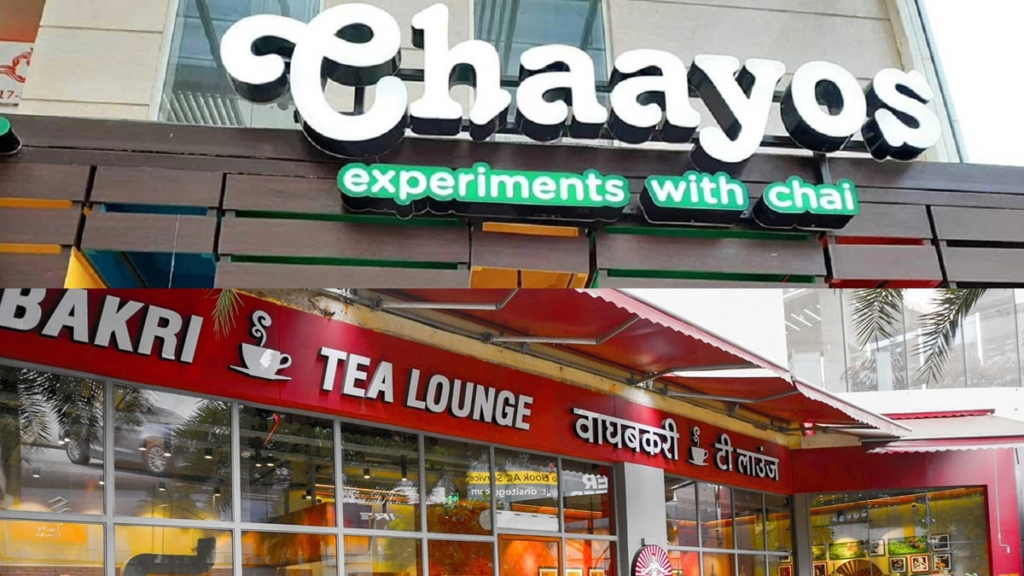
Just about a month back, Wagh Bakri Tea Group, the third largest packaged tea company in India with a turnover of over `1,500 crore, opened its 15th tea lounge in Noida’s upscale DLF Mall of India.
A little over two years ago, Chaayos’ physical footprint was 75 outlets across the country. Currently, its store count is 200.
Just about a month back, Wagh Bakri Tea Group, the third largest packaged tea company in India with a turnover of over `1,500 crore, opened its 15th tea lounge in Noida’s upscale DLF Mall of India.
A little over two years ago, Chaayos’ physical footprint was 75 outlets across the country. Currently, its store count is 200.
Get the drift?
Today the humble cuppa is much bigger than an excuse for roadside tittle-tattle. The rash of tea lounges and bars have taken what used to be, at its best, a social lubricant, and turned it into a `700-crore market.
Homegrown tea café chains have been quick to cash in on the out-of-home demand from a young consumer cohort, offering snacks, groovy ambience and even free wi-fi connectivity. Chains such as Chaayos, Chai Point and Wagh Bakri’s Tea Lounge are ramping up their offerings to cater to a segment for whom coffee shops were the default hang-out zone. Up until now.
But how sustainable are they, given that 80% of the tea drinking market is unorganised? Pramod Damodaran, CEO, Wagh Bakri Tea Lounge, says brands in this segment are catering to the “need state of the consumer”, whether it is meetings,family outings, a quick rest after shopping at the mall or a quiet moment in airports, offices or hospitals. “We elevate the tea drinking experience and make it premium, almost akin to how tea drinkers in the past would enjoy their tea at fancy hotels, but we offer the experience at affordable prices,” he says. While coffee chains offer muffins and croissants with their beverages, Wagh Bakri pairs its teas with pakoras, samosas and vada pav, which resonate more with the average Indian consumer.
Growing the market
Nitin Saluja, founder, Chaayos, draws parallels with global coffee brand, Starbucks. “Before Starbucks launched in the US, there were very few good quality coffee retail outlets. In the Indian context, before chai cafes were launched, consumers could barely enjoy a good cup of tea in a hygienic retail space outside their homes,” he says.
The pandemic, too, played its part in getting consumers to choose hygienic options. That is why home delivery, which was 20% of Chaayos’ revenue prior to the pandemic, now hovers around 30-35%.
The success of chai chains is a reflection of evolving consumer preferences. Saluja says despite the presence of huge international and homegrown brands in the coffee retail segment, the category earns an annual revenue of around 1,500 crore. “In comparison, there are only 3-4 homegrown chai café players, but their combined annual revenue is around700 crore. Only chai retail chains in India can replicate the success of coffee chains in the West,” he says.
Damodaran says his chain is not competing with coffee chains but rather catering to the growing need for cafes. It is for this reason that the brand also offers coffee across its outlets. Wagh Bakri has 15 tea lounges and 10 tea kiosks (Tea World) across Maharashtra, Gujarat and Delhi NCR but plans to ramp up its footprint in the North, West and South over the next three years.
“The industry can ensure long-term health only by capturing the value offered by out-of-home consumption in modern branded formats, packaged branded sales in modern retail and direct-to-consumer models,” sums up Devangshu Dutta, CEO, Third Eyesight.
Source: financialexpress
admin
August 3, 2022
Written By Ratna Bhushan

Large restaurants have increased the amount of discounts and promotional offers by 15-20% on their own apps compared with those offered by aggregators Swiggy and Zomato, to offset steep commissions and search optimisation fees being charged by the aggregators and reduce the dependence on them, industry executives said.
India’s largest quick service chain, Domino’s Pizza which operates 1,625 outlets, launched multiple “free rewards offers” on its own app last weekend, across delivery, takeaway and dine-ins.
While Zomato and Swiggy charge commissions of 15-30% on every order, new tech platforms like ThriveNow and Google-backed DotPe levy only 3-5%. These food tech platforms allow restaurants to set up their own digital services.
Domino’s, McDonald’s, Social, Punjab Grill, deGustibus Hospitality, Street Foods of India, Wow!Momo and Pizza Hut are among the ones offering higher discounts on their own apps.
For large brands, orders from their own apps are averaging anywhere between 10% and 25%, though smaller ones are still relying heavily on the aggregators for scale, executives said.
“Our focus is to increase promotions and give more value through our own delivery platforms to entice customers to transact and reduce dependence on more expensive aggregators,” said Rohit Aggarwal, director at Lite Bite Foods, which operates Punjab Grill, Artful Baker and YouMee. He said close to 20% of the company’s delivery business was now through its own platforms.
Executives said the relationship between restaurants and aggregators involved both a huge benefit and cost.
“There’s the inherent benefit which restaurants reap from the aggregators in terms of scale and last-mile delivery, specially for the mid-sized restaurants which don’t have the budgets to set up their own deliveries. But the restaurants are also dealing with the very steep cost of commissions,” said Devangshu Dutta, chief executive of retail consultancy Third Eyesight.
Some brands that offer direct deliveries are also focusing on the nascent but emerging subscription-based meal services and menu customisation.
“It is extremely important for restaurants to take back some control of their digital landscape, rather than being totally dependent on the aggregators. This will not only save them huge delivery costs but also give them access to more customer data; aggregators have thrived on discounts, which is funded almost entirely by the restaurants,” said Anurag Katriar, chief executive of Indigo Hospitality.
In addition to third-party delivery operators such as Dunzo and Shadowfax, which work either through logistics aggregators or directly with the restaurants, brands are also delivering through their own fleet.
Riyaaz Amlani, chief executive at Impresario Handmade Restaurants, which runs Social, Smoke House Deli and Salt Water Cafe, said: “We are offering the best price on our own platforms and our discounts are in the range of 20-25%.”
For large brands, orders from their own apps are anywhere between 10% and 25%, though smaller ones are still relying heavily on the aggregators for scale, executives said.
In addition to third-party delivery operators such as Dunzo or Shadowfax which work either through logistics aggregators or directly with the restaurants, brands are also delivering through their own fleet. Some that offer direct deliveries said they were also focusing on the nascent but emerging subscription-based meal services and menu customisation.
Mid last year, over a dozen large restaurant chains had collaborated to start a #OrderDirect movement, amid escalation of a long-standing tussle between restaurants and aggregators. The food services chains alleged that aggregators charged steep commissions and masked critical customer data.
According to estimates by the National Restaurant Association of India, the annual food services market in India is of about Rs 4.2 lakh crore and could grow to Rs 7.7 lakh crore by 2025.
India’s largest quick service chain, Domino’s Pizza which operates 1,625 outlets, launched multiple “free rewards offers” on its own app last weekend, across delivery, takeaway and dine-ins.
While Zomato and Swiggy charge commissions of 15-30% on every order, new tech platforms like ThriveNow and Google-backed DotPe levy only 3-5%. These food tech platforms allow restaurants to set up their own digital services.
“We’ve grown 40% this quarter over the previous quarter, enabling restaurants to set up their own direct ordering platform; we expect to see further escalation in demand in the upcoming festive season,” said Dhruv Dewan, cofounder at Hashtag Loyalty, which operates ThriveNow.
Jubilant Foodworks, the master franchise for Domino’s Pizza in India, had acquired a 35% stake Hashtag Loyalty late last year.
Thrive charges a 5% commission and is working to increase its scale from 11,300 restaurants at present, Dewan said.
Domino’s, McDonald’s, Social, Punjab Grill, deGustibus Hospitality, Street Foods of India, Wow!Momo and Pizza Hut are among the ones offering higher discounts on their own apps.
For large brands, orders from their own apps are averaging anywhere between 10% and 25%, though smaller ones are still relying heavily on the aggregators for scale, executives said.
“Our focus is to increase promotions and give more value through our own delivery platforms to entice customers to transact and reduce dependence on more expensive aggregators,” said Rohit Aggarwal, director at Lite Bite Foods, which operates Punjab Grill, Artful Baker and YouMee. He said close to 20% of the company’s delivery business was now through its own platforms.
Executives said the relationship between restaurants and aggregators involved both a huge benefit and cost. “ .
“There’s the inherent benefit which restaurants reap from the aggregators in terms of scale and last-mile delivery, specially for the mid-sized restaurants which don’t have the budgets to set up their own deliveries. But the restaurants are also dealing with the very steep cost of commissions,” said Devangshu Dutta, chief executive of retail consultancy Third Eyesight.
Some brands that offer direct deliveries are also focusing on the nascent but emerging subscription-based meal services .
“It is extremely important for restaurants to take back some control of their digital landscape, rather than being totally dependent on the aggregators. This will not only save them huge delivery costs but also give them access to more customer data; aggregators have thrived on discounts, which is funded almost entirely by the restaurants,” said Anurag Katriar, chief executive of Indigo Hospitality.
In addition to third-party delivery operators such as Dunzo and Shadowfax, which work either through logistics aggregators or directly with the restaurants, brands are also delivering through their own fleet.
Riyaaz Amlani, chief executive at Impresario Handmade Restaurants, which runs Social, Smoke House Deli and Salt Water Cafe, said: “We are offering the best price on our own platforms and our discounts are in the range of 20-25%.”
For large brands, orders from their own apps are anywhere between 10% and 25%, though smaller ones are still relying heavily on the aggregators for scale, executives said.
In addition to third-party delivery operators such as Dunzo or Shadowfax which work either through logistics aggregators or directly with the restaurants, brands are also delivering through their own fleet. Some that offer direct deliveries said they were also focusing on the nascent but emerging subscription-based me .
Mid last year, over a dozen large restaurant chains had collaborated to start a #OrderDirect movement, amid escalation of a long-standing tussle between restaurants and aggregators. The food services chains alleged that aggregators charged steep commissions and masked critical customer data.
According to estimates by the National Restaurant Association of India, the annual food services market in India is of about Rs 4.2 lakh crore and could grow to Rs 7.7 lakh crore by 2025.
Source: economictimes
admin
July 27, 2022
Written ByAlakananda Chakraborty
Brand’s positioning may be just below Starbucks

It is against this background that Reliance Brands (RBL) announced its strategic partnership with global fresh food and organic coffee chain, Pret A Manger (PAM).
By Alokananda Chakraborty
India may boast of the presence of several marquee international coffee chains, but none of them, with the possible exception of Starbucks, have been able to make much of an impact. The reasons are obvious; for one, India is largely a tea-drinking market, with coffee penetration still at just about 11%. Coffee remains largely an in-home consumption drink. Then there are the usual challenges of getting prime real estate at a reasonable cost and consumers’ capacity to pay. The pandemic, which disrupted food supply chains and the overall demand, delivered a body blow, leading to shutdown of around 8% of the outlets during 2021.
It is against this background that Reliance Brands (RBL) announced its strategic partnership with global fresh food and organic coffee chain, Pret A Manger (PAM). The first store will open by the end of this financial year. While RBL is tight-lipped about the pricing or positioning strategy, experts say PAM’s biggest advantage is its association with Reliance.
“PAM is a late entrant and would have been at a huge disadvantage if it went alone,” says Anthony Dsouza, executive director & country service line leader, innovation, Ipsos India.
So what does Reliance brings to the table? “Significant investment capability, real estate strength and know-how of retail. These could lead to a much higher scalability and access to the right locations,” says Angshuman Bhattacharya, national leader, consumer product and retail sector, EY India. “However, running a café chain also involves building out the right supply chains across the country, which the brand would need to build,” he adds.
Bhattacharya is bang on. The success of an F&B franchise business depends on getting real estate at the right price. Reliance can offer a tremendous advantage here to PAM. Not only does it run a very large retail business, it also owns malls.
Experts say a lot would also depend on the right pricing. Pramod Damodaran, who had relaunched Costa Coffee India in his earlier stint as COO for that firm, and is now CEO of Wagh Bakri Tea Lounge, says, “There’s a big space between the 240 and170 for a cup of cappuccino, that is, just below the Starbucks/Costa Coffees of the world.”
PAM will probably occupy that window – it is unlikely to be a premium offering for two reasons. One, PAM is primarily a sandwich chain in the UK and it’s not clear how much premium it can command for a pre-made sandwich. Two, if PAM were to take advantage of the retail footprint of Reliance and were to follow a shop-in-shop format, say, in a Reliance Trends store, it can’t afford to be premium. The positioning would be a consequence of that captive audience.
In other words, the store location will, to a large extent, determine both the pricing and positioning of PAM. Agrees Devangshu Dutta, chief executive of Third Eyesight, a specialist management consulting firm: “At the end of the day, PAM is more a quick service outlet than a cafe. (Pret A Manger means “ready to eat” in French). And the consistency of its offering comes from what is called the pre-prep.”
All PAM outlets in the UK follow the concept of “freshness of ingredients” and “quickness of service”. The hero product – the sandwich in this case – is still a convenience food, a grab-and-go item. It is prepared by a central commissary or multiple commissaries and is at the most heated or packaged at the counter. “So it is not a restaurant and it can’t charge a restaurant price,” says Dutta.
In a sense, Domino’s has perfected this model with a lot of pre-prep done at the commissary end but the actual pizza is prepared “at location” or in the store. “In this case (PAM), you are not doing that volume of work at the consumer-facing counter,” Dutta adds. And if that is the model RBL plans to replicate in the country, the positioning, by default, is mass.
“The PAM-Reliance combination is likely to be a mass market offer, with value pricing and highly localised strategy,” Dsouza of Ipsos says.
But mass or premium positioning, PAM’s entry will no doubt roil the waters. “Incumbents have to up the food game if they want to take on the might of Reliance,” says an executive with a rival brand. Beverages form a dominant part of the café industry sales. Besides food and beverages, merchandising, which is employed largely for branding, is rapidly becoming a source of additional revenue. About 60-65% of café sales come from beverages, followed by food which forms about 20-25% and about 10% from merchandise.
For one, Tata Starbucks, which witnessed a 76% growth and logged `636 crore revenue in FY22, has been working at its food menu and delivery for some time. In a recent interview to FE BrandWagon, Sushant Dash, CEO, Tata Starbucks, had said that the brand had to “re-prioritise” because of the pandemic, with innovation becoming more important to keep the brand relevant. Starbucks innovated with the menu to keep the interest level up among customers and introduced new food items and gave the existing food items an Indian twist,” he had said.
Earlier this month, Starbucks added masala chai, filter coffee and an array of bite-sized snacks and sandwiches to its menu card. Its new milkshakes will be priced starting at 275, while masala chai and filter coffee will start from190. It also introduced the ‘Picco’ – meaning ‘small’ in Italian – starting at `185.
Will that be enough? Given PAM’s strong presence in the food space, there is no denying that existing café chains in India have to tweak their food menu considerably. In other words, they will have to get out of their comfort zones.
Source: financialexpress
