
admin
February 15, 2024
An insightful must-watch discussion, moderated by Devangshu Dutta (Founder, Third Eyesight), with venture capital fund managers, investors and entrepreneurs in retail on what factors attract investors to retail businesses.
The panelists included Vikram Gupta (Founder & Managing Partner, IvyCap Ventures), Amar Nagaram, (Co-Founder, Virgio), and Vikram Gawande (Vice President, Growth, Blume Ventures).
admin
January 29, 2024

Economic Times, 29 January 2024
High aspirational value, rising disposable incomes in non-metro markets, premiumisation, and social media boosting brand awareness have led to international retail brands growing at a fast pace while desi brands go easy on expansion.
Global brands such as Zara, H&M, Bugatti Fashion, La Vie en Rose, Adidas, Nike, West Elm, Starbucks, Uniqlo and Marks & Spencer are fast finding favour with Indian buyers. A significant propeller of their growth is small towns where buyers, willing to spend more, are getting more brand conscious.
According to CBRE, about two dozen international brands entered India in 2023 and expansion by global brands that are already present in the country have fuelled the demand.
Videshi retailers make more space
The retail sector recorded an all-time high leasing in 2023, taking 7.1 million sq ft across eight cities, an increase of 47% from last year despite large retailers slowing down on store expansion. A prominent factor in the growth was international brands. Retail leasing by international brands was almost 25% in 2023 compared to 14% in the previous year, ET has reported.
Canadian lingerie retailer La Vie en Rose made its debut in India in partnership with Apparel Group India and launched its first store in Delhi-NCR in July 2023 and later expanded in Pune and Bangalore. Similarly, Rimowa, a German luxury luggage brand, entered India through its partnership with Reliance Brands and opened its first store in Mumbai.
Other notable expansions by international players include French fashion & apparel brand Bugatti Fashion and the American furniture brand West Elm opening their stores in Pune, and American lingerie brand Victoria’s Secret opening stores in Hyderabad and Pune.
Making inroads into small towns
Three dozen big brands entered tier-II cities in the first nine months of 2023, as demand from smaller cities continued to be strong even after the pandemic. A good number of those were global brands.
Brands such as H&M, Marks & Spencer and GAP have entered cities like Indore, Mangalore, Patna, Ranchi, Mysore, and Coimbatore, according to data by CBRE. “India’s first retail REIT has encouraged developers to aggregate and upgrade their existing facilities, apart from developing new malls. Moreover, domestic and international fashion brands are looking to expand in non-metro cities, fueled by a well-aware and well-travelled consumer set,” Ram Chandnani, Managing Director, Advisory & Transactions Services, CBRE India, has said.
Desi retailers turn cautious
While international brands are expanding at a strong pace, desi retailers are turning cautious. India’s top retailers have significantly slowed down their store expansion this fiscal year, after opening a record number of outlets last year, ET has reported based on their latest investor disclosures. The top five retail chains – Reliance Retail, Titan Company, Avenue Supermarts that owns DMart, V-Mart Retail and Shoppers Stop – together opened 44% fewer stores in the first three quarters through December compared with a year earlier.
Top industry executives attributed the slowdown in store expansion to more focus on profitability when consumption had not picked up the way it was expected to and as most of the new markets are already filled up with two-four retailers, leaving little room for more outlets. It appears global retail brands are less vulnerable to these pressures.
Global brands buck the trend
Top global apparel and fast fashion brands appear to have struck a strong chord with young customers, racking up sales growth of anywhere between 40% and 60% in FY23, bucking the trend in a market where the overall demand for discretionary products slowed down, ET has reported based on latest filings with the Registrar of Companies.
For instance, Swedish fashion retailer H&M and rival Zara reported a 40% increase in its topline while Japanese brand Uniqlo saw a 60% jump in sales. American denim maker Levi Strauss and British brand Marks & Spencer posted a 54% increase. Dubai-based department store Lifestyle International, too, saw a 46% jump in revenues on a large base. These brands garnered combined annual revenues of nearly $2.6 billion, more than double compared to FY21 when it was $1.1 billion all put together.
“With consumers getting brand conscious, global brands have a natural advantage. There is a distinct aspirational momentum for international brands that carries them through. Also they can sustain having unsold inventory and discounting better than smaller peers,” Devangshu Dutta, founder of Third Eyesight, a strategy consulting firm, told ET recently. “Also, these brands have not yet reached saturation point in terms of network and hence can invest further to widen their reach.”
Even as international brands are aggressively adding more physical stores, the revenue surge was also led by brands’ shifting focus on ecommerce, which now accounts for more than a quarter of their sales, even as they face intensify competition from both local and global rivals in an increasingly crowded market where web-commerce firms continue to offer steep discounts. Over the past two years, sales growth for most retailers have been price-led, reversing the historic trend when volumes or actual demand drove a bulk of the sales.
The fashion retail segment has been struggling with a demand slowdown since January last year due to inflationary headwinds. The overall retail growth slowed down to 6% in both March and April, increasing marginally to 9% in August and September before falling slightly to 7% in October and November, according to the Retailers Association of India.
(Published in Economic Times)
admin
January 20, 2024

20 January 2024, Mumbai
Economic Times
Brand managers love a viral campaign that gives them a louder voice in the company boardroom, and leverage during appraisal conversations. An event the size and scale of the Ram Temple inauguration in Ayodhya, to be held on January 22, could be a means to get all this. Yet, brand strategists observe that major consumer brands are focusing on an on-ground presence with kiosks and hoardings around the venue-a more below-the-line (BTL) marketing approach instead of going for a mass media moment-marketing campaign that could fetch them the much-desired social media chatter and a subsequent virality badge.
Branding consultants believe there could be multiple reasons for this. For starters, January may not be a marketer’s favourite month to spend on a big campaign considering the Diwali season – when brands incur huge ad spends to drive festive consumption – concluded not too long ago.
Further, “there are various ways to stimulate consumption around religious festivals. A temple inauguration, while a good opportunity for TV brands to perhaps push people into watching the event on a big-sized television screen, is difficult for many brands to find a direct connection with,” says Ambi Parameswaran, founder of Mumbai-based brand advisory, Brand-building.com. “How does a clothing brand ask people to buy more clothes when they’re not attending the event?” he asks, adding that brands in the airline and travel aggregator sector are likely to start mainstream advertising once the temple is open to the public.
“Logistics and infrastructure brands involved in the construction of the temple will also most probably start advertising their involvement in the project in some time, to showcase it as a key part of their portfolio,” he notes.
Management consultant Devangshu Dutta says that “brands looking to get a boost from the event will still be treading cautiously,” as it is one of the most sensitive political issues pre-dating even the country’s independence. “We may see vanilla marketing, such as congratulatory or celebratory billboards from brands. But marketers will not want to hit any off note that can get hugely controversial, so they may avoid going for something clever or humorous,” he adds. Dutta is the founder of Delhi-based strategic advisory firm Third Eyesight.
Shagun Ohri, founder of Bengaluru-based branding outfit, The Satori Studio, says a client recently approached them for a major promotional activity ahead of the launch . “It was a founder-led brand keen to do something around the event as it aligns with their belief system. But they dropped the idea eventually as it would not have directly helped the brand’s sales and marketing objectives,” says Ohri.
With Ayodhya getting a full makeover, marketing consultants are keen to see the tourism trends that will emerge soon and the brand spending that will follow. “A new generation of India has gotten into religious tourism. It will be interesting to see whether popular consumer brands that are planning to set up shops around the temple area will be able to draw customers in droves,” says Ohri. “For a religious place to become a tourist spot requires a lot of work. Tirupati has taken years to create that pull.”
(Published in Economic Times)
admin
January 8, 2024
Yash Bhatia, Afaqs
8 January 2024
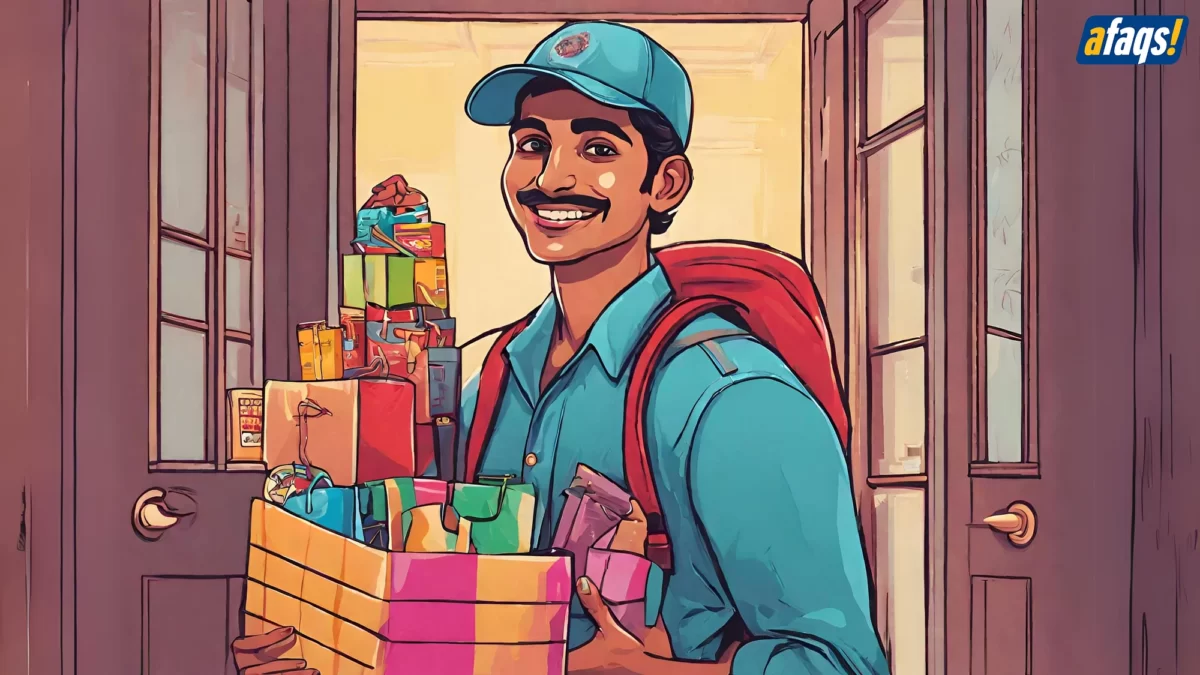
In the 10th episode of Zerodha co-founder Nikhil Kamath’s YouTube podcast series, WTF, Aadit Palicha, co-founder, Zepto, says that consumer goods are the fastest-growing category for its quick commerce business. Initially, quick commerce brands just focussed on serving impulse grocery needs, but now they have changed their way to serve regular planned purchases too.
Major players like Zepto, Blinkit, Swiggy Instamart, and BBNow are expanding their offerings in gifting, makeup, ready-to-eat, baby care, pet care, meat, poultry and more to cater to a wider range of consumer needs and preferences.
Through our interviews with brands like Bombay Shaving Company, Bevzilla and Plum, it is evident that Q-comm business contributes approximately 10-25% of online revenue for different brands.
Also, according to a report by Redseer, the Q-comm market is expected to reach almost $5.5 billion by 2025. The report highlights, that these platforms can up their game by going beyond just grocery and extend their offerings to other consumables, electronics, newspapers and more.
It shows that quick commerce players would focus on other categories to reach this milestone. But, are brands ready for it? If yes, how is their strategy different for this model?
Aditi Handa, co-founder of The Baker’s Dozen, an artisanal bakery, states, “In our category, once the customers figure out a product in the physical store, then they tend to buy again on the quick commerce platforms rather than visiting a store. It works well in our category, as there is no need to touch and feel the product.”
Baker’s Dozen makes 60-65% of its online sales on Q-comm platforms.
Devangshu Dutta, founder of Third Eyesight says that quick commerce has spread across various product categories and he believes, “It is driven more by buzz than customer needs. Unless we meet a core demand with a large consumer market, there’s no sustained road to profit.”
Deepti Karthik, fractional CMO, SuperBottoms, says, “In the diaper category, there are a lot of unplanned purchases. We target customers who’re buying other products, and eventually get trails from them.”
She points out that a lot of gifting happens in the quick commerce segment. “Gift packs can be a great solution our brand can leverage.”
She predicts that for the baby-care brand, quick commerce will contribute 3-5% of overall revenue, led by gifting as a category.
Apart from the reduced delivery time, is there a reason that customers are opting to shop on quick commerce platforms?
Handa answers that two factors work in favour of Q-comm platforms: discounts and convenience. “As these players are expanding their portfolio, customers will find more reasons to go on these apps.”
Is the quick commerce business driven by celebrations?
India is renowned for its diverse festivities. Quick commerce platforms capitalise on this by selling event-related or topical assortments. For instance, they offer flutes for Krishna Jayanti, Ganesha idols for Ganesh Chaturthi, Christmas decorations for the holiday, decorative items for Diwali, and gold and silver coins for Dhanteras.
These platforms are also curating special web and app pages for such occasions, even for regional festivals like Chauth Puja. In 2023, Blinkit curated a specific page dedicated to the wedding season.
Karthik states, “The major business of this sector is driven by consumables and FMCG products. On special occasions, e-commerce brands used to curate specific products, which Q-commerce is now doing. The market share of the other modes is now being taken by the quick commerce players on festivals. That’s why every e-commerce is looking to launch its version of Q-commerce, like Amazon Fresh by Amazon, and BBnow by Big Basket.”
Handa believes differently and states that quick commerce is not taking up the market share of any other modes. “Currently we’re buying more than what we need. Quick commerce is creating some new markets, and people are spending more money as it is easy to spend now.”
Will Q-commerce take over e-commerce?
As the country embraces digital commerce, the battle between e-commerce and Q-commerce is intensifying. While e-commerce has a well-established presence with a vast user base, Q-commerce offers unmatched speed and efficiency. As Q-commerce players foray into other categories, will they take over e-commerce?
Ritesh Ghosal, former chief of marketing at Croma believes that Q-comm will not replace e-commerce. He says that Q-commerce will only be a successful mode for urgently needed products like trimmers, headphones etc.
Handa predicts, “In our category, Q-commerce will replace e-commerce purely based on better service. The only advantage that e-commerce holds is a variety of stock keeping units (SKUs). Like, some products will have a presence in e-commerce only like English Cheddar cheese, it will not be there in Q-comm, a customer can only get it through e-commerce.”
She says that quick commerce also provides a fast way to experiment with new products.
Kartik, says e-commerce will always be at the main stage for the brand and believes Q-commerce will be an incremental business for them.
She has observed that in quick commerce if a product gets listed, it starts to sell faster and gets a quick start as compared to the e-commerce route.
Challenges
While the benefits of quick commerce are evident for customers, these players in the backend face a lot of challenges including warehousing, labour expenses, and, most importantly, the orders are low-value, therefore the margins are less.
Balasubramanian Narayanan, vice president, of Teamlease services points out that the consumer preferences and buying patterns in the quick commerce segment evolve rapidly, making data collection and analysis a crucial aspect.
“Balancing data collection with user privacy is a key challenge. The data insights can help to create personalised experiences, predict demands, and improve operational efficiency. But this can be a challenge in this mode.”
Handa says in quick commerce, the biggest challenge is the stock keeping unit (SKU) mix, SKU selection is critical.
“Brands like Amazon, and Flipkart allow a plethora of SKUs, while quick commerce just allows a limited number, due to limitation of warehouse space and delivery time. The SKU selection by the brand becomes a critical aspect.”
In the physical realm, shelf presence plays an important role in reaching customers, in the online world, optimising the online presence is crucial to get the customers’ attention. She highlights that in quick commerce, the fight is to be at the top of the search bar.
“To be at the top, the brand should generate organic sales, secondly it’s about keyword bidding. A keyword that would search customers to find the product from the brand. The brand pays quick commerce players for this.”
Ghosal also agrees with this and states, “In the Q-commerce arena, most searches are by category rather than by brand. The brands have to tick more boxes in terms of categories/searches so that customers tend to look at them.”
(With additional inputs: Ruchika Jha)
(Published in Afaqs)
admin
January 5, 2024

Sagar Malviya, Economic Times
January 5, 2024
Top global apparel and fast fashion brands appear to have struck a strong chord with young customers, racking up sales growth of anywhere between 40% and 60% in FY23, bucking the trend in a market where the overall demand for discretionary products slowed down.
For instance, Swedish fashion retailer H&M and rival Zara reported a 40% increase in its topline while Japanese brand Uniqlo saw a 60% jump in sales. American denim maker Levi Strauss and British brand Marks & Spencer posted a 54% increase, latest filings with the Registrar of Companies showed. Dubai-based department store Lifestyle International, too, saw a 46% jump in revenues on a large base. These brands garnered combined annual revenues of nearly $2.6 billion, more than double compared to FY21 when it was $1.1 billion all put together.
“With consumers getting brand conscious, global brands have a natural advantage. There is a distinct aspirational momentum for international brands that carries them through. Also they can sustain having unsold inventory and discounting better than smaller peers,” said Devangshu Dutta, founder of Third Eyesight, a strategy consulting firm. “Also, these brands have not yet reached saturation point in terms of network and hence can invest further to widen their reach.”
The revenue surge was also led by brands’ shifting focus on ecommerce, which now accounts for more than a quarter of their sales, even as they face intensify competition from both local and global rivals in an increasingly crowded market where web-commerce firms continue to offer steep discounts. Over the past two years, sales growth for most retailers have been price-led, reversing the historic trend when volumes or actual demand drove a bulk of the sales.
The fashion retail segment has been struggling with a demand slowdown since January last year due to inflationary headwinds. The overall retail growth slowed down to 6% in both March and April, increasing marginally to 9% in August and September before falling slightly to 7% in October and November, according to the Retailers Association of India.
“Spends are shifting to experience, holidays and big ticket purchases such as cars. Stronger retailers which had the right product to price proposition works for consumers who are not necessarily looking at brands from global and local lens. What helped our sales was product rationalisation, renovation of stores as well as our value proposition,” said Manish Kapoor, managing director at Pepe Jeans that clocked 54% growth to Rs560 crore in FY23. “The current fiscal has been muted and we expect election spending and improved sentiment to drive recovery next fiscal.
As the world’s second most-populated country, India is an attractive market for aspirational apparel brands as rising disposable incomes cause the consuming base of the pyramid to broaden further. “The Indian economy is on course to be among the top economies in the world. The key factors driving the India consumption story include a large proportion of young population, rising urbanization, growing affluence, increasing discretionary spending and deeper penetration of digital,” said Levi Strauss in its latest annual report.
Last year Levi’s said India is now the largest market for them within Asia and sixth largest globally while M&S said it is opening a store every month in India, already its largest international market outside home in terms of store network.
(Published in Economic Times)
