
admin
September 7, 2016
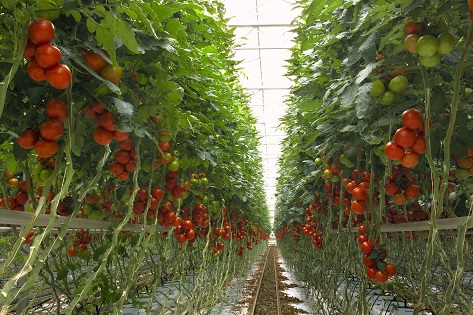
Horticulture production in India has been surpassing the production of food grains for many years. In 2014-15, the total production of horticultural produce was estimated by the Department of Agriculture, Cooperation and Farmers Welfare, Ministry of Agriculture to be approximately 281 million tonnes as against 252 million tonnes of food grain production and 275 million tonnes of oilseeds.
Horticulture and floriculture have result in growing foreign earnings, and India’s domestic market is also growing. In fact the demand for many types of vegetables and fruits which are not native to India such as lettuce, broccoli, gherkins, as well as for exotic flowers such as orchids, gerberas, carnations, is soaring. These crops were initially being cultivated only for export, but are now being bought by the urban population within India as well, as a result of growing familiarity with other cultures, and shifts in cuisines and lifestyles.
Many of these crops require specific climatic conditions which are not available in all parts of India, hence, cultivating them in controlled environments is a preferred option. Other than providing them a hospitable environment, the yield of the crop can be significantly better and availability can be all-year round, providing better market prices in the off-season. Greenhouses can be used by farmers for years to grow and sell exotic vegetables and other high-value commodities. Moreover, greenhouses help reduce the expenditure on pesticides by warding off insects and pests, many of which are carriers of viral and other infections. There is, therefore, considerable merit to extending the area under this system of cultivation, for the benefit of both producers and consumers.
While greenhouses have existed for more than one and a half centuries in various parts of the world, in India use of greenhouse technology started only during 1980’s and it was mainly used for research activities. The commercial utilization of greenhouses started from the late-1980s and with the introduction of the Government’s liberalization policies and development initiatives, several businesses were set up as 100 per cent export oriented units. Now many progressive farming organisations and individual farmers are using varied levels of technology in order to control the environment in which agriculture is done.
Although, there is an upfront capital cost involved in the setting up of a greenhouse, the scale of the greenhouse and proper management helps in yielding viable results. Most of the greenhouse projects in India at this point of time are on landholdings of up to 1 acre. However interest is seen to be growing towards projects of larger landholdings. Capital costs per acre range from Rs. 15 lakhs for a basic green house with simple techniques to control temperature and humidity, to Rs. 1.5 crore for automated greenhouses with superior humidity and temperature control, more closely managed water and nutrient dispersal etc.
Protected cultivation is one the important interventions of the National Horticulture Mission. Various patterns of assistance in the form of subsidies (ranging up to 50% of the cost of setting up the structures) have been devised by the government to encourage farmers to engage with this form of cultivation.
To encourage cultivation of vegetables under controlled atmosphere, Punjab government has empanelled five firms to assist farmers to set up polyhouses and polynet houses in their fields. The state government will provide subsidy on the greenhouse structures erected by these firms.
In Khammam, Telangana, the Horticulture Department is readying two poly-house demonstration units to popularise greenhouse technology and help farmers take up cultivation of high yielding vegetables round the year under controlled weather conditions.
Projects have already been taken up in Telangana, Gujarat and Himachal Pradesh ranging from feasibility studies of green house facilities and distribution halls for grading, sorting and packing to designing and setting up of green houses for breeding of rice and other crops and cultivation of tomatoes, strawberries, capsicum, cucumbers and lettuce.
For higher end, larger scale farms, Indian growers are also exploring technology from Europe. For instance, the Netherlands is the traditional exporter of greenhouse grown flowers and vegetables all over the world. The Dutch greenhouse industry is one of the most advanced in the world, and has now also become a provider of technology and support for the development of greenhouse cultivation around the world. Advanced technology solutions include climate sensors, air treatment devices, and software support.
However, success doesn’t only depend on equipment. Organisations such as Koppert provide biological solutions for natural pest control, natural pollination and seed treatment, to not only improve the quality and yield of the produce, but also make it safer.
There are many Indian as well as international organisations providing greenhouse solutions ranging from materials, technology and project consultancy. In the coming years it is expected that India’s rich agricultural, horticultural and relatively newer floricultural expertise will get enhanced and further competitive with the adoption of greenhouse cultivation to feed the burgeoning global and domestic demand.
admin
August 1, 2016

The cold chain sector is expanding quickly due to increased investments from Indian and international organisations going towards both modernisation of the existing facilities and establishment of new ventures. Over the last few years cold-chain has gained a buzz, finding its way not only into industry presentations but also into budget speeches in Parliament. It is widely reported that India needs to build more cold chain capacity, especially to reduce the enormous amount of waste of food products in the chain from farm to consumer.
India is one of the largest producers of agro-products i.e. fresh fruits and vegetables, milk and related products, fishery products and meat. However, due to lack of the required facilities, spoilage of products is comparatively high.
In recent years, significantly incentivised both by business logic and by tax breaks, there has been a fair amount on investment in cold storages. However, the sector is still highly fragmented; there is inequitable distribution of cold storages, interlinkages between storages is also very poor and many facilities are also operating below capacity.
The National Centre for Cold Chain Development (NCCD) reported that as of December 2014, 70% capacity was utilised, where the total number of cold storages available in India was around 5300 and approximately 6000+ vehicles, providing about 30 Million Metric Tonnes capacity of storage. Most of these facilities are located in the states of Uttar Pradesh, Uttaranchal, Punjab, Maharashtra and West Bengal.
Storage and transportation capacity is only the very first step in strengthening cold chain capabilities but, unfortunately, that is where many entrepreneurs and investors in cold-chain are stopping their thought process. Many players in the industry have been using obsolete machinery, and storages are majorly for a single commodity. The result, predictably, is underutilisation of capacity or mishandling of food products leading to operational problems, cost escalations, spoilage and other losses. Just to mention a simple example that many seem to forget: even domestic refrigerators have at least 3-4 temperature-humidity zones: the freezer, the chill tray, the large cool area, and a vegetable tray. In comparison, many cold stores are built without adequate thought to the various influencing factors. It’s important to recognise that in developing a cold chain capability, the products to be handled, the environment in which the cold chain will operate, not only storage but intake, handling and transportation, all have a role to play.
With a fragmented operating environment, both in terms of production as well as distribution, often a single investor or company may not be able to create the business logic to set up a cold chain facility. Collaboration between multiple individuals and agencies may be a way out.
An example of successful use of integrated cold chain is the Tamil Nadu Bananas Growers Federation. Banana growers in the Tamil Nadu belt were diminishing due to lack of appropriate storage facilities, and farmers were forced to sell produce at throw away prices. With introduction of integrated cold chain solutions, the federation of farmers from Tamil Nadu has now managed to gain a hold of the banana market again. They have managed to increase their income manifold by growing better qualities and storing bananas for longer period of time in the integrated cold chains.
Cold chain logistics in the true sense begin with harvesting and post-harvest handling, going on to controlled atmosphere vehicles, cold storages, sorting and grading facilities, modern pack houses and controlled atmosphere retail stores. Most importantly, even operational know-how is something that is not made part of the investment plan, leading to unviable, unprofitable cold chain facilities.
The focus should be to integrate the cold chain, and also build capacities in all areas. As per NCCD (December 2014), India has approximately 6,000 reefer vehicles against a requirement of 60,000. Similarly the number of pack houses available is 250 and the projected requirement is for 70,000. Hence, the need for a more balanced investment in terms of modern pack-houses, refrigerated transport units and ripening chambers is evident and will bring far better results, both operationally and financially.
In addition, there has to be a significant improvement in developing the know-how and skills sets available to the sector. While the country is faced with large-scale unemployment annually, a well-thought out development of the cold chain sector including due investment in knowledge-based initiatives can create significant numbers of better paying jobs around the country, especially in rural areas from where the produce is sourced.
With development of the consumer and retail sector supporting its growth, integrated cold chain development should be at the top of the agenda for government as well as for private business.
admin
May 7, 2016
Third Eyesight’s CEO, Devangshu Dutta recently participated in a discussion about the phenomenal growth of the Patanjali brand, from yoga lessons to a food and FMCG conglomerate taking well-established multinational and Indian competitors head-on. In a conversation with Zee Business anchor, P. Karunya Rao and FCB-Ulka’s chairman Rohit Ohri, Devangshu shared his thoughts on the factors playing to Patanjali’s advantage. Excerpts from the conversation were telecast on Brandstand on Zee Business:
Devangshu Dutta
April 24, 2016

(Published in the Financial Express, 10 May 2016)
In about 20 years, Café Coffee Day (CCD) has grown from one ‘cyber café’ in Bengaluru to the leading chain of cafés in the country by far.
In its early years, it was a conservative, almost sleepy, business. The launch of Barista in the late 1990s and its rapid growth was the wake-up call for CCD — and wake up it did!
CCD then expanded aggressively. It focussed on the young and more affluent customers. Affordability was a keystone in its strategy and it largely remains the most competitively priced among the national chains.
Its outlets ranged widely in size — and while this caused inconsistency in the brand’s image — it left competitors far behind in terms of market coverage. However, the market hasn’t stayed the same over the years and CCD now has tough competition.
CCD competes today with not only domestic cafés such as Barista or imports such as Costa and Starbucks, but also quick-service restaurants (QSRs) such as McDonald’s and Dunkin’ Donuts. In the last couple of years, in large cities, even the positioning of being a ‘hang-out place’ is threatened by a competitor as unlikely as the alcoholic beverage-focussed chain Beer Café.
CCD is certainly way ahead of other cafés in outlet numbers and visibility in over 200 cities. It has an advantage over QSRs with the focus on beverage and meetings, rather than meals. Food in CCD is mostly pre-prepared rather than in-store (unlike McD’s and Dunkin’) resulting in lower capex and training costs, as well as greater control since it’s not depending on store staff to prepare everything. However, rapid expansion stretches product and service delivery and high attrition of front-end staff is a major operational stress point. Upmarket initiatives Lounge and Square, which could improve its average billing, are still a small part of its business.
Delivery (begun in December 2015) and app-orders seem logical to capture busy consumers, and to sweat the assets invested in outlets. However, for now, I’m questioning the incremental value both for the consumer and the company’s ROI once all costs (including management time and effort) are accounted for. The delivery partner is another variable (and risk) in the customer’s experience of the brand. Increasing the density through kiosks and improving the quality of beverage dispensed could possibly do more for the brand across the board.
The biggest advantage for CCD is that India is a nascent market for cafés. The café culture has not even scratched the surface in the smaller markets and in travel-related locations. The challenge for CCD is to act as an aggressive leader in newer locations, while becoming more sophisticated in its positioning in large cities. It certainly needs to allocate capex on both fronts but larger cities need more frequent refreshment of the menu and retraining of staff.
An anonymous Turkish poet wrote: “Not the coffee, nor the coffeehouse is the longing of the soul. A friend is what the soul longs for, coffee is just the excuse.” There are still many millions of friends in India for whom the coffee-house remains unexplored territory, whom CCD could bring together.
admin
February 21, 2016
 Shinmin
Bali, Financial Express
Shinmin
Bali, Financial Express
Mumbai,
21 February 2016
 Having
created quite a stir at the time of their launch, hyperlocal companies
are now witnessing a dampened mood. While several have folded
up operations in some cities, others have downsized staff, tweaked
the services they offer and even made alterations to their business
models. A recent example is Grofers shutting down operations in
Bhopal, Bhubaneswar, Coimbatore, Kochi, Ludhiana, Mysuru, Nashik,
Rajkot and Visakhapatnam.
Having
created quite a stir at the time of their launch, hyperlocal companies
are now witnessing a dampened mood. While several have folded
up operations in some cities, others have downsized staff, tweaked
the services they offer and even made alterations to their business
models. A recent example is Grofers shutting down operations in
Bhopal, Bhubaneswar, Coimbatore, Kochi, Ludhiana, Mysuru, Nashik,
Rajkot and Visakhapatnam.
TinyOwl last year was in the news for a poorly-handled downsizing
operation in Pune, with a dramatic hostage situation involving
its co-founder Gaurav Choudhary. PepperTap also recently shut
down operations in six cities.
Ironically, giants like Amazon have not only aggressively entered
the hyperlocal space, they are building on it. Amazon is currently
offering the service in Bengaluru, Amazon Now, after running a
pilot project, Kirana Now, in 2015.
The investor sentiment in India is also on a decline, as was
reported earlier this year. Investments by venture capitalists
have dropped from $2.12 billion (October-December 2014) to $1.15
billion (October-December 2015), according to a report by CB Insights
and KPMG International. This leaves an even shorter window of
opportunity for players to retain investor interest.
Albinder Dhindsa, co-founder, Grofers, states that differing
levels of technology literacy among the majority of merchants
and consumer adaptation to the online platform are concern areas
for the company. In 2016, the company is looking to bring over
one lakh merchants aboard and ensure that turnaround time stays
under an hour. Grofers delivers more than 35,000 orders per day
on average. In Q4 2015, the firm acquired teams of SpoonJoy and
Townrush to bring dynamic learning to the table.
For Swiggy’s co-founder Nandan Reddy, the focus is currently
to grow the market, while catering to a wide demographic of consumers.
He admits that in the early stages, the brand had trouble educating
even its partners. Furthermore, operating a delivery fleet in
an on-demand service offering sub-40 minute deliveries is a challenging
task, given that there are at least 15 points of failure in an
average order. Swiggy currently owns a delivery fleet of 3,800
delivery executives. The brand’s repeat consumers contribute
to over 80% of orders.
Debadutta Upadhyaya, co-founder, Timesaverz, says some of the
major challenges in a hyperlocal market are optimum resource utilisation
and matching locations, price points, and other specific requirements
to customer needs. Timesaverz currently has a service range spread
across 40 categories, aided by a network of over 2,500 service
partners across five metros. Its revenue model is commission based,
where 80% of earnings from consumers are shared with service partners.
Vinod Murali, MD, Innoven Capital, points out that as the hyperlocal
industry is in its nascent stages, it needs a fair amount of time
to grow. “One aspect to keep in mind is that a large sized
equity cheque does not imply that a company has achieved operational
maturity or robust business metrics, especially in this segment,”
he notes.
Given the recent consolidation in this category, the survivors
have the opportunity and time to focus on improving unit economics
and demonstrate that their businesses are viable and valuable.
Devangshu Dutta, CEO, Third Eyesight, is of the opinion that
hyperlocals make the mistake of borrowing business models and
terminologies from Silicon Valley, without adequately understanding
the real context of the Indian market. “Is there an existing
or even potential demand for the service claimed to be provided?
Or are you just going to introduce an intermediary and an additional
link in the chain, with additional costs and unnecessary administration
involved?” he asks.
(Published in Financial Express)
