Devangshu Dutta
January 6, 2012
The transition between calendar years offers a pause. We can use it to evaluate what passed in the previous year, chalk out our journey for the next one.
The first response of most people to the question “What happened in the Indian retail sector in 2011” would be probably something like this: lots happened, and then – at the end – nothing did!
That is because one theme ran through the entire year, month after month, fuelled by tremendous interest in the mainstream media as well. This was about the change expected, hoped for, in the policy governing foreign direct investment (FDI) into the retail sector. Hearing the debate go back and forth, on one side it seemed as if FDI was going to cure every ill of the Indian economy, and on the other it seemed as if the country was being sold out to neo-colonists.
It’s worth remembering that not too long ago foreigners could invest in retail businesses in India freely. Benetton ran some of the key locations in the network through its joint-venture which subsequently became a 100 per cent owned subsidiary. Littlewoods (UK) set up a 100 per cent owned operation in India during the 1990s before its home market business collapsed, and its Indian operation was bought by the Tata Group to form Westside. And well before all these, one of the early multi-nationals, Bata, had already built a humongous network of stores across the length, breadth and depth of India.
The motivation for the decision to exclude foreigners from this sector may have been political, economic or mixed – that is not as important as the timing.
By the mid-90s India had just started to attract interest as private consumption was just about picking up steam. Several international apparel, sportswear and quick service brands entered the market during this time. Many of these brands started setting up processes and systems that changed the way the supply chain worked. They gained market share, and more importantly mindshare, with young consumers. In this process some of the domestic brands did suffer, some of them irrecoverably. However, with foreign investment suddenly blocked-off, many brands that wanted direct ownership in the business in India turned away. In their opinion the opportunity just wasn’t big enough to take on the hassle of a partner. Some did enter, but with wholesale distribution structures rather than in retail.
During this last decade, the Indian retail landscape has changed dramatically. During the 2000s the economic boom happened and India became “hot” again. So did retail and real estate, as large corporate houses pumped in significant amounts of capital into setting up modern chains to tap into the fattening consumer wallets. Clearly, FDI was going to come up on the agenda again, but not quite at once. Indian companies needed some headroom to grow; and grow they did, partly with indigenous business models and brands, and partly as partners to international brands.
By 2011, there was more of a clear consensus among the Indian businesses that retail could be opened to FDI and must be. Internationally, too, political and economic heavy-weights from the significant western economies pitched for opening up the retail sector in India to foreign investment. Here’s the small public glimpse of the hectic activity that happened internationally and domestically:
Such an anticlimax! For many, 2011 was the year that could have been a turning point. Could have been! If you had slept through the year and woken up on New Year’s Eve, would you have found nothing had really changed?
Ah, that’s the thing! I think most people observing the retail business actually slept through the year, because they were just focused on the FDI dream. Those actually engaged in the retail business know that many other things did change, some of which create the foundation for further growth.
The government did push on with the GST (goods and services tax) agenda. While stuck in politics at the moment, we look forward to incremental changes in harmonizing the taxes and tariffs regime, vital for truly unifying the country in the economic sense. On the downside, excise being levied on the retail price of clothing was a blow to retailers.
Growth continued. Indian’s retail giant, Future Group, grew to around 15 million square feet. The other giant, Reliance, announced renewed vigour and focus on the retail business with additions to the management team partnerships with international brands such as Kenneth Cole, Quiksilver and Roxy. Other new partnerships were announced, including significant American food service brands Starbucks (with the Tata Group) and Dunkin’ Donuts (with Jubilant). The British footwear brand Clark’s announced that it was aiming to make India its second-largest source country and among its top-5 markets within 5 years. Marks & Spencer pushed to expand its chain by more than 50 per cent, adding 10 stores to 19, while Walmart said its focus was on building scale rather than trying to squeeze profitability from its US$ 40 million investment so far. For fashion brands, the Rs 500 crores (US$ 100 million) sales threshold seemed more achievable as they used the accelerated pace of growth.
Many in the retail business talk about “the people problem”. Fortunately, some decided to demonstrate positive leadership, reflected in RAI’s announcement of an ambitious skill development plan for 5 million people in next 4-5 years, and industry veteran BS Nagesh announcing the launch of a non-profit venture, TRRAIN.
There was some bad news on the issue of shrinkage: a sponsored study placed India at the top of the list of countries suffering from theft. But the level was reported to be lower than the previous study, so there seemed to be hope on the horizon. The study didn’t say whether consumers and employees had become more honest, better security systems were preventing theft, or whether retailers themselves had become better at counting and managing merchandise over time.
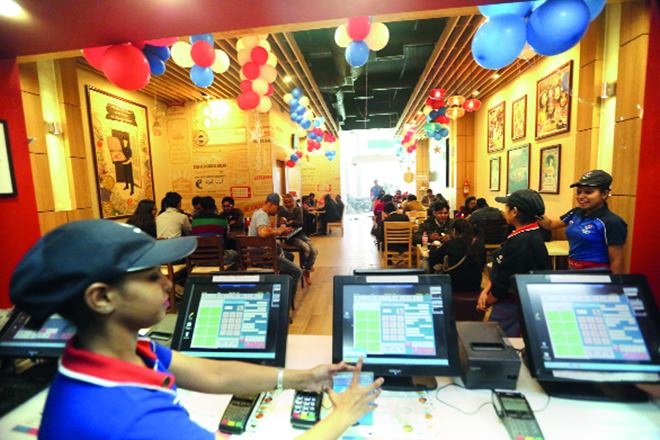
A significant highlight was the e-commerce sector, which has found its way to grow within the existing restrictions and regulations, even as the online population is estimated to have grown to 100 million. Flipkart delighted customers with its service and racked up Rs. 50 crores (US$ 10 million) in sales. Deal sites proliferated and media channels celebrated the advertising budgets. Even offline businesses, notable among them pizza-major Domino’s, found their online mojo; Domino’s reported 10 per cent of its total revenues from online bookings within a year of launching the service.
In all of this the biggest story remains untold, which is why I call it an Invisible Revolution. This revolution is made up of the changes that are happening in the supply chain in the entire country, including investment by private companies in massive, large and small facilities to store, move and process products more efficiently. And in spite of the high costs of capital, suppliers are continuing to look at investing in upgrading their production facilities as well as their systems and processes. While the companies at the front-end will no doubt get a lot of the credit for modernizing India’s retail sector, it would be impossible without the support of the foundation that is being built by their suppliers and service providers.
2011 seems to have ended with a whimper. 2012’s beginning will be tainted by large piles of leftover inventory that needs to be cleared. Inflation seems tamer, but consumers have already tightened their belts, anticipating difficult times. The policy flip-flops and the political debates are sustaining the air of uncertainty. So what does 2012 hold?
Remember, the ancient Mayan calendar stops in December 2012, and no doubt there are many predicting doomsday! However, there are several others that see this as a possibility of rejuvenation, renewal.
Hope and fear are both fuel for taking action. Investment cycles are caused by an imbalance of one over the other.
In 2012, we’ll probably continue to see a mix of both. I recommend that we don’t take an overdose of any one of them. Even if you think 2011 was “the year that could have been”, I suggest still treating 2012 as “the year that could be”.
Here’s wishing you a successful New Year!
Devangshu Dutta
August 26, 2011
A few months ago, when asked to speak about value-addition at a food industry seminar, I decided, in a deviation from the usual discussion, to dissect the meaning of “value”.
Most people in industry focus on only one dimension of value-addition – the economic value added by processing and transforming food raw materials – virtually ignoring two other dimensions which are required for most of the (undernourished) population: calorific value and nutritional value (see “Perishable Value Opportunities”).
At the end of that seminar session, an agriculturist from the audience put forth a very pointed question: “What is the cost of the potatoes in a bag of branded chips that sells for Rs. 10? Or to put it another way, how much of the retail price actually goes back to the potato farmer?”
The question, of course, was completely loaded with angst on the economic imbalance between farm and factory, supplier and buyer, small and big, rural and urban. But it also underlined missed opportunities to capture economic value, which in turn accentuate the imbalances in growth.
Economic value can be added to food through improvement, providing protection, changing the basic product and through marketing. Improvement typically focuses on seeds, growing techniques and post-harvest areas for improved quality of harvests, disease resistance, better colours, size and flavour, possibly nutrition. Protection initiatives work across cultivation, harvest and post-harvest, storage, during processing, through packaging, while change is essentially focused on processing techniques (cooking, combining, breaking down and reconstitution).
There is a lot of work going on in the food supply chain to enhance the value captured closer to the farmgate. And, certainly, the “value-added” earlier is vital to maintaining and building value later in the supply chain.
However, what is striking is the fact that as we move downstream towards final consumption, the economic value captured as a price premium also increases dramatically.
So, as depressing as the multiplier may be to the farmer, on a kilo-for-kilo comparison, the bag of factory-fresh potato chips is priced many times higher than his farm-fresh potatoes. And, the maximum economic value is created, or at least captured, by the act of branding and marketing.
The Love is in the Brand
A short quiz break: can you recall the “most valuable company” in the world in August 2011, as measured by valuation on the stock market?
The answer is Apple. It is a company that physically manufactures nothing, but tightly controls the design, development, sourcing, distribution and, yes, branding of a group of products and services, whose fans seem to grow by the minute.
Of course, one can argue that Apple “produces” by the very act of designing completely new, highly desirable, products that are not available from anyone else, and that this is what provides the premium. But similar premium – which is due to branding and marketing, rather than proprietary products – is also visible in thousands of companies, across product sectors, including food. That sustained price premium is the sign that the consumer trusts and wants a particular brand’s product more than another one. There is a hook, a strong connect, due to which that consumer is willing to lighten her wallet just that much more.
In India, surprisingly, “value-addition” discussions in the food industry focus almost entirely on cultivation, storage and transformation through processing, virtually ignoring branding and marketing. In fact, branding is usually only discussed in the context of multinationals or some of the largest Indian companies. What’s more, most of the brands discussed are focussed largely in the area of processed food products that originated in the west.
Run these tests yourself. When you think of food and beverage branded companies who do you think of? And, when you think of food brands, what kind of products come to mind first?
The answer is that the brand landscape is dominated by products such as biscuits and cookies, jams, fruit and non-fruit beverages, potato chips, 2-minute noodles, confectionary products and food supplements, mostly from the portfolio of some of the largest companies operating in the market.
Of course, there are some alternative examples.
Aashirvaad and Kitchens of India present quintessentially Indian products (albeit from the gigantic stables of ITC which also has a multinational parent).
And, yes, there are cooperatives such as Lijjat, as well as home-grown mid-sized companies such as the Indian snack maker Haldiram’s, spice brands such as MTR and MDH, pickle brands such as “Mother’s Recipe”, rice brands such as Kohinoor and Daawat.
But, given the size of the Indian food market and the width and depth of Indian cuisine, shouldn’t there be more brands that are Indian and focussed on essentially Indian food products?
This is a tremendous opportunity – a gap – not just in the Indian market (among the largest and fastest growing in the world), but also globally.
The Hurdles to Branding
So, why aren’t there more Indian brands?
Let’s face it, for most companies, marketing fulfils one need: to communicate their name to potential customers. Most of them generally hope that if they do it enough, they would actually be able to sell more volume.
Of course, no one has been able to draw a straight line graph that correlates more marketing expense with higher sales.
Those are two self-destructive notions. Obviously, if marketing is an expense, then it must be minimised! And secondly, if it cannot be proven to be effective, why would you spend money doing it? For most people, branding is even fuzzier in that regard, in terms of what it is and what it achieves.
However, the picture changes when you look at marketing as an investment rather than an expense. As we evaluate any investment, there should be an expected return that should be quantifiable. Examples of Apple and other brands make it amply clear that branding and marketing, when done well, can certainly create quantifiable financial returns on the investment.
The second hurdle to branding and marketing is that they require consistency, which is not a strong point for most wannabe brands. They end up with too many messages to the consumer, or the messages keep changing and shifting. The company, the name, end up representing many things, sometimes everything, and eventually nothing.
The third, enormous, hurdle is the time needed to develop a brand with a decent sized marketing footprint and a deep relationship with the consumer. Most small and mid-sized companies, constrained as they are for resources, focus on areas that seem to offer more immediate returns, such as distribution margins or discounts, or even expansion of production capacity. Especially in the early years of the business, the benefits of branding and marketing seem to be too far in the future to be a priority for investment.
Due to these one of these reasons or a combination, many companies are unable to see their brands through to success. In fact, sadly, most companies do not last long enough to become owners of successful brands.
Even those who do achieve success and even market leadership, sometimes choose to cash-out on their success by selling their brands to larger competitors, rather than competing with the financial might of the giants (such as Thums Up being sold to Coca Cola; Kissan, Kwality and Milkfood being sold to Hindustan Unilever).
In the past, one of the other barriers in India was the hugely fragmented retail and distribution system, which essentially sapped energy, resources and focus for any company that wished to grow a brand across regions. In fact, one of the key lessons from the western markets is that the growth of brands has been closely linked to the expansion of retail chains. So, certainly, we should view the growth of modern retail in India as a platform for the emergence of regional, national and global Indian food brands.
However, there is a flip side to this retail growth. In the west, most retailers were focussed on running shops, and were content to leave product development and brand development to their suppliers, the national brands. These retailers began looking at private labels only as an additional source of margin well after they had gained scale, and even then they ventured rather carefully into the space. In India, on the other hand, private label is very high on the priority list of our nascent modern retailers, precisely because the effectiveness of that business model has been proven elsewhere and because there are such few national brands that have a strong, irrevocable connect with the consumer.
Should You Invest in Branding?
The short answer is to that question is: yes.
It doesn’t matter if you run a small company or start-up, or a more mature company. It doesn’t matter whether you are selling a consumer product directly, which is the most effective and most necessary playing field for building a brand, or an intermediate product or service where you can still achieve a premium within the trade.
If you are committed to selling only commodities, where your selling prices are determined only by the tug-of-war between supply and demand, government policies and Acts of God, then you wouldn’t be reading this article.
Since you are reading this, you should brand.
In the short to medium term, if you do the job well, your customers will pay you a premium. And in the mid to long term, financial investors looking to ride India’s economic growth are more willing to put their money in a company that has a recognisable hook and a trading premium over its generic competition.
The brand can be built on any platform for which there could be a discernible premium. This can be trust (quality, quantity), simplicity and convenience (prepared snacks and meals, pre-ground spices, flour instead of grain), or even novelty (fizzy coloured sweetened water, reconstituted potato “chips” so uniform in shape and size such that they fit into a cylinder). Organic, vegan, fair-trade – you take your pick of the platform on which to build the brand.
Possibly the strongest driver of premium and brand value is a properly maintained heritage. Some brands have a past, some of them even have a history, but very few have a heritage. If your business has a history, there is a heritage waiting to be discovered, and it is worth a lot.
Of course, this doesn’t mean that a brand should become anchored at a certain historical time point and expect to only milk its age. Heritage is always viewed in a cultural context and culture evolves over time, so the most effective brands maintain a link between the attributes of their past to their ever-evolving present.
As with most other things, it is good idea to start early. Take on board the lessons of branding early in the company’s life so that the foundation is strong, and the brand can grow organically. As a side benefit, strongly branded companies also have strong and cohesive organisation cultures, a fantastic defence during times of high employee attrition.
The Global Branding Opportunity for Indian Food Companies
One of the most important ingredients of a good brand is clarity of identity and origin.
Often we confuse identity with the name, the logo, fonts or colours associated with a brand. Yes, a brand’s identity is certainly indicated by these – as much as our name and our physical appearance indicate our identity. However, the identity itself is much larger; in fact, it is helpful to think of the brand’s identity as a personality. The personality gets expressed in many different ways, but is tied together in a definable manner and has some strong traits that define its actions.
There are clear statements that can be associated with effective brands, whether or not they have been expressed by the company or brand in any of its formal communications. For instance, some globally relevant Indian brands include Tata Nano (“frugal engineering”), the Taj Mahal (“timeless beauty”), Goa (“party”), Rajasthan (“royal exotica”), and Kerala (“bliss”).
(I am deliberately picking “global relevance” as a theme to keep in mind that there is, literally, a world of opportunity that we could be looking at.)
We find a high number of tourism-related brands in this list, because these are destinations that pull the customer in – as long as they are true to themselves and relevant to the context of the consumer, they will be successful.
More conventional consumer product brands, on the other hand, must work harder to fit into the consumer own context, especially as they move away from their geographical origin, their home market.
This is particularly true of food, which is widely divergent across geographies. Some products can be adopted into multiple cuisines, offering more easily accessible opportunities and potentially greater scale. Rice and generic spices fit the bill here. However, for most other food items, the context of the home country cuisine is vital. Therefore, the growth of food brands, not surprisingly, is linked to the expansion of cuisines across borders. It is partly driven by the movement of people, and partly by the movement of culture (television and movies being the most important in current times), mostly both together.
For Indian companies, there is certainly an opportunity to ride on the back of the Indian diaspora across the world. And now there is an additional opportunity: expatriates who spend a few years living and working in India can also help to carry the cuisine and its associated brands out.
Finished product brands such as Tasty Bite, Haldiram’s and Amul are good examples of diaspora-led expansion, where the original driver was to bring people of Indian-origin a taste of home. In fact, Amul has recently announced that it wants to set up a manufacturing plant for cheese and other dairy products in the US, to service the Indian-origin population more effectively. Should it be restricted only to that? Certainly not; availability, if supported well by branding, can help it to cross into other segments as well.
As the consumption of Indian food grows across ethnic lines, it is likely to drive the growth of Indian ingredients as well – a perfect vehicle for branded ingredient suppliers. What’s more, Indian recipe books could even specify Amul Cheddar Cheese, MDH Chaat Masala or MTR’s Dosa Mix as ingredients – they wouldn’t achieve a 100% hit rate, but it would certainly be significantly higher than zero!
There is an opportunity to capture economic value that branding offers, which is very often greater than any other process in the food supply chain. Remember two phrases made famous by Hollywood: “show me the money” and “show me some love”. In the business of brands, these are one and the same.
It’s worth asking: do we have the patience to live through the lifecycle of a brand, and can we commit resources to nurturing it? If the answer is “yes” to both, we are most likely to benefit from branding.
Here’s to more Indian food brands that grow within India and across the world.
(If you need support with growing brands, do connect with us.)
Tarang Gautam Saxena
June 27, 2011
In most conversations we have had with international brands in the last 2-3 years, India consistently appears on list of the top-5 markets in which to expand into.
The second most populous country in the world, India has a young population that offers a vibrant population mix that will provide a workforce and consumers in decades to come. There is steady growth in per capita income and a greater availability of credit, as well as a significant change in the consumers’ outlook to life that has propelled consumption levels.

The United Nations Conference on Trade and Development ranked India as the second most attractive destination for global foreign direct investments in 2010. The lowest recorded GDP growth rate during the global slowdown was still a decent 6.7 per cent. This growth rate is expected to have returned around 9 per cent in 2011, and is driven by robust performance of the manufacturing sector, as well as government and consumer spending.
The ongoing opening up of the economy over two decades and its robust growth has steadily attracted brands and retailers into the country. Many of them have now been in the country since the early 1990s, and the numbers have grown exponentially during the last 8-10 years. Despite this, the market is far from saturation and many more international brands are actively scouting the market.
Many of them are value brands in their home markets and may, therefore, be more a logical fit into a “developing” market, but there are also plenty of premium and luxury names on the list. For instance while the growth has largely been led by soft goods product brands, as incomes have grown, the presence of more expensive consumer durable brands has also expanded.

While the journey to the Indian market has not been a smooth ride even for the well established and successful international brands in the market, brands that have invested in understanding the psyche of the Indian consumer, adopted flexibility in market approach and displayed persistence, have been paid off handsomely.
Some international brands have exceeded domestic brands in size and reach, while others have had to reconcile to being niche operators. Some have seen profits while others may have their senior management wondering what fit of madness brought them to tackle this market where they can only dream about making money sometime in the future.
Typically, when looking at a new market the very first question anyone would ask is: what is the market potential for brand?
However, you should also be prepared to ask yourself: what need is the brand addressing and what is the value being offered by the brand? How would it be able to effectively and efficiently deliver that value? In many cases, for those entering a non-existent product category a more basic question is: “Is there a need for my product offer?” Just because a brand is huge somewhere else in the world does not automatically make it desirable to the Indian consumer.
While most brands want to target the Indian middle-class millions, their sourcing structure and strategy places them out of the reach of most of the population. Brands that have succeeded in creating a significant presence, maintaining their brand image and having a sustainable operating model have, almost uniformly had a significant amount of local manufacturing. Notable examples from fashion include Bata, Benetton, Levi Strauss, Reebok, among others. In case of certain food brands such as Domino’s and McDonald’s, the companies have collaborated with and developed their vendors locally to bring down costs, and improve serviceability.
Apart from the costs and margins, another important issue is that of the adaptability of the product mix. Brands that are sourcing locally and have a significant product development capability in India are also able to respond to specific needs of the Indian market better, rather than being driven by what is appropriate for European or North American markets. This is an enormous advantage when you are trying to be “locally relevant” to the consumer in an increasingly cluttered marketplace.
Indeed the question is more to do with the brand’s willingness and capability to create a product mix that is most suitable for India through a blend of international and India-specific merchandise. The famous “Aloo-tikki” burger by McDonald’s is a great example of a product specifically developed for the Indian consumers. Not just that, India is probably McDonald’s only market in which its signature dish, the Big Mac, is not sold.
Of course, flexibility in tweaking the product to suit Indian market can become a concern when it amounts to losing control over the brand direction, and mutating away from the core proposition that defines the parent in the international market. Many brands wish to control every aspect of product development head office, but this also severely limits their ability to respond to local market needs and changes. A one-size fits all strategy obviously will limit the number of consumers that the brand can effectively address in a market such as India.
Another key question is: what is the degree of control that a brand wants to exercise on the brand, the product, the supply chain and the retail experience of the consumer? The corporate structure itself may be determined by the internal capabilities and strategies of the international brand in their home market or other overseas markets. A brand that has presence through a wholesale business in the home market may not have internal capability or experience in retail, and would look for an Indian partner who can fill in the gap.
Based on whether they want direct operational control over store operations, international companies can set up fully owned subsidiaries or joint ventures to manage the business in India. Many brands prefer to take a slow and steady approach as they do want to exert a significant amount of control over the business (including companies such as Inditex, the owner of Zara, and other retailers such as Wal-Mart and Tesco), entering only when they are fairly confident of being able to closely manage the business in India right up to the retail store.
During our work we have come across both extremes – companies that want to manage the minute details of the India business out of their own head offices, as well as companies that are so hands-off that they only want to hear from their franchisee or licensee when things are especially good or particularly bad. While a balanced, middle-of-the-road approach would be the logical one in each case, in reality individual styles of the top management have a huge influence on the approach actually taken. Also, the size of the potential market segment – relevant to the brand – has an important role to play in the strategy. If the brand is meaningful only to a small segment of the population, or priced at the top-most end of the market, one company may choose to establish an exploratory distribution relationship, while another might choose to set up an owned presence rather than look for an Indian partner to handle their small business.
While perfect partnerships seldom exist, companies could be a lot more careful we have found them to be, in questioning the criteria and motivations for choosing partners. In some cases, financial strengths, or past industrial glory were qualifying factors for picking franchisees, and the relationships have failed because the business culture was divergent from the Principal’s. In other cases, partners have been picked because they “have real estate strengths”, but no consideration has been paid to whether the partner has the operational skills to manage a fashion brand.
On several occasions, franchise relationships and joint ventures have split because one or both partners find that their expectations are not being fulfilled, or the water looks deeper than it did when they got into the business.
The opportunities in India are many. As the managing director of one international brand commented in a conversation with Third Eyesight, India is a market where a brand can enter and live out an entire lifetime of growth.
However, international brands do need to carefully identify what role they wish to play in the market, and what capability and capacity they need operationally to create the success that can truly root a brand into the rich Indian soil.
admin
March 29, 2011
We didn’t get an award, but got the chance to give one away — the Coca Cola Golden Spoon Award 2011 for the “Most Admired Foodservice Retailer of the Year: Cafés & Juice Bars” to Costa Coffee (Devyani International). Congratulations also to the other nominees: Café Coffee Day, Jus Booster Juice, Mad Over Donuts, Baker Street, and Coffee Bean & Tea Leaf.
Eric Oving (Larive), Virag Joshi (Devyani International), Devangshu Dutta (Third Eyesight)
PHOTO CREDIT: IMAGES MULTIMEDIA

Devangshu Dutta
March 24, 2011
During its history, the Indian subcontinent has been known as the “Golden Bird” for its natural and manufactured riches. In fact, long before the United States of America, India was the Land of Promise. (The irony, of course, is that Columbus also set foot on North America when he was actually trying to discover an alternative route to India.)
However, in the more recent centuries, India became an exploited golden goose which not only stopped laying golden eggs, but also almost appeared starved at different points in time.
The government’s thrust on infrastructure and industrialisation in the 1950s would have been a great base for economic growth, but the country had to wait another 4 decades to see a true boom, which only happened after the government began stepping back from excessive controls. Similarly, while the Green Revolution took India to self-sufficiency in grain and White Revolution made India the largest producer of milk, we are very far from the place where we can celebrate a boom in agriculture.
If anything, the recent economic boom is much more an urban and upper-income phenomenon, and that is creating some serious socio-economic fault-lines, about which I have expressed concern earlier. The growth of income inequality looks slower in the case of India than in the case of China, but that is only because India still has far too many poor people weighing down the decile averages.
My concern today is of a different nature: about the need to secure food and nutrition supplies for the burgeoning economy.
Over the decades, farm-holdings have steadily fragmented. With shrinking parcels, a farming family finds it increasingly difficult to create enough surplus produce to trade effectively. As farming becomes unattractive, the family looks at alternative, primarily urban opportunities to generate income, reducing the hands available to farm.
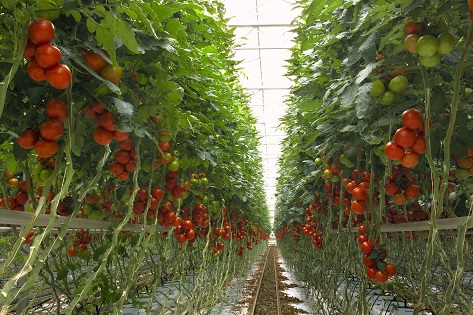
At the same time, economic shifts are causing increasing urbanisation, as concrete and glass takes over what used to be active farming land. Large cities such as Delhi (Gurgaon) and Bengaluru are prime examples, but the phenomenon is affecting smaller cities as well.
The demographic dividend to which we should otherwise look forward could, therefore, turn out to be a triple time-bomb, with:
The employment issue needs to be addressed by placing adequate emphasis on manufacturing (especially labour intensive products) and entrepreneurship, but without addressing agriculture, even this growth would unsustainable.
Also, India is at the inflexion point similar to where China was in the 1990s. The increasing income is leading to changes in food consumption. Not only is the overall consumption growing, the diet is broader and more balanced, as people are able to afford a greater variety of food. There is a growing consumption of milk, meat and poultry products, as well as processed foods (per capita of processed foods quadrupled from the late 1980s to the early-2000s). All of these require more inputs (land, feed, water, and fertiliser) per unit of food produced.
We may be tired of hearing this, but Indian farm productivity continues to be among the lowest in the world. For instance, India as the largest milk producing country is still only at about half the level of milk production per head of cattle, when compared to the global best. Similar comparisons can be made across the food supply chain.
There are three legs to create a change: technology, dissemination of information, and market demand.
There is an urgent for technology infusion across the chain, from seed to shelf. Technology doesn’t only mean tinkering with the genetic code (about which there are significant sensitivities). Traditional technologies that are centuries-old can be as effective, sometimes even more so, as technologies that come out of modern labs. If we can avoid taking a “fundamentalist” approach between modern and traditional, we will probably achieve much more, and faster in cultivating and harvesting more efficiently.
Information dissemination is vastly superior today, and with the convergence of internet and mobile technologies, not only is it possible to compile ever more information, but also spread it in regional languages very cost-effectively.
But these two alone will not be quick enough. The last, but possibly the most important leg, is market demand.
For obvious reasons, manufacturers and retailers are focussed on growing their brands, sales and driving per capita consumption. I would argue they also need to look equally critically and perhaps more urgently at the supply chain.
Without seeing the farmer and the processors as true partners in the supply chain, and ensuring them a productive existence, any victory on the market or brand-side will only be hollow.
As customers, retailers and brand manufacturers not only have the weight, but the sophistication to encourage development. Retailers and brands have the power to drive change. They must also assume the responsibility. A few of them have begun showing the way, but need support from many more. Urgently.