
admin
May 6, 2024

Sesa Sen, NDTV Profit
6 May 2024
Starbucks Corp., the world’s largest coffee chain, posted its slowest sales growth in India since the pandemic. The coffee giant is struggling to bring in as much business as it has in the past as consumers reduce their visits even as it prepares for ambitious store expansion in a tea-drinking nation.
The India unit formed in partnership with the Tata Group clocked net sales of Rs 1,218 crore, a growth of 12%, during the year ended March 2024, according to Tata Consumer Products Ltd.’s latest investor presentation.
The Seattle-based retailer experienced a compounded annual growth rate of 21.89% between FY17 and FY23 in the world’s most populous nation. The only exception to this trend was in FY21, when sales plunged by 33% as shops were forced to shut down due to the impact of Covid-19.
“Tata Starbucks had a subdued quarter given the overall trends that we’re seeing in the QSR [quick service restaurants] business,” said Sunil D’Souza, managing director and chief executive officer at Tata Consumer Products.
He, however, indicated that March was an improvement over February, and April was even better than March. “So, we see a better trend right now, and we remain focused on the larger India opportunity.”
Tata Starbucks Pvt. Ltd. took 11 years to scale its operations to a revenue of over Rs 1,000 crore. Although the joint venture turned positive at the EBITDA level for the fiscal year 2023, it continues to be loss-making. In the year ending March 2023, Tata Starbucks posted a net loss of Rs 25 crore on a turnover of Rs 1,087 crore, according to filings with the Registrar of Companies. The net profit figures for fiscal 2024 are not available yet.
The coffee chain has seen its popularity take a major hit over the last two quarters, ending in March and December, with a meagre 7% increase in sales during each period. This is a marked shift from its historical track record of double-digit growth, suggesting that consumers are now looking for more budget-friendly cafe experiences.
“Consumers have turned slightly more conservative with their spends, which is affecting both the frequency and of transactions,” according to Devangshu Dutta, head of retail consultancy Third Eyesight.
According to him, new store openings rather than an increase in sales at existing ones could drive growth.
The other reason is that the coffee market is more competitive today, with most local peers selling at price points lower than Starbucks, Dutta said.
Starbucks competes with Bengaluru-based Cafe Coffee Day and foreign entrant Barista, among others, in the country’s $400 million market. It also faces competition from private equity-backed Third Wave and Blue Tokai, which have opened about 200 stores between them in the last three years.
Since opening its first cafe in October 2012, Tata Starbucks’ store count has grown to 421, implying that on average, each outlet generated roughly Rs 3 crore in revenue from coffee, snacks, and merchandise sales in FY24.
The dwindling sales come at a time when the company plans to open 1,000 cafes in India. To meet the target, it seeks to open one new store every three days.
Starbucks added 29 net new stores between January and March, achieving a record of 95 stores opening in a year, according to the presentation.
The coffee chain had earlier said it plans to enter tier-2 and tier-3 cities in the country and increase the number of its drive-through, airport-based and 24-hour cafes. It also aims to double its headcount to 8,600.
To lure consumers back after a rough start to the year, the coffee giant is launching new products like a boba-inspired summer beverage.
“Over the past 11 years, the India market has grown to become one of Starbucks’ fastest-growing markets in the world,” Laxman Narasimhan, chief executive officer, Starbucks, said in a statement during his India visit earlier this year. “With a growing middle class, we are proud to help cultivate the evolving coffee culture while honouring its rich heritage.”
Starbucks faces challenges not only in India but also globally. A disastrous fourth quarter that saw a slowdown in store visits promoted Starbucks Corp. to lower its expectations for its full-year sales and profit. Its revenue for the January–March period dropped 2%, the first since the end of 2020.
admin
March 29, 2024

Mumbai, 29 March 2024
Sharleen Dsouza, Business Standard
With the IPL kicking off, speculations are rife that the former Indian cricket team captain M S Dhoni will hang up his boots after handing over the captaincy of Chennai Super Kings (CSK) to Ruturaj Gaikwad. However, brand experts believe this is not the end of the road for Dhoni as a celebrity, and he still has some mileage left even if he completely retires.
Dhoni is expected to continue being associated with CSK even after retirement, according to a media report. In an Instagram post, CSK said that Dhoni has handed over the captaincy to Gaikwad, who joined the team in 2019.
PTI first reported the story of Dhoni handing over the captaincy and quoted CSK Chief Executive Officer (CEO) Kasi Viswanathan as saying, “Whatever Dhoni does, it is in the best interest of the team. I got to know of the decision just before the captains’ meeting. You have to respect his decision; it is his call.”
Brand experts say that his brand value will carry through even after he leaves cricket. “He has done a lot of things, and his brand value will persist even after his retirement. There won’t be a drop in momentum immediately after he retires,” says brand expert Devangshu Dutta, founder of Third Eyesight.
According to Kroll’s Celebrity Brand Valuation Report, in 2022, Dhoni’s brand value stood at $80.3 million and was the sixth-highest-ranked celebrity, while he stood at number 5 in 2021.
Brand experts expect a drop, which is natural, but it certainly won’t be a crash in his valuation as brands would still like to associate with him.
Dhoni is also one of those players who can continue to build brand equity even once he retires completely from the sport, according to experts.
Also, the 42-year-old is one of those sportsmen who announced his retirement in phases. He announced his retirement from international cricket on August 15, 2020, and had earlier retired from Test cricket on December 14, 2014. This move, according to brand experts, has also worked in his favour as it continued to help him build his brand equity, and he did not see a sharp drop overnight.
“I think he still has some mileage left,” said brand expert Santosh Desai. He explained that Dhoni’s connection with people is still strong. However, he did not rule out a drop in his valuation but said it wouldn’t be a huge drop.
N Chandramouli, CEO of brand insights firm TRA Research, also believes that the former Indian cricket team captain has been wise with his investments.
“He will continue to remain relevant, and brands will continue to want him. He won’t be a celebrity who goes from hero to zero overnight if he retires after the IPL,” Chandramouli said.
He also explained that Dhoni is going out at a time when he is still performing and added that the question people will ask him at this stage is why now and not why not.
“Dhoni is one of those guys who has a lasting impression which will continue to appeal to brands,” according to Chandramouli.
(Published in Business Standard)
admin
February 23, 2024

Kailash Babar & Sagar Malviya, Economic Times
Mumbai, 23 February 2024
Tata Group and Reliance Industries, two of India’s largest conglomerates, are vying for premium retail real estate in Mumbai as they extend their footprints, creating rivalry in a city starved of marquee properties. From Zara and Starbucks to Westside and Titan, the Tata Group occupies nearly 25 million square feet of retail space in India. That is still no match for Reliance Industries that control three times more at 73 million sq ft for more than 100 local and global brands.
But in Mumbai, they are evenly matched, having nearly 3 million sq ft of retail space each. That is a quarter of what is considered the most prime retail real estate in the country, and both the retail giants are looking for more.
“In a modern retail environment, most visible locations contain more successful or larger brands. It just so happens that many of those brands are owned by either Reliance or the Tatas,” said Devangshu Dutta, founder of Third Eyesight, a strategy consulting firm.
“Tatas have been in retail for longer but also slower to scale up compared to Reliance which had this stated ambition of being the most dominant and put the money behind it,” he said.
In a market where demand is much higher than supply, developers and landlords seek to separate the wheat from the chaff, experts said. Ultimately, success in Mumbai’s retail real estate scene hinges on a delicate equilibrium between accommodating industry leaders and fostering a vibrant, varied shopping environment, they said. “In the competitive landscape of retail real estate in Mumbai, commercial developers and mall owners often face the strategic challenge of accommodating prominent retail brands,” said Abhishek Sharma, director, retail, at commercial real estate consultants Knight Frank India.
“These big brands, with a significant market share of 40-45% in the Indian retail sector, can easily be termed as industry giants and possess the potential to command 45-50% of space in any mall,” he said. According to Sharma, there may be perceptions of preferential treatments, but the dynamics are complex, and developers must balance the demand from these major brands with the need for a diverse tenant mix.
Tata Group entered retail in the late 1980s, initially by opening Titan watch stores and a decade later by launching department store Westside. So far, it has about 4,600 stores, including brands such as Tanishq, Starbucks, Westside, Zudio, Zara and Croma.
While Reliance Retail started in 2006, it overcompensated for its late entry by aggressively opening stores across formats. Reliance has over 18,774 stores across supermarkets, electronics, jewellery, and apparel space. It has also either partnered or acquired over 80 global brands, from Gap and Superdry to Balenciaga and Jimmy Choo. A diverse portfolio of brands across various segments through strategic partnerships and collaborations helps an entity like Reliance to leverage synergies and enhance retail presence, especially in malls, experts said.
“The array of brands with Reliance bouquet allows it to enter early into the project and set the tone and positioning of the mall,” said a retail leasing expert who requested not to be identified.
“This positively helps the mall to set its own positioning and future tenant mix. It also helps Reliance place their brands in most relevant zones within the mall. This will emerge as a clear differentiator in a city like Mumbai where brands are already jostling for space, which is the costliest in the country,” the person added.
(Published in Economic Times)
admin
February 21, 2024
Published in ETPrime, 21 February 2024
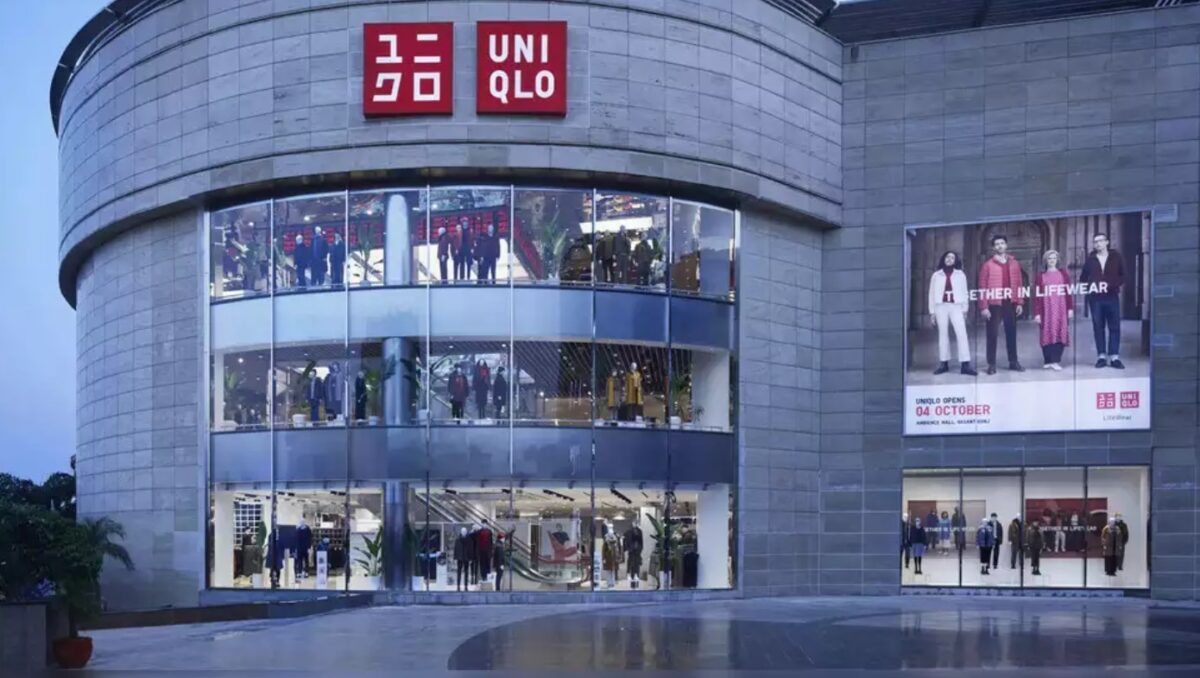
Around two years ago, when Delhi-based Debabrata Bhattacherjee decided to explore a new brand for casual wear, he decided to give Uniqlo a try. The 27-year-old was so impressed by the quality that he became a regular customer of the Japanese fashion brand that had set foot in India in 2019.
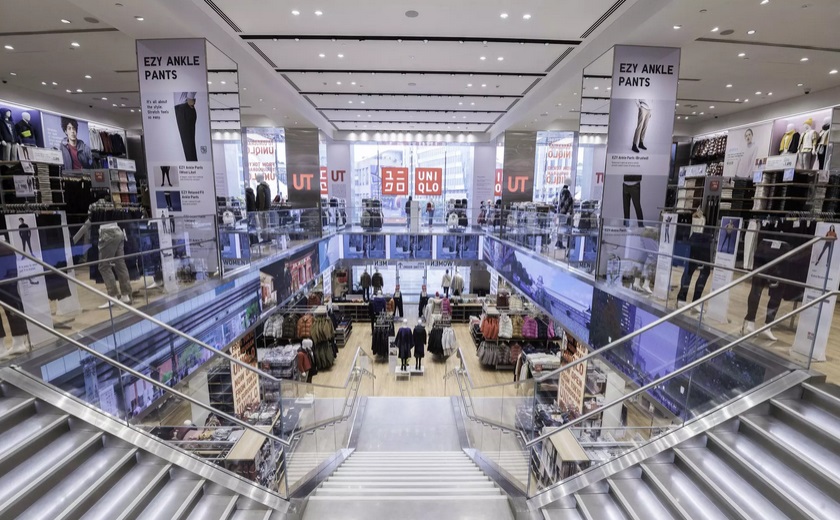
“What first attracted me was the convenient design of their store, which was very organised and clean. Very Japanese, to say! The shopping experience is very hassle-free and offers a lot of options. Their clothes are very comfortable and the quality is excellent,” said Bhattacherjee, a video producer. Though the brand is costlier than others, he is okay paying the premium.
Bhattacherjee is among the many Indians who have contributed to the rising sales of Uniqlo. Also known to be Asia’s biggest clothing brand, the Japanese company posted a 69% jump in sales in FY23 from FY22, with a net revenue of Rs 624.6 crore and a net profit of Rs 68.38 crore in India.
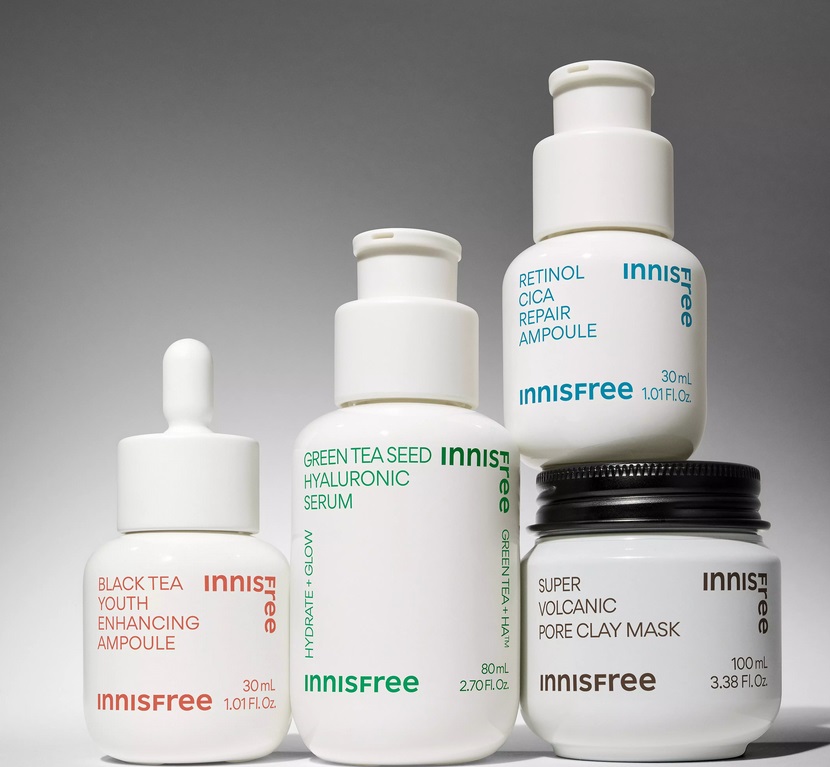
Uniqlo is among a bunch of Japanese and South Korean brands that have, in the past couple of years, been gaining more space in the lifestyle and beauty product shelves of Indians. Wacoal, MUJI, Innisfree, Sulwhasoo and Amorepacific have been witnessing a relatively quiet but consistent growth in sales in the country.
East Asian portfolio
Indian consumers are not new to the products from these countries. A popular example is automobiles: Suzuki, Hyundai, Toyota and Honda have made millions of Indians mobile. Now, fashion and lifestyle products from East Asia are also now becoming part of Indian households.
Anand Ramanathan, Partner and Leader-Consumer Products and Retail, Deloitte India, said this is because these brands have built a reputation for quality, design and durability — much like their peers in automobiles and engineering.
East Asian lifestyle and beauty brands initially had an influence in the Northeastern states, where the customers are not only ahead of the curve in fashionability but also found resonance with the look of these brands, said Devangshu Dutta, founder and CEO of management consulting firm Third Eyesight. “In due course, K-dramas and K-pop (Korean popular culture) has boosted their expansion across the country. Japan and Korea are highly developed beauty and skincare markets, with customers who are conscious both about their appearance, as well as about the products’ performance. These brands have established brand equity across markets on their quality, innovation, and product development,” he said.
Indians have been enjoying the “Korean wave” or Haalyu, which refers to the global popularity of Korean culture, music, movies, and TV dramas. Ramanathan pointed out that Korean has emerged as the most learnt language among the 13-22 age group in India. Apart from fashion, he said, the cultural impact can be seen in food and jewellery options of Indian Gen Z and millennials.
Well-travelled Indians who have been exposed to these brands find the pricing has “value” implicitly built in, Dutta added.
Companies from these countries also seem to find value in India. A 2023 survey by the Japan Bank for International Cooperation (JBIC) that collected responses from over 500 manufacturers in the island country showed that 48.6% of the companies considered India a key destination for medium-term business growth. Ramanthan cited a report by DPIIT that stated that since 2000, South Korea has invested $5.7 billion in India across various sectors. Recently, South Korea has invested $400 million in India during July 2022 to June 2023.
E-commerce is a driver
Another brand on this list is Japan-based Wacoal. The lingerie maker entered India in 2015 with its first store in Mumbai, and has posted an impressive 3X year-on-year increase over the last eight years, said Pooja Merani, COO of Wacoal India.
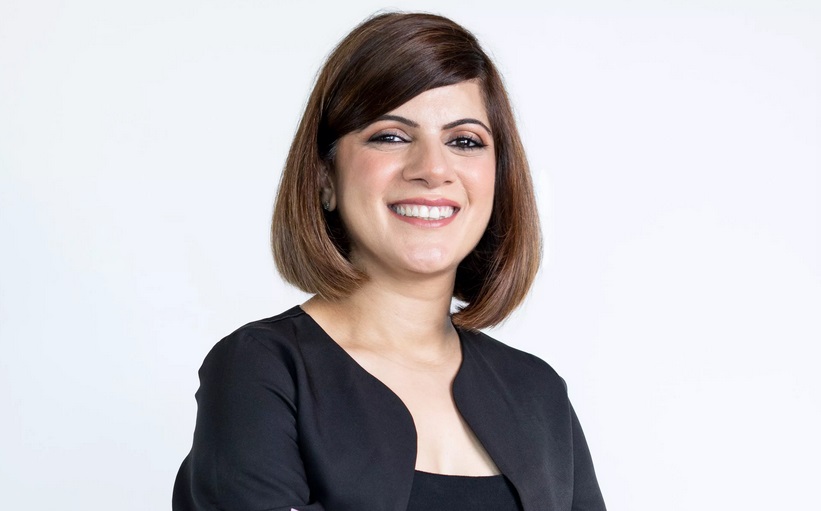
This was because its products have adapted designs that align with the preferences of the Indian market, demonstrating cultural sensitivity, she said. The company measures the physique of approximately 1,000 women and girls between the ages of 4 and 69 every year, said Merani. This has helped it make clothes that suit Indians well. “Prioritising fit and comfort in the offerings, and understanding the diverse body types in India, have likely contributed to customer satisfaction and loyalty,” she said.
South Korean beauty firm Amorepacific, which is the parent company of popular cosmetic brands such as Innisfree and Sulwhasoo, said they are seeing traction in India as the beauty and wellness industry is experiencing robust growth. “There is an increasing awareness and emphasis on skincare, with consumers seeking effective and high-quality products. India has a large and youthful population, and the youth are often early adopters of beauty trends. Korean skincare products, with their trendy packaging, innovative formulations, and youthful image, can resonate well with this demographic,” said Mini Sood Banerjee, Assistant Director and Head of Marketing at Amorepacific Group.
The company had last year signed an agreement with Reliance Retail to sell through its online fashion platform, Tira. Banerjee said 80% of its sales are through e-commerce. “INNISFREE has been engaging with the Indian consumer much more rapidly in the online space.”
Uniqlo attributed its success to its blend of Japanese philosophy with Indian culture — the company started selling kurtas from 2019, when it had entered India through Delhi. A spokesperson credited the brand’s success to the 13 brick-and-mortar stores in India focussing on its “LifeWear” philosophy. “It is simple, high-quality, everyday clothing with a practical sense of beauty that is ingenious in detail. This approach originates from the Japanese values of simplicity, quality and longevity — and we have seen that Indians appreciate the high level of quality of our apparel,” the spokesperson said.
Making in India
These companies have also started production in India, a sign that they find the market promising.
Wacoal started its production in India last year, and is expanding into newer segments. The Uniqlo spokesperson said the company is on track to achieve 30% domestic sourcing. “We are actively growing local suppliers to deliver quality products for our customers. For example, we now work with 17 sewing factories and 6 fabric mills in India.”
Fashion, home textiles and other home products are potentially the first categories where manufacturing within India can be explored, said Third Eyesight’s Dutta. Brands with a large global footprint and established supply chains find it difficult to shift manufacturing bases.
“To make a shift to India, a substantial volume of demand needs to be generated within the country, and brands also need to be actively looking to diversify from their existing supply bases. Fashion brands and retailers with product lines that are relatively less technical or complex, or for which the size of economically viable production base is relatively small, are already looking at manufacturing more products and greater volumes in India,” he said.
Foreign brands have to find the product-market fit to be successful in a country. India being an ethnically diverse market, the product-market fit can be dissimilar across the country. Brands can be successful only if they can address specific segments and build the business accordingly, Dutta added.
Companies like Wacoal said they are mindful of the cultural challenges. Merani pointed out how the lingerie market is predominantly unorganised and has challenges such as limited awareness about proper sizing and cultural taboos. “Overcoming traditional industry norms and promoting accurate sizing awareness remains a persistent hurdle for us. Additionally, addressing diverse body types while ensuring top-notch quality further adds complexity,” she said.
‘Affluent India’
Despite the challenges and the steep pricing, experts said these brands are becoming popular as Indians have more disposable income.
According to a recent Goldman Sachs report that corroborated data using tax filings, bank deposits, credit cards and broadband connections, the affluent Indian consumer cohort has grown at a compound annual growth rate (CAGR) of over 12% in 2019-23, compared to 1% CAGR in India’s population. Rising retail participation has lifted India market cap over 80%, it pointed out. “The largest beneficiary of rising ‘affluent India’ are categories such as leisure, jewellery, out-of-home food and healthcare, and premium brands within all categories,” it added.
The willingness of Indian customers to pay a premium price for better quality products depends on factors such as product category, brand reputation, target demographic and economic conditions, said Amorepacific’s Sood.
For Japanese brands, the shift in India from electronics and automobiles to clothing and lifestyle is driven by strategic diversification and changing consumer trends. Japanese companies are leveraging globalisation and the increasing exposure of Indian consumers to international lifestyles, said Wacoal’s Merani.
“Economic factors, such as India’s growing middle-class population and economic growth, contribute to the attractiveness of the market. Thorough market research and understanding of local preferences, along with collaborations and partnerships, enable Japanese brands to align their products with the specific demands of the Indian consumer market. Overall, this shift reflects the adaptability and strategic decision-making of Japanese brands, indicating their confidence in the potential for success in diverse sectors beyond automobiles,” she said.
The Indian market still has legs.
The COO of Wacoal India said the lingerie market, for one, would grow by a CAGR of 9.3%, especially as more young women join the workforce.
India presents a great opportunity as a strong growing market. Even domestic brands are competing for “share-of-mind, shelf-space and share-of-wallet, and some larger Indian corporates are also backing their own brands and retail formats with strong investments,” added Third Eyesight’s Dutta.
If the Japanese and Korean brands want to survive, they would need to keep innovating and adapting to consumer preference. For Indians, meanwhile, it is “ache din” when it comes to shopping.
admin
February 15, 2024
An insightful must-watch discussion, moderated by Devangshu Dutta (Founder, Third Eyesight), with venture capital fund managers, investors and entrepreneurs in retail on what factors attract investors to retail businesses.
The panelists included Vikram Gupta (Founder & Managing Partner, IvyCap Ventures), Amar Nagaram, (Co-Founder, Virgio), and Vikram Gawande (Vice President, Growth, Blume Ventures).
