
admin
September 7, 2016
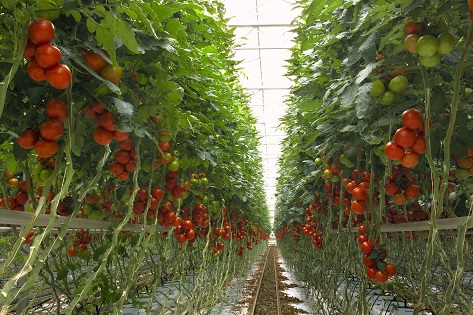
Horticulture production in India has been surpassing the production of food grains for many years. In 2014-15, the total production of horticultural produce was estimated by the Department of Agriculture, Cooperation and Farmers Welfare, Ministry of Agriculture to be approximately 281 million tonnes as against 252 million tonnes of food grain production and 275 million tonnes of oilseeds.
Horticulture and floriculture have result in growing foreign earnings, and India’s domestic market is also growing. In fact the demand for many types of vegetables and fruits which are not native to India such as lettuce, broccoli, gherkins, as well as for exotic flowers such as orchids, gerberas, carnations, is soaring. These crops were initially being cultivated only for export, but are now being bought by the urban population within India as well, as a result of growing familiarity with other cultures, and shifts in cuisines and lifestyles.
Many of these crops require specific climatic conditions which are not available in all parts of India, hence, cultivating them in controlled environments is a preferred option. Other than providing them a hospitable environment, the yield of the crop can be significantly better and availability can be all-year round, providing better market prices in the off-season. Greenhouses can be used by farmers for years to grow and sell exotic vegetables and other high-value commodities. Moreover, greenhouses help reduce the expenditure on pesticides by warding off insects and pests, many of which are carriers of viral and other infections. There is, therefore, considerable merit to extending the area under this system of cultivation, for the benefit of both producers and consumers.
While greenhouses have existed for more than one and a half centuries in various parts of the world, in India use of greenhouse technology started only during 1980’s and it was mainly used for research activities. The commercial utilization of greenhouses started from the late-1980s and with the introduction of the Government’s liberalization policies and development initiatives, several businesses were set up as 100 per cent export oriented units. Now many progressive farming organisations and individual farmers are using varied levels of technology in order to control the environment in which agriculture is done.
Although, there is an upfront capital cost involved in the setting up of a greenhouse, the scale of the greenhouse and proper management helps in yielding viable results. Most of the greenhouse projects in India at this point of time are on landholdings of up to 1 acre. However interest is seen to be growing towards projects of larger landholdings. Capital costs per acre range from Rs. 15 lakhs for a basic green house with simple techniques to control temperature and humidity, to Rs. 1.5 crore for automated greenhouses with superior humidity and temperature control, more closely managed water and nutrient dispersal etc.
Protected cultivation is one the important interventions of the National Horticulture Mission. Various patterns of assistance in the form of subsidies (ranging up to 50% of the cost of setting up the structures) have been devised by the government to encourage farmers to engage with this form of cultivation.
To encourage cultivation of vegetables under controlled atmosphere, Punjab government has empanelled five firms to assist farmers to set up polyhouses and polynet houses in their fields. The state government will provide subsidy on the greenhouse structures erected by these firms.
In Khammam, Telangana, the Horticulture Department is readying two poly-house demonstration units to popularise greenhouse technology and help farmers take up cultivation of high yielding vegetables round the year under controlled weather conditions.
Projects have already been taken up in Telangana, Gujarat and Himachal Pradesh ranging from feasibility studies of green house facilities and distribution halls for grading, sorting and packing to designing and setting up of green houses for breeding of rice and other crops and cultivation of tomatoes, strawberries, capsicum, cucumbers and lettuce.
For higher end, larger scale farms, Indian growers are also exploring technology from Europe. For instance, the Netherlands is the traditional exporter of greenhouse grown flowers and vegetables all over the world. The Dutch greenhouse industry is one of the most advanced in the world, and has now also become a provider of technology and support for the development of greenhouse cultivation around the world. Advanced technology solutions include climate sensors, air treatment devices, and software support.
However, success doesn’t only depend on equipment. Organisations such as Koppert provide biological solutions for natural pest control, natural pollination and seed treatment, to not only improve the quality and yield of the produce, but also make it safer.
There are many Indian as well as international organisations providing greenhouse solutions ranging from materials, technology and project consultancy. In the coming years it is expected that India’s rich agricultural, horticultural and relatively newer floricultural expertise will get enhanced and further competitive with the adoption of greenhouse cultivation to feed the burgeoning global and domestic demand.
admin
August 1, 2016

The cold chain sector is expanding quickly due to increased investments from Indian and international organisations going towards both modernisation of the existing facilities and establishment of new ventures. Over the last few years cold-chain has gained a buzz, finding its way not only into industry presentations but also into budget speeches in Parliament. It is widely reported that India needs to build more cold chain capacity, especially to reduce the enormous amount of waste of food products in the chain from farm to consumer.
India is one of the largest producers of agro-products i.e. fresh fruits and vegetables, milk and related products, fishery products and meat. However, due to lack of the required facilities, spoilage of products is comparatively high.
In recent years, significantly incentivised both by business logic and by tax breaks, there has been a fair amount on investment in cold storages. However, the sector is still highly fragmented; there is inequitable distribution of cold storages, interlinkages between storages is also very poor and many facilities are also operating below capacity.
The National Centre for Cold Chain Development (NCCD) reported that as of December 2014, 70% capacity was utilised, where the total number of cold storages available in India was around 5300 and approximately 6000+ vehicles, providing about 30 Million Metric Tonnes capacity of storage. Most of these facilities are located in the states of Uttar Pradesh, Uttaranchal, Punjab, Maharashtra and West Bengal.
Storage and transportation capacity is only the very first step in strengthening cold chain capabilities but, unfortunately, that is where many entrepreneurs and investors in cold-chain are stopping their thought process. Many players in the industry have been using obsolete machinery, and storages are majorly for a single commodity. The result, predictably, is underutilisation of capacity or mishandling of food products leading to operational problems, cost escalations, spoilage and other losses. Just to mention a simple example that many seem to forget: even domestic refrigerators have at least 3-4 temperature-humidity zones: the freezer, the chill tray, the large cool area, and a vegetable tray. In comparison, many cold stores are built without adequate thought to the various influencing factors. It’s important to recognise that in developing a cold chain capability, the products to be handled, the environment in which the cold chain will operate, not only storage but intake, handling and transportation, all have a role to play.
With a fragmented operating environment, both in terms of production as well as distribution, often a single investor or company may not be able to create the business logic to set up a cold chain facility. Collaboration between multiple individuals and agencies may be a way out.
An example of successful use of integrated cold chain is the Tamil Nadu Bananas Growers Federation. Banana growers in the Tamil Nadu belt were diminishing due to lack of appropriate storage facilities, and farmers were forced to sell produce at throw away prices. With introduction of integrated cold chain solutions, the federation of farmers from Tamil Nadu has now managed to gain a hold of the banana market again. They have managed to increase their income manifold by growing better qualities and storing bananas for longer period of time in the integrated cold chains.
Cold chain logistics in the true sense begin with harvesting and post-harvest handling, going on to controlled atmosphere vehicles, cold storages, sorting and grading facilities, modern pack houses and controlled atmosphere retail stores. Most importantly, even operational know-how is something that is not made part of the investment plan, leading to unviable, unprofitable cold chain facilities.
The focus should be to integrate the cold chain, and also build capacities in all areas. As per NCCD (December 2014), India has approximately 6,000 reefer vehicles against a requirement of 60,000. Similarly the number of pack houses available is 250 and the projected requirement is for 70,000. Hence, the need for a more balanced investment in terms of modern pack-houses, refrigerated transport units and ripening chambers is evident and will bring far better results, both operationally and financially.
In addition, there has to be a significant improvement in developing the know-how and skills sets available to the sector. While the country is faced with large-scale unemployment annually, a well-thought out development of the cold chain sector including due investment in knowledge-based initiatives can create significant numbers of better paying jobs around the country, especially in rural areas from where the produce is sourced.
With development of the consumer and retail sector supporting its growth, integrated cold chain development should be at the top of the agenda for government as well as for private business.
admin
May 7, 2016
Third Eyesight’s CEO, Devangshu Dutta recently participated in a discussion about the phenomenal growth of the Patanjali brand, from yoga lessons to a food and FMCG conglomerate taking well-established multinational and Indian competitors head-on. In a conversation with Zee Business anchor, P. Karunya Rao and FCB-Ulka’s chairman Rohit Ohri, Devangshu shared his thoughts on the factors playing to Patanjali’s advantage. Excerpts from the conversation were telecast on Brandstand on Zee Business:
admin
May 12, 2015
A seminar was organised on the 12th of May in Zeist (the Netherlands) on “the Opportunities & Challenges for Dutch (Semi-) Processed Food Companies in India”. Highlights of a report and other insights were presented by Devangshu Dutta, chief executive of Third Eyesight. Other entrepreneurs who also shared their experiences in India, and the Dutch agricultural counsellor, Wouter Verhey, was present at the event.
The sessions included:
You can download a summary of the report via this link: India – Opportunities Challenges for Dutch Processed Food Companies

Devangshu Dutta
October 25, 2014

These are thoughts shared in an emailed interview with the AgriBusiness and Food Industry magazine (published in the November 2014 issue.)
A Perspective on the Indian market:
Our first word of advice to companies that are looking at India as an evolving and large market, is to acknowledge the fact that that it has very diverse cuisines and food cultures.
Both Indian and international companies wishing to enter this market for the first time need to understand and acknowledge that one-size certainly does not fit everyone.
The variety of finished products needed requires food companies to address smaller quantities and to have flexible production.
Therefore, suppliers of capital equipment and technology also need to be able to think about how they can make their solutions more flexible to adapt to changing market needs, and also to price them appropriately for the Indian market. Simply extending solutions that work in large, developed markets such as Western Europe and North America is not the best approach.
I would use the example of one of our clients, a manufacturer of bakery automation equipment, who have approached the market with an open mind. After initial investigations they have gone back to the drawing board and created production lines that have smaller capacity, can produce multiple products including Indian specialities, and which are techno-commercially more feasible for an Indian customer to adopt.
There is no reason to think that India’s food industry should follow exactly the same development curve as the west. The population is much larger, with significantly lower income, and needs that are far more diverse and changing far more rapidly than in most other economies. The technical and technological models for India need to be strongly focussed on four major attributes:
Agricultural, horticultural and animal husbandry practices and technologies, as well as those in the downstream sectors such as food processing, need to perhaps even look at setting new benchmarks for accessibility and long-term sustainability.
Food processing and the Indian consumer market:
Food processing has been part of human history since we learned to transform hunted, gathered and farmed raw products into new foods through curing, cooking, culturing etc. This processing has been driven by mainly two major factors: to make the raw material into a product that is more palatable and easily consumed (for example, from raw grains to bread), or to extend the storage life of the raw material (for example, in the form of cheese, pickles, or sweets, or using cooling and freezing).
However, during the last century, processing has been driven mostly by “convenience” by providing partly or fully cooked options, to reduce the time spent by individuals in cooking and to instead apply that time to activities outside home. Social structures in India are changing, as individuals are migrating out of their home-towns to other locations within the country. The number of households is increasing dramatically, while cooking time and cooking skills are both declining. With this, out-of-home consumption as well as partially or fully-cooked packaged foods are bound to rise, leading to greater need of food processing capacities.
Also, with increasing industrialisation of food manufacturing, standards have become important both for efficiency and for safety. We’re seeing signs of such development happening in recent years in India as well – expectations of both consumers as well as regulatory authorities are higher with each passing year. The industry needs to invest proactively in better technology and processes in all areas – cultivation, handling, processing, packaging, storage and transportation – to raise the standards of hygiene, safety, traceability etc.
Food productivity needs urgent attention:
India is among the largest producers of many agricultural products. However, our yields per head of workforce, per animal, per hectare, or per litre of water consumed can be improved significantly. Not only is the population growing, but per capita consumption of most products will rise as the economic situation of each family unit changes. Better practices, technologies and know-how need to be acquired and applied to dramatically improve Indian agricultural productivity.
An interesting model of development to look at is the “golden triangle” approach followed by the Netherlands – active and intensive cooperation between the government, academic institutions and the private sector.
So far, by and large, academic institutions in India have limited themselves to “teaching” and have stayed away from actively collaborating with industry. Academic institutions and the industry typically connect only for the occasional “lecture” by senior individual from industry, or during the time of recruitment of fresh talent. Government largely limits itself to creating macro-level policies. More effective communication and coordination between these three legs could help to dramatically improve the standards in the agricultural and food sector in India and make the nation not just self-sufficient but significantly more competitive in both cost and quality of the final products.
Similarly, active collaboration within the industry itself is important to achieve combined growth, which can only happen if companies step beyond the usual industry association framework.
Local production and service of food processing equipment is an important factor:
In cases where the market is large enough, local production of the equipment should certainly be investigated because it can help to bring down the initial capital cost for customers, and also provide a quicker service and support base.
A first step that a company takes is to create a local presence, either through a distributor or agent, or by directly opening a sales and service office of its own. However, most international companies need to gain a certain degree of confidence in the market, both in terms of sustained demand and in terms of operating conditions, before they would invest in manufacturing in India, since it takes a whole different level of management commitment as well as financial involvement.
With the announcement of the government’s “Make in India” initiative, hopefully more international companies will come forward to take advantage of the changing operating environment in the country.
